

Types of Land in Agriculture: 6 Key Land Types for 2025 – A Comprehensive Overview
Summary: Types of Agricultural Land for Modern Farming in 2025
Agriculture remains the backbone of global food security and rural livelihoods. As we advance to 2025, understanding the main types of land in agriculture—including arable, pasture, permanent cropland, fallow, agroforestry-based forest land, and adapted wetlands—is more crucial than ever. Knowledge of these agriculture land types is essential for sustainable practices, climate resilience, and the optimization of productivity. This comprehensive article explores the characteristics, challenges, and sustainable management techniques for each land type, supporting farmers, policymakers, and stakeholders in their quest for food security and environmental conservation.
“By 2025, arable land is projected to cover only 10% of the world’s total land area.”
Introduction: Understanding Types of Land in Agriculture for 2025
As we progress toward 2025, agriculture stands at a pivotal point—facing challenges such as climate change, soil degradation, urbanization, and population pressure. The need for sustainable agriculture land management has never been greater. A deep understanding of the types of land in agriculture remains the foundation for modern, sustainable, and productive farming.
Globally, the diversity of agriculture land types enables different regions and agricultural systems to thrive. These include arable land for annual crops, pasture for livestock, permanent croplands for orchards and plantations, fallow for soil recovery, forest land for agroforestry, and adapted wetlands for rice, aquaculture, and unique food systems.
In this comprehensive article, we will explore the six key types of land in agriculture, their characteristics, significance, and sustainable management techniques. These insights will help farmers, policymakers, researchers, and all agricultural stakeholders optimize land use, conserve resources, and enhance productivity for a resilient food future in 2025 and beyond.

Comparative Overview Table of Agricultural Land Types (2025)
| Land Type | Estimated Global Coverage (%) in 2025 | Main Uses | Typical Soil Characteristics | Sustainability Practices | Average Productivity (tons/ha/year) |
Environmental Impact | Key Management Tips |
|---|---|---|---|---|---|---|---|
| Arable Land | ~10% | Annual crops (cereals, vegetables, legumes) | Fertile, well-drained, flat/undulating | Crop rotation, cover cropping, precision ag | 4–10 | Medium-High | Rotate crops, add organic matter, reduce tillage |
| Pasture Land | ~25% | Livestock grazing, fodder | Varied; typically grassland soils, moderate fertility | Rotational grazing, reseeding, integrated systems | 2–6 | Medium | Control stocking rates, restore degraded patches |
| Permanent Cropland | ~7% | Fruits, nuts, coffee, vineyards, rubber, olives | Deep, high-organic soils, stable structure | Mulching, pruning, agroforestry, contour planting | 5–15 | Low-Medium | Apply organic mulch, maintain soil cover, avoid soil compaction |
| Fallow Land | ~6% | Soil recovery, breaking disease cycles | Varied; left to rejuvenate organic content | Cyclic fallowing, cover crops, organic additions | 0 (rest period) | Low | Time fallows strategically, use green manure crops |
| Forest Land used for Agroforestry | ~12% | Integrated trees with crops/livestock, timber, NTFPs* | Diverse, high organic content, stable structure | Multi-strata planting, conservation corridors, shade management | Varies (3–12) | Low | Diversify species, manage canopy, protect young trees |
| Wetlands & Marshes (adapted) | ~6% | Rice, aquaculture, vegetable & fodder crops | Waterlogged, rich in organic matter, anaerobic | Water management, buffer zones, minimize drainage | 5–9 | Medium | Balance water levels, prevent salinization, protect ecology |
*NTFPs: Non-Timber Forest Products (e.g., honey, mushrooms, medicinal plants)
Figures are rounded estimates for 2025, based on FAO and regional statistical projections.
1. Arable Land: The Backbone of Food Crop Production
Arable land remains vital for global food security, representing land capable of being ploughed and used for growing annual crops. This type of land is essential for the cultivation of cereals (wheat, rice, maize), legumes, and vegetables. As of 2025, arable land is under increasing pressure from urbanization, climate change, industrialization, and soil degradation.
- Definition: Land that can be ploughed, tilled, and is suitable for growing annual crops and vegetables.
- Key Characteristics: Fertile soil, good drainage, relatively flat or gently undulating terrain, suitable for mechanized and precision farming practices.
- Main Uses: Annual cropping, cereal production, vegetable farming, and intensive agriculture.
- Soil Management Techniques:
- Crop rotation to prevent pest and disease build-up.
- Cover cropping for soil health and erosion prevention.
- Reduced or zero tillage for soil structure conservation.
- Precision agriculture (using satellite data and sensors) for optimized inputs and sustainable yield.
With only about 10% of global land area remaining arable by 2025, sustainable management is crucial. Over-cultivation, monocropping, and chemical overuse threaten fertility and productivity. Modern strategies, including satellite monitoring and AI-driven insights (such as those provided by Farmonaut), empower farmers with real-time soil health information, precise input recommendations, and early warning signals for disease and weather.

Examples of Arable Land Use
- Wheat and rice belt regions in India, United States, China, and the European Union
- Major vegetable-producing zones in California, Spain, Netherlands, and China
Sustainable Practices for Arable Land in 2025
- Crop Rotation: Breaks disease cycles; improves yield stability.
- Cover Cropping: Increases soil organic matter; fixes nitrogen naturally.
- Satellite-based Monitoring: Using multispectral imagery and AI systems like Farmonaut Large Scale Farm Management Tools helps optimize input application and catch early issues in arable fields.
- Carbon Footprinting: Tracking and reducing CO₂ emissions in arable farming practices with tech solutions like Farmonaut Carbon Footprinting to enhance climate-smart strategies.
“Wetlands support 40% of global species diversity, yet make up less than 6% of agricultural land.”
2. Pasture Land: Sustaining Livestock & Rural Livelihoods
Pasture land—both natural and cultivated—remains fundamental to livestock production worldwide. It consists of meadows, grasslands, savannas, and sown grass/forb fields, primarily used for feeding cattle, sheep, and goats. As global demand for animal products rises in 2025, effective pasture management is essential to prevent overgrazing and maintain ecosystem balance.
- Definition: Land covered with grasses or herbaceous plants, suitable for grazing livestock (cattle, sheep, goats).
- Main Uses: Livestock grazing, fodder production, dairying, sustainable silvopastoral systems.
- Typical Soils: Variable; may include loamy, sandy, or clayey soils with moderate fertility. Soil management is vital to prevent compaction and erosion.
- Sustainability Practices:
- Rotational grazing to allow pasture recovery.
- Integrated crop-livestock systems for nutrient cycling.
- Reseeding and pasture renovation for persistency and productivity.
- Managed stocking rates to avoid overgrazing and land degradation.
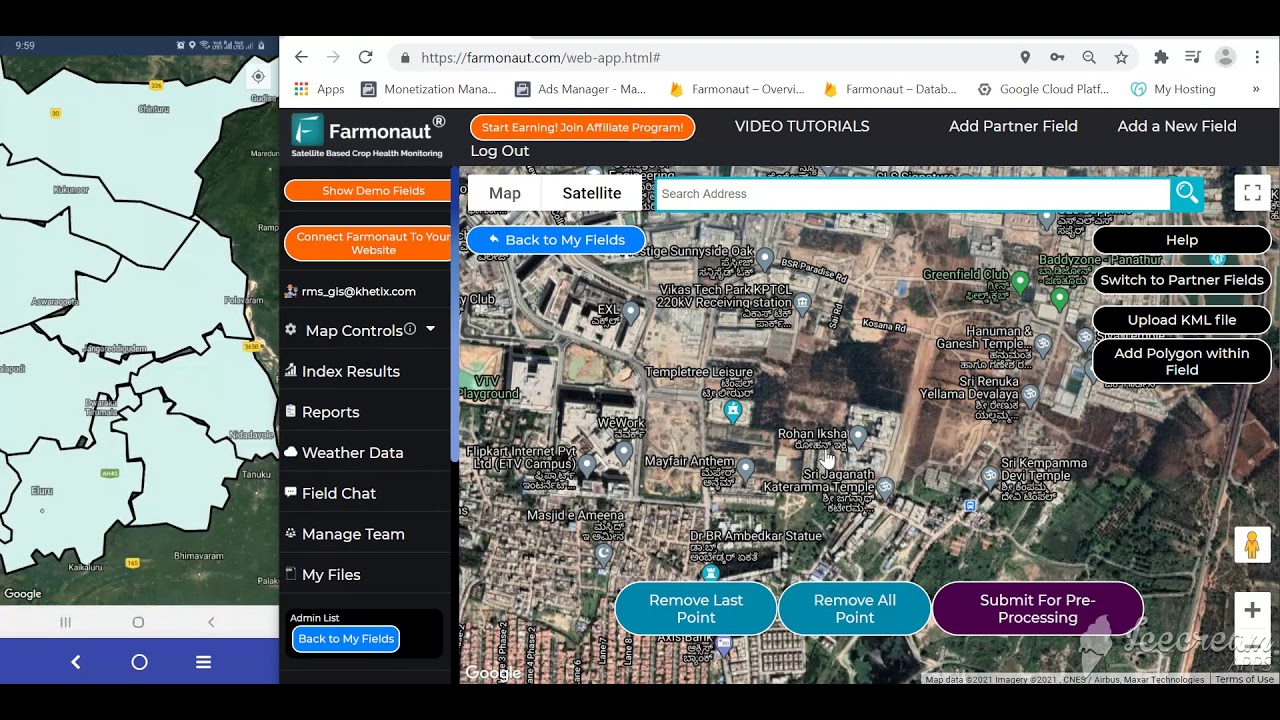
Innovative pasture monitoring is possible through satellite technology that tracks biomass, grazing intensity, and pasture health. Farmonaut’s solutions empower farm managers and ranchers with real-time insights into rangeland conditions to optimize fleet management, rotation planning, and ecological stewardship.
Key Techniques for Pasture Land Management
- Strategically timed grazing periods matched to plant growth rates
- Soil testing and pH correction improves grass yields
- Application of organic manure supports soil biodiversity
- Fencing and paddocking enhances animal distribution and reduces soil erosion
Livestock & Grazing Land Innovations in 2025
- Remote sensing to estimate biomass and detect overgrazing areas, supporting integrated management systems
- AI-based advisory tools for rotational schedules, based on real-time pasture health and weather data
3. Permanent Cropland: Long-Term Resilience & Crop Diversity
Permanent cropland refers to land continuously used for perennial crops such as fruit orchards (apples, mangoes), vineyards, coffee plantations, rubber estates, and olive groves. Unlike arable land, permanent cropland is not regularly ploughed or tilled, making soil structure, root zone conservation, and water management particularly crucial.
- Definition: Land cultivated with long-lived, deep-rooted crops such as fruit/nut trees, vines, coffee, rubber, and olives; not typically re-ploughed each year.
- Typical Uses: Orchard farming, vineyard production, plantation agriculture.
- Soil Characteristics: Deep, well-structured, with high organic matter and moisture retention properties.
- Sustainability Practices:
- Mulching and ground cover for moisture regulation and soil health
- Agroforestry integration for increased biodiversity
- Contour planting to prevent erosive runoff
- Pruning and tree health management
Permanent cropland is gaining importance due to its role in carbon sequestration, integrated pest management, and diversified income. Satellite-based analysis from platforms like Farmonaut helps monitor canopy health, predict disease outbreaks, and guide site-specific inputs.

Permanent Cropland Examples
- Coffee highlands of Kenya, Uganda, Brazil (see Regenerative Coffee Boom 2025: Kenya & Uganda Profits video for an immersive look)
- Apple and peach orchards in North America and China
- Rubber plantations in Southeast Asia
- Vineyards in California and the Mediterranean
Best Practices for Sustainable Permanent Cropland
- Interplanting nitrogen-fixing shrubs for soil enrichment
- Implementing agroforestry and shade management systems
- Using precision irrigation and moisture sensors
- Blockchain-based traceability for premium market access—learn more about Farmonaut Product Traceability Services for permanent crop supply chains

4. Fallow Land: Resting the Soil for Sustainable Recovery
Fallow land is agricultural land deliberately left uncultivated for a period to restore soil fertility, break disease cycles, and increase organic matter naturally. This time-honored practice is being integrated with modern soil management techniques in 2025 to balance productivity and conservation.
- Definition: Land left uncultivated (seasonally or multi-year) as a soil-restoration measure.
- Main Uses: Recovery of soil health, weed and pest control, enhancement of biodiversity.
- Soil Characteristics: Vary; improved by resting, with higher organic content and microbial regeneration over time.
- Fallowing Techniques:
- Green manuring (growing legumes and ploughing under as natural fertilizer)
- Mulching and organic residue management
- Planned cyclic fallowing with grazing for added manure input
- Partial fallowing (strip or rotational fallow) in intensive systems
Advanced mapping and scheduling tools—like those offered via Farmonaut Crop Loan and Insurance Verification—can remotely verify fallow practices for financial institutions and optimize field rotation, especially for regions under high cropping pressure.
Strategic Fallowing in High-Pressure Regions
- Cyclic resting of wheat and maize belts in Northern India, US Midwest, and Eastern Europe
- Integration with cover crops to suppress weeds and enhance soil nitrogen
By carefully timing fallows and using multispectral satellite imagery, farmers can maintain productive capacity and avoid long-term soil degradation.
5. Forest Land Used for Agroforestry: Integrating Trees for Sustainability
Agroforestry refers to the integration of trees into crop and/or livestock systems, creating complex, layered landscapes that enhance biodiversity, soil health, and climate adaptation. This forest-based land type supports productive agriculture while conserving natural resources.
- Definition: Forest land purposefully managed to integrate trees, crops, and sometimes livestock into the same, ecologically balanced system.
- Main Uses: Timber, fruits, NTFPs (honey, mushrooms), shade-grown crops (coffee, cocoa), carbon sequestration, climate regulation.
- Typical Soils: Rich in organic matter, well-structured, moisture retentive, and protected from erosion by tree cover.
- Sustainability Practices:
- Multi-strata (multi-layer) planting
- Diversification of species and genetic resources
- Maintaining conservation corridors and wildlife habitats
- Minimal chemical input and natural pest control
- Mixed income sources for farmers and rural communities
Agroforestry in 2025 is increasingly promoted for its socioeconomic and ecological benefits—from stabilizing slopes in hilly regions to restoring degraded lands in the tropics. Satellite-enabled monitoring tools allow precise mapping of tree-crop combinations and support sustainable harvesting strategies.

Examples of Agroforestry-Based Systems
- Shade-grown coffee and cocoa in South America, Africa, and Southeast Asia
- Silvopastoral (trees + pasture) systems in the Brazilian Cerrado and Spanish dehesa
- Home garden agroforestry in Kerala, India (mixing fruit trees, spices, and vegetables)
Benefits also include carbon storage, climate moderation, diversified food and income, and soil and water conservation. Discover how carbon footprint monitoring and product traceability services can support certified agroforestry produce for specialty markets.
6. Marshy and Wetland Areas Adapted for Agriculture
Adapted marshy and wetland agricultural lands are essential for rice, aquaculture, and special crops@ supporting a high level of species diversity despite covering less than 6% of total agricultural land by 2025. Wetlands offer unique challenges and opportunities for sustainability, food production, and ecosystem services.
- Definition: Natural or managed marshes, swamps, and floodplains adapted for periodic or semi-permanent agricultural cropping (especially paddy rice, taro, lotus, and fish farming).
- Main Uses: Rice paddies, aquaculture ponds, floating vegetable production, fodder harvesting.
- Soil Characteristics: High organic content, often waterlogged, with anaerobic decomposition processes. Proper water management is vital to avoid salinization, acidification, and loss of soil fertility.
- Sustainable Practices:
- Careful scheduling of water inflow and drainage
- Use of constructed wetlands and buffer strips for nutrient capture
- Integration of fish or ducks with rice for holistic pest control and nutrient cycling
- Strict conservation measures to protect critical wetland habitats
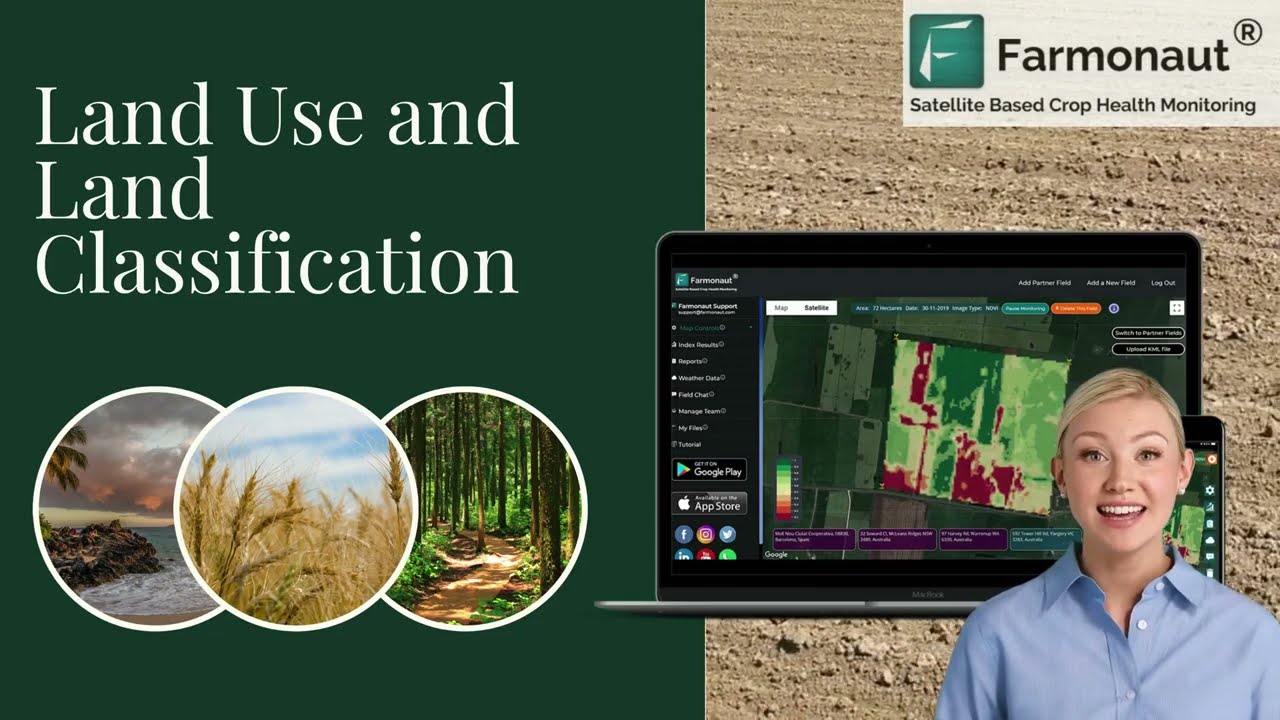
In 2025, sustainability in wetland agriculture includes careful monitoring of water usage and ecological health, often through remote sensing platforms. Farmonaut’s satellite imagery tools are well suited to detect inundation, potential drainage issues, and biotic stress in wetland-adapted croplands.
Wetland Agriculture Examples and Innovations
- Paddy rice cultivation in Ganges-Brahmaputra Delta, Mekong Basin, and Nile River Floodplains
- Traditional floating gardens (chinampas) and aquaponic systems adapted to rising climate variability
Effective mapping and monitoring are essential to balance food production, water use, and biodiversity conservation within these fragile, productive landscapes.

The Importance of Classification and Mapping in Sustainable Agriculture Land Management
Accurate classification and mapping of agriculture land types underpin sustainable land use in agriculture in 2025. Land type identification helps determine suitable crops, site-specific soil and water management, and optimal conservation practices. Satellite-based tools, remote sensing, and GIS mapping have become essential for farmers, agronomists, and policymakers to:
- Monitor land use changes and prevent encroachment/illegal conversion
- Balance crop choice with region-specific land, water, and biodiversity characteristics
- Identify degradation trends and develop targeted soil conservation interventions
- Support climate-smart strategies and sustainable development goals
Embedded technologies—from NDVI crop health indices to AI-powered advisory systems—allow for dynamic decision-making and real-time land use optimization.
Farmers and stakeholders can utilize Farmonaut’s app & API to streamline field mapping, land use classification, and yield monitoring, making data-driven decisions accessible for farms and policymakers alike. Learn more about implementing these technologies for your fields and business at Farmonaut Satellite Data API.
How Farmonaut Empowers Us for Sustainable Land Management (2025 and Beyond)
As we navigate the complexities of types of agriculture land, modern technology becomes the driving force for sustainable decisions and productivity enhancements.
- Affordable Satellite Monitoring: Farmonaut’s platform offers cost-effective multispectral monitoring of all agriculture land types: arable, pasture, permanent croplands, forest, and wetlands. This democratizes access to land classification and health diagnostics for all farm sizes.
- AI-Based Advisory: Our proprietary Jeevn AI analyzes weather, soil, and crop data, delivering actionable guidance for rotational cropping, input management, and yield maximization without harming ecological balance.
- Resource & Fleet Management: Through integrated resource tracking and fleet management systems, users optimize the use of agricultural machinery, reduce costs, and minimize emissions across vast and diverse land portfolios.
- Blockchain Traceability: For sectors like permanent cropland and agroforestry, our blockchain-powered traceability solutions ensure authenticity and transparency from farm to market—benefiting regulatory compliance, consumers, and exporters.
- Environmental Accountability: Real-time carbon foot-printing and impact monitoring features help users and policymakers align their agriculture land use with sustainability and climate-resilient farming goals.
- Financial Integrity: Banks and insurers verify field conditions (including fallow, cropping, and reclamation status) via our satellite-based verification portal, reducing risks and enhancing access to credit for smallholder and large-scale farmers alike.
For users, regional governments, and corporate clients seeking scalable, efficient, and sustainable land management, Farmonaut’s suite of tools—available on Android, iOS, web App & API—is designed to empower evidence-based stewardship of every agriculture land type in 2025.
Frequently Asked Questions (FAQ) – Types of Land in Agriculture in 2025
1. What are the major types of land in agriculture used worldwide in 2025?
Six key types: Arable land, pasture land, permanent cropland, fallow land, forest land used for agroforestry, and adapted marshy/wetland areas.
2. Why is land classification essential for sustainable agriculture?
Classification determines suitable crops, management systems, optimal resource allocation, and allows for sustainable land use in agriculture—helping to adapt to climate change and conserve resources.
3. How can satellite and AI technology support different agriculture land types?
Satellite data and AI platforms (like Farmonaut) provide accurate, real-time land use mapping, crop health diagnostics, yield prediction, impact monitoring, and traceability for all major land types.
4. Which agriculture land type supports the highest biodiversity?
Wetlands (though they cover a small percentage of farmland) support the highest level of global species diversity, followed by agroforestry-based forest systems.
5. What are the recommended sustainability practices for arable land?
Key practices include crop rotation, reduced tillage, organic amendments, integrated pest management, and satellite-guided precision input use.
6. Can permanent cropland be adapted for sustainable climate solutions?
Yes—permanent cropland supports carbon sequestration, reduces erosion, and allows for year-round ground cover. Integrating trees (agroforestry) amplifies these benefits.
7. How important is pasture land for food security?
Pasture land is crucial for animal production, rural livelihoods, and protein supply. Sustainable grazing and restoration techniques are essential for its longevity.
8. Are wetlands suitable for all crop types?
No; wetlands are best adapted to water-loving crops (like rice, lotus, aquatic vegetables) and aquaculture. Attempts to convert them for other crops can lead to biodiversity loss and ecological harm.
Conclusion: Harnessing the Value of Every Land Type—A Foundation for Future Food Security
The diversity of types of land in agriculture remains a cornerstone of global food production and environmental sustainability. Each land type brings unique characteristics, challenges, and opportunities for productivity, livelihoods, and conservation. Understanding and managing arable, pasture, permanent cropland, fallow land, agroforestry-based forest land, and adapted wetlands is essential for resilient, thriving farming systems in 2025 and beyond.
Satellite, AI, and data-driven innovations—such as those available via Farmonaut—equip farmers, businesses, and policymakers with the insights needed to optimize yields, balance resource use, and protect natural ecosystems. The integration of traditional agricultural wisdom with cutting-edge remote sensing and environmental monitoring secures our ability to feed a growing population while conserving resources for future generations.
Explore Farmonaut’s platform via our web and mobile app, test our API, or check out our specialized products such as carbon footprint tracking, traceability, satellite-based crop loan verification, and fleet management.
Let’s build a sustainable, productive, and climate-resilient agricultural sector by leveraging both our land’s diversity and 21st-century technology.
Farmonaut Subscription Plans – Get Started
Whether you’re a farmer, agribusiness, or government agency, get affordable access to advanced satellite-driven insights for all agriculture land types directly through Farmonaut’s customized subscription packages.



Discussion
Questions, corrections or field experience? Share them below. First-time comments are reviewed before they appear, and your email is never published.
No comments yet. Be the first to add a question or your experience.

 Croptimum
 Dalmia Bharat Sugar
 DnCubed
 Pistachio ST
 Field Capacity
 Indosistim Teknologi
 Liquify Digital
 CU Foods
 BeyondTech Global
 Rouge VC
 AgroGreen Dynamics
 AgroRisk
 Oath Inc
 Reddane Farming
 Esri North East Africa
 Cresol
 MDCV UK
 Etech Consulting Madagascar
 Vestlandsforsking
