

Land Capability for Agriculture Map & Sustainable Use 2025
Land Capability for Agriculture Map: Foundations for Sustainable Agriculture
The future of agriculture depends on our understanding and utilization of the land beneath our feet. In 2025, the intersection of land capability for agriculture map, sustainability and agriculture, and advanced mapping technologies plays an essential role in food production, environmental protection, and rural prosperity.
Land capability maps are foundations that serve farmers, planners, and policymakers by categorizing land based on its suitability for diverse agricultural uses. These maps use factors like soil type, topography, climate, drainage, and erosion risk to classify land into specific capability classes.
- Why is this classification important? It guides decisions on which crops or methods are most appropriate for each land type, minimizing degradation and optimizing productivity and land use efficiency.
- It supports planners and policymakers in sustainable planning and development by highlighting suitable uses and preserving vulnerable resources.
- For farmers, it minimizes input costs by preventing unsuitable cropping or excessive chemical use, supporting environmental health and sustainability.
Essential Factors in Land Capability Classification
- Soil Type & Fertility – Determines natural nutrient supply and root penetration.
- Topography – Slopes, undulation, and aspect impact erosion risk and drainage capability.
- Drainage – Poorly drained versus well-drained soils require different management approaches.
- Erosion Risk – Susceptibility to wind and water erosion affects sustainable agriculture options.
- Climatic Variability – Rainfall, temperature, and extremity frequency define suitability for crops and methods.
By 2025, ongoing advances in remote sensing, geographic information systems (GIS), and data analytics have significantly improved accuracy and accessibility of land capability for agriculture map tools.

Such precision in mapping means farmers and resource managers can now utilize localized, dynamic assessments to adapt to changing conditions. Instead of relying only on static manuals, land capability maps in 2025 allow for split-season adjustments and better rapid responses to events like drought, floods, or pest outbreaks.
Sustainable practices and management methods are now firmly anchored in robust, tech-driven land capability for agriculture map insights, boosting productivity and preserving valuable resources for the future.
How Do Land Capability Maps Work?
A land capability map categorizes parcels into various capability classes (often I-VIII), with Class I soils possessing minimal limitations and Class VIII being unsuitable for agriculture. Each class is assessed using scientific criteria:
- Physical soil properties (texture, stoniness, depth, salinity)
- Relief (slope percentage, aspect, micro-topography)
- Hydrological factors (wetness, flooding risk, drainage patterns)
- Climatic suitability (temperature regime, frost frequency)
The combination of these data points results in a capability classification that’s visualized as a clear, actionable agricultural map. These maps are essential for both micro (farm-level) and macro (regional or national) land use planning.
Sustainability and Agriculture: The Core of Responsible Land Planning
Sustainability and agriculture in 2025 are inseparable. We now understand that productive agriculture cannot exist in isolation from ecological health or social equity. The land capability for agriculture map is the bedrock for sustainable management, enabling alignment of agricultural practices with both environmental and economic realities.
- Balance is key: Sustainable agriculture balances viability (profitability and yield), environmental health (conserving soil, water, and biodiversity), and social equity (fair access and distribution of benefits).
- Regeneration & Resilience: Proper assessment ensures activities do not exceed the natural regeneration capacity, supporting future productivity.
- Efficient Input Use: Land capability maps help in planning inputs (water, fertilizers, pesticides), reducing wastage and preventing environmental degradation.
Practices for sustainable agriculture that are informed by capability maps in 2025 include:
- Crop rotation and intercropping: Preserves soil structure and nutrient balance.
- Conservation tillage: Reduces erosion, maintains organic matter, and conserves water.
- Agroforestry: Trees integrated with crops support biodiversity and stabilize the microclimate.
- Integrated pest management: Combines biological, cultural, mechanical, and chemical controls, reducing pesticide use.
- Precision agriculture (enabled by tech): Delivers exact needs to each zone, leveraging farm map data for optimal resource use.
Land capability for agriculture maps ensure land use is aligned with sustainability goals by assessing suitability, minimizing risk, and optimizing productivity.




“Over 60% of global farmland will utilize advanced mapping tools for resource protection and sustainability by 2025.”
Economic, Environmental, and Social Impacts
- Economic Viability: Proper land capability assessments enable cost minimization and yield maximization.
- Environmental Health: Sustainable practices protect against soil erosion, pollution, and degradation.
- Social Equity: Considers equitable access and cultural sensitivity in planning and resource allocation.
The Role of Agricultural Land Use Map and Integrated Mapping
While land capability maps assess what land can do, agricultural land use maps show how land is actually being used. The combined use of both tools provides the full picture required for informed planning and sustainable agricultural development in 2025.
- Agricultural land use maps offer spatial data about: current crops, fallow periods, grazing zones, irrigation, deforestation, and land degradation.
- By overlaying capability and use maps, policymakers and governments can identify where land is being overused (exceeding sustainability thresholds), underused (wasted productive potential), or inappropriately allocated (farming on sensitive, highly erodible areas).
- For farmers and resource planners, this integrated approach means better decisions—from crop selection to irrigation and fertility management, to land rehabilitation efforts.

2025 Trends: Globally, agricultural land use maps help shape broad strategy and policy, guiding:
- Land use zoning (protecting prime soils from urban encroachment or mining)
- Resource-targeted subsidies (focusing funds where environmental and economic return is highest)
- Agro-environmental monitoring (tracking degradation, rehabilitation successes, and the impacts of climate change)
- Regional food security planning (mapping vulnerable areas and production gaps)
Sustainability and agriculture in 2025 are directly supported by these integrated, real-time mapping tools.
Tech-Driven Mapping Tools in 2025: Optimizing Agricultural Productivity and Resource Protection
In 2025, the transformation in land capability for agriculture map and agricultural land use map quality and accessibility is fueled by cutting-edge technologies:
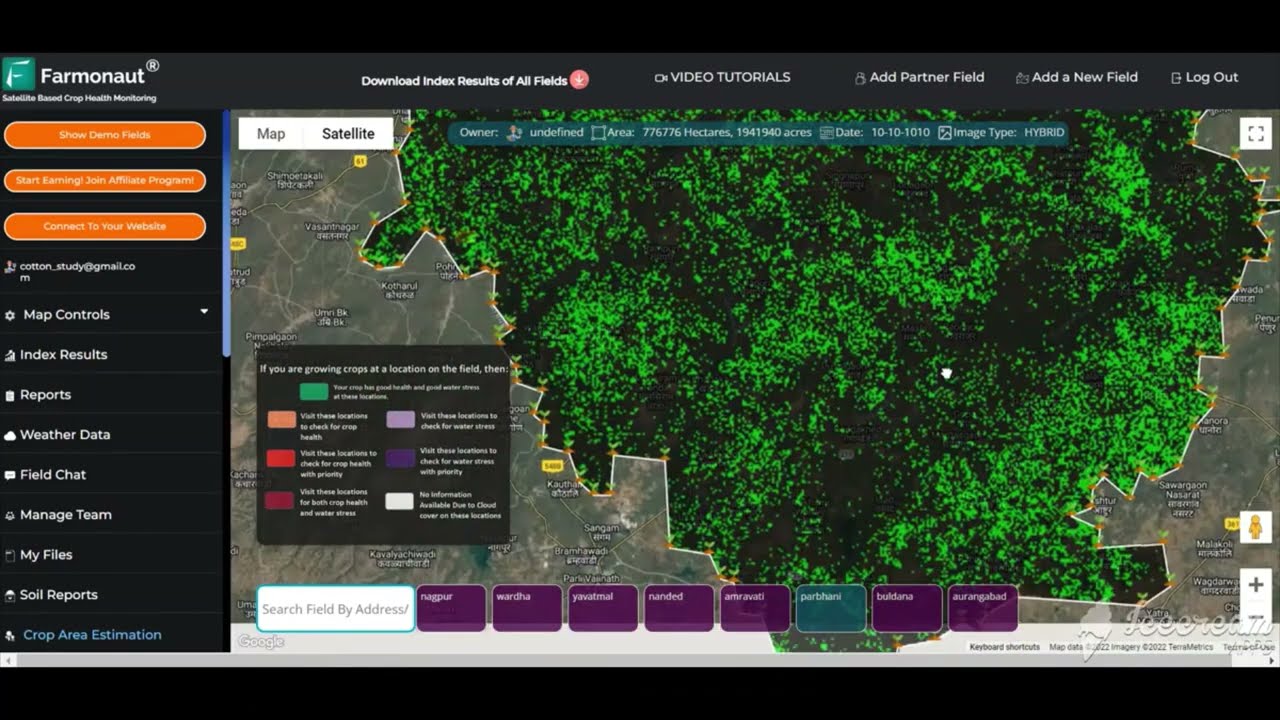
- Remote Sensing: Real-time satellite imagery detects soil moisture, vegetation health, crop phenology, land cover changes, and disaster impacts (drought, flood, erosion).
- Geographic Information Systems (GIS): Layering and analyzing vast, multidimensional data—for localized decision-making.
- AI and Machine Learning: Pattern recognition in massive datasets for enhanced classification, dynamic risk mapping, and prediction of degradation.
-
APIs & Mobile Apps: Accessibility to mapping and advisory tools for farmers and governments, anywhere, anytime.
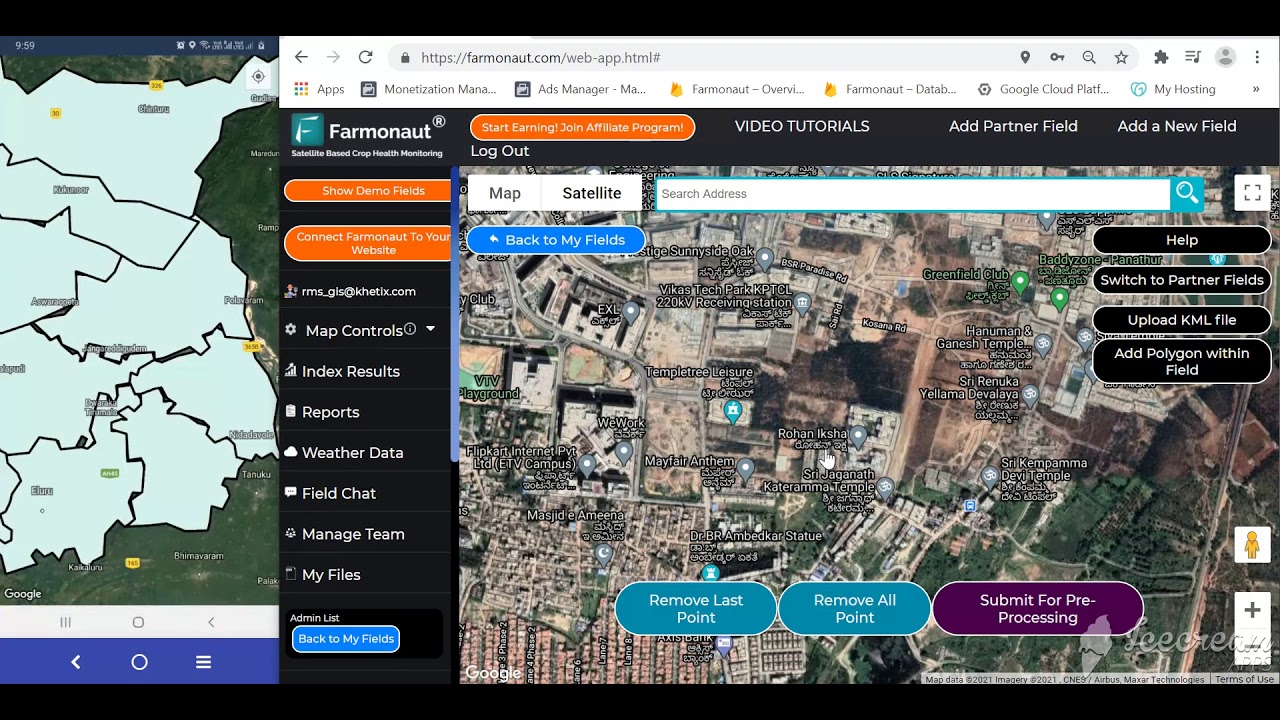
Developers and agritech solution providers can integrate advanced remote sensing and mapping data into their platforms using the Farmonaut Satellite Data API.
For full documentation, visit Farmonaut Satellite API Developer Docs. - Field-Level Precision Tools: Drones and IoT sensors complement satellite data for hyper-local, real-time insights (soil nutrition, plant status, microclimate).
Benefits of Mapping Innovations in Sustainable Agriculture
- Dynamic Planning: Technology enables continuous land suitability assessments, not just one-time surveys.
- Data-Driven Management: Precision agriculture applies the right input at the right place, right dose, and right time.
- Efficient Resource Use: Water, fertilizers, and pesticides dosed as per real field conditions, reducing cost and environmental load.
- Risk Minimization: Early warning for soil degradation, erosion, pest/disease outbreaks, and climate threats helps protect food security.

Farmonaut’s Satellite Technology: Empowering Land Capability & Sustainable Use
At Farmonaut, we believe that integrating advanced satellite technology with AI, blockchain, and mobile application accessibility is transforming how land capability for agriculture maps support sustainability and agriculture in 2025 and beyond.
Our satellite-based platform delivers real-time monitoring, AI-driven management strategies, carbon footprint tracking, crop health analysis, and blockchain-enabled traceability—empowering farmers, businesses, and governments to make data-driven decisions that enhance productivity and sustainability.
- Easy onboarding for large-scale monitoring via Farmonaut’s Large Scale Farm Management suite. This web and mobile solution allows for fleet tracking, environmental data monitoring, and seamless resource management for vast agricultural operations.
- Real-time crop health insights and event detection support timely interventions to prevent degradation and ensure resilience. See our Carbon Footprinting service for tracking and reducing emissions in agriculture.
- Blockchain-powered traceability allow users to confidently prove sustainability compliance, which is critical for accessing premium, eco-sensitive markets. Learn more about Farmonaut Traceability.
- Satellite-backed insurance and crop loan verifications speed up claim settlements and reduce fraud, improving farmers’ access to capital. Find out about Farmonaut Crop Loan & Insurance.
- Fleet and resource tracking tools optimize logistics and reduce the carbon footprint in agricultural supply chains. Explore our Fleet Management offerings.
By making these technologies affordable and accessible, we’re helping all stakeholders—from small farm stewards to national policy agencies—align agricultural development with the highest standards of sustainability.

Comparative Table: Land Capability Classes, Sustainable Practices, & Tech-Driven Mapping in 2025
| Land Capability Class | Est. % of Arable Land (2025) | Main Soil Limitations | Recommended Sustainable Practices | Example Mapping Technologies |
|---|---|---|---|---|
| Class I (Very Good) | ~5% | None or minimal |
|
|
| Class II (Good) | ~13% | Slight slope, moderate fertility limits |
|
|
| Class III (Moderate) | ~17% | Moderate slopes, low fertility, drainage |
|
|
| Class IV (Limited) | ~21% | Steeper slopes, shallow soils, salinity |
|
|
| Class V (Non-arable, Pasture) | ~11% | Poor drainage, periodic flooding |
|
|
| Class VI (Severe Limitations) | ~18% | Rockiness, erosion, poor nutrients |
|
|
| Class VII (Very Severe) | ~9% | Very steep, stony, infertile |
|
|
| Class VIII (Nonagricultural) | ~6% | Barren, urban, permanent water |
|
|
Note: Estimates based on global averages – actual percentages may vary by nation and region. Table highlights the critical role of land capability for agriculture map classifications in guiding sustainable management and technology deployment.
Challenges, Opportunities, and the Road Ahead for Sustainable Land Use in 2025 and Beyond
Despite significant advances in mapping technologies and data analytics, several challenges continue to influence the role of land capability for agriculture map and sustainability and agriculture efforts:
- Climate change impacts: Land capability assessments must rapidly incorporate new climate models as shifts in rainfall, temperature, and extreme events intensify.
- Socio-economic factors: Land tenure security, farmer education, and market access can be just as decisive for sustainable development as technological advancements.
- Data quality and accessibility: Ensuring high-resolution, up-to-date mapping data is available to all stakeholders is essential for inclusive progress.
- Policy integration: Governments must tie capability and use mapping insights to enforceable regulations and support frameworks.
- Financial inclusion and support: Access to insurance, credit, and technical capacity building remains essential for small and marginal farmers adopting sustainable techniques.
Looking into the future: Collaborative efforts among governments, researchers, and farming communities will keep refining land capability for agriculture map tools. Continued innovation in satellite monitoring, AI-based advisory systems, and blockchain-enabled traceability will be pivotal for advancing global food security, protecting resources, and meeting sustainability goals.
- Precision, efficiency, and resilience will remain the watchwords as we face the pressures of population growth, land degradation, and climate change.
FAQs: Land Capability Maps, Sustainable Agriculture & Mapping Technologies (2025)
-
Q: What’s the difference between a land capability map and an agricultural land use map?
A: Land capability maps classify land by its suitability for specific uses based on inherent characteristics (soil, slope, drainage, etc.), guiding what the land could be used for. Agricultural land use maps document what land is actually being used for, such as types of crops grown, grazing, or urban development. Combined, they are foundational for sustainable planning. -
Q: How do mapping technologies improve sustainability agriculture?
A: Technologies like remote sensing, GIS, and AI allow for dynamic, real-time assessments of suitability, performance, and risk, enabling farmers and policymakers to optimize resource use, reduce inputs, and minimize land degradation. -
Q: Can smallholder farmers access advanced mapping tools in 2025?
A: Yes! With platforms like Farmonaut and similar mobile/web apps, mapping data is more affordable and accessible than ever—helping even small farms benefit from precision agriculture and sustainable planning. -
Q: How do land capability maps help fight climate change?
A: By ensuring land for agriculture is matched to the most suitable, climate-adaptive practices, these maps reduce degradation, conserve carbon stocks, and promote resilient food systems. -
Q: What role do governments play in using these tools?
A: Governments use integrated capability and use maps to guide zoning, subsidies, restoration projects, and national-level food security policies. Farmonaut’s satellite and AI tools help governments make informed, large-scale decisions.
Conclusion: The Backbone of Modern Sustainable Agriculture
In 2025, the combination of land capability for agriculture map, sustainability and agriculture principles, and integrated mapping tools is pivotal for advancing global food security, protecting our environmental resources, and supporting rural livelihoods. These tools—powered by satellite, AI, and digital innovation—optimize land use decisions, enable efficient, sustainable farming, and provide real-time insight to all stakeholders. As the pressures of population growth, climate change, and land degradation intensify, our shared future hangs on understanding, utilizing, and preserving the land to ensure abundance for generations to come.
At Farmonaut, we remain committed to driving precision, transparency, and sustainability in the world’s agricultural landscapes—one land capability map at a time.

 Godrej Agrovet
 Hayleys Agriculture
 Linx Agritech
 Adinet
 Save Your Soils
 GalaxEye Space
 Grandstream Algérie
 XOS Realty
 Geospatial Lab Africa
 Agro La Gándara
 HIPSAC
 ZOL Zimbabwe
 Juligerm
 AdBio
AdBio MISE Maroc
 NWNS
NWNS Red August Group
 Farm Inc
 WeMe Global
 Agrotoken
 Blue BearX
 Insignito
 DnCubed
 Indosistim Teknologi
 Liquify Digital
 CU Foods
 BeyondTech Global
 Rouge VC
 AgroRisk
 Oath Inc
 Esri North East Africa
 MDCV UK
 Etech Consulting Madagascar
 Vestlandsforsking
 WB Dev
 Sama Premium
 Tres Valles
 Blickwinkel
 Agricultural Credit Policy Council
 eKGIS
eKGIS Mostas Tech
 Andex
Andex Deluxe Conseil
 WICO
WICO Chimera Innovation
 SkyHarvest
 Teledarbas
 Exurbia Geospatial
 FieldZero
