

World Largest Tractor & Farm: 2026 Powerhouses
“The world’s largest tractor in 2025 delivers over 690 horsepower, redefining mechanization in modern agriculture.”
Introduction: The New Titans of Agriculture
In the vast and rapidly evolving world of agriculture, 2025 and the years leading toward 2026 continue to witness remarkable advancements driven by mechanization, scale, and innovation. All across the globe, it’s not just the food we grow that has changed — it’s the very machines and farms that make the world’s food security possible.
The world largest tractor, the largest farm tractor models, and the largest farm in the world have become more than feats of engineering — they symbolize our shift toward maximizing productivity and sustainability on an unprecedented scale. Meanwhile, the largest dairy farm in the world and the largest cattle farm in the world have escalated both production and environmental stewardship, setting new global standards.
This comprehensive article delves into the realm of the largest tractors, the biggest farms globally, and the growth of expansive dairy and cattle operations, highlighting their significance and impact on modern agriculture. From groundbreaking technological advancements to data-driven crop management and sustainability, we’ll explore the critical role these powerhouses play in feeding our growing world.
The Largest Tractors: Engineering Marvels in 2026
When we think of the largest tractors, it’s easy to imagine sheer size and raw horsepower. Yet, in modern agriculture, these giants are engineering marvels — machines designed to combine immense power, precision technologies, and operational efficiency. Today, the world largest tractor continues to set benchmarks, enabling farms to cover vast acres with speed, accuracy, and reduced costs.
Let’s take a closer look at some of these legendary machines and the technological innovations that are transforming the scale of agricultural operations:
Big Bud 747: Retaining Legendary Status
- Big Bud 747 remains an icon in tractor history. With over 1,100 horsepower, its power and size have influenced a new generation of tractors.
- Today’s newer models from manufacturers like John Deere and Case IH have pushed boundaries even further. By incorporating automation, telematics, and fuel efficiency technologies, they are meeting the demands of modern farming.
- Modern largest farm tractor models exceed 600-1,000 horsepower, enabling the pulling of multiple heavy-duty implements simultaneously.
Engineering Innovations Driving Modern Tractors
- ✔ AI-Guided Automation: Precision planting and harvesting now rely on artificial intelligence for real-time field adjustments.
- 📊 Telematics: Sensors and wireless data links provide operational diagnostics, fuel management, and optimization insights quickly and efficiently.
- ⚡ Hybrid & Electric Drivetrains: The move toward electric tractors is minimizing fossil fuel use and reducing the environmental footprint.
- 🌱 Advanced Soil Management: Automated controls ensure tractors apply the right inputs, at the right places, for soil health and sustainability.
- 🚜 Multifunctional Implements: One tractor pass can now perform tillage, seeding, and fertilizing, further streamlining large-scale operations.

The impact of these machines is extraordinary. With the largest tractor models, farms can cover tens of thousands of acres in a fraction of the time it took a decade ago, reducing manual labor, cutting operational time drastically, and improving productivity for crops like grains, oilseeds, and industrial crops.
Why Scale Matters: Maximizing Efficiency in 2026
- Use of AI for planting and seeding enables real-time adaptation to soil conditions.
- Operational insights from telematics support smarter maintenance and resource management.
- Electric models are increasingly common, minimizing environmental impact (see carbon footprinting for agriculture).
- Tractor fleet management is now largely automated (see Farmonaut’s fleet management tools for optimizing large equipment usage).

“By 2026, some mega-farms will span over 300,000 acres, leveraging cutting-edge technology for efficiency.”
Largest Farms in the World: Scale, Sustainability & Tech
Considering scale and sustainability is essential when we discuss the largest farm in the world. In 2026, these vast enterprises — both family-owned and corporate — stretch for millions of acres and are, increasingly, symbols of both food security and economic viability.
Take, for instance, Mudanjiang City Mega Farm in China’s Heilongjiang province. This largest farm in the world spans more than 22 million acres, dedicated to commercial crop and dairy production. Australia is equally famous for its expansive cattle stations — Anna Creek Station alone covers almost 6 million acres, a hallmark of extensive pastoral farming.
The largest farms are pioneering the integration of renewable energy sources, digital systems, and precision management via drones and satellites. These technologies help manage planting, irrigation, fertilization, and harvesting with breathtaking efficiency, even as climate change brings new challenges.
- 🌐 Satellite crop monitoring for real-time insights and resource allocation
- 💧 Irrigation sensors that reduce water usage per hectare
- ⛽ Automated fertilization systems lowering water and chemical footprints
- 🚜 Autonomous tractors that operate around the clock
- ⚡ Renewable energy integration (solar, wind) for operational sustainability

Largest Dairy and Cattle Farms: Feeding the World with Efficiency
Among the largest agricultural enterprises, the world’s largest dairy farm and the largest cattle farm in the world meet the demands of a global appetite for protein. These operations manage thousands of cows and cattle — some with herds over 10,000 — maximizing output and efficiency while moving toward better environmental practices.
Ferme des 1,000 vaches in France and the Sindh Dairy Farm in Pakistan are shining examples of centralized dairy operations. These farms house thousands of cows in advanced facilities, where robotic milking, automated feeding, and real-time herd health data are standard.
In the United States, mega-dairies in California and Texas regularly manage herds exceeding 10,000 cattle. Brazil and Argentina, meanwhile, leverage extensive rangelands and intensive management systems, turning cattle farming into one of their most competitive agricultural sectors.
- 🐄 Robotic Milking Systems: Reducing labor, improving animal welfare, and maximizing consistency
- 🚦 Animal health monitoring: Wearable sensors track individual cow activity and nutrition
- 🌱 Automated Feed Dispensers: Ensuring feed accuracy and minimizing waste
- 📈 Genetic selection & analytics: Data-driven breeding for higher yield and disease resistance
- 💩 Biogas & manure management: Turning waste into energy and fertilizer for sustainable cycles

World’s Largest Tractors & Farms Comparative Table
To provide a clear view of how the largest tractor and largest farms in the world are shaping agriculture, here’s a comparative summary table demonstrating capacity, technological features, and their operational impact.
Comparing the Largest Farm Tractors (2025-2026)
| Tractor Model | Manufacturer | Estimated Horsepower | Key Technology Features | Year Introduced | Notable Innovations |
|---|---|---|---|---|---|
| Big Bud 747 | Big Equipment Co. (USA) | 1,100+ | Manual operation, heavy tillage implements | 1977 (refurbished 2020s) | Legendary scale and crowd-puller; benchmark for size |
| John Deere 9RX | John Deere (USA) | 670 | AI-guided automation, telematics, auto-steering | 2024 | Hybrid drivetrain; remote diagnostics; variable-rate application |
| Case IH Steiger Quadtrac 620 | Case IH (USA) | 620 | Precision farming, ISOBUS, autonomous mode | 2025 | Fully autonomous capability; electric variant announced |
| Versatile DeltaTrack 620DT | Versatile (Canada) | 620 | GPS, telematics, deep tillage systems | 2025 | Smart soil compaction control; modular implements |
| Fendt 1167 Vario MT | Fendt (Germany) | 673 | CVT, dynamic traction control, remote management | 2026 | First commercial hydrogen-fuel model announced |
Comparing the Largest Farms (2025-2026)
| Farm Name | Location (Country/Region) | Estimated Size (Acres) | Main Operations | Key Technology Used | Sustainability Practices Implemented |
|---|---|---|---|---|---|
| Mudanjiang City Mega Farm | China (Heilongjiang) | 22 million | Crop production, dairy | AI, large-scale satellite monitoring, autonomous tractors | Water conservation, biogas recycling, precision irrigation |
| Anna Creek Station | Australia (South Australia) | 6 million | Cattle | Drones, fleet management, GIS mapping | Carbon sequestration, rotational grazing |
| Ili River Farms | Kazakhstan | 2.3 million | Crops, oilseeds | Satellite surveillance, remote diagnostics | Drip irrigation, cover cropping |
| Ferme des 1,000 vaches | France (Somme) | 4,000 | Dairy | Robotics, real-time herd AI analytics | Manure digesters, animal welfare certifications |
| Sindh Dairy Farm | Pakistan (Sindh) | 7,000 | Dairy | Genetic analytics, automated feeding | Organic cert., digital water balancing |
Future Trends: Innovation on a Grand Scale
The future of large-scale mechanized agriculture is defined by technology — not just the size of tractors or farms, but by how they’re integrating AI, robotics, satellite analytics, and renewable energy. As we move into 2026, several trends are shaping the next generation of agricultural powerhouses:
- ✔ Autonomous Tractors with swarm robotics allowing coordinated, simultaneous operations across thousands of acres.
- 📊 Satellite-driven resource management (see large-scale farm management solutions) reduces input waste and maximizes yields.
- ⚠ Data security and blockchain traceability become mandatory for supply chains — check Farmonaut’s traceability service.
- 💡 Electric and hydrogen tractors begin scaling up, with focus on rural charging/fueling networks.
- 🌱 Climate-smart agriculture practices, such as cover cropping, soil carbon sequestration, and drip irrigation, become industry standards (review carbon services).
With new large farm tractor releases anticipated annually, and farms expanding integration of big data and AI, operational efficiency will continue to improve. Farmonaut and similar advanced analytics providers enable stakeholders at every level to contribute to global food security with lower risk and a smaller environmental footprint.
Farmonaut: Enabling Large-Scale, Data-Driven Agriculture
As we scrutinize the technologies that are revolutionizing modern farming, it’s essential to look at how satellite technology companies — particularly Farmonaut — make these advancements accessible and actionable for farms of every size, but especially the world’s largest farms and mechanized enterprises.
We at Farmonaut specialize in delivering affordable, real-time satellite analytics, AI-driven advisory systems, and blockchain traceability to support agricultural efficiency, precision management, and sustainability. Here’s how our solutions power today’s large-scale operations:
- 🌐 Real-Time Satellite Monitoring – Track crop health, soil moisture, and field status to improve productivity and quickly respond to pests or drought.
- 🤖 Jeevn AI Advisory – Delivers actionable weather forecasts and operational recommendations customized for your specific fields.
- 🔗 Blockchain Traceability – Securely track product journeys for compliance and global certification needs.
- ⚙ Fleet & Resource Management – Optimize large machinery usage, maximize fuel efficiency, and minimize downtime.
- 🌱 Environmental Impact Monitoring – Track and report carbon emissions with regulatory-ready satellite data.




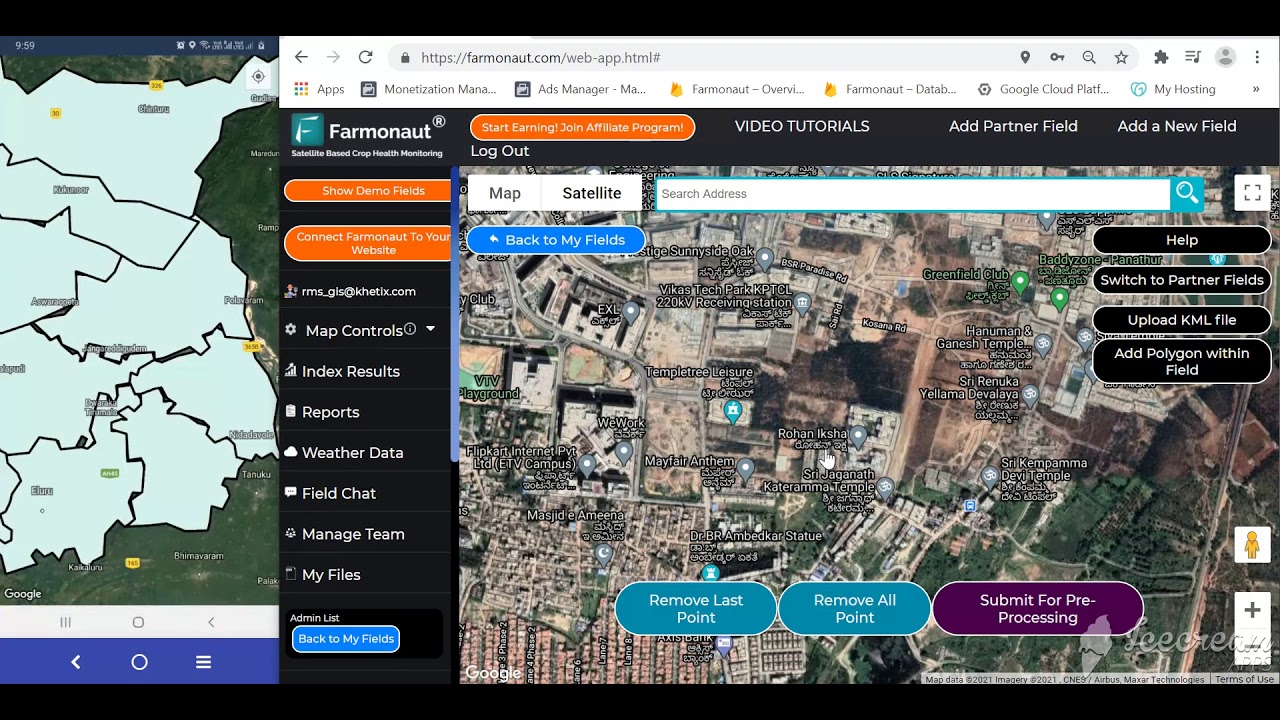
Our mission is to ensure cost-effective satellite solutions are within everyone’s reach, unleashing efficiency and sustainability for the next era of global agriculture.

FAQ: World Largest Tractor & Farm 2026
What is the world largest tractor in 2026?
The world largest tractor by 2026 is the refurbished and reinvented Big Bud 747 with over 1,100 horsepower. However, manufacturers like John Deere, Case IH, and Fendt are releasing advanced models with extensive AI and hybrid tech, featuring 600–700+ horsepower for production farming.
Which is the largest farm in the world by acreage?
The Mudanjiang City Mega Farm in China leads with over 22 million acres under continuous crop and dairy production.
How are the largest dairy and cattle farms revolutionizing food production?
By using robotics, real-time data, genetic selection, and resource recovery systems, the largest dairy farm in the world and largest cattle farm in the world meet protein demand with better environmental and operational efficiency.
How do satellite technology and AI benefit large farms?
Satellite and AI platforms help automate resource management, monitor field variability, forecast yield, and provide compliance-ready environmental reports — all critical for large-scale, sustainable agriculture (read more about Farmonaut’s large-scale farm management system).
Are big tractors and large farms environmentally sustainable?
Sustainability is a growing focus, as top-tier farms implement renewable energy, soil management, smart irrigation, and carbon accounting (see carbon footprint solutions). The goal is to feed larger populations while minimizing environmental impact.
Conclusion
In 2026, the world’s largest tractors and largest farms are indispensable pillars of global agriculture. They stand as testaments to human innovation, technological advancement, and the relentless pursuit of both productivity and sustainability. As the central transformation of agriculture continues, we see the converging impact of mechanization, big data, and environmental responsibility on every continent.
These giants — from tractors like Big Bud 747 and John Deere 9RX to farms such as Mudanjiang and Anna Creek Station — do not just meet the food demands of a growing global population: They illustrate how precision, efficiency, and innovation can coexist with stewardship of our planetary resources.
As technology and sustainability mature hand in hand, and as satellite-driven insights from organizations like Farmonaut become mainstream, the future of farming will continue to break new ground — in scale, efficiency, and responsible management.
The ultimate challenge — and opportunity — is to balance scale with biodiversity and social equity, ensuring large-scale farming evolves responsibly in a changing world.
- 🌎 The world’s largest tractor and largest farm in the world are redefining modern agriculture in 2026.
- 🚀 Advanced mechanization drives efficiency, productivity, and sustainability from field to market.
- 🛰️ Satellite and AI-powered management are now essential for large-scale farm operations.
- 🌱 Environmental responsibility is integral to the business models of tomorrow’s mega-farms.
- 📈 The integration of digital tech ensures future resilience, traceability, and higher returns for food enterprises globally.

 Nivia
Nivia Doodlakine
 Exurbia Geospatial
 FieldZero
 Indico Company
 Kubota
 FFBS
FFBS Jontra
 Kalustyan
 Tucor
Tucor Geno
Geno Hayleys Agriculture
 Linx Agritech
 Adinet
