

Reviewed September 2026 against Statistics Canada, Alberta Agriculture (via Seed Alberta), and the Canadian Agricultural Policy Institute.
Try it: Run your own numbers →
Table of Contents
- Introduction: Alberta Agriculture in Numbers
- Livestock: Cattle Inventory and Calving Season
- Crop Production: Canola, Wheat, and Barley Yields
- Technology and Innovation in Agriculture
- Crop Protection Drones in Alberta
- Precision Agriculture at Farm Level
- Sustainability: Soil, Carbon, and Forestry
- Digital Supply Chain and Traceability
- Alberta Agriculture Data Table
- Cattle Herd Growth Calculator
- Farmonaut’s Role in Alberta Agriculture
- Frequently Asked Questions
- Try it: Run your own numbers
Introduction: Alberta Agriculture in Numbers
Alberta agriculture is Canada’s largest cattle-producing base and one of its top canola and wheat regions, built on roughly 20 million hectares of farmland stretching from the Peace Country to the southern prairies. As of January 1, 2026, Alberta’s cattle inventory stood at 4,850,000 head, up from 4,680,000 head a year earlier — a 3.6% year-over-year increase, according to Statistics Canada’s February 2026 cattle inventory report. On the crop side, Alberta growers brought in a canola crop averaging 45.4 bushels per acre in the 2025 harvest, up from 35.6 bushels per acre in 2024, per Alberta Agriculture data reported by Seed Alberta.
This page pulls together the numbers that actually describe Alberta’s agriculture sector today — livestock inventories, crop yields, and the pace at which farms are adopting sensors, drones, and satellite tools — and shows where to check each figure again once it updates. It also covers two questions people search for alongside Alberta agriculture: when calving season happens, and where crop protection drones fit into the picture.

Livestock: Cattle Inventory and Calving Season
Alberta carries close to 40% of Canada’s beef cow herd, and the province’s January 1, 2026 count of 4,850,000 head of cattle and calves confirms the inventory is expanding again after several years of herd contraction tied to drought and high feed costs. The 170,000-head increase over the January 1, 2025 figure of 4,680,000 head is the clearest signal that ranchers are rebuilding breeding herds, per Statistics Canada’s cattle and calves report. Statistics Canada publishes this inventory twice a year, in February and August, so a reader checking this figure in 2027 should go directly to the statcan.gc.ca daily release archive for the newest count rather than rely on this page.
When Is Calving Season in Alberta?
Most Alberta cow-calf operations target spring calving, concentrated in April and May, timed so calves are on the ground before pasture turnout and before the heaviest labour and feed-cost months are behind the herd. Some operations run fall calving (typically September–October) or split their herd across both windows to spread labour and market timing risk, but Alberta’s data does not publish an official province-wide breakdown of what share of operations use each system — that detail sits at the individual ranch level and is set by each operation’s own feed inventory, pasture readiness, and marketing plan rather than by a provincial calendar.
Crop Production: Canola, Wheat, and Barley Yields
Alberta’s 2025 harvest set new marks on two of its three major field crops. Canola averaged 45.4 bushels per acre across the province, translating to 6.3 million tonnes of production, a jump from the 2024 crop’s 35.6 bushels per acre and 5.1 million tonnes, according to Alberta Agriculture figures published by Seed Alberta. That’s roughly a 10-bushel, 27% per-acre yield gain in a single season — the kind of swing that makes yield monitoring and in-season crop-health data valuable rather than optional for input planning.
The 2024 season, documented by Statistics Canada’s principal field crops release, also recorded Alberta spring wheat at 41.8 bushels per acre and barley at 55.6 bushels per acre, per Alberta’s 2024 farming year-in-review. Statistics Canada’s principal field crops survey updates through the growing season with a final release in December; for the current season’s numbers, check the Statistics Canada daily quotidien archive under “Production of principal field crops.”

Technology and Innovation in Agriculture
Digital tool adoption on Canadian farms now tracks closely with farm size. Among large operations of 5,000 acres or more, 81% report using at least one digital agriculture tool — yield monitors, guidance systems, satellite imagery, or farm management software — according to the Canadian Agricultural Policy Institute’s 2025 digital agriculture survey. That figure is Canada-wide rather than Alberta-specific, since CAPI’s survey does not break adoption out by province, but Alberta’s grain and oilseed operations — many of them in the 5,000-acre-plus bracket given the province’s average farm consolidation trend — sit squarely inside that large-farm segment.
CAPI runs this survey annually with new results typically released mid-year, so a reader wanting the newest adoption percentage should search “CAPI digital agriculture survey” for the latest edition rather than assume the 81% figure holds indefinitely. What the number establishes is a threshold: technology adoption in Canadian field agriculture is no longer a leading-edge minority behaviour on large operations — it’s the default, and the gap that remains is concentrated on smaller and mid-sized farms where per-acre technology cost is harder to amortize.
Crop Protection Drones in Alberta
The market for agricultural drone applications in Canada — spraying, scouting, and crop-protection flights — was valued at $444.99 million USD in 2024 and is projected to reach $1.564 billion USD by 2035, according to Market Research Future’s Canada agricultural drones market report. That’s a projected 3.5x expansion over roughly a decade, driven largely by spot-spraying for weeds and targeted fungicide application replacing blanket field passes. No Alberta-specific drone penetration figure is published separately from the national numbers, so a grower wanting a provincial adoption rate should check with an equipment dealer or Alberta Agriculture’s crop technology extension staff directly, since drone regulations (Transport Canada RPAS certification) and dealer network coverage vary by region within the province.
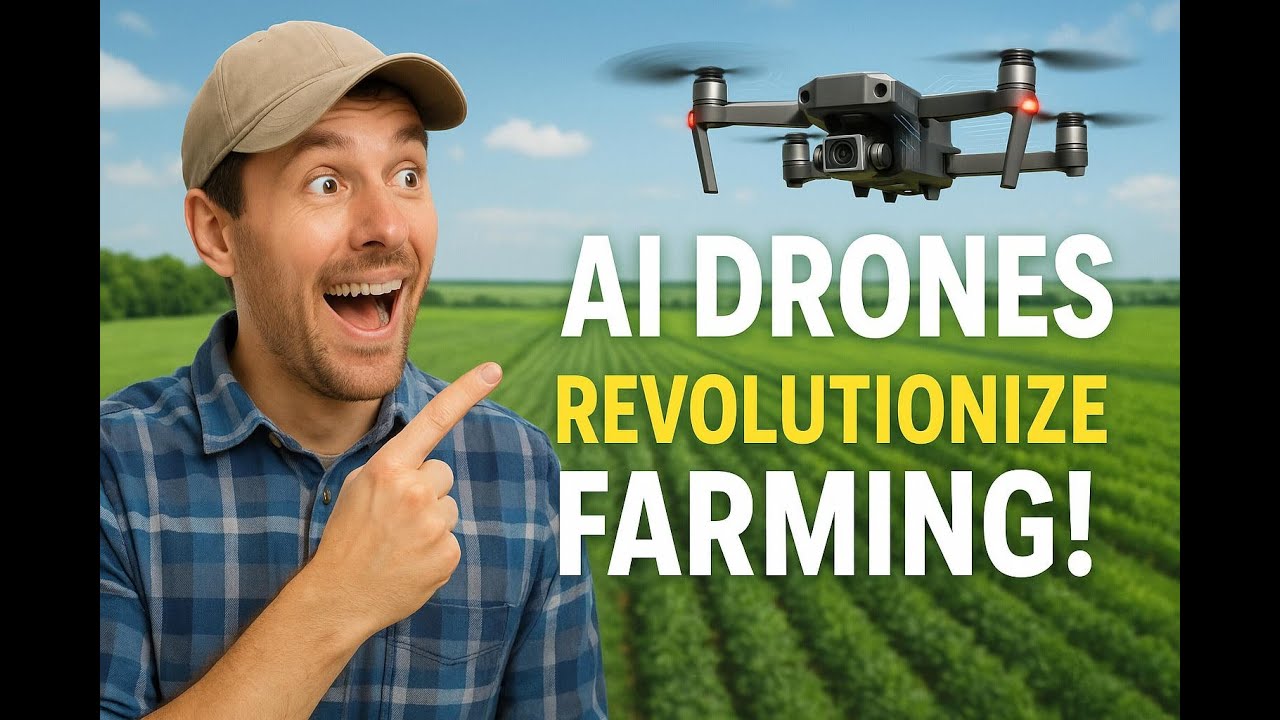
In practice, Alberta’s crop protection drone use clusters around two jobs: scouting for weed patches and disease pressure that trigger a spot-spray decision, and applying fungicide or desiccant in fields with standing water, steep topography, or shelterbelts that make ground rigs or aerial fixed-wing application impractical.
Precision Agriculture at Farm Level
Precision agriculture on Alberta farms combines three data layers: satellite or drone imagery for crop health and stand assessment, in-field soil and moisture sensors, and variable-rate equipment that acts on that data at the pass level. The value of this stack shows up most clearly in seasons like 2025, where canola yields jumped from 35.6 to 45.4 bushels per acre year-over-year — a swing large enough that in-season monitoring which flags stress zones early, rather than waiting for combine yield maps after the fact, materially changes what a grower can still do about a struggling zone.
- Satellite crop-health monitoring flags NDVI stress zones during the growing season, while there’s still time to act on fertility or irrigation.
- Soil moisture sensors and satellite-derived moisture layers guide irrigation timing on Alberta’s irrigated acres, concentrated in the southern part of the province.
- Variable-rate application equipment uses these data layers to vary seed, fertilizer, and fungicide rates within a single field rather than applying a flat rate.
- Real-time dashboards put satellite and sensor data in front of the farm manager on a phone or tablet during field operations, not after them.
No province-specific variable-rate application adoption figure for Alberta is published separately; industry reporting places Canada-wide VRA adoption in the high teens as a percentage of farms, without a per-province breakdown. Combined with the 81% large-farm digital tool adoption CAPI reported nationally, the pattern is consistent: technology adoption scales with acreage, and the biggest remaining opportunity in Alberta sits with mid-sized operations weighing the per-acre cost of sensors and variable-rate hardware against a yield swing like the one canola growers saw between 2024 and 2025.
Sustainability: Soil, Carbon, and Forestry
Alberta’s mixed crop-livestock base makes soil health and carbon accounting inseparable from production planning. Pulse crops in rotation with canola and wheat fix nitrogen and reduce synthetic fertilizer dependence, while cover cropping and reduced tillage build soil organic matter that shows up in both yield stability and carbon sequestration reporting. For operations that need to document and report on-farm emissions and sequestration — whether for a buyer’s supply-chain requirement or a voluntary carbon market — carbon footprinting and soil health monitoring tools turn field-level satellite and sensor data into a reportable record instead of an estimate.
Alberta’s forestry sector, adjacent to much of the province’s northern and foothills farmland, applies the same remote-sensing logic at a different scale: satellite-based forest inventory for stand health, disease and pest detection before an outbreak spreads, and harvest planning that accounts for both timber yield and replanting obligations.

Digital Supply Chain and Traceability
Downstream of the field, Alberta’s beef and grain sectors increasingly rely on digital traceability to meet buyer and export-market documentation requirements. Blockchain-based product traceability lets a processor or exporter show a verifiable chain of custody from field or ranch to final buyer, which matters for both premium markets and regulatory compliance. Fleet and equipment logistics carry a parallel digital thread: fleet management platforms track machinery utilization and movement across large Alberta operations where a single farm may run equipment across dozens of non-contiguous quarter-sections.
Alberta Agriculture Data Table
| Metric | 2024/2025 | 2025/2026 | Change | Source |
|---|---|---|---|---|
| Alberta cattle inventory (Jan 1) | 4,680,000 head (2025) | 4,850,000 head (2026) | +3.6% | Statistics Canada |
| Alberta canola yield | 35.6 bu/acre (2024) | 45.4 bu/acre (2025) | +27.5% | Alberta Agriculture / Seed Alberta |
| Alberta canola production | 5.1 million tonnes (2024) | 6.3 million tonnes (2025) | +23.5% | Statistics Canada / Seed Alberta |
| Alberta spring wheat yield | 41.8 bu/acre (2024) | Not yet published | — | Alberta Agriculture |
| Alberta barley yield | 55.6 bu/acre (2024) | Not yet published | — | Alberta Agriculture |
| Canada agri-drone market size | $444.99M USD (2024) | $1.564B USD (2035 projection) | +251% by 2035 | Market Research Future |
| Large-farm (5,000+ acres) digital tool adoption | 81% (2024, Canada-wide) | — | CAPI | |



Cattle Herd Growth Calculator
Alberta’s herd grew 3.6% between January 2025 and January 2026 — use the calculator below to project what a similar or different growth rate does to your own herd size over the next few years.
Run your own numbers
Assumes a constant compound annual growth rate with no culling shocks, disease events, or market-driven herd liquidation factored in. Alberta's actual year-over-year rate (3.6%, Jan 2025–Jan 2026) is the default; replace it with your own operation's historical rate for a more relevant projection.
Farmonaut's Role in Alberta Agriculture
Farmonaut provides satellite-based crop health monitoring, AI advisory, carbon accounting, and traceability tools built for the kind of large-acreage, mixed crop-livestock operations common across Alberta. Our platforms turn the same satellite imagery layers used in national crop yield estimation into field-level, farm-specific decisions.
- 🛰️ Satellite-based crop health monitoring: Flags stress zones during the growing season for canola, wheat, and barley fields.
- 🌱 JEEVN AI advisory system: Delivers data-driven recommendations on crop and soil management.
- ♻️ Environmental impact monitoring: Tracks and reports emissions for compliance and sustainability. Explore carbon footprinting solutions
- 🔗 Blockchain traceability: Documents the supply chain from field or ranch to buyer. Trace your product's journey
- 🚜 Fleet and resource management: Tracks machinery and logistics across dispersed land holdings. Fleet platform details

API Access: Integrate satellite data directly into your farm or agri-business management systems with our open API. For developers, see our detailed documentation.


Frequently Asked Questions: Alberta Agriculture
1. How many cattle does Alberta have?
Answer: Alberta's cattle and calves inventory was 4,850,000 head as of January 1, 2026, up 3.6% from 4,680,000 head on January 1, 2025, per Statistics Canada. Statistics Canada updates this figure every February and August — check the statcan.gc.ca daily release for the current count.
2. When is calving season in Alberta?
Answer: Most Alberta cow-calf operations calve in spring, concentrated in April and May, ahead of pasture turnout. Some run fall calving (September–October) or split systems; no province-wide breakdown of which system predominates is published, since the choice is set at the individual operation level.
3. What was Alberta's canola yield?
Answer: Alberta's 2025 canola harvest averaged 45.4 bushels per acre for 6.3 million tonnes of total production, up from 35.6 bushels per acre and 5.1 million tonnes in 2024, according to Alberta Agriculture data via Seed Alberta and Statistics Canada.
4. How widely is technology and innovation in agriculture adopted in Canada?
Answer: 81% of Canadian farms of 5,000 acres or more used at least one digital agriculture tool as of the Canadian Agricultural Policy Institute's 2025 survey. No Alberta-specific figure is published separately; CAPI reissues this survey annually.
5. Are crop protection drones used in Alberta?
Answer: Yes, mainly for scouting and spot-spraying weeds, fungicide, and desiccant. Canada's agricultural drone market was valued at $444.99 million USD in 2024, projected to reach $1.564 billion USD by 2035 per Market Research Future. No Alberta-specific adoption percentage is published; check with a Transport Canada-certified RPAS operator or equipment dealer for local availability.
6. What role does Farmonaut play in Alberta agriculture?
Answer: Farmonaut provides satellite-based crop monitoring, AI advisory, carbon accounting, and traceability tools for Alberta's grain, oilseed, and livestock operations, accessible via web and mobile apps.
7. Where can I try Farmonaut's tools?
Answer: Visit our web app or download our mobile apps for direct access to real-time monitoring, advisory, and traceability solutions built for Alberta and beyond.
Conclusion: Alberta's Agriculture Sector, Tracked
Alberta agriculture in 2026 is a growing cattle herd (4,850,000 head, +3.6% year-over-year), a canola crop that jumped 27.5% in per-acre yield in a single season, and a technology adoption curve that's already the default on large operations (81% digital tool use nationally) but still has room to run on mid-sized farms. Every figure on this page carries a source and a refresh path — Statistics Canada's cattle count reissues every February and August, crop yields update through December, and CAPI's digital agriculture survey lands mid-year — so the numbers here are a starting point to verify, not a fixed snapshot.
For details on Alberta's sustainable and innovative farming initiatives, see our companion page on the province's agri-tech programmes.
Ready to bring satellite-driven data to your Alberta farm or ranch? Explore our platform and subscription options above.

 Godrej Agrovet
 Hayleys Agriculture
 Linx Agritech
 Adinet
 Save Your Soils
 GalaxEye Space
 Grandstream Algérie
 XOS Realty
 Geospatial Lab Africa
 Agro La Gándara
 HIPSAC
 ZOL Zimbabwe
 Juligerm
 AdBio
AdBio MISE Maroc
 NWNS
NWNS Red August Group
 Farm Inc
 WeMe Global
 Agrotoken
 Blue BearX
 Insignito
 DnCubed
 Indosistim Teknologi
 Liquify Digital
 CU Foods
 BeyondTech Global
 Rouge VC
 AgroRisk
 Oath Inc
 Esri North East Africa
 MDCV UK
 Etech Consulting Madagascar
 Vestlandsforsking
 WB Dev
 Sama Premium
 Tres Valles
 Blickwinkel
 Agricultural Credit Policy Council
 eKGIS
eKGIS Mostas Tech
 Andex
Andex Deluxe Conseil
 WICO
WICO Chimera Innovation
 SkyHarvest
 Teledarbas
 Exurbia Geospatial
 FieldZero
