

Canada · Project comparison
Gold Mine Water Treatment in Canada: 6 Projects Compared
Canadian gold mines must meet federal limits such as 0.30 mg/L arsenic and 0.50 mg/L cyanide (monthly mean, existing mines). Six projects compared: Giant, Meliadine, Brucejack, Canadian Malartic, Agnico Eagle’s Meadowbank, LaRonde and Macassa, and Eagle Gold.
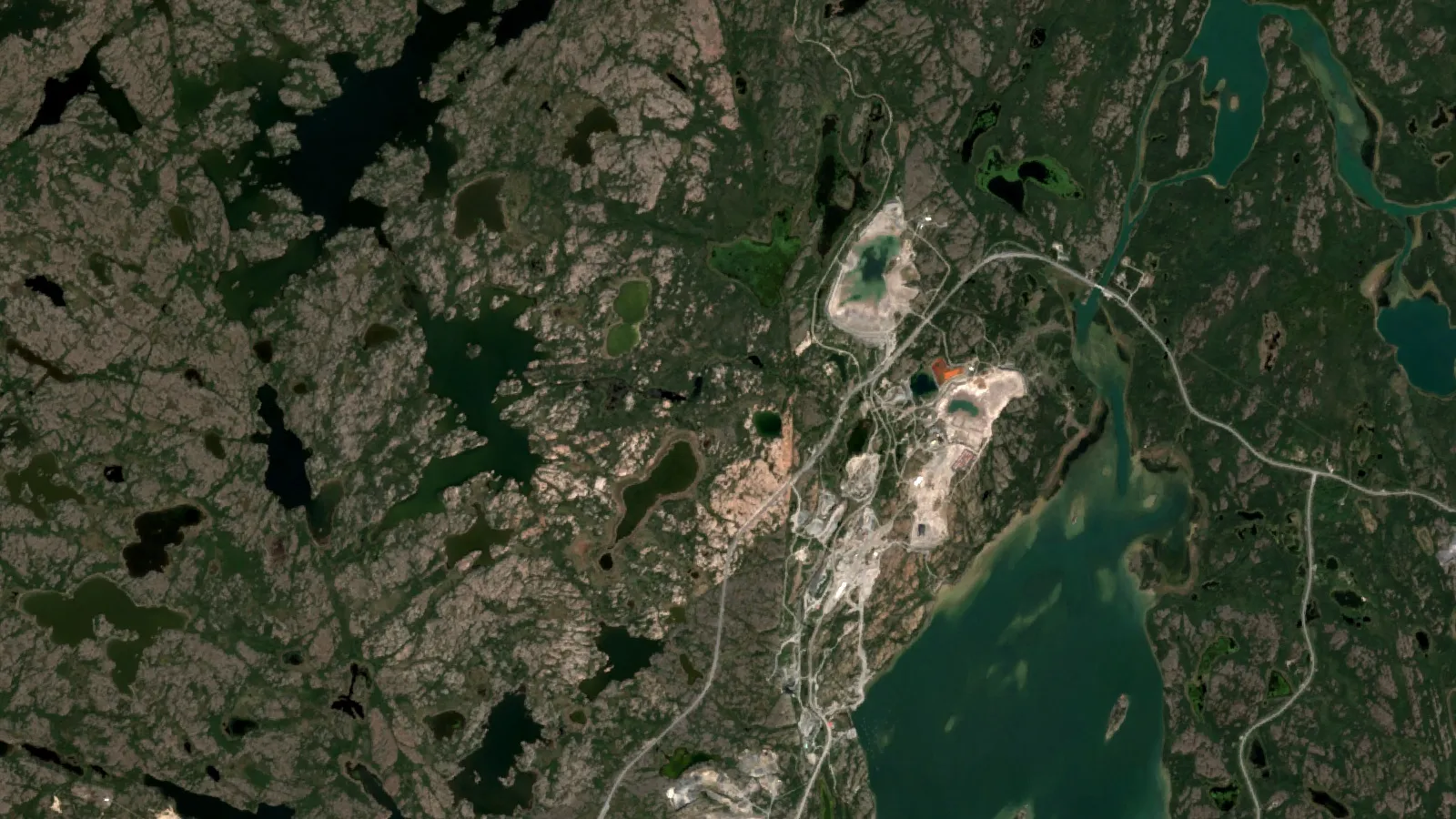
Key takeaways
- Existing mines may discharge up to 0.30 mg/L arsenic and 0.50 mg/L cyanide (monthly mean); mines first subject on or after 1 June 2021 face 0.10 mg/L arsenic (federal effluent regulations, Schedule 4).
- Environment and Climate Change Canada counted 136 effluent exceedances across 151 metal and diamond mines in 2023, down from a peak of 240 in 2019.
- Meliadine runs three streams: an effluent plant set to 18,000 m3/day, a 1,600 m3/day saline plant and a reverse osmosis plant (Agnico Eagle, 2024 plan).
- Giant Mine’s arsenic cleanup is costed at about C$4.4 billion and needs water treatment in perpetuity (CIRNAC; The Northern Miner, 2025).
- Agnico Eagle reused or recycled 74 percent of its water in 2025, up from 68 percent in 2024 (sustainability report).
In this article
- Gold mine water treatment projects in Canada compared
- How the six projects were chosen
- The six projects, one by one
- What Canadian rules require gold mines to discharge
- How well do mines meet the limits?
- How gold mines clean cyanide, metals and ammonia
- Water reuse at gold mines
- What mine water treatment costs, and how to estimate it
- What to check before choosing a treatment approach
- Where satellite data helps with mine water
- Frequently asked questions
Canadian gold mines must clean their wastewater to the federal Metal and Diamond Mining Effluent Regulations, which cap arsenic, copper, cyanide, lead, nickel, zinc and suspended solids in every discharge. This page compares six Canadian projects, from the Giant Mine cleanup in the Northwest Territories to Agnico Eagle’s Arctic, Quebec and Ontario operations, and shows what each one treats, how, and at what scale.
The six projects differ a lot. Some treat a few thousand cubic metres a day of acidic or metal-rich mine water, one handles salty water from deep underground, and one is a legacy site where treatment must run for ever. The sections below give the numbers each operator, regulator or equipment supplier has published, with dates.
Gold mine water treatment projects in Canada compared
The table lists the sites in the order used on this page: legacy cleanup first, then operating mines, then an upset and its response. It is a comparison, not a ranking. Capacity figures are design or reported values from the sources named, not measured performance.
| Project | Where | Main water problem | Treatment as published | Scale figure (source) |
|---|---|---|---|---|
| Giant Mine | Yellowknife, NWT | Arsenic in underground mine water | Effluent plant with settling and polishing ponds; new year-round plant planned | 237,000 t of stored arsenic trioxide (CIRNAC) |
| Meliadine | Nunavut | Suspended solids, ammonia, salinity | Effluent plant, saline plant, reverse osmosis | Effluent plant set to 18,000 m3/day (Agnico Eagle) |
| Brucejack | British Columbia | Metals and solids from a high-grade underground mine | Clarification then disc filtration | Designed for up to 10,000 m3/day (Veolia, 2016) |
| Canadian Malartic | Quebec | Solids and metals from open-pit water | Six modular plants with coagulant and flocculant dosing | Average 420 m3/hour (supplier ASDR) |
| Agnico Eagle: Meadowbank, LaRonde, Macassa | Nunavut, Quebec, Ontario | Closure risk, mine water compliance | Passive in-pit treatment, biological plant, MBBR pilot | No capacities published (Agnico Eagle, 2025) |
| Eagle Gold | Yukon | Cyanide-bearing solution after a heap leach failure | Capture, storage and treatment by the receiver | At least 280,000 m3 of solution escaped containment (Northern Miner) |
How the six projects were chosen
Each project is a Canadian gold operation or former gold mine where an operator, a regulator or an equipment supplier has published design or operating details that can be checked. Projects without public details are left out, so this is a sample, not a list of every treatment plant in the country. Vendor pages are marked as vendor claims. Where a source gives only a photo caption or a one-line mention, the entry says so.
Gold is mined across the country, but most of the plants below sit in three regions: the Abitibi belt of Ontario and Quebec (see our guide to the Abitibi greenstone belt), the Arctic and subarctic territories, and the British Columbia Golden Triangle.
The six projects, one by one
1. Giant Mine, Northwest Territories: the legacy case
Best for: seeing what treatment at a closed site looks like when it has no end date.
Giant produced about 7.6 million ounces of gold between 1948 and 2004, The Northern Miner reported in July 2025. Roasting the ore left about 237,000 tonnes of arsenic trioxide dust, which was stored in underground chambers and stopes, according to Crown-Indigenous Relations and Northern Affairs Canada (CIRNAC).
The project collects all water that enters the underground workings and pumps it to the Northwest Pond. During spring and summer the water goes to an effluent treatment plant, then to a settling pond and a polishing pond, and is discharged seasonally to Baker Creek. The plant must meet both the site water licence and the federal effluent regulations, CIRNAC explains.
A new plant is planned to run all year, draw water straight from the underground pool and treat arsenic to the Canadian drinking water guideline of 10 micrograms per litre. CIRNAC says it will operate in perpetuity. The project’s fall 2025 update reported construction progress on the plant during summer 2025, and the existing plant and ponds continue to treat water until it takes over.
- Pros: a drinking-water target for arsenic; year-round operation; a public record of each step.
- Cons: the arsenic freeze, expected to run until 2038, is part of a plan costed at about C$4.4 billion, and treatment continues after that.
2. Meliadine, Nunavut: three plants for three kinds of water
Best for: an Arctic site that has to treat fresh, salty and reverse-osmosis brine streams.
The mine’s water management plan (version 14, 2024) lists a reverse osmosis plant, an effluent water treatment plant and a saline effluent treatment plant. The effluent plant was designed for at least 12,000 m3/day, its equipment can run to 28,000 m3/day, and it is set to a maximum of 18,000 m3/day so the discharge pipe is not over-pressured. It targets a maximum of 15 mg/L of suspended solids before water goes to the diffuser in Meliadine Lake, the plan states.
Saline water from the underground mine takes a different route. The saline plant was designed for 1,600 m3/day: a clarifier removes solids, break-point chlorination removes ammonia that the plan links to blasting explosives, and activated carbon strips excess chlorine. The treated water is trucked to Itivia and released through a diffuser in Melvin Bay. The March 2024 plan (version 14) expected a replacement saline plant to be commissioned in 2025, with discharge to follow construction of a waterline.
The trucking is a logistics task of its own. In 2020 the operator reported a rise from 32 to 88 one-way truck trips a day to carry saline water to Itivia, and proposed a 34 km pipeline to replace them, according to Agnico Eagle Nunavut. Operators track such haulage with fleet management tools.
- Pros: every stream has its own plant; design ranges are published.
- Cons: in the March 2024 plan, salty discharge still depended on trucks until the proposed pipeline is built.
3. Brucejack, British Columbia: clarification and disc filters
Best for: a compact two-stage design for an underground mine.
In October 2016 Veolia announced it would supply the permanent effluent plant, built to treat up to 10,000 m3/day. The first step is Actiflo clarification for primary metals removal, followed by a disc filter to polish the water, Veolia said at the time. Veolia had run a mobile Actiflo unit since 2014 to dewater the exploration workings, which gave the designers seasonal data.
Brucejack began commercial production in July 2017 under Pretium Resources. Newcrest completed its purchase of Pretium in 2022, Global Mining Review reported, and Newmont’s annual report for 2025 lists Brucejack among its operations.
- Pros: compact two-stage train; operating data from the exploration years fed the design.
- Cons: the 10,000 m3/day figure is a 2016 design value, not a reported flow.
4. Canadian Malartic, Quebec: modular plants that stayed
Best for: an open-pit mine that needs treatment that can be moved, added to and run remotely.
The supplier ASDR says it built six modular plants in 20-foot containers, with caustic soda, coagulant and flocculant dosing, to meet Quebec’s Directive 019 on mining effluent. They were meant for the construction phase but stayed for operations and have run since 2018 at an average of 420 m3/hour, which is about 10,000 m3/day. The contaminants listed are suspended solids, iron, zinc, lead, copper and nickel. This is a supplier case study, so treat the performance claim as the supplier’s own. For the ownership and claims story of the district, read our guide to gold mining at Malartic.
- Pros: containers can be added or moved as the pit changes; remote telemetry cuts staffing.
- Cons: independent discharge data are not part of the case study.
5. Other Agnico Eagle sites: Meadowbank, LaRonde and Macassa
Best for: seeing three different approaches inside one operator.
Agnico Eagle’s 2025 sustainability report describes three Canadian approaches. At Meadowbank in Nunavut it progressed in-pit passive water treatment to reduce water quality risks at closure. At LaRonde in Quebec it operates a biological water treatment plant. At Macassa in Ontario it commissioned and piloted a small-scale moving bed biofilm reactor (MBBR), a tank where bacteria grow on small plastic carriers, to support regulatory compliance. The report also lists metal removal, cyanide destruction and filtration among the processes used across its sites, and notes that permitting and commissioning a plant can take longer than the water balance allows. It gives no capacities for these three sites.
6. Eagle Gold, Yukon: what a treatment system has to absorb after an upset
Best for: understanding why storage and spare treatment capacity matter.
On 24 June 2024 the heap leach pad at Victoria Gold’s Eagle mine collapsed and at least 280,000 m3 of cyanide-containing solution went beyond containment. The receiver, PwC, then had to boost storage, speed up water treatment and secure new financing, The Northern Miner reported in June 2025. The Yukon government had authorised C$220 million in lending to the receiver by April 2025, and the minister said contaminated groundwater was being pumped, intercepted and treated, with cyanide and mercury levels on a downward trend in June 2025. PwC announced that month that it was preparing to sell the mine; the sale outcome is for the receiver and the courts to announce.
- Lesson: within a year the receiver had to boost storage and speed up water treatment. Check pond volumes and spare treatment rate against a wet-year water balance, not an average year.
What Canadian rules require gold mines to discharge
Under the federal regulations, effluent from a metal mine may not exceed the monthly mean, composite-sample and grab-sample limits in Schedule 4, and its pH must stay between 6.0 and 9.5. The monthly mean limits are in mg/L for arsenic, copper, cyanide, lead, nickel, zinc and suspended solids, plus radium-226 in becquerels per litre and un-ionized ammonia, the regulations show.
Chart
Monthly mean discharge limits, two tables
Milligrams per litre (total values)
There are two sets of limits. The stricter Table 1 applies to mines that became subject to the regulations on or after 1 June 2021, or recognised closed mines that return to commercial operation after that date. Table 2 applies to every other mine, section 4 of the regulations says. Owners may not dilute effluent with other water to meet the limits. They may, under section 13, reduce testing to once a quarter for a substance whose monthly mean stays under 10 percent of the limit for 12 months in a row.
Toxicity testing sits on top of the chemical limits. Mines run acute lethality tests on fish and on small invertebrates, and a sample fails if more than half the test animals die.
The International Cyanide Management Code is a separate, voluntary program for gold and silver producers. Five Canadian mines were certified in 2018, according to Environment and Climate Change Canada.
How well do mines meet the limits?
Environment and Climate Change Canada publishes an annual status report. For 2023 it counted 151 mines subject to the regulations, 136 exceedances of a limit or the pH range, and four mines that submitted no monitoring reports. These figures cover all metal and diamond mines, not only gold, the 2023 report shows.
Chart
Effluent exceedances reported by Canadian mines
All metal and diamond mines, count per year
The count rose from 49 in 2015 to a peak of 240 in 2019, and has stayed between 136 and 188 since 2020. In 2023 low pH and suspended solids caused the most exceedances. Cyanide and radium-226 had none. The same report lists 21 failed fish tests out of 1,417 and 78 failed invertebrate tests out of 1,894, mostly in Quebec.
Four mines submitted no monitoring reports, or had quarterly reports missing, in 2023, so their results may be absent from these counts.
▶ A clay-animation overview of the seven main environmental impacts of mining, including effects on water. · 2:31
How gold mines clean cyanide, metals and ammonia
Cyanide leaching is the main way gold is recovered, which is why gold sites carry a cyanide limit that most base-metal mines do not. In 2016, 42 gold mines and 10 other metal mines reported using or releasing cyanide, according to the same federal risk assessment. Mines that use cyanide often destroy it in their effluent with the SO2-air or hydrogen peroxide process, and some rely only on natural breakdown, often as a final polishing step.
Chart
What exceeded the limits in 2023
Exceedances by parameter, all metal and diamond mines
The federal Environmental Code of Practice for metal mines says sunlight in summer can break down cyanide in tailings ponds, and recommends sizing the pond so the liquid stays long enough for that to happen even in spring runoff, chapter 4 of the Code explains.
| Problem | Common method | Canadian example from this page |
|---|---|---|
| Suspended solids and metals | Coagulant and flocculant dosing, clarification, filtration | Brucejack, Canadian Malartic, Meliadine effluent plant |
| Cyanide | Natural breakdown in ponds, SO2-air or hydrogen peroxide destruction | Federal guidance for gold mills |
| Ammonia from explosives | Break-point chlorination, then carbon filters | Meliadine saline plant |
| Arsenic | Treatment plant plus settling and polishing ponds | Giant Mine |
| Salinity | Reverse osmosis, controlled marine discharge | Meliadine |
| Mine water compliance | Biological reactors | LaRonde, Macassa pilot |
| Closure | Passive in-pit treatment, research on freezing methods | Meadowbank; Agnico Eagle research chair at the University of Toronto |
No single method suits every site. A salty stream needs its own plant, as at Meliadine, and ammonia from blasting called for chlorination there. The choice follows the water chemistry, the flow range and the discharge point.
▶ Follows gold from rock to ring, including the step where the metal is dissolved, which is why cyanide control matters. · 5:27
Water reuse at gold mines
Reusing process water cuts how much has to be treated and discharged. Agnico Eagle reports the share of water it reused and recycled across all its sites, including operations in Finland, Mexico and Australia as well as Canada. The share was 74 percent in 2025, from a low of 68 percent in 2024. In 2025 the company used 73.9 million m3 of water in total, withdrew 74.8 million m3 and discharged 42.4 million m3, and it says natural inflows from rain, snowmelt and runoff account for more than 90 percent of the water it manages in Canada and Finland, the 2025 sustainability report states.
Chart
Agnico Eagle: share of water reused and recycled
Per cent of operational water used, all sites
That last point matters for design. Most of a northern mine’s water is weather, so the plant has to be sized for wet years and spring melt. Operators that model the site’s water balance against rainfall records, using long local rainfall records and short-range forecasts such as those in the satellite and weather API, can set pond storage and treatment rates with real numbers rather than averages.
What mine water treatment costs, and how to estimate it
Public cost figures for single plants are rare. What is public shows the scale. The Giant Mine plan is costed at about C$4.4 billion in total, and the 2024-25 budget was C$325.4 million, about seven times that of 2019-20, according to The Northern Miner. These numbers cover the whole remediation, not the plant alone.
Newmont’s annual report for 2025 says water treatment and discharge rules are becoming more demanding and may raise its estimated closure costs. It adds that the Yanacocha closure obligation in Peru includes two new water treatment plants whose final cost is still uncertain. The pattern for gold is the same everywhere: the plant is a one-off cost, but the reagents, power, sludge disposal and monitoring continue for as long as the water needs treatment.
The calculator below turns your own numbers into an annual operating cost, a cost per ounce of gold and a capital cost spread over the plant’s life. Treatment also uses power, so tracking the emissions side with a carbon footprint tool belongs in the same cost review.
Calculator
What does water treatment add per ounce of gold?
Enter your own flow, unit cost, plant capital and gold output.
- Operating cost per year (C$): $4,380,000
- Capital spread per year (C$): $2,666,667
- Operating cost per ounce: 29 C$/oz
- Water treated per year: 2.19 million m3
Example values only, not any mine’s figures. Unit cost per cubic metre is an input: include reagents, power, labour, sludge disposal and monitoring, and use your own quote in Canadian dollars. Capital is spread evenly over plant life with no discounting.
What to check before choosing a treatment approach
- Flow range, not average flow. Meliadine’s effluent plant is designed for 12,000 m3/day yet configured for 18,000 m3/day, with equipment able to reach 28,000. Ask for the wet-year and spring peak.
- Which limit table applies. A mine first subject to the regulations on or after 1 June 2021 faces the stricter Table 1 limits, for example 0.10 mg/L of arsenic instead of 0.30.
- Salinity and the discharge point. Freshwater lakes and the sea need different treatment and different permits.
- Ammonia. Blasting residues can drive ammonia up even when cyanide is under control.
- Storage for upsets. The Eagle Gold response was shaped by how much water could be held while treatment caught up.
- Sludge and closure. Settling ponds hold contaminants in a sludge, and Giant Mine shows treatment can be required for ever.
- Lead time. Agnico Eagle notes that permitting and commissioning a plant can lag the water balance.
Where satellite data helps with mine water
Satellite imagery can show pond extent, vegetation change and bare ground around a site over many seasons. It does not replace sampling or a permit, but it helps map where to place monitoring points before a field campaign. For wider technology trends, see our guide to mining innovations. Teams that want a first satellite look at a licence boundary can request a mineral screening from Farmonaut.
For a closer look at a related question, see our guide: Best Places to Buy Gold in Canada: 6 Options Compared.
Frequently asked questions
How do gold mines treat wastewater in Canada?
Most sites use a series of steps: collect the water in ponds, add coagulant and flocculant so solids settle, filter, and destroy cyanide or remove ammonia where needed. Arctic and underground sites may add reverse osmosis or biological reactors. The treated water must meet the federal effluent regulations and any limits in the site licence.
What are the federal discharge limits for gold mine effluent?
The monthly mean limits for mines under Table 2 are 0.30 mg/L arsenic, 0.30 mg/L copper, 0.50 mg/L cyanide, 0.10 mg/L lead, 0.50 mg/L nickel, 0.50 mg/L zinc and 15 mg/L suspended solids. Newer mines under Table 1 face lower values for arsenic, copper, lead, nickel and zinc. The pH must be between 6.0 and 9.5.
How is cyanide removed from gold mine water?
Mines either let it break down naturally in sunlit ponds or destroy it with the SO2-air or hydrogen peroxide process. Federal guidance describes both methods as common in Canada, and natural breakdown is often a final polishing step.
Do Canadian gold mines recycle their water?
Yes. Agnico Eagle reported reusing or recycling 74 percent of the water it used in 2025 across all its sites, and 78 percent in 2021 and 2022. Other operators publish their own figures.
How much is Canada spending on the Giant Mine cleanup?
The federal plan is costed at about C$4.4 billion, and the project’s own officials told The Northern Miner in 2025 that 2026 is the peak year for activity. Treatment of mine water continues after the main work, which is expected to run until 2038.
What happens to mine water after a mine closes?
The operator must keep it from leaving the site untreated. Options include pumping and treating, as at Giant Mine, and passive systems such as the in-pit treatment Agnico Eagle is developing at Meadowbank. The closure plan sets which applies.
How do Arctic gold mines treat salty water?
Meliadine treats saline underground water in a separate plant for solids and ammonia, then discharges it to the sea through a diffuser, using trucks until a pipeline is built. Fresh contact water goes through a different plant to a lake diffuser.
Who checks that mines meet the limits?
Mine owners must test their effluent and report the results to Environment and Climate Change Canada, which publishes an annual status report. Provinces and territories add their own licences and rules, such as Quebec’s Directive 019.
Does Newmont still own Éléonore and Musselwhite?
No. Newmont announced on 3 March 2025 that it had completed the sale of both Canadian operations, along with Cripple Creek and Victor in Colorado. Brucejack remains in its portfolio.
Can passive treatment replace a treatment plant?
Not in every case. Agnico Eagle describes its passive work at Meadowbank as a way to reduce risks at closure, and says nothing yet about replacing plants during operation.
This page is for information only. It is not legal or engineering advice. Discharge limits, licences and site conditions change: confirm them with the regulator and a qualified water engineer before you rely on them.
Farmonaut mining
Map your mining site from space
Consultants can request a satellite view of a site boundary to plan where ponds, drainage and monitoring points sit.
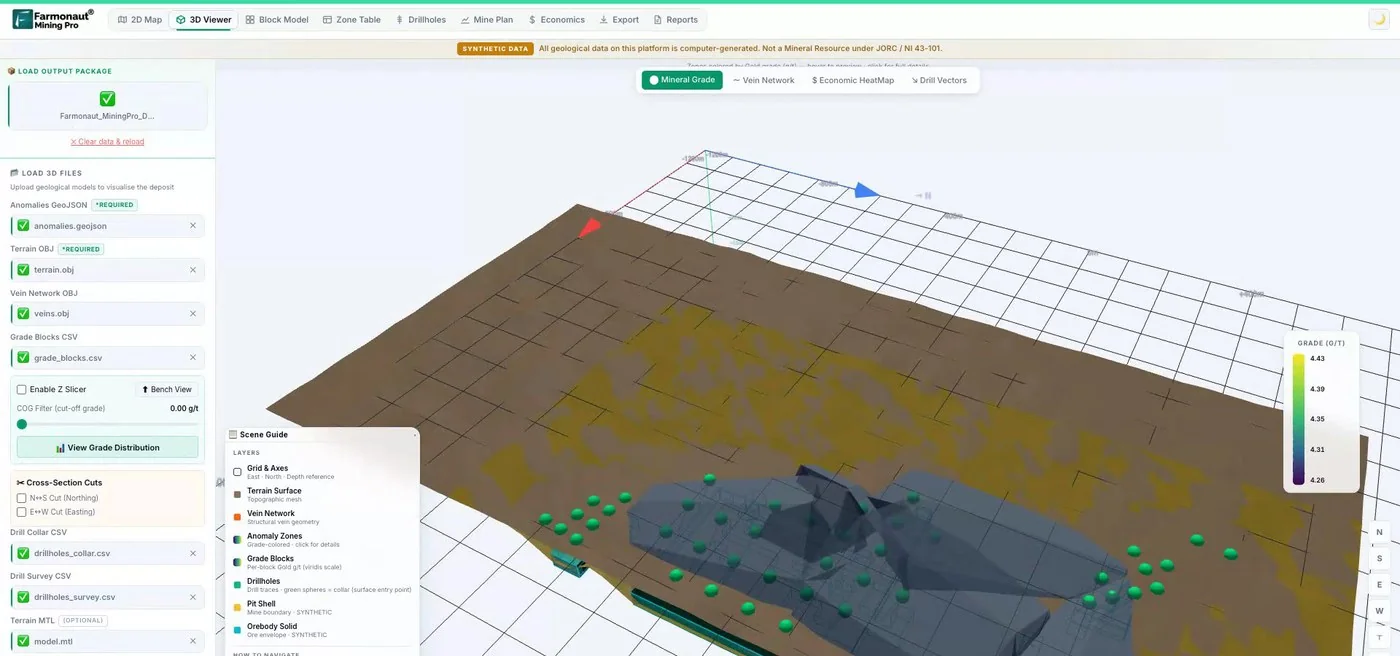
Mining Pro sample view, synthetic data
Keep reading
Sources
- Government of Canada, Metal and Diamond Mining Effluent Regulations, Schedule 4 limits: laws-lois.justice.gc.ca
- Government of Canada, Metal and Diamond Mining Effluent Regulations, sections 1-6: laws-lois.justice.gc.ca
- Environment and Climate Change Canada, status report on mine performance (2023 data): canada.ca
- Environment and Climate Change Canada, risk management approach for cyanides: canada.ca
- Environmental Code of Practice for metal mines, chapter 4: canada.ca
- CIRNAC, Treating the water at Giant Mine: rcaanc-cirnac.gc.ca
- CIRNAC, Arsenic trioxide and underground issues at Giant Mine: cirnac-rcaanc.gc.ca
- CIRNAC, What’s happening at Giant Mine? Fall 2025: rcaanc-cirnac.gc.ca
- The Northern Miner, Canada advances plan to freeze Giant mine’s toxic waste (July 2025): mining.com
- The Northern Miner, PwC to sell disaster-hit Eagle gold mine in Yukon (June 2025): mining.com
- Agnico Eagle Mines, 2025 Sustainability Report: s205.q4cdn.com
- Agnico Eagle, Meliadine Water Management Plan, version 14: aemnunavut.ca
- Agnico Eagle Nunavut, Meliadine water management (2020 projects page): aemnunavut.ca
- Veolia, effluent treatment facility for Brucejack (Water Online, October 2016): wateronline.com
- Global Mining Review, Newcrest completes acquisition of Pretium Resources (2022): globalminingreview.com
- Newmont, Form 10-K for fiscal 2025: s24.q4cdn.com
- Newmont, completes the sale of Musselwhite, Eleonore and CC&V (3 March 2025): minedocs.com
- ASDR Canada, Water treatment, Canadian Malartic Mine (supplier case study): asdr.ca
- CIRNAC, The Remediation Project’s Frozen Block Method: rcaanc-cirnac.gc.ca
- Government of Canada, Metal and Diamond Mining Effluent Regulations, sections 7-16: laws-lois.justice.gc.ca
Discussion
Questions, corrections or field experience? Share them below. First-time comments are reviewed before they appear, and your email is never published.
No comments yet. Be the first to add a question or your experience.

 African Venture Partners Holding
 Congo Mining Solutions
 Mining SARL
 SenGold Invest SAS
 Sania Corporation
 Sean Mining Limited
 NTS Group (Pty) Ltd
 Mine4Africa
 Lithspo Minerals Limited
 Tintina Mining Group
 Dalgety Minerals Pty Ltd
 Vortex Minerals Pty Ltd
 Faith At Work (Pty) Ltd
 Geotech Mining Solutions plc
 Vulcan International Limited
 Kidepo Associates
 GKY Mining
 Alkimy SARL
 Double A Trading
 GemSprout Metals Limited










