

Acid Mine Drainage Chemistry: 7 Sustainable Solutions
Summary: Acid mine drainage chemistry remains at the heart of environmental challenges in mining operations worldwide. This article delves into AMD’s chemical reactions, associated environmental impacts, and introduces seven sustainable solutions shaping mining management in 2025—helping protect water, ecosystems, and communities.
“7 innovative solutions can cut acid mine drainage pollution, protecting over 150,000 km of global waterways annually.”
Table of Contents
- What is Acid Mine Drainage Chemistry?
- Impact and Consequences of AMD in 2025
- Understanding Acid Mine Drainage Chemistry and Processes
- Critical Factors Influencing Acid Mine Drainage
- 7 Sustainable Solutions for AMD Management in Mining
- Comparative Overview of Sustainable Solutions for Acid Mine Drainage (AMD)
- Advanced AMD Monitoring with Farmonaut
- Conclusion: The Future of Acid Mine Drainage Chemistry
- Frequently Asked Questions (FAQs)
- Farmonaut Subscription Plans
What is Acid Mine Drainage Chemistry?
Acid mine drainage chemistry (AMD) is a central environmental concern in mining, particularly in 2025 as the world faces increased mining activities to meet the global demand for minerals and metals. The generation of AMD is driven by the exposure of sulfide minerals—mainly pyrite (FeS₂)—to oxygen and water during mining operations. This exposure initiates complex chemical reactions resulting in the formation of sulfuric acid and the dissolution of hazardous metals, significantly impacting waters, ecosystems, and surrounding communities.
The focus on acid mine drainage chemistry is growing in the mining sector. It provides the foundation for advanced management strategies and supports the development of innovative, sustainable solutions that are critical to mitigating environmental threats.
Acid Mine Drainage Chemistry: The Fundamentals
AMD occurs when pyrite (FeS₂), a common sulfide mineral in many mine wastes, is exposed to air and water. The oxidation of pyrite sets off a chain of chemical reactions that produce sulfuric acid (H₂SO₄) and release dissolved metals into drainage waters:
Overall Simplified Reaction:
4FeS₂ + 15O₂ + 14H₂O → 4Fe(OH)₃ + 8H₂SO₄
- 4FeS₂ (Pyrite): Sulfide mineral found in mine tailings and rock.
- 15O₂ and 14H₂O: Oxygen and water infiltrate mine workings and waste, accelerating reactions.
- 4Fe(OH)₃ (Ferric Hydroxide): Insoluble, orange precipitate—seen as “yellow boy” deposits.
- 8H₂SO₄ (Sulfuric Acid): Acidifies waters, drastically lowering pH (often to values below 3), and enhances heavy metal solubility.
This acidic water forms acid mine drainage, which remains one of the most significant challenges associated with mining activities worldwide.

Impact and Consequences of AMD in 2025
Environmental and Societal Impacts
AMD exerts a detrimental impact on ecosystems, water resources, and local communities. Acidification and metal contamination threaten aquatic biodiversity, and contaminated waters can find their way into human food chains, posing long-term health risks, such as neurological disorders and increased cancer rates. Clean water resources are essential for communities and agriculture—AMD contamination inflates treatment costs for municipal water supplies and often renders waters unfit for human or animal consumption.
In 2025, climate variability introduces further complexities. More extreme rainfall events can increase infiltration, accelerating acid production, while droughts may elevate concentrations of metals and sulfuric acid in tailings or mine waters.
“Neutralizing AMD with limestone can reduce metal contamination in affected streams by up to 90%.”
The consequences of acid mine drainage chemistry are felt across various levels, necessitating the adoption of modern, data-driven monitoring and management practices for risk mitigation and ecological recovery.
AMD: A Significant Global Mining Challenge
- Mining activities in regions like British Columbia, the Canadian Shield, Arizona, Tanzania, Kenya, and Mauritania increasingly generate AMD due to the abundance of pyrite and related sulfide minerals.
- Acidic mine drainage remains a key pollutant in more than 150,000 km of waters globally.
- Strict environmental regulations in 2025 demand continuous monitoring, transparency, and adaptive remediation of AMD in mining operations.
Understanding Acid Mine Drainage Chemistry and Processes
The Chemical Process Behind AMD Formation
The formation of AMD begins with the oxidation of pyrite (FeS₂), whose exposure initiates a series of reactions catalyzed by both abiotic (chemical) and biotic (microbial) factors.
-
Step 1: Pyrite Oxidation
FeS₂ + 7/2 O₂ + H₂O → Fe²⁺ + 2SO₄²⁻ + 2H⁺ -
Step 2: Iron Oxidation
Fe²⁺ + 1/4 O₂ + H⁺ → Fe³⁺ + 1/2 H₂O -
Step 3: Ferric Iron Hydrolysis
Fe³⁺ + 3H₂O → Fe(OH)₃ (Yellow Boy) + 3H⁺
The resulting ferric hydroxide is an orange insoluble precipitate—the classic “yellow boy” seen in affected streams. -
Step 4: Metal Mobilization
Acidic water (low pH) promotes the release of heavy metals including copper, zinc, lead, and arsenic. -
Step 5: Microbial Catalysis
Certain acidophilic bacteria (e.g., Acidithiobacillus ferrooxidans) accelerate these reactions, intensifying acid and metal production.

Critical Factors Influencing Acid Mine Drainage
- Availability of Sulfide Minerals: The higher the abundance of pyrite, the greater the potential for AMD generation.
- Oxygen and Water Infiltration: Physical exposure of sulfide minerals to air and water accelerates oxidation.
- Microbial Activity: Bacteria such as Acidithiobacillus ferrooxidans catalyze pyrite oxidation, dramatically increasing acid and metal production.
- Secondary Mineral Formation: Minerals like jarosite and schwertmannite may temporarily sequester heavy metals but can later release them.
- Climatic Conditions: Changes in rainfall patterns, drought, and temperature in 2025 affect oxidation rates and are critical factors in management strategies.
The pH of drainage drops significantly (often below 3), enhancing the solubility of heavy metals, including iron, copper, lead, zinc, and arsenic. These can leach into water bodies, impacting entire food chains and ecosystems.
For example, copper and zinc are highly toxic to aquatic organisms at trace concentrations, while arsenic and lead are human health hazards.

Acid Mine Drainage Chemistry: 7 Sustainable Solutions
With mining facing mounting scrutiny in 2025 to reduce its environmental footprint, acid mine drainage chemistry is at the forefront of sustainability debates. The following seven solutions combine engineering, chemical, biological, and digital strategies to minimize and manage AMD:
-
Source Isolation and Water Diversion
By physically covering mine wastes or diverting surface water, oxygen and water infiltration are reduced, limiting pyrite exposure and acid generation. Common materials include synthetic liners or indigenous clays, which are impermeable to water and air. This approach is especially effective in regions with seasonal heavy rains (e.g., Kenya, Guyana).
-
Alkaline Addition (Lime/Limestone Treatment)
The classic method for AMD treatment: Adding alkaline materials (usually limestone or lime) neutralizes acidic waters and causes metals to precipitate as hydroxides (‘sludge’). Modern systems are automated to optimize reagent use, lower sludge production, and enable recovery of certain metals from the waste stream.
-
Constructed Wetlands and Passive Treatment Systems
Artificial wetlands, anoxic limestone drains, and anaerobic bioreactors harness microbial activity and plant processes to treat AMD ‘passively.’ Plants and sulfate-reducing bacteria immobilize or transform metals, reduce sulfate to sulfide, and raise pH. This is ideal for low-flow or abandoned sites and is characterized by low operating costs and high sustainability.
-
Chemical Precipitation and Advanced Metals Recovery
Targeted chemical addition (hydroxides, carbonates, sulfides) precipitates specific metals from solution. Modern operations increasingly recover valuable metals (e.g., copper, zinc) from AMD for reuse or sale, complimenting both pollution control and resource recovery.
-
Microbial and Biotechnological Interventions
Emerging in 2025, engineered microbial consortia can be deployed to either accelerate sulfate reduction or promote precious mineral formation (thus trapping metals). Bioremediation is under active research for both preventive and curative purposes.
-
Real-Time Digital Monitoring and Predictive Analytics
AI-driven remote sensing, sensor networks, and IoT technologies model pH, metal concentrations, and oxidation trends—enabling timely interventions in AMD management. Real-time data improves safety, compliance, and effectiveness of mining operations. Farmonaut offers advanced satellite-based environmental monitoring, supporting timely and informed decision-making in mining.
Learn more about Farmonaut’s Carbon Footprinting for mining environmental impact tracking
-
Mine Rehabilitation and Ecological Restoration
Closing the loop on AMD means stabilizing tailings and reclaiming land by restoring vegetation and natural hydrology. Chemical amendments can bind residual metals, while robust planting prevents further surface erosion and sulfide exposure. In post-mining landscapes, this is a priority for social license and biodiversity recovery.
Explore Farmonaut’s Large-scale Farm & Land Management tools for post-mining reclamation





Comparative Overview of Sustainable Solutions for Acid Mine Drainage (AMD)
| Solution | Key Principle/Technology | Estimated Effectiveness (% AMD Reduction) | Implementation Cost (Estimated Range, $/hectare) | Environmental Impact | Suitability (Industrial/Small-Scale) |
|---|---|---|---|---|---|
| Source Isolation & Water Diversion | Impermeable covers, drainage control, water capture/diversion | 65–85% | $10,000–$50,000 | Low impact, prevents new AMD formation | Industrial/Small |
| Alkaline Addition (Lime/Limestone) | Lime, limestone, or soda ash dosing to neutralize acid and precipitate metals | 70–95% | $2,000–$15,000 | High effectiveness, but generates sludge | Mainly Industrial |
| Constructed Wetlands/Passive Systems | Vegetation, anaerobic bacteria, substrate beds, limestone drains | 50–80% | $5,000–$25,000 | Low energy, links restoration to remediation | Both |
| Chemical Precipitation/Metals Recovery | Selective precipitation with hydroxide or sulfide reagents, recovery systems | 60–90% | $8,000–$25,000 | Reduces environmental metal load, enables resource recovery | Industrial |
| Microbial/Biotechnological Interventions | Engineered bacteria, bioreactors, metagenomic consortia | 50–75% | $7,000–$18,000 | Targeted action, eco-friendly | Both |
| Real-Time Monitoring & Analytics | Satellite, IoT sensors, AI-based early warning and prediction | Variable (Prevention: 20–50%) | $3,000–$10,000 | Preventative, enables rapid response, minimal footprint | Industrial/Small |
| Rehabilitation & Ecological Restoration | Regrading, soil amendments, revegetation, water path restoration | 50–80% | $7,000–$30,000 | Restores ecosystem, enhances biodiversity | Both |
Advanced AMD Monitoring with Farmonaut
Satellite, AI, and digital monitoring technologies are changing how mining operations address acid mine drainage chemistry in 2025 and beyond. Real-time data enhances early detection of pH changes, metal mobilization, and ongoing environmental impacts. We at Farmonaut deliver:
- Satellite-Based Monitoring: Multispectral imagery for mine-site, tailings, water, and landform assessment, providing rapid and scalable coverage (Learn more: Carbon Footprinting).
- AI-Driven Insights: Our Jeevn AI system delivers tailored predictions for mine drainage chemistry, risk mapping, and sustainable management planning.
- Resource & Fleet Management: Optimize logistics, machinery use, and reclamation timelines in support of active or post-mining operations (Try the solution: Fleet Management).
- Blockchain Traceability: Ensure transparency across mining supply chains with tamper-proof resource tracking (Product Traceability).
- Real-Time Alerts: Sat-based and IoT sensor data to trigger rapid intervention, regulatory reporting, and stakeholder engagement.
Find out how to integrate Farmonaut’s API into your mining or environmental management platforms to automate AMD monitoring and reporting: Access Farmonaut API | Developer Docs

Key Sustainability Benefits
- Early intervention prevents major acid spills and uncontrolled contamination events.
- Historical tailings and waste are tracked for slow-onset pollution, closing the loop on legacy contamination.
- Secure blockchain traceability builds trust—essential for community relations and regulators in 2025.
- Combining digital monitoring with on-the-ground treatment (lime, wetlands) maximizes effectiveness and minimizes costs.
See how Farmonaut supports environmental data for mining loans and insurance

Mobile-Optimized: AMD Solutions at Your Fingertips
AMD monitoring and reporting are accessible via our web and mobile applications:
- Web portal: View high-resolution maps, alerts, and sustainability analytics
- Android/iOS: Receive push notifications, compliance status, and real-time field data. Get started:
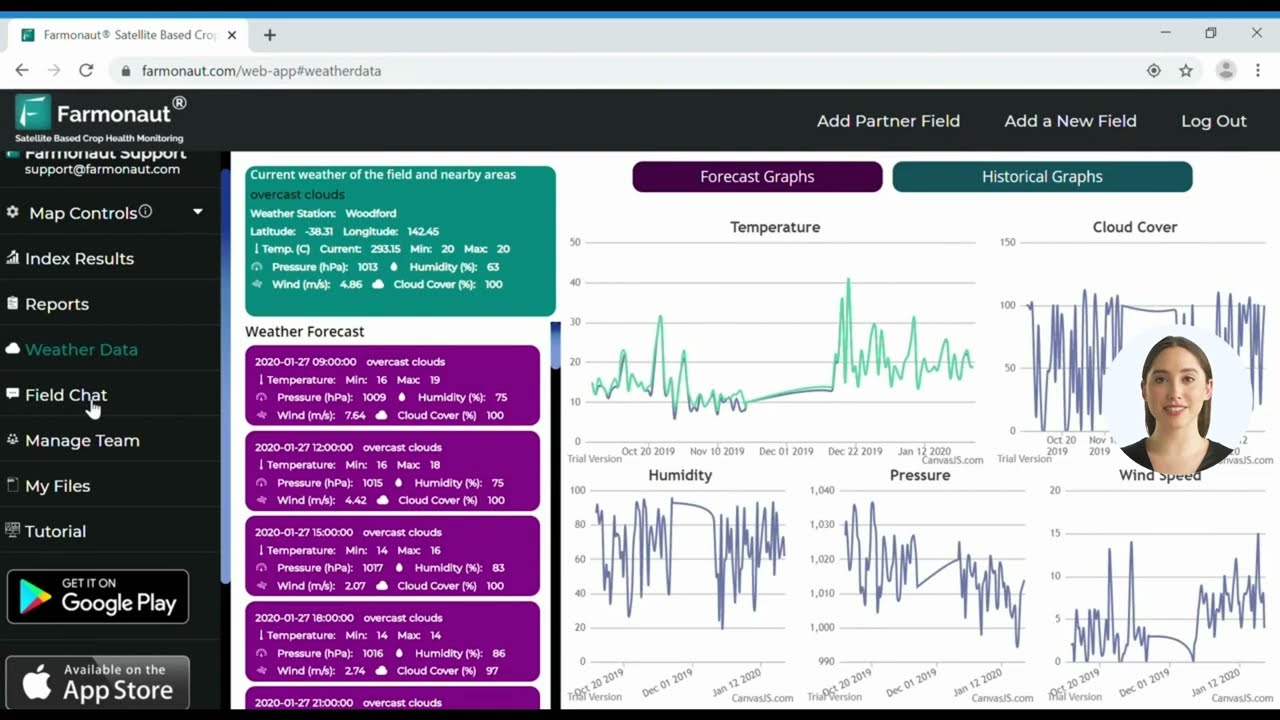
Farmonaut Web App
Conclusion: The Future of Acid Mine Drainage Chemistry
The chemistry of acid mine drainage remains a defining factor in both the environmental performance and sustainability image of mining operations in 2025 and beyond. Understanding the fundamental reactions—from pyrite oxidation and sulfuric acid generation through to metal mobilization—enables us to drive sustainable practices that minimize detrimental impacts on water, ecosystems, and communities.
In the coming decade, integrated management—blending chemical, engineering, biological, and digital monitoring—will be central to meeting global demand for minerals while protecting our planet. Farmonaut’s scalable, satellite-powered solutions empower users to track, report, and mitigate AMD at every stage. With real-time data, blockchain traceability, and AI-based alerts, we believe mining can align productivity with sustainability requirements.
Frequently Asked Questions (FAQs)
1. What is acid mine drainage and why is it a problem?
Acid mine drainage (AMD) is acidic water produced when sulfide minerals (such as pyrite) oxidize upon exposure to oxygen and water during mining. This water leaches heavy metals and acidifies natural water bodies, severely impacting aquatic ecosystems, drinking water sources, and community health.
2. How does limestone neutralize acid mine drainage?
Limestone or lime is added to acidic AMD, raising the pH and causing metals to precipitate out as insoluble hydroxides, forming a manageable sludge and restoring water quality. This process can reduce metal contamination in streams by up to 90%.
3. Can AMD be prevented entirely?
Complete prevention is challenging, but source isolation, water diversion, and effective mine design can reduce AMD generation by 65–85%. Long-term, integrated strategies that incorporate monitoring and ecological restoration are critical.
4. What is the role of microbial activity in AMD?
Acidophilic bacteria (like Acidithiobacillus ferrooxidans) accelerate the oxidation of sulfide minerals, intensifying acid and metal production. Some sustainability strategies make use of engineered microbes to immobilize or transform metals for safer management.
5. How does Farmonaut help with AMD management?
We provide satellite-powered, AI-driven tools for real-time AMD monitoring, carbon footprint assessment, resource tracking, and blockchain traceability. Our solutions help users make informed decisions, comply with regulations, and adopt sustainable mine management strategies. Read more about our Fleet Management and Carbon Footprint modules for mining.
Farmonaut Subscription Plans
Acid mine drainage chemistry will remain central to environmental risk management and the future of mining. Adopting these sustainable solutions is the surest path to protecting our water, resources, ecosystems, and communities for generations to come.
Discussion
Questions, corrections or field experience? Share them below. First-time comments are reviewed before they appear, and your email is never published.
No comments yet. Be the first to add a question or your experience.

 Almosi SARL
 SRK Consulting
 Berks Gold Limited
 Mwerezi Minerals Company Limited
 Mining SARL
 SenGold Invest SAS
 Sean Mining Limited
 NTS Group (Pty) Ltd
 Mine4Africa
 Lithspo Minerals Limited
 Tintina Mining Group
 Dalgety Minerals Pty Ltd
 Vortex Minerals Pty Ltd
 Faith At Work (Pty) Ltd
 Geotech Mining Solutions plc
 Licence holder · Nigeria · Gold + lithium










