

Internet of Things Mining: 7 Key 2025 Transformations
- Introduction: Internet of Things in Mining 2025
- 2025 Mining IoT Trivia
- The Core of Internet of Things Mining
- 7 Key 2025 IoT Transformations in Mining
- Before and After IoT in Mining
- Farmonaut: Satellite-Powered IoT Monitoring
- Challenges, Risks, and the Future of IoT in Mining
- FAQ: Internet of Things Mining 2025
- Conclusion: Transforming Mining with IoT
Introduction: Internet of Things in Mining 2025
The internet of things mining revolution is at the heart of digital transformation in the resource extraction sector. Mining companies worldwide are adopting IoT devices and smart systems to capture, exchange, and analyze unprecedented volumes of operational data. This transformation is enabling smarter, safer, and more sustainable mining operations, essential for an industry grappling with resource depletion, environmental concerns, increasing costs, and stringent productivity demands.
At its core, the internet of things in mining links equipment, sensors, vehicles, and monitoring stations through a vast, interconnected network. Real-time data flows enhance decision-making, safety, and resource management — transforming traditional practices into new standards of operational excellence. As you read on, discover the 7 key transformations defined by IoT in 2025, explore smart solutions like those delivered via platforms such as Farmonaut, and envision the future of mining in a connected world.
With the internet of things mining spearheading this industrial evolution, let’s look at what’s driving these seismic shifts and how your operations can join the future of mining.

The Core of Internet of Things Mining: Systems, Sensors, and Data
What is the Internet of Things in Mining?
The internet of things in mining refers to embedding digital sensors, automation controls, and analytics platforms throughout all layers of mining operations. From underground tunnels to surface fleets, sensors are installed on equipment, machinery, worker gear, vehicles, and monitoring stations to continuously collect and transmit critical data. This vast network enables real-time monitoring and control that were unthinkable in the traditional, analog past of mining.
- Devices & Sensors: Accelerometers, gas detectors, vibration, temperature, and wear sensors are embedded across equipment.
- Operational Data: Information such as load weights, ore processing rates, air quality, and worker location is streamed 24/7 for precise management.
- Smart Systems: Automation platforms, AI-based analytics, and advanced edge computing optimize processes in real time.
This massive transformation makes the mining sector more efficient, smarter, safer, and more sustainable.

7 Key 2025 IoT Transformations in Mining
Let’s break down the seven pillars of change that internet of things mining brings to the industry in 2025 and beyond.
-
1. Predictive Maintenance: Reducing Downtime & Costs
Predictive maintenance is rapidly replacing the old “run-to-failure” or fixed-schedule service models. With IoT sensors continuously monitoring machine vibration, operating temperature, and internal wear, mining companies can predict failures before they happen.
- Continuous Monitoring: IoT sensors keep a vigilant eye on every critical equipment component, from underground drill rigs to surface haul trucks.
- Data Analytics: Real-time analytics analyze subtle changes in sensor readings, pinpointing early warning signs of failures.
- Proactive Approach: Companies schedule maintenance only when needed, reducing unplanned outages and lowering overall expenses.
- Impact: Extends the lifespan of expensive machinery, improves efficiency, and helps meet aggressive production schedules.
By implementing predictive systems, companies see substantial savings—both in maintenance costs and in gains from increased operational availability.
-
2. Enhancing Safety: Protecting Workers in Hazardous Environments
Safety remains a critical concern as mining environments are inherently hazardous due to factors like heavy machinery, explosion risks, and exposure to harmful gases. With IoT, wearable devices track workers’ locations, monitor vital signs, and analyze environmental conditions (air quality, gas levels).
- Wearable Sensors: Detect sudden temperature changes, gas leaks, or unusual health markers in real-time.
- Rapid Alerts: If dangerous situations are detected, alerts are sent to central control centers for a rapid response.
- Location Tracking: Track personnel location underground and on the surface to enhance safety and streamline emergency evacuations.
- Prevention: These systems help prevent accidents by responding quickly to developing problems that traditional systems might miss.
In 2025, IoT-based safety tech is becoming indispensable, helping to reduce incidents and save lives.
-
3. Environmental Sustainability & Compliance
Environmental monitoring is no longer optional. Stringent regulations and stakeholder pressures demand transparency. IoT-enabled sensors in water bodies, tailings dams, and surrounding ecosystems monitor water quality, soil conditions, and emissions around the clock.
- Continuous Data Collection: Real-time environmental data helps companies document compliance and respond to potential violations before fines or disasters occur.
- Dynamic Controls: Automated systems optimize energy usage and reduce waste by adjusting pumps, fans, and ore processing machinery based on real-time resource needs.
- Resource Management: Minimize water and energy use while maximizing operational output and sustainability.
The focus on environmental impact—supported by continuous IoT data and analytics—is driving smarter, greener mining globally.
Related Product: Learn about Farmonaut’s Carbon Footprinting for Mining & Agriculture—a satellite-based solution to monitor, verify, and reduce carbon emissions across sites.
-
4. Operational Efficiency: Optimizing Ore Extraction & Logistics
Smart, connected fleets and process equipment (haul trucks, conveyors, drills) synchronize production flows, reduce bottlenecks, and maximize throughput.
- Machine-to-Machine Communication: Automated vehicles exchange data to coordinate movements across vast mining areas.
- Dynamic Scheduling: Centralized analytics compile sensor data to optimize production schedules and maintenance windows, minimizing idle time.
- Drones & Satellites: Used for surveying and mapping, reducing risk and expense in exploration planning.
Companies deploying these systems realize higher productivity, more accurate resource extraction, and improved use of manpower.
Explore Satellite-Powered Logistics with Farmonaut: Our Fleet & Resource Management Tools reduce operational costs and enhance mining logistics.
-
5. Data-Driven Automation & Decision-Making
The “smart mine” leverages AI, machine learning, and big data analytics to turn raw sensor flows into actionable insights for all levels of decision-making.
- Edge Computing: On-site AI platforms reduce latency, enabling split-second automation for critical operations (e.g., load control, emergency shutdowns).
- Decision Support: Supervisors receive real-time dashboards, enabling faster, more informed reactions to changing conditions.
- Continuous Adaptation: Systems learn from past data, continually refining their efficiency strategies.
This level of integration is nearly impossible to match using only traditional systems.
Farmonaut’s API powers data-driven insights via satellite: Get Started with the Farmonaut API or review our API Developer Docs for Mining Integrations.
-
6. Supply Chain and Traceability: Ensuring Transparency
Modern mining doesn’t end at the pit—traceability throughout the supply chain is crucial for compliance and consumer trust. IoT and blockchain integration can verify every step, from ore extraction to processing and shipment.
- Automated Traceability: IoT devices log shipment, storage, and processing activities, creating an immutable digital trail.
- Blockchain-Protected Data: Ensures records cannot be tampered with, reducing fraud and boosting transparency.
- Regulatory Compliance: Meet international reporting standards and provide independently confirmable records for stakeholders.
See Farmonaut’s Blockchain Traceability Solution: Product Traceability for Mining & Agriculture
-
7. Workforce Empowerment & Remote Operations
IoT not only protects workers but enables them—by facilitating remote work, reducing risky exposure, and ensuring smart, data-driven routines.
- Remote Monitoring: Supervisors can oversee site operations from anywhere, thanks to real-time data visualization apps.
- Wearable Tech: Beyond tracking, wearables can offer on-the-spot training, feedback, and process guidance.
- Reduced On-Site Headcount: Autonomous vehicles and remote-controlled equipment reduce the need for workers in dangerous zones.
The empowered workforce of 2025 leverages technology to boost safety, productivity, and work-life balance.


Where IoT already runs at scale in mining
The clearest proof that IoT works in mining comes from autonomous haulage and rail, where every vehicle is a connected sensor platform reporting position, speed, load and machine health to a control system.
- Komatsu FrontRunner. Komatsu’s autonomous haulage system has been in operation for more than 17 years. As of October 2025 the company reported more than 900 autonomous trucks commissioned and more than 10 billion tons moved (Komatsu).
- Rio Tinto AutoHaul. Rio Tinto’s autonomous heavy-haul rail network in Western Australia’s Pilbara became fully operational in June 2019. Each train has three locomotives, carries about 28,000 tonnes of iron ore over more than 280 km, and is supervised from the Operations Centre in Perth, about 1,500 km away (Rio Tinto).
Both systems depend on the same building blocks described above: sensors on every machine, a reliable wireless network across the site, and a remote operations centre that turns the data into decisions. Underground, the same pattern appears in gas monitoring, personnel tracking and ventilation control, where fans are run according to measured air quality and where people and machines are working.
Before and After IoT in Mining
In practice the shift is from manual checks, periodic audits and run-to-failure servicing to continuous sensor data, predictive maintenance and automated reporting. Measured results vary by site, equipment and baseline, so treat any single headline percentage with caution.



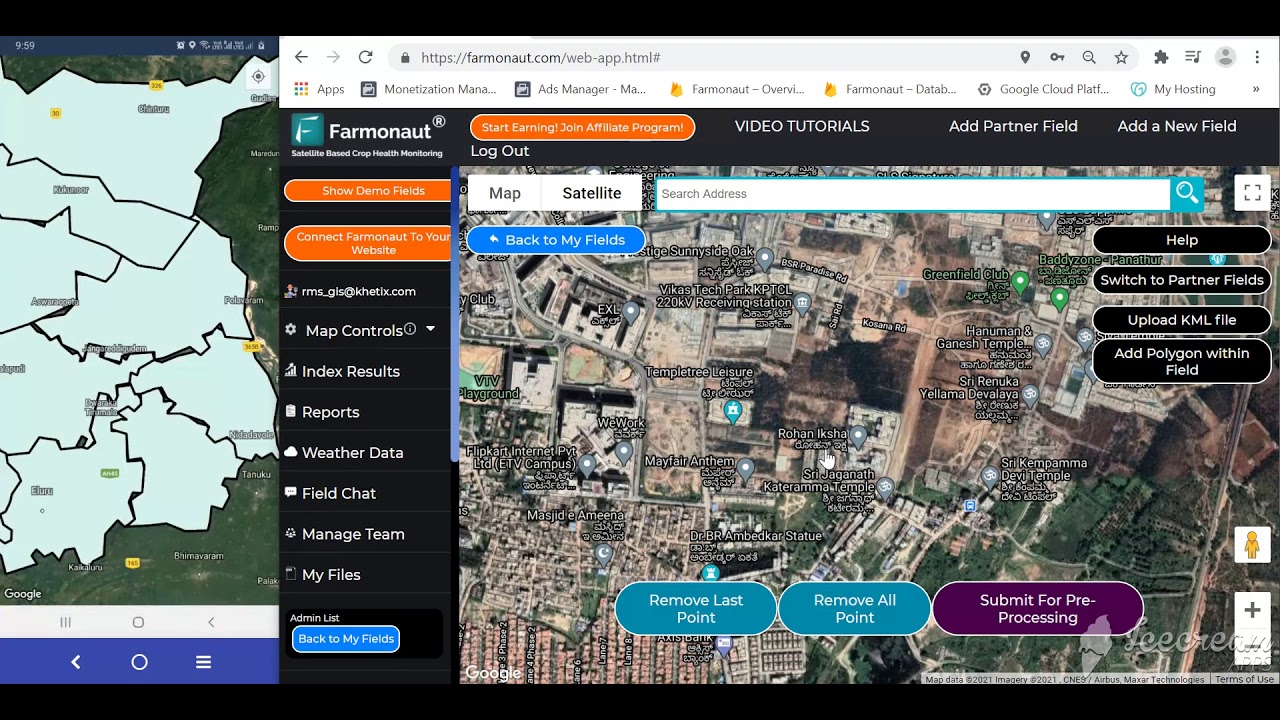
Farmonaut: Satellite-Powered IoT Monitoring for Mining
Platforms such as Farmonaut are at the intersection of IoT, satellites, and AI, making advanced, affordable monitoring a reality for mining businesses.
- Satellite-Based Insights: Farmonaut leverages multispectral imagery and AI to help mining operations monitor resource extraction, soil conditions, and environmental impact over vast areas—all from your desktop or mobile device.
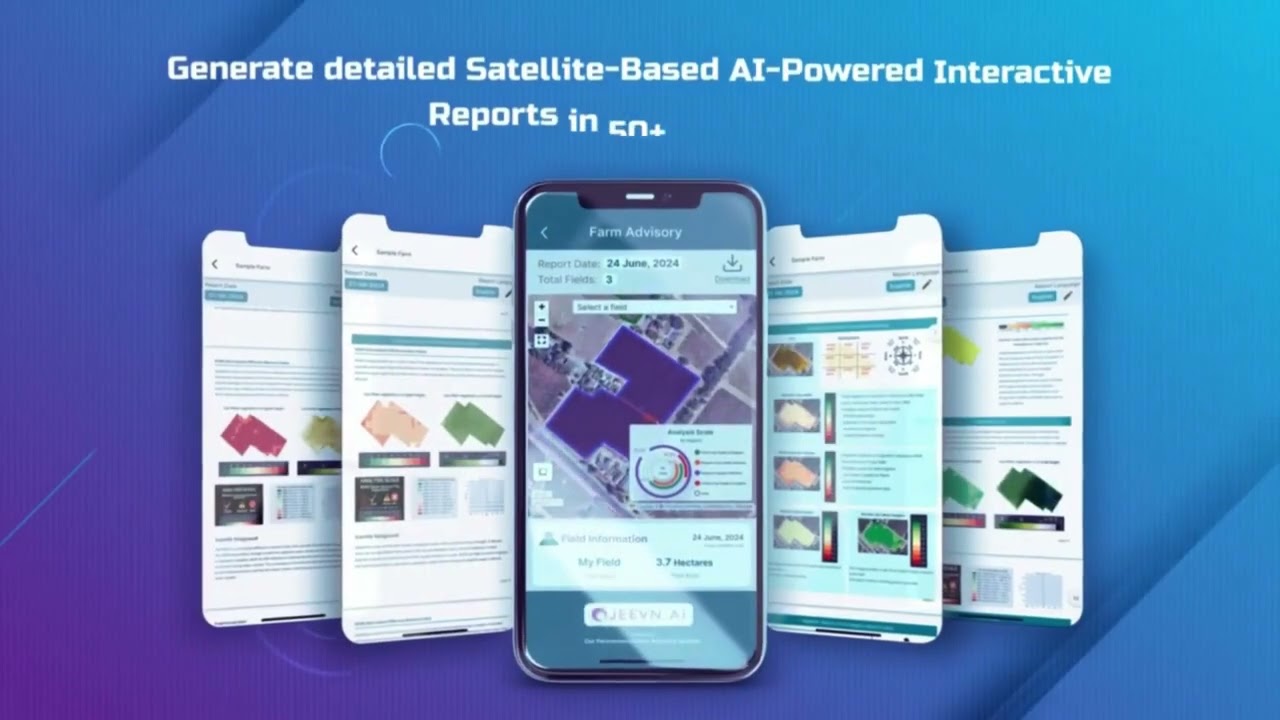
- Real-Time Data & Advisory: Jeevn AI offers instant, data-driven recommendations by analyzing satellite data with mining-relevant parameters such as weather, resource quality, and operational status.
- Blockchain-Based Traceability: Farmonaut integrates blockchain to enable end-to-end resource tracking and anti-fraud protection—vital for supply chain transparency in mining.
- Fleet & Resource Management: Our satellite-powered fleet management platform optimizes logistics for mining equipment and vehicles, improving both efficiency and safety.
- Environmental Impact Monitoring: Farmonaut enables businesses to track carbon emissions, water use, and ecological compliance for both regulatory reporting and ESG performance.
With flexible access via web, Android, and iOS apps, as well as a powerful API for seamless integration into your operational systems, Farmonaut’s data-driven tools empower mining companies to excel in operational efficiency, sustainability, and safety.

Want to streamline mining fleet logistics, safety monitoring, or integrate real-time satellite data into your workflow?
- Farmonaut’s Large Scale Resource Management: Not just for agriculture—adaptable for managing vast mining lands, vehicle tracking, and environmental reporting.
- Crop Loan & Insurance with Satellite Verification: Mining companies can use Farmonaut’s verification platform to ease financing and insurance, reducing fraud and streamlining regulatory compliance.
Our solutions are designed to scale from individual operators and site managers to expansive corporate and government projects worldwide, ensuring accessibility and affordability—core to modern mining practices in 2025 and beyond.

Unlock the power of connected, satellite-driven mining management—visit the Farmonaut App now!
Challenges, Risks, and the Future of IoT in Mining
Despite tremendous advances, widespread adoption of internet of things mining technologies is not without obstacles:
- Cybersecurity Risks: With more critical systems online, protecting operational data and control networks from cyber threats is paramount.
- Investment Costs: Initial installation and integration of IoT infrastructure is capital intensive, though offset by long-term gains.
- Workforce Skills Gap: Managing smart, interconnected equipment requires upskilling operators, technicians, and managers for both operational and IT security roles.
- Integration Complexity: Merging new IoT solutions with legacy systems and varying regional regulations can present technical and compliance hurdles.
Yet, as 5G and edge computing technologies mature, and API-driven solutions from companies like Farmonaut become more accessible, these hurdles are shrinking. The promise of:
- Real-time, secure data exchange—even in remote underground tunnels,
- Decreased resource use and emissions,
- Safer, more empowered workers, and
- Transparent traceability for regulatory and branding benefits,
…is pushing the entire sector toward a smarter, safer, more sustainable future.
Challenges for IoT in mining
Beyond cost and skills, most IoT projects in mines run into the same practical problems.
- Radio coverage underground. Rock blocks ordinary radio signals, so a sensor is only useful if the network reaches it. Mines use leaky feeder cables (a cable that acts as a long antenna along the drift), Wi-Fi or node-based mesh networks, and increasingly private LTE or 5G. Every new heading needs the network extended. In the US, the MINER Act requires underground coal operators to maintain communications and tracking systems for emergencies (MSHA).
- Explosive atmospheres. In gassy mines, sensors, gateways and batteries must be certified as safe to use. In the EU, mining equipment falls under Group I of the ATEX Directive 2014/34/EU (European Commission). Internationally, the IECEx scheme certifies equipment for explosive atmospheres (IECEx). Certification narrows the choice of devices and adds cost and lead time.
- Dust, water and vibration. Sensors on crushers, conveyors and trucks fail early unless sealed and mounted for constant shock.
- Power. Battery-powered sensors far from mains power need low-power radios and planned battery changes.
- OT cybersecurity. Connecting control systems for fans, pumps and autonomous vehicles to wider networks creates entry points that safety systems were never designed for.
- Legacy equipment. Older machines often need retrofit kits and protocol converters before their data can be used.
FAQ: Internet of Things Mining 2025
What is the internet of things in mining?
It refers to the use of interconnected sensors, devices, and automation systems to monitor, control, and optimize all aspects of mining operations through real-time data collection and analytics.
How does IoT improve mining safety?
By using wearables, gas detectors, and real-time tracking, IoT monitors personnel location, air quality, gas levels, and vital worker signs—sending alerts to control centers to prevent accidents and streamline emergency evacuations.
What kind of equipment is IoT-enabled in mining operations?
Almost everything: Haul trucks, drills, conveyors, processing machinery, ventilation systems, underground vehicles, personnel safety gear, and even stationary monitoring stations.
Can IoT help make mining more environmentally sustainable?
Yes, through sensors for continuous monitoring of water quality, emissions, carbon footprint, and other ecological impacts, enabling compliance and reducing overall resource usage.
What are the risks and challenges of adopting IoT in mining?
Key challenges include cybersecurity threats, high initial investment, complex integration with legacy systems, and the need for specialized workforce training.
How does Farmonaut fit into IoT-driven mining?
Farmonaut offers satellite-driven monitoring, AI advisory, blockchain-based traceability, and resource management solutions, making advanced data analytics and real-time insights accessible and affordable for mining sector stakeholders.
Conclusion: Transforming Mining with IoT in 2025 and Beyond
The internet of things mining movement is nothing short of transformative. By 2025:
- The fusion of smart devices, real-time data, and advanced analytics is revolutionizing how companies mine, manage resources, and protect both workers and the environment.
- Mining operations are becoming smarter, safer, more efficient, and sustainable thanks to the intelligent integration of IoT across the workflow.
- Solutions like Farmonaut’s satellite-powered monitoring, resource optimization, and blockchain traceability are at the forefront of accessibility and innovation, making high-tech transformation achievable for companies of any size, worldwide.
The future belongs to mining operations that embrace IoT-driven change—achieving not just compliance and efficiency, but true competitive advantage in a data-centric world.
Ready to explore IoT-powered mining?
Download the Farmonaut App for real-time monitoring, or integrate with the Farmonaut API to future-proof your mining operations today.
Discussion
Questions, corrections or field experience? Share them below. First-time comments are reviewed before they appear, and your email is never published.
No comments yet. Be the first to add a question or your experience.

 Riverside Resources Limited
 Congo Mining Solutions
 Mining SARL
 SenGold Invest SAS
 Sania Corporation
 Sean Mining Limited
 NTS Group (Pty) Ltd
 Mine4Africa
 Lithspo Minerals Limited
 Tintina Mining Group
 Dalgety Minerals Pty Ltd
 Vortex Minerals Pty Ltd
 Faith At Work (Pty) Ltd
 Geotech Mining Solutions plc
 Vulcan International Limited
 Kidepo Associates
 GKY Mining
 Alkimy SARL
 Double A Trading
