

Reviewed August 2026 against PS Market Research, the US Energy Information Administration (EIA), and ERP Research.
Try it: Estimated annual ERP cost range will appear here. →
Table of Contents
- Introduction: What a Mining ERP System Actually Costs and Does
- 1. The US ERP Market: Size, Growth, and Where Mining Fits
- 2. Mining ERP Systems: What “ERP for Mining” Means in Practice
- 3. ERP Software Costs for Mining Production: Junior to Major Producer
- 4. Core Modules in ERP Software for the Mining Industry
- 5. ERP for Coal Mining: The US Production Backdrop
- 6. Mining Energy Systems Inside an ERP Platform
- 7. Mining Hydraulic Systems: Integration Points With ERP
- 8. Comparison: How to Pick the Best ERP for a Mining Company
- 9. Mining ERP Licensing Cost Calculator
- 10. Where Satellite Data Plugs Into a Mining ERP Stack
- 11. What Changes Next in Mining ERP, Energy, and Hydraulics
- Farmonaut Apps, APIs, and Developer Resources
- Frequently Asked Questions (FAQ)
- Conclusion and How to Verify These Numbers Yourself
- Farmonaut Subscription Plans
- Try it: Estimated annual ERP cost range will appear here.
Mining ERP Systems: Costs, Modules, and What “Best” Actually Means
A mining ERP system is enterprise resource planning software adapted to run extraction, maintenance, compliance, and financial workflows for a mine site rather than a generic factory or warehouse. Annual licensing for a junior or mid-tier mining company runs $20,000 to $600,000, while a major producer running multi-site operations pays $250,000 to $2,000,000 or more per year, according to ERP Research’s mining industry cost benchmarks (ERP Research). That spread is the first thing to understand before comparing vendors: “erp for mining” is not one product category, it’s a price range that tracks site count, module depth, and whether energy and hydraulic telemetry are integrated or bolted on separately.
This guide breaks down what mining ERP software actually includes, what it costs at each company size, how energy and hydraulic system data feed into it, and where satellite monitoring closes gaps that on-premises ERP sensors can’t reach.
 Experience advanced resource management—access the Farmonaut Web App.
1. The US ERP Market: Size, Growth, and Where Mining Fits
The US ERP software market was valued at $12.6 billion in 2024 and is forecast to reach $16.8 billion by 2032, a compound annual growth rate of 3.7% from 2024 to 2032, per PS Market Research (PS Market Research). Neither figure is broken out by mining specifically — no publisher tracks a standalone “mining ERP” market size, so the mining segment has to be read through the general ERP numbers plus sector-specific cost surveys like the one above.
Two adoption trends matter for a mining buyer regardless of segment: 78.6% of organisations implementing new ERP chose cloud software in Panorama Consulting Group’s 2024 survey, up from 65% the year before (Panorama 2024 ERP Report). For a mining operator choosing between an on-premises deployment and a cloud subscription, that shift is the practical argument for cloud: the vendor ecosystem investment is concentrated there.
None of these figures are mining-specific adoption rates — that is a genuine gap in published research. No source in this review (including USGS and MSHA public data) reports what percentage of US mining companies currently run ERP software. If that number matters for your business case, the closest proxy is asking your shortlisted vendors (SAP, Oracle, IFS, Infor CloudSuite, Unit4) directly for their mining-sector client counts, since none of them publish it independently.
2. Mining ERP Systems: What “ERP for Mining” Means in Practice
Generic ERP platforms manage finance, HR, and inventory. Mining ERP systems add three things a generic platform doesn’t: geological and grade-control data feeds, heavy-equipment maintenance scheduling tied to usage hours rather than calendar dates, and environmental/regulatory compliance modules built around permit conditions specific to extraction sites. IFS, for example, markets its energy-and-resources ERP line specifically around mill and mine operations (IFS), which is the kind of vertical-specific positioning that separates “erp for mining industry” searches from plain “erp software” searches.

What a Mining ERP System Should Centralize
- Asset tracking, inventory, and procurement across every site, tied to a single vendor and cost ledger
- Predictive maintenance for haul trucks, drills, crushers, and hydraulic-driven equipment, scheduled on runtime hours and sensor thresholds rather than fixed calendars
- Environmental compliance tracking against permit conditions, with an auditable record for regulators
- For satellite-based compliance tracking that plugs into that record, see Farmonaut’s carbon footprinting solutions.
- Financial planning unified across capital projects, operating costs, and commodity price exposure
The distinction that matters when comparing “mining erp systems” to plain “erp software” is data source integration: a mining-specific platform ingests machine telemetry, geological survey outputs, and — increasingly — satellite feeds directly, rather than requiring a separate business-intelligence layer to stitch them together.

3. ERP Software Costs for Mining Production: Junior to Major Producer
Cost is the question buyers actually search for under “erp software for mining production” and “best erp for mining industry,” and it’s also the figure most vendor landing pages omit. ERP Research’s benchmark splits mining buyers into two tiers:
- Junior and mid-tier mining companies: $20,000–$600,000 per year in ERP software costs
- Major producers running multi-site, multi-commodity operations: $250,000–$2,000,000+ per year
That 30x range within the junior/mid-tier band alone means a single “how much does mining ERP cost” answer is meaningless without knowing site count, user seats, and which modules (finance-only vs. finance-plus-maintenance-plus-compliance) are in scope. The overlap between the two tiers — $250,000–$600,000 sits inside both bands — reflects mid-tier companies that have added modules a junior company typically hasn’t, without yet reaching major-producer scale.
No published source breaks this down further by specific vendor (SAP S/4HANA, Oracle Cloud ERP, Infor CloudSuite, Unit4, or IFS), so vendor-level quotes require direct contact — pricing in this category is negotiated per contract and not listed publicly. Panorama Consulting Group publishes an annual ERP Report on implementation cost, timeline and outcomes; check its latest edition for any industry breakdown.
Which ERP systems mining companies use, by company size
No vendor publishes its count of mining customers, but advisers group the market by the size of the buyer. ERP Research’s 2026 mining review sorts it like this (ERP Research):
| Buyer | Systems usually shortlisted |
|---|---|
| Large, asset-heavy producers | IFS, SAP S/4HANA |
| Mid-tier producers | Oracle ERP Cloud, Microsoft Dynamics 365 |
| Metals and processing operations | Infor CloudSuite |
| Junior miners and exploration companies | NetSuite, Acumatica, Sage Intacct |
Panorama Consulting’s 2024 ERP Report uses revenue tiers that line up with this (Panorama Consulting). Tier I systems such as SAP S/4HANA, Oracle Fusion Cloud ERP and Infor CloudSuite serve large, multi-entity groups. Upper Tier II systems, including Microsoft Dynamics 365 Finance, IFS Cloud, Sage X3 and Epicor Kinetic, typically serve organisations with $250 million to $750 million in revenue. Lower Tier II systems such as NetSuite, SYSPRO and Acumatica serve those with $10 million to $250 million.
Two vendors market dedicated mining editions: SAP through its mining industry solutions and IFS through its mills and mining line. For a junior miner, the practical question is whether a lower-tier system can add maintenance and compliance modules later, or whether moving to a Tier I system at production stage means a second implementation.
4. Core Modules in ERP Software for the Mining Industry
- Inventory & Asset Management — live tracking of consumables, spare parts, and equipment against maintenance schedules
- Compliance Tracking — regulatory modules for environmental permits and safety reporting
- Blockchain-enabled traceability for supply chain transparency is covered under Farmonaut Product Traceability.
- Procurement & Vendor Management — bid comparison and vendor performance tracking
- Workforce Scheduling — shift planning against labor availability and safety certifications
- Fleet & Equipment Management — usage-hour tracking across haul trucks, loaders, and drill rigs
- For fleet tracking that integrates with an ERP maintenance module, see Farmonaut’s Fleet Management and the related guide on fleet management systems for mining productivity.
- Financial Planning & Analytics — dashboards for cash flow, capital budgeting, and commodity price exposure
Cloud deployment matters at the module level too: since 78.6% of new ERP implementations in 2024 went to cloud infrastructure, most module updates and integrations (including satellite data feeds) now ship as API connections rather than on-premises server installs, which is the direction the rest of this article assumes.
5. ERP for Coal Mining: The US Production Backdrop
“Erp coal mining” searches usually want two things: whether coal-specific ERP modules exist, and how big the US coal segment actually is today. On the second point, the US Energy Information Administration reported US coal production of 512.5 million short tons in 2024, with productivity of 5.22 short tons per employee hour (EIA Annual Coal Report). The EIA publishes this report every November, so a reader checking this in 2027 should pull the current edition from that same URL rather than treat 2024 as a standing figure.
On the first point, there’s no coal-specific ERP module category tracked separately from general mining ERP — coal producers use the same core platforms (SAP, Oracle, IFS, Infor) configured with coal-specific chart-of-accounts and reserve-reporting fields, typically through the vendor’s mining industry template rather than a distinct product line. If a vendor markets a standalone “coal ERP” product, verify that claim by asking for coal-sector reference clients directly, since it isn’t a category the market research cited here distinguishes.
6. Mining Energy Systems Inside an ERP Platform
“Mining energy systems” as a search term covers the hybrid power setups — grid, diesel, solar, wind, and battery storage — that remote mine sites increasingly run, and how that consumption data feeds back into ERP dashboards for cost and emissions tracking. The mechanism is straightforward: an ERP platform doesn’t generate power, it ingests metering data from whatever energy system is on site and turns it into a cost ledger and compliance record.
What Energy Data an ERP Platform Should Ingest
- Grid and diesel consumption — logged against production volume to calculate energy cost per ton extracted
- On-site renewable generation — solar and wind output at remote sites, offsetting logged diesel draw
- Battery storage state — buffering data for critical loads like ventilation and dewatering pumps
- Peak demand charges — smart-grid load prioritization data, since utilities bill industrial sites partly on peak draw, not just total consumption

There is no published, peer-reviewed study quantifying energy cost or emissions reduction specifically attributable to ERP integration at US mining operations — that’s a genuine gap, not an oversight in this article. Vendor case studies exist but are not independently verified figures, so treat any specific percentage a vendor quotes you as a claim to verify against your own metered data before and after implementation, not as an industry-wide constant.
For real-time monitoring of energy consumption and emissions at the site level — the data an ERP platform needs as an input — Farmonaut’s satellite and AI-based tracking tools are covered in Section 10 below.
7. Mining Hydraulic Systems: Integration Points With ERP
Hydraulic systems drive most heavy mining equipment — excavators, drills, loaders, and conveyors — and “mining hydraulic systems” searches are typically looking for how modern hydraulics reduce downtime and how that data reaches an ERP dashboard. Vendors often quote large efficiency gains for hydraulic upgrades, but this review found no peer-reviewed validation or published US case study, so treat any figure as a claim to test against your own site data.
Hydraulic-to-ERP Integration Points
- Variable Displacement Pumps — adjust output dynamically to match load, reducing energy waste versus fixed-displacement systems
- IoT Pressure and Flow Sensors — feed leak-detection alerts directly into ERP maintenance tickets, rather than requiring manual inspection logs
- Centralized ERP Dashboards — aggregate hydraulic sensor data fleet-wide, so a maintenance manager sees pressure trends across every rig from one screen
- Eco-Friendly Hydraulic Fluids — biodegradable, fire-resistant fluids reduce environmental incident risk in permit-sensitive zones

The practical takeaway for a buyer evaluating “mining hydraulic systems” vendors: ask whether the hydraulic monitoring hardware ships with an open API or a proprietary dashboard. If it’s proprietary, your ERP integration becomes a custom development project rather than a standard connector, which changes both the cost and timeline estimates in Section 3.
8. Comparison: How to Pick the Best ERP for a Mining Company
“Best erp for mining industry” doesn’t have a single answer because the right platform depends on company size, module needs, and deployment model. This table compares what to weigh across the decision, using the cost and market figures established above rather than marketing claims.
| Buyer Profile | Typical Annual ERP Cost | Deployment Model | Priority Modules | Key Question to Ask Vendors |
|---|---|---|---|---|
| Junior/exploration-stage miner | $20,000–$100,000/yr (low end of ERP Research’s junior/mid-tier band) | Cloud/SaaS — matches the 78.6% of 2024 new implementations on cloud | Financials, procurement, basic asset tracking | Can modules be added incrementally as we scale past exploration? |
| Mid-tier producer, single site | $100,000–$600,000/yr (ERP Research junior/mid-tier band) | Cloud/SaaS, hybrid integrations for site sensors | Maintenance scheduling, compliance tracking, fleet management | Does the maintenance module ingest hydraulic and energy sensor data natively? |
| Major producer, multi-site | $250,000–$2,000,000+/yr (ERP Research major-producer band) | Cloud with dedicated integration layer across sites | Full suite: finance, compliance, maintenance, energy, workforce | What is the implementation timeline and reference-client list for our commodity? |
| Coal-specific operation | Same bands as above — no separate coal ERP pricing tier exists | Cloud, configured with coal chart-of-accounts | Reserve reporting, MSHA-aligned safety compliance, productivity tracking against EIA-style per-employee-hour metrics | Do you have coal-sector reference clients, since no vendor markets a distinct “coal ERP” product? |
9. Mining ERP Licensing Cost Calculator
Use the sliders below to estimate where your operation likely falls in ERP Research’s cost bands, based on site count and module scope — then use that range as a starting point for vendor RFPs, not a quote.
Assumptions: uses ERP Research’s published bands ($20,000–$600,000/yr junior/mid-tier, $250,000–$2,000,000+/yr major producer). Cost scales linearly with site count and module count within each band as a simplified estimate — it does not account for negotiated discounts, implementation services, or vendor-specific pricing, and does not replace a vendor quote.
10. Where Satellite Data Plugs Into a Mining ERP Stack
An ERP platform is only as good as the data feeding it. Ground-based sensors cover equipment and energy meters well, but site-wide monitoring — vegetation disturbance, extraction progress across a large footprint, environmental compliance evidence — is where satellite data closes a gap that on-premises IoT can’t reach cost-effectively. Farmonaut provides that layer as an integration point for existing mining ERP systems, not a replacement for them:
- Real-time site monitoring — tracking extraction progress, vegetation change, and resource allocation across large mining footprints
- AI-based advisory and resource planning — feeding predictive planning data into ERP logistics and extraction modules
- Blockchain-based traceability — supply chain transparency for regulatory and investor reporting
- Environmental impact tracking — carbon footprint monitoring that maps to compliance modules; see carbon emissions monitoring
- Fleet and machine resource optimization — data-driven oversight that reduces idle time; see Farmonaut’s Fleet Management and alternatives to subsurface mining approaches
These tools are mobile-accessible, so decisions can be made from headquarters or a remote site without waiting for a desktop terminal.
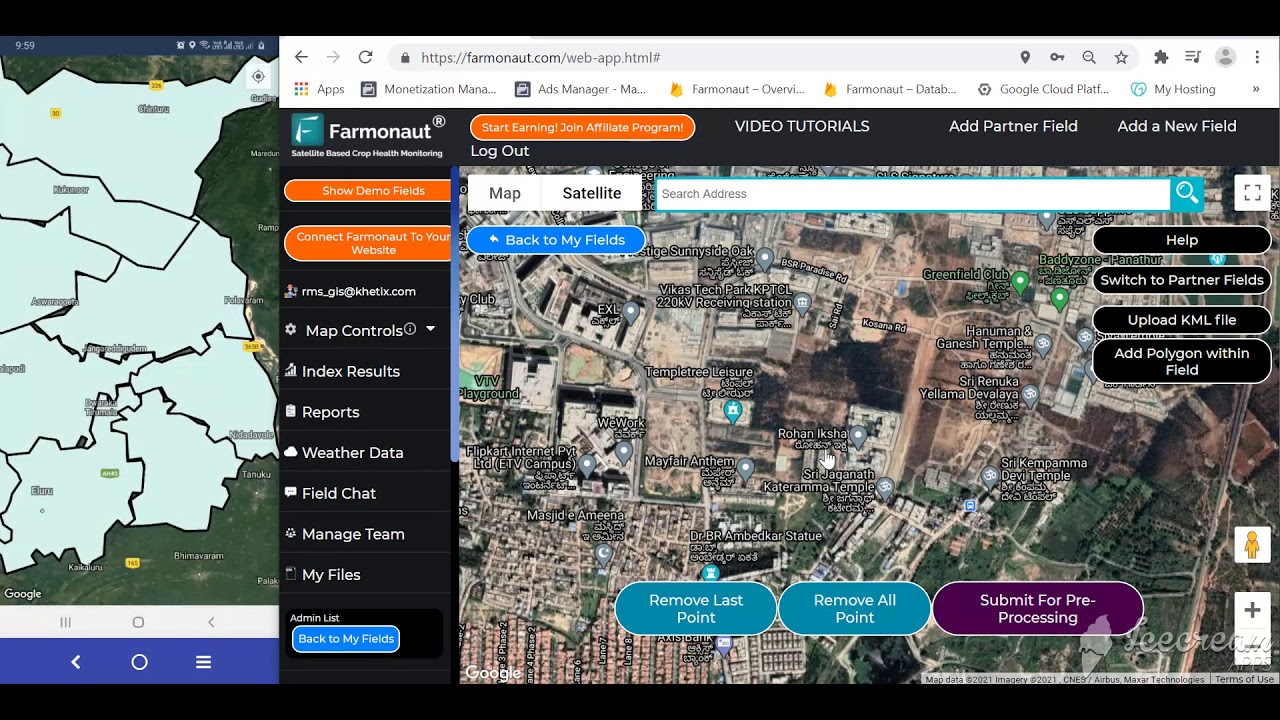
API integration lets a mining enterprise connect Farmonaut’s satellite, environmental, and analytics data directly into an in-house ERP platform or dashboard. Documentation is available at Farmonaut API and API Developer Docs.


11. What Changes Next in Mining ERP, Energy, and Hydraulics
The market-level numbers in Section 1 point to a specific trajectory rather than a static state: most new ERP projects choosing cloud (78.6% in Panorama’s 2024 survey) means the mining ERP buying decision is increasingly a cloud-vendor decision by default, not a build-vs-buy one. Three things to track going forward, each with its own refresh path:
- Market size updates — check the P&S Intelligence (PS Market Research) page directly for the current US figure rather than relying on the 2024 baseline cited here
- ERP cost benchmarks — Panorama Consulting Group’s annual ERP Report covers implementation cost and timeline data
- US coal production figures — the EIA republishes its Annual Coal Report every November at eia.gov/coal/annual; treat the 512.5 million short ton, 5.22 short-tons-per-employee-hour figures here as the 2024 baseline, not a standing number
On the technology side, blockchain-based supply chain traceability, expanded AI/edge computing for on-site decision-making, and deeper hydraulic-to-ERP sensor integration are the directions vendors are investing in — see Farmonaut Product Traceability for the traceability piece specifically. None of these are single-year events; they’re continuing build-outs that make each next ERP contract slightly more capable than the last, which is the durable pattern worth tracking rather than any one year’s feature list.
Farmonaut Apps, APIs, and Developer Resources


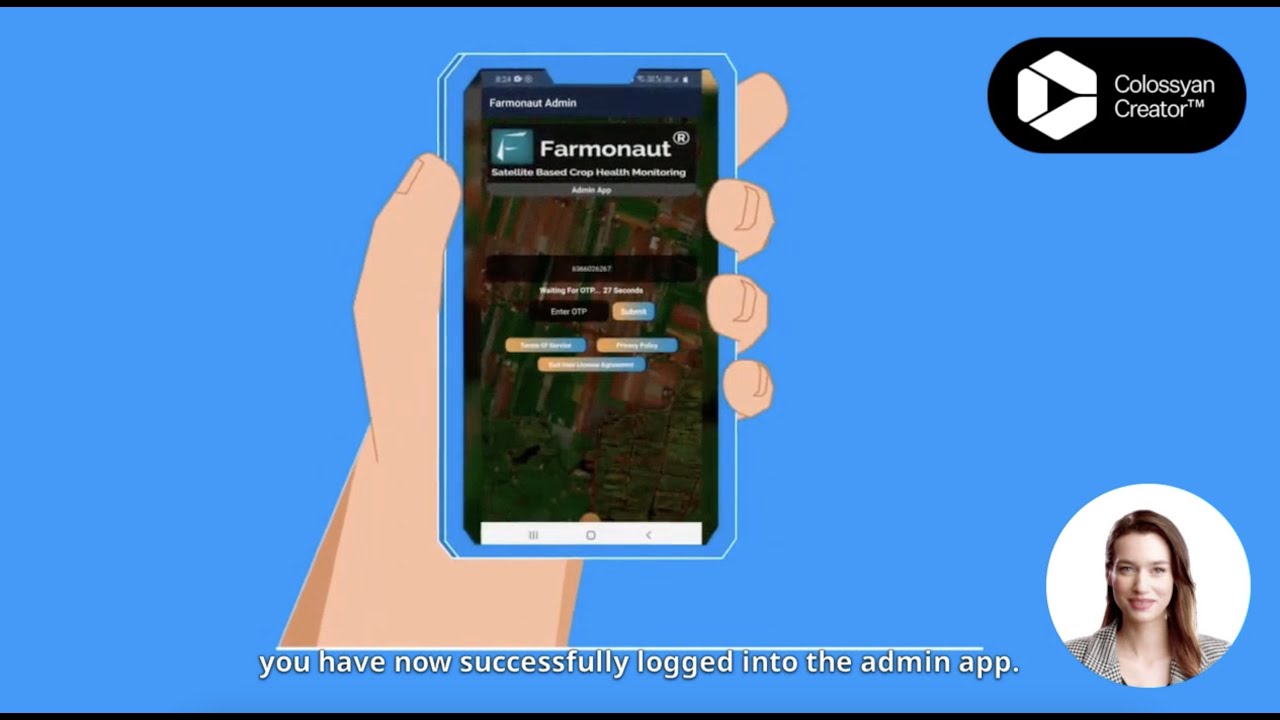
Access resource and environmental monitoring anywhere using Farmonaut’s web and mobile apps.
Built for integration with existing mining ERP, energy, and hydraulic system data.
For direct API integration into a mining workflow, visit Farmonaut API or get developer resources at API Docs.
Frequently Asked Questions (FAQ)
-
What does a mining ERP system cost?
Junior and mid-tier mining companies pay $20,000 to $600,000 per year for ERP software; major producers running multi-site operations pay $250,000 to $2,000,000 or more per year, per ERP Research’s mining cost benchmarks. Actual pricing depends on site count, module scope, and negotiated contract terms — request quotes from SAP, Oracle, IFS, Infor CloudSuite, or Unit4 directly for current figures. -
What is the difference between generic ERP and ERP for the mining industry?
Generic ERP covers finance, HR, and inventory. Mining-specific ERP software adds geological and grade-control data feeds, equipment maintenance scheduled on usage hours rather than calendar dates, and compliance modules built around mine-permit conditions. IFS is one vendor marketing a dedicated mining and mills industry line. -
Is there a specific ERP product for coal mining?
No — coal producers typically use the same core mining ERP platforms as other commodities, configured with coal-specific chart-of-accounts and reserve reporting. US coal production was 512.5 million short tons in 2024 at a productivity of 5.22 short tons per employee hour, per the EIA’s Annual Coal Report, which republishes each November. -
How do mining energy systems connect to an ERP platform?
ERP platforms don’t generate power — they ingest metering data from grid, diesel, solar, wind, and battery storage systems on site, then turn that into a cost-per-ton ledger and compliance record. No independently verified US study currently quantifies energy savings specifically attributable to ERP integration, so any vendor-quoted percentage should be checked against your own metered data. -
What efficiency gains do hydraulic system upgrades deliver in mining?
No peer-reviewed study or published US case study quantifies it. Test any vendor figure against your own equipment’s before-and-after runtime data. -
How big is the US ERP software market?
$12.6 billion in 2024, forecast to reach $16.8 billion by 2032 at a 3.7% compound annual growth rate, per PS Market Research. -
How does Farmonaut support mining ERP, energy, and hydraulic system integration?
Farmonaut provides satellite-based site monitoring, AI-powered resource planning, blockchain traceability, fleet management, and environmental impact tracking that feed into existing mining ERP platforms via API. Tools are accessible on Google Play or the App Store.
Conclusion and How to Verify These Numbers Yourself
The durable way to evaluate any mining ERP claim — cost, efficiency gain, or adoption rate — is to check whether it’s tied to a named source and a period, and to re-pull that source before acting on it. This article’s cost bands ($20,000–$600,000 junior/mid-tier, $250,000–$2,000,000+ major producer) come from ERP Research and should be re-verified there or against direct vendor quotes before budgeting. The market-size figures ($12.6 billion in 2024, 3.7% CAGR to 2032) come from P&S Intelligence (PS Market Research); re-check its page for updates. The coal production figures (512.5 million short tons, 5.22 short tons per employee hour, both 2024) come from the EIA’s Annual Coal Report, republished every November at the same URL.
Where this review found a genuine gap — mining-specific ERP adoption rates, peer-reviewed energy savings tied to ERP, and validated hydraulic efficiency case studies — the honest answer is that the data doesn’t exist yet in public form, and the way to get it for your own operation is to benchmark your site’s metered data before and after implementation rather than rely on an industry-wide percentage.
Farmonaut’s role in this stack is the satellite and API layer that feeds site-wide environmental and resource data into whichever ERP platform a mining company already runs.
Explore Further:
- Fleet Management for Mining: Reduce operational costs and maximize fleet efficiency with Farmonaut’s Fleet Management—ideal for large-scale mining and logistics operations.
- Product Traceability in Mining: Build certainty in the supply chain and meet investor compliance requirements with Farmonaut’s Blockchain Traceability.
- Carbon Footprinting: For instant monitoring and reporting of emissions, adapt Farmonaut’s Carbon Footprinting tools.
- Large Scale Farm & Mine Management: Harness the power of satellite data for resource and site monitoring on a grand scale—try Farmonaut Admin App.
- API Integration: Connect Farmonaut insights directly into a mining ERP system using the API and Developer Docs.
Farmonaut Subscription Plans
Join us to access cost-effective, scalable satellite-based solutions for mining industry resource management, environmental compliance, and digital transformation.

 Alkimy SARL
 Double A Trading
 GemSprout Metals Limited
 Qader Group
 Ileys General Trading
 SG Gold Mining LLC
 VRV Global Pte Ltd
 Omsri International FZE
 G.I.T.T.
 Jaunita Erss Ltd
 Almosi SARL
 SRK Consulting
 Berks Gold Limited
 Mwerezi Minerals Company Limited
 Mining SARL
 SenGold Invest SAS
 Sean Mining Limited
 NTS Group (Pty) Ltd
