

Mining sustainability · Evidence comparison
Most Sustainable Mining Companies: Who Has the Proof
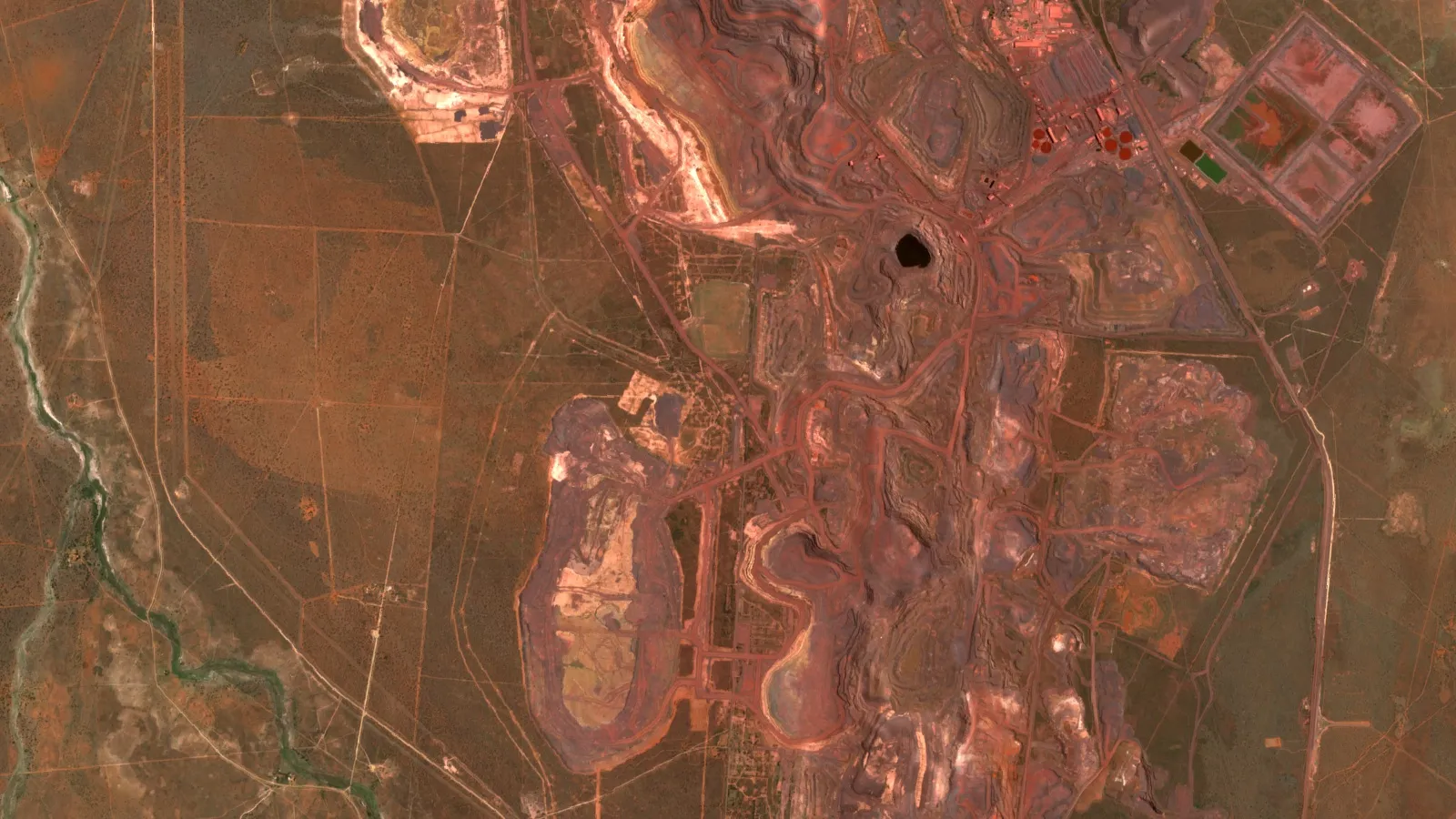
No official ranking exists. On outside evidence, Anglo American has the most mines in IRMA’s independent audit table (six, November 2026), Valterra Platinum has four, and Newmont and Rio Tinto publish emissions progress you can test against their targets.
Key takeaways
- Anglo American has six mines in IRMA’s independent table and Valterra Platinum four (IRMA, viewed November 2026).
- Newmont reports 2025 emissions 12% below 2018 against a 32% target for 2030 (Newmont, 2026).
- Rio Tinto reports a 14% cut against 2018 in H1 2026, with a 50% aim for 2030 (Rio Tinto, 2026).
- 67% of ICMM members’ 836 tailings facilities are in full GISTM conformance (ICMM, 2025).
- Check the current owner: Borden and Akyem left Newmont in 2025.
In this article
- How we chose and compared these companies
- Most sustainable mining companies compared
- Which companies lead on low-carbon operations
- Which gold mining companies are most environmentally responsible
- Sustainable mining practices that can be measured
- How to check a company's sustainability claim
- Standards and ESG rules that shape mining
- Sustainable gemstone mining and traceability
- Mining sustainability solutions and technology
- What small mine owners can copy from the leaders
- Merger and ownership changes to watch
- Frequently asked questions
No official league table names the most sustainable mining companies, so the fairest answer rests on outside evidence. On that test, Anglo American stands out: it has six mines in the IRMA independent audit table (viewed November 2026), more than any other parent company, and it belongs to the International Council on Mining and Metals (ICMM). Valterra Platinum follows with four audited or assessing sites. Newmont and Rio Tinto publish clear emissions numbers that you can test against their own targets.
That is a different kind of answer from the scored “top 10” lists found online. A score out of 10 with no method tells you very little. This page shows instead what each company can prove, who checked it, and where the gaps are. It is written for mine owners who want to know what buyers and lenders will ask for, and for investors who want to read sustainability claims with care.
How we chose and compared these companies
We used three public tests, and we ordered the table below by the first one, because outside audit is the hardest evidence to fake.
- Independent mine audits. The Initiative for Responsible Mining Assurance (IRMA) sends third-party auditors to a single mine and judges its environmental and social performance. The audit reports are published, so nearby communities, customers and investors can read them.
- Membership commitments. ICMM is an industry body that says it brings together about a third of the global metals and mining industry. Members are represented on its council by their CEOs. Membership is a commitment and a reporting duty; it is not a performance score.
- Published numbers against a stated target. We looked for Scope 1 and 2 emissions (direct emissions from a company’s own sites, plus emissions from the power it buys) with a baseline year and a target.
A company can do well on one test and show nothing on another. Newmont, for example, has no mine in the IRMA table but reports its emissions progress in detail. Absence from the table does not prove poor practice, as a mine may use a different assurance scheme. For the basic definitions, see our short guide on what makes a mining company a sustainable company.
Most sustainable mining companies compared
The table is a selection, ordered by the number of mines each parent company has in IRMA’s independent table (excluding postponed sites), then by ICMM membership. The audit status comes from IRMA’s table as viewed on 5 November 2026. “Not listed” means the company did not appear on the ICMM member page on that date.
Chart
Mines in IRMA’s independent audit table, by parent company
Number of sites, selected companies, excluding postponed sites, viewed 5 November 2026
| Company | Mines in IRMA table | ICMM member | What it reports or targets | Limit to keep in mind |
|---|---|---|---|---|
| Anglo American | 6 (Barro Alto, Kolomela, Los Bronces, Minas-Rio, Quellaveco, Sishen) | Yes | Goal of carbon neutral metals and minerals by 2040 | Los Bronces and Quellaveco are still in process; merger with Teck pending; Barro Alto was agreed for sale to MMG in 2025, and we could not confirm completion |
| Valterra Platinum | 4 (Amandelbult, Mogalakwena, Mototolo, Unki) | Not listed | Platinum group metals audits in South Africa and Zimbabwe | Three of the four are surveillance checks still in process |
| Sibanye-Stillwater | 2 (Marikana, Rustenburg) | Yes | Two South African platinum operations under assessment | Its US operations are shown as postponed |
| Gerdau | 2 (Várzea do Lopes, Miguel Burnier) | Not listed | Iron ore mines in Brazil | Miguel Burnier’s surveillance check is in process |
| Rio Tinto | 1 (Fénix lithium) | Yes | Scope 1 and 2 emissions 14% below 2018 in H1 2026; aims for 50% by 2030 | Says the 2030 pathway depends on third-party projects |
| Eramet | 1 (Grande Côte) | Not listed | IRMA 50 at its mineral sands mine in Senegal | One site, not the whole group |
| Gemfields | 1 (Montepuez Ruby) | Not listed | A coloured gemstone mine in the IRMA process | Assessment still in process |
| Newmont | 0 | Yes | 4.4 Mt CO2e in 2025, 12% below 2018; 32% target by 2030 | Targets are described as aspirational |
| Gold Fields | 0 | Yes | Renewables at 18% of electricity use in 2025 | Same share as 2024 |
Other ICMM company members on the same page include African Rainbow Minerals, Alcoa, Antofagasta Minerals, Barrick, BHP, Boliden, Codelco, Freeport-McMoRan, Glencore, Hydro, Minera San Cristóbal, Minsur, MMG, Orano, South32, Teck and Vale. Membership alone does not place them above or below a company in the table.
IRMA’s table also lists single sites from ArcelorMittal Brazil, Albemarle, SQM, Syrah Resources, Tianqi and its partners, CMOC, Vale’s Indonesian unit and others. It is a working list, and sites can leave it: one Mexican silver mine appears in the withdrawn section at the foot of the page.
Which companies lead on low-carbon operations
Scale matters when you read a carbon claim. ICMM’s greenhouse gas dataset, built with Wood Mackenzie from about 1,700 facilities, puts non-coal mining at about 0.54% of global greenhouse gas emissions in 2024. Metal production is near 8%, and fugitive emissions from coal mining are about 2.46%. Steel, coal mining and aluminium together make up around 93% of the sector’s Scope 1 and 2 emissions, so a gold miner’s reduction and a steelmaker’s reduction are very different in size.
Chart
Scope 1 and 2 emissions cut against 2018, and the 2030 target
Percent below each company’s own 2018 baseline
Two large companies give figures that can be set side by side. Newmont’s 2025 sustainability report gives 4.4 million tonnes of CO2 equivalent, down 12% from a restated 2018 baseline of 5.0 million tonnes. Its aspirational 2030 target is a 32% cut. It rebased the figures after selling non-core assets, which is a reminder that a fall in emissions can partly reflect a smaller portfolio or a changed baseline.
Rio Tinto’s half-year results report 15.9 million tonnes in the first half of 2026, which it says equals a 14% reduction against its 2018 baseline. It aims for 50% by 2030 but warns that this depends on third-party projects and commercial talks. The same report describes a trial of eight 91-tonne battery-swappable haul trucks at Oyu Tolgoi in Mongolia, which had reached its halfway point.
Power contracts are where much of this work shows up. Newmont says a wind contract now supplies about 40% of the energy needs at Cadia in Australia, and that a contract at Boddington could cut that site’s emissions by up to 70% over time. Gold Fields’ 2025 integrated report gives renewables at 18% of group electricity use, level with 2024, and says the hybrid renewable project at St Ives was on track for commissioning in mid-2026.
What happened to the Borden electric mine
Older lists, including earlier versions of this page, credit Newmont with the all-electric Borden mine in Ontario. That is out of date. Newmont’s report lists Porcupine among the sites it sold in 2025, and Franco-Nevada’s 2025 results now describe Borden as part of Discovery Silver’s Porcupine operations. Akyem in Ghana is on Newmont’s divested list too. This shows a wider point: check who owns a mine today before you credit a company with its record.
Which gold mining companies are most environmentally responsible
No single measure settles this among gold producers, so look at three separate records. Newmont, Barrick and Gold Fields are all ICMM members. Newmont reports 131 hectares of completed reclamation for 2025, says it increased water recycled to 71% compared with its 2018 baseline, and says it met the August 2025 reporting deadline for the tailings standard. Gold Fields publishes its renewable share and says it complies with ICMM’s Mining Principles and Performance Expectations.
Smaller gold producers rarely publish at this depth, yet their buyers and lenders may still ask the same questions. If you own a small gold project, the useful starting point is a record of water use, land disturbed, land restored and community agreements from the first day of work. That record carries real weight when you later sell a mine, because a buyer will want to see those liabilities priced.
Sustainable mining practices that can be measured
Many practices sound similar in a brochure. These five leave numbers or documents you can ask to see.
Chart
ICMM member tailings facilities in full GISTM conformance
Percent of 836 facilities, by group
- Tailings management. Tailings are the fine waste left after processing. The Global Industry Standard on Tailings Management (GISTM) sets the benchmark. Ask for the company’s conformance disclosure.
- Water. Ask for withdrawals by source and the share recycled. In Chile, Cochilco reports that copper miners drew 7.8 cubic metres per second of seawater in 2024, up 14.7% on 2023, as desalination replaced some inland sources. It also notes the high energy needed to desalinate and pump that water.
- Energy and emissions. Ask for absolute tonnes as well as intensity, and for the baseline year. A falling intensity can sit beside rising total emissions.
- Closure and rehabilitation. Ask for hectares restored against hectares disturbed, and for the closure cost provision. ICMM’s closure guidance treats closure as something to plan through the life of a mine.
- Community and workforce. Ask for grievance records, local employment and payments to governments. Check ICMM’s Mining Contribution Index to see how much mining matters to a country’s economy.
Tailings: where progress can be counted
Tailings give one of the clearest sector-wide numbers. ICMM’s tailings progress report says 67% of its members’ 836 facilities are in full conformance with GISTM, and 33% are in partial conformance. Over 80% of “extreme” and “very high” consequence facilities are in full conformance, and lower classes range from 53% to 65%. ICMM admits that full conformance is taking longer than first expected. The report covers ICMM members only, so it cannot tell you about the wider industry.

▶ The seven environmental impacts of mining, explained in clay. · 2:31
How to check a company’s sustainability claim
You do not need a specialist team for a first check. An hour with public documents will separate a measured claim from a slogan, and the same list works when you assess a joint venture partner or a mine you may buy. It also helps when you approach mining investment companies, which often ask similar questions.
Infographic
Check a sustainability claim in 5 steps
- 1Find the siteSearch IRMA’s table for the mine by name.
- 2Read the boundaryGroup, one mine or one product?
- 3Check the baselineAre before and after comparable?
- 4Find the assuranceWho checked the data?
- 5Compare the paceYearly cut needed against actual rate.
- Find the site, not the slogan. Search IRMA’s table for the mine by name and read the status. “Completed” and “in process” mean different things.
- Read the boundary. Does the figure cover the group, one mine or one product? Are recently sold sites included?
- Check the baseline. A restated baseline is normal after asset sales, but the before and after must be comparable.
- Look for an assurance statement. Who checked the data, and at what level of assurance?
- Compare the pace. Work out the cut needed each year to reach the target, then compare it with the actual rate. The calculator below does this.
One claim shows why this matters. Alrosa said in July 2026 that a verification certificate confirmed its diamonds as carbon neutral for 2025, and it calls itself the only miner to have confirmed this for both product and operations. The result relies on carbon dioxide absorbed by kimberlite ore, the rock that hosts diamonds. Read such a claim with its method: it is a company statement resting on a specific accounting approach, and Alrosa has no mine in IRMA’s table and is not listed by ICMM.
Calculator
Is this company cutting emissions fast enough to hit its target?
Enter the figures from any sustainability report, or your own site’s numbers.
- Cut achieved so far (% of baseline): 10.0
- Tonnes still to cut: 200,000
- US$ value of the remaining tonnes at your price: $10,000,000
Example values only, not a benchmark or a forecast. The cut per year is a straight line. The carbon price is an input: example, use today’s price. The US$ line is a simple illustration: all remaining tonnes multiplied by your price, not a yearly cost.
Standards and ESG rules that shape mining
ESG stands for environmental, social and governance. Rules differ by country, so no global law requires “zero water waste” or binds every miner to a carbon target. Most of the pressure comes from a mix of national permits, stock exchange reporting, lender conditions and buyers’ demands, along with voluntary standards.
| Standard or body | Who it applies to | What it gives you |
|---|---|---|
| IRMA Standard | Single mine sites, any size that opts in | Published third-party audit and level such as IRMA 50 |
| ICMM Mining Principles | Member companies | Company-level commitments with assurance and validation |
| GISTM | Tailings facilities | Disclosure and conformance by facility |
| Responsible Jewellery Council | Jewellery and watch supply chain | Membership and standards across more than 2,100 companies |
| CRAFT and Fairmined | Artisanal and small-scale miners | Tools for showing progress on ESG practices |
IRMA is revising its standard: it has taken public input through a Standard v2.0 consultation. For a real example of the audit in use, IRMA reports that Eramet’s Grande Côte operation reached IRMA 50 and became Senegal’s first mineral sands mine at that level. ICMM also publishes its members’ position on climate change, which ties their approach to the Paris Agreement goals.
A sustainability audit is separate from a study of mine economics. If you are moving a project forward, a pre-feasibility study is the stage where environmental and closure costs begin to enter the numbers.
Sustainable gemstone mining and traceability
Gemstone buyers often ask about origin. Gemfields’ Montepuez Ruby Mining in Mozambique is the gemstone entry worth noting: it appears in IRMA’s table under “Independent Assessment In Process”, so no result can be claimed from that listing yet.
Beyond the mine, the Responsible Jewellery Council, founded in 2005, says it unites over 2,100 companies across the jewellery and watch supply chain. The Alliance for Responsible Mining works on responsible gold sourcing from small-scale miners, using the CRAFT code and the Fairmined standard. These schemes differ in scope, so ask which part of the chain a certificate covers: the mine, the trader or the retailer.
Recovering metal from old products is a related route to responsible supply. Our separate post on urban mining companies looks at that side of the sector.
Mining sustainability solutions and technology
Technology helps when it produces evidence that someone can check. Battery-electric haulage reduces diesel use underground and in pits, as the Oyu Tolgoi trial is testing. Water meters and piezometers (instruments that measure water pressure in a tailings dam) give continuous readings. Ore sorting can reduce the waste rock sent to the mill.
Satellite imagery adds an outside view. It can show land disturbance and regrowth on rehabilitated ground over time, and it can help screen ground before anyone clears it. It cannot replace a site audit, a social assessment or an environmental permit.
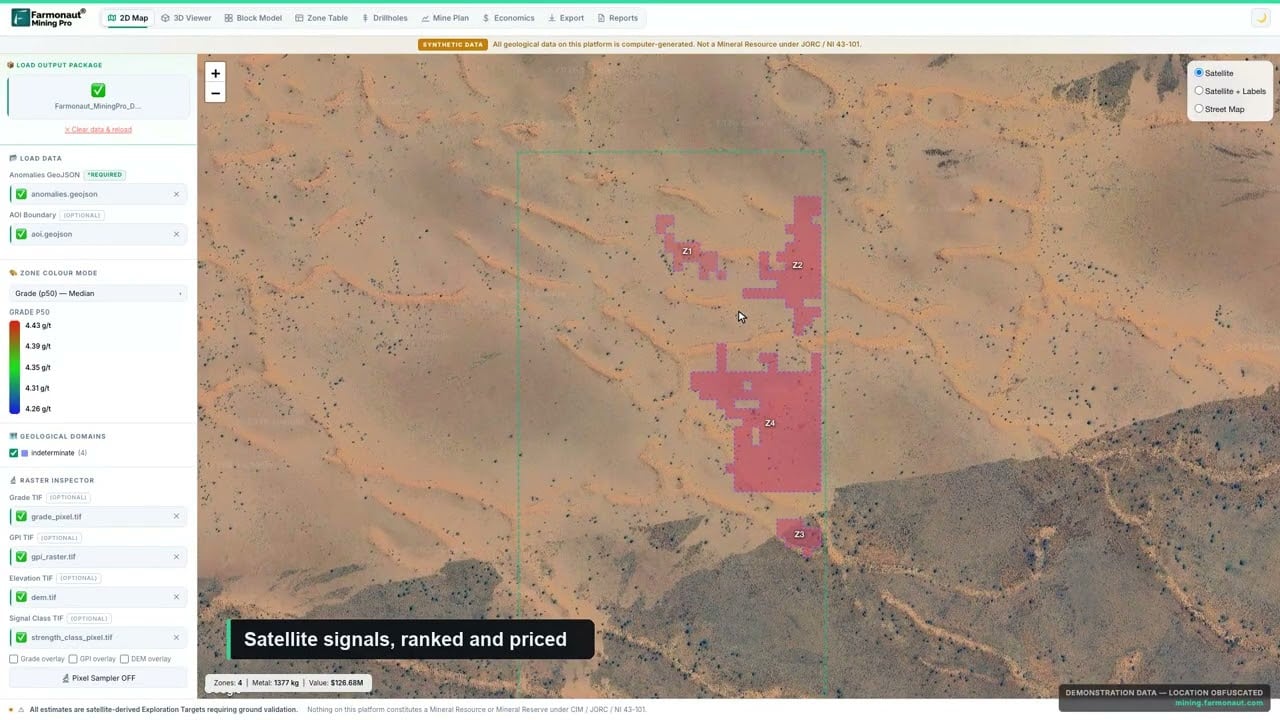
Farmonaut offers satellite-based tools in this area, including carbon footprinting, product traceability, fleet management, satellite verification for lenders and insurers, a developer API and a mobile app; more is on the Farmonaut home page. These are monitoring aids, and they are not an environmental or social clearance.

▶ What an AI mining app really does, and who makes one. · 3:52
What small mine owners can copy from the leaders
You do not need a large company’s budget to build the same kind of record. A small operator can start with these steps, in this order.
- Keep a land record. Map the disturbed area each year and note what has been restored. Dated satellite images make a simple, cheap archive.
- Measure water. Meter what comes in and what is recycled. Test water upstream and downstream on a fixed schedule.
- Track fuel and power. Those two bills give you a first estimate of Scope 1 and 2 emissions.
- Write down community agreements. Keep signed access terms, complaints and how you resolved them.
- Budget for closure early. Include rehabilitation cost in every project estimate.
- Stay legal and safe. Hold the right licence, get landowner permission, and never use mercury.
Later, you can use the IRMA self-assessment route, which the IRMA site lists separately from independent audits, to see how far your site sits from the standard before paying for an audit.
▶ A short look at Farmonaut Mining Pro. · 4:56
Merger and ownership changes to watch
Any list of this kind will age, because ownership keeps changing. Teck and Anglo American announced a merger of equals on 9 September 2025 to form Anglo Teck. Teck’s second-quarter report for 2026 says shareholders approved it on 9 December 2025 and that Canada approved it under the Investment Canada Act on 15 December 2025. That report still expected closing within 12 to 18 months of the announcement, and in October 2026 Anglo American still expected to complete by March 2027, with China’s competition approval outstanding. Once it closes, group-level targets and audited site counts will need a fresh look.
Sales of older assets also move a mine’s record to a new owner, as with Newmont’s 2025 divestments of CC&V, Musselwhite, Éléonore, Porcupine and Akyem. Always match a claim to the current operator.
Frequently asked questions
Which companies are leading in sustainable mining practices?
On independent audits, Anglo American has the most mines in IRMA’s table (six as of November 2026), followed by Valterra Platinum with four. Newmont and Rio Tinto publish clear emissions progress against targets. There is no official ranking, so the leader depends on the measure you choose.
What is sustainable mining?
It means extracting minerals while limiting harm to land, water, air and people, and leaving the site in a planned, usable state at closure. In practice it is judged through audits, disclosures and measured results.
What is an ESG mining company?
It is a miner that reports on its environmental, social and governance performance and manages those risks. The label has no legal test, so read the data and who assured it.
What makes a mining company responsible or ethical?
Look for published audits, safe workplaces, signed community agreements, clean grievance records and honest closure budgets. Ethical sourcing also means knowing where ore comes from. A certificate should name exactly what it covers.
Which mining companies lead in low-carbon operations?
Comparable public figures include Rio Tinto (14% below 2018 in H1 2026, 50% target by 2030) and Newmont (12% below 2018 in 2025, 32% target by 2030). The two are not the same size or commodity mix, so compare the pace, not the total.
Are there global standards for sustainable mining?
Yes, but they are mostly voluntary. IRMA audits single mines, ICMM sets commitments for members, GISTM covers tailings, and the Responsible Jewellery Council covers the jewellery chain. National permits and laws still apply on top.
What does IRMA 50 mean?
It is an achievement level awarded after an independent IRMA audit. IRMA reported in February 2026 that Eramet’s Grande Côte mine in Senegal had reached it. IRMA says an achievement level lasts three years and can lapse without timely renewal.
Where can I find case studies on sustainable mining projects?
IRMA publishes independent audit reports for named mines, which give detailed public examples. Company sustainability reports, such as Newmont’s, add site stories, but they are written by the company.
Do companies offer technology for eco-friendly mining?
Yes. Equipment makers supply battery-electric trucks, and other suppliers offer water sensors, ore sorting and satellite monitoring. Ask each vendor for measured results from a named site before you buy.
Are sustainable mining stocks a safe investment?
No label makes a stock safe. Sustainability data can help you judge some risks, such as tailings or permit trouble, but commodity prices and costs still drive results. This page does not recommend any share.
This page is for information only. It is not investment advice. Listed companies are described from public documents, with no view on buying or selling their shares.
Farmonaut mining
Map your own project area from space
Send your licence boundary for a quote on satellite mapping of your ground.

Mining Pro sample view, synthetic data
Keep reading
Sources
- IRMA, Independently Assessing mines table (viewed November 2026): responsiblemining.net
- IRMA, Senegal’s IRMA-assessed mine (2026): responsiblemining.net
- IRMA, Standard v2.0 public consultation: responsiblemining.net
- ICMM, Our Members (viewed November 2026): icmm.com
- ICMM, Global Mining and Metals GHG Emissions Dataset (2024 data): icmm.com
- ICMM, Tailings Progress Report (2025): icmm.com
- ICMM, Position Statement: Climate Change (2021): icmm.com
- ICMM, Integrated Mine Closure guidance (2019): icmm.com
- ICMM, Mining Contribution Index, 7th edition (2025): icmm.com
- Newmont, 2025 Annual Sustainability Report (2026): s24.q4cdn.com
- Rio Tinto, 2026 half year results: announcements.asx.com.au
- Gold Fields, Integrated Annual Report 2025: goldfields.com
- Franco-Nevada, 2025 results (2026): newswire.ca
- Teck, second quarter results for 2026: teck.com
- Anglo American, Sustainability: angloamerican.com
- Alrosa, carbon neutrality statement (July 2026): alrosa.ru
- Cochilco, water use in copper mining, 2024 update (2025): cochilco.cl
- Responsible Jewellery Council, home page: responsiblejewellery.com
- Alliance for Responsible Mining, home page: responsiblemines.org
Discussion
Questions, corrections or field experience? Share them below. First-time comments are reviewed before they appear, and your email is never published.
No comments yet. Be the first to add a question or your experience.

 Viahara Mining
 Mining SARL
 SenGold Invest SAS
 Sania Corporation
 Sean Mining Limited
 NTS Group (Pty) Ltd
 Mine4Africa
 Lithspo Minerals Limited
 Tintina Mining Group
 Dalgety Minerals Pty Ltd
 Vortex Minerals Pty Ltd
 Faith At Work (Pty) Ltd
 Geotech Mining Solutions plc
 Vulcan International Limited
 Kidepo Associates
 GKY Mining
 Alkimy SARL
 Double A Trading
 GemSprout Metals Limited
 Qader Group
 Ileys General Trading
 SG Gold Mining LLC
 VRV Global Pte Ltd
 Omsri International FZE

 Client · Tanzania · Gold










