

Cobalt Mining Companies: 7 Sustainable Innovations for 2025
“By 2025, over 65% of cobalt mining companies plan to use recycled materials in battery production globally.”
Introduction: The Cobalt Catalyst in a Sustainable Economy
Cobalt has become one of the most critical minerals in the global economy due to its indispensable role in the production of batteries for electric vehicles (EVs), portable electronics, and energy storage systems. As the world accelerates towards green electrification, the demand for cobalt continues to surge, positioning cobalt mining companies at the forefront of resource supply in 2025.
Why does cobalt matter so much? As we collectively transition to a lower-carbon and highly connected economy, cobalt is a foundational pillar for the lithium-ion batteries powering our EVs, renewable energy storage, and digital devices. It is both a strategic commodity and a sustainability challenge—a key mineral whose responsible management is vital for a green future.
In this in-depth guide, we’ll explore the evolving landscape of companies mining cobalt in 2025. We’ll dive into innovative, sustainable practices that promise to reshape cobalt’s reputation from an environmental and ethical liability to a driver of sustainable progress.

Geopolitical and Economic Significance of Cobalt Mining
The Role of the Democratic Republic of Congo (DRC) in Global Supply
About 70% of the world’s cobalt is mined in the Democratic Republic of Congo (DRC). This heavy geographic concentration poses several challenges:
- Geopolitical risk: Fluctuations in political stability and legal frameworks can disrupt the supply chain overnight.
- Ethical concerns: Reports of child labor, unsafe conditions, and conflict financing drive scrutiny and regulatory responses from the global community.
- Supply constraints: Concentration in one region makes the global market highly sensitive to local events, creating a delicate balance between supply and demand.
The cobalt sector is unique, as its future viability depends on not just economic growth but also meeting rising expectations for ethical and transparent sourcing.

The Soaring Demand in 2025: Batteries, EVs, and Beyond
- EV Revolution: The ongoing growth of electric vehicle markets—led by automakers moving towards high-performance, long-range battery chemistries—puts companies mining cobalt in a central role.
- Portable Electronics: From smartphones to laptops, consumer technology depends on stable, reliable, and high-density batteries, further driving demand.
- Renewable Energy Storage: Grid-scale storage solutions for solar and wind require efficient battery systems, wherein cobalt-rich technologies still offer some of the best trade-offs in performance and lifecycle.
As of 2025, cobalt companies must defend their market share against not only supply risks but also technological advances that could shift battery chemistry away from cobalt. Yet, for high-end and long-lasting batteries, cobalt remains irreplaceable—underscoring its critical position in the energy transition.
Sustainability and Environmental Stewardship in Cobalt Mining
The strategic importance of cobalt is paired with the undeniable responsibility of mining companies to reduce their environmental footprints and meet global sustainability standards. Let’s look at the core environmental priorities in modern cobalt mining operations of 2025:
Minimizing Environmental Impact of Extraction
Traditional mining impacts biodiversity, water resources, and local communities. Modern cobalt companies are increasingly:
- Adopting hydrometallurgical extraction: By switching from pyrometallurgical (smelting) to hydrometallurgical processes, companies reduce carbon emissions and toxic waste.
- Optimizing water usage: Closed-loop water systems and water recycling innovations minimize fresh water consumption and contamination.
- Site rehabilitation: Rehabilitating mine sites after closure, returning land to productive or ecological use, and minimizing lasting damage.
- Embedding strict waste management protocols: Proper disposal and treatment of mining waste reduce impacts on surrounding environments.
Many cobalt mining companies are part of the Responsible Minerals Initiative (RMI)
and similar programs to guarantee a transparent, ethical, and sustainable supply chain.
“Cobalt mining innovations in 2025 are projected to cut water usage per ton by up to 45%.”
Ethical Sourcing, Blockchain Traceability, and Social Accountability
New regulatory frameworks hold mining companies responsible for their entire supply chain. In 2025, two vital practices dominate:
- Blockchain traceability: Cross-industry use of blockchain technology records each mineral’s journey from the mine to the battery manufacturer, ensuring transparency and preventing “conflict mineral” entry into global supply chains.
- Social audits and labor standards: Ongoing on-site verification upholds basic human rights and fair labor practices—critical for both multinational corporations and eco-conscious consumers.

For those in cobalt mining, aligning with these ethical benchmarks is increasingly necessary for securing contracts with major battery manufacturers—and for defending long-term reputation in the market.
Cobalt Mining Companies: 7 Sustainable Innovations for 2025
2025 marks a new era for cobalt companies investing in next-generation practices. Here we present the 7 most impactful sustainable innovations actively shaping the global cobalt mining landscape:
-
Closed-Loop Battery Recycling and Urban Mining
Cobalt mining companies are embracing closed-loop recycling—capturing cobalt from end-of-life batteries (EVs, phones, laptops) and reprocessing the metal for new battery production. This approach not only minimizes the need for new ore extraction but also massively reduces energy and water consumption.
- Impact: Studies project recycled cobalt could account for as much as 20% of total supply by 2025.
- Benefits: Reduces environmental impact, builds a resilient supply during market fluctuations, and lessens dependence on high-risk mining regions.
-
Hydrometallurgical Extraction & Low-Impact Processing
Advanced hydrometallurgy enables companies to extract cobalt with fewer emissions, less hazardous waste, and lower water demand. Compared to smelting, these processes are more selective and efficient for cobalt-rich ores.
- Impact: Reduces greenhouse gas output and minimizes tailings toxicity.
- Water Savings: Modern plants utilizing up to 45% less water per ton of cobalt mined.
-
Blockchain-Based Supply Chain Traceability
Integration of blockchain technology allows for audit-ready, tamper-proof records of each stage in the cobalt value chain—from mining to finished battery packs.
- Impact: Mitigates risk of conflict minerals, increases end-user and manufacturer trust, and fulfills regulatory requirements for mineral sourcing.
- Tech Example: Learn more about blockchain for mining supply chains in Farmonaut’s Traceability Platform.
-
Satellite Monitoring and Environmental Impact Tracking
Satellite-driven analytics and remote sensing technologies—like those we offer at Farmonaut—bring unprecedented visibility to mining impact, vegetation health, water usage, and carbon emissions. Real-time monitoring improves compliance, decreases risk, and supports adaptive management at scale.
- Impact: Enables compliance with international environmental regulations, supports certification, and reduces operational risks associated with environmental violations.
- Benefits: Farmonaut’s Carbon Footprinting tools help track and reduce mining emissions while ensuring a sustainable mining operation.
-
Automated Drones, AI, and Data-Driven Exploration
The future of cobalt extraction hinges on efficiency and safety—automation and AI-driven tools minimize human exposure in hazardous environments and uncover new deposits with less waste.
- Impact: AI-powered exploration increases ore recovery rates and reduces unnecessary land disturbance.
- Examples: Automated drones map resources, guide extraction, and monitor site changes in near real-time.
-
Water Recycling Systems and Zero-Liquid Discharge Technology
To address the critical issue of water consumption, state-of-the-art cobalt mines now implement closed-loop water management and zero-liquid discharge systems, recycling nearly all process water.
- Impact: Up to 90% reduction in external water requirements, critical for operations in arid regions or water-stressed environments.
- Benefits: Reduces operational risk and lowers environmental compliance costs.
-
Renewable Energy Integration for Mining Operations
With ESG (Environmental, Social, Governance) criteria at the heart of investment decisions, cobalt mining companies are building solar arrays, wind farms, and hybrid energy storage directly onsite.
- Impact: Some operations report up to 60% of total energy demand met by renewables as of 2025, drastically lowering both costs and the environmental footprint.
- Benefits: Reduces carbon emissions, insulates against grid outages, and aligns operations with net-zero targets.

Comparative Sustainability Innovations Table
| Company Name | Geographic Location | Main Sustainable Practice | Estimated CO₂ Reduction (%) in 2025 | Estimated Water Savings (liters/ton) | Renewable Energy Usage (% of operations) | Innovation Overview |
|---|---|---|---|---|---|---|
| Glencore | Democratic Republic of Congo, Australia | Hydrometallurgical Extraction, Blockchain Traceability | 22% | 2,400 | 48% | Digitized supply chain, AI-based resource mapping, reuse of mining waste for secondary roads. |
| China Molybdenum Co., Ltd. (CMOC) | DRC, China | Closed-Loop Recycling, Water Recycling Systems | 29% | 2,600 | 61% | Battery recycling, zero-liquid discharge, solar-powered mining fleets. |
| Umicore | Belgium, Global | Closed-Loop Recycling, Environmental Auditing | 33% | 3,000 | 82% | Urban mining, supplier ESG audits, advanced recycling centers integrated with battery plants. |
| Eurasian Resources Group | DRC, Kazakhstan | Renewable Energy Integration, AI-driven Ore Sorting | 37% | 2,050 | 55% | Real-time energy telemetry, on-site solar + wind generation, AI drone mapping. |
| Vale S.A. | Brazil, Global | Water Recycling, Automated Drone Exploration | 28% | 3,200 | 39% | Combined cobalt-nickel-copper mining, real-time remote sensing, robust site rehab projects. |
| Jervois Global | Australia, US, Finland | AI-Driven Exploration, Zero-Liquid Discharge | 35% | 2,800 | 64% | Automated mineral discovery, total water recycling, clean energy sourcing for refineries. |
| Cobalt Blue Holdings | Australia | Hydrometallurgy, Blockchain Traceability | 34% | 2,100 | 77% | Next-gen process pilot plants, supply chain transparency for OEMs, green mining commitments. |
How Satellite-Driven Insights Drive Sustainable Mining
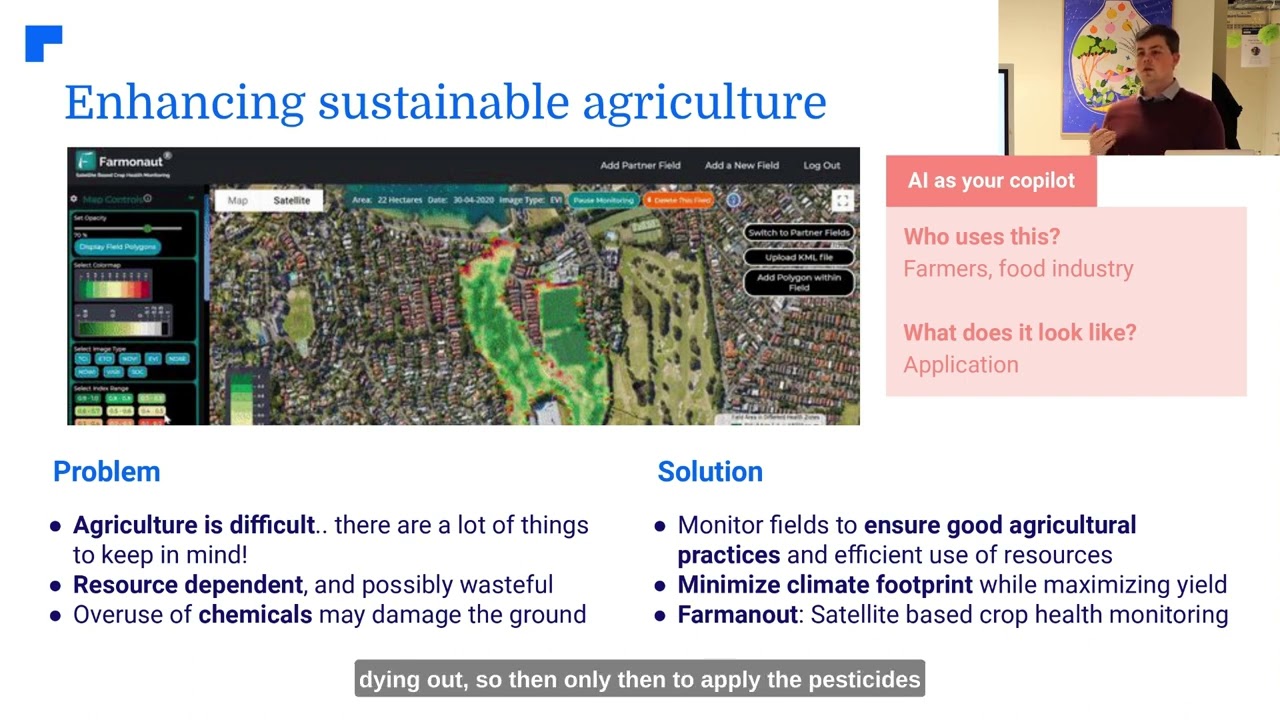
Satellite-driven solutions have become essential for cobalt mining companies seeking to optimize resource management, monitor environmental compliance, and meet rigorous sustainability standards. At Farmonaut, we empower the mining industry with technologies that enable:
- Real-time mine monitoring: Multispectral satellite imagery provides continuous oversight of mining sites, enabling detection of unsanctioned expansion, encroachment on protected areas, and water body impact at a large scale.
- Environmental impact tracking: Our platform’s carbon footprinting features help companies reliably quantify, audit, and report their emissions—an ESG essential in 2025.
- Blockchain-based supply chain traceability: Using Farmonaut’s traceability modules, cobalt producers and buyers alike can ensure every step of the supply chain is documented, from ore extraction to battery integration.
- AI-powered advisory: Our Jeevn AI system delivers real-time, tailored guidance for mining operations, leading to higher operational efficiency and improved environmental stewardship.
- Fleet and resource management: Satellite-enabled fleet management tools can streamline equipment movement and resource deployment—lowering operational costs and emissions.



Need to integrate satellite data and mining analytics into your own workflow? Try our powerful Farmonaut API (see developer docs here).
Benefits for Mining, Resource, and Environmental Compliance
- Data-driven sustainability: Quantify your water and energy reductions.
- Enhanced transparency: Build trust with stakeholders, governments, and the public by documenting responsible practices.
- Scalable deployment: Use the Farmonaut platform via Android, iOS, browser, or direct API—enable monitoring for single sites or global operations.
- Cost-effective compliance: Avoid fines and reputation risks by catching environmental deviations before they escalate.
For mining companies interested in environmental stewardship and traceable supply chains, Farmonaut offers scalable tools and affordable subscription plans to monitor impact and optimize operations.
Featured Videos
Farmonaut Subscriptions and Pricing
Explore cost-effective, scalable satellite monitoring for mining and resource management—see our subscription tiers below:
Challenges, Market Trends, and 2025 Outlook for Cobalt Companies
Risks and Roadblocks Facing Cobalt Mining Companies
- Political instability in the DRC: Ongoing regulatory shifts, social unrest, or expropriation risks can disrupt cobalt’s global supply overnight.
- Labor and community relations: Companies are under more pressure than ever to ensure ethical labor, community consultation, and fair benefit-sharing models.
- Volatile prices and alternative chemistries: Although demand remains high, the rise of cobalt-free battery chemistries (such as lithium iron phosphate, or LFP) could threaten market positions if new technologies deliver comparable performance.
Cobalt mining companies must stay ahead with agile, responsible business models and continued investment in sustainability and advanced technology.
Future-Proofing Operations: Integration and Diversification
- Vertical integration: By controlling refining, recycling, and direct partnerships with battery makers, leading cobalt companies capture more value and reduce risk throughout the supply chain.
- Exploring secondary deposits: Some companies focus on copper and nickel mines where cobalt is a byproduct, spreading risk and optimizing value extraction from complex ore bodies.
- Diversification into new geographies: Exploration in Australia, Canada, and beyond helps lessen the global sector’s overdependence on the DRC.
Pathways to Resilient, Ethical, and Green Supply Chains
Certification initiatives, digital traceability, AI-enabled monitoring, and satellite technology will define the next generation of sustainable mining practices. By 2025, eco-friendly cobalt mining is not just a competitive edge—it’s a requirement for licensing and market access.
Farmonaut’s technologies offer actionable pathways: from real-time monitoring to resource and fleet management for mining operations, to environmental impact audits that support compliance and reporting. Secure your license to operate—and your market share—by investing in these critical drivers of sustainable value.
FAQ: Cobalt Supply, Sustainability, and the Global Market
What makes cobalt so indispensable for batteries in 2025?
Cobalt stabilizes cathodes in lithium-ion batteries. Its physical properties allow batteries to last longer, store more energy, and function reliably across a range of temperatures—critical for electric vehicles and grid-scale storage.
Are all cobalt mining companies focusing on sustainable practices now?
By 2025, over 65% of companies mining cobalt are integrating at least one advanced sustainability practice, such as closed-loop recycling, hydrometallurgical extraction, or renewable energy integration. Regulatory and consumer pressure accelerates this trend globally.
How is ethical cobalt sourcing achieved?
Through a combination of blockchain-based traceability, routine labor and environmental audits, supplier certification via standards such as the Responsible Minerals Initiative, and, increasingly, use of recycled cobalt to reduce reliance on primary mining from high-risk regions.
What role does technology play in minimizing mining’s environmental impact?
Smart mining is built on real-time satellite monitoring, AI for predictive site analysis, automated drones for safer exploration, and digital platforms for continuous auditing and management—tools that Farmonaut provides for improved efficiency and lower environmental footprints.
Can battery makers really trace cobalt all the way back to its origin?
With blockchain traceability and satellite technology, yes. Battery and electronics manufacturers increasingly require chain-of-custody records for cobalt, demanding digital proof—from the mine through to the assembly line—that their resources meet ethical and environmental standards.
Conclusion: Cobalt Mining Companies – Drivers of a Greener Future
As the world propels toward widespread electrification and low-carbon innovation, responsible cobalt mining companies stand as the vital drivers of a secure and sustainable global supply chain. Their willingness to embrace new technologies, invest in water and energy management, and enhance transparency will determine the true resilience of the cobalt market in 2025 and beyond.
Farmonaut’s suite of satellite-powered solutions helps enable these ambitions by offering advanced monitoring, AI-driven advisory, and blockchain traceability for ethical, responsible sourcing. We are part of a growing movement to ensure that minerals as critical as cobalt are not just extracted for progress—but managed as sustainable resources that secure our future and the planet’s health.
Curious to experience next-gen satellite monitoring and data solutions?
-
Get started with Farmonaut’s satellite platform—track mining operations, environmental compliance, and more in real time. -
Download our mobile apps for mining management on the go. - Farmonaut API | Developer Docs—integrate satellite-powered insights into your proprietary tools and workflows for mining oversight.
For more options on environmental traceability, see our: Carbon Footprinting Solutions
For financial institutions seeking satellite-based loan and insurance assessments for mining, visit our Crop Loan and Insurance Page.
For fleet management across mining operations, learn about our Fleet Management Solutions.
Summary: Cobalt Mining Companies: Key Drivers in the Sustainable Resource Landscape of 2025.
Cobalt’s future is not just about extraction—it’s about stewardship, innovation, and responsibility. Companies mining cobalt in 2025 are forging a path where critical minerals, eco-friendly practices, and digital transparency are inseparable, driving sustainable batteries for the next era of clean technology and global prosperity.

 Berks Gold Limited
 Mwerezi Minerals Company Limited
 Congo Mining Solutions
 Mining SARL
 SenGold Invest SAS
 Sania Corporation
 Sean Mining Limited
 NTS Group (Pty) Ltd
 Mine4Africa
 Lithspo Minerals Limited
 Tintina Mining Group
 Dalgety Minerals Pty Ltd
 Vortex Minerals Pty Ltd
 Faith At Work (Pty) Ltd
 Geotech Mining Solutions plc
 Vulcan International Limited
 Kidepo Associates
 GKY Mining
 Alkimy SARL
 Double A Trading
 GemSprout Metals Limited
 Qader Group
 Ileys General Trading
 SG Gold Mining LLC
 VRV Global Pte Ltd
 Omsri International FZE
 G.I.T.T.
 Jaunita Erss Ltd
