

Gold prospecting · Who he is and panning guide
Dan Hurd Prospecting: Who He Is, Gear and Panning Steps
Dan Hurd is a teacher and YouTube prospector who runs Dan Hurd Prospecting. Here is what his own site confirms, plus panning steps, tool rules and a way to log and value your own pan tests.
Key takeaways
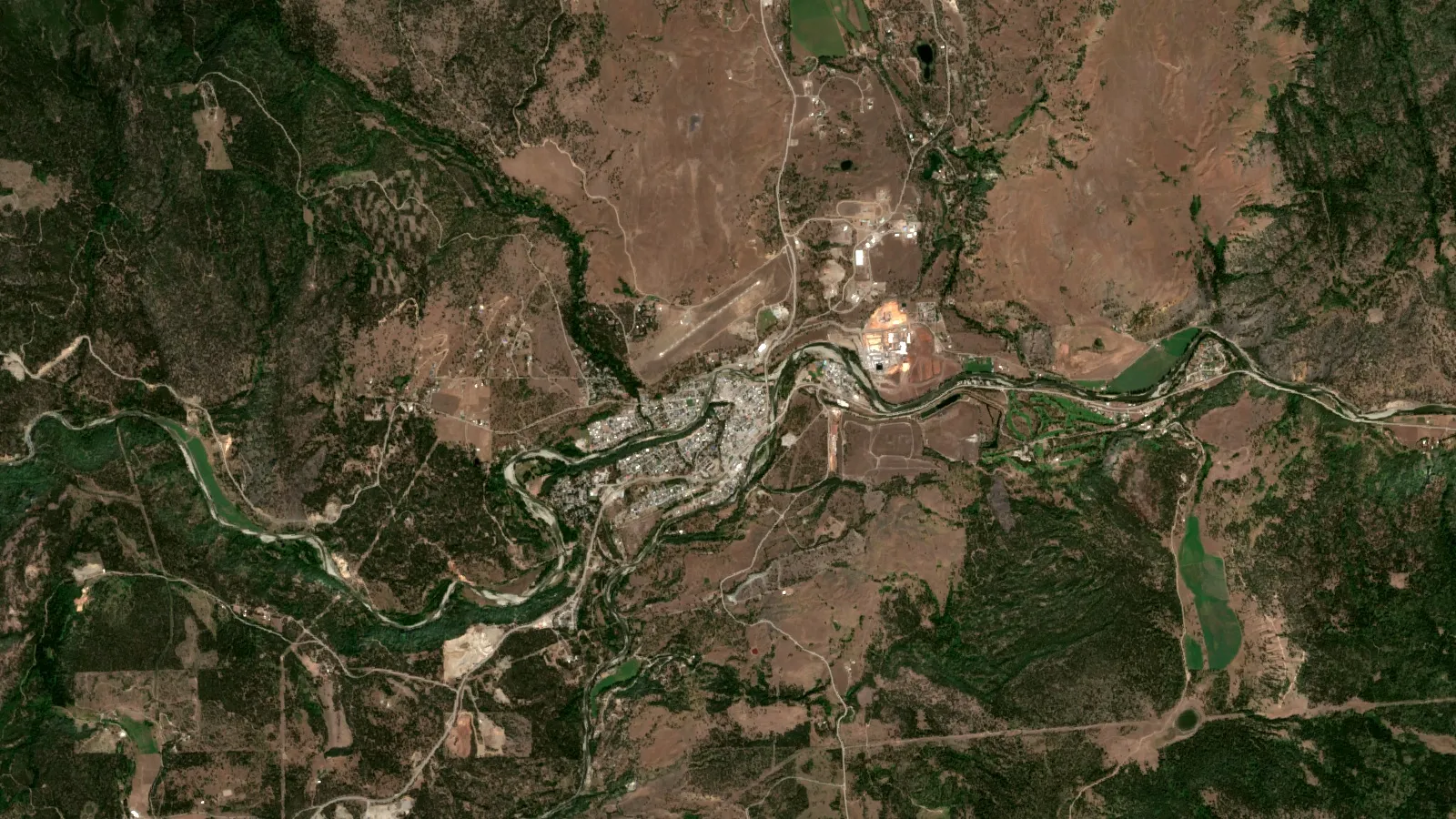
- Dan Hurd describes himself as a father, husband, teacher and prospector, and first panned gold as a child in the Similkameen (his site, read 5 November 2026).
- His official site is danhurdprospecting.com. He sells rocks, gems, jewelry, paydirt and some tools, and does not offer tours.
- A 12-inch pan is probably the most widely used size. An experienced panner handles about 100 pans of a 16-inch pan, or 0.6 cubic yard, in 10 hours (Washington State placer guide, 1979).
- Tool rules depend on the land: British Columbia hand panning allows only a pan and hand shovel.
- A new US federal lode claim costs US$274 per claim to file, including the first US$200 maintenance fee (BLM).
In this article
- Who is Dan Hurd?
- Dan Hurd Prospecting website, shop and channel
- Is there a Dan Hurd prospecting pan?
- How to pan for gold in 9 steps
- Where gold settles in a creek
- Placer gold, lode gold and what a pan can tell you
- Pan, sluice, detector or dredge: what each tool does and where it is limited
- Turn pan tests into a sampling record
- Where you can legally pan
- What it costs to move from panning to a claim
- What to check before you buy or map a claim
- Frequently asked questions
Dan Hurd is a teacher and YouTube prospector who shares gold panning, metal detecting and mining trips through Dan Hurd Prospecting. His own About page calls him a father, husband, teacher and prospector, and says he once ran a mining class he designed for high school students.
This page sets out what his own site confirms, what it does not, and how to turn the panning skills his audience comes for into a test you can write down. It also covers the rules that decide whether you may pan a creek at all, and the costs that begin once a hobby becomes a claim.
Who is Dan Hurd?
The clearest facts come from him. His FAQ page says his father took him gold panning in the Similkameen when he was a child, and that he came back to it when his own children began to enjoy the outdoors. His sons then pushed him to try metal detecting and magnet fishing. The About page adds that his sons and his wife sometimes join him on trips.
A few more points from the same pages are worth knowing:
- Work: the About page says he taught metalwork as a high school shop teacher for years. The FAQ describes a full-time teaching job, and says the YouTube channel is close to a second full-time job.
- Biggest gold find he names: a 3 gram nugget at a place he spells Pickerton.
- Claims: he says he has many varied claims and finds it hard to pick a favourite.
- Tours: he does not offer them. He gives liability and lack of time as the two reasons.
A 3 gram nugget is a useful reality check. At 31.1035 grams to the troy ounce, it is just under a tenth of an ounce, from a person who prospects often and films it. Viewers who are weighing up a first claim should keep that scale in mind.
Dan Hurd Prospecting website, shop and channel
The official website is danhurdprospecting.com. The home page describes the project as gold panning, metal detecting and mining adventures, points visitors to YouTube, and links to Twitter, Instagram and Facebook. The home page also lists recent clips, including how to sample a vein properly, cleaning bedrock under big boulders, and recovering gold and silver ore from the Midway Mine.
The shop is much broader than gold. On 5 November 2026 it listed rocks, gems and jewelry by the hundred, such as BC Ocean Picture Stone (361 products) and jade and gem serpentine (163). Three categories matter most to prospectors: Gold (13 products), Dan Hurd Paydirt (11) and Tools & Equipment (5). Weekly auction items are also listed, and the FAQ notes that a login is needed only for auctions.
Paydirt, for readers new to the word, is gravel or concentrate sold or dug for its gold content. Bought paydirt is practice material. It says nothing about the ground you might want to work, so never treat it as a sample of a claim.
Is there a Dan Hurd prospecting pan?
None of the shop category names on 5 November 2026 is a signature pan, and neither his About page nor his FAQ describes one. Treat any recovery-rate score for a pan with caution unless a named test supports it.
If you want a pan, buy on simple facts. Washington State’s placer gold guide (August 1979) lists standard pans of 10, 12 and 16 inches and calls the 12-inch size probably the most widely used. It also says the film of grease on a new pan must be removed before use, for example by scrubbing with fine silt. Size, material and riffle pattern are matters of comfort and habit. Practice with a known target will tell you more than a brand name.
How to pan for gold in 9 steps
These steps are a paraphrase of the sequence in the Washington guide, which draws on a 1934 text. The guide says the technique is not difficult but needs practice.
- Fill the pan nearly full of gravel, after screening out large stones.
- Put the pan under water and mix with your hands until everything is wet.
- Rotate the pan quickly from side to side without tipping it. Gold settles and large rocks rise.
- Keep that motion going and tip the pan forward, so light material and large pieces move to the front.
- Scrape part of that top layer over the brim with your thumb.
- Continue the motion and let water carry more light material over the brim, adding water as needed.
- Repeat until only a small patch of material covers part of the bottom. This is the concentrate.
- Pour off water until there is just enough to cover the concentrate.
- Swirl that water across the low part of the pan. Light grains travel further, and gold stays behind as a tail at the end of the concentrate.
Lift small flakes with a dry fingertip, a matchstick or a moistened fine brush, then wash them into a vial of water. Older texts describe mercury for this job. Do not use it. The US EPA lists panning and sluicing among gravity methods that work without mercury.
Where gold settles in a creek
Gold is heavy, so it drops out where water slows. The Washington guide names broad valleys below narrow gorges, tributary junctions, the heads of quiet reaches and the inside of bends. Placer gold is almost always concentrated on or near bedrock, or on a false bedrock such as a hard clay layer. That is why cleaning bedrock cracks under boulders, a theme of one of Hurd’s recent clips, is a sound habit and not just good television.
The same guide lists mistakes that first-timers make:
- Panning ground staked by someone else, or private ground without asking.
- Choosing creeks beside highways and busy roads, which have been panned many times.
- Going at high water, when bedrock channels are covered.
- Working very gentle streams, which are often too weak to carry gold.
- Panning in swift water, which can wash fine gold out of the pan.
Its best advice for an amateur is plain: check places where placer gold has already been found. A placer is a deposit of loose sand and gravel holding particles that weathered out of rock. It adds that almost all streams in Washington have already been prospected and mined, so history is your cheapest guide.
Placer gold, lode gold and what a pan can tell you
The US Geological Survey’s gold prospecting booklet separates two main deposit types. Lode deposits are primary gold in rock, usually veins. Placer deposits are secondary, formed when erosion releases gold and gravity concentrates it. Magnetite, a heavy iron mineral, is the most common mineral in black sand. Black sand can travel with gold, but the Washington guide notes that not all black sand contains gold. See our guide to types of gold deposits for the geology behind each style.
Chart
Gold mine output in selected countries
Metric tons, 2025 estimate
A pan answers one narrow question: is there visible loose gold at this exact spot? It cannot tell you how much rock-hosted gold lies underground. Hurd’s clip title “16 ounces of gold per ton” shows why units matter. The USGS booklet notes that assays, which are lab tests of metal content, report troy ounces per short ton or grams per metric ton. Sixteen troy ounces per short ton is about 549 grams per metric ton (g/t), which is why his title says over 500 grams. A figure like that from a selected vein sample describes that sample. It is not the grade of a mine, because a mine’s grade is averaged over a large tonnage of rock.
For scale, the USGS Mineral Commodity Summaries 2026 estimates world leaders in mine output for 2025. Canada, where his childhood Similkameen trips and BC-labelled shop lines point, sits at about 200 metric tons. In the United States, Nevada produced about 64% and Alaska about 22% of domestic gold, and the top 25 operations gave about 94%. USGS also lists several large placer mines in Alaska and numerous smaller ones, mostly in Alaska and the Western States. With the top 25 at about 94%, all other operations share about 6%.
▶ How gold moves from rock to refined metal, step by step · 5:27
Pan, sluice, detector or dredge: what each tool does and where it is limited
The two rule columns come from the published site rules. The job column is a plain description of each tool. Two sites are shown as examples, because the tool you may use depends on the land.
| Tool | Job | BC recreational hand panning | Whiskeytown (US National Park Service) |
|---|---|---|---|
| Hand pan | Finds gold-bearing gravel and cleans concentrate | Allowed | Allowed, metal or plastic, with permit |
| Hand shovel or trowel | Digs small samples | Hand shovel allowed | Small digging tools only, blade within 4 by 8 inches |
| Sluice box | Washes more gravel per hour with riffles | Not allowed | Not allowed |
| Metal detector | Finds nuggets at shallow depth | Not allowed as hand panning; counts as prospecting | Not allowed |
| Suction dredge | Lifts gravel from the stream bed | Not allowed | Not allowed |
Capacity explains why people move beyond the pan. The Washington guide puts an experienced panner at around 100 pans of a 16-inch pan in 10 hours, or about 0.6 of a cubic yard. It therefore treats the pan as a tool for locating gold and cleaning up concentrates, not for production. If you are weighing up detection instead, our gold detector price guide compares models.
Turn pan tests into a sampling record
This is the part consultants and claim buyers should care about most. One pan with colour in it is an anecdote. A set of equal-sized pans from marked points is data, though still rough data. Use the same method each time:
Chart
US gold price by year
US$ per troy ounce, 2025 is an estimate
- Record the GPS point, date, water level and depth for each pan.
- Use the same pan and fill level, so that sample sizes match.
- Follow the Washington guide on test holes and pan a sample every foot as you dig down toward bedrock.
- Take two or three tests at a promising spot, keeping each pan’s material from one place.
- Record flake counts and rough size, and keep each concentrate in its own labelled vial.
- Weigh the combined gold on a good scale, or send concentrates for assay if the result will drive a decision.
Flake counts vary widely. The Washington guide says very fine flood gold can take up to 40,000 flakes to make an ounce, so that number is an upper example and not a conversion factor. Weighing beats counting whenever you can. The calculator below gives a rough value per cubic yard from your own test. On 5 November 2026, Trading Economics showed gold at US$4,119.29 per troy ounce, but buyers of small lots may pay less than spot, so enter your own figure.
Calculator
What is your pan test worth per cubic yard?
Enter your own pan count, gold weight and price.
- Value per cubic yard at your price (US$): $107
- Value of the gold you recovered (US$): $13
Example values only, not a benchmark or a resource estimate. Pan tests are rough and selective. The default of 167 pans per cubic yard comes from the Washington State guide: about 100 pans of a 16-inch pan equal 0.6 cubic yard. Change it for your pan. The gold price is an example, use today’s price. One troy ounce is 31.1035 grams.
Where you can legally pan
Rules change by land type, so check before you dig. These examples show how far they can differ.
British Columbia
The province’s hand panning page (updated 1 March 2024) says no FMC (the provincial miner’s certificate) is needed for recreational hand panning, and only a hand pan and hand shovel may be used. Panning is allowed in recreational panning reserves, and the page lists them with maps and GPS files. One is at the Quesnel and Fraser river junction. Panning is prohibited on provincial heritage sites, and there is no right to explore for placer minerals on federal land, treaty settlement lands, First Nations reserves, parks, conservancies, ecological reserves or protected areas. The best practices include staying on existing paths, leaving vegetation alone and not digging into stream banks. For local detail, read our guide to gold panning on Vancouver Island. Claim titles are handled by the province’s Mineral Titles Branch.
United States
There is no single national panning rule. Whiskeytown National Recreation Area in California sells a one-dollar annual permit, required from age 17, on top of an entrance pass. Sale or commercial use of what you recover is banned there, as are mercury and digging above the water line. Marshall Gold Discovery State Historic Park allows hands and pans only on a set stretch of the river. Our page on California panning rules by land type goes further. Always find out who holds the land and any claim before you start.
▶ How satellites and remote sensing help in gold exploration · 4:25
What it costs to move from panning to a claim
A pan costs little. A claim brings yearly bills and duties. On US federal land the Bureau of Land Management fee page lists these for new claims filed on or after 1 September 2024: a US$25 processing fee, a US$49 location fee and a US$200 maintenance fee, which comes to US$274 for a lode claim. A placer claim pays the maintenance fee for each 20 acres or part of 20 acres. Maintenance on existing claims falls due on or before 1 September each year, and a waiver route exists for those who qualify.
Chart
First-year fees on a new US federal lode claim
US$ per claim, new claims filed on or after 1 September 2024
State pages explain the next layer: holding a California claim, getting a gold claim in Alaska and buying a claim in Oregon. A claim’s fees are the smallest risk. The larger risk is paying for ground without good evidence of gold, so test before you buy, and treat seller samples as a starting point. No panning result promises a profitable operation.
What to check before you buy or map a claim
- Title: search the official register for the holder, status and fees paid.
- Land status: confirm it is open to mining, and check for parks, reserves or private surface rights.
- History: read old survey reports and records of past placer work.
- Access and water: confirm a legal road, and the permits needed for any water use or machine work.
- Your own samples: pan and log the ground yourself, at low water if possible.
Pan tests cover a few points. Satellite imagery can add a wider view of geological patterns, such as faults and alteration zones, before a field trip. Farmonaut offers satellite screening from a KML or polygon boundary, with results treated as exploration targets that still need ground checks. Teams that also run field operations can see its pages on fleet management, product traceability, carbon footprinting, loan and insurance verification, the satellite and weather API and the app.
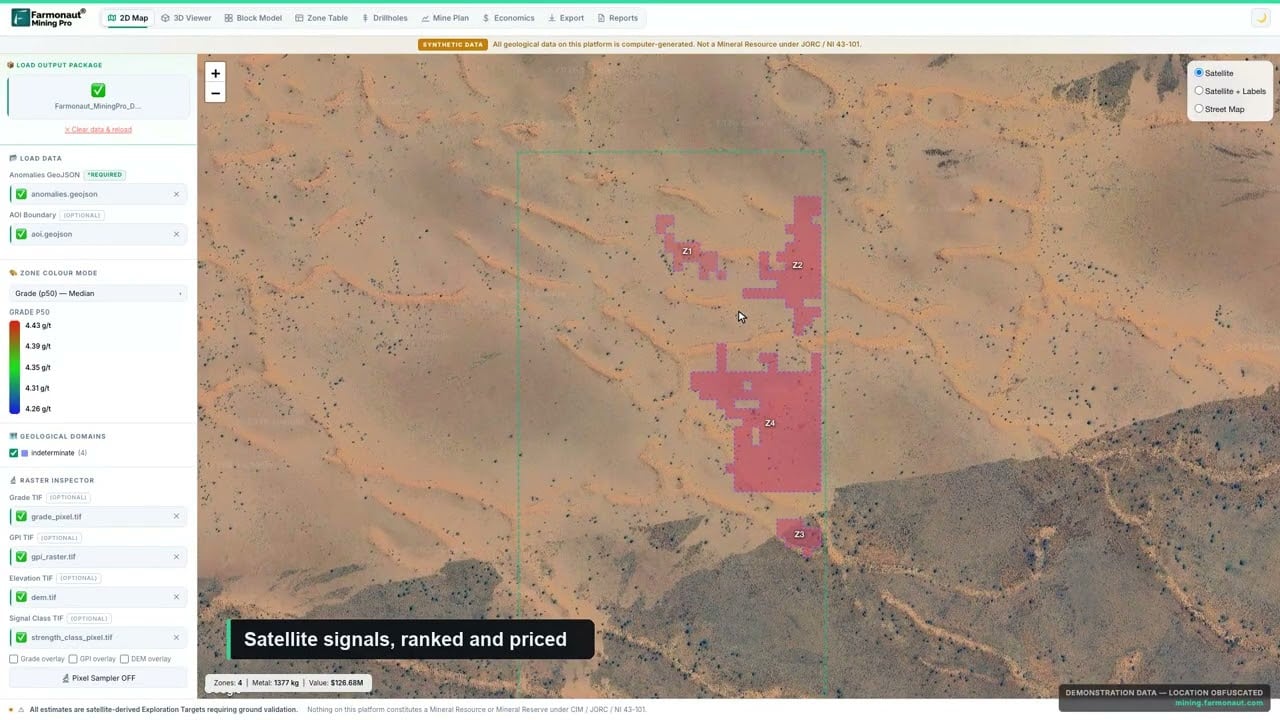
▶ An overview of Farmonaut Mining Pro for project areas · 4:56
Frequently asked questions
Who is Dan Hurd?
He is a prospector, teacher and YouTube creator who runs Dan Hurd Prospecting. His site says he taught high school metalwork and designed a mining class for students.
What is the Dan Hurd Prospecting website?
It is danhurdprospecting.com. It has his videos, an About page, an FAQ on the Blog page, a shop and a contact page.
Does Dan Hurd have a Wikipedia page?
On 5 November 2026 English Wikipedia had no article at the title Dan Hurd. His own site is the best first source for his background.
Does Dan Hurd sell a signature gold pan?
His shop’s category names on 5 November 2026 did not include one. It did list Tools & Equipment with 5 products, so check that category for current stock.
Does Dan Hurd sell paydirt?
Yes. The shop had a Dan Hurd Paydirt category with 11 products on 5 November 2026. Stock changes often.
Can I go prospecting with Dan Hurd?
No. His FAQ says he does not offer tours, because of liability and time.
What is the biggest gold nugget Dan Hurd has found?
His FAQ names a 3 gram nugget, found at a place he spells Pickerton.
What size gold pan should a beginner buy?
The Washington guide calls the 12-inch pan probably the most widely used of the standard 10, 12 and 16 inch sizes.
Do I need a licence to pan for gold in British Columbia?
The province says recreational hand panning needs no FMC (the provincial miner’s certificate), using only a pan and hand shovel in allowed places. A metal detector counts as prospecting and falls under different rules.
How much gravel can one person pan in a day?
The Washington guide gives around 100 pans of a 16-inch pan in 10 hours for an experienced panner, about 0.6 of a cubic yard.
This page is for information only. It is not legal or investment advice. Confirm the rules with the regulator. Get permission before you enter any land, follow local safety rules and never use mercury. Dan Hurd Prospecting is an independent channel with no connection to this page.
Farmonaut mining
Map your mining site from space
If you advise on or hold a project area, request a quote for a satellite screen of its boundary, reported as exploration targets for ground checks.

Mining Pro sample view, synthetic data
Keep reading
Sources
- Dan Hurd Prospecting, home page (read 5 November 2026): danhurdprospecting.com
- Dan Hurd Prospecting, About: danhurdprospecting.com
- Dan Hurd Prospecting, FAQs on the Blog page: danhurdprospecting.com
- Dan Hurd Prospecting, Shop (read 5 November 2026): danhurdprospecting.com
- Province of British Columbia, Recreational hand panning (updated 1 March 2024): www2.gov.bc.ca
- Province of British Columbia, Mineral Titles (updated 15 January 2026): www2.gov.bc.ca
- Washington State DNR, Placer Gold Mining in Washington, open file report (August 1979): dnr.wa.gov
- USGS, Prospecting for Gold in the United States: pubs.usgs.gov
- USGS, Mineral Commodity Summaries 2026: Gold: pubs.usgs.gov
- US National Park Service, Whiskeytown gold panning (updated 27 November 2024): nps.gov
- California State Parks, Marshall Gold Discovery recreational gold panning: parks.ca.gov
- US Bureau of Land Management, Mining Claim Fees: blm.gov
- US EPA, Artisanal and Small-Scale Gold Mining Without Mercury: epa.gov
- Trading Economics, Gold price (5 November 2026): tradingeconomics.com
Discussion
Questions, corrections or field experience? Share them below. First-time comments are reviewed before they appear, and your email is never published.
No comments yet. Be the first to add a question or your experience.

 Sahara Mining
 Sean Mining Limited
 NTS Group (Pty) Ltd
 Mine4Africa
 Lithspo Minerals Limited
 Tintina Mining Group
 Dalgety Minerals Pty Ltd
 Vortex Minerals Pty Ltd
 Faith At Work (Pty) Ltd
 Geotech Mining Solutions plc
 Vulcan International Limited
 Kidepo Associates
 GKY Mining
 Alkimy SARL
 Double A Trading
 GemSprout Metals Limited
 Qader Group
 Ileys General Trading
 SG Gold Mining LLC
 VRV Global Pte Ltd
 Omsri International FZE
 G.I.T.T.
 Jaunita Erss Ltd
 SRK Consulting
 Berks Gold Limited

 Client · Tanzania · Gold










