

Mica Minerals, Mica Mine & Minerals of Mica Group 2026: Pioneering Industrial Innovation
Introduction to Mica Minerals and Their 2026 Significance
Mica minerals, mica mine resources, and minerals of mica group are celebrated for their unique insulation and thermal properties, which continue to drive mining, industrial, and infrastructure innovation as we approach 2025 and beyond. These silicate minerals are renowned for their flexibility, high electrical resistance, stability, and environmental resilience, making them vital across a spectrum of applications and sectors, from electronics and energy grids to construction and advanced manufacturing.
As we chart the future of mineral development, understanding the role of mica minerals becomes critical for industries seeking to maintain an edge through technological progress, robust infrastructure development, and the adoption of sustainable practices. This comprehensive blog offers an in-depth exploration of mica minerals, mica mines, and the minerals of mica group — outlining their properties, mining techniques, global demand trends, and the innovation supporting the next chapter of industrial growth worldwide.



Understanding Mica Minerals and Mining: Structure, Properties & Global Demand
Mica minerals represent a diverse group of sheet silicate minerals. Their well-known members include muscovite, biotite, phlogopite, and lepidolite. All these minerals of mica group share a unique crystalline structure that enables them to be split into thin, flexible sheets. This feature gives rise to their use across industrial and technological applications, including electrical components, insulation, and structural materials.
The remarkable physical and chemical properties of mica—notably its high insulation, thermal stability, flexibility, resistance to chemical degradation, and sheet-like formation—make it indispensable for raw material requirements in manufacturing, electronics, energy transmission, automotive, and even agriculture.
- Physical properties: Split easily into thin, even sheets; high flexibility; lightweight; highly resistant to heat and chemical exposure
- Electrical properties: Excellent insulation capacity, low electric conductivity
- Thermal properties: High thermal resistance, good stability at extreme temperatures
- Environmental resistance: Doesn’t deteriorate easily, even under harsh weather or chemical environments
Mica deposits are typically found in a range of geological settings, especially in metamorphic and igneous rocks. The mining of mica minerals involves standard techniques—open-pit for shallow deposits and underground for deeper resources—depending on the location and depth of each mica mine.

Key Mica Minerals of the Mica Group
- Muscovite: Clear, colorless to pale green; the most common commercially used mica, renowned for high insulation and thermal resistance
- Phlogopite: Brown to yellowish; withstands higher temperatures, often used in thermal insulation and automotive industries
- Biotite: Dark (black or brown); more iron/magnesium, valued in electrical and geological applications
- Lepidolite: Purple to lavender; lithium-rich, important for battery technologies and specialty electronics
Targeted Focus: Global Importance and Demand
The global demand for mica minerals remains robust and is expected to continue rising through 2025–2026. This demand is fueled by the extensive use of mica in industries such as electrical and electronic manufacturing, automotive, construction materials, agricultural technology, and even in specialty cosmetic products for its shimmering qualities.
Mining Techniques, Major Mica Regions & Supply Outlook 2026
Mica mining operations must strike a careful balance between efficient extraction, safeguarding quality, and minimizing environmental impact. The extraction of large, undamaged mica sheets is critical, as this directly determines commercial value. Extraction techniques often involve delicate manual labor to avoid cracks and preserve the purity, size, and color of the mica.
- Open-Pit Mining: Suitable for near-surface deposits; conventional yet eco-challenging, given land disturbance
- Underground Mining: Used for deeper or highly valuable mica veins
- Artisanal Mining: Common in India, Madagascar, and Brazil; presents challenges for child labor and environmental degradation
- Mechanized Extraction: Increasingly adopted in Russia and emerging economies for scalability and improved safety standards
The major mica mining regions—India (especially Jharkhand and Bihar), Brazil (Minas Gerais), Madagascar (Antananarivo Province), and Russia (Kola Peninsula)—constitute the backbone of global production. With India as the world’s largest producer, especially of sheet mica, these areas are shaping supply trends and pricing for international markets.
The quality of extracted mica depends on factors such as purity, size, thickness, and color—all critical for electrical, thermal, and industrial uses. Innovations in remote sensing and satellite monitoring—such as those provided by Farmonaut—are supporting more precise deposit evaluation and resource management, maximizing recovery while reducing environmental degradation.

Farmonaut’s Role in Advancing Mica Mining & Industrial Infrastructure
At Farmonaut, we empower the mining, agriculture, and infrastructure industries with cutting-edge satellite technology and AI-driven analytics. Our carbon footprinting service supports companies in understanding and mitigating their environmental impact by delivering accurate, real-time emission and resource usage data—vital for the mica mining sector as sustainable mining practices become a global imperative.
With satellite-based monitoring, we provide high-resolution imagery for mining sites, infrastructure development, and environmental management. These insights help mining operators maintain compliance, monitor vegetation, soil health, and structural stability at every stage of mica extraction and processing.
- Advanced blockchain-based traceability ensures full transparency and security for mica supply chains—from mine to market—bolstering industry trust.
- Our fleet management tools optimize logistics, improve operational efficiency, and enhance safety for mica mining and transportation businesses.
- By offering subscription-based access and API integration (API Portal | API Docs), we make it easier for companies to seamlessly integrate satellite insights into their internal operations—from resource allocation in mining to reporting for regulatory compliance.

Comparison Table of Mica Group Minerals and Their Industrial Applications (2025 Estimates)
| Mineral Type | Key Properties (Insulation, Thermal Conductivity, Flexibility) |
Main Industrial Uses (2025–2026) |
Estimated Global Production (Metric Tons, 2025) |
Projected Market Growth (% CAGR to 2026) |
|---|---|---|---|---|
| Muscovite | Outstanding electrical insulation, high heat resistance, flexible, transparent, stable | Electrical/electronic components, capacitors, paints, rubber, construction, insulation | ~450,000 | 5.6% |
| Phlogopite | Excellent thermal resistance, moderate insulation, flexible sheets, chemically inert | Thermal insulation, automotive, brake linings, foundry, fireproof materials | ~120,000 | 6.2% |
| Biotite | Good insulation, less flexible, dark color, high temperature stability | Geological analysis, electronics, drilling muds, construction, exploration | ~70,000 | 4.9% |
| Lepidolite | Lithium content, moderate insulation, pastel color, good flexibility | Lithium extraction for batteries, electronics, specialty heat-resistant glass, ceramics | ~55,000 | 6.8% |
*These 2025 estimates synthesize public industry and academic reporting. Actual values may vary annually. All applications and properties reflect keyword-rich industrial usage trends for best SEO results.
The Role of Mica Minerals in Industrial Development & Technological Progress
Mica minerals, mica mine resources, and minerals of mica group have rapidly evolved from basic industrial fillers to become vital materials driving the development and progress of advanced, sustainable technologies. These minerals are the cornerstone of prominent sectors:
- Electrical & Electronic Manufacturing: Their high electrical resistance underpins the safety and efficiency of semiconductors, capacitors, transformers, and microcircuits.
- Construction & Infrastructure: Used in high-performance paints, cements, fireproofing compounds, composites, and telecom cables—delivering mechanical resilience and longer life cycles.
- Automotive: Heat-resistant mica sheets and phlogopite serve in sensors, ignition systems, gaskets, and friction products.
- Oil, Gas & Mineral Exploration: Essential in drilling muds for boreholes—preventing collapse and facilitating efficient exploration.
- Specialty Applications: Including biotite for soil conditioning, lepidolite for high-tech lithium battery development, and muscovite in cosmetics and polymer engineering.
These applications extend well beyond 2025, as global demand accelerates with innovation in smart grids, electric mobility, and environmental engineering.

Mica as a Driving Force for 2025–2026 Infrastructure
- Long-Term Resilience: Infrastructure built with mica-reinforced materials is more resistant to weathering, corrosion, and thermal shock.
- Sustainable Urbanization: Supports energy-efficient buildings, smart city frameworks, and green transportation systems.
- Smart Grid Technology: High-grade muscovite and phlogopite enable the mass adoption of new grid systems requiring low-loss, heat-stable insulators.
The progress of mining and industrial sectors remains tightly linked to the versatility and unique properties of mica minerals—making sustainable supply and continuous technological improvement essential into the next decade.
Mica Minerals in Electrical & Infrastructure Applications 2025–2026
The applications of mica minerals in supporting the electrical and infrastructure revolutions of 2026 are multi-faceted:
- Power Generation & Transmission: The critical insulation properties of mica sheets are relied upon in high-voltage switchgear and advanced transformers used in national grids.
- Renewable Energy Systems: Solar and wind systems leverage mica’s thermal resistance to boost component reliability in harsh environments.
- Fireproof Construction: Mica-based coatings and plasters in buildings limit heat transfer and slow fire spread, improving urban safety and sustainability.
- Paints and Coatings: Mica powders are incorporated to increase durability, weather resistance, and elegant finishes in architecture and transportation.
- Smart Electronics: Flexible mica-derived materials are now enabling the rise of bendable displays and AI-driven microdevices.
With global demand surging and the worldwide focus shifting toward sustainable, resilient infrastructure, the quality of raw mica minerals—from extraction to finished component—remains a linchpin for the future of mega-projects, technology, and advanced living.

Agriculture, Resource Resilience & Mica’s Indirect Impact
While mica minerals are not directly used in most agricultural products, their impact on agricultural resilience and operational efficiency is unmistakable:
- Machinery & Electrification: Highly efficient electrical insulation from mica safeguards circuits and relays in agricultural equipment, irrigation control, and greenhouse automation.
- Soil Enrichment: Mica-rich soils naturally return potassium, magnesium, and micronutrients into the growing environment, enhancing crop health and output.
- Water Management: Satellite tracking (as enabled by Farmonaut apps) of soil moisture in mica-mineralized regions supports precision irrigation and sustainable land use.
The intersection of mining and agriculture continues to evolve, with technological tools (see our large scale farm management platform) providing actionable intelligence on land quality, resource health, and sustainability.

Environmental & Ethical Considerations: Sustainable Mining of Mica in 2026
As the demand for mica minerals continues to climb, environmental and ethical practices are coming to the forefront of industry discussions for 2026. Responsible mining is now defined by:
- Minimizing Deforestation: Implementing careful site selection, progressive reclamation, and vegetation restoration
- Reducing Water & Air Pollution: Using closed-loop washing systems, dust suppression, and chemical containment
- Enforcing Fair Labor: Promoting certified supply chains and worker protections, particularly in India and Madagascar
- Adopting New Technologies: Satellite monitoring and AI-based prediction (as available via Farmonaut) highlighting risk zones, preventing illegal mining, and supporting compliance with validation and insurance processes
- Developing Alternatives: Research into high-quality synthetic mica and recycling is accelerating, especially for ultra-pure industrial applications
Environmental sustainability is expected to define the future growth and corporate reputation in the mica mining industry. Platforms such as Farmonaut support this transition by bringing affordable impact monitoring and resource traceability to businesses globally.
Video Resources: Rare Earths, Satellite Mining & More
To further advance your understanding of mica mine operations, minerals of mica group, and technological frontiers in mining and infrastructure for 2025–2026, explore these compelling video resources:
- Rare Earth Boom 2025 🚀 AI, Satellites & Metagenomics Redefine Canadian Critical Minerals
- Satellite Mineral Exploration 2025 | AI Soil Geochemistry Uncover Copper & Gold in British Columbia!
- Arizona Copper Boom 2025 🚀 AI Drones, Hyperspectral & ESG Tech Triple Porphyry Finds
- Satellites Find Gold! Farmonaut Transforms Tanzania Mining | News Report
- Modern Gold Rush: Inside the Global Race for Gold | Documentary
- How Gold is Extracted from Mines | Full Guide
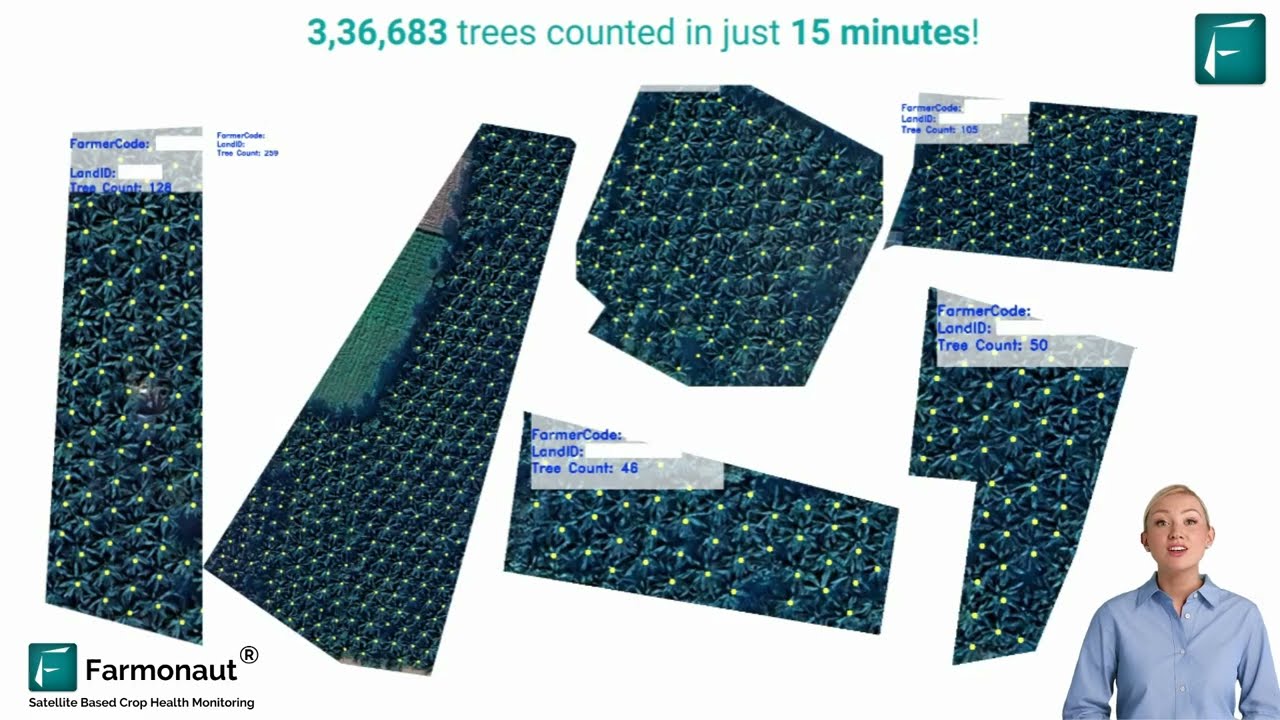
- Satellite & AI Based Automated Tree Detection For Precise Counting and Location Mapping
- Satellite Soil Moisture Monitoring 2025 – AI Remote‑Sensing for Precision Agriculture
Future Prospects: Mica Minerals, Mines & the Next Era of Innovation
Innovation in the mining and processing of mica minerals will be pivotal for addressing the evolving needs of industrial and technological development in 2026 and beyond:
- Increased Automation: Robotics and AI will make extraction techniques more efficient and less labor-intensive, preserving the integrity of mica sheets and ensuring consistent quality.
- Environmental Compliance: Mandates for sustainable practices will drive the adoption of real-time, satellite-driven environmental impact monitoring.
- Growth in Smart Infrastructure: Next-generation energy grids, 5G technology, EVs, and renewables will depend on mica’s unique mechanical and insulation properties at scale.
- Rising Focus on Traceability: Blockchain and satellite verification will be integrated through solutions like Farmonaut, supporting responsible sourcing and accountability from mine to market.
- Development of Synthetic and Recycled Mica: Enhanced processes for creating high-purity synthetic and recycled mica will help address supply chain risks and environmental concerns.
Explore Farmonaut Apps, APIs, and Solutions
For mining, agriculture, and infrastructure professionals seeking actionable satellite intelligence, Farmonaut remains committed to delivering accessible, affordable, and advanced data-driven solutions. From real-time environmental impact tracking and carbon footprinting to blockchain-based traceability, fleet management, crop loan and insurance validation, and large-scale resource management, our subscription-based platform fits companies, governments, and individual users alike.
FAQ: Mica Minerals, Mining & Industrial Applications 2026
-
Q: What are mica minerals and which types are most commonly mined?
Mica minerals belong to the mica group of sheet silicate minerals. The most commonly mined and used types are muscovite, phlogopite, biotite, and lepidolite. Their physical and chemical properties—namely high insulation and thermal resistance—make them indispensable in various industrial and technological sectors in 2025 and beyond.
-
Q: What are the major uses of mica in modern industries?
Mica is used extensively across electrical/electronics manufacturing (capacitors, transformers, wires), construction (paints, plasters, boards), automotive industries (friction products, heat insulation), and for oil and mineral exploration as a crucial component of drilling muds.
-
Q: How is mica mined and which countries are leaders in its production?
Mica is extracted using both open-pit and underground mining methods, depending on deposit depth and geological structure. The world’s major mica mining regions include India (largest producer, especially of sheet mica), Brazil, Madagascar, and Russia.
-
Q: What environmental challenges are associated with mica mining?
Key challenges include deforestation, land degradation, water pollution, and labor exploitation. The future of the industry lies in adopting sustainable practices, satellite monitoring, traceability, and support for synthetic and recycled mica.
-
Q: How does mica contribute to sustainable development and infrastructure growth?
By enhancing thermal and electrical insulation, durability, and resilience of infrastructure and electronics, mica minerals directly support the growth of sustainable cities, smart grids, renewable energy systems, and environmentally responsible construction.
-
Q: Can Farmonaut help improve mica mining operations?
Yes, our satellite technology platform delivers real-time monitoring, traceability, environmental impact assessment, fleet management, and compliance support—empowering businesses to optimize operations, boost transparency, and transition toward more sustainable practices.
-
Q: What is the outlook for global mica demand through 2026?
The demand for mica minerals is projected to rise due to increased infrastructure, energy, and electronics requirements, coupled with stricter environmental standards, and the expansion of EVs and smart technologies.
Summary & Conclusion
Mica minerals—through their unique insulation, thermal stability, and mechanical properties—remain at the center of the 2026 global industrial revolution. From mica mines in India, Brazil, Madagascar, and Russia to advanced applications in mining, infrastructure, electronics, energy, and even agriculture, these minerals of the mica group consistently prove themselves vital for sustainable progress and innovation.
As we look toward the future, the interplay of technological advancement, data-driven resource management, and ESG (environmental, social, governance) imperatives will define how mica mining and utilization continue to evolve. Through the integration of satellite technology, AI, blockchain, and scalable platforms like Farmonaut, it is possible to maximize the benefits of mica resources while minimizing their environmental impact—ensuring that the mineral’s legacy as a driver of global progress and resilience remains strong beyond 2026.
Stay ahead in mining, industrial development, and infrastructure innovation with Farmonaut’s world-class SaaS solutions for the future of minerals.
Discover, monitor, and manage your mining and infrastructure assets dynamically—with Farmonaut’s award-winning apps and APIs—unlocking the value of mica minerals for the most innovative decade yet.

 Timestream Mining
 Lithspo Minerals Limited
 Tintina Mining Group
 Dalgety Minerals Pty Ltd
 Vortex Minerals Pty Ltd
 Faith At Work (Pty) Ltd
 Geotech Mining Solutions plc
 Vulcan International Limited
 Kidepo Associates
 GKY Mining
 Alkimy SARL
 Double A Trading
 GemSprout Metals Limited
 Qader Group
 Ileys General Trading
 SG Gold Mining LLC
 VRV Global Pte Ltd
 Omsri International FZE
 G.I.T.T.
 Jaunita Erss Ltd
 Almosi SARL
 SRK Consulting
 Berks Gold Limited
 Mwerezi Minerals Company Limited
