

Diamonds · Arizona and the USA
Arizona Diamond Mine: Where US Diamonds Really Come From
Arizona has no diamond mine, and the USGS reports no US natural diamond mine output in 2024 or 2025. The state’s diamond stories are meteorite grains at Meteor Crater, garnet pipes on Navajo land and an 1872 hoax.
Key takeaways
- No diamond mine operates in Arizona; US natural diamond mine production was nil in 2024 and 2025 (USGS, 2026).
- Microscopic diamonds were reported in the Canyon Diablo meteorite at Meteor Crater in 1891.
- Visitors have found more than 37,377 diamonds at Crater of Diamonds, Arkansas, since 1972 (Arkansas tourism office, January 2026).
- Kelsey Lake, Colorado, mined about 12,000 carats in 1996 and closed in 2001.
- Arizona led US natural gemstone output by value in 2025, mainly non-diamond gems (USGS, 2026).
In this article
- Is there a diamond mine in Arizona?
- Where diamonds have been mined in the USA
- Diamonds in Arizona: the four real stories
- Crater of Diamonds: the nearest place to dig
- Kelsey Lake: a commercial US diamond mine that closed
- How rich must a diamond pipe be to pay?
- Arizona gold and copper: what the state actually mines
- How explorers screen ground for diamond pipes
- Where the world's diamonds come from
- Frequently asked questions
Is there a diamond mine in Arizona?
No. Arizona has no diamond mine, and the United States had no natural diamond mine production in 2024 or 2025, according to the USGS Mineral Commodity Summaries 2026 gemstones chapter. People who search for an “Arizona diamond mine” usually find one of four real things: tiny diamonds inside the meteorite that made Meteor Crater, garnet-rich volcanic pipes on the Navajo Nation that look a little like diamond pipes, the 1872 diamond hoax that sent prospectors into Arizona, or the state’s real gem mines for peridot and turquoise.
This guide sorts out each story, shows where diamonds really have been mined in the USA, and gives a calculator that tests how rich a diamond pipe must be before it can pay. It is written for consultants, licence holders and investors who are asked about diamond potential in the Southwest and need a short, sourced answer.
Where diamonds have been mined in the USA
Diamonds form deep in the mantle and reach the surface in rare volcanic pipes made of kimberlite or lamproite. A kimberlite is a dark, potassium-poor volcanic rock that erupts from more than 150 km deep; a lamproite is a related, potassium-rich rock. Only a small share of these pipes carry enough diamonds to mine. In the USA, the known diamond-bearing pipes sit in Arkansas and along the Colorado-Wyoming border, not in Arizona.
| Site | State | Host rock | Status | What it produced |
|---|---|---|---|---|
| Crater of Diamonds (Prairie Creek pipe) | Arkansas | Lamproite | State park; public digging | More than 37,377 diamonds found by visitors since 1972 (state figure, January 2026) |
| Kelsey Lake Diamond Mine | Colorado | Kimberlite | Closed 2001; site reclaimed by 2006 | About 12,000 carats in 1996 and 9,000 carats in 1997 |
| State Line Kimberlite District | Colorado and Wyoming | Kimberlite | Explored since diamonds were found in 1976 | Exploration samples; Kelsey Lake is its one mine |
| Meteor Crater (Canyon Diablo meteorite) | Arizona | Iron meteorite | Private site and museum; no mining | Microscopic diamonds, a scientific find only |
| Garnet Ridge and Buell Park diatremes | Arizona (Navajo Nation) | Ultramafic breccia, once called kimberlite | No diamond production | Pyrope garnet and peridot |
Sources for the table: Arkansas tourism office, Kelsey Lake mine history, USGS and the Navajo volcanic field literature, all listed at the end of the page. For a wider list of places where the public can search, see our guide to where you can dig for diamonds.
Diamonds in Arizona: the four real stories
1. The meteorite diamonds of Meteor Crater
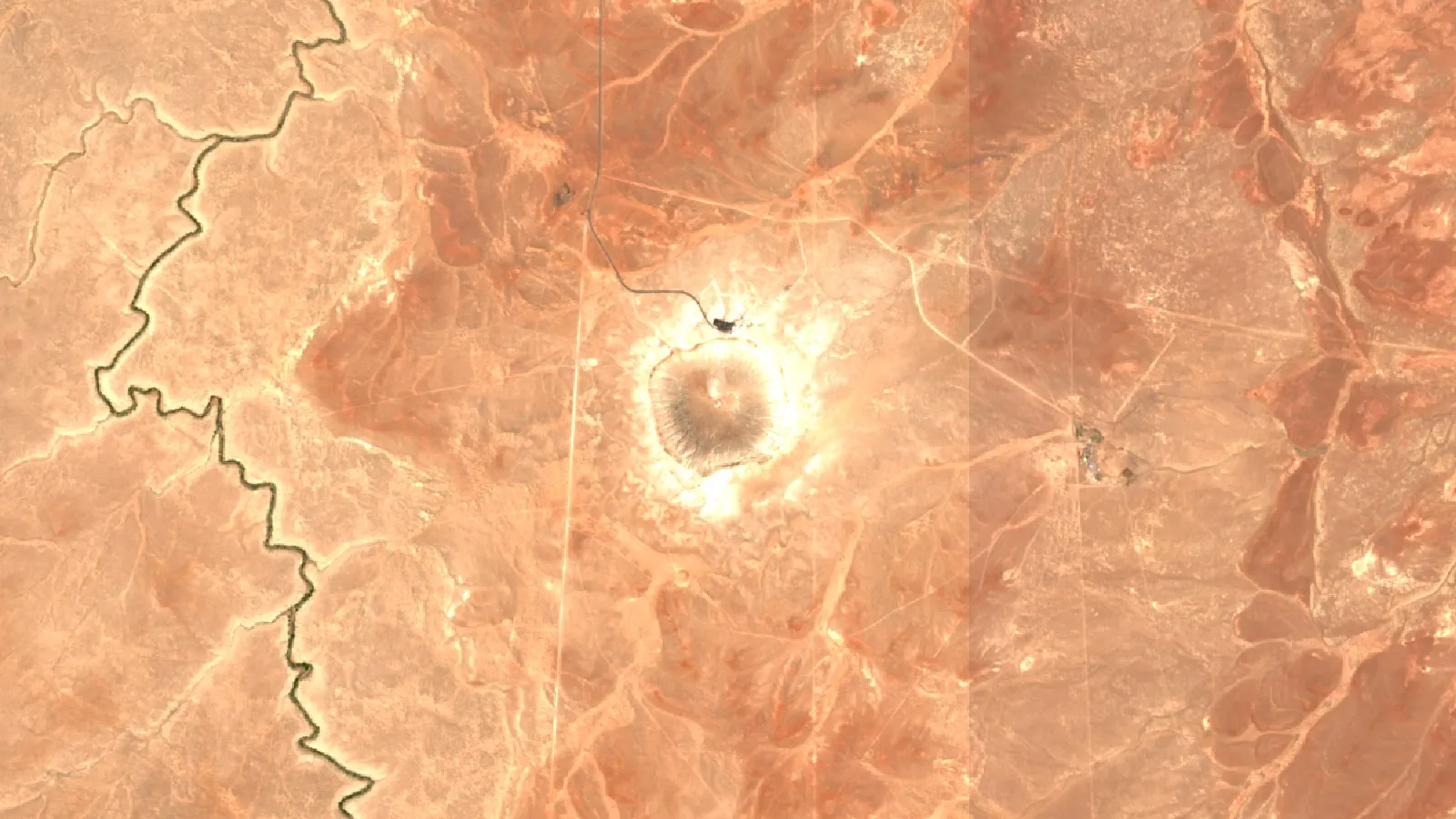
Meteor Crater, also called Barringer Crater, lies about 60 km east of Flagstaff. It formed about 50,000 years ago when an iron meteorite hit the Colorado Plateau. In 1891 the mineralogist Albert E. Foote described the meteorites found around the crater and reported microscopic diamonds inside them. Fragments are called Canyon Diablo meteorites, after the nearest old post office.
Chart
US gemstone production value, natural vs lab-grown
US$ million per year, all gem types
Later scientists described a hexagonal form of diamond in the Canyon Diablo meteorite and named it lonsdaleite. In 2014 a team based mostly at Arizona State University reported that “lonsdaleite” is ordinary diamond full of structural defects, formed by shock. Either way, these grains are far too small for jewellery and occur only in the meteorite. The crater is privately owned by the Barringer family’s company and run as a visitor site, so it is not open to prospecting.
2. Garnet-rich pipes on the Navajo Nation
Northeast Arizona holds the Navajo volcanic field, a group of small volcanic vents and diatremes. A diatreme is a carrot-shaped pipe blasted through rock when magma meets groundwater. Some of these pipes, such as Garnet Ridge and Buell Park, carry red pyrope garnet, the same indicator mineral that diamond explorers chase in Canada and southern Africa. Ants bring the small garnets to the surface, which is why traders sell them as “anthill garnets”.
Geologists first called these rocks kimberlite. Later work reclassified most of them as serpentinized ultramafic microbreccia, because their big crystals are pieces torn from the walls rather than crystals grown in the magma, and they lack the chemistry of true kimberlite (Navajo volcanic field summary). No diamond deposit has been reported from them. The land is Navajo Nation trust land, and mineral work there needs tribal approval.
3. The 1872 diamond hoax
In 1871 the prospectors Philip Arnold and John Slack bought rough diamonds and other gems, mixed them with garnets picked up on Navajo land, and “salted” a site near Diamond Peak in northwest Colorado. Investors in San Francisco and New York put money in before government geologists exposed the field as a fraud. The story triggered a short diamond rush that reached Arizona, New Mexico, Utah, Wyoming and Colorado (Great Diamond Hoax). It is one reason old maps and stories still link Arizona with diamonds.
4. Arizona’s real gems: peridot and turquoise
Arizona led the United States in natural gemstone production by value in 2025, ahead of Oregon, California, Nevada, Montana and Maine, according to the USGS gemstones chapter. The main gems are not diamonds. On the San Carlos Apache Reservation, tribal members mine young basalt flows for green olivine nodules, and the clear olivine is cut as peridot, as GIA’s Gems & Gemology describes. Turquoise from copper districts such as Sleeping Beauty near Globe is the official state gem, named in 1974.
The chart below shows how small the natural side of US gem output is next to lab-grown stones, and how both fell in 2025.
Crater of Diamonds: the nearest place to dig
For anyone who wants to find a diamond in the ground, the realistic choice is Arkansas. Crater of Diamonds State Park, near Murfreesboro, lets visitors search a 37-acre plowed field on the eroded top of a lamproite pipe and keep what they find. The Arkansas tourism office states that visitors had found more than 37,377 diamonds there by 13 January 2026 since it became a state park in 1972.
Chart
Selected large US diamonds
Rough weight in carats
Most stones are small. A park release in 2025 counted 220 diamonds registered that year by the date of publication, weighing just over 32 carats in all, and named a 3.81-carat brown stone the largest of the year at that point (Arkansas Department of Parks, Heritage and Tourism). The largest diamond ever found in the USA, the 40.23-carat Uncle Sam, came from this pipe in 1924. Attempts to mine the pipe commercially in the early 1900s failed because the stones were mostly small, and a US Bureau of Mines test in the 1940s recovered only 32 diamonds.
The chart compares the best-known large US diamonds. Every stone above 15 carats on the list came from Arkansas or from Kelsey Lake in Colorado.
Kelsey Lake: a commercial US diamond mine that closed
Kelsey Lake sits in the State Line Kimberlite District, in northern Colorado, near the Wyoming border. The district has nine kimberlite pipes; two were mined by open pit. Commercial output started in May 1996. Bulk samples taken in 1990 and 1991 graded 3.4 to 4.5 carats per hundred tons (cpht) for stones larger than 2 mm. Carats per hundred tons is the usual grade unit for diamond ore: 4 cpht means 4 carats in every 100 tons of rock.
Under Redaurum, which took control in 1995, the mine ran at half capacity, producing almost 12,000 carats in 1996 and 9,000 carats in 1997. It also produced the 28.3-carat yellow “Colorado Diamond”. A railroad company sued, saying it still held the mineral rights under the land it had sold in 1896. The case settled, ownership changed, and the mine stopped in 2001; the site was reclaimed by 2006 (Kelsey Lake Diamond Mine history). The lesson for any buyer of US ground is to check who owns the minerals as well as the surface.
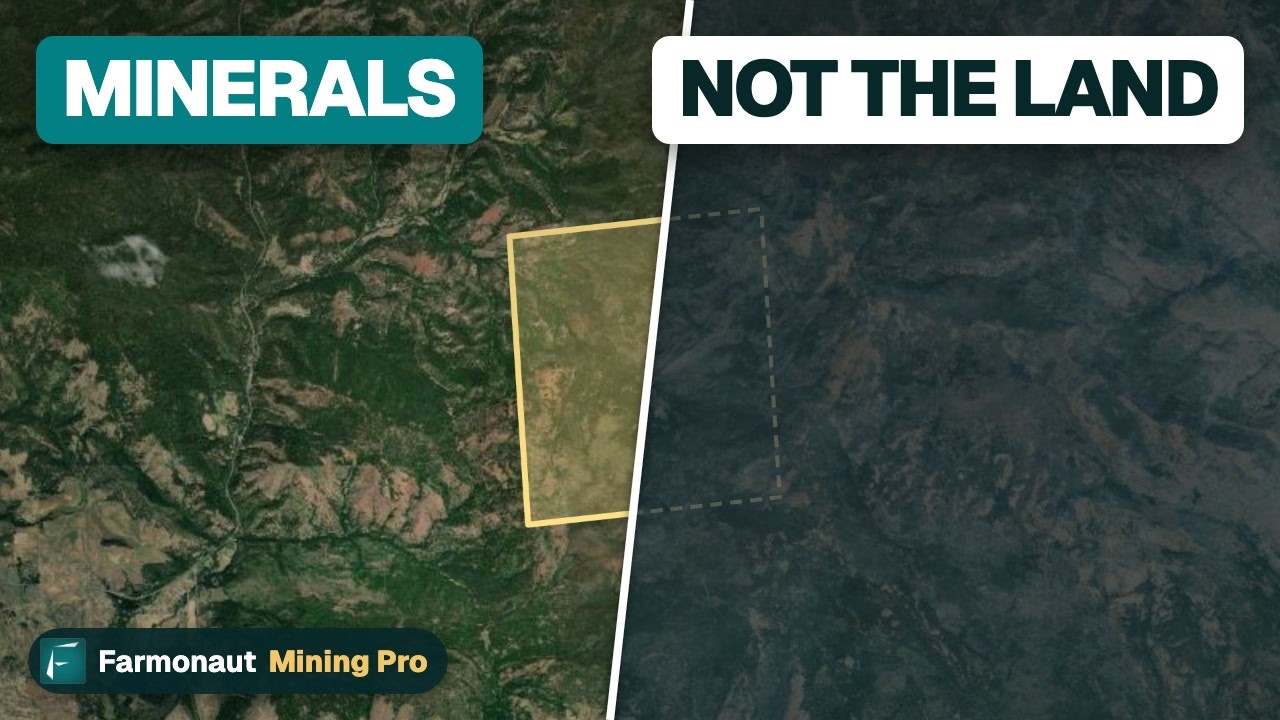
▶ Explains why owning a mining claim is not the same as owning the land or minerals. · 3:19
How rich must a diamond pipe be to pay?
Diamond grade varies more than gold grade, and the value of each carat matters as much as the number of carats. The USGS notes that most diamond ore bodies hold from less than 1 carat to about 6 carats per ton of ore (USGS, 2026). Kelsey Lake’s 3.4 to 4.5 carats per hundred tons was at the very low end of that range, which is one reason the mine struggled.
The calculator below turns tonnes, grade and price per carat into carats and value per tonne. Use it to test whether a reported grade could ever cover mining and processing cost. Price per carat swings widely by size, colour and quality, so treat it as an input you must check, not a fixed number.
What to check before believing a diamond claim
- Grade unit: carats per ton and carats per hundred tons differ by a factor of 100. Many promotions mix them.
- Bottom cut-off: grades depend on the smallest sieve size counted. A grade for stones above 1 mm is not comparable with one above 2 mm.
- Price per carat: a value from a few large stones does not hold for a whole parcel.
- Sample size: diamonds are rare and clustered, so grade needs bulk samples of hundreds to thousands of tonnes.
- Mineral rights: check who owns the minerals, as Kelsey Lake shows.
Calculator
What is a tonne of diamond ore worth?
Enter your own tonnes, grade, price per carat and cost. Amounts in US$.
- Diamond value (US$): $460,000
- Value per tonne (US$): 4.60
- Margin after cost (US$): -$1,540,000
Example values only, not a benchmark. Grade is in carats per hundred tonnes (Kelsey Lake samples graded 3.4 to 4.5 cpht). Price per carat is an example, use today’s price for your parcel. Cost per tonne is your own estimate.
Arizona gold and copper: what the state actually mines
Arizona is a metal state, not a diamond state. It produced about 70% of US mined copper in 2025, according to the USGS copper chapter. Gold in the USA comes mainly from Nevada, about 64% of 2025 output, and Alaska, about 22% (USGS gold chapter). About 7% of US gold is recovered as a byproduct of base-metal ore, chiefly copper, which is how Arizona’s large copper mines add to the gold total.
Arizona also has a long history of small lode and placer gold districts, such as the Bradshaw Mountains, Oatman and the placers near Quartzsite. For readers whose interest is gold rather than diamonds, our pages on gold and mineral mining methods and geochemical analysis in prospecting cover how explorers test ground before drilling.
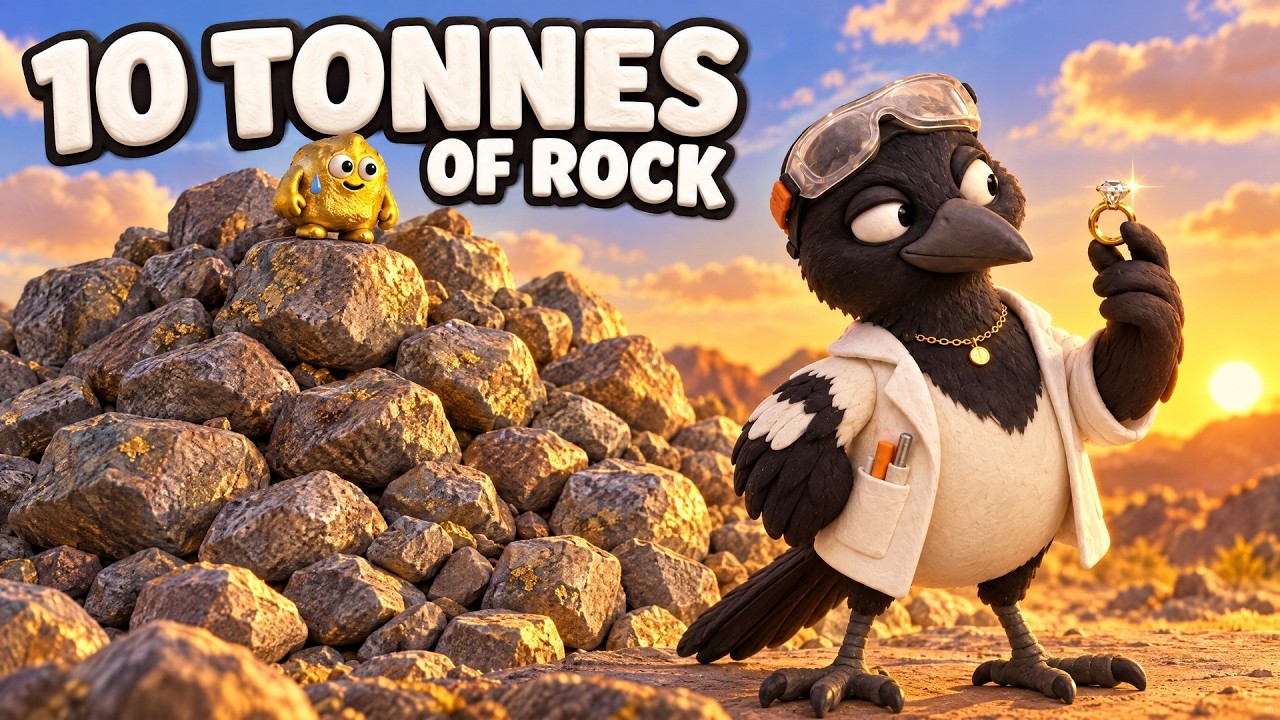
▶ Follows gold from rock to ring: drilling, crushing, leaching and refining. · 5:27
How explorers screen ground for diamond pipes
Modern diamond exploration follows indicator minerals and geophysics, then drills. The steps below are the standard sequence used in Canada and southern Africa; the same logic applies to any claim in the Southwest.
Infographic
Screening ground for diamond pipes in 5 steps
- 1Desk studyRead survey maps and known pipe locations.
- 2Indicator mineralsSample for pyrope garnet, chrome diopside and ilmenite.
- 3GeophysicsFly magnetic and gravity surveys over targets.
- 4Satellite screenMap round features, soils and access.
- 5Drill and bulk sampleMeasure grade and stone value.
- Desk study: read state survey maps and published pipe locations. In Arizona, check the Arizona Geological Survey and Navajo volcanic field papers.
- Indicator minerals: sample streams and soils for pyrope garnet, chrome diopside and ilmenite. Their chemistry shows whether the source came from the diamond-stable depth.
- Geophysics: fly magnetic and gravity surveys. Pipes often show as small round anomalies.
- Satellite and remote sensing: map round depressions, altered soils and vegetation changes over candidate pipes, and check access and land status.
- Drilling and bulk sampling: drill the best targets, then take bulk samples to measure grade and stone value.
Satellite imagery cannot see a diamond, but it can show the shape, soil and plant patterns over a pipe and rank targets before money goes into geophysics or drilling. Farmonaut maps exploration targets from satellite data for licence holders and consultants; results are targets ahead of drilling, not a resource estimate. For more on how the technology is used in diamond work, see technologies used in diamond mining and the coordinate guide best coordinates to find diamonds.

▶ How satellites map the rock around a deposit rather than the mineral itself. · 4:25
Where the world’s diamonds come from
If the USA mines no natural diamonds, where do they come from? World gem-quality diamond production was about 69 million carats in 2025 (USGS, 2026). Russia led with about 21 million carats, followed by Angola, Botswana and Canada with about 13 million carats each. The USGS adds that industrial diamond is almost all synthetic: about 97% of US industrial diamond use in 2025 was lab-made (USGS industrial diamond chapter).
Chart
Gem-quality diamond mine production by country
Thousand carats, 2025 estimate, selected countries
The natural diamond market has also been weak. The USGS describes a downturn since early 2023, hitting stones of one carat or less hardest, as lab-grown diamonds took market share. For the companies behind the big mines, see our pages on the biggest diamond companies, the biggest diamond mines and diamond exploration companies. A deeper look at the Arizona geology question is on our page can you find diamonds in Arizona, and the main deposit families are explained in types of ore deposits.
Frequently asked questions
Is there a diamond mine in Arizona?
No. No diamond mine operates in Arizona, and the USGS reports no US natural diamond mine production in 2024 or 2025.
Are there any diamond mines in the United States?
Not commercial ones today. Crater of Diamonds State Park in Arkansas is a public dig site, and Kelsey Lake in Colorado, the most recent commercial gem mine, closed in 2001.
Have diamonds ever been found in Arizona?
Yes, but only microscopic ones inside the Canyon Diablo meteorite at Meteor Crater, reported in 1891. They formed by impact or in space, not in Arizona bedrock.
Can I prospect at Meteor Crater?
No. The crater is private land owned by the Barringer family’s company and run as a visitor site with a museum.
Are the Garnet Ridge and Buell Park pipes kimberlite?
They were first called kimberlite, but later work classed most Navajo field pipes as ultramafic microbreccia. They yield pyrope garnet and peridot, not diamonds, and lie on Navajo Nation land.
Where is the closest place to Arizona to dig for diamonds?
Crater of Diamonds State Park in Arkansas, where visitors keep what they find. The Colorado State Line district is not open for public digging.
What gems are mined in Arizona?
Peridot from the San Carlos Apache Reservation, turquoise from copper districts, and gems such as amethyst, fire agate and garnet. Arizona led US natural gemstone output by value in 2025 (USGS).
What is the largest diamond found in the USA?
The 40.23-carat Uncle Sam, found at the Arkansas site in 1924.
What grade does a diamond mine need?
It depends on stone value and cost. Most mined ore bodies hold from under 1 to about 6 carats per ton (USGS); Kelsey Lake held about 3.4 to 4.5 carats per hundred tons.
Where is gold mined in Arizona?
Much of Arizona’s gold comes as a byproduct of its large copper mines, with smaller output from lode and placer districts. Nevada and Alaska produce most US gold.
More from Farmonaut: agro admin app, carbon footprinting, crop loan and insurance, farmonaut satellite weather api developer docs, fleet management, product traceability.
This page is for information only. It is not investment or legal advice. Prospect only with the landowner’s permission and the right licence, and never use mercury.
Farmonaut mining
Map your mining site from space
Consultants can map a client's licence area from satellite data to rank targets before geophysics or drilling. Results are exploration targets, not a resource estimate.

Mining Pro sample view, synthetic data
Keep reading
Sources
- USGS, Mineral Commodity Summaries 2026: Gemstones: pubs.usgs.gov
- USGS, Mineral Commodity Summaries 2026: Diamond (industrial): pubs.usgs.gov
- USGS, Mineral Commodity Summaries 2026: Copper: pubs.usgs.gov
- USGS, Mineral Commodity Summaries 2026: Gold: pubs.usgs.gov
- Arizona State University, Buseck Center for Meteorite Studies, lonsdaleite study (2014): meteorites.asu.edu
- GIA, Gems & Gemology, Colored stones from the deep (Winter 2021): gia.edu
- Arkansas tourism office, Crater of Diamonds State Park (January 2026): arkansas.com
- Arkansas Department of Parks, Heritage and Tourism, 3.81-carat diamond release (2025): arkansas.com
- Kelsey Lake Diamond Mine history: en.wikipedia.org
- Crater of Diamonds State Park history and geology: en.wikipedia.org
- Meteor Crater history (Foote 1891, ownership): en.wikipedia.org
- Navajo volcanic field geology: en.wikipedia.org
- Great Diamond Hoax of 1872: en.wikipedia.org
- Geology.com, Arizona gemstones (H. King): geology.com
Discussion
Questions, corrections or field experience? Share them below. First-time comments are reviewed before they appear, and your email is never published.
No comments yet. Be the first to add a question or your experience.

 Vulcan International Limited
 Kidepo Associates
 GKY Mining
 Alkimy SARL
 Double A Trading
 GemSprout Metals Limited
 Qader Group
 Ileys General Trading
 SG Gold Mining LLC
 VRV Global Pte Ltd
 Omsri International FZE
 G.I.T.T.
 Jaunita Erss Ltd
 Almosi SARL
 SRK Consulting
 Berks Gold Limited
 Mwerezi Minerals Company Limited
 Mining SARL
 SenGold Invest SAS
 Sean Mining Limited

 Exploration consultancy · South Africa · Gold
 Client · Oregon, USA · Gold










