

Table of Contents
- Introduction: The Critical Role of Energy Source Minerals in 2026
- Lithium: The Backbone of Renewable Energy Storage
- Innovations and Sustainability in Lithium Mining
- Uranium: A Cornerstone of Low-Carbon Energy Generation
- Nuclear Innovations: The Future of Uranium Energy Fuels
- Comparative Overview: Lithium vs Uranium in the Energy Transition (2026)
- The Interplay Between Lithium and Uranium in Global Energy Systems
- Challenges, Risks, and the Quest for Sustainable Solutions
- Supporting Energy Source Minerals with Satellite Technology: The Farmonaut Perspective
- Frequently Asked Questions: Energy Source Minerals in 2026
- Conclusion: Powering the Future with Lithium and Uranium
“By 2026, global lithium demand for energy storage is projected to rise by over 60% compared to 2021.”
Energy Source Minerals: Lithium, Uranium Energy Fuels 2026
The rapidly evolving landscape of the global energy sector underscores the critical role of energy source minerals lithium and uranium. In an era where the world grapples with the urgent need to create cleaner, more reliable, and sustainable energy systems, these two minerals stand at the forefront of technological innovation, underpinning development and fueling current and next-generation power infrastructures.
By 2026 and beyond, energy source minerals like lithium and uranium are not just enabling advancements—they are reshaping the global energy transition. From renewable power integration to continuity of supply, their importance has never been greater.



Access real-time lithium and uranium energy mineral monitoring via Farmonaut satellite solutions on Web, Android, and iOS.
Lithium: The Backbone of Renewable Energy Storage
In 2026, lithium‘s position as the backbone of renewable energy storage is undisputed. Its vital role emerges in the core of lithium-ion batteries, which empower electric vehicles (EVs), grid-scale energy storage systems, and an ever-increasing array of portable electronics.
The driving force behind lithium’s immense prominence in the energy revolution is its unique electrochemical properties. With high energy density, exceptional cycle life, and relatively lightweight composition, lithium batteries have become indispensable to tackling the intermittent nature of renewable sources like solar and wind. These batteries enable stable storage and seamless integration of renewables into energy systems, making energy distribution reliable and efficient.
The demand for lithium continues to surge rapidly. According to projections, global lithium demand for energy storage will rise by over 60% between 2021 and 2026. This trend is driven by the proliferation of EVs, grid-level batteries, and the exponential growth of portable devices (smartphones, laptops, and more).
Why Lithium is Indispensable
- Energy Storage: Central to advanced batteries for both mobility (EVs) and grid-scale renewable storage.
- High Energy Density & Long Cycle Life: Outperforms most alternatives (lead-acid, nickel-cadmium) in efficiency and durability.
- Enables Renewable Integration: Addresses the intermittent supply of solar and wind by capturing and distributing electricity as needed.
- Future-Ready: At the forefront of solid-state, high-capacity battery innovations, further expanding potential applications.
- Lightweight & Portable: Perfect for consumer electronics and EVs, requiring compact yet powerful energy source minerals.

Discover the cutting-edge impact of AI and satellites in redefining energy source minerals like lithium and rare earths in the renewable energy transition.
Key Global Lithium Producers (2026)
- Australia: Projects continue making it the world’s largest lithium producer.
- Chile & Argentina: The Lithium Triangle dominates brine extraction, with advanced practices addressing water use.
- China: Major player in both raw material extraction and battery manufacturing.
- Emerging Producers: Canada, Portugal, Zimbabwe, and the United States are increasing their market share to strengthen global supply security.
Localized Mining Trends
In Australia, hard-rock mining and advanced extraction practices reduce waste and control environmental impacts.
Chile and Argentina focus on sustainable brine extraction, while China’s lithium sector integrates battery manufacturing, recycling, and mining.

Explore how AI and satellite-driven soil geochemistry aid energy source mineral exploration, including lithium, globally.
Innovations and Sustainability in Lithium Mining
With the demand for lithium surging due to battery proliferation, the focus has shifted significantly toward responsible extraction, reducing pressure on virgin deposits, and supporting a circular economy.
- Recycling of Used Batteries:
Efforts are intensifying in 2026 to recover lithium from spent batteries. This process not only reduces environmental impacts but also alleviates pressure on virgin resources. - Innovative Mining Techniques:
Modern operations now feature closed-loop water systems, automation, and AI-enabled analysis to minimize ecological disturbance. - Environmental Impacts:
Lithium extraction can affect water consumption, habitat disruption, and local communities—necessitating stringent best practices and monitoring. - Farmonaut’s Contribution:
We help transform lithium extraction and mining with remote satellite monitoring, offering real-time data on site health, resource tracking, water use, and environmental compliance. Advanced AI tools on our platform provide actionable insights for sustainable operations.
Track and minimize the carbon footprint of your lithium mining operations using Farmonaut’s Carbon Footprinting solution. Enhanced sustainability, regulatory compliance, and actionable insights for every project.
Key Environmental Considerations
- Reduce water use and contamination
- Manage habitat disruption and community impacts
- Close the loop with battery recycling and resource traceability
- Support circular economy with sustainable practices

ESG and AI-based technologies are reshaping energy source mineral extraction, including lithium, ensuring more sustainable and efficient mining practices in key locations.
Uranium: A Cornerstone of Low-Carbon Energy Generation
“Uranium-powered nuclear plants supplied about 10% of the world’s electricity as of 2023, supporting reliable energy generation.”
While lithium powers the future of electrical storage, uranium as a source of energy remains the cornerstone for large-scale, low-carbon electricity generation. In 2026, uranium is anticipated to continue providing roughly 10% of global electricity, making it an exceptionally efficient resource that far exceeds fossil fuels in energy density.
- Nuclear Power’s Role: Uranium fuels nuclear reactors—providing vast, reliable, and continuous electricity with minimal greenhouse gas emissions.
- Baseload Energy Stability: Offers rock-solid energy reliability even when renewable sources fluctuate due to weather and time-of-day effects.
Why Uranium Remains Indispensable in 2026
- Unmatched Energy Density: A single uranium pellet can provide as much energy as hundreds of kilograms of coal or oil.
- Continuous, Large-Scale Power Generation: Critical for countries with limited renewable resource availability or needing steady, reliable energy supplies.
- Enabling Decarbonization: Helps countries reduce greenhouse gas emissions, especially in heavy industry and urban centers.
- Strategic Importance: Powers advanced infrastructures, defense systems, and even space missions.

Uncover the potential of satellite intelligence for locating uranium and gold deposits, revolutionizing the mineral sector globally.
Major Global Uranium Producers (2026 Estimate)
- Kazakhstan: The world’s leader, expanding ISL technology to control costs and minimize environmental impacts.
- Canada: High-grade, efficient mines in Athabasca Basin contribute significantly to global uranium fuel supply.
- Australia: Known for stable regulatory environment and innovative mining operations.
- Niger, Namibia: African producers with rising export volumes, supporting global energy demands.
Nuclear Innovations: The Future of Uranium Energy Fuels
Recent years saw quantum leaps in nuclear technology, with advanced reactors and modular designs reshaping the role of uranium energy fuels:
- Small Modular Reactors (SMRs):
Compact, transportable reactors designed for improved safety, cost savings, and easier integration in distributed or off-grid energy systems.
SMRs are being piloted in North America, Europe, and Asia, with commercial deployments expected by 2026-2028. - Generation IV Reactors:
These leverage new fuel types and closed fuel cycles, further increasing safety, efficiency, and waste minimization. Generation IV is pivotal for the next era of uranium energy fuels. - Thorium and Mixed-Oxide Fuel: Promising alternative nuclear fuels for enhanced sustainability and efficiency, potentially reducing pressure on natural uranium resources.
Uranium mining is also evolving. Modern extraction practices employ rigorous environmental controls to minimize radiation risks, water contamination, and habitat disruption. Regulatory oversight is intense due to the radioactive nature of uranium and its potential impacts.
Economic and Strategic Importance
Uranium is critical for national energy security, enabling countries to diversify energy sources and limit dependence on fossil fuels or insecure supply chains.
Ensure resource authenticity and regulatory compliance in uranium mining using Farmonaut’s blockchain-powered Traceability.
Enhance security, transparency, and economic value in uranium production and export.
Comparative Overview of Lithium and Uranium in Energy Transition (2026 Projections)
| Energy Source Mineral | Main Application | Estimated Global Production 2026 | Energy Output Potential | Key Advancements | Major Producing Countries (2026) | Environmental Considerations |
|---|---|---|---|---|---|---|
| Lithium | Battery storage for EVs, grid energy, portable electronics | ~200,000 metric tons (LCE) | Supports batteries: 1 GWh lithium batteries stores energy for ~1M homes/day | Solid-state batteries, high-speed recycling, AI-driven extraction, low-water brine mining | Australia, Chile, Argentina, China, Canada, Portugal | Water use, habitat disruption, recycling needed, carbon footprint |
| Uranium | Nuclear energy generation (baseload power, SMRs, isotopes) | ~65,000 metric tons (U3O8) | 1 ton uranium = ~44 GWh (enough for a major city/year) | SMRs, Gen IV reactors, thorium/MOX fuel, environmental monitoring | Kazakhstan, Canada, Australia, Namibia, Niger, Russia | Radioactivity, water use, land management, waste storage |
The Interplay Between Lithium and Uranium in Global Energy Systems
Energy source minerals lithium and uranium serve distinct yet complementary roles in the energy transition:
- Lithium: Empowers the storage and flexibility needed to accommodate intermittent renewable sources like solar and wind. Lithium-ion batteries ensure grid stability and enable efficient electrification of transport.
- Uranium: Anchors the baseload generation required for modern societies, helping nations ensure reliable supply regardless of weather or renewable variability. Nuclear power plants provide clean, continuous power for infrastructure and defense.
When strategically combined, lithium and uranium enable hybrid grids that are robust, resilient, and sustainable—addressing both the need for flexibility and continuity in the world’s power systems.

Energy systems mining rapidly evolves with diamond drilling, satellite mapping, and sustainable practices—vital for energy source minerals like lithium and uranium.
Strategic Value for Infrastructure and Defense
- Lithium energy storage is crucial for deploying robust electric mobility solutions, advanced grid management, and backup systems for critical national infrastructures.
- Uranium-based nuclear plants are strategic for energy security, defense operations, and providing stable energy for technological industries and urban centers.
Reliable energy infrastructure—from city grids to rural electrification—depends on a harmonious integration of both minerals to support economic growth and strategic security.

Learn how we at Farmonaut are enabling large-scale satellite-based resource monitoring for industries involved in lithium and uranium extraction, supporting efficient and sustainable operations worldwide.
Challenges, Risks, and the Quest for Sustainable Solutions
While the importance of energy source minerals lithium and uranium in 2026 is undeniable, several challenges threaten the resiliency and sustainability of future energy systems:
-
Environmental Impacts:
- For lithium: water use, habitat disruption, waste, and carbon footprint across mining locations—especially in Chile, Argentina, Australia, and China.
- For uranium: radioactive hazards, water contamination risks, and long-term waste storage.
-
Supply Chain Reliability:
- Disruptions due to geopolitical instability or environmental regulations can affect both lithium and uranium supply.
- Need for diversified sourcing and recycling to ensure global security.
-
Geopolitical and Economic Risks:
- Resource nationalism, trade restrictions, and international competition for strategic minerals create volatility in prices and access.
-
Technological Limitations and Innovations:
- Advancements—such as alternative battery chemistries (sodium-ion, solid-state) or next-gen nuclear fuels—could change demand landscapes.
Pathways to Sustainable Solutions
- Adoption of advanced mining practices that emphasize environmental monitoring and resource optimization—with satellite-based insights playing a crucial role.
- Investments in recycling to create a circular economy, reducing dependency on virgin deposits for lithium.
- Development of traceability systems to build trust, responsibility, and transparency in mining and mineral supply chains.
- International cooperation for regulatory standards, technology sharing, and risk mitigation.
Optimize resource logistics in lithium and uranium industries with Farmonaut’s fleet management solutions.
Streamline transit, reduce emissions, and lower operational costs using real-time satellite tracking.
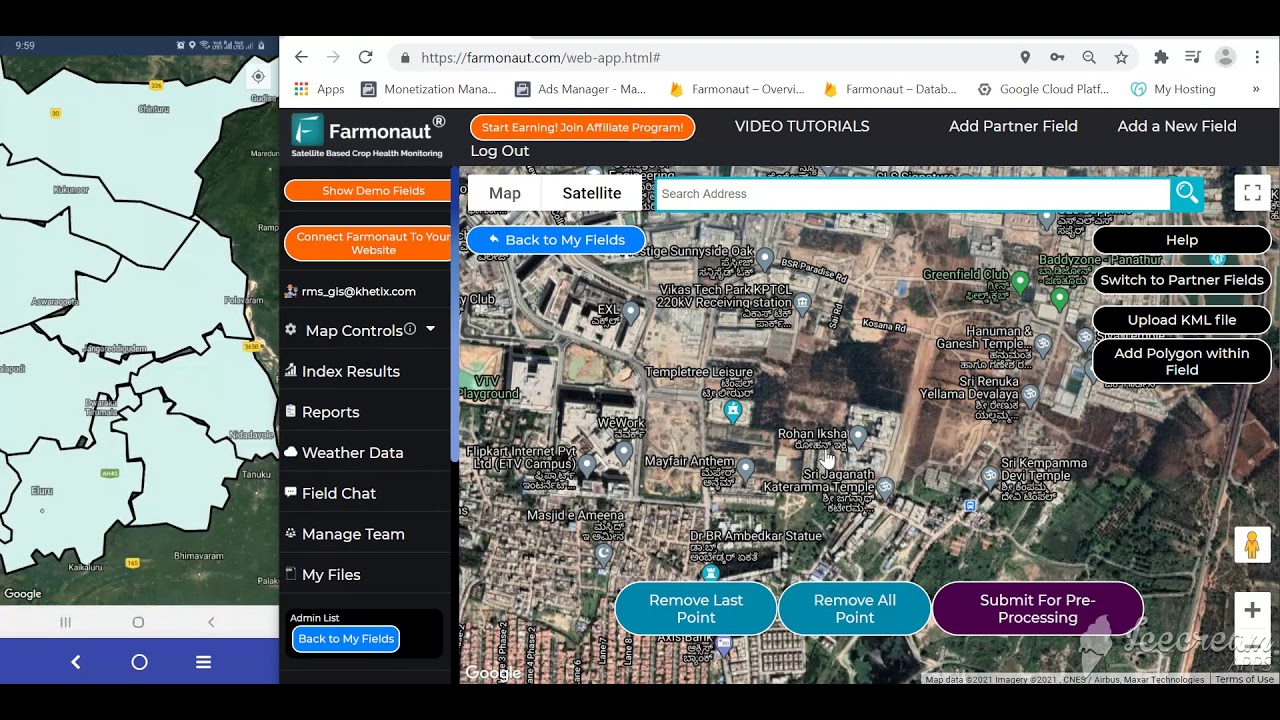
Supporting Energy Source Minerals with Satellite Technology: The Farmonaut Perspective
Our mission at Farmonaut is clear: To make advanced, satellite-powered monitoring and management affordable and accessible for businesses and governments navigating the evolving lithium and uranium energy landscape.

What Do We Offer?
- Satellite-Based Monitoring: Real-time tracking of mining, extraction, infrastructure, and environmental impacts across global energy source minerals lithium and uranium operations.
- AI-Powered Advisory: Our Jeevn AI delivers custom insights for managing extraction rates, monitoring site compliance, and ensuring sustainability in lithium and uranium mining.
- Blockchain-Based Traceability: Enhance supply chain transparency and security for critical minerals—from source extraction to final product delivery.
- Fleet and Resource Management: Optimize resource allocation—streamlining logistics, supporting operational security, and reducing costs in large-scale energy infrastructures.
- Environmental Monitoring: Continuous tracking of carbon footprint, water usage, and habitat impacts, supporting global requirements for cleaner, responsible mining and mineral management.
Through our accessible apps, web interface, and open APIs, we empower agricultural, mining, energy, and government stakeholders to readily track, manage, and optimize their energy source mineral operations for maximum productivity, transparency, and sustainability.
Enable evidence-based crop loan and insurance verification for lithium-rich regions using Farmonaut’s satellite solutions.
Foster economic growth and risk management in agricultural and mining communities.
Integrate satellite-powered lithium and uranium data monitoring into your systems with the Farmonaut API. Access detailed developer documentation via the Farmonaut API Developer Docs.
Frequently Asked Questions: Energy Source Minerals Lithium & Uranium in 2026
What makes lithium and uranium critical energy source minerals in 2026?
Lithium powers advanced energy storage systems, enabling the proliferation of electric vehicles and renewable integration. Uranium as a source of energy fuels reliable, low-carbon nuclear generation, anchoring stable grids and national energy security worldwide.
What are the main sources of lithium and uranium globally?
In 2026, lithium is produced primarily in Australia, Chile, Argentina, and China, with emerging producers in Canada and Portugal. Uranium production is dominated by Kazakhstan, Canada, Australia, Namibia, and Niger.
How are environmental impacts addressed in lithium and uranium mining?
Lithium mining focuses on reducing water usage, managing habitat disruption, and increasing recycling of used batteries.
Uranium mining is regulated to minimize radiation, manage water quality, and ensure safe long-term waste storage. New technologies and satellite monitoring enhance compliance and sustainability.
What technological innovations are shaping the future of these minerals?
For lithium: solid-state batteries, closed water systems, and AI-driven extraction.
For uranium: SMRs, Gen IV reactors, and new fuel cycles.
Both benefit from blockchain and satellite-based traceability for secure, transparent supply chains.
How can businesses and governments use Farmonaut for resource management?
We offer real-time satellite-based tracking, AI-powered advisory, and blockchain-enabled traceability across lithium and uranium operations. Our tools optimize mining, logistics, environmental compliance, and supply chain transparency—accessible via app and API.
Why is the supply of lithium and uranium so strategically important?
Both minerals underpin energy security, economic growth, infrastructure stability, and defense readiness. Disruptions in their supply chains can impact everything from EV production to national security and power continuity.
Conclusion: Powering the Future with Lithium and Uranium
The trajectory of the energy transition in 2026 and beyond is clear: Lithium and uranium are foundational energy source minerals that drive the world ever closer to a sustainable, secure, and cleaner energy future.
Lithium’s prominence as the enabling force for renewable energy storage and electrification continues to soar, supported by monumental advancements in battery technology, recycling, and sustainable mining practices.
Uranium remains the bulwark of reliable, large-scale, low-carbon electricity—its significance growing as nuclear innovations like SMRs and Gen IV reactors become more prevalent and globally distributed.
Together, these minerals underpin not just technological innovation and infrastructure growth—they also secure environmental stewardship, economic stability, and energy reliability for billions.
As nations and industries align with global climate goals and prepare for the challenges ahead, the responsible extraction, innovative integration, and sustainable management of lithium and uranium will shape the energy systems of tomorrow.
With advanced tools like Farmonaut’s satellite platform, we are ready to empower governments, businesses, and users on this transformative journey—making real-time insights, transparency, and efficient operations the new standard for energy source minerals worldwide.
Discover more about:
- Large-scale farm, mining, and infrastructure management with Farmonaut’s admin solutions for lithium and uranium extraction sites.
- Farmonaut Satellite App Platform – Real-time mineral monitoring and management
Together, we power the future—responsibly, sustainably, and intelligently.

 SMA Investments Ltd
 NTS Group (Pty) Ltd
 Mine4Africa
 Lithspo Minerals Limited
 Tintina Mining Group
 Dalgety Minerals Pty Ltd
 Vortex Minerals Pty Ltd
 Faith At Work (Pty) Ltd
 Geotech Mining Solutions plc
 Vulcan International Limited
 Kidepo Associates
 GKY Mining
 Alkimy SARL
 Double A Trading
 GemSprout Metals Limited
 Qader Group
 Ileys General Trading
 SG Gold Mining LLC
 VRV Global Pte Ltd
 Omsri International FZE
 G.I.T.T.
 Jaunita Erss Ltd
 Almosi SARL
 SRK Consulting
 Berks Gold Limited
