

Gold miners · Mine by mine
Equinox Gold Mines: Locations, Output and Reserves
Equinox Gold runs six mine complexes in Canada, the USA, Mexico and Nicaragua, led by Greenstone in Ontario. Here is each site’s output, cost and reserves after the 2026 Orla merger and Brazil sale.
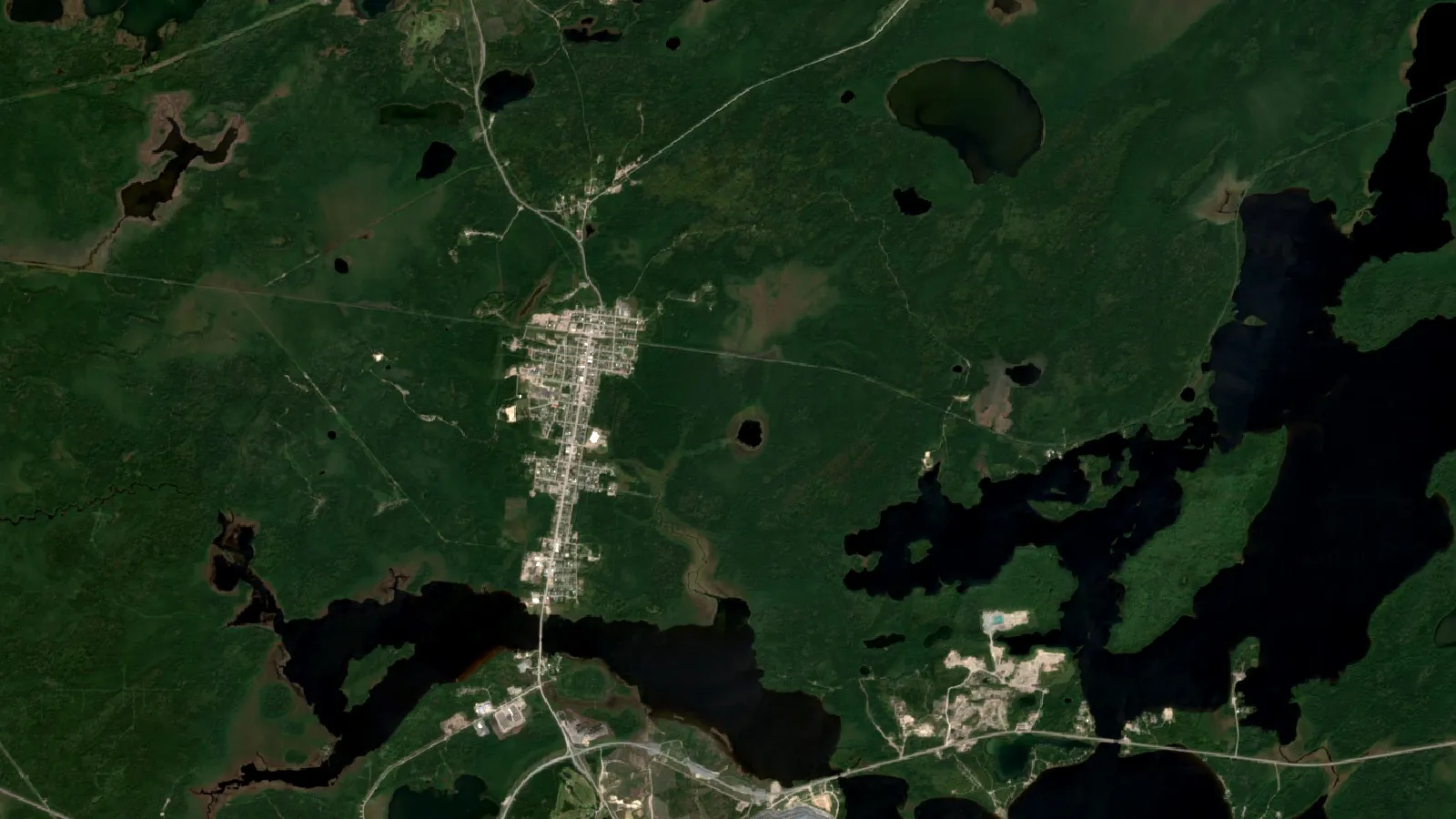
Key takeaways
- Equinox Gold has six producing complexes: Greenstone, Musselwhite and Valentine in Canada, Mesquite in California, Camino Rojo in Mexico and Limon and Libertad in Nicaragua (November 2026).
- Greenstone is the biggest single mine on 2026 guidance, at 250,000 to 275,000 oz, though Musselwhite produced more over the first nine months on a full-period basis.
- The Brazil mines, including Aurizona, were sold in January 2026, and the Orla Mining merger closed on 31 July 2026.
- Group guidance is 870,000 to 920,000 oz for 2026, or about 1.1 million oz on a full-year combined basis.
- Reserves total 22.7 million oz, but about half sit at Los Filos, Castle Mountain and South Railroad, which are not yet full producers.
In this article
- Where are Equinox Gold mines located?
- What is Equinox Gold's biggest mine?
- How much gold does Equinox Gold produce?
- What does each mine cost to run?
- How much gold is in Equinox Gold's reserves?
- Which projects are next?
- Equinox Gold stock on Stockhouse: the facts to check
- What to watch next
- Safety and sustainability record
- How we compiled this page
- Frequently asked questions
Equinox Gold has six operating mine complexes in four countries: Greenstone, Musselwhite and Valentine in Canada, Mesquite in California, Camino Rojo in Mexico and the Limon and Libertad operations in Nicaragua, according to its operations page (November 2026). Its biggest single mine is Greenstone in Ontario, guided to 250,000 to 275,000 ounces of gold in 2026.
That list is very different from what older articles show. The company sold all of its Brazil mines in January 2026 and merged with Orla Mining on 31 July 2026. Below you will find each location, how much each site produces, what it costs, how much gold is left in reserves, and what to watch in the projects still to be built.
Where are Equinox Gold mines located?
The company is a Canadian miner with its head office in Vancouver. Its shares trade as EQX on the Toronto Stock Exchange and the NYSE American. Production comes from these sites, as listed on its operations page and August 2026 fact sheet.
| Mine | Location | Mining and processing | 2026 production guidance | Status, November 2026 |
|---|---|---|---|---|
| Greenstone | Ontario, Canada | Open pit | 250,000 to 275,000 oz | Operating, still ramping up |
| Musselwhite | Ontario, Canada | Underground, carbon-in-pulp | 100,000 to 110,000 oz (August to December only) | Operating since 1997 |
| Valentine | Newfoundland and Labrador, Canada | Open pit with a mill | 140,000 to 150,000 oz | Operating, commercial production since November 2025 |
| Limon and Libertad | Nicaragua | Reported together as Nicaragua Operations | 225,000 to 250,000 oz | Operating |
| Camino Rojo | Zacatecas, Mexico | Open pit, heap leach | 55,000 to 65,000 oz (August to December only) | Operating since 2022 |
| Mesquite | California, USA | Open pit, heap leach | 70,000 to 80,000 oz | Operating |
Guidance figures come from the company’s 5 August 2026 results release. A heap leach mine stacks crushed or broken ore on a lined pad and trickles a solution through it to dissolve the gold. A mill grinds the ore first, which costs more but suits richer or harder ore.
Three more sites are in the portfolio but are not counted among the six producers. Los Filos in Guerrero, Mexico, has been suspended since 1 April 2025. Castle Mountain in California only recovers leftover gold from its leach pads. South Railroad in Nevada is under early construction.
Which mines did Equinox Gold sell?
Older pages call Aurizona in Brazil a flagship. That is out of date. The company agreed in December 2025 to sell its Brazil operations for up to US$1.015 billion in cash and closed the sale on 23 January 2026. CMOC Group’s entry records it as the buyer of Aurizona, RDM and the Bahia Complex. The only Brazil ounces in 2026 results are 13,473 oz from the weeks before closing.
How the portfolio reached this shape
The company was formed at the end of 2017. Its first producing asset came through the US$158 million purchase of Mesquite, announced in September 2018. The fact sheet then lists mergers with Leagold Mining in 2020, Premier Gold in 2021, Calibre Mining in 2025 and Orla Mining in 2026. Calibre brought Nicaragua and Valentine. Orla brought Musselwhite, Camino Rojo and South Railroad.
What is Equinox Gold’s biggest mine?
Greenstone is the biggest single mine on 2026 guidance. Its 250,000 to 275,000 oz range is above the roughly 235,000 oz full-year figure for Musselwhite, which is the company’s own estimate of a whole year rather than the five months it will report. Greenstone also holds the largest reserves of any mine now producing, at 5.33 million ounces.
Chart
Gold output by mine, third quarter of 2026
Ounces, full quarter including pre-merger months at Musselwhite and Camino Rojo
The ranking changes with the measure, and the third quarter shows why. Musselwhite produced 63,090 oz over the full quarter, ahead of Greenstone’s 60,596 oz. Over nine months, Musselwhite reached 193,152 oz against Greenstone’s 185,589 oz, per the 13 October 2026 production release. Nicaragua produced more than either, at 199,246 oz, but that total covers more than one mine.
Why reported totals understate two mines
Equinox Gold only counts Musselwhite and Camino Rojo from 1 August 2026. Its reported third-quarter total of 237,019 oz therefore includes just two months from each. The chart above uses full-quarter numbers so that the sites can be compared fairly, which means its bars add up to more than the reported total.
Greenstone
Greenstone is an open-pit mine in Ontario, now 100% owned. It processed 2.18 million tonnes of ore in the third quarter at 1.03 grams per tonne (g/t), meaning 1.03 grams of gold in each tonne of rock. Mill throughput averaged 26,856 tonnes per day in the second quarter, against a design rate of 27,000.
Musselwhite
Musselwhite is the high-grade mine of the group, underground and running since 1997. Its processed grade was 6.15 g/t in August and September, about six times Greenstone’s. It handles far less rock for a similar amount of gold. You can compare it with its neighbours in our guide to gold deposits in Ontario.
Valentine
Valentine poured first gold in September 2025 and declared commercial production in November 2025. Grade has been the issue to follow: the company lowered its 2026 guidance to 140,000 to 150,000 oz, then reported a third-quarter feed grade of 1.82 g/t, up from the year-to-date 1.64 g/t.
Nicaragua, Camino Rojo and Mesquite
Nicaragua carries the second-largest guidance in the group, with a grade of 3.09 g/t in the third quarter. Camino Rojo is the low-cost mine, with guided all-in sustaining costs near US$1,000 per ounce. Mesquite is the highest-cost site and has the smallest reserves, at 275,000 oz. For US context, our list of active gold mines in the USA ranks the largest American producers.
How much gold does Equinox Gold produce?
Reported production was 611,483 oz in the first nine months of 2026. Guidance for the year is 870,000 to 920,000 oz. On a full-year combined basis, the company puts its capacity at about 1.1 million oz. That would make it the second-largest producer of Canadian gold, by its own description, with more than 60% of output from the three Canadian mines.
For scale, Canada as a whole mined about 200 tonnes in 2025, per USGS Mineral Commodity Summaries 2026, which is around 6.4 million ounces. Natural Resources Canada says Ontario and Quebec together made 68% of Canadian output in 2024. Our page on top gold producing countries gives the wider table, and the top 20 gold mining companies shows how large producers compare.
▶ How gold is mined and refined, from rock to finished metal · 5:27
What does each mine cost to run?
All-in sustaining cost, or AISC, is the standard industry measure of the cost to produce an ounce and keep the mine running. It includes site costs and sustaining capital, but not new-build projects. Group guidance for 2026 is US$1,900 to US$2,000 per ounce, excluding corporate overheads.
Chart
Guided all-in sustaining cost by mine, 2026
US$ per ounce sold, low and high end of guidance
Costs differ widely across the group. Actual results can run above guidance too: AISC was US$2,175 per ounce in the second quarter, as reported in the August release, and the company expects unit costs to fall in the second half. Gold was US$4,119.29 per ounce on 5 November 2026, according to Trading Economics, against an average realized price of US$4,256 in the second quarter.
The margin depends on both numbers, and a thin-margin mine such as Mesquite reacts more sharply to a price fall than Camino Rojo does. The calculator lets you test that with your own inputs.
Calculator
What margin does a mine make at your gold price?
Enter ounces, an all-in sustaining cost from the chart and your own gold price.
- Revenue, US$: $1,000,000,000
- Margin per ounce, US$: $2,000
- Margin after the price fall, US$: $400,000,000
- Margin lost to the price fall, share of original: 20.0%
Example values only, not a forecast or a benchmark. All-in sustaining cost excludes growth capital, tax and corporate overheads, so this is not profit. The price is an example, use today’s price. All money in US$.
How much gold is in Equinox Gold’s reserves?
The company reports 22.7 million ounces of proven and probable reserves at an average 0.88 g/t, plus 25.1 million ounces of measured and indicated resources on top of those, on its reserves and resources page. Reserves are the part shown to be economic to mine under a technical study. Resources are gold with reasonable prospects of extraction, without that economic proof, so the two should never be added together as if they were equal.
Chart
Proven and probable gold reserves by asset
Million ounces; the eight largest assets, with Mesquite at 0.28 not shown
Two points stand out. Los Filos holds the largest reserves at 5.35 million ounces, but it is not producing. Castle Mountain and South Railroad add another 5.6 million ounces that are also not in production. Roughly half of the reserve base is therefore tied to projects that still need restarts, permits or construction. The effective dates differ too: some technical reports date from December 2025, while Mesquite’s is from 2019, so check the date before comparing two sites.
Which projects are next?
The company says its growth pipeline could add more than 800,000 oz a year over about five years, taking output above 1.9 million oz. These are company targets that depend on permits, funding and studies.
| Project | Location | Added output, company estimate | Where it stands |
|---|---|---|---|
| Los Filos restart and expansion | Guerrero, Mexico | About 280,000 oz a year | 20-year land agreements signed June 2026; restart planning under way |
| Castle Mountain Phase 2 | California, USA | About 220,000 oz a year | Federal decision pending |
| Camino Rojo underground | Zacatecas, Mexico | About 215,000 oz a year | Decline permits received March 2026; pre-feasibility study targeted for 2027 |
| South Railroad | Nevada, USA | About 130,000 oz a year | Federal decision August 2026; early works begun; first gold planned for 2028 |
| Valentine Phase 2 | Newfoundland and Labrador, Canada | About 48,000 oz a year | Construction approved; completion expected late 2028 |
Los Filos: the largest and least certain
Los Filos stopped on 1 April 2025 after the land access agreement with Carrizalillo, one of its three host communities, expired on 31 March 2025. In June 2026 the company signed 20-year agreements with the communities of Carrizalillo, Mezcala and Xochipala. The heap leach restart comes first. The larger gain relies on a carbon-in-leach plant that is still being studied. No restart date should be assumed until the company gives one.
South Railroad and Castle Mountain
The US Bureau of Land Management issued the South Railroad Record of Decision in August 2026. The open-pit heap leach mine in Elko County has a US$395 million initial capital estimate and a target of 130,000 oz a year over its first five years. State permits and water rights were still in application at that date. Nevada is well placed for this kind of mine: it made about 64% of US gold in 2025, USGS reports.
Castle Mountain has two dates to track. The investor page gives December 2026 for the federal decision, and the August results deck expects the federal decision in the fourth quarter of 2026 and permits in the first half of 2027. Both are company targets.
Equinox Gold stock on Stockhouse: the facts to check
Many readers meet this company on Stockhouse, a Canadian investor forum. Forum posts are opinions. The figures below come from company documents, so use them to test what you read there. This section gives facts, not a view on whether to own the shares.
- Listing: TSX: EQX and NYSE American: EQX, per the share structure page.
- Shares: 1,167.5 million issued and 1,247.5 million fully diluted at 4 August 2026.
- Market value: about US$12.5 billion on 6 August 2026, per the fact sheet. Check the current figure yourself.
- Dividend: started in February 2026 at US$0.015 per quarter, raised in August 2026 to US$0.0225, or US$0.09 a year. Future payments are at the board’s discretion.
- Buyback: 1,697,600 shares repurchased for about US$20.7 million in 2026, as of 9 October.
- Balance sheet: US$527 million cash and US$163 million net cash at 30 September 2026, preliminary and excluding convertible notes the company said it would redeem by 19 October.
- Largest holder: Van Eck Associates with 9.3%, including its gold mining funds, per the August fact sheet.
The first dividend was declared only in February 2026, so articles describing an older dividend record are wrong. For other names in the sector, see our overview of gold stocks.
Leadership has changed
Founder Ross Beaty stepped down as chairman at the merger’s close and became Chairman Emeritus, with Chuck Jeannes taking the chair. Darren Hall’s retirement as chief executive was set for 31 October 2026. Jason Simpson, the former head of Orla Mining and the company’s President, was named to take over as chief executive after that date. Treat older interviews as coming from a different management line-up.
What to watch next
The next hard data point is close. Full third-quarter financial results are due on 9 November 2026 after market close, with a conference call the next morning. Here is what they and later reports can settle:
Infographic
How to check an Equinox Gold claim in 4 steps
- 1Production releaseRead the quarterly ounces by mine and note which months are counted.
- 2Financial resultsCompare AISC and cash with guidance in the filed statements.
- 3Technical reportCheck the reserve, grade and the report’s effective date.
- 4Permit statusConfirm the project’s permits and restart dates in a dated release.
- Fourth-quarter delivery: reaching the low end of guidance needs about 259,000 oz in the final quarter, up from 237,019 oz, with a full quarter from the Orla mines helping.
- Greenstone: it needs about 64,000 oz in the fourth quarter to reach the bottom of its range, after 60,596 oz in the third.
- Valentine grade: whether feed grade keeps rising above 1.82 g/t.
- Costs: whether AISC moves toward the guided US$1,900 to US$2,000 range.
- Permits: Nevada state permits for South Railroad, and the federal decision at Castle Mountain.
- Los Filos: a dated restart plan and capital estimate.
Safety and sustainability record
Measured numbers say more than general claims about responsible mining. These come from the 2025 Sustainability Report, which predates the Orla merger and still includes Brazil:
- Zero work-related fatalities among employees and contractors in 2025.
- Total recordable injury frequency of 1.65 per million hours worked, improved from 2.21 in 2024.
- 12.0 million gigajoules of energy used, 10% of it from renewable sources, and 612,006 tonnes of direct (Scope 1) greenhouse gas emissions.
- 19.9 million cubic metres of water withdrawn in 2025.
- 17.9 million tonnes of tailings, the finely ground waste left after processing.
- An independent assurance process completed against the World Gold Council’s Responsible Gold Mining Principles.
Orla Mining published a separate 2025 report, so a combined record will not exist until the next reporting cycle. The Los Filos dispute shows that community agreements can stop a mine outright, which makes them a business risk as well as a social one.

▶ The seven environmental impacts of mining, explained in clay animation · 2:31
How we compiled this page
Mine names, ownership and guidance come from the company’s website and news releases, checked on 5 November 2026. Production is from the 13 October 2026 release and is preliminary until the financial statements are filed. Reserves are stated under Canada’s NI 43-101 disclosure standard and have not been reviewed by us. We compared sites on full-period figures where the company provides them and said so where we did.
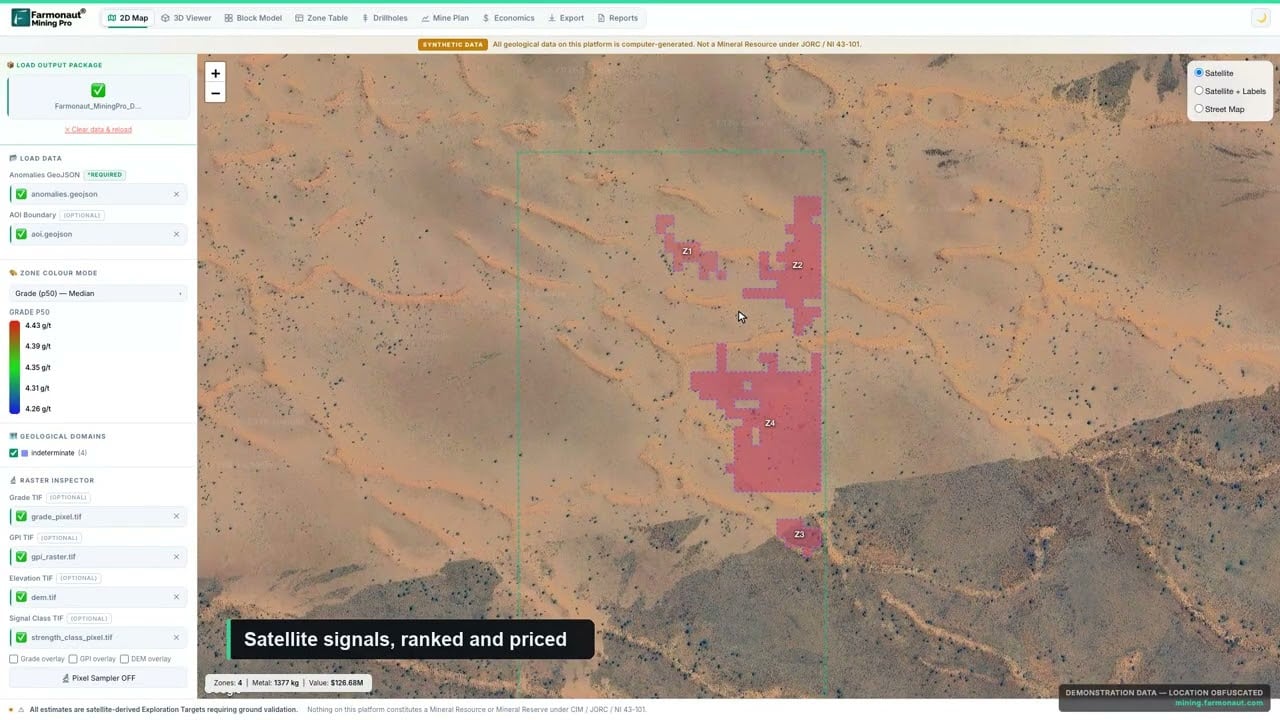
Farmonaut has no link to Equinox Gold or its mines. Investors and consultants who want to look at ground around a district can use Sentinel-2 satellite imagery as a first screen of surface conditions, ahead of field work and consultant review. Other Farmonaut tools include carbon footprinting, fleet management, product traceability, large-scale land management, loan and insurance verification and a developer API.
▶ What Farmonaut Mining Pro does with satellite data · 4:56
Frequently asked questions
Where are Equinox Gold mines?
Ontario and Newfoundland and Labrador in Canada, California in the USA, Zacatecas in Mexico, and Nicaragua. Non-producing assets are in Guerrero, Mexico, and in California and Nevada.
What is Equinox Gold’s biggest mine?
Greenstone in Ontario, on 2026 guidance of 250,000 to 275,000 oz and reserves of 5.33 million oz among producing mines. Musselwhite out-produced it in the first nine months of 2026 on a full-period basis.
Does Equinox Gold still own mines in Brazil?
No. The Brazil operations, including Aurizona, were sold in a deal that closed on 23 January 2026.
Does Equinox Gold own Musselwhite?
Yes. It came with the Orla Mining merger, completed on 31 July 2026, and is reported as 100% owned.
Is Equinox Gold a Canadian company?
Yes. It describes itself as a Canadian mining company, with its head office in Vancouver, British Columbia.
Is the Los Filos mine open?
Not as of the latest company reports. Operations were suspended on 1 April 2025. Land agreements signed in June 2026 allow restart work, but gold production has not resumed.
How many ounces does Equinox Gold produce a year?
Guidance for 2026 is 870,000 to 920,000 oz with five months of the Orla mines, or about 1.1 million oz on a full-year combined basis.
Does Equinox Gold pay a dividend?
Yes, since 2026. The quarterly rate was raised to US$0.0225 per share in August 2026, or US$0.09 a year. Future dividends are at the board’s discretion.
What ticker does Equinox Gold use?
EQX on both the Toronto Stock Exchange and the NYSE American.
Who founded Equinox Gold?
Ross Beaty is described by the company as its founder. The company was formed at the end of 2017, and he became Chairman Emeritus in July 2026.
More from Farmonaut: agriculture utah 2026 innovative agriculture in utah.
This page is for information only. It is not investment advice. Company figures are as reported by Equinox Gold, and third-quarter figures are preliminary until filed.
Farmonaut mining
See a gold district from space
Investors and consultants can review a licence area with satellite exploration data, as a step ahead of field work and technical review.

Mining Pro sample view, synthetic data
Keep reading
Sources
- Equinox Gold, Operations page (2026): equinoxgold.com
- Equinox Gold, Fact sheet (August 2026): equinoxgold.com
- Equinox Gold, Q2 2026 results release (5 August 2026): equinoxgold.com
- Equinox Gold, Q4 and FY 2025 production release (14 January 2026): equinoxgold.com
- Equinox Gold, Q2 2026 results deck (6 August 2026): equinoxgold.com
- Wikipedia, CMOC Group Limited: en.wikipedia.org
- Equinox Gold, Mesquite acquisition release (2018): equinoxgold.com
- Equinox Gold, Musselwhite mine page: equinoxgold.com
- Equinox Gold, Q3 2026 production release (13 October 2026): equinoxgold.com
- Equinox Gold, Greenstone mine page: equinoxgold.com
- Equinox Gold, Valentine mine page: equinoxgold.com
- Equinox Gold, Valentine commercial production release (2025): equinoxgold.com
- Equinox Gold, Mesquite mine page: equinoxgold.com
- USGS, Mineral Commodity Summaries 2026: Gold: pubs.usgs.gov
- Natural Resources Canada, Gold facts: natural-resources.canada.ca
- Trading Economics, Gold price (5 November 2026): tradingeconomics.com
- Equinox Gold, Reserves and resources: equinoxgold.com
- Equinox Gold, Growth projects: equinoxgold.com
- Equinox Gold, Los Filos land access release (25 June 2026): equinoxgold.com
- Equinox Gold, South Railroad Record of Decision release (17 August 2026): equinoxgold.com
- Equinox Gold, Investor centre: equinoxgold.com
- Equinox Gold, Shares, dividends and NCIB: equinoxgold.com
- Equinox Gold, Orla merger completion release (31 July 2026): equinoxgold.com
- Equinox Gold, 2025 Sustainability Report: equinoxgold.com
- Equinox Gold, Responsible mining reports: equinoxgold.com
- the land access agreement with Carrizalillo: equinoxgold.com
Discussion
Questions, corrections or field experience? Share them below. First-time comments are reviewed before they appear, and your email is never published.
No comments yet. Be the first to add a question or your experience.

 Imperial Impex FZE
 Congo Mining Solutions
 Mining SARL
 SenGold Invest SAS
 Sania Corporation
 Sean Mining Limited
 NTS Group (Pty) Ltd
 Mine4Africa
 Lithspo Minerals Limited
 Tintina Mining Group
 Dalgety Minerals Pty Ltd
 Vortex Minerals Pty Ltd
 Faith At Work (Pty) Ltd
 Geotech Mining Solutions plc
 Vulcan International Limited
 Kidepo Associates
 GKY Mining
 Alkimy SARL
 Double A Trading
 GemSprout Metals Limited
 Qader Group
 Ileys General Trading
 SG Gold Mining LLC

 Client & affiliate partner · Ghana · Gold










