

Financial Modeling for Copper Mining: 2025 How-To Guide
Table of Contents
- Introduction
- Understanding the Purpose of Financial Modeling in Copper Mining
- Step 1: Define Project Parameters and Scope
- Step 2: Revenue Forecasting and Price Volatility Analysis
- Step 3: Capital Expenditure (CapEx) Structuring
- Step 4: Operating Expenses (OpEx) Breakdown
- Step 5: Integrating ESG and Regulatory Criteria
- Step 6: Building Financial Statements and Cash Flow Models
- Step 7: Scenario and Sensitivity Analysis
- Step 8: Model Validation and Investor Communication
- Copper Mining Project Financial Forecast Table (2025 Estimates)
- FAQs
- Conclusion
“By 2025, over 70% of copper mining investors use financial modeling for capex, opex, and ESG risk assessments.”
Introduction: Mastering Financial Modeling for Copper Mining Projects in 2025
Financial Modeling for Copper Mining Projects: How-To Tutorial is the ultimate resource for stakeholders in copper mining—spanning investors, analysts, engineers, and project managers—eager to achieve robust investment decisions in a rapidly evolving sector.
As the global economy undergoes significant transformation driven by infrastructure, renewable energy, electric vehicles, and electronics, copper mining remains pivotal as a raw material supply chain cornerstone. The industry advances rapidly with innovations in decarbonization, digitalization, and ESG (Environmental, Social, and Governance) compliance, making financial modeling for copper mining ventures more sophisticated than ever before.
This comprehensive guide will walk step-by-step through the 2025 framework needed to build a robust financial model for copper mining projects—covering
- project parameters and scope
- revenue forecasting and sensitivity
- capital expenditure (CapEx)
- operating costs (OpEx)
- integrating ESG factors and regulatory risks
- data-driven financial statements and cash flow projections
- scenario and risk analysis
- stakeholder communication and model validation
We’ll leverage best-practices and 2025’s leading-edge tools (including satellite-based monitoring for operational data) to ensure our modeling is both accurate and sustainable. By the end, you’ll understand how a well-designed financial model supports sound strategic, operational, and capital investment decisions in the copper sector.

Understanding the Purpose of Financial Modeling in Copper Mining
Financial modeling in copper mining projects serves multiple objectives critical to all actors in the project lifecycle:
- Assessing project feasibility, including technical, commercial, and environmental viability
- Attracting investment and securing financing from banks, equity holders, and alternative funds
- Budgeting capital and operating expenditures over both short- and long-term timelines
- Forecasting project returns—NPV, IRR, payback, and sensitivities under various scenarios
Robust financial models balance technical mining data, market dynamics, CapEx, OpEx, ESG criteria, and macroeconomic indicators to clarify project risk and optimize allocation of capital and operational resources. This approach enhances decision-making and aligns all stakeholders with regulatory compliance and global sustainability goals.
Why Copper Mining Projects Demand Sophisticated Financial Modeling in 2025
Several factors influence the heightened importance of financial modeling for copper mining in 2025:
- Rising demand for copper in renewable energy and electric vehicles accelerates exploration and expansion.
- Stricter environmental and ESG regulations increase the need for compliance-driven cost assessment.
- Volatile copper prices require robust scenario and sensitivity analysis.
- Investors are now more focused on sustainability and transparency than ever before.
- Technology disruptions (e.g., satellite monitoring, AI, blockchain for supply chain transparency) are altering risk and cost dynamics, demanding their integration within all models.
Consequently, mastering step-by-step financial modeling for copper mining projects has become essential in 2025 to navigate complex operational, financial, and ESG factors and foster robust investments in this pivotal global sector.
Step 1: Define Project Parameters and Scope
A strong model always begins by clearly defining the parameters and scope of the copper mining project. Clarity at this stage ensures downstream calculations of costs, production, and revenue forecasts remain accurate and real-world aligned.
Key Project Inputs
- Project Life: The total timeline from exploration through to closure—often 15 to 30 years for major copper mines.
- Production Capacity: Target annual and total tons of ore or copper concentrate to be extracted/processed. Must be in line with reserve estimates and mine plan.
- Ore Grades: Expected copper percentage in ore (e.g., 0.5% Cu). Directly impacts metal output and economics.
- Recovery Rates: Metallurgical yield reflecting how much copper is recovered in processing from the mined ore (e.g., 89%).
- Development Phases: Detail exploration, permitting, construction, commissioning, operation, and eventual closure/remediation.
- Mining Method: Open-pit (often lower cost, higher scale) or underground (higher grade, higher cost).
- Strip Ratios: Waste-to-ore ratio; impacts stripping costs in open-pit operations.
- Scheduilng: Annual/quarterly breakdown of production, development capex, and progressive ramp-up or decline.
Example:
If the project is targeting a 20-year mine life, with 300,000 tonnes of copper concentrate per year, at 0.6% ore grade and 91% recovery, these metrics will anchor all subsequent capital, operating, and revenue calculations.

Step 2: Revenue Forecasting and Price Volatility Analysis
A comprehensive financial model requires robust revenue estimation, which hinges on realistic copper price forecasts, production schedules, and consideration of by-product credits.
Components of Revenue Modeling
- Production Volumes: Annual/quarterly copper tonnes produced, factoring in mine and processing scheduling.
- Copper Prices: Use a basket of consensus forecasts—e.g., from the International Copper Study Group, IMF, and bank analysts. Apply spot, forward, and scenario-based pricing (e.g., $8,900–$9,600 per tonne for 2025) with sensitivity analyses.
- By-product Credits: Consider gold, silver, molybdenum, or other minerals recovered and sold, which can enhance total revenue streams and reduce net production costs.
- FX Considerations: If costs and revenues are incurred in different currencies, model currency risk and apply hedges as necessary.
Tip: Scenario analysis is essential: For each major copper project, simulate lows and highs (e.g., a 15% drop or 20% spike in price) to quantify revenue volatility and support resilient investment decisions.

Key Revenue Model Outputs
- Total Annual Revenue = Copper Tonnes Produced x Recovery Rate x Copper Price (plus by-product credits)
- Realized Prices and Provisional Payments: Account for offtake contracts and timing of sales recognition, as provisional payments on shipment (with true-up after pricing period) are common in mining.
- Royalty Adjustments: Deduct applicable government/third-party royalties from gross revenue.
Farmonaut Data Integration for Revenue Forecasting
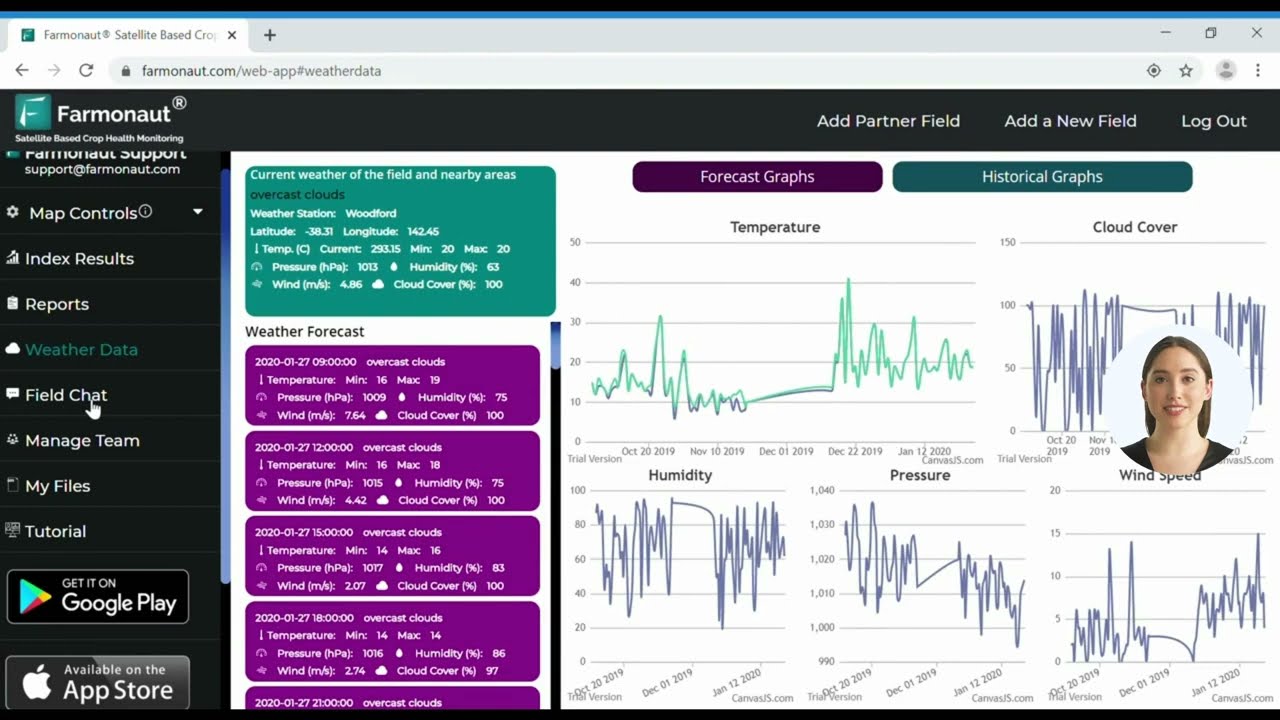
Satellite-based insights (like those on Farmonaut’s carbon footprinting and supply chain traceability tools) can deliver near-real-time confirmation on ore movement, crop health (for reclamation zones), and by-product flows. This enhances model accuracy and compliance.


Our API enables seamless integration of Farmonaut’s mining and environmental data (API documentation) to automate revenue, sustainability, and operational reporting—central to next-generation financial models.
“Detailed revenue forecasting models can improve copper mining project investment decisions by up to 40% in accuracy by 2025.”

Step 3: Capital Expenditure (CapEx) Structuring
Capital expenditure (CapEx) is the largest up-front commitment in a copper mining project and the foundation for later financial performance and ESG compliance. A granular, scenario-based approach to CapEx is especially essential in 2025, given cost inflation, decarbonization targets, and regulatory pressure.
CapEx Components
- Mine Infrastructure: Roads, power supply (grids/renewables), tailings dams, camps, water management facilities, etc.
- Processing Plant: Crushing, grinding, flotation plants for copper concentrate production.
- Mining Equipment: Open-pit trucks/loaders, underground drilling and haulage, robotics, and remote sensing tech.
- Environmental & Social Compliance: Water treatment, carbon capture, biodiversity offset, community resettlement, reclamation bonds, and monitoring infrastructure.
- Contingency: Provision for cost overruns and design modifications, typically 10–15% of base CapEx in modern models.
Include both:
- Initial CapEx (pre-production outlay for mine setup and processing)
- Sustaining CapEx (on-going capital needed to replace/upgrade equipment, comply with new environmental standards, expand life/throughput, or integrate renewables)
2025 Trends Impacting CapEx:
- Decarbonization: Electrification of mobile fleets, solar/wind array installations, and battery storage integration.
- Advanced Environmental Compliance: Real-time satellite and sensor monitoring (like those offered via Farmonaut), automated dust and runoff controls.
- Digitalization: Investment in fleet management software, AI-based ore sorting, and blockchain for supply chain traceability.
Direct integration of satellite-based fleet management tools enables real-time tracking and optimization—improving CapEx efficiency, uptime, and sustainability reporting for copper mining projects.
Step 4: Operating Expenses (OpEx) Breakdown
Operating costs (OpEx) determine the day-to-day profitability of copper mining ventures—especially vital as margins remain tight even with rising global copper demand. In financial modeling, detail each cost category and factor in 2025’s market and regulatory shifts.
Core OpEx Categories for Copper Projects
- Labor: Management, mining, processing, maintenance crews, and associated benefits/overheads.
- Energy: Electricity (ever more important with decarbonization), fuel for vehicles, and renewables integration costs.
- Consumables: Grinding balls, reagents, explosives, liners, lubricants.
- Maintenance: Scheduled and unscheduled repairs, spare parts, predictive maintenance systems.
- Royalties & Taxes: Payable to government or private mineral owners—deducted from gross revenue.
- Environmental Management: Waste/effluent treatment, emissions monitoring, progressive rehabilitation, community engagement.
- Insurance: Coverage for operational, environmental, and political risks.
- Transport & Logistics: Shipping concentrate, transport to smelters, port/rail costs.
2025 OpEx models should incorporate:
- Anticipated electricity price increases due to grid decarbonization.
- Higher compliance costs from stricter environmental regulations.
- Sensitivity for labor/energy inflation, and potential disruptions to supply chain logistics.
Farmonaut’s Role in Tracking and Optimizing OpEx
Leveraging satellite and AI-driven analytics (available via our platform), users can monitor operational costs, benchmark energy use, and identify ESG compliance gaps instantly. This continuous insight improves forecasting accuracy and supports sustainability management at the lowest cost.

Step 5: Integrating ESG and Regulatory Criteria in Financial Models
Copper projects operating in 2025 face unparalleled ESG scrutiny from regulators, offtakers, investors, and communities. Integrating ESG (Environmental, Social, Governance) into financial modeling is no longer optional—it’s essential for project feasibility and investment appeal.
Key ESG and Regulatory Cost Centers
- Community Engagement and Development: Investments in local infrastructure, schools, clinics, training, indigenous partnerships, and ongoing stakeholder dialogue.
- Environmental Compliance: Permitting, site monitoring, progressive reclamation, carbon offsets, and emissions reporting.
- Water Management: Water rights, conservation, treatment, and recycling facilities to meet stricter rules in arid regions.
- Tailings and Mine Closure: Permanent land and water management infrastructure, rehabilitation of mined areas, and ongoing monitoring costs post-closure.
2025 models should forecast potential carbon pricing, carbon penalty risk, and ongoing compliance expenditures. We recommend using Monte Carlo analysis to model the impact of unforeseen regulatory changes.
ESG-centric features on our platform—such as satellite carbon footprinting and blockchain-based supply chain traceability—allow users to monitor compliance, minimize greenwashing risk, and demonstrate transparency to investors and governments.
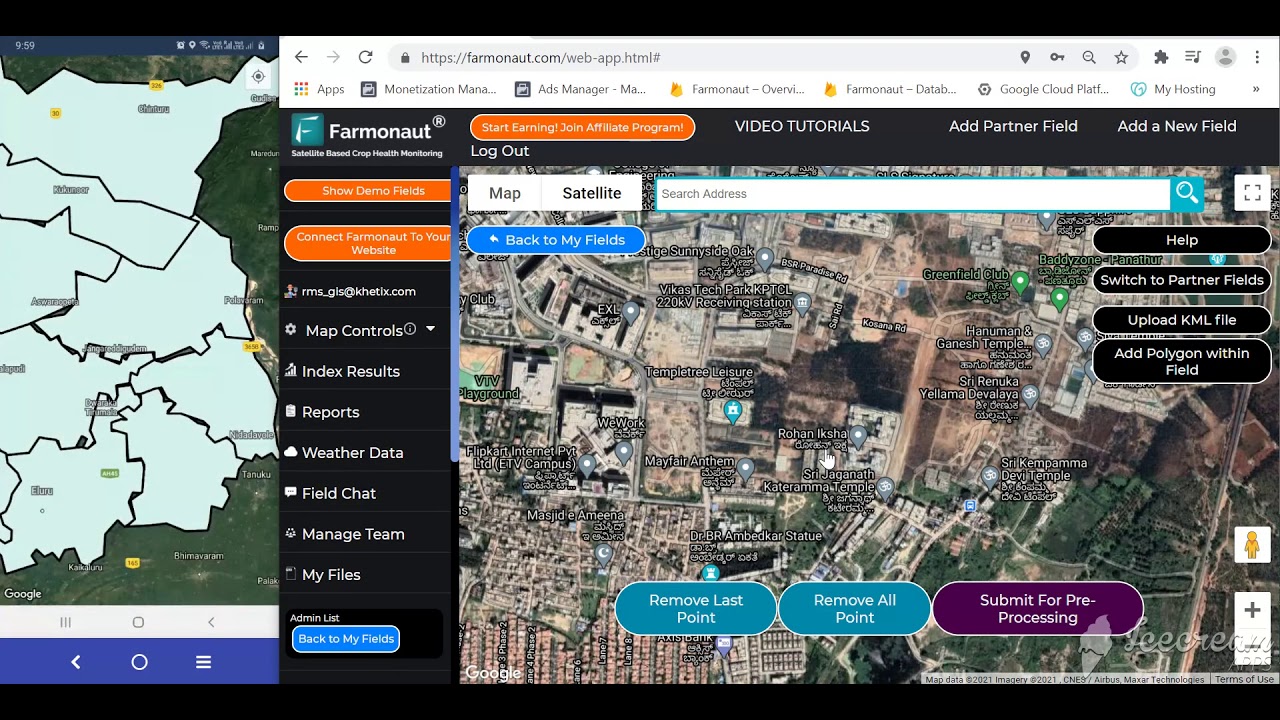
Integrate Farmonaut’s API (see API) into your financial model for automatic import of environmental, rate, and operational data, supporting accurate, compliant, and investor-ready projections.
For more implementation guidance, explore our developer documentation for satellite and weather insights.
Step 6: Building Financial Statements and Cash Flow Models
A comprehensive financial model integrates the following core statements:
- Income Statement (P&L): Revenues, operating costs, depreciation/amortization, interest, taxes, and net profit/loss.
- Cash Flow Statement: Direct and indirect methods, distinguishing operational, investment, and financing flows. Focus on Free Cash Flow (FCF) available for valuation and debt service.
- Balance Sheet: Asset, liability, and equity snapshot–mining properties, inventories, provision for closure, and debt balances.
Essential Elements for Copper Mining Models in 2025
- Discount Rate (WACC): Reflect country risk, commodity volatility, project-specific hurdles.
- NPV & IRR Calculation: Net present value (NPV) and internal rate of return (IRR) are the main shareholder decision metrics. Sensitivity of these to model assumptions is crucial.
Link all statements for dynamic scenario analysis, ensuring that a change in production rates, copper prices, or ESG costs ripples throughout model outputs. This integrated structure supports robust investment and operational decisions.

Step 7: Scenario and Sensitivity Analysis for Copper Mining Projects
No model is robust until it’s been stress tested against plausible scenarios and sensitivities. This step is essential for project teams, investors, and lenders who must understand downside risks and upside potential.
Key Variables for Scenario Analysis
- Copper Price Volatility: Simulate baseline, bull, and bear markets (e.g., ±20% from forecast price).
- Production Rates: Assess impact of ramp-up delays, unexpected grade variability, or process recovery dips.
- CapEx Overruns: Test the effect of 10–30% higher initial or sustaining CapEx.
- OpEx Inflation: Analyze the toll of rising energy, labor, and compliance costs versus base case.
- Supply Chain Disruptions: Factor in delays in equipment delivery, geopolitical conflict, or pandemic-like scenarios.
- Technological Innovations: Examine the impact of breakthrough mineral processing, AI automation, or renewables adoption.
- ESG Regulatory Tightening: Factor risk of future carbon taxes, stricter local content laws, or new reclamation standards.
Where practical, use Monte Carlo simulation or other probabilistic tools to turn assumptions into a range of potential financial outcomes—not just a single point estimate.
Step 8: Model Validation and Investor Communication
The final stage in a comprehensive financial modeling process is rigorous validation followed by transparent stakeholder presentation.
Validation Checklist
- Audit all formulas and calculation links between assumptions, inputs, and outputs.
- Cross-check against third-party feasibility studies, technical reports, and industry benchmarks.
- Document assumptions, sources, regulatory interpretations, and scenario analyses.
Investor-Ready Summaries
- Develop dashboards visualizing key KPIs—NPV, IRR, payback, ESG ratings, scenario range.
- Explain risks and mitigants, and disclose both base case and pessimistic outcomes.
This step is critical for attracting capital, building trust, and achieving regulatory sign-off for copper mining investments in 2025.
Copper Mining Project Financial Forecast Table (2025 Estimates)
| Financial Component | Estimated Value (USD millions) | Assumption/Basis | 2025 Projection Notes |
|---|---|---|---|
| Mineral Reserves | 350 | Million tonnes @ 0.55% Cu | JORC-compliant resource statement, strong for 20-year life |
| Projected Production (tonnes/yr) | 300,000 | Annual copper concentrate, 91% recovery | Aligned with plant design and strip ratio plan |
| Capital Expenditure (CapEx) | 1,000 | Initial construction + sustaining capex over life | Includes electrification, tailings, digital plant upgrades |
| Operating Expenditure (OpEx) | 420 / year | Labor, energy, consumables, transport, maintenance, ESG | Assumes slight 2025 price inflation |
| Forecasted Annual Revenue | 2,700 | 300kt x $9,000/t; modest by-product credits | Estimated on spot and consensus copper price for 2025 |
| Net Present Value (NPV) | 890 | At 8% discount rate, 20-year project | Mid-case; stress tested to CapEx and price volatility |
| Internal Rate of Return (IRR) | 15.5% | NPV-driven calculations | Above typical mining sector hurdle rate |
| ESG Compliance Costs | 125 | Permitting, monitoring, reclamation bonds, water | Rising trend in ESG expenditures predicted for 2025 |
| Risk Adjustment Factor | -12% | Discount to reflect regulatory, price, and schedule risk | Sensitivity analysis informs decision-making |
Frequently Asked Questions (FAQ): Financial Modeling for Copper Mining Projects: How-To Tutorial
1. Why is financial modeling essential for copper mining projects in 2025?
Financial modeling provides data-driven forecasts of revenues, costs, risks, and investment returns, balancing technical, operational, and environmental factors. In 2025, with heightened ESG and regulatory demands, it is crucial for attracting investment, securing funding, and managing copper mining projects efficiently.
2. Which financial metrics should my copper mining model focus on?
Core metrics include NPV (Net Present Value), IRR (Internal Rate of Return), payback period, FCF (Free Cash Flow), CapEx, OpEx, ESG compliance costs, and price sensitivity analysis. These support robust comparisons between alternative projects and investment cases.
3. How do I integrate ESG and compliance costs into a financial model?
Create dedicated cost centers in your OpEx and CapEx for permitting, reclamation, carbon pricing, water, and community investments. Link these line items to input assumptions, and perform scenario analysis using real-time regulatory updates. Satellite-based ESG monitoring tools (e.g., Farmonaut) further improve data reliability.
4. Is it possible to automate operational data import into models?
Yes. Powerful APIs like Farmonaut’s (see API) support automated, real-time supply, production, and environmental data integration, improving the accuracy and responsiveness of modeling for copper mining projects.
5. What trends shape copper mining modeling in 2025 and beyond?
Key trends include electrification/decarbonization, more advanced digital data collection (satellite/AI/blockchain), tighter ESG regulations, increased investor scrutiny, and heightened exposure to supply chain volatility and price swings. Staying ahead requires adaptive, scenario-driven models.
6. Can Farmonaut support mine resource management and traceability?
Yes. We offer fleet and resource management (learn how) and blockchain-based product traceability (learn more) to help users optimize operations, improve sustainability, and meet market and regulatory expectations for transparency.
Conclusion: The Future of Financial Modeling for Copper Mining Projects (2025 Perspective)
Financial Modeling for Copper Mining Projects: How-To Tutorial in 2025 is more than an accounting exercise—it’s a holistic, dynamic toolkit integrating mining engineering, market forecasting, ESG and regulatory criteria, and digital asset monitoring. Accurate financial modeling for copper mining is essential for all sector stakeholders to drive operational excellence, optimize investments, and comply with strict sustainability standards amid evolving global market dynamics.
As copper demand remains pivotal across infrastructure, EVs, electronics, and renewable sectors, those who master step-by-step modeling—with integrated operational, financial, and ESG data—will lead successful ventures and shape the responsible copper supply chain that underpins our shared green future.
Ready to modernize your copper mining financial modeling?
Access Farmonaut’s advanced, satellite-driven platform for real-time resource management, environmental compliance, blockchain traceability, and API-powered modeling.
Drive next-generation copper mining financial models—empower your investment and sustainability decisions with Farmonaut today!

 Process Metrology LLC
 Dalgety Minerals Pty Ltd
 Vortex Minerals Pty Ltd
 Faith At Work (Pty) Ltd
 Geotech Mining Solutions plc
 Vulcan International Limited
 Kidepo Associates
 GKY Mining
 Alkimy SARL
 Double A Trading
 GemSprout Metals Limited
 Qader Group
 Ileys General Trading
 SG Gold Mining LLC
 VRV Global Pte Ltd
 Omsri International FZE
 G.I.T.T.
 Jaunita Erss Ltd
 Almosi SARL
 SRK Consulting
 Berks Gold Limited
 Mwerezi Minerals Company Limited
