

Heap Leaching Techniques for Gold: 3 Top 2025 Cases
Meta Description: Heap Leaching Techniques for Gold: Case Studies in Mining (2025 Perspective). Explore top 2025 heap leaching cases, technological advances, and sustainable mining innovations improving gold extraction efficiency and environmental safety worldwide.
Introduction
The mining industry finds itself at the crossroads of technological breakthrough and environmental accountability in 2025, with heap leaching techniques for gold continuing to gain traction as the method of choice for extracting gold from low-grade ores worldwide. As heap leaching evolves, the focus has shifted toward achieving higher recovery rates, reducing cyanide dependency, and integrating advanced monitoring solutions that optimize operational efficiency while adhering to rigorous environmental standards.
This article delves into the principles behind heap leaching, recent (2025 perspective) technological advancements, sustainable mining practices, and supported case studies from flagship projects in Nevada, Burkina Faso, and Mongolia. We present a detailed comparison of their respective heap leaching innovations, environmental strategies, and their impacts on global gold production.
Whether you are a mining professional, an environmental consultant, or a stakeholder interested in the future of gold extraction, this blog will offer a comprehensive, up-to-date overview rooted in the latest industry trends and Heap Leaching Techniques for Gold: Case Studies that are shaping the field in 2025 and beyond.



For seamless integration of satellite-powered monitoring in mining, check out the Farmonaut API and detailed API Developer Docs – enhance site monitoring, solution optimization, and environmental compliance for your heap leaching operations.
Principles of Heap Leaching for Gold
Heap leaching is a hydrometallurgical process that has emerged as one of the most efficient and cost-effective techniques for gold extraction. The method involves stacking finely crushed ore into large heaps on an impermeable pad, then irrigating the pile with a leaching solution—most commonly a diluted cyanide mixture.
The solution percolates through the heap, dissolving target metals (primarily gold), which are then collected at the base. From here, gold is recovered via carbon adsorption or zinc precipitation. The technique allows processing of relatively low-grade ores that are otherwise uneconomical to treat through traditional milling or gravity concentration.
- The principal heap leaching techniques for gold involve:
- Preparing the ore by crushing, agglomeration, and conveying it to an engineered heap pad.
- Ensuring heap permeability (to avoid solution channeling or blockages) via careful piling and compaction.
- Applying the leach solution through precision irrigation systems, sprinkler controls, and drip lines.
- Monitoring and collecting the pregnant leach solution (PLS) that contains dissolved gold.
- Extracting and purifying gold from the PLS through methods such as adsorption onto activated carbon or Zn precipitation.

How Gold is Extracted from Mines | Full Guide
Why Heap Leaching is Favored in Modern Mining
- Adaptable to a range of ore grades and compositions (especially complex and refractory bodies).
- Reduced capital expenditures compared to milling-based circuits.
- Enables mining companies to operate in remote or developing regions with limited infrastructure.
- Offers scalable processing (heaps can span tens of hectares).
- Enables higher recovery rates with recent advancements in heap construction, irrigation, and solution monitoring.
- Environmental benefits with advanced geomembranes, containment systems, and cyanide detoxification.
- Can be paused or ramped up based on market conditions—making it economically attractive.

Modern Gold Rush: Inside the Global Race for Gold | Documentary
Advancements in Heap Leaching Techniques for Gold: Case Studies (2025)
The year 2025 has marked a turning point for heap leaching. Technological and process-related innovations have significantly boosted heap leaching efficacy, transforming the way gold extraction is approached at several tier-one mining operations globally. The heap leaching techniques for gold landscape now incorporates:
- Bioleaching Integration: Employing microbial agents to break down sulfide ores, thus improving gold liberation from refractory deposits.
- Automated Precision Irrigation Systems: AI-driven sprinkler controls that ensure uniform leach solution distribution, optimizing contact between solution and ore surfaces.
- Enhanced Liners & Geomembranes: Next-generation composite geomembranes extend heap pad lifespan and reduce cyanide leakage risk significantly.
- IoT and Real-Time Monitoring: Sensors for tracking heap moisture, temperature, solution pH, and even metal concentrations—allowing timely operational adjustments.
- Reduced Reagent Consumption: Optimized distribution alongside low-permeability liners has contributed to a notable reduction in cyanide and water usage.
- Lixiviant Innovations: Biodegradable leaching agents and non-cyanide alternatives have matured in recent pilot studies, making new gold extraction processes more sustainable.
These advancements have not only achieved higher gold recovery rates but have also improved environmental practices, reduced reagent costs, and minimized site-level ecological impacts. This is evident in the case analysis of heap leaching techniques for gold: case studies reviewed here.

Satellite Mineral Exploration 2025 | AI Soil Geochemistry Uncover Copper & Gold in British Columbia!
Key Heap Leaching Innovations Shaping 2025
- Microbial Bioleaching: Leveraging specialized bacteria and fungi in the heap to break down sulfide ore matrices, making gold extraction more efficient, especially for refractory ores.
- AI and IoT Integration: Smart systems analyze real-time data from numerous sensors across the heap, permitting data-driven operational controls to optimize solution application and improve gold recovery rates.
- Advanced Irrigation: Precision leaching irrigation systems adjust flow rates and pressure dynamically; this delivers an optimal leach solution to every portion of the heap, reducing reagent consumption and environmental risk.
- Enhanced Heap Pad Liners: Modern geomembranes (composite HDPE with mineral barriers) ensure impermeability, supporting safer operations and longevity against chemical attack or weathering.
- Biodegradable & Non-Cyanide Lixiviants: Ongoing research, now entering the field, marks the gradual shift to lower-impact alternatives to cyanide, which showcase good leach kinetics and improved detoxification profiles.
Environmental and Safety Practices in Heap Leaching
As heap leaching for gold becomes more prevalent, environmental responsibility and safety protocols have taken center stage in mining operations, especially in 2025. Cyanide management and containment, reducing reagent losses, water conservation, and proper closure/post-closure protocols define “responsible mining” in modern projects using heap leaching.
By 2025, most authorities and agencies worldwide have imposed stringent regulatory frameworks for heap leaching techniques for gold: case studies. This includes not only technological advancements but also improved operational practices and community engagement. Major elements involve:
- Upgraded heap pad liners: Use of triple-layered HDPE/geosynthetic clay liners to reduce leak risk and ensure long-term containment of heap leach solutions.
- Cyanide detoxification: Application of biodegradable chemicals and in-situ treatment cells to break down any residual cyanide before solutions are discharged or recycled.
- Leak detection and monitoring systems: Sensor arrays and satellite monitoring can alert operators to anomalies in leach pad performance or environmental impacts.
- Dust and emissions control: In arid regions, heap coverings (such as geomembrane wraps) and spray bars manage dust and evaporation, safeguarding local ecosystems.
- Community engagement and reporting: Modern mining operations prioritize transparent environmental and safety reporting, incorporating local community feedback into continuous improvement strategies.

1.5 M-oz Gold Find 2025 ? Diamond Drilling, AI Satellite Mapping & ESG Mining in Oko, Guyana
To further enhance sustainable operations, real-time environmental impact monitoring is increasingly powered by satellite and AI analytics. For example, Farmonaut offers carbon footprinting solutions, enabling mines to precisely track their carbon emissions, optimize resource input, and ensure compliance with international sustainability guidelines. This trend is vital for eco-conscious gold miners aiming to minimize environmental impacts and transparently document their stewardship.
For advanced environmental monitoring in mining, discover Farmonaut’s Carbon Footprinting tools. Our satellite-powered platform enables mining companies to track, analyze, and optimize emissions and resource use in real time, supporting efficient, compliant, and sustainable heap leaching projects.
Case Comparison Table: Heap Leaching Gold Projects (2025)
| Project Name / Location | Year / Timeline | Heap Leaching Technique Used | Estimated Gold Recovery Rate (%) | Key Innovation / Technology | Environmental Practices Implemented | Est. Environmental Impact Reduction (%) | Notable Outcome / ROI |
|---|---|---|---|---|---|---|---|
| Goldstrike Mine (Nevada, USA) |
2023–2025 | Microbial Bioleaching + Automated Precision Irrigation | 87% | AI-driven irrigation; pre-treatment bioleaching | Enhanced composite geomembrane liner, cyanide detox | 32% | +7% recovery, -15% cyanide use |
| Essakane Mine (Burkina Faso) |
2024–2025 | Upgraded Heap Pad Liner & Leak Detection | 81% | Satellite monitoring; advanced leak prevention | Triple-layer liner, active community ecosystem monitoring | 29% | Stable ROI in low-grade ore mining |
| Gatsuurt Mine (Mongolia) |
2024–2025 | Water-Efficient Heap Leaching; Heap Covering Tech | 79% | Evaporation-minimizing covers, water-saving irrigation | Dust control, satellite ecosystem monitoring, solar-powered automation | 34% | Profitable gold extraction in arid, remote region |
Heap Leaching Techniques for Gold: Case Studies (2025)
Real-world case studies anchor our understanding of heap leaching techniques for gold and reveal how modern operations are achieving higher gold recovery rates and improved environmental management. Let’s examine three leading mines representing advanced heap leaching methodologies as of 2025.
Case Study 1: Goldstrike Mine, Nevada, USA
Nevada remains at the forefront of global gold production, with the Goldstrike Mine (operated by Barrick Gold) exemplifying state-of-the-art heap leaching. The Goldstrike heap leaching operation incorporates bioleaching integration as a pre-treatment phase, where specialized microbial agents accelerate the breakdown of sulfide refractory ores, boosting gold recovery rates by around 7% as compared to standard methods.
- Automated AI-Driven Irrigation Systems: The introduction of AI-driven sprinkler controls alongside in-heap sensor networks has reduced cyanide consumption by 15% and significantly minimized environmental impacts while maintaining optimal moisture distribution across the massive heap.
- Enhanced Composite Liners: Multi-layer geomembrane liners with geosynthetic clay barriers have extended the heap pad’s life and lowered the risk of solution leakage—the linings surpass regulatory requirements and deliver top-tier environmental safety.
- Real-Time Heap Monitoring: IoT sensors continuously track heap temperature, solution composition, and liner integrity—enabling timely operational adjustments and compliance with Nevada’s environmental regulations.
This blend of bioleaching and AI-based operations makes Goldstrike a flagship case study of optimized, responsible heap leaching—driving global interest in replicating their success in other gold-rich yet challenging geological settings.

Satellites Spark a New Alaska Gold Rush
For gold mining companies aiming for supply chain transparency and environmental accountability, Farmonaut’s Product Traceability solution enables complete resource tracking and ensures compliance with global mining standards.
Case Study 2: Essakane Mine, Burkina Faso
In West Africa, the Essakane Gold Mine highlights how heap leaching techniques for gold are being deployed efficiently in low-grade, remote ore settings. Essakane processes predominantly oxide ores, economically mining gold resources previously regarded as marginal.
- Upgraded Heap Pad Liners: Over 2024–25, Essakane invested in triple-layered pad liners with integrated leak detection sensors. This infrastructure maximizes environmental safety and longevity while simplifying compliance with Burkina Faso’s mining governance standards.
- Satellite and Community Ecosystem Monitoring: Continuous environmental monitoring combines on-the-ground testing and satellite imagery (see Farmonaut’s environmental impact tracking solution as an example of advanced satellite-powered compliance tools). The practice supports responsible mining, ensures water protection, and upholds community relations.
- Community Engagement & Sustainable Development: Essakane’s approach involves local stakeholders, from ecosystem monitoring to reclamation planning—demonstrating that heap leaching techniques can align with sustainable development goals even in developing regions.
The mine’s sustainable practices and adoption of advanced heap leaching techniques have made it a reference model, balancing economic returns with minimized environmental impact.
Case Study 3: Gatsuurt Mine, Mongolia
The Gatsuurt Mine in semi-arid northern Mongolia provides a prime example of adapting heap leaching techniques for gold to extreme climates and remote areas in 2025. Here, water scarcity and dust risks have historically constrained mining, but several innovations have overcome these hurdles:
- Water-Efficient Heap Leaching: Optimized irrigation patterns, low-flow drip lines, and automated water usage monitoring have cut process water consumption by up to 40%, maximizing recovery while protecting precious local water resources.
- Heap Covering Technology: Gatsuurt’s heaps are covered with specialized polymer membranes to reduce evaporation, limit dust generation, and stabilize heap temperature—vital for maximizing leach efficiency and minimizing site-wide environmental impact.
- Solar-Powered Automation: Solar power runs control stations and remote monitoring, showcasing the mine’s commitment to both operational efficiency and sustainable energy deployment.
By deploying these innovative environmental controls, Gatsuurt has made profitable gold extraction viable in previously avoided regions, setting new benchmarks for heap leaching gold operations in water-limited environments.

Arizona Copper Boom 2025 ? AI Drones, Hyperspectral & ESG Tech Triple Porphyry Finds
Optimize mining logistics in challenging terrains: Farmonaut’s Fleet Management solution ensures operational safety and efficient resource distribution for even the most remote heap leaching projects, using satellite tracking and AI-powered scheduling for cost-effective outcomes.
How Satellite Tech Empowers Heap Leaching Practices by 2025
Satellite technology and AI-powered monitoring have become integral to pushing the frontiers of heap leaching techniques for gold worldwide. By leveraging real-time, high-resolution satellite data, modern mining operations can:
- Detect heap pad anomalies or leaks using visual and multispectral indices before ground-based sensors trigger alarms—reducing environmental incident response times.
- Monitor vegetation health and water body changes in the areas surrounding heap leach pads, ensuring regulatory compliance and minimizing biodiversity impacts.
- Support digital traceability and auditing—with services like Farmonaut Traceability—helping mining companies build trust and transparency through blockchain-backed documentation of every operational step.
- Integrate satellite weather forecasting to schedule solution irrigation, reagent addition, and heap management processes for maximum gold recovery efficiency.
- Estimate site-wide carbon emissions and track progress toward climate goals leveraging environmental impact monitoring tools.
In practice, these innovations allow decision-makers to rapidly adjust operational variables, improve environmental stewardship, and demonstrate compliance to stakeholders, investors, and regulators.

Satellites Find Gold! Farmonaut Transforms Tanzania Mining | News Report
Modern Heap Leaching and Gold Mining: Relevant Videos
For those interested in seeing these advancements in action, here are some informative videos:
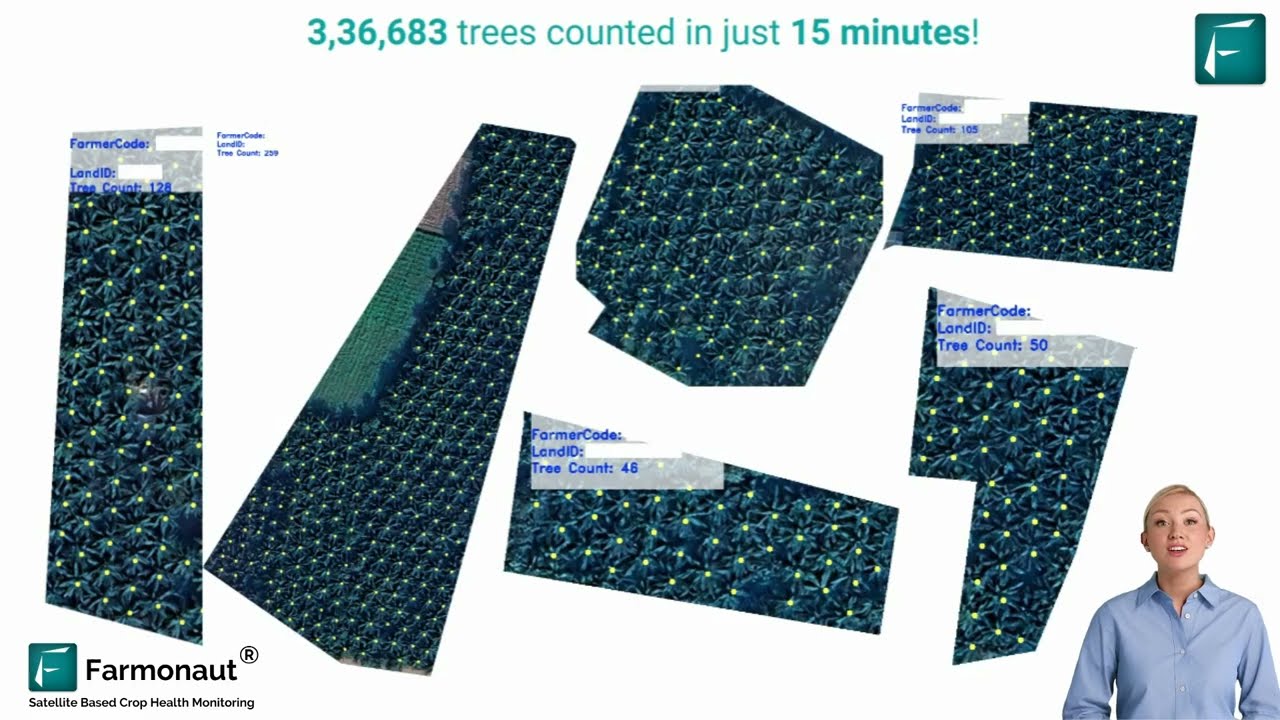
Satellite & AI Based Automated Tree Detection For Precise Counting and Location Mapping
Looking to reduce risk and gain financial flexibility in your gold and heap leaching operations? Farmonaut’s Crop Loan & Insurance verification tools provide satellite-based data for efficient loan approvals and insurance processing in the mining sector.
Frequently Asked Questions: Heap Leaching Techniques for Gold (2025)
What is heap leaching and why is it popular for gold extraction?
Heap leaching is a low-cost hydrometallurgical process used to extract gold from low-grade ores. Ore is crushed, stacked on impermeable pads, and irrigated with a leaching solution, typically cyanide-based. Gold dissolves and is then recovered from the solution. Heap leaching’s scalability, low capital investment, and ability to process complex ores make it very popular in modern mining.
How are new heap leaching techniques improving recovery rates and safety?
Innovations such as microbial bioleaching, AI-driven irrigation, advanced geomembranes, and real-time monitoring now allow higher metal recovery, reduced operational risk, and minimized cyanide consumption. Enhanced liners and leak detection have made heap leaching safer and more environmentally friendly than ever.
Are there sustainable alternatives to cyanide in gold leaching?
Yes. By 2025, pilot projects demonstrate biodegradable lixiviants with performance close to, or better than, conventional cyanide. Mines also employ cyanide destruction units and in-situ detoxification to reduce environmental impact even before switching to alternative agents.
How does satellite monitoring help in heap leaching?
Satellite-based platforms provide real-time oversight for large mining areas. For heap leaching, this enables detection of leaks, monitoring environmental parameters, supporting ecosystem tracking, and verifying compliance with regulations and sustainability goals. These technologies enhance both operational efficiency and public trust.
Can heap leaching be used in arid or remote regions?
Absolutely. Advances in water-efficient irrigation systems, heap covering to minimize evaporation, and remote monitoring now make heap leaching viable and profitable in semi-arid locations such as Mongolia’s Gatsuurt Mine, as well as other resource-constrained sites.
Conclusion: The Future of Heap Leaching for Gold Extraction
By 2025, heap leaching has truly established itself as the cornerstone for efficient, scalable, and sustainable gold mining across many of the world’s most productive—and challenging—geographies. Modern techniques blending biotechnology, automation, superior environmental practices, and digital monitoring enable mines to achieve record recovery rates while minimizing environmental impacts.
As highlighted by our three top case studies—Nevada’s Goldstrike, Burkina Faso’s Essakane, and Mongolia’s Gatsuurt projects—heap leaching techniques for gold have evolved not only as a means for low-grade ore exploitation, but as a blueprint for the future of responsible mining. Regulatory mandates, ongoing research into greener leaching agents, and increasing integration of satellite-based monitoring signal a trajectory toward a mining industry that balances profitability with social and environmental responsibility.
With gold demand unrelenting and ecological considerations paramount, heap leaching innovations will continue to define gold extraction, setting the standard for mining excellence in the years to come.
To stay at the forefront of mining innovation, modern operators are incorporating real-time data, blockchain-backed traceability, and remote oversight—see how Farmonaut’s platform delivers actionable satellite insights to drive responsible, optimized heap leaching gold operations worldwide.
Farmonaut Subscription Plans
Get started with industry-leading satellite-powered monitoring and management for agriculture, mining, and infrastructure. Choose a subscription plan that fits your needs:
Heap leaching techniques for gold: case studies in 2025 and beyond demonstrate that with the right blend of technology, environmental commitment, and data-driven management, gold mining can become more efficient and sustainable. Stay informed on the latest industry trends and adopt state-of-the-art satellite solutions for your mining operations by exploring Farmonaut’s unique offerings for monitoring, resource management, and environmental stewardship.

 Rains of Favour
 Tintina Mining Group
 Dalgety Minerals Pty Ltd
 Vortex Minerals Pty Ltd
 Faith At Work (Pty) Ltd
 Geotech Mining Solutions plc
 Vulcan International Limited
 Kidepo Associates
 GKY Mining
 Alkimy SARL
 Double A Trading
 GemSprout Metals Limited
 Qader Group
 Ileys General Trading
 SG Gold Mining LLC
 VRV Global Pte Ltd
 Omsri International FZE
 G.I.T.T.
 Jaunita Erss Ltd
 Almosi SARL
 SRK Consulting
 Berks Gold Limited
 Mwerezi Minerals Company Limited
