

Hematite Specularite, Specularite Quartz, Hematite Ore Trends 2026: Industry Advancements, Applications & Sustainable Practices
“By 2026, global hematite ore production is projected to reach 3.2 billion tons, driving advanced processing technologies.”
Introduction: Hematite Specularite, Specularite Quartz & Hematite Ore—2026 Outlook
Hematite specularite, specularite quartz, and hematite ore are integral components within the contemporary mining and industrial mineral extraction sector. Their significance as sources of iron—and their unique geological characteristics—define their role in meeting increasing global demand for infrastructure, industrial manufacturing, and strategic defence. As we approach 2026, emerging trends, technological advances, and the drive for sustainable development are reshaping how ore extraction, beneficiation processes, and mineral applications unfold worldwide.
High-grade hematite—especially specularite—remains one of the world’s most important iron ores, enabling efficient steel manufacturing and critical infrastructure projects.
- Hematite specularite, specularite quartz, hematite ore are foundational for global steel and iron production.
- Advanced satellite and AI technologies (e.g., satellite based mineral detection) are modernizing mineral exploration.
- Sustainable practices in mining and beneficiation are now industry standards.
- Global production and demand for iron ore will continue to rise through 2026—fueling new industry opportunities.
- Emerging applications in eco-friendly steelmaking and specialty industrial processes are driving innovations in ore processing and usage.
Geological Characteristics & Composition of Hematite Specularite, Specularite Quartz, and Hematite Ore
Understanding the unique geological characteristics of hematite specularite, specularite quartz, and related ores is essential for efficient ore extraction and processing in 2025–2026. Our discussion covers each mineral’s composition, typical deposit forms, and the features that influence industry beneficiation practices.
Hematite (Fe₂O₃): Foundation of the Iron Industry
- Hematite is an iron oxide mineral (Fe₂O₃), typically containing around 70% Fe by weight.
- Known globally as one of the most important iron ores due to its high grade and relative abundance.
- Found in various forms: earthy, massive, platy, and the highly reflective specular type.
The reflective, metallic luster of specularite (specular hematite) is caused by its fine crystalline, platy structure. This mineral’s striking, mirror-like appearance often distinguishes it from the massive or earthy forms and even makes it a collector’s specimen in some cases. Specularite is particularly valued for both direct iron extraction and aesthetic uses.
Specularite Quartz: Composite Assemblages in Modern Orebodies
The term specularite quartz refers to composite assemblages where quartz crystals are intergrown with specular hematite. This mineral association influences ore processing techniques, due to the mixture of hard, dense quartz and metallic hematite particles. The presence of both minerals requires advanced, tailored grinding and flotation methods—especially as specularite quartz becomes more valuable in high-tech, sustainable steelmaking operations.
- Hematite, specularite, and quartz-rich composite ores account for a significant share of new, high-grade iron ore deposits globally.
- The mixture affects not only beneficiation efficiency but also the design of mining and extraction technologies.
Not all platy metallic minerals in ore deposits are specularite. Accurate identification using remote sensing or advanced geochemical techniques is essential for efficient beneficiation.
2025–2026 Global Market & Mining Trends for Hematite Specularite, Specularite Quartz, Hematite Ore
“Specularite quartz use in sustainable steelmaking could grow by 15% annually, enhancing eco-friendly mining practices by 2025.”
As global economies pursue infrastructure expansion and heightened strategic security, iron ore demand continues to rise. Hematite, especially its specular variant and specularite quartz composites, remain critical for modern steel manufacturing. Let’s examine the market drivers, technological advances, and sustainability initiatives shaping the sector as we approach 2026.
- ✔ China, Australia, Brazil, South Africa, and India continue to be leaders in hematite ore production and trade.
- 📊 New deposits with higher-grade specularite are increasingly prioritized for investment, as they offer better ore-to-steel conversion rates.
- ⚠ Environmental, social, and governance (ESG) regulations are tightening, impacting mining strategies for both hematite and specularite quartz ores.
- 📈 Global steel consumption—driven by construction and defence—is expected to keep demand for hematite, specularite, and hematite ore at record highs through 2026.
- 💡 Remote sensing, satellite analytics, and AI are enabling more efficient and targeted mineral exploration. See how satellite based mineral detection is transforming early-stage discovery of these minerals worldwide.
Key Market Focus Areas
- Strategic supply chain security—especially for nations prioritizing domestic steel output.
- Sustainable mining & beneficiation practices, including water recycling, tailings management, and non-toxic chemicals.
- Innovation in ore processing technologies for “harder-to-beneficiate” specularite quartz ores.
- Value addition and vertical integration: Shifting from primary ore export to finished steel and specialty product manufacturing.
- Increasing relevance of satellite-driven prospectivity mapping for identifying untapped, high-grade deposits. (Learn more about satellite driven 3d mineral prospectivity mapping.)

Find Hidden Minerals by Satellite | Farmonaut Detection
Hematite & Specularite: Mining and Processing Innovations for 2025–2026
In 2025 and beyond, the mining and processing of hematite specularite, specularite quartz, and related ores is being transformed by technological advancements and environmental responsibility goals. Here’s how:
- ✔ Exploration: Satellite-driven geophysical analysis and AI-based remote sensing allow faster, more accurate deposit identification—minimizing ground disturbance and environmental footprint.
- 📊 Extraction: Focus on higher-grade, specularite-rich deposits enables more efficient iron recovery and lower processing costs.
- ⚒ Beneficiation: Hematite and specularite ores undergo crushing, grinding, magnetic separation, and flotation. Advanced grinding technology addresses the abrasive nature of quartz-rich ores.
- 💧 Eco-friendly Practices: Water recycling, zero-liquid discharge systems, and non-toxic reagents are becoming industry best practices.
- 🔄 Digitization: Real-time monitoring and data-driven resource management increase operational efficiency while supporting sustainability targets.
Challenges & Solutions in Hematite/Specularite Quartz Processing
- Challenge: Hardness and abrasiveness of specularite quartz increases grinding media wear and energy consumption.
- Solution: Deployment of advanced wear-resistant equipment and tailored flotation reagents improves recovery rates and plant efficiency.
- Challenge: Presence of fine, dense minerals complicates separation processes.
- Solution: Multi-stage magnetic and gravity beneficiation, coupled with real-time ore characterization for optimal process control.
Utilizing advanced remote sensing early in exploration increases identification accuracy of specularite-rich zones and minimizes costly exploratory drilling.

Rare Earth Boom 2025 🚀 AI, Satellites & Metagenomics Redefine Canadian Critical Minerals
Industrial Applications: Iron, Steel & Beyond
The core industrial application for hematite specularite, specularite quartz, and hematite ore is iron extraction for steel manufacturing. However, emerging trends are diversifying these minerals’ uses across key economic sectors:
- ✔ Steel Manufacturing: High-purity hematite and specularite form the backbone of steel used in infrastructure, automotive, defence, and construction industries.
- 🏗 Infrastructure: Hematite-derived steel supports bridges, railways, skyscrapers, and highways.
- 🛡 Defence: Critical for high-strength, corrosion-resistant military vehicles, aircraft, and naval equipment—important for national security.
- 🎨 Specialty Industrial Applications: Specularite is used as a pigment, polishing powder, and decorative aggregate due to its unique metallic luster.
- 🌱 Emerging Sustainable Steelmaking: Specularite quartz is increasingly sought after for eco-friendly metallurgical processes thanks to its low impurity profile and reduced carbon impact.

Arizona Copper Boom 2025 🚀 AI Drones, Hyperspectral & ESG Tech Triple Porphyry Finds
Visual List: Key Sectors Utilizing Hematite Specularite, Specularite Quartz, Hematite Ore
- 🏭 Steel/Alloy Production
- 🚄 Global Infrastructure Development
- 🛡 Defence Industry Manufacturing
- 🎨 Specialty Manufacturing (Pigments, Polishing)
- 🌱 Eco-Steel & Sustainable Metal Alloys

Manitoba Rare Earth Soil Hack 2025 | AI Metagenomics, Microbial Markers & Critical-Mineral Boom
Sustainability & Environmental Practices in Mining Hematite and Associated Ores
The mining, beneficiation, and use of hematite specularite, specularite quartz, and hematite ore have significant environmental implications. By 2026, the industry is defined by innovation, regulation, and responsibility:
- 🌱 Sustainable Operations: Adoption of closed-loop water systems, eco-friendly beneficiation processes, and real-time environmental monitoring using drones and AI.
- 🚜 Land Restoration: Systematic site rehabilitation post-extraction, prioritizing biodiversity and community use.
- 🔄 Circular Economy: Growing emphasis on steel recycling to reduce demand for primary hematite ore.
- ⚠ Challenges: Balancing economic growth with local environmental preservation, especially in ecologically sensitive regions.
- 📈 Opportunities: Innovating new alloys and industrial materials that reduce waste and carbon emissions.
Mining ventures with verified sustainable practices and eco-innovations—such as rigorous tailings management and water stewardship—are increasingly favored by both regulators and international investors.

Arlington Gold Hunt 2025 🚀 AI DCIP, Hyperspectral & LIDAR Reveal BC High-Grade Zones
Visual List: Hallmarks of Sustainable Hematite Ore Operations
- ♻️ Zero-liquid discharge beneficiation plants
- 🛰 AI and satellite-driven monitoring
- 🌲 Land rehabilitation and afforestation
- 🔄 Steel recycling initiatives
- 🌍 Community engagement and regulatory compliance
Farmonaut’s Satellite-Based Mineral Intelligence: Accelerating Sustainable Discovery
Modern mineral exploration has been revolutionized by satellite analytics and AI. At Farmonaut, we bridge geospatial science and mining intelligence by deploying advanced remote sensing to swiftly and non-invasively detect mineralized zones, including those containing hematite, specularite quartz, and associated industrial minerals. Our technology supports global mining operations by:
- 🔍 Rapidly identifying high-potential hematite and specularite-rich deposits—often before conventional field teams are deployed.
- 🌐 Lowering exploration costs by up to 85% and minimizing initial environmental impact during early-stage assessments.
- 📡 Delivering 3D mineral prospectivity mapping (see example) that visualizes mineralized structure, grade, and prospect zones.
- 🕒 Decreasing mineral exploration timelines from several years to a few weeks, boosting speed-to-market for mining companies and investors.
- 🌱 Supporting ESG targets by enabling resource targeting before any physical ground disturbance occurs.
We empower mining companies, investors, and exploration teams to rapidly evaluate targeted zones for further prospecting, validation, and investment using our satellite based mineral detection solutions. This not only makes mineral discovery more efficient but also aligns with next-generation sustainable mining goals.
Early-stage drilling decisions and resource allocation are more accurate and less risky when guided by satellite-driven mineral intelligence—essential for high-value hematite and specularite targets.

Satellite Mineral Exploration 2025 | AI Soil Geochemistry Uncover Copper & Gold in British Columbia!
Clients can Request a Custom Quote for hematite or specularite quartz exploration projects using our Get Quote form.
Comparative Trends & Application Table: Hematite Specularite, Specularite Quartz, Hematite Ore (2025–2026)
| Mineral Type | 2025 Est. Production (MT) | Major Mining Regions | Primary Industrial Applications | Est. Application Growth Rate (2023–2025, %) | Notable Sustainability Trends |
|---|---|---|---|---|---|
| Hematite Specularite | 780 million | Australia, Brazil, South Africa, India | High-grade steel, defence, pigments, aggregates | 7.5 | Remote-sensing exploration, water-recycled plants |
| Specularite Quartz | 140 million | China, India, Australia | Eco-steel, specialty alloys, decorative materials | 15.0 | Green metallurgy, closed-loop beneficiation |
| General Hematite Ore | 3.2 billion | Global: All continents | Traditional steel, construction, foundries | 6.4 | ESG adoption, tailings reduction, site restoration |
Note: 2025 Estimated Production figures in million tonnes (MT). Growth rates based on sectoral forecasts and market research as of 2024.
Specularite quartz, though smaller in volumetric production, demonstrates the fastest application growth—driven by sustainability-focused steelmaking.

Gold Rush Arizona 2025: History & Modern Gold Mining Revival | Ultimate Guide
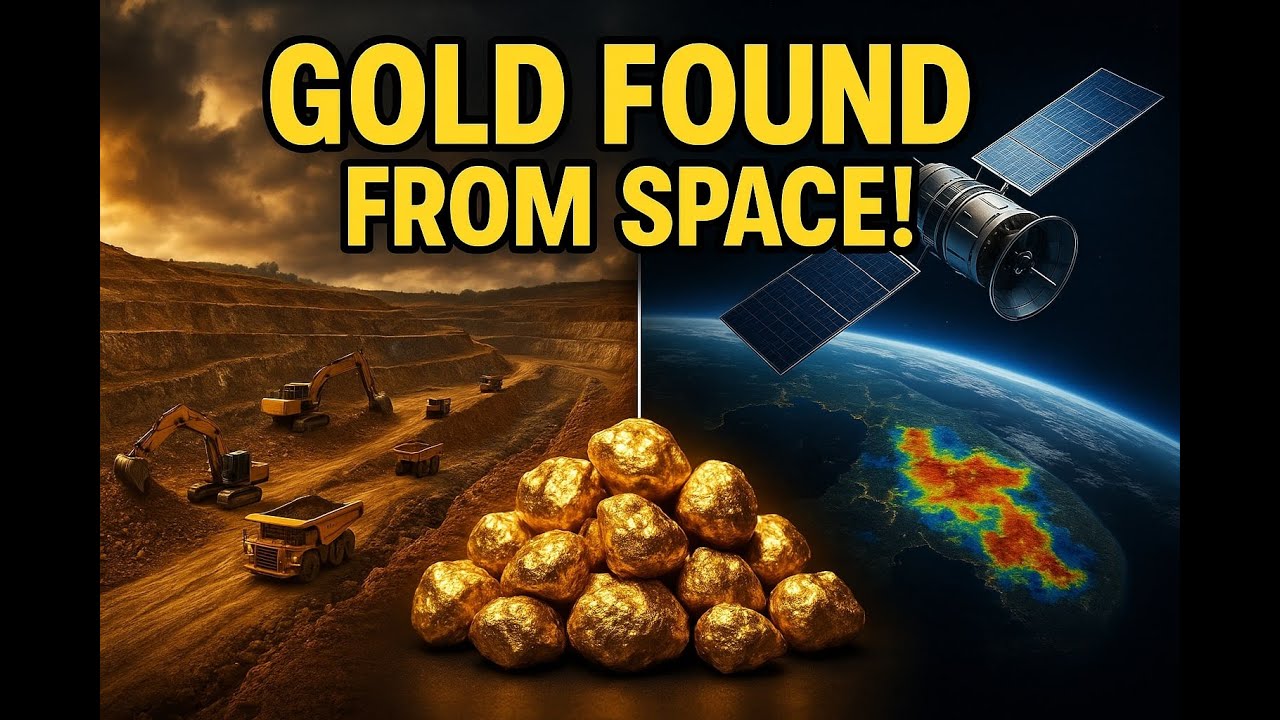
How Gold is Extracted from Mines | Full Guide
- 🔬 Advanced processing of hematite specularite leverages AI-driven mineral identification and precision beneficiation.
- 📈 Global demand for iron and steel drives ongoing exploration for high-grade specularite and specularite quartz deposits.
- 🌏 Key regions producing these ores include Australia, Brazil, India, China, and South Africa.
- 🌱 Environmental best practices (like zero-discharge beneficiation and closed water loops) are quickly becoming industry standards as we approach 2026.
- 🛰 Farmonaut’s solutions provide rapid, cost-effective, and non-invasive mineral prospectivity mapping for modern mining projects. Contact us to learn more.
FAQ: Hematite, Specularite Quartz, Iron Ore Mining (2025–2026)
Q1: What makes hematite specularite and specularite quartz critical for steelmaking in 2025–2026?
Hematite specularite and specularite quartz are critical due to their high iron content, low impurity profile, and advances in eco-friendly steelmaking. Their reflective, platy structure also makes specularite suitable for specialty applications in construction and manufacturing.
Q2: How are satellite & AI technologies improving hematite and specularite exploration?
Satellite-based analytics and artificial intelligence, like those offered by Farmonaut, enable rapid, large-scale identification of mineralized zones. This reduces time, cost, and environmental disturbance compared to traditional exploration.
Q3: What sustainability practices are most important for mining in this sector?
The most important practices include: water recycling, tailings reduction, non-toxic beneficiation reagents, satellite monitoring, closed-loop site management, and land restoration after extraction.
Q4: Where is growth fastest for specularite quartz applications?
Specularite quartz growth is strongest in eco-friendly steelmaking and specialty alloy production, particularly in Asia and Australia. Closed-loop beneficiation plants and green metallurgy processes are key drivers.
Q5: How does Farmonaut support iron ore and mineral exploration projects?
We provide satellite-based mineral detection and 3D prospectivity mapping services—delivering comprehensive, non-invasive analysis for early-stage mining projects, reducing exploration cost and environmental impact.
Conclusion—Meeting Global Demand Responsibly
In 2026 and beyond, hematite specularite, specularite quartz, and hematite ore will remain at the core of the global iron and steel industry. As new processing and satellite-based exploration technologies take hold, and as environmental responsibility becomes paramount, our approach to mineral extraction and application must continue to evolve. Leveraging advanced, sustainable mining strategies and embracing innovative digital tools positions industry players to meet global demand, maintain strategic security, and protect our environment.
For mining companies, investors, and exploration professionals, working with expert analytics partners such as Farmonaut unlocks access to next-generation mineral intelligence, supporting smarter investments and long-term sustainable growth. For tailored solutions or to initiate a satellite-driven mineral exploration project, contact us today.
Discussion
Questions, corrections or field experience? Share them below. First-time comments are reviewed before they appear, and your email is never published.
No comments yet. Be the first to add a question or your experience.

 GemSprout Metals Limited
 Qader Group
 Ileys General Trading
 SG Gold Mining LLC
 VRV Global Pte Ltd
 Omsri International FZE
 G.I.T.T.
 Jaunita Erss Ltd
 Almosi SARL
 SRK Consulting
 Berks Gold Limited
 Mwerezi Minerals Company Limited
 Mining SARL
 SenGold Invest SAS
 Sean Mining Limited
 NTS Group (Pty) Ltd
 Mine4Africa
 Lithspo Minerals Limited










