

Top Lithium Producing Companies 2025: Global Trends & Impact
Introduction
The demand for lithium, a lightweight metal with excellent electrochemical properties, continues to soar as we move into 2025. Lithium producing companies are now at the heart of the global shift towards cleaner energy, electrification of transport, and industry innovation. As electric vehicles (EVs), consumer electronics, and renewable storage technologies see unprecedented growth, it is more crucial than ever to understand the dynamics of the lithium industry, especially the top players, mining trends, and sustainable production practices that are shaping the future of this fundamental element.
In this comprehensive blog, we explore the top lithium producing companies in 2025, analyze global trends in mining and infrastructure development, examine the impact of lithium on agriculture and industry, and assess the challenges and opportunities that lie ahead. Whether you’re an investor, researcher, or policy maker, this guide will provide you with the most updated and practical insights into lithium’s pivotal role in the modern world.
“By 2025, the world’s top 5 lithium companies are predicted to produce over 70% of global lithium supply.”
Overview of Lithium Production: Metal of the Future
Lithium, sometimes dubbed “white gold,” has cemented itself as a cornerstone of the global transition towards sustainable technologies. Its distinctive electrochemical properties make it crucial for battery production, especially lithium-ion batteries which power the surge in EVs, renewable storage systems, and millions of consumer devices. But how is it sourced, and why is it so valuable?
Key Sources & Extraction Methods
- Brine Deposits: Most plentiful in regions like the Atacama Desert in Chile, Argentina, and Bolivia. Brine extraction involves pumping mineral-rich water to the surface and evaporating it in ponds, thereby collecting lithium salts.
- Hard Rock (Spodumene) Mining: Especially prevalent in Australia and China. Here, lithium is extracted from spodumene, a hard silicate mineral ore, using mining and chemical processing methods.
Extraction and processing methods vary by source and geographic conditions, but all approaches must ultimately feed a robust supply chain that supports battery and device manufacture. The environmental, economic, and social implications of each method are coming under greater scrutiny as global demand accelerates.

Lithium in the Supply Chain
Once extracted, lithium is processed into compounds (carbonate, hydroxide) that are integrated into manufacturing lines. This processed lithium forms the backbone of batteries that power not only EVs and grid storage solutions, but also backup systems that stabilize electric grids increasingly relying on wind and solar energy. Its reach spans nearly every aspect of modern industrial life, from agriculture machinery to consumer electronics.
“Global lithium production is set to exceed 170,000 metric tons by 2025, powering energy, agriculture, and industry.”
Top Lithium Producing Companies 2025: Who’s Leading?
As of 2025, several lithium producing companies dominate the international scene, driven by rapid technological advancements, aggressive expansion of production, and strategic resource management. Let’s take an in-depth look at the most influential players, their mining practices, capacity, and impact on global supply.
1. Albemarle Corporation (United States)
- Headquarters: North Carolina, United States
- Regions: Major brine operations in the Atacama Desert (Chile), hard rock assets in Western Australia
- Key Facts:
- Among the largest lithium producing companies in the world in both brine and hard rock mining
- Leading the way in sustainable mining practices and advanced processing technologies
- Extensive technological investment to expand capacity and efficiency
2. SQM (Sociedad Química y Minera de Chile)
- Headquarters: Santiago, Chile
- Region: Giant brine and evaporation pond fields in the Atacama Desert, Chile
- Key Facts:
- World leader in efficient brine extraction and lithium processing
- High production capacity, accounting for a major share of global lithium output
- Close ties with regional infrastructure to support rapid expansion
3. Ganfeng Lithium (China)
- Headquarters: Jiangxi, China
- Operations: Diversified assets in China, Australia, and Argentina
- Key Facts:
- Vertically integrated: spanning mining, chemical processing, and battery manufacturing
- Significant investments in acquisitions and resource bases worldwide
- Strategic focus on sustainable, closed-loop production systems
4. Tianqi Lithium (China/Australia)
- Dual operations in China (Chengdu headquarters) and strategic stakes in Australia’s Greenbushes, the world’s largest lithium mine
- Important global market player shaping regional production trends
5. Livent (United States/Argentina)
- Strong presence in Argentina’s brine fields and new North American expansion
- Accounts for a meaningful share in lithium supply for battery manufacturers

Top Lithium Producing Companies in 2025: Production, Region, and Sustainability Overview
| Company Name | Estimated 2025 Lithium Production (Metric Tons LCE) |
Country / Region | Market Share (%) | Key Mining Sites | Sustainability Initiatives | Primary End-Use Sectors |
|---|---|---|---|---|---|---|
| Albemarle Corporation | ~55,000 | United States, Chile, Australia | ~19% | Atacama (Chile), Greenbushes (Australia), Silver Peak (USA) | Yes – water recycling, energy usage reduction, carbon mitigation | Energy (EVs, Grid), Industry, Agriculture |
| SQM | ~44,000 | Chile | ~15% | Atacama Desert (Brine Operations) | Yes – closed water loops, solar energy, biodiversity programs | Energy, Agriculture, Industry |
| Ganfeng Lithium | ~45,000 | China, Australia, Argentina | ~16% | Mt Marion (Australia), Cauchari-Olaroz (Argentina), Xinyu (China) | Yes – battery recycling, sustainable brine management | Energy, Industry, Electronics |
| Tianqi Lithium | ~26,000 | China, Australia | ~9% | Greenbushes (Australia), Shehong (China) | Yes – renewable power use, tailings management | Energy, Industry |
| Livent | ~23,000 | Argentina, United States | ~6% | Hombre Muerto (Argentina), Bessemer City (USA) | Yes – water efficiency, social programs | Energy, Agriculture, Industry |
| Pilbara Minerals | ~20,000 | Australia | ~5% | Pilgangoora (Australia) | Yes – renewable energy investments | Energy, Electronics |
*Estimates based on industry data and forecasted growth for 2025.

Global Mining Trends Shaping the Industry
The modern lithium industry is not merely about production quantities. It’s the interplay of sustainable extraction, geographic dynamics, technological integration, and infrastructure development that defines leading lithium producing companies today. Here’s what’s shaping global lithium markets in 2025:
Geographic Expansion & Resource Diversification
- Emerging Regions: Australia, Chile, and China remain powerhouses, but Argentina, Zimbabwe, and new projects in Africa are beginning to transform the landscape. New deposits are discovered as exploration technologies evolve.
- Resource Nationalism: Countries with strategic lithium deposits are seeking greater control and value retention. This leads to new policies and increased local participation in mining operations.
Technological Advancements
- AI-driven and satellite-based remote sensing (like Farmonaut’s platform) are revolutionizing resource discovery and mine management. Blockchain technology is also increasingly adopted for traceability and transparency in the lithium supply chain.
- Innovations in direct lithium extraction (DLE) are improving efficiency and reducing environmental footprint compared to traditional pond evaporation methods.
Infrastructure Development
- Massive investment is being poured into roads, railways, ports, and utilities in mining regions to ensure robust raw material flows. The goal is to optimize cost, reduce transport time, and ensure timely delivery to global battery manufacturers.
- New processing plants are being established near key mining sites to minimize raw material transport, further enhancing efficiency.



Get started with Farmonaut Apps for real-time resource monitoring in mining, agriculture, and infrastructure.

Sustainable Lithium Production: Challenges & Solutions
As global attention turns to the environmental implications of large-scale lithium extraction, sustainability has emerged as a core focus for all top lithium producing companies. The delicate balance between meeting soaring demand and preserving land, water, and agricultural resources underpins every major project in 2025.
Key Sustainability Concerns
- Water Scarcity: Particularly serious in brine mining areas, such as the Atacama Desert, where water usage must be balanced with local agriculture and ecosystem needs.
- Land Degradation: Both brine ponds and hard rock pits can alter landscapes and disturb rural communities.
- Carbon Emissions & Pollution: Mining and chemical processing contribute to emissions unless mitigated by renewable energy and advanced technology.
Industry Solutions for Sustainable Practices
- Water Recycling & Closed Loops: Albemarle, SQM, and Ganfeng Lithium now deploy advanced recycling and closed-loop systems to reduce water withdrawal for processing.
- Direct Lithium Extraction (DLE): This novel method, under pilot by several companies, allows for faster, more efficient, and less water-intensive lithium recovery from brines.
- Integration of Renewables: Mining infrastructure is increasingly powered by renewables like solar PV and wind, cutting the carbon footprint of extraction and processing.
- Environmental Impact Monitoring: Companies leverage real-time satellite data and AI platforms (for example, those provided by Farmonaut) to track carbon output, erosion, and ecosystem health as part of responsible resource management. Learn more about carbon footprint monitoring in mining and agriculture.

Lithium’s Impact on Energy, Industry, and Agriculture
The impact of the largest lithium producing companies extends well beyond the mine gates. Lithium’s influence now spans:
Energy Storage & EV Revolution
- Lithium-ion batteries power nearly all modern EVs and energy storage systems, directly supporting the transition to renewable grids that integrate wind and solar sources.
- Efficient energy storage solutions stabilize electric grids, allowing for broader renewable adoption and decarbonization of the energy sector.
- Major automakers and battery giants partner with lithium producers for secure sourcing, driving further investment in mining and processing technology.
Industrial & Consumer Products
- Consumer electronics: From smartphones to laptops, lithium batteries make high-density, lightweight power possible.
- Industrial materials: Lithium is used in glass, ceramics, lubricants, and specialty alloys, making it indispensable for manufacturing.
Agriculture, Land, and Local Communities
- Expansion of lithium mining operations in remote areas (like Chile’s Atacama, Argentina’s salt flats, or Australia’s outback) has significant implications for local agriculture, water use, and land management.
- Mining companies must collaborate with local and indigenous communities to ensure that agricultural lands, water rights, and cultural sites are protected. Sustainable practices—and the monitoring thereof using satellite technology—are becoming industry norms.
- Farmonaut’s large scale farm management platform is empowering modern agriculture with satellite-driven resource insights, ensuring crop, soil, and water health are managed—even near mining zones.
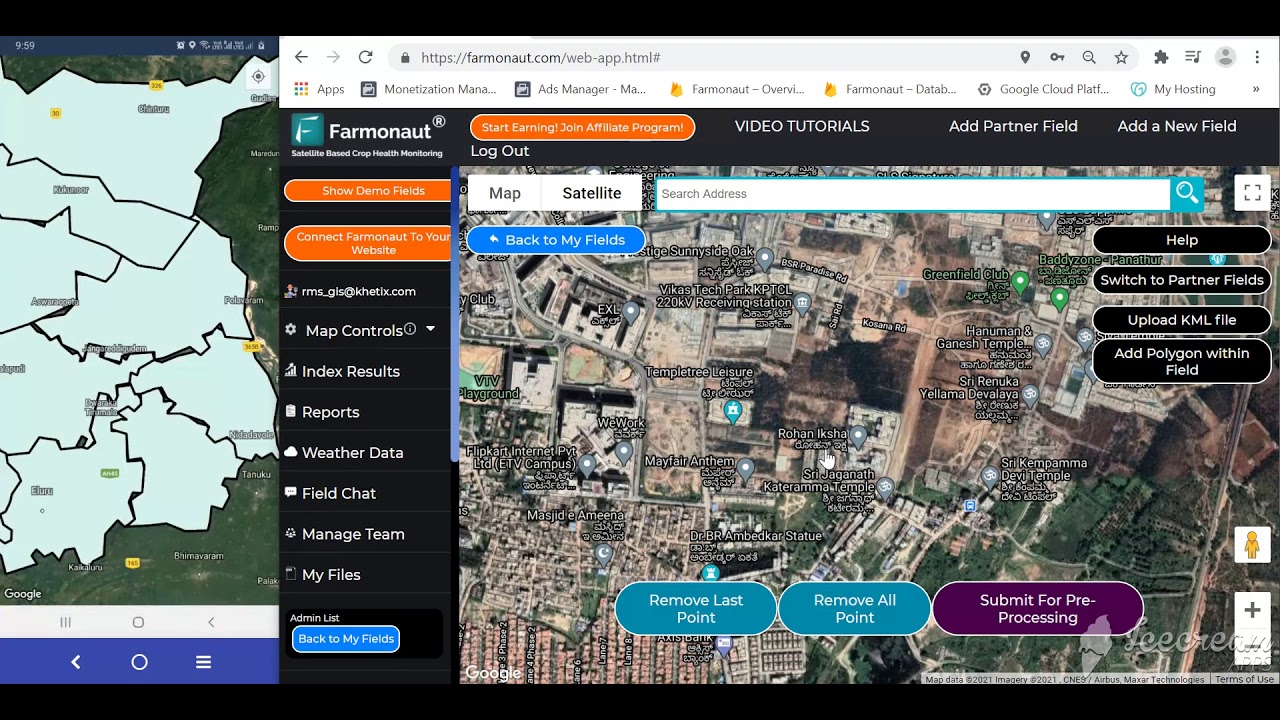
Farmonaut: Satellite Solutions for Mining, Infrastructure, and Agriculture
We at Farmonaut are committed to advancing sustainable practices in mining, infrastructure, and agriculture by making satellite-driven insights affordable and accessible. Our technology stack—including AI-based advisory, blockchain traceability, and environmental impact monitoring—empowers:
- Mining operators to monitor site safety, resource extraction efficiency, and environmental compliance in real-time.
- Agriculture enterprises to manage vast fields, optimize irrigation, and prevent yield loss even in proximity to industrial infrastructure.
- Infrastructure companies to oversee structural integrity and project development, proactively managing land, water, and energy consumption.
Need vehicle or fleet tracking for mining and agri operations? Explore Farmonaut’s Fleet Management Solution for seamless logistics using satellite and AI insights.
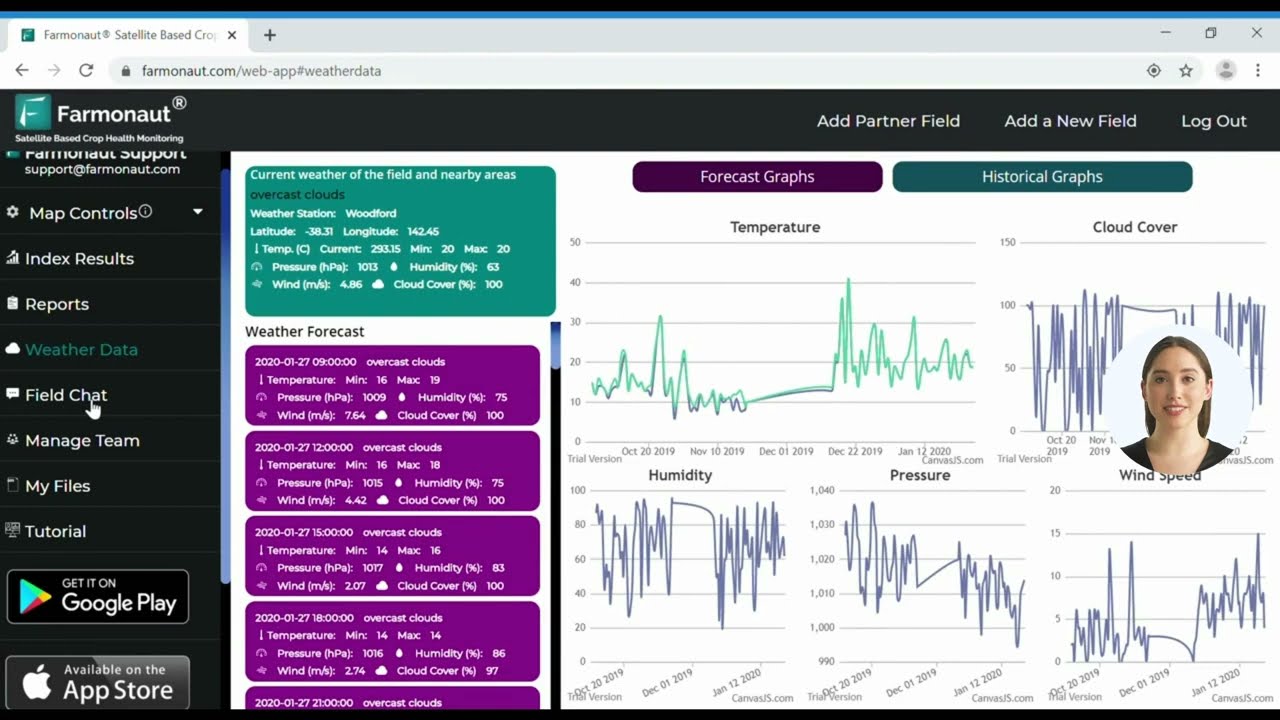
Financial institutions in mining or agriculture can automate verification for loans and insurance. Learn how with satellite-based risk assessment tools.
Future Outlook: Challenges, Growth & Innovation in 2025 and Beyond
Despite the robust expansion and technological advancements, top lithium producing companies face several challenges that will shape the decade ahead:
Environmental and Social Challenges
- Water Rights & Community Relations: Mining in arid regions must balance lithium recovery with water needs for local agriculture and residents.
- Land Use Conflicts: Expansion of mining footprints should not come at the expense of arable land or protected ecosystems.
- Regulatory Oversight: Governments worldwide are tightening environmental regulations, requiring companies to show responsible stewardship and transparency.
Innovation & Technology Play Crucial Roles
- Recycling: As EVs and batteries reach end-of-life, recycling will become a critical source of lithium, mitigating some of the pressure on new mining operations.
- Alternative Lithium Sources: Research is intensifying into geothermal brines, lithium extraction from clay, and seawater—potentially reshaping future supply.
- Data-Driven Operations: The adoption of satellite monitoring, AI-based advisory (like Jeevn AI), and blockchain traceability will remain foundational for safe, verifiable, and efficient lithium production.
Global Demand and Market Dynamics
- EVs continue to drive lithium demand: Forecasts show battery demand will double within a few years, making supply security even more essential.
- Regional Self-Sufficiency: North America, Europe, and Asia are investing in localized supply chains to minimize dependency on imports.
- Stakeholder Pressure: Investors, governments, and consumers now demand greener, more transparent lithium production—driving ESG compliance up the corporate agenda.

Frequently Asked Questions (FAQ)
What are the top lithium producing companies in 2025?
The leading companies are Albemarle Corporation (United States), SQM (Chile), Ganfeng Lithium (China), Tianqi Lithium (China/Australia), and Livent (United States/Argentina). These firms together produce over 70% of the world’s lithium supply.
Which countries dominate global lithium production?
Australia, Chile, China, and Argentina are the primary lithium producing countries, with significant new projects also underway in Africa and North America.
How does lithium production impact agriculture?
Lithium extraction, especially from brine deposits, can affect local water supply and land use. Top lithium producing companies are now prioritizing water recycling, closed-loop systems, and satellite monitoring to reduce impact on local agriculture and communities.
What are the main uses of lithium?
The principal use is in lithium-ion batteries (for EVs, energy storage, consumer electronics), but lithium also plays a role in glass, ceramics, lubricants, and specialty industrial materials.
How is the lithium industry ensuring sustainability?
Through innovations in extraction methods (e.g., direct lithium extraction, battery recycling), the integration of renewable energy, and advanced environmental monitoring (such as those from Farmonaut’s carbon footprint solutions).
Can satellite technology support lithium mining and agriculture?
Yes, satellite monitoring enables efficient resource management, environmental compliance, and supply chain traceability in both mining and agriculture. Explore Farmonaut’s satellite solutions for actionable data.
Conclusion
As the lithium industry remains a cornerstone of the energy, automotive, and technology sectors in 2025, understanding the role of the top lithium producing companies—including Albemarle, SQM, and Ganfeng—is essential. Their operations and supply chains not only drive innovation in batteries and clean energy, but also raise complex questions about sustainable resource use and the future of agriculture, mining, and infrastructure worldwide.
The future will see even greater emphasis on sustainability, technological integration, and responsible growth. Companies, investors, governments, and local communities must collaborate to balance expansion with stewardship, ensuring that lithium remains a critical enabler of a green future.
For those in mining, agriculture, and industrial sectors seeking to thrive in this new era, advanced tools like Farmonaut’s satellite-driven platforms offer a competitive edge — delivering real-time insights for optimized resource management, sustainability, and supply chain transparency.
To explore affordable, scalable, and actionable geospatial technologies, visit Farmonaut’s homepage now.

 Berks Gold Limited
 Mwerezi Minerals Company Limited
 Congo Mining Solutions
 Mining SARL
 SenGold Invest SAS
 Sania Corporation
 Sean Mining Limited
 NTS Group (Pty) Ltd
 Mine4Africa
 Lithspo Minerals Limited
 Tintina Mining Group
 Dalgety Minerals Pty Ltd
 Vortex Minerals Pty Ltd
 Faith At Work (Pty) Ltd
 Geotech Mining Solutions plc
 Vulcan International Limited
 Kidepo Associates
 GKY Mining
 Alkimy SARL
 Double A Trading
 GemSprout Metals Limited
 Qader Group
 Ileys General Trading
 SG Gold Mining LLC
 VRV Global Pte Ltd
 Omsri International FZE
 G.I.T.T.
 Jaunita Erss Ltd
