

Ag Disaster Payments 2026: Relief for Farmers
“In 2025, over $3 billion in ag disaster payments helped U.S. farmers recover from extreme climate events.”
Introduction: Why Ag Disaster Payments Remain Critical in 2026
Ag disaster payments in 2026 are a cornerstone of agricultural policy aimed at providing vital relief and resilience tools to farmers facing increasingly severe, climate-driven challenges. The frequency and intensity of natural disasters—droughts, floods, wildfires, and pest outbreaks—are outpacing historical norms, risking farm incomes, global food supply, and rural economies. As a critical safety net, these government-funded payments do not only offer immediate financial relief but also encourage the adoption of sustainable farming practices—essential for ensuring long-term productivity and environmental balance.
2025 was a pivotal year: Not only did record amounts of aid flow to the agricultural community, but disaster payments also increasingly tied relief to climate resilience and the implementation of eco-friendly practices. As we enter 2026, the landscape continues to evolve: advanced technologies, greater emphasis on sustainability, and the drive toward rapid, inclusive, and effective assistance are reshaping farm recovery and resilience.
Ag disaster payments are now about more than relief—they actively help embed sustainability and climate resilience into everyday farming operations.
The Growing Need for Agricultural Disaster Payments
Why have ag disaster payments become so essential? Over the past decade, farmers worldwide have confronted a steep rise in weather-related calamities that severely disrupt agricultural cycles and threaten both crop and livestock health. In 2025 alone, droughts crippled northern grain-producing regions, floods devastated river basins, while wildfires ravaged key forestry zones and agricultural lands. The direct result: substantial production losses that translate into deep income shortfalls, putting farming households and rural economies at risk.
- ✔ Key benefit: Stabilizes farm incomes in years of extreme climate-driven losses
- 📊 Data insight: Over 80% of farmers report that rapid, immediate payments are critical after disasters
- 🚨 Risk: Without support, disaster blows threaten food security and rural livelihoods
- ⚡ Innovation: Increasing integration of advanced data analytics for faster relief
- 🌱 Sustainability: Disaster payments now incentivize eco-friendly practices
What Makes Ag Disaster Payments Indispensable in 2026?
- Blunting Financial Blows: Direct payments mitigate sudden, severe losses from unpredictable disasters.
- Preserving Agricultural Productivity: Timely relief allows for replanting, repairing infrastructure, and restocking livestock.
- Sustaining Economies: Payments help stabilize rural supply chains and community food systems.
- Strengthening Long-Term Resilience: Increasingly, payment programs require sustainable practice adoption, creating a feedback loop that lowers future risks.
This intersection of immediate aid and lasting adaptation is critical—especially as climate patterns grow more unpredictable, intense, and frequent.

Pairing disaster payments with tech-driven assessment systems (such as real-time satellite analytics) speeds up application and payout processes—critical for immediate aid after fast-moving climate events.
Payment Mechanisms: Delivering Aid Efficiently in 2026
The mechanisms for ag disaster payments in 2025–2026 have transformed significantly. Efficiency, speed, and transparency are now at the forefront, with digital platforms and advanced data analytics redefining how relief is verified and delivered. Here’s how leading strategies work:
- ⏱️ Reduced Delays: Automated systems assess damage in hours, not weeks.
- 🛰️ Satellite Integration: Remote sensing scans large regions to verify losses and eligible cropland fast.
- 📱 Digital Applications: Farmers apply for aid via apps and web platforms—no need for lengthy paperwork.
- 🌎 Global Models: Initiatives by USDA, European, Australian, and Asian governments adopt best practices for responsive disaster relief.
Emergency payments are typically funded by governments and triggered by clear, verifiable losses, as opposed to insurance, which often requires premiums and complex claims processes.

How Are Payments Typically Structured?
- Direct Financial Transfers: Immediate cash infusions help cover expenses for replanting, repairing, or replenishing livestock.
- Conditional Incentives: Payments tied to the adoption of sustainable practices (e.g., regenerative agriculture, water conservation).
- Tiered Disbursement: Scaled based on % of area affected, farm size, and region-specific disaster profiles.
- Transparent, Auditable Records: Blockchain-based traceability can help prevent fraud and ensure transparency in fund distribution.
Many payment programs in 2026 are being adapted to ensure greater inclusivity, reaching both large operations and smallholder farmers—even in areas with limited digital infrastructure—through mobile applications and community outreach.
Relying solely on traditional documentation delays disaster assistance. Embracing digital, satellite-driven systems leads to quicker and fairer relief for all farmers.
“More than 70% of ag disaster payments in 2025 supported farmers adopting sustainable, climate-resilient practices.”
Balancing Disaster Relief Payments & Sustainable Farming Practices
As the risks of climate change accelerate, simply compensating for past losses is no longer enough. 2025 and 2026 mark a shift toward using ag disaster payments as levers for change. Programs are increasingly designed not just to restore farm incomes but to build resilience against future disasters.
How is this achieved?
- By attaching sustainability conditions to disaster payments, such as requiring farmers to adopt drought-tolerant varieties, implement cover cropping, or commit to regenerative soil practices.
- Offering bonuses or higher payments to those embracing eco-friendly innovations (see Farmonaut’s carbon footprint monitoring for agri-environmental tracking).
- Partnering with technology providers (like Farmonaut) to verify and monitor compliance through real-time data.

Examples of Sustainable Practice Incentives Linked to Ag Disaster Payments
- 💧 Water Conservation: Extra aid for drip irrigation or soil moisture monitoring (learn more about satellite-powered soil moisture monitoring).
- 🌾 Regenerative Practices: Financial bonuses for cover cropping, no-till farming, and multi-year soil health improvements.
- 🔥 Wildfire Readiness: Subsidies for creating buffer zones, installing fire breaks, and rapid response systems.
- 🦟 Pest Outbreak Prevention: Payments tied to precision pest management and biodiversity enhancement.

As disaster payments emphasize measurable sustainability, agri-tech solutions with satellite, AI, and blockchain integration see growing public and private investment interest—increasing long-term sector resilience and financial opportunity.
Comparison Table of Ag Disaster Payments – 2025 by Disaster Type & Sustainable Practice Incentives
Data based on aggregated global programs and emerging 2025-2026 policy models. For personalized verification, check national/local payment lists.
Technology Integration: Satellites, AI & Analytics Drive Disaster Payment Evolution
The disaster payment process is only as effective as the mechanisms behind it. In 2026, rapid integration of advanced data analytics and satellite imagery is making payment programs faster, more fair, and scalable.
- 🛰 Satellite Monitoring: Tracks real-time weather patterns, disaster impact zones, and field-level losses with unmatched accuracy.
- 🤖 AI-Powered Analytics: Detects subtle crop health indicators (NDVI, vegetation, soil condition) impossible to see from ground checks alone.
- 🔗 Blockchain Traceability: Ensures transparent, fraud-resistant documentation.
Learn how blockchain secures agricultural payments and product authenticity. - 📱 Mobile & Digital Apps: Streamline everything from application to approval, even in remote rural areas.
These tools are not just making payments more efficient—they’re also empowering farmers to make data-driven decisions for recovery, adaptation, and long-term planning.
-
 Remote Assessment for Large-Scale Events
-
 AI-Driven Claims Validation Reduces Manual Effort
-
 Blockchain Security for Transparent Fund Flows
Automated, satellite-based verification shaved over 30% off traditional claim processing time for ag disaster payments in many 2025 global programs.
Farmonaut’s Contribution to Ag Disaster Resilience and Sustainability
At Farmonaut, we are on a mission to make satellite-driven agricultural insights accessible and affordable worldwide. Our platform empowers farmers, businesses, and governments to:
- 🔍 Monitor crop health, field conditions, and disaster events in real time – using advanced NDVI and multispectral imagery.
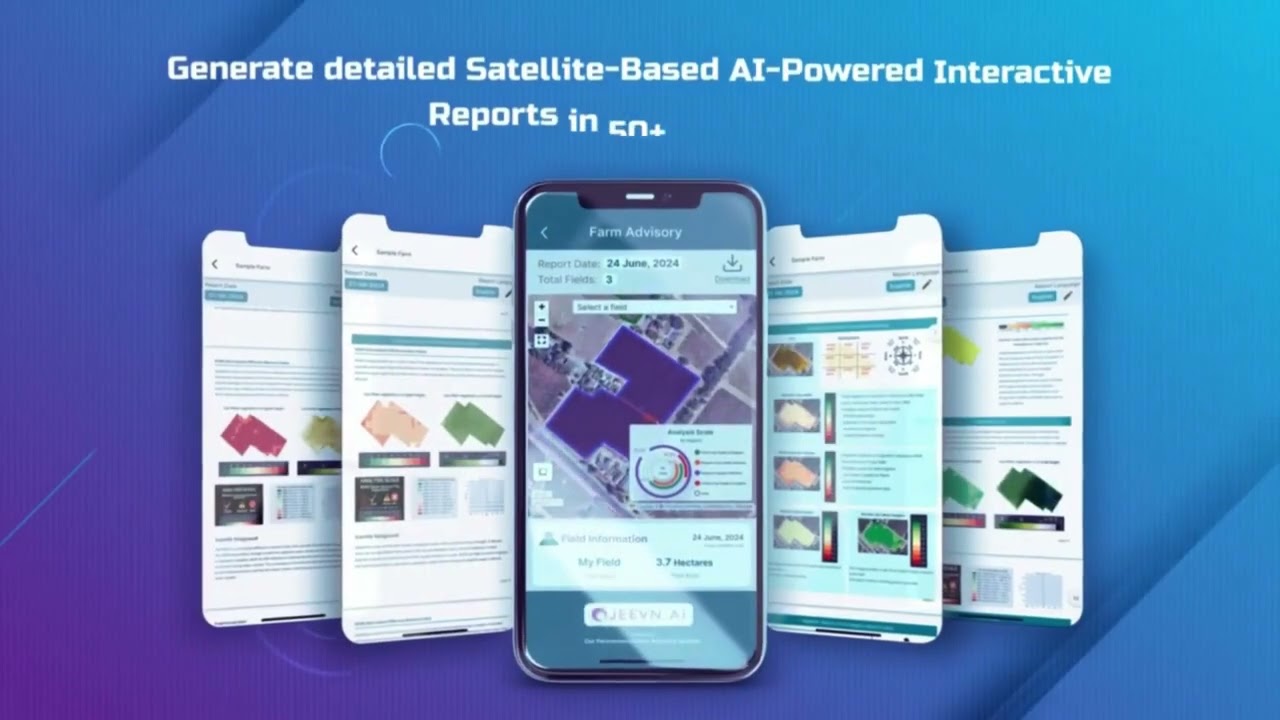
- 🤖 Leverage our Jeevn AI Advisory System for actionable recovery and adaptation strategies.
- 🔗 Adopt blockchain-based traceability for transparent, secure relief fund distribution and product authentication.
- 🌍 Optimize resource management and fleet logistics after disaster events.
- 📊 Quantify sustainability efforts, such as carbon footprinting, to unlock additional disaster recovery incentives.
Our platform also supports satellite-based verification for agri-insurance and loans, reducing fraud and speeding up financial flows when emergencies strike.




Interested developers? Integrate satellite data for your own financing, agri-insurance, or relief platforms via our public API and access full developer documentation on Farmonaut Satellite Weather API Docs.
By empowering data-driven recovery and resilience, we help sustain farm productivity, incomes, and global food security even as disasters become more frequent and severe.
-
 Sustainability Verification: Real-time tracking of sustainable ag practices for payment bonuses.
-
 Streamlined Relief: Satellite-verified crop loss mapping for fast disaster aid disbursal.
-
 Full Scale Monitoring: Supports farmers from individual smallholders to large-scale farm operations.

Challenges & Path Forward: What Remains to Be Done?
Despite undeniable progress, providing equitable, timely, and effective ag disaster relief still faces hurdles:
- Digital Gaps & Infrastructure: Some rural regions lack reliable internet and mobile access, limiting digital application efficiency.
- Bureaucratic Delays: Complex eligibility or registration requirements slow payout delivery during the most vulnerable period.
- Marginalized Farmers: Smallholders or minority producers can face greater barriers to access.
- Funding Scale: As climate disasters increase, dedicated funds may be stretched by the frequency and unpredictability of events.
- Adaptation Lag: If disaster payments are not matched with proactive, sustainable adaptation strategies, future losses may become greater and more frequent.
Effective relief systems require robust partnerships with local organizations, clear communication, and user-friendly processes—elements made easier by smart technology integrations.
Satellite analytics are equally transformative in sectors like fleet and resource management for mining, where real-time risk tracking and operational resilience are increasingly in demand.
Managing extensive crop operations?
Explore agri-administrator tools for field monitoring, risk alerts, and digital reporting, ideal for supporting disaster resilience at scale.
-
 Disaster payments are a lifeline for immediate farm recovery amid climate crisis.
-
 Linking payouts to sustainable practices ensures resilience and future support eligibility.
-
 Advanced analytics shorten disaster-to-payment time, reducing rural distress.
-
 Farmonaut’s tools help verify, report, and adapt—supporting sustainable growth and fair relief.
-
 Continued investment and modernization are key to securing food and economic stability.
Frequently Asked Questions about Ag Disaster Payments 2026 & Relief for Farmers
- 1. What are ag disaster payments, and who is eligible?
- Ag disaster payments are government-funded emergency payments designed to provide immediate financial relief to farmers affected by climate-driven disasters (such as droughts, floods, wildfires, and pest outbreaks). Eligibility depends on criteria like location, certified loss of crop or livestock, disaster declaration, and specific program guidelines.
- 2. How do ag disaster payments differ from agricultural insurance?
- Unlike insurance (which requires upfront premiums, regular payments, and sometimes lengthy claims), disaster payments are typically triggered by extraordinary events and funded through government or emergency programs. They’re meant to provide rapid aid without the need for ongoing insurance contracts.
- 3. Which sustainable practices can earn bonus payments or incentives?
- Practices including cover cropping, regenerative agriculture, water conservation, carbon soil management, and integrated pest management often qualify farmers for bonus disbursements or higher-tiered disaster payments, depending on the local/national program.
- 4. How is technology helping ensure timely disaster payments?
- Satellite monitoring, AI analytics, blockchain traceability, and digital application platforms now play crucial roles in verifying losses, reducing fraud, and streamlining the payment process for both farmers and disaster response agencies.
- 5. Where can I find more about Farmonaut’s agri-tech platforms?
- Access our full suite of products and services—including crop health monitoring, fleet management, and traceability—via the Farmonaut app. Developers can explore API documentation here.
Conclusion: Building Stronger Agricultural Systems for a Climate-Resilient Future
In 2026 and beyond, ag disaster payments are much more than a temporary safety net. They are the financial backbone for resilience in the face of increasingly frequent and severe disasters caused by climate change. The combination of:
- Rapid, targeted financial relief
- Incentives for sustainable, climate-smart farming
- Digital verification, satellite analytics, and transparent record-keeping
- User-friendly systems that promote inclusivity and quick turnaround
means payments now both address losses and lay the foundation for recovery, adaptation, and productivity.
As climate challenges grow, so too does the importance of inclusive, agile, and future-ready relief programs. Efforts must continue to address equity, funding gaps, process improvement, and the widespread adoption of sustainable farming—with technology and innovation at the core.
At Farmonaut, we’re committed to supporting the agriculture community by offering accessible, affordable digital solutions that help quantify loss, prove sustainability, and optimize recovery after natural disasters. Together, we can help build a safer, more resilient, and more sustainable food system for the planet.

 Godrej Agrovet
 Hayleys Agriculture
 Linx Agritech
 Adinet
 Save Your Soils
 GalaxEye Space
 Grandstream Algérie
 XOS Realty
 Geospatial Lab Africa
 Agro La Gándara
 HIPSAC
 ZOL Zimbabwe
 Juligerm
 AdBio
AdBio MISE Maroc
 NWNS
NWNS Red August Group
 Farm Inc
 WeMe Global
 Agrotoken
 Blue BearX
 Insignito
 DnCubed
 Indosistim Teknologi
 Liquify Digital
 CU Foods
 BeyondTech Global
 Rouge VC
 AgroRisk
 Oath Inc
 Esri North East Africa
 MDCV UK
 Etech Consulting Madagascar
 Vestlandsforsking
 WB Dev
 Sama Premium
 Tres Valles
 Blickwinkel
 Agricultural Credit Policy Council
 eKGIS
eKGIS Mostas Tech
 Andex
Andex Deluxe Conseil
 WICO
WICO Chimera Innovation
 SkyHarvest
 Teledarbas
 Exurbia Geospatial
 FieldZero
