

Agriculture Payment Solutions: A 2026 Buyer’s Guide
Reviewed September 2026 against USDA Farm Service Agency, the European Commission’s DG Agriculture, and Statistics Canada / Export Development Canada.
Try it: Run your own numbers →
Agriculture payment solutions are the digital rails that move money between farmers, buyers, lenders and governments — replacing cash and paper cheques with mobile transfers, bank API integrations, and blockchain-verified settlement. The category covers two distinct flows that get lumped together under “agri payments”: private commercial payments (crop sales, input purchases, equipment financing) and public transfers (subsidies, disaster aid, insurance indemnities). In the United States alone, federal commodity subsidies for corn, soybeans, cotton and wheat totalled $9.3 billion in 2024, and USDA projects $55 billion in total farm-sector income transfers — subsidies, crop insurance and disaster aid combined — for 2026, according to a market intelligence brief from the American Farm Bureau Federation. American Farm Bureau Federation Both flows now run through the same digital payment infrastructure, which is why a farm’s choice of payment platform affects how fast it gets paid for grain, how fast it receives a subsidy, and how easily it proves creditworthiness to a lender.
What Counts as an Agriculture Payment Solution
An agriculture payment solution is any system — mobile wallet, bank-linked app, blockchain ledger, or government payment portal — built to move money in and out of a farm operation with a verifiable record attached. That record matters more in agriculture than in most sectors because a single transaction (a subsidy payment, a grain sale, an insurance payout) often has to satisfy three different audiences at once: the farmer who needs the cash, the buyer or agency that needs proof of delivery or eligibility, and the lender who needs a transaction history to underwrite the next loan.
The two queries this article is built to answer — “agriculture payment solutions” and “agriculture digital payment” — both point at the same underlying question: how does money move faster and more transparently through a farm business than it did with a paper cheque. The rest of this guide answers that with real payment figures from the US, EU and Canada, a feature comparison of platforms, and a working calculator.

The Subsidy and Direct-Payment Landscape: US, EU, Canada
Government-to-farmer payments are the largest single category of agricultural payments by dollar volume, and they’re a useful baseline for understanding why digital payment rails matter — these are recurring, eligibility-gated transfers that farms depend on for cash-flow timing.
United States
USDA/USAFacts reports $9.3 billion in federal commodity subsidies for corn, soybeans, cotton and wheat in 2024. USAFacts On top of standing commodity programmes, USDA’s Farm Service Agency authorized the Emergency Commodity Assistance Program (ECAP) at $10 billion for eligible US farmers in 2025, with a published payment calculator so producers can estimate their own payment before it arrives. USDA Farm Service Agency – ECAP Payment Calculator Combined with crop insurance indemnities and disaster assistance, the American Farm Bureau Federation’s market intelligence team projects $55 billion in total income transfers to the US farm sector for 2026. Because ECAP and commodity payment totals are refiled by USDA FSA on a rolling basis as sign-ups close, check the FSA payment calculator link directly for the current authorized amount and your own estimated payment rather than relying on a single point-in-time figure.
European Union
The EU runs its farm payments through the Common Agricultural Policy (CAP), split into two pillars. Direct payments to farmers totalled €38.16 billion in 2023, and rural development funding across member states added a further €12.95 billion, per the European Commission’s consolidated CAP expenditure report. European Commission – CAP Expenditure The Commission publishes this breakdown annually, searchable by year and member state on DG Agriculture’s data portal — Dutch, French and German farms all draw from this same CAP pool, disbursed through each member state’s national paying agency.
Canada
Canadian agricultural exports reached $67.7 billion in 2025, according to Export Development Canada, drawing on Statistics Canada trade data. Export Development Canada That export volume is the commercial-payment side of the ledger — grain, oilseed, pulse and livestock sales settled between Canadian producers and international buyers, largely through bank wire and increasingly through digital trade-finance platforms. Statistics Canada updates monthly trade data by HS commodity code at statcan.gc.ca, with certified annual totals released each Q1.
Agriculture Digital Payment: What’s Actually Changed
The shift from cash and paper cheque to digital rails is not a future prediction — it’s the current default for most subsidy disbursement and an increasing share of commercial farm transactions in the US, EU and Canada. Three changes matter most:
- Direct deposit as default for government payments. USDA FSA and EU national paying agencies now disburse the vast majority of subsidy and CAP payments via direct bank transfer rather than cheque, cutting the time between eligibility determination and cash-in-hand.
- Bank API integration for commercial sales. Grain elevators, cooperatives and input suppliers increasingly settle through ACH (US), SEPA (EU) or Interac/EFT (Canada) rails rather than mailed cheques, with same-day or next-day settlement.
- Verified, condition-based payouts. Smart-contract and satellite-verified triggers — payment released only once delivery, quality or maturity conditions are met — are moving from pilot to production in supply-chain and insurance contexts.
What’s genuinely new for 2026 is not “digital payments exist” — they have for over a decade — but that payment platforms are now expected to integrate with farm data (yield monitors, satellite crop health, weather) so that a payment can be triggered or verified against real production evidence, not just a submitted invoice.

Emerging Trends in Agri Payment Platforms
1. Real-Time Tracking and Dashboard Visibility
Payment platforms now surface transaction status, dispute flags and payout timing in a live dashboard rather than a monthly statement, which is what farms in the US, Canada and EU increasingly expect from any counterparty — buyer, cooperative or government agency.
2. Integration With Farm Management Systems
Linking payment data to production data — acreage, yield, input costs — lets a lender or insurer underwrite faster and lets a farm operator reconcile cash flow against the season’s actual output, rather than against invoices alone.
3. Blockchain and Smart Contract Settlement
Blockchain ledgers and smart contracts are being piloted for supply-chain payments where a buyer wants payment released automatically once a shipment clears a quality or traceability check, reducing disputes over “was this delivered to spec.”
4. Verified Credit Histories From Digital Transaction Records
A farm with two or three years of digital transaction history — subsidy receipts, input purchases, sales — has a stronger basis for a loan application than one relying on paper records, since lenders can review the ledger directly rather than trusting self-reported figures.
5. Interoperability Across Buyers, Cooperatives and Agencies
A payment platform that only works with one buyer or one bank is a dead end. The platforms gaining share are the ones that settle across multiple counterparties — cooperative, private buyer, government agency — without forcing the farm to run three separate systems.

Comparing Leading Agriculture Payment Solutions
Fee percentages, security features and processing times below are platform-published or estimated figures compiled for comparison; verify current fee schedules directly with each provider before choosing, since fee tiers change with transaction volume and region.
| Solution Provider | Digital Transaction Fees (Estimated %) | Transaction Security Level | Average Processing Time (Hours) | User Accessibility (1–5) | Technology Utilized |
|---|---|---|---|---|---|
| Farmonaut (Satellite-Integrated Payments) | 0.3% – 0.6% | Very High (AI, Blockchain, Satellite Verification) | 1–2 | 5 | AI, Blockchain, Satellite Data, Mobile/Web App, API |
| Agrisync (Global Ag Payment Platform) | 0.7% – 1.2% | High (Secure Payment Gateway) | 2–4 | 4 | Mobile App, Bank API Integration |
| AgriDigital (Blockchain Exchange) | 0.5% – 1.0% | Very High (Blockchain) | 1–2 | 4 | Blockchain, Mobile/Web |
| Bank ACH/SEPA Direct (Traditional Digital) | 0.1% – 0.5% (flat fee common) | High (Bank-Grade Auth.) | 4–24 | 3 | ACH/SEPA Rails, Online Banking |
On fees alone, bank-direct ACH/SEPA transfers are often cheapest, but they carry no built-in verification layer — no automatic tie to delivery, quality or production evidence. That’s the gap satellite- and blockchain-integrated platforms are built to close: a small fee premium buys a verifiable record that a subsidy auditor, insurer or lender can check independently, which is the whole basis for how Farmonaut Crop Loan & Insurance Services underwrite claims against satellite-confirmed crop condition rather than paperwork alone.
ECAP-Style Payment Calculator
USDA’s Emergency Commodity Assistance Program pays out per eligible acre by crop type, subject to a per-farm payment rate; use the calculator below to model your own estimate, then confirm the current official rate at USDA FSA’s own calculator before filing.
Run your own numbers
Assumptions: this is a simple acres × rate calculation capped at a per-person payment limitation, and excludes payment eligibility rules (AGI limits, actively-engaged-in-farming tests), crop-specific rate tiers, and any prior-program offsets. It does not replace USDA FSA’s own ECAP payment calculator, which applies the actual published rates and eligibility rules for the current sign-up period.
Where Precision Agriculture Spending Fits In
Readers comparing agriculture payment solutions often end up comparing precision agriculture solutions in the same breath, because both categories compete for the same farm technology budget. The global precision agriculture market was sized at $7.28 billion in 2024, per Precedence Research’s market aggregate. Precedence Research – Precision Farming Market Adoption is already mainstream on large US grain farms: variable-rate technology penetration reached 69% among major US corn and soybean operations in the 2024–2025 period, and AI-powered precision agriculture adoption reached 60% among large global farms in 2025, according to the same research aggregate. Sci-Tech Today – Precision Farming Statistics
When comparing precision agriculture solutions against each other, the payment angle is this: platforms that combine field monitoring with payment or credit verification (like satellite-based yield and health data feeding into a crop loan application) return value on both the production side and the finance side of the operation, rather than production data sitting in a silo separate from the farm’s financial records.

A Note on Milking Equipment and Dairy Software Costs
Some readers researching agri payments also search for customizable milking solutions — automated and configurable milking systems for dairy operations. That’s a farm-equipment and herd-management category rather than a payments category, so we won’t stretch this guide to cover milking hardware in depth. On the finance side alone: dairy farm management software, which handles herd records, milk yield tracking and often payment/invoicing to processors, is priced in the $50–$500 per month range per operation depending on herd size and feature set, according to market research on the dairy herd management sector. MarketsandMarkets – Dairy Herd Management Market If milking hardware customization is what you actually need, that’s best researched directly with equipment vendors (DeLaval, Lely, GEA) rather than through a payments-focused resource like this one.
Technologies Powering Verified Payments
AI for Payment Verification and Credit Scoring
AI-driven analytics assess payment behaviour and flag anomalies before a payment settles, reducing the fraud and dispute rate that plagued manual, paper-based agri transactions.
Blockchain for Traceable Transactions
Blockchain ledgers give every stakeholder in a supply chain — farmer, buyer, auditor — the same immutable transaction record, which is the basis for Farmonaut Product Traceability, reducing fraud and enabling end-to-end supply chain visibility from farm to buyer.
Satellite and IoT-Verified Disbursement
Satellite imagery and IoT sensors let a payment be triggered against real field conditions — crop maturity, delivered quality — rather than a submitted claim alone. For large-scale operations coordinating many fields and payment events, Farmonaut Large Scale Farm Management centralizes that operational and payment-relevant data in one place.

Multi-Channel Access: Web, Mobile, API
Access agri payment tools wherever your operation runs:



For developers and fintechs building payment-adjacent integrations:
Farmonaut Satellite Data & Payment API (API Documentation)

Integrating Payments With Farm Data and Risk Management
Payment platforms that link to production data do three things a standalone payment app can’t:
- Verified, evidence-based payment releases — tying payout to confirmed delivery or crop condition rather than an invoice alone.
- Underwriting support for loans and insurance — satellite-confirmed crop health feeding directly into a claim or credit decision via Farmonaut Crop Loan & Insurance Services, streamlining access to financing and reducing risk for both farmers and lenders.
- Compliance reporting — carbon and sustainability data increasingly required alongside payment records for regulatory and buyer compliance, covered under Farmonaut Carbon Footprinting.
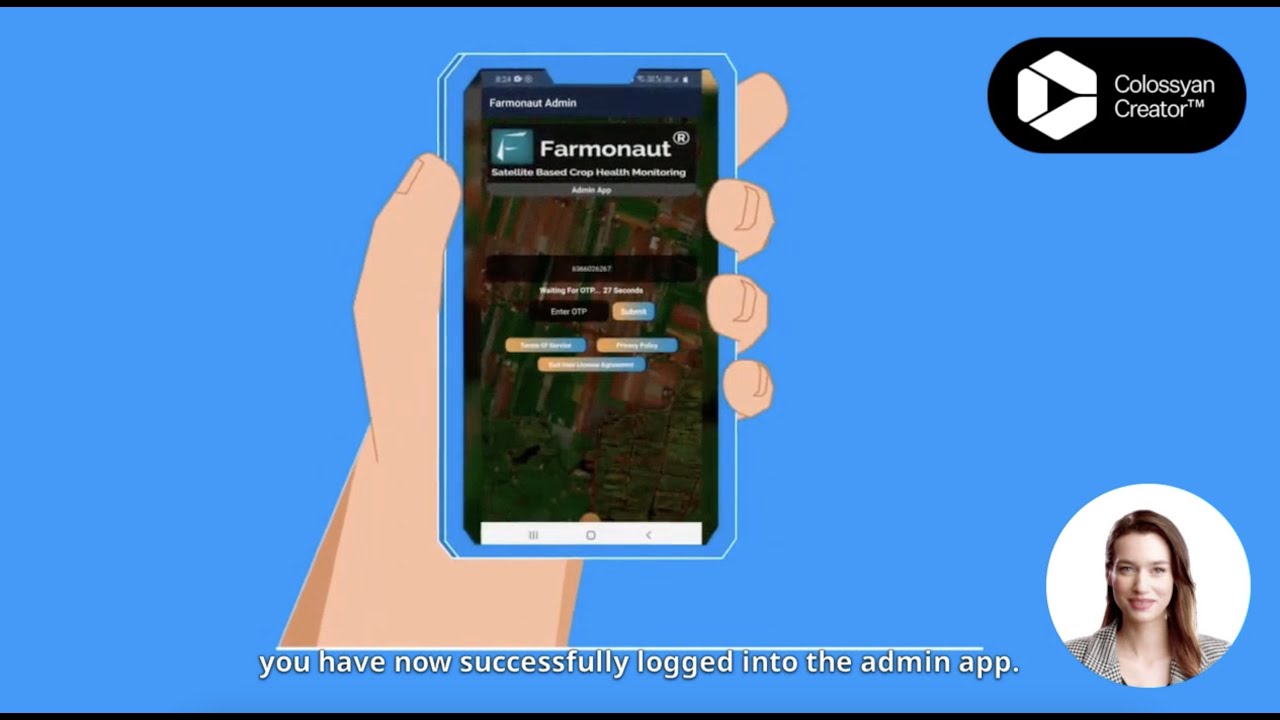

Farmonaut’s Role in Verified Agri Payments
Farmonaut’s platform combines satellite crop monitoring, AI advisory (JEEVN AI) and blockchain traceability so that payment-relevant events — harvest readiness, delivered quality, sustainability compliance — have an independently verifiable record attached, not just a submitted claim. That record is what makes the payment comparison table above possible: satellite and blockchain verification is the reason integrated platforms can justify a 0.3%–0.6% fee against a security profile that plain bank transfer can’t match on its own.
For fleet and logistics costs tied to delivery-based payments, see Farmonaut Fleet Management, which optimizes logistics and equipment usage to reduce operational costs across the delivery chain that payments depend on.
Flexible Subscription Options for Advanced Agricultural Monitoring
Choose a Farmonaut subscription model that suits your operations — from individual farms to government requirements. All plans include secure monitoring, analytics, compliance, and 24/7 platform access.
Remaining Challenges
- Cybersecurity: As payment and production data digitize, robust authentication and fraud monitoring remain essential — a breach at a payment platform is a farm-income event, not just a data event.
- Rural connectivity gaps: Broadband and mobile network gaps in remote US, Canadian and rural EU regions still delay adoption of real-time payment platforms in the areas that most need faster cash flow.
- Payment limitation and eligibility complexity: Programmes like ECAP apply per-person payment limitations and eligibility tests (AGI limits, actively-engaged-in-farming rules) that a simple acres × rate estimate — like the calculator above — cannot fully capture; always confirm against USDA FSA’s own calculator before relying on an estimate.
- Interoperability: A payment platform that only settles with one buyer or one bank fragments a farm’s financial picture across multiple disconnected systems.
FAQ
1. What are agriculture payment solutions?
Digital systems — mobile apps, bank API integrations, blockchain ledgers, government payment portals — that move money between farmers, buyers, lenders and agencies with a verifiable transaction record, replacing cash and paper cheques.
2. What’s the difference between agriculture payment solutions and agriculture digital payment?
They describe the same category from two angles: “payment solutions” refers to the platforms and providers themselves, while “digital payment” refers to the transaction method (bank transfer, mobile wallet, card) as opposed to cash or cheque.
3. How much does the US government pay out in farm subsidies?
USDA/USAFacts recorded $9.3 billion in federal commodity subsidies (corn, soybeans, cotton, wheat) for 2024, and USDA FSA authorized $10 billion for the Emergency Commodity Assistance Program (ECAP) in 2025. Total projected farm-sector income transfers for 2026, including insurance and disaster aid, are estimated at $55 billion by the American Farm Bureau Federation. Check the USDA FSA payment calculator for current figures.
4. How does the EU’s CAP compare to US farm subsidies?
The EU’s Common Agricultural Policy disbursed €38.16 billion in direct payments and €12.95 billion in rural development funding in 2023, according to the European Commission’s CAP expenditure data, updated annually by member state.
5. Does a “customizable milking solution” belong under agriculture payments?
Not directly — that’s a dairy equipment and herd-management category. The payment-relevant figure is that dairy farm management software (which typically includes payment/invoicing to processors) runs $50–$500 per month per operation. For milking hardware itself, consult equipment vendors directly.
6. What role does Farmonaut play in agri payments?
Farmonaut provides satellite monitoring, AI advisory and blockchain traceability that verify payment-relevant events (delivery, quality, crop maturity) independently, supporting faster and better-documented payment, loan and insurance decisions via its web, mobile and API channels.
Discussion
Questions, corrections or field experience? Share them below. First-time comments are reviewed before they appear, and your email is never published.
No comments yet. Be the first to add a question or your experience.

 Sayaji Group
 eKGIS
eKGIS Mostas Tech
 Native Seeds
 Andex
Andex FCF India
 Unifrutti Gulf
 Deluxe Conseil
 TVS Electronics
 BW Pipelines
 WICO
WICO Chimera Innovation
 SkyHarvest
 Polaris Digitech
 Licence holder · Niger · Gold










