

Agricultural Drone & AI Agriculture News October 2025: Revolutionizing Farming for a Sustainable Tomorrow
Introduction: Agricultural Drone & AI Agriculture News October 2025
October 2025 marks a significant milestone in precision farming innovation. Fuelled by a dynamic convergence of artificial intelligence (AI) and drone technology, the latest developments reported in agricultural drone news October 2025 and ai agriculture news October 2025 underline a global shift towards high-tech, sustainable agriculture.
Advanced agricultural drones now function as indispensable tools for farmers worldwide—unlocking unprecedented crop insights, optimizing resource application, and supporting higher yields, all while strengthening environmental stewardship. In this comprehensive roundup, we explore the top trends, breakthroughs, and future prospects defining this new era of AI agriculture news October 2025.
From multispectral sensors revealing plant health at the micro-level, to deep learning algorithms that predict the next disease outbreak before it hits the field, these innovations are transforming farming operations of all scales and boosting resilience against the challenges of climate change, soil depletion, and food security.



Cutting-Edge Innovations: The Evolution of Agricultural Drones in October 2025
Agricultural drone technology in 2025 goes far beyond the legacy of basic surveillance. The newest aerial devices launched this year are highly sophisticated, AI-driven systems equipped for performing a multitude of critical tasks vital to precision agriculture.
From Simple Imaging to Autonomous Intelligence
- AI-guided Drones: Today’s drones are more than flying cameras. They possess AI-driven guidance systems enabling them to analyze ground data, adjust maneuvers in real-time, and cover vast areas with minimal human intervention.
- Sensor Technology: The use of multispectral and hyperspectral sensors empowers farmers to gather unprecedented detail on crop health—quickly detecting plant vigor, nutrient deficiencies, pest infestations, and water stress often invisible to the naked eye.
- Longer Flights, Higher Capacity: Newly launched models feature enhanced flight endurance and improved payload capacities, supporting large-scale input application and multi-sensor operations in a single sortie.
- Onboard, Real-Time Processing: Drones process collected data during flight, enabling immediate action and dynamic adjustment of tasks such as targeted spraying or variable-rate seeding.
- Autonomous Application Systems: Capable of optimizing pesticide, fertilizer, and water applications based on real-time assessment, reducing waste and amplifying efficiency.
These advancements place drones at the core of smart farm management systems, establishing new standards in efficiency and sustainability for the agricultural sector in 2026 and beyond.

The Role of AI in Agricultural Efficiency: Powering Smart Farms
In 2025, AI agriculture news highlights the growing importance of artificial intelligence as the backbone for data-driven farm management systems. By analyzing enormous volumes of flight data, AI algorithms generate tailored, actionable insights for every farm.
- Predictive Analytics: Advanced analytics integrate weather, soil health, and multi-year crop data to predict disease outbreaks and optimize the timing of everything from planting to harvesting.
- Deep Learning Crop Models: AI models trained with global datasets learn to detect subtle changes in plant health, stress patterns, or pest infestations—often before visible signs appear.
- Precision Application: Intelligent drones can recommend and execute targeted input application, reducing chemical use and environmental runoff.
- Irrigation Optimization: Using both satellite and drone data, AI can optimize irrigation schedules in real-time, based on actual crop water needs.
- Resource Management: Farms experience up to 20% improvement in yield and significant cost savings, with direct benefits in sustainability and carbon footprint reduction.
These capabilities, extensively covered in both agriculture news October 2025 and agricultural drone news October 2025, empower farmers worldwide to make nuanced, data-driven decisions that maximize productivity while minimizing impact on the environment.

Comparison Table of AI-Driven Agricultural Drone Features and Impacts (October 2025)
| Drone Model/Tech Name | AI Capabilities | Estimated Market Launch (Month/Year) | Coverage Area per Flight (ha) | Crop Yield Improvement (%) | Sustainability Enhancement | Notable October 2025 Updates |
|---|---|---|---|---|---|---|
| AgriEye X5 | Advanced pest/disease detection, variable-rate spraying | October 2025 | 110 | 18-22 | Reduces pesticide use by 28% | Launched with deep learning hyperspectral crop stress AI |
| TerraVision Pro | Multispectral crop health, predictive harvest timing | September 2025 | 85 | 20 | Cuts irrigation water usage by 35% | AI weather & soil moisture integration added |
| FieldAtlas AI Scout | Autonomous scouting, weed recognition | October 2025 | 90 | 15 | Prevents over-fertilization in 40%+ fields | Real-time edge processing with UAV swarming |
| CropGuard Sentinel | Integrated NDVI/thermal, blockchain traceability | October 2025 | 120 | Up to 25 | Traceable application records; 20% less chemical drift | New blockchain-tracked input reports |
| EcoSpray Ultra | AI-powered variable-rate pesticide/fertilizer | August 2025 | 100 | 16 | Reduces emissions, 30% less farm chemical | Battery swap system, faster AI data upload |
As shown, October 2025 brought AI drones capable of covering large areas, significantly improving yields, and supporting more sustainable practices than ever before.
Sustainable Agriculture: Environmental Impact and Resource Optimization
One of the most powerful impacts of agricultural drone technology and AI in farming—as documented in ai agriculture news October 2025—is their ability to enhance sustainability at scale. By using these technologies:
- Precision Spraying: Drones apply pesticides, fertilizers, and water with surgical accuracy, targeting only the crops that need them and slashing chemical runoff into neighboring ecosystems.
-
Targeted Irrigation: Drones, integrated with soil moisture sensors and AI analytics, optimize irrigation schedules—delivering water just where and when it’s needed and preventing over-irrigation.
Learn about carbon footprint monitoring for agriculture, unlocking guidance for both large and small farms committed to sustainability. - Reduced Resource Waste: Precision agriculture means less fertilizer and chemical waste, providing natural cost savings and supporting environmental health.
- Biodiversity Support: Minimizing chemical application preserves soil quality and promotes pollinator-friendly farming—all in line with the latest sustainability standards.
- Climate Resilience: Data-driven adaptation using drone and AI insights helps farmers worldwide manage increasingly unpredictable weather and resource availability.
For those focused on traceability in agriculture, blockchain-backed solutions provide transparency and build consumer trust:
Explore blockchain-based traceability in the agri supply chain
Industry Adoption and Real-World Benefits: Transforming Food Systems Globally
The adoption of AI-powered drones is no longer reserved for experimental pilot projects; it is a mainstream and rapidly growing practice, as widely reported in october 2025 agriculture news. Key advantages to farmers and agricultural enterprises include:
- Labor Cost Reduction: Automated input application and scouting reduce manual labor, making farm operations more efficient—especially for large holdings.
- Higher Output, Lower Input: AI-optimized resource application maximizes yield per unit of water, fertilizer, and pesticide applied.
-
Decision Support: Combined drone and satellite analytics deliver actionable insights for planting density, disease risk, and input needs.
See advanced tools for large-scale farm management - Faster Response Times: Real-time drone data processing enables immediate intervention—from pest infestation management to drought response.
- Inclusive Access: Government and private initiatives are driving technology access to smallholders, democratizing precision agriculture benefits.
Wide deployment is occurring in the American Midwest for major crops like corn and soy, and across Asian rice fields—each adapting AI drone systems to suit regional specifics and resource conditions. In Africa, drought monitoring and crop insurance verification are also on the rise:
Read about satellite-powered solutions for crop loan and insurance verification.

Future Outlook: Integration, Innovation, and the Rise of Smart Farms
As we look beyond October 2025 towards 2026 and beyond, agriculture news analysts and experts project major trends in the field:
- Holistic Smart Farming Systems: Drones will fully integrate with autonomous ground equipment, satellite monitoring, sensor networks, and cloud analytics—establishing a connected, intelligent ecosystem for every farm.
- Increased Affordability and Accessibility: Advances in battery life, processing power, and user-friendly interfaces will accelerate adoption even in remote and resource-limited regions.
- New AI Capabilities: Continuous improvements in deep learning models and real-time video analytics will increase detection accuracy and automate complex tasks including robotic planting, scouting, and even harvesting.
- Greater Environmental Focus: Regulatory frameworks, combined with sustainability tracking and blockchain traceability, will become mainstream—meeting both compliance and consumer demand for environmentally responsible food.
-
Data Sharing and Open APIs: Open API integrations, such as those provided by Farmonaut (access API here), support the seamless flow of agricultural intelligence across platforms and stakeholder networks.
Discover API developer documentation for integrating weather and crop intelligence

Farmonaut’s Role: Satellite-Powered Precision, AI Advisory, and Traceable Food Systems
At Farmonaut, we play a crucial role in the digital transformation of agriculture, mining, and infrastructure by offering satellite-driven, AI-powered advisory systems and blockchain-enabled traceability.
- Satellite-Based Monitoring: We harness multispectral satellite imagery to monitor crop health, water stress, and soil conditions, guiding farmers and business users to make timely, impactful resource decisions.
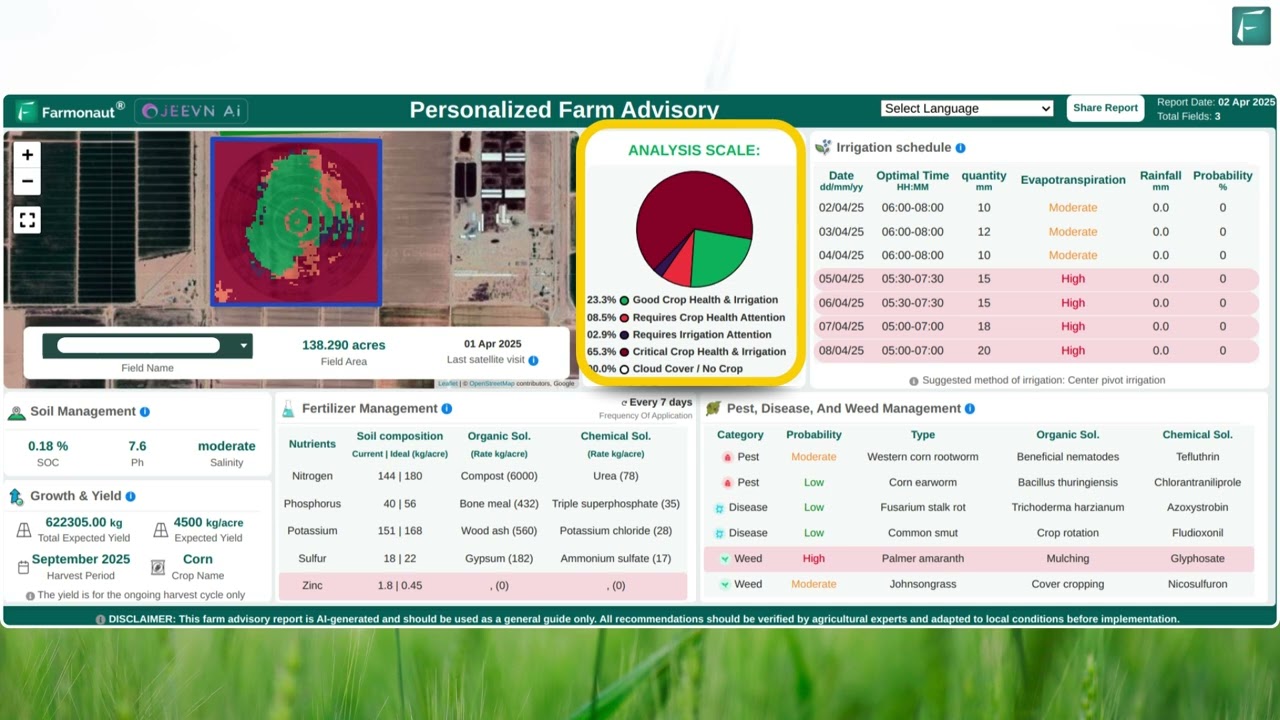
- Jeevn AI Advisory: Our Jeevn AI system delivers real-time insights and tailored strategies for everything from precision farming to mining operations, as featured in the YouTube videos below.
- Blockchain Traceability: We enable end-to-end transparency for food, agriculture, and minerals, enhancing supply chain trust and sustainability reporting capabilities.
- Environmental Impact Monitoring: Our advanced systems support carbon footprint and emissions tracking for compliance and sustainable practice promotion.
-
Fleet and Resource Management: Advanced logistics tools empower enterprises to optimize machinery and input use—reducing costs and improving productivity.
Learn more about agricultural fleet management solutions - API Access: Integrate our data and insights directly into your apps or dashboards for enhanced field and business intelligence.
All solutions are designed to be scalable, cost-effective, and accessible via web and mobile platforms, supporting the unique needs of every user, business, or government institution worldwide.
Interested in custom advisory for large-scale plantations or forestry? Explore Farmonaut’s advanced plantation and forest advisory systems.
Watch: In-Depth Videos on Drones & AI in Agriculture (2025)



Frequently Asked Questions (FAQ): Agricultural Drones & AI in 2025-2026
-
What are the main benefits of using agricultural drones and AI in farming?
Agricultural drones, especially those with AI integration, offer high-precision monitoring, optimized pesticide and water application, immediate detection of disease/pest stress, and automation of time-intensive tasks. These technologies help farmers improve yield, reduce operational costs, and minimize environmental impact.
-
How do drones and AI directly support sustainability?
By only applying chemicals or water where needed, AI-driven drones help reduce runoff, decrease green-house gas emissions, and preserve soil health. Many solutions also feature traceability, ensuring supply chain transparency for sustainably grown produce.
-
Are these advanced agricultural drones suitable for smallholder farms?
Yes. The 2025-2026 generation of drones emphasizes affordability, modular platforms, and user-friendly interfaces. Governments and agritech providers are working to enhance accessibility for farms of all sizes.
-
What’s new in agricultural drone news October 2025?
October’s major updates include: enhanced autonomous systems, deeper AI learning capabilities (like early disease prediction), blockchain-backed traceability in drones, and integration with satellite insights for more robust farm intelligence.
-
How can I integrate Farmonaut’s services into my farm or business operation?
Farmonaut offers web and mobile platforms with scalable subscriptions. Developers and enterprises can use our open API and developer documentation for seamless integration of satellite and AI insights into their custom systems.
-
Where can I find support for drone-based crop insurance verification?
Farmonaut’s satellite-driven monitoring, detailed in our crop loan and insurance verification solution, provides accurate, tamper-proof verification for insurers and lenders.
Conclusion: The New Era of Agricultural Drones & AI is Here
The agricultural landscape, as captured in agricultural drone news October 2025, has fundamentally changed. The integration of high-tech drones and sophisticated artificial intelligence is driving a smart, sustainable, and highly productive revolution in farming.
- For Farmers: Access to targeted, actionable data supports smarter decisions, higher yields, and more sustainable agricultural practices.
- For Businesses: Automation, traceability, and compliance are now seamless, scalable, and more affordable than ever.
- For Rural Communities: Smart systems extend benefits of precision agriculture—boosting income, food security, and resilience in the face of climate unpredictability.
- For a Sustainable Future: Advanced drone and AI technologies are vital allies in combating resource depletion, food insecurity, and environmental degradation.
The smart farm revolution is underway—bringing the future of agriculture to today’s fields, acre by acre, flight by flight.
Get Started with Farmonaut: Subscribe for Next-Gen Satellite & AI-Driven Solutions
Unlock the power of real-time monitoring, AI advisory, blockchain traceability, and resource optimization for your farm, business, or government operations:

 Godrej Agrovet
 Hayleys Agriculture
 Linx Agritech
 Adinet
 Save Your Soils
 GalaxEye Space
 Grandstream Algérie
 XOS Realty
 Geospatial Lab Africa
 Agro La Gándara
 HIPSAC
 ZOL Zimbabwe
 Juligerm
 AdBio
AdBio MISE Maroc
 NWNS
NWNS Red August Group
 Farm Inc
 WeMe Global
 Agrotoken
 Blue BearX
 Insignito
 DnCubed
 Indosistim Teknologi
 Liquify Digital
 CU Foods
 BeyondTech Global
 Rouge VC
 AgroRisk
 Oath Inc
 Esri North East Africa
 MDCV UK
 Etech Consulting Madagascar
 Vestlandsforsking
 WB Dev
 Sama Premium
 Tres Valles
 Blickwinkel
 Agricultural Credit Policy Council
 eKGIS
eKGIS Mostas Tech
 Andex
Andex Deluxe Conseil
 WICO
WICO Chimera Innovation
 SkyHarvest
 Teledarbas
 Exurbia Geospatial
 FieldZero
