

Agricultural Loan Market 2026: Loans for Land
“By 2026, the global agricultural loan market is projected to reach $4.3 trillion, boosting rural investments and land acquisitions.”
Introduction: Agricultural Loans in 2025 — Empowering Farmers & Transforming Rural Economies
Agricultural loans remain a vital financial instrument driving the growth and sustainability of the agricultural sector. As the global demand for food intensifies—fueled by population rise, resource constraints, and climate variability—farmers need tailored loan and credit facilities more than ever.
In 2025 and looking toward 2026, the landscape of agricultural loans is shifting, with new financial products and innovation transforming how land is purchased, improved, and managed. Agricultural loans for land—whether for acquisition, expansion, modernization, or sustainability—are pivotal in empowering farmers to adopt modern technologies, invest in equipment, and build more resilient and productive rural economies.
This article explores the current dynamics of the agricultural loan market, how evolving credit solutions support rural development, the critical role of loans for land, and why access to financial services is indispensable to the future of agriculture.
We’ll also dive into digital transformation and highlight how satellite technology, like Farmonaut’s advanced platform, is improving data-driven decision-making for loans, crop monitoring, carbon-footprinting, and more, shaping agricultural lending for 2026 and beyond.

The Agricultural Loan Market in 2025: Overview & Landscape
As we approach 2026, the agricultural loan market is experiencing significant evolution. Innovation in financing solutions and a renewed focus on sustainability are reshaping lending practices within agriculture. Governments, financial institutions, and agritech firms now provide tailored loan products that address unique needs: from seasonal crop support and livestock purchases to investment in renewable energy or precision farming.
Banks are leveraging analytics, satellite imagery, and data-driven evaluation models to assess risk and extend credit—even where smallholder farmers are traditionally excluded from formal lending. Repayment terms and interest rates are increasingly personalized, creating access for rural populations still left behind by legacy financial systems.
Green financing and climate-aligned loans are becoming mainstream, aimed at promoting sustainable practices including:
- Nitrogen-efficient fertilizers
- Water-saving irrigation systems
- Carbon sequestration projects
The expansion of these products not only drives sustainability but safeguards farmer livelihoods against climate risks and volatile markets.
In summary, the current agricultural loan market is:
- Diverse and segmented—offering niche credit for land, crops, equipment, and more
- Data-driven—using analytics and AI for evaluation
- Climate-focused—integrating sustainability requirements
- Inclusive—actively enabling access to smallholders and rural regions
The role of these loans in empowering farmers to adopt modern practices and improve assets has never been more critical.

Key Facts & Trends Driving the Agricultural Loan Market Toward 2026
The agricultural loan market is set to witness accelerated growth and evolution as we head into 2026. Notable worldwide developments and trends include:
- Global Market Size: Projected to reach $4.3 trillion by 2026
- Tailored Credit: Expected to finance over 60% of new farmland purchases in 2025 (see trivia below)
- Digital and Satellite-Based Assessment: Real-time monitoring improving loan approval and evaluation
- Green Loan Expansion: Increase in sustainability-linked loan products
- Alternative Credit Scoring: Use of mobile data, transaction history, and satellite imagery for assessing smallholder risk
- Climate & Disaster Risk: Insurance products bundled with credit to protect against extreme weather variability
- Land Use Optimization: Loans for consolidation, improvement, and reclamation becoming critical in fast-urbanizing regions
- Policy & Regulatory Push: Governments incentivizing sustainable financing and improved land tenure security
These trends reflect the agricultural loan sector’s ongoing transformation as a catalyst for food security, rural economic stability, and sustainable land use.
“Tailored credit solutions are expected to finance over 60% of new farmland purchases in 2025 alone.”
Significance of Agricultural Loans for Land Acquisition
Agricultural loans for land are more than simple financing tools; they are critical enablers of farm expansion, mechanization, and economic stability for farmers. Land holding remains central to agricultural productivity and rural wealth. In 2025 and beyond, land values are rising—driven by urbanization, resource constraints, and shifting environmental regulations.
Current rates, the main lenders and state-by-state comparisons are gathered in ag land loan rates by state.
Agricultural loans for land fund not only acquisition or leases but also cover:
- Land reclamation projects
- Soil enrichment and drainage improvements
- Farm plot consolidation for higher efficiency
- Compliance with environment and land use mandates
Region-specific loan programs are helping address land tenure security, especially in developing economies where uncertain property rights can discourage investment. By making land assets bankable, these loans increase confidence among farmers to invest in long-term improvements and sustainable practices.
Access to reliable credit for land means:
- Farmers can invest in modern equipment and technologies
- Farm boundaries and titles are better defined, reducing disputes
- Land can be optimized for production or conservation, depending on policy and market need
- Farmers benefit from improved resilience against climate and market risks
As demand for food and sustainable resource use intensifies worldwide, the role of agricultural loans for land will only become more significant.

Financial Products & Innovation in the Agricultural Loan Market
The agricultural loan market of 2026 is characterized by an ever-expanding suite of tailored financial products. Banks and financial institutions are increasingly designing specialized solutions to address the specific needs of different farmer segments.
Common Agricultural Loan Types
- Term Loans: For land acquisition, consolidation, and long-term farm development.
- Seasonal/Crop Loans: Designed for short-term working capital—covering seeds, inputs, fertilizers, and labor costs.
- Equipment & Technology Financing: Facilitates the purchase of modern machinery, precision agriculture systems, and renewable energy installations.
- Agribusiness Loans: Larger facility for integrated farm or supply chain projects—storage, logistics, or processing units.
- Green/Sustainable Financing: Preferential rates for sustainable practices (e.g., organic farming, carbon reduction, efficient irrigation).
Innovations Shaping the Market
- Alternative Credit Scoring: Incorporates non-traditional data—transaction histories, satellite-based crop health, and mobile payments.
- Data and Satellite-Driven Decision Making: Satellite imagery and remote sensing help validate farm locations, crop cycles, and physical assets.
- Blockchain Traceability: Used to ensure transparency and track production cycles.
- Integrated Digital Applications: Enable end-to-end loan application, approval, disbursement, and monitoring via web and mobile platforms.
These advances are making financing more inclusive, rapid, and effective across both advanced and developing markets.

Risk Management & Insurance: Safeguarding Farmers’ Repayment and Assets
One of the biggest challenges within agricultural finance is climate variability and its impact on repayment cycles. Crop failures, disease outbreaks, or extreme weather events can disrupt income. To manage these risks, financial products are evolving:
- Bundled Credit & Crop Insurance: Integrated offerings provide immediate support in adverse seasons and reduce non-performing assets for lenders.
- Parametric Insurance: Uses climate indices (e.g., rainfall, heat) and satellite data for faster, pre-defined payouts, enabling swift recovery.
- Loan Rescheduling: Flexible repayment terms in disaster-affected regions; automatic waivers or rescheduling to protect farmers from falling into debt traps.
The intersection of insurance and credit remains a powerful tool for reducing rural vulnerability and increasing the sustainability of agricultural lending.
Want to know more? See how satellite-driven platforms support real-time monitoring for crop loans and insurance
Farmonaut Crop Loan & Insurance Solution.
Digital & Technological Leap: Satellite Technology and Farmonaut’s Role
Modern agricultural loan markets are benefitting from the integration of digital technology, including satellite data, AI, and blockchain. These innovations are addressing longstanding challenges related to credit risk evaluation, asset verification, and monitoring.
Farmonaut, for example, is an advanced satellite technology company offering solutions that revolutionize loan and insurance verification in agriculture. Using multispectral satellite imagery, AI, and blockchain, we support:
- Real-time monitoring of crop health (NDVI), soil conditions, and land use — improving loan underwriting and risk assessment for financial institutions.
- AI-based advisory systems that provide customized strategies for farming practices, increasing productivity and sustainability.
- Blockchain-based traceability — ensuring authenticity and transparency within agricultural supply chains, fostering trust, and reducing fraud.
Learn About Farmonaut’s Traceability Solutions - Fleet and resource management tools — optimally managing assets, vehicles, and equipment for reduced costs and higher operational efficiency.
Explore Fleet Management Benefits with Farmonaut - Environmental impact tracking — including carbon footprint monitoring to support green loan eligibility and promote sustainability.
Farmonaut Carbon Footprinting for Compliance & Finance
These advanced services not only help farmers and financial institutions but also enhance access to credit by addressing risk, sustainability, and transparency mandates worldwide.
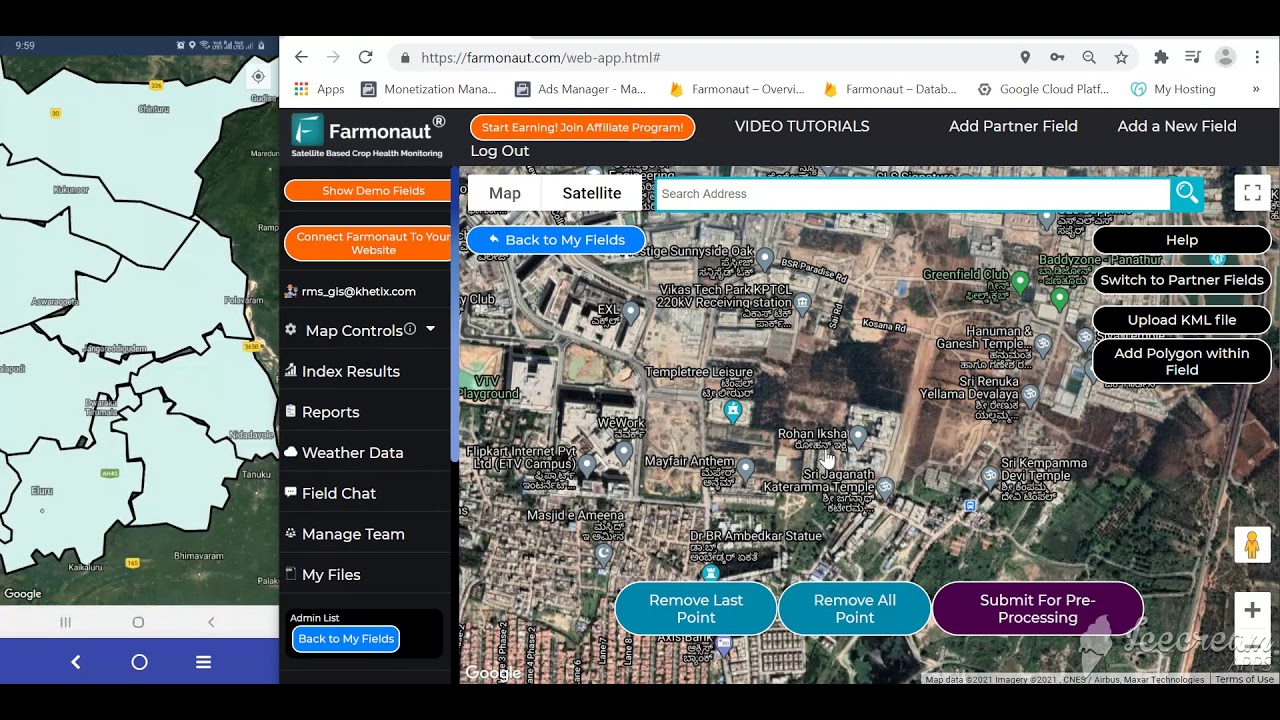

Agricultural Land Use: Future Outlook & Transitions with Loans
The future of land use in the agricultural sector will be shaped by:
- Urbanization: Shrinking farm sizes and rising land prices
- Climate change: Increasing the need for land improvement projects
- Technological transitions: Requiring new investment in modern equipment, digital platforms, and sustainable practices
- Policy shifts: Encouraging ecological restoration, soil conservation, and green infrastructure
- Financial innovations: Making land loans for acquisition and expansion more accessible and favorable for smallholder and commercial farmers alike
Satellite insights, offered by platforms like Farmonaut, are becoming essential for real-time validation of land quality, tenure, and usage—enabling more effective risk evaluation for lenders and better-informed land management for farmers.

Comparative Data Table: Key Agricultural Loan Types (2025–2026)
To help readers understand the variety of agricultural loan products available in the market, below is a comparative table summarizing key loan types and their estimated characteristics for 2025–2026:
| Loan Type | Estimated Average Interest Rate (%) | Typical Loan Amount Range (USD) | Repayment Period (Years) | Primary Purpose |
|---|---|---|---|---|
| Term Loans | 6.5–10.5 | $25,000–$1,000,000 | 5–20 | Land acquisition, farm expansion, irrigation projects, long-term development |
| Crop/Seasonal Loans | 5.0–9.0 | $2,000–$30,000 | 0.5–2 | Short-term working capital for inputs, seeds, fertilizer, wages |
| Equipment Financing | 7.0–11.5 | $10,000–$500,000 | 3–7 | Tractors, harvesters, irrigation systems, renewable energy units |
| Agribusiness Loans | 7.5–12.0 | $50,000–$2,500,000 | 5–15 | Supply chain infrastructure, storage & processing, logistic units |
| Green/Sustainable Loans | 4.5–8.0 *incentivized | $20,000–$1,000,000 | 4–15 | Eco-friendly farming, carbon sequestration, water conservation, organic inputs |

Regulations, Sustainability, and Policy Impact on Agricultural Loan Market
Government regulation and international standards are increasingly impacting the design and distribution of agricultural loans for land. Policy mandates focus on:
- Promoting Sustainability: Many central banks require a sustainability screening for large agricultural financing packages.
- Green Taxonomies: Financial institutions use “green” criteria to differentiate loans for sustainable vs. conventional farming practices.
- Land Tenure Strengthening: Regulations ensure that only properly titled land is eligible, reducing fraud and risks.
- Incentives for Technology: Subsidized rates or grants support the adoption of digital and satellite monitoring for compliance.
- Transparency & Traceability: Blockchain adoption is encouraged to prevent multi-lending or exploitation.
Environmental and social safeguards are rapidly becoming part of the regulatory landscape, reshaping how agricultural loans are structured and delivered, accelerating the transition to sustainable agriculture worldwide.
Quick Access: Agricultural Monitoring & Farmonaut Services
 |
 |
 |
Access agricultural satellite monitoring, crop health advisory, and field management on any device. Try Farmonaut’s app now!
Integrate crop, weather, and field data into custom solutions with our robust API. API documentation available here.
Challenges & Opportunities in the Evolving Agricultural Loan Sector
While massive progress has been made, challenges persist in ensuring that agricultural loans benefit all farmers, especially smallholder and vulnerable segments.
Key Challenges
- Lack of Collateral: Smallholder farmers often lack bankable assets or formal land titles needed for conventional loan approval.
- Poor Credit History: Many rural farmers work outside the formal financial system—with no credit records to qualify for traditional loans.
- Seasonal & Income Variability: Crop cycles and unpredictable markets cause fluctuating farmer incomes, complicating fixed repayment schedules.
- Climate Shocks: Crop losses due to drought, flood, or pest outbreaks lead to repayment defaults and lender risk aversion.
- Digital Access & Literacy: Limited infrastructure in some regions can slow adoption of digital or satellite-driven financial tools.
Emerging Opportunities
- Alternative Credit Assessment: Leveraging farm transaction data, community guarantee schemes, and remote sensing to reach underserved groups.
- Expansion of Agri-Infrastructure: Investments in rural roads, cold storage, and digital networks make loan servicing and repayment more reliable.
- Climate Insurance Bundles: Reducing default-related losses by offering rapid compensation after adverse weather events.
- Cooperative Lending Models: Aggregating smallholder demand through FPOs or cooperatives, lowering transaction costs for lenders.
- Satellite-Based Verification: Real-time, data-driven monitoring (like Farmonaut offers) to support risk evaluation, traceability, and loan compliance.
- Environmental Incentives: Carbon credits, government grants, and green loan discounts for verified sustainable practices.
The intersection of these opportunities with policy support and digital technology is expected to close credit gaps across global rural economies in the coming years.
Empowering Farmers: Transforming Rural Economies with Agricultural Loans
Agricultural loans are the cornerstone of farming sector development and rural economic transformation. By enabling access to finance, these instruments have a ripple effect across several dimensions:
- Increased Productivity: Loans fund modern equipment, seeds, and sustainable inputs, boosting output and quality.
- Economic Diversification: Funding allows farmers to diversify into new crops, livestock, or agribusiness activities—reducing dependency on single income streams.
- Rural Job Creation: Investment in land and farms spurs ancillary employment in logistics, retail, processing, and services.
- Food Security: Improved efficiency and sustainability translate to more reliable food supplies for national and export markets.
- Building Resilience: Credit-linked insurance and digital monitoring strengthen farmers’ ability to withstand shocks and adapt to a changing climate.
- Driving Sustainability: Green loans and environmental incentives reward climate-smart practices, positioning rural economies for the future.
How Farmonaut Supports Agricultural Financing & Sustainability
Platforms such as Farmonaut play a pivotal role in supporting the evolving agricultural loan market for 2026 and beyond. Our technological capabilities empower lenders, insurance providers, agribusinesses, and farmers to make data-driven decisions—enhancing finance access, risk management, and sustainability.
- Advanced Satellite Imagery: We provide high-resolution, multispectral satellite monitoring of fields, enabling real-time validation of land quality and crop health for more accurate loan evaluation and risk reduction.
- AI-based Advisory and Monitoring: Our Jeevn AI system delivers field-specific insights, from weather forecasting to tailored agronomy practices—improving farm productivity and sustainability, which are key for favorable loan terms.
- Blockchain Traceability: We ensure authenticity, transparency, and integrity within agricultural value chains, reducing fraud risk for lenders and investors.
- Environmental Compliance and Carbon Footprinting: We facilitate emission tracking and help farmers access green loans and carbon market incentives.
- Fleet and Resource Management: Our systems reduce operational costs and optimize machinery use, further improving creditworthiness.
- Digital Access at Scale: Our platform is accessible via web, Android, and iOS apps and can be integrated via API (API documentation here), supporting wide-scale adoption, inclusivity, and scalability across all stakeholders.
Whether you are seeking to monitor a single farm or manage a nationwide portfolio, our services provide an affordable, effective way to empower agricultural financing and transform rural economies.
Discover large-scale management for big landholdings: Farmonaut’s Large Scale Farm Management Solution.
Access expert plantation and forest advisory for crop loan approval or land improvement: Farmonaut Crop Plantation & Advisory Tools
FAQ: Agricultural Loan Market 2026
Q1: What are agricultural loans, and why are they important in 2025–2026?
Agricultural loans are specialized credit products provided to farmers, agribusinesses, or rural enterprises for land acquisition, expansion, crop input financing, equipment purchases, sustainability upgrades, and more. Their importance lies in enabling farmers to invest in productivity improvements, weather climate variability, and contribute to food security and rural economic growth worldwide.
Q2: How do satellite and AI technologies improve agricultural lending?
Digital platforms like Farmonaut provide real-time satellite-based monitoring of land, crop health, and assets. This data assists banks and insurers in risk evaluation, crop yield forecasting, and claim verification, streamlining the loan and insurance process and reducing fraud.
Q3: Who is eligible for agricultural loans for land?
Eligibility varies by lender and jurisdiction but generally includes farmers and farm entrepreneurs with proof of genuine farming activity, landholding (owned or leased), and the ability to comply with local regulatory and sustainability requirements.
Q4: What is the typical interest rate and repayment period for agricultural loans?
Interest rates and repayment periods vary by product type and market. As of 2025–2026, term and land loans often range from 6.5% to 10.5% (5–20 years), while short-term crop loans may be available at 5% to 9% annual interest (up to 2 years). Green loans often offer incentivized rates for sustainable practices.
Q5: How do farmers with little or no formal credit history access loans?
Alternately, lenders are now using transaction data, group lending/cooperative models, satellite-based verification, and community guarantees to offer loans even to those traditionally excluded from formal lending channels.
Q6: What’s the future outlook for agricultural loans in the face of climate change?
The outlook is positive if lending and insurance are bundled, with a focus on climate resilience, sustainable land use, and integration of digital risk management tools. Policy and technology adoption will play crucial roles in keeping loans accessible and productive for all.
Conclusion: The Future of Agricultural Loans in 2026 & Beyond
As we approach 2026, the agricultural loan market stands as a pillar supporting the future of agriculture, rural economies, and food security worldwide. Agricultural loans for land—from acquisition to sustainable improvement—will continue to empower farmers to adopt modern technologies, weather market and climate challenges, and drive economic growth within rural communities.
Innovation in financial products, digital platforms, and risk management is bridging traditional credit gaps, bringing the vision of sustainable, resilient rural development closer to reality. Platforms like Farmonaut are instrumental in making this transformation accessible, affordable, and scalable for all stakeholders.
To meet the intensifying global demand for food—and to ensure the long-term sustainability of land and livelihoods—expansion, digitization, and inclusivity must remain at the heart of every agricultural loan strategy. The coming decade promises both challenges and opportunities; those who embrace technology and tailored credit solutions will lead the way toward a more food-secure and prosperous world.
Ready to explore digital transformation for farming and land monitoring? Get Started with Farmonaut today.

 Bharat Krushi Seva
 Geno
Geno Hayleys Agriculture
 Linx Agritech
 Adinet
 Save Your Soils
 Grandstream Algérie
 XOS Realty
 Geospatial Lab Africa
 Agro La Gándara
 HIPSAC
 ZOL Zimbabwe
 Juligerm
 AdBio
AdBio MISE Maroc
 NWNS
NWNS
