

Advantages of Smart Farming 2025: Proven Benefits
Smart farming advantages in 2025 deliver measurable gains in productivity, sustainability, and resilience. Learn how IoT, AI, precision tools, urban systems, and modern aquaculture improve yields, reduce costs, conserve water, and strengthen food security.
“Precision fertilization and variable-rate seeding lift yields 5–20% while cutting fertilizer use 10–30%.”
Table of Contents
- Advantages of Smart Farming 2025: Why It Matters
- Productivity and Efficiency with Precision Agriculture
- Resource Conservation and Climate Action
- Resilience and Risk Reduction
- Economic and Social Advantages of Farming in 2025
- Advantages of Urban Farming and Localized Systems
- Advantages of Fish Farming and Modern Aquaculture
- How We at Farmonaut Enable Smart, Sustainable Farming
- Smart Farming Impact Comparison Matrix and FAQs
Advantages of Smart Farming 2025: Why It Matters
In 2025, the advantages of smart farming extend beyond basic food provision. The most compelling farming advantages today lie in the integration of precision agriculture, data analytics, automation, and digital systems that enhance productivity, resource efficiency, and resilience. These advantages are not theoretical. They are measurable improvements seen in yields per hectare, reductions in water consumption, lower fertilizer and crop protection use, and better timing of operations through IoT, AI, drones, satellites, and autonomous machinery.
Traditional advantages of farming remain essential—stable food supply, rural employment, landscape stewardship, and community identity. But contemporary farming leverages data, sensors, and connectivity to optimize inputs, reduce pollution and greenhouse gas intensity per unit produced, and strengthen local food security. The advantages of smart farming, advantages of urban farming, and advantages of fish farming together encompass economic opportunity, environmental conservation, and social resilience.
- Productivity and efficiency: Precision tools target inputs to where and when they are needed, improving crop quality and yields while cutting costs.
- Resource conservation and climate action: Smart irrigation and nutrient management reduce water consumption, limit runoff, and support carbon sequestration and soil health.
- Resilience and risk reduction: Predictive analytics, early-warning networks, and diversified models reduce climate and pest risks.
- Economic and social benefits: Technology-driven gains improve incomes, create skilled jobs, and expand market access via digital platforms and traceability.

Productivity and Efficiency with Precision Agriculture
Precision agriculture combines satellites, drones, IoT soil and crop sensors, and AI analytics to optimize application of water, fertilizers, and crop protection. These tools allow variable-rate application and data-informed scheduling, helping farms perform timely, targeted operations that increase yields, enhance quality, and reduce unnecessary inputs. In 2025, the integration of these technologies supports higher productivity per hectare, improved efficiency per unit of input, and more reliable output.
How IoT, AI, and Drones Work Together
- IoT sensors and networks: Soil moisture probes, weather stations, and canopy sensors feed data to digital platforms. This data supports irrigation controllers, fertilization timing, and disease risk models.
- AI analytics: Machine learning models analyze variability in soil, crop vigor, and microclimates to generate predictive insights and actionable recommendations for management.
- Satellites and drones: Multispectral imaging from satellites and UAVs tracks plant health, chlorophyll, and stress patterns. Drones can also perform targeted application and scouting, reducing labor and improving coverage.
- Autonomous machinery: Tractors, robotic planters, and harvesters perform consistent, timely field operations, limiting dependence on seasonal labor and cutting operational delays.
Together, these systems deliver measurable improvements. Precision irrigation reduces water consumption, variable-rate fertilization reduces nutrient waste, and targeted crop protection reduces pest and disease pressure—leading to increases in yield and quality while cutting pollution and costs.


Key advantages of farming productivity in 2025
- Higher yields and quality: Targeted inputs and timely operations optimize growth stages and reduce stress, improving crop quality and output per hectare.
- Lower costs per unit produced: Precision application reduces input use and operational inefficiencies, improving margins and profitability.
- Better labor utilization: Automation and robotic tools reduce repetitive tasks, allowing labor to shift to higher-skilled roles in analytics and equipment management.
- Fewer passes over fields: Smart scheduling and consolidation of tasks reduce fuel use and soil compaction, supporting healthier soil structure.
The advantages of smart farming are also organizational. Digital management systems streamline planning, record-keeping, and compliance. Fleet and equipment data help managers schedule operations, monitor usage, and reduce downtime. For smallholders, mobile advisory services translate complex analytics into clear, practical instructions they can use.
Resource Conservation and Climate Action
Smart farming helps align daily management with conservation goals. Smart irrigation controllers, moisture-sensing networks, and weather-linked scheduling reduce water consumption by substantial margins. Nutrient-management systems based on soil tests, remote sensing, and AI limit runoff and eutrophication. Conservation practices such as no-till, cover cropping, and agroforestry can be tracked by sensors and satellites, enabling farmers to verify soil health gains and carbon sequestration. These practices stabilize yields under variable climate conditions and lower greenhouse gas intensity per unit of food produced.
Water, nutrients, and carbon: aligned for sustainability
- Water: Precision irrigation reduces over-watering. Evapotranspiration estimates and NDWI-based monitoring support the right amount of water at the right time.
- Nutrients: Variable-rate fertilization reflects spatial variability in soil. Targeted application reduces waste, costs, and pollution.
- Carbon and soil health: Practices like cover cropping and reduced tillage improve soil organic matter and resilience. Monitoring tools track vegetation health and biomass trends to inform long-term stewardship.
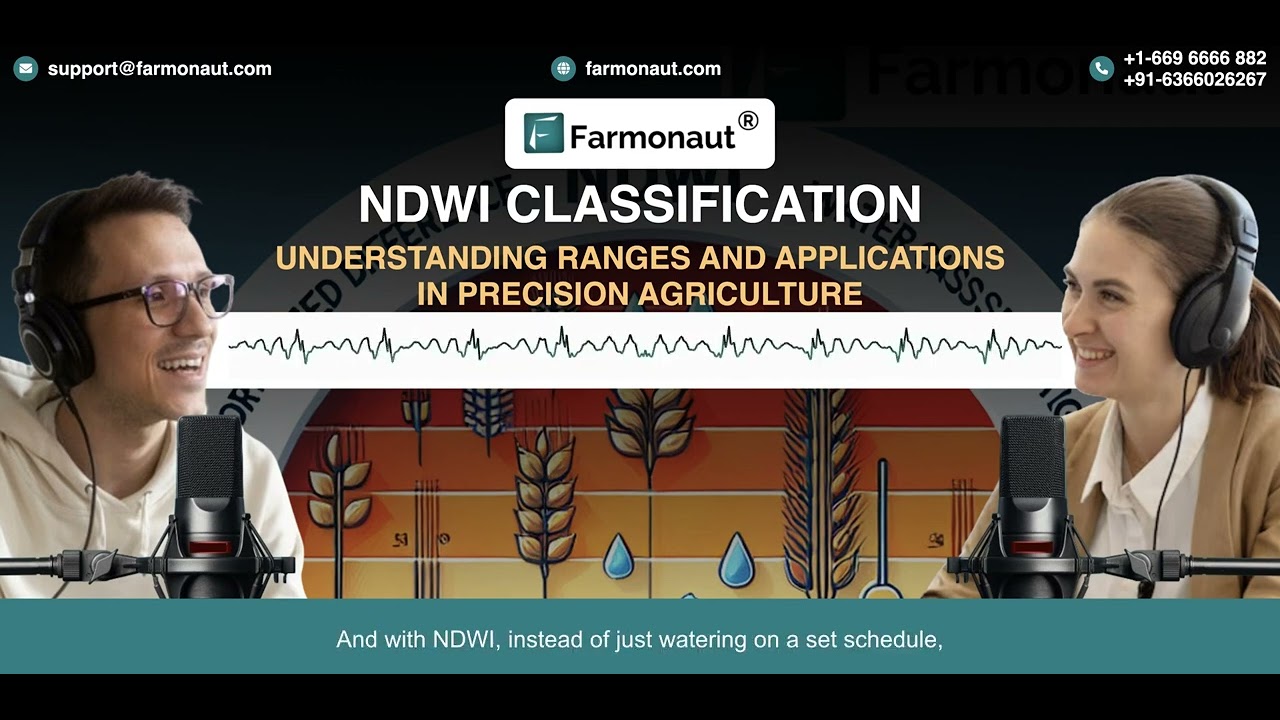

For 2025 and beyond, the advantages of farming include the ability to demonstrate and document sustainability performance. Tools that quantify carbon intensity reduction, water use trends, and nutrient balances help align farm operations with environmental regulations and market expectations for sustainable, traceable products.
“Recirculating aquaculture systems cut water use 95–99% while achieving feed conversion ratios near 1.2–1.5.”
Resilience and Risk Reduction
Climate variability, extreme weather, evolving pest pressures, and market disruptions highlight the need for adaptive farm systems. Smart farming leverages predictive analytics, sensor networks, and diversified models to lower risk and increase resilience. Early-warning systems detect pest outbreaks, disease pressure, and water stress, allowing rapid, localized responses. Diversified farms that integrate crops, livestock, and trees spread risk and strengthen ecosystem services.
- Predictive analytics: Forecast-based scheduling and disease/pest risk modeling improve timing for planting, irrigation, and crop protection.
- Early-warning networks: Sensor data triggers alerts for temperature extremes, soil moisture deficits, and pest outbreaks.
- Diversified systems: Intercropping, agroforestry, and rotations reduce exposure to single-crop failure and enhance ecological stability.
- Localized supply chains: Urban and regional production reduce reliance on long supply routes, improving food security during disruptions.
Economic and Social Advantages of Farming in 2025
Technology-driven productivity gains can raise incomes and support a broader set of jobs in rural areas. Autonomous equipment operators, data analysts, UAV pilots, and digital service providers are in growing demand. Digital marketplaces and traceability systems improve market access and price discovery for smallholders, while provenance tools enable premium pricing for sustainably produced goods. Cooperative and community-scale models help distribute technology access and prevent widening inequality.
Examples of economic and social benefits
- Efficient resource use: Lower input costs and higher output per unit create economic resilience, especially under price variability.
- Market differentiation: Verified sustainability and traceability can support premium pricing for quality crops.
- Digital access: Mobile advisory tools and APIs bring advanced capabilities to smallholders without prohibitive upfront hardware.
- Community development: Local training, service provision, and shared infrastructure build capacity and employment.
Advantages of Urban Farming and Localized Systems
The advantages of urban farming include year-round production of fresh, high-value crops and localized supply chains that reduce transport emissions and improve freshness. Vertical farms, rooftop hydroponics, and community gardens can use circular resource flows, compost urban organic waste, and provide cooling and green space. These systems increase urban food security and create local employment.
Key advantages of urban farming in 2025
- Local provision: Short supply chains improve reliability, reduce food miles, and maintain quality.
- Resource efficiency: Controlled environments optimize water and nutrient use, with recirculation reducing consumption.
- Community benefits: Education, wellness, and local jobs arise from urban agriculture initiatives.
- Integration with smart systems: Sensors and automation manage lighting, irrigation, and climate in vertical systems.

Advantages of Fish Farming and Modern Aquaculture
Advantages of fish farming in 2025 build on recirculating aquaculture systems (RAS), improved feed, and integrated multi-trophic approaches. RAS conserves water, contains effluent, and improves biosecurity. By enabling production close to consumption centers, RAS reduces transport emissions and supports fresh, high-quality protein supply. Monitoring systems track water quality, oxygen levels, and fish health, enabling rapid interventions and stable production.
Why modern aquaculture supports sustainable food systems
- Water use reduction: RAS recirculates water with filtration and treatment, drastically lowering consumption.
- Biosecurity and health: Contained systems and sensor-driven monitoring help detect disease early and maintain optimal conditions.
- Localization: Production near urban markets reduces logistics costs and food miles while improving freshness.
- Integration: Multi-trophic systems reuse nutrients, aligning production with ecological principles.

How We at Farmonaut Enable Smart, Sustainable Farming
As a satellite technology company, we provide advanced, satellite-based solutions for agriculture via Android, iOS, web apps, browser platforms, and APIs. Our mission is to make satellite-driven insights affordable and accessible by integrating innovative technology and data-driven systems into everyday farm management. We focus on real-time monitoring, AI-based advisory, blockchain-based traceability, and resource management to deliver measurable improvements in productivity, efficiency, and sustainability.
What our platform offers
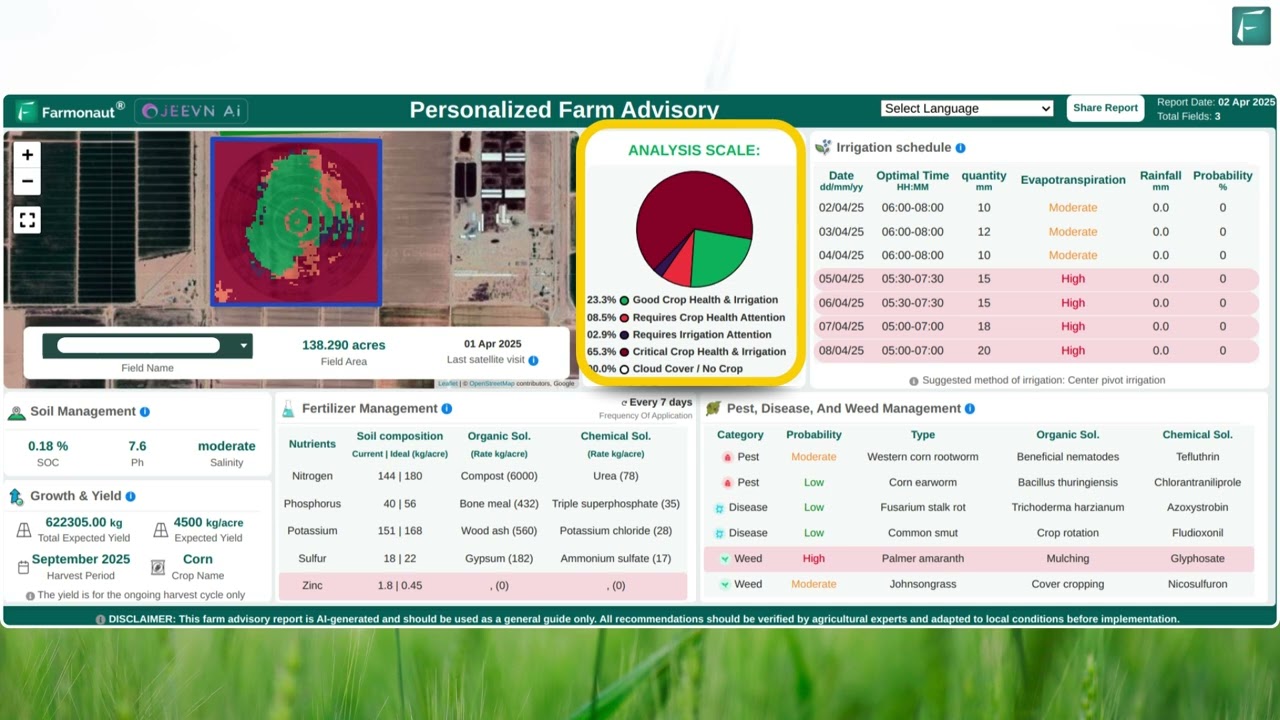
- Satellite-based monitoring: Multispectral images support vegetation health assessments (e.g., NDVI) and soil condition insights to guide precision application of water, fertilizers, and crop protection.
- Jeevn AI advisory: Our AI-driven tool provides weather-informed recommendations and tailored strategies to help optimize operations and reduce risk.
- Blockchain-based traceability: We enable secure, transparent provenance for agricultural products, building trust and supporting market access.
- Fleet and resource management: Tools to optimize logistics, reduce costs, and enhance equipment utilization improve overall efficiency.
- Environmental impact tracking: We provide carbon footprint and environmental monitoring features to support sustainability reporting and action.
Get started: apps, APIs, and tools
Access to digital tools should be simple. Explore our applications and APIs designed for farms of all types, from smallholders to large-scale operations. Our platform supports open-field farming, greenhouse operations, urban vertical systems, and aquaculture monitoring.



Developers and integrators can use our API endpoints for weather, satellite, and analytics data to extend capabilities into existing farm management systems. Explore:
Farmonaut API and
API Developer Docs.
Related product pages and use cases
- Carbon Footprinting — Estimate and track field-level emissions intensity to support climate action, compliance, and sustainability reporting.
- Traceability — Use blockchain-secured provenance to verify product journeys from farm to market, improving trust and enabling premium positioning.
- Fleet Management — Monitor vehicle and machinery usage, optimize routes, and improve fuel and time efficiency across operations.
- Large-Scale Farm Management — Coordinate multi-farm, multi-plot operations with centralized dashboards, tasking, and analytics for open-field and protected cultivation.
- Crop Loan & Insurance — Use satellite-based verification to streamline financial access, improve risk assessment, and reduce fraud for agriculture finance.
- Crop Plantation & Forest Advisory — Apply satellite and AI insights to plantation planning, monitoring, and resource management across seasons.
We operate on a subscription-based model and also provide APIs for integration. Our platform serves individual users, businesses, and public institutions with scalable tiers. By lowering the cost of satellite and AI insights, we help farmers and organizations leverage digital tools without large upfront hardware investments.
Smart Farming Impact Comparison Matrix and FAQs
The matrix below summarizes core technologies in smart farming and their typical ranges of impact. Values are indicative and vary by crop, climate, management, and baseline performance. Use this side-by-side view to compare advantages, resource conservation, and resilience benefits across open-field, greenhouse, urban, and aquaculture contexts.
Smart Farming Impact Comparison Matrix — Advantages of Smart Farming 2025: Proven Benefits
| Technology | Primary Use Case | Estimated Yield Uplift (%) | Estimated Resource Savings (%) | Estimated Cost Payback (months) | Resilience Benefit | Data Requirements | Farm Context | Sustainability Impact | Integration Notes |
|---|---|---|---|---|---|---|---|---|---|
| IoT Sensors | Soil moisture, microclimate, nutrient and water monitoring | 5–15% | Water 10–30%; Fertilizer 5–20% | 6–18 | Medium (drought, heat) | Moderate connectivity; low-to-medium data volume | Open-field, Greenhouse, Urban | Lower water use and runoff (10–30%) | Integrates with irrigation controllers and farm apps |
| AI Analytics | Decision support, yield forecasting, pest/disease risk prediction | 5–20% | Inputs 10–25%; Energy 5–15% | 4–12 | High (multi-risk adaptation) | Stable connectivity; medium data volume | All farm types | Lower emissions per unit (5–15%) via optimized operations | Combines IoT, satellite, and market data streams |
| Precision Irrigation | Water scheduling and application, salinity management | 5–15% | Water 20–40% | 8–18 | Medium (drought resilience) | Low-to-moderate connectivity; low data | Open-field, Greenhouse, Urban | Reduced water withdrawals and energy for pumping (15–30%) | Links to sensors and weather data (ET, rainfall) |
| Variable-Rate Application | Fertilizers and crop protection targeting by zone | 5–20% | Fertilizer 10–30%; Chemicals 10–25% | 6–18 | Medium (resistance and disease pressure) | Medium connectivity; medium data | Open-field, Greenhouse | Lower runoff and eutrophication risk (10–25%) | Uses sat/UAV maps and controller-compatible equipment |
| Drones | Remote scouting, mapping, targeted application | 5–15% | Inputs 5–20%; Labor 10–30% | 6–24 | Medium (rapid response) | Low connectivity; medium data (imagery) | Open-field, Greenhouse | Reduced fuel and chemical drift; better targeting (5–15%) | Integrates with GIS/analytics platforms |
| Autonomous Machinery | Automated planting, weeding, harvesting, field logistics | 5–15% | Labor 20–40%; Fuel 5–15% | 12–36 | Medium (timely field ops) | Low connectivity; low data | Open-field | Lower soil compaction and emissions via fewer passes (5–10%) | Requires compatible implements and safety protocols |
| Urban Vertical Systems | Controlled-environment produce grown near consumers | 10–30% (vs. traditional baselines for leafy greens) | Water 70–95%; Nutrient recirculation 50–80% | 18–36 | High (supply chain stability) | High connectivity; high data (controls) | Urban, Greenhouse | Lower food miles and waste (10–30%) | Interoperable with HVAC, lighting, fertigation controls |
| Aquaculture Monitoring | RAS water quality, oxygen, biosecurity, feeding optimization | 5–20% | Water 80–99%; Feed 5–15%; Energy varies | 12–30 | High (disease risk reduction) | Moderate connectivity; medium data | Aquaculture | Substantial water savings and effluent control (80–99%) | Links to automation for aeration and feeding |
| Summary (typical ranges) | Across open-field, greenhouse, urban, aquaculture | 5–20% | Water 10–99%; Inputs 5–30%; Energy 5–20% | 6–36 | Medium to High | Low to High (varies by system) | All contexts | Reduced emissions, runoff, and waste (5–99%) | Stronger integration improves ROI and resilience |
Frequently Asked Questions
What are the core advantages of smart farming in 2025?
The advantages include higher yields, better resource-use efficiency (especially water and fertilizers), lower costs per unit produced, improved resilience to climate variability and pest pressures, and enhanced market access through digital traceability and quality verification.
How do IoT sensors and AI analytics reduce water and fertilizer use?
Sensors detect soil moisture and crop stress in real time. AI models translate this data into precise irrigation and nutrient recommendations. Variable-rate application applies inputs only where needed, reducing consumption and runoff while maintaining or improving yields.
Can smallholders access these tools without major capital expenditure?
Yes. Mobile advisory services, API-driven insights, and subscription-based platforms lower entry barriers. Shared services, cooperatives, and pay-as-you-grow models improve access to data, tools, and training for small farms.
How does urban farming improve local food security?
Urban vertical farms and rooftop systems shorten supply chains and provide fresh produce close to consumers. They reduce transport emissions, enable year-round production, and can integrate with circular resource use such as nutrient and water recirculation.
What is RAS in aquaculture and why is it important?
RAS stands for Recirculating Aquaculture Systems. These systems conserve water by filtering and reusing it, enhance biosecurity, and allow production near cities. They support advantages of fish farming by reducing environmental impacts and improving product freshness.
How do digital traceability and carbon accounting add value?
Traceability verifies origin and production practices, supporting premium pricing and compliance. Carbon footprint tracking helps demonstrate sustainability performance and guides strategies to lower greenhouse gas intensity per unit of food produced.
What policy steps help realize these benefits?
Investments in rural broadband, training programs, inclusive finance, and environmental safeguards are essential. Incentives for conservation practices and equitable access to technology ensure that productivity, social, and environmental benefits are widespread.
Conclusion: Integration is the 2025 Advantage
In 2025, the core advantage of farming is integration—ecological practices aligned with digital tools, automation, and localized production models. The advantages of smart farming, advantages of urban farming, and advantages of fish farming converge to produce abundant, sustainable, and resilient food systems. Precision irrigation and variable-rate application increase productivity while conserving water and nutrients. Predictive analytics, early-warning sensors, and diversified models reduce risk under variable climate conditions. Urban and regional production improve local security and reduce supply chain vulnerabilities.
As digital access expands and data-driven tools become more affordable, farms of every size can leverage IoT, AI, satellites, drones, and automation to deliver measurable improvements. With supportive policy, inclusive finance, and strong environmental stewardship, these advantages extend beyond the field to encompass social and economic opportunity for rural and urban communities alike.

 IRE Soil
 Blickwinkel
 Agricultural Credit Policy Council
 BayWa
BayWa MCSOD
MCSOD Marei Nursery
 eKGIS
eKGIS Mostas Tech
 Native Seeds
 Andex
Andex FCF India
 Unifrutti Gulf
 Deluxe Conseil
 TVS Electronics
 WICO
WICO Chimera Innovation
