

Artificial Intelligence & Logistics Automation in GIS, Livestock: Revolutionizing Agriculture in 2025 and Beyond
“AI-driven GIS analysis improves livestock tracking accuracy by over 40% compared to traditional methods.”
Introduction: Artificial Intelligence & Logistics Automation Reshaping Agriculture
In 2025, the agricultural sector faces unprecedented challenges and opportunities. The integration of artificial intelligence and logistics automation within farming operations and supply chain management is not just a technical upgrade—it is a transformative force that is revolutionizing food production, sustainability, and profitability on a global scale. Critical among these innovations are AI in GIS analysis and rapid developments in the artificial intelligence in precision livestock farming market. These advancements are redefining how data-driven technologies optimize efficiency, address environmental pressures, and ensure food security for a growing population.
This comprehensive guide explores how AI and automation are unlocking new levels of productivity, sustainability, and resilience within agricultural supply chains, GIS analysis, and livestock management. We’ll examine the key technologies, applications, and benefits—supported by up-to-date examples, detailed explanations, and actionable insights for farmers, food producers, and technology adopters.
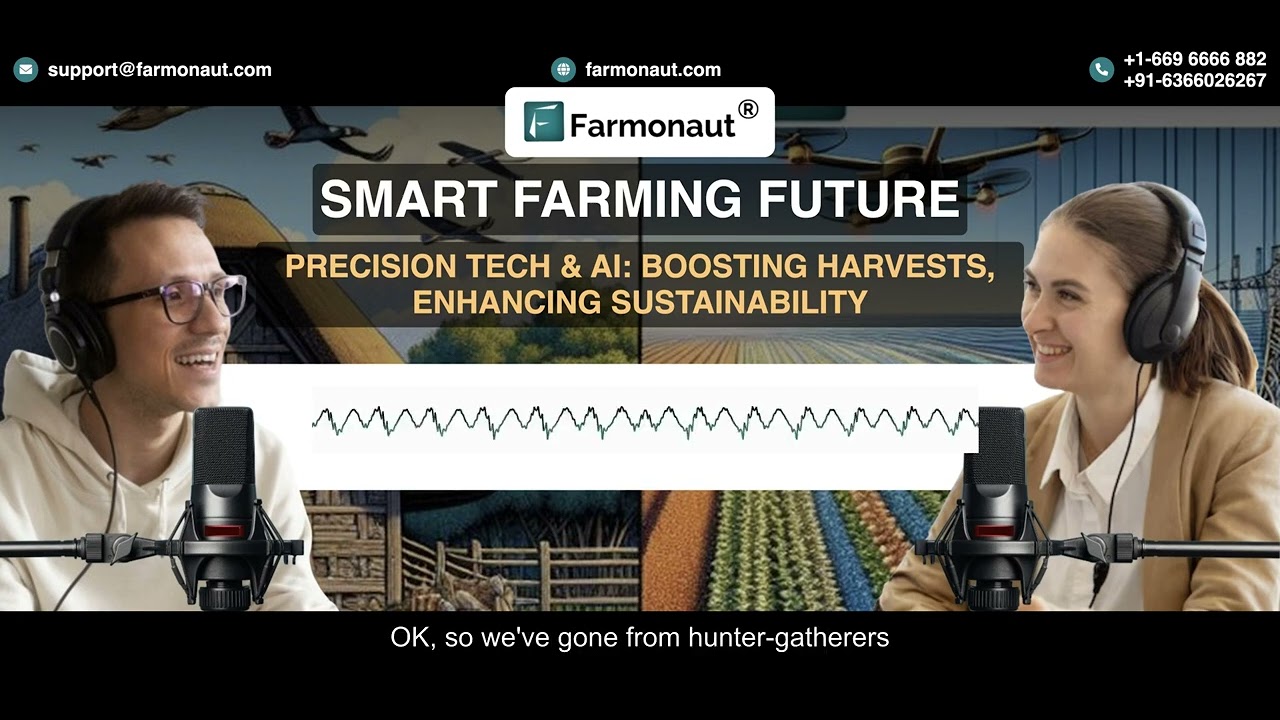
AI in GIS Analysis: Precision Agriculture’s New Frontier
Unlocking the Power of AI in GIS for Precision Agriculture
At the intersection of artificial intelligence and GIS (Geographic Information Systems), we are witnessing the dawn of a transformative era in precision farming. Artificial intelligence in GIS analysis serves as a cornerstone of modern agriculture, leveraging machine learning algorithms to interpret and extract actionable insights from vast, multi-dimensional datasets.
- Satellite imagery—including multispectral and hyperspectral data—provides granular perspectives on land, crop, and vegetation health.
- Soil sensors deliver real-time, plot-level data on nutrient levels, pH, moisture, and organic matter.
- Climatic data ensures that weather patterns, heat stress, rainfall, and temperature variability are factored into every decision.
By employing AI models capable of learning from spatial patterns, satellite imagery, and sensor data, farmers can:
- Early identification of disease outbreaks, pest infestations, and nutrient deficiencies—enabling targeted interventions that greatly reduce input waste and environmental impact.
- Delineate micro-zones within farms—so resources like water, fertilizers, and agrochemicals can be applied with unprecedented precision.
- Predict yield outputs with high accuracy—using spatial and temporal patterns to enhance crop planning and financial forecasting.
- Support sustainable forestry by mapping biomass and vegetation health, aiding both harvest planning and wildfire risk assessment for balanced ecosystem management.
This scalable approach is rapidly becoming standard across the agricultural sector—from smallholder farms to enterprise-level operations. The capacity to analyze and respond to data in real time means that AI in GIS analysis is now a key driver of both productivity and sustainability.

AI-Driven Micro-Zonation: Optimize, Don’t Generalize
Micro-zonation powered by AI means dividing vast tracts of farmland into smaller, data-rich management zones. Each zone is analyzed based on soil, crop requirement, historic yield, and weather conditions. This enables highly precise input application, reducing waste and maximizing both yield and cost savings.
- Optimized water use: AI-controlled irrigation responds to actual crop needs, cutting water consumption by up to 30%.
- Tailored fertilization: Prevents nutrient runoff, reducing environmental impact and input costs.
- Dynamic pesticide application: Targets only affected areas, minimizing chemical usage.

From Data Overload to Actionable Insights: The Role of Machine Learning
In 2025, vast amounts of GIS data are processed at speeds unimaginable a decade ago. Layered satellite imagery, sensor feeds, historical datasets, and live weather updates are interpreted using advanced machine learning algorithms. These technologies interpret variability, identify trends, and predict future scenarios—transforming raw data into a blueprint for day-to-day and long-term farm management.
For instance, a multi-layered AI in GIS analysis system can simultaneously monitor signs of water stress, chlorophyll content, and impending disease outbreaks—all without manual scouting. The implications for crop health and productivity are enormous.
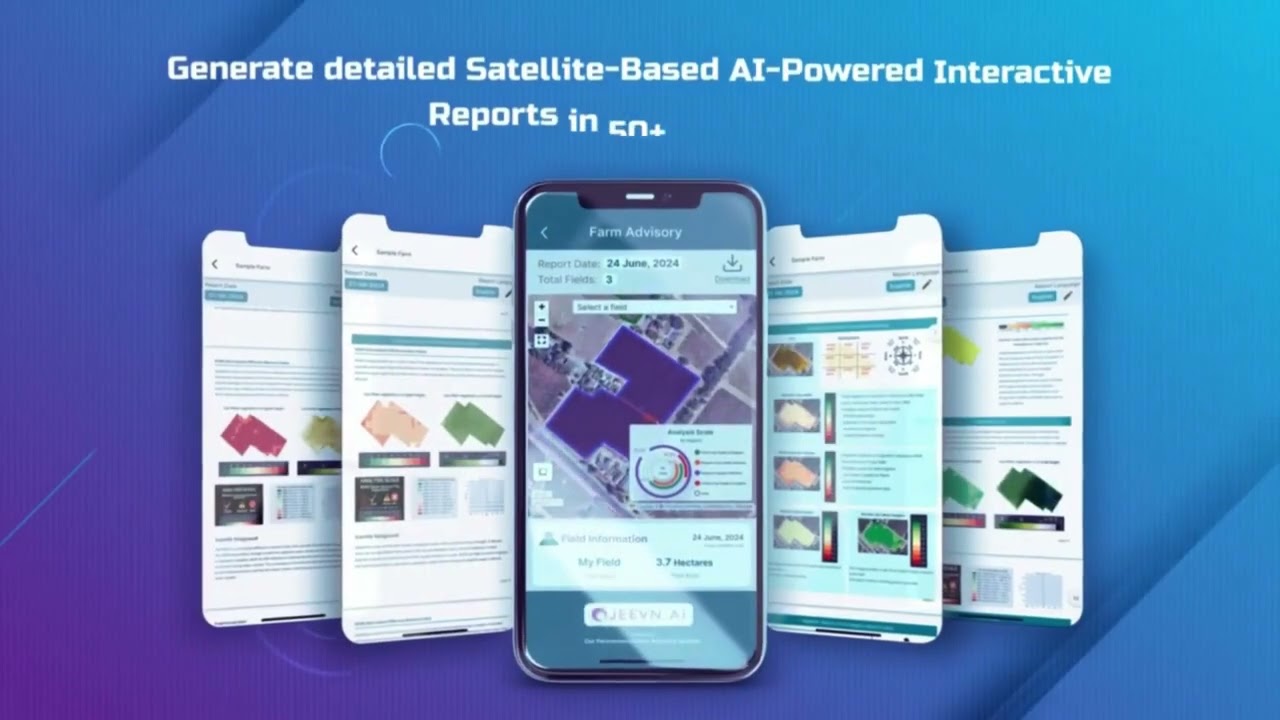
Tip: For growers looking to leverage AI-powered GIS analysis and receive actionable, crop-specific satellite insights, Farmonaut’s Crop Plantation and Forest Advisory Tools deliver real-time decision support for optimizing land, crop, and environmental management across diverse geographies.
AI in Forestry, Risk, & Environmental Management
Modern GIS solutions with AI stretch well beyond row crops. In forestry, AI-based analysis estimates sustainable yields, maps biomass, and supports wildfire risk assessment by interpreting vegetation health and climatic conditions. This ensures both economic efficiency and ecosystem balance—teaming technology with environmental responsibility.

Environmental Impact: For businesses and agricultural stakeholders prioritizing sustainable practices, Farmonaut Carbon Footprinting Suite provides real-time emissions monitoring and actionable insights to minimize the carbon footprint of farming and field operations.
“Automated logistics systems can reduce feed delivery times in precision livestock farming by up to 30%.”
Logistics Automation in Agriculture: Optimizing The Supply Chain
Why Logistics Automation is Critical to Agricultural Efficiency in 2025
The agricultural supply chain is notoriously complex and fragmented, often leading to inefficiencies, losses, and high operational costs. Logistics automation, powered by artificial intelligence, is now integral to overcoming these challenges, transforming how products, resources, and information move from farm to market.
- Automated warehouse management systems orchestrate product movement, inventory, and storage, optimizing workflows and reducing manual labor dependence.
- AI-driven demand forecasting ensures that harvest, processing, and storage are precisely aligned with real-time market requirements, reducing surplus and spoilage.
- Autonomous vehicles—from self-driving tractors to drones and delivery trucks—streamline field operations and long-haul transport, adjusting routes based on traffic, road, and weather conditions.
Such systems optimize route planning for farm equipment, harvest machinery, and distribution vehicles, cutting downtime, reducing fuel costs, and ensuring timely product delivery for maximum freshness and market value.

Reducing Waste & Losses: AI in Post-Harvest Management
- Automated scheduling ensures harvest occurs at peak ripeness and cold storage is deployed on-time, avoiding spoilage.
- Granular tracking via IoT devices enables real-time monitoring of temperature, humidity, location, and product quality from field to warehouse.
- Smart contracts, blockchain, or AI-based digital ledgers provide transparent product provenance, traceability, and compliance—crucial for regulatory and consumer trust.
Traceability & Food Safety: For producers, processors, and exporters aiming to build consumer trust and meet global standards, Farmonaut’s Traceability Solutions leverage AI, satellite, and blockchain to ensure tamper-proof supply records and transparent monitoring from farm to shelf.
Autonomous Vehicles and Telematics: Minimizing Human Error, Maximizing Delivery Speed
- Autonomous field vehicles: Drones and autonomous tractors execute tasks ranging from soil analysis to field mapping, planting, and chemical application—without human intervention.
- Telematics systems integrate with logistics networks to optimize route planning, fuel use, and fleet safety, ensuring streamlined operations and swift product movement.
Fleet Optimization: For agricultural businesses seeking to reduce operational costs and maximize delivery efficiency, Farmonaut Fleet Management Tools offer realtime tracking, safe vehicle usage, and seamless integration with logistics automation systems.
Financing & Risk Management: For banks, insurers, and agricultural financiers, Farmonaut Crop Loan & Insurance Verification enables rapid, satellite-based validation of crop conditions—reducing fraud and unlocking faster, secure lending and claims processing.
Building Resilience: Automation’s Role in Food Security
A fully integrated artificial intelligence and logistics automation framework boosts agricultural resilience against unpredictable shocks—whether from climatic variability, labor shortages, or disrupted transport routes. By automating critical logistics functions, the industry can respond dynamically to forecasting errors, demand surges, and supply chain interruptions—minimizing losses and safeguarding food supplies.



Access powerful AI, GIS, and logistics tools via Farmonaut’s web, Android, and iOS applications.
For API integration, developers and businesses can access advanced AI-driven satellite insights for agriculture, GIS analysis, and logistics automation through our Farmonaut API (API documentation).
Artificial Intelligence in Precision Livestock Farming Market
What is Precision Livestock Farming (PLF)?
Precision Livestock Farming (PLF) represents an impactful leap in agricultural innovation, utilizing AI, IoT, and logistics automation to maximize animal health, productivity, and sustainability. By 2025, the artificial intelligence in precision livestock farming market is rapidly expanding, delivering new efficiency and welfare standards for livestock operations worldwide.
- AI-driven sensors, cameras, and wearables collect real-time data on animal behavior, location, reproductive status, and meteorological/environmental conditions within barns, pastures, or aquaculture environments.
- Machine learning algorithms analyze this data to identify early signs of disease, nutritional deficits, stress, and changes in animal welfare.
- Automated systems enable tailored feeding regimes, climate controls (temperature/humidity/ventilation), and smart waste management—minimizing emissions, reducing labor dependency, and maximizing yields.
In these systems, predictive analytics go far beyond historic averages. PLF platforms understand the individual physiology, genetics, and productivity of each animal, driving personalized care for unprecedented growth and welfare outcomes.
AI-Powered Livestock Surveillance & Health Management
- Early detection: AI models interpret subtle changes in animal movement, feeding, and vocalization—enabling intervention days before symptoms manifest visually or clinically, and reducing herd-wide outbreaks.
- Stress and reproductive monitoring: Real-time alerts regarding ovulation cycles, calving windows, or heat stress enhance breeding success and animal comfort.
- Automated feeding & environment: AI orchestrates daily feed rations, optimizing growth and minimizing resource waste, while sensors maintain optimal barn conditions.
The net effect? Higher productivity, cost savings, and measurable reduction in greenhouse gas emissions per kilogram of product.
For wide-scale animal operations, Farmonaut’s Large-Scale Farm Management Platform streamlines everything from satellite monitoring to logistics, integrating AI-based livestock and resource management for maximum productivity and sustainability.
Smart Robotics: Automation for Milking, Cleaning, and beyond
Robotics further advances the artificial intelligence in precision livestock farming market by automating labor-intensive tasks such as milking, barn cleaning, and feed distribution. These robots, connected to central AI platforms, reduce disease transmission risk and keep welfare standards consistently high—even as labor supply fluctuates in post-pandemic economies.
- Robotic milkers track individual yields and health data.
- Automated cleaners minimize cross-contamination and maintain hygiene.
- Drones and ground-based vehicles provide round-the-clock monitoring and rapid response to emergencies.
Integrated Supply Chain & Compliance
AI-powered PLF platforms integrate seamlessly with supply chain logistics, providing traceability from farm to fork. This capability is essential to meet the growing demand for ethical, transparently sourced animal products—and compliance with international trade and food safety standards.
Comparative Feature-Impact Table: AI & Automation Innovations in Agriculture
| Technology/Practice | Primary Application (GIS/Livestock) | Key Benefit | Estimated Impact |
|---|---|---|---|
| Machine Learning for GIS Mapping | GIS | Early disease/pest detection & predictive yield mapping | +10-18% yield increase; -25% input waste |
| AI Satellite Image Analysis | GIS & Livestock | Plot-specific health, biomass, and weather monitoring | -20% manual scouting; improved intervention speed by 35% |
| Autonomous Livestock Monitoring | Livestock | Health surveillance & tailored nutrition via sensors/wearables | +22% animal productivity; -40% tracking error |
| Predictive Logistics Scheduling | Livestock & GIS | Data-driven harvest & distribution planning | -30% post-harvest losses; -23% fuel consumption |
| Robotics in Precision Farming | Livestock & GIS | Automated milking, cleaning, pesticide, and fertilizer application | -48% manual labor; -30% chemical use; +19% process efficiency |
| IoT-based Product Traceability | Livestock & GIS | Transparent monitoring via real-time environmental and supply chain data | +95% audit accuracy; consumer trust increase |
| Environmental Impact Monitoring | GIS | Carbon emissions and sustainable resource management | -15% farm emissions; +12% regulatory compliance |
Farmonaut: Satellite-Driven Insights for Agricultural Transformation
At Farmonaut, we are committed to democratizing access to affordable satellite-driven insights and AI advisory solutions for businesses, individual users, and governments worldwide. Through our Android, iOS, web platform, and API, we empower users with real-time monitoring, AI-based analysis, traceability, fleet management, and environmental impact tracking.
- Satellite-Based Monitoring: Multispectral satellite imagery for vegetation health, soil analysis, and infrastructure condition assessment.
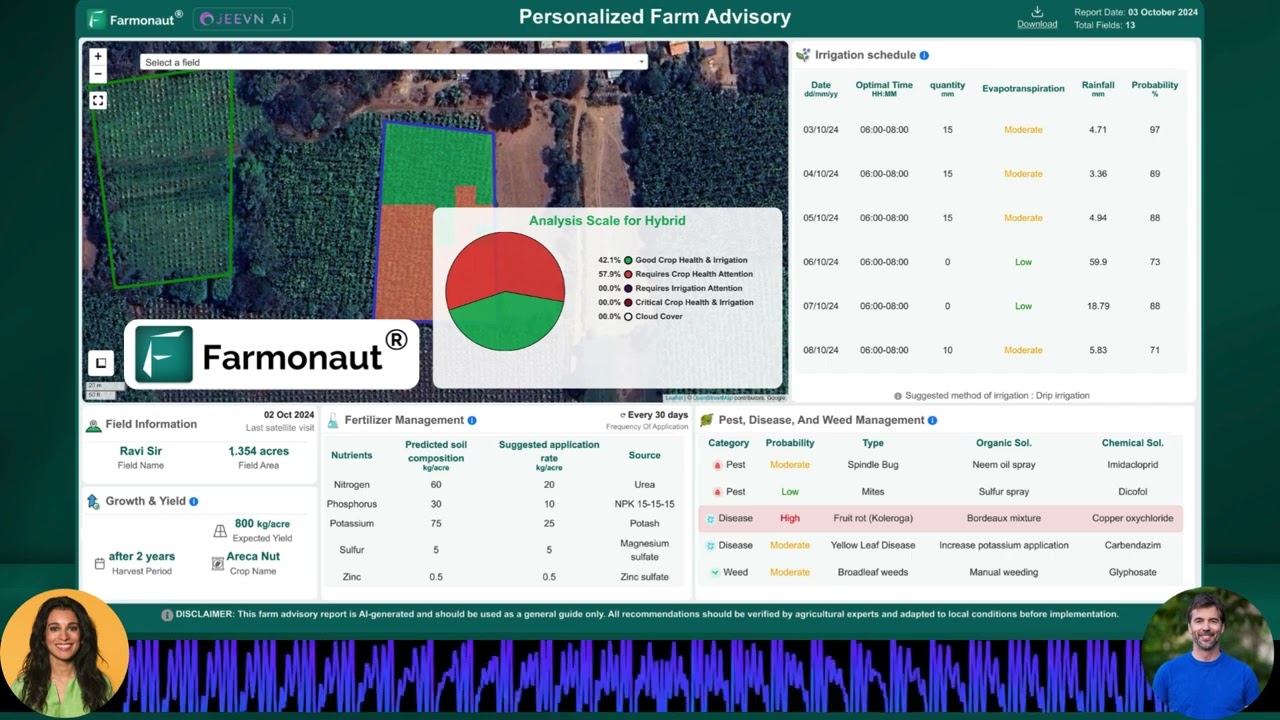
- Jeevn AI Advisory System: Delivers tailored weather predictions and agriculture-oriented strategies for yield optimization.
- Blockchain-Based Traceability: Ensures transparent product records—ideal for meeting export, food safety, and consumer trust requirements.
- Fleet and Resource Management: Real-time tracking, optimized vehicle schedules, and operational cost reduction across logistics and supply.
- Environmental Impact Monitoring: Carbon footprint tracking and compliance support for sustainable agriculture and processing.
Designed for scalability, our platform supports individual farmers, large agribusinesses, and policy-making bodies with modular, pay-as-you-grow access. Learn more about our solutions:
- Crop Plantation & Forest Advisory: AI-powered insights and advisories for every field, orchard, or forest.
- Large Scale Farm Management: Streamlining wide-area farming and livestock operations from field to fork.
- Carbon Footprinting: Real-time tracking to ensure sustainability and regulatory compliance.
- Traceability Solutions: Seamless, blockchain-backed product tracking for maximum transparency.
- Fleet Management Tools: Automating vehicle use and resource management in real time.
- Crop Loan & Insurance Verification: Fast, fraud-proof data for financial institutions.
All Farmonaut tools can be accessed via mobile and web apps or integrated through our API for direct business, enterprise, or developer use.
Future Trends: The Road Ahead for AI & Logistics Automation in Agriculture
By 2025 and beyond, three defining trends are shaping the next generation of agricultural innovation:
- Hyper-Personalization via AI: As machine learning grows more sophisticated, real-time individualized recommendations—from seed selection to livestock feed—enable farm processes to adapt continuously to on-the-ground realities.
- Decentralization of Data & Decision-Making: With cloud-based GIS and blockchain, farmers and cooperatives can collaborate securely—facilitating transparent, decentralized markets and rapid collective response to weather or pest emergencies.
- Integration with Sustainability Protocols: AI-driven environmental impact monitoring will increasingly automate compliance reporting and incentivize regenerative farming and carbon farming—redefining what it means to be “profitable” in agriculture.
In every scenario, the synergy of artificial intelligence and logistics automation—especially within GIS analysis and precision livestock farming market—will remain the industry’s most impactful lever for sustainable growth, resource optimization, and long-term food system resilience.
FAQs: Artificial Intelligence & Logistics Automation in GIS, Livestock
How does artificial intelligence improve GIS analysis in agriculture?
AI enhances GIS analysis by interpreting complex patterns in satellite imagery, soil, and weather data, enabling real-time detection of crop stress, disease outbreaks, and resource inefficiencies. This targeted, data-driven approach increases yield, reduces input waste, and supports sustainable land management.
What are the top logistics automation benefits for the agricultural supply chain in 2025?
Top benefits include streamlined inventory and distribution management, AI-optimized scheduling, real-time vehicle and product tracking, faster market delivery, and significant reductions in post-harvest loss and cost.
What is precision livestock farming, and why is AI important in PLF?
Precision Livestock Farming (PLF) uses AI, IoT, and automated devices to individually monitor and care for animals, increasing productivity, health, animal welfare, and minimizing emissions and resource use. AI-driven early detection and smart logistics automation are crucial to meeting modern sustainability and animal welfare standards.
How does Farmonaut support AI and logistics automation in agriculture?
We provide satellite-based monitoring, AI advisory, traceability, fleet and environmental management tools for farms, businesses, and government users, accessible via mobile/web platforms and APIs. Our aim is to power data-driven crop, land, and livestock management with actionable, affordable insights.
Are automated logistics and AI in livestock farming eco-friendly?
Yes, automation and AI reduce unnecessary inputs, minimize emissions, optimize transport, and enable compliance with evolving sustainability standards—benefitting both profitability and the environment.
Conclusion
The integrated rise of artificial intelligence and logistics automation—anchored by AI in GIS analysis and the precision livestock farming market—is the cornerstone of modern agricultural transformation in 2025 and the years to come. These technologies not only unlock unprecedented resource efficiency and productivity but also drive environmental sustainability, transparency, and food security.
With scalable, affordable, and accessible platforms like Farmonaut—and the convergence of satellite imagery, AI, IoT, and data analytics—the agricultural sector, across regions and scales, is now better equipped than ever to meet the demands of a growing population in a changing climate.
Embracing AI-driven innovations is no longer optional—it’s imperative. Stakeholders who invest in artificial intelligence and logistics automation will not only thrive amid change, but will actively shape the future of sustainable, resilient global agriculture.

 Fresh Platter
 Andex
Andex FCF India
 Unifrutti Gulf
 Deluxe Conseil
 TVS Electronics
 BW Pipelines
 WICO
WICO Gen Chayat
 Chimera Innovation
 SkyHarvest
 Polaris Digitech
 Teledarbas
 Wild Oak Farm
 SFX
SFX
