

Automate Scale Tickets for Grain: Top 2025 Innovations
— Transforming Agriculture & Forestry for the Future
- Introduction
- 2025 Trivia: Industry-Leading Facts
- The Evolving Landscape of Automation in Agriculture & Forestry
- Automate Scale Tickets for Grain: Innovations and Benefits
- Comparison Table: 2025 Automation Innovations in Agriculture & Forestry
- Automatic Tree Farm: Future of Sustainable Forestry
- Integrated Smart Pest Management: Tackling Aphids and Scale Insects
- 2025 Trivia: Game-Changing Stats
- Farmonaut’s Role in Transforming Management Practices
- Mobile Apps, API, and Platform Access
- Frequently Asked Questions (FAQ)
- Conclusion
“In 2025, automated scale ticket systems process grain weights up to 60% faster than traditional manual entry methods.”
Introduction
The evolving landscape of modern agriculture and forestry in 2025 is marked by automation breakthroughs. Key critical advancements such as automate scale tickets for grain, the rise of the automatic tree farm, and the adoption of integrated smart pest management for aphids and scale are fundamentally transforming how the world cultivates, harvests, stores, and protects both crops and timber.
This article explores how automation is addressing persistent industry challenges, enhancing efficiency, and contributing to more sustainable and resilient systems. With revolutionary solutions now gaining traction, the next era in agricultural and forestry management is already here.

The Evolving Landscape of Automation in Agriculture & Forestry
Automation in agriculture and forestry isn’t just a trend; it’s a paradigm shift. Traditional processes, particularly those relying heavily on manual labor, paperwork, and human judgment, are increasingly being replaced with integrated, digital, and automated solutions.
- Data-driven technologies and IoT sensors now enable real-time monitoring, control, and reporting across all stages of agricultural production and forest management.
- Innovations like automated scale ticketing, automatic tree farms, and smart pest management systems, allow for maximized efficiency, traceability, and scalability.
- Environmental monitoring is crucial for optimizing resources and boosting yields in ways that preserve ecosystem health and support sustainable practices.
The integration of these technologies is changing not only how we grow and store grain, but also how we protect crops and timber against pests and changing climate conditions.
Automate Scale Tickets for Grain: Innovations and Benefits
Why Automate Scale Tickets for Grain?
Scale tickets have long served as essential, official records for grain deliveries at storage facilities, elevators, and processing plants. By documenting weight, quality, and transaction dates, these tickets underpin grain supply chains, manage inventory, and enable payment flows.
However, the traditional process—involving manual weighing, spreadsheet entries, pickup notes, and hard-copy tickets—is prone to error, inefficiency, and paper-based delays.
How Automatic Ticketing Works in 2025
- Automated weighbridges use digital sensors to capture truck weights as they pass over electronic, IoT-enabled scales.
- Systems instantly generate digital scale tickets—no need for manual input or waiting.
- Data is transmitted directly to centralized, cloud-based databases—accessible to farmers, buyers, and transporters via apps or platforms.
- Additional quality assessment modules integrate moisture content and impurity detection for comprehensive reports.
- All information is securely archived and traceable for compliance, audits, and supply chain management.

Advantages of Automating Scale Tickets for Grain Handling
- Accuracy: Digital sensors minimize weighing errors and transcription mistakes.
- Efficiency: Transaction times are accelerated, improving logistics and throughput.
- Compliance: Automated systems help maintain regulatory and internal compliance with tamper-proof records.
- Traceability: Data is immediately accessible, enhancing transparency from field to buyer.
- Security: Cloud storage protects against loss or falsification of paper tickets.
- Real-Time Insights: Aggregated data improves inventory, payment, and transport management.
Key Technologies Empowering Scale Ticket Automation
IoT-integrated electronic scales, cloud-based platforms, and sophisticated data management software work in concert to revolutionize grain management:
- Weighbridge Technology: Modern bridges capture weight instantly, tagging geolocation and timestamp for robust transaction proof.
- App and API Integration: Seamless data push to management platforms improves workflow and real-time oversight.
Try Farmonaut’s API for custom integration: Farmonaut’s API.
View Developer Documentation: API Developer Docs - AI and Machine Learning: Not only for operational flow, but for predictive analytics, anomaly detection, and yield estimation from ticket data trends.
- Blockchain Traceability: Use blockchain-backed validation to verify and securely archive every transaction.
Discover advanced traceability for grain logistics: Farmonaut Product Traceability
A Typical Workflow for Automated Scale Tickets in 2025
- Truck arrives at the facility, passes over IoT-enabled weighbridge.
- Electronic scales record truck’s gross weight; sensors read identification details.
- Software instantly generates digital scale tickets and links with associated moisture and impurity detection modules.
- Data transmits directly to centralized databases.
- Farmers, buyers, and transporters access tickets and reports via secure portal or app (see platform access).
Notably, such automation significantly reduces timing, errors, and costs compared to manual processes, laying the foundation for smarter, scalable logistics in the future of agricultural management.

Comparison Table: 2025 Automation Innovations in Agriculture & Forestry
| Innovation | Industry/Application | Key Technology Used | Estimated Cost Savings (%) | Estimated Efficiency Improvement (%) |
|---|---|---|---|---|
| Automated Scale Ticket Processing | Grain Handling, Logistics | IoT-enabled weighbridges, Cloud Data, AI | 25–35% | 50–60% |
| Automatic Tree Farm Management | Forestry, Timber Production | Robotics, Sensor Networks, AI Software | 20–30% | 35–50% |
| Smart Integrated Pest Control (Aphids & Scale) | Agriculture, Storage, Forestry | Sensors (hyperspectral, pheromone), AI, Cloud | 30–40% | 40–45% |
| AI-based Growth Monitoring & Climate Prediction | Crop Management, Forestry | Satellite Imagery, Machine Learning, Weather API | 15–25% | 20–35% |
| Blockchain-based Traceability | Grain, Produce, Timber Supply Chains | Blockchain, API Integration, Cloud Storage | 10–20% | 15–20% |
For large and enterprise-scale farms, forestry, or grain logistics, a unified, feature-rich management platform is critical. Explore Farmonaut’s Agro Admin App for scalable management of vast operations.
Automatic Tree Farm: The Future of Sustainable Forestry
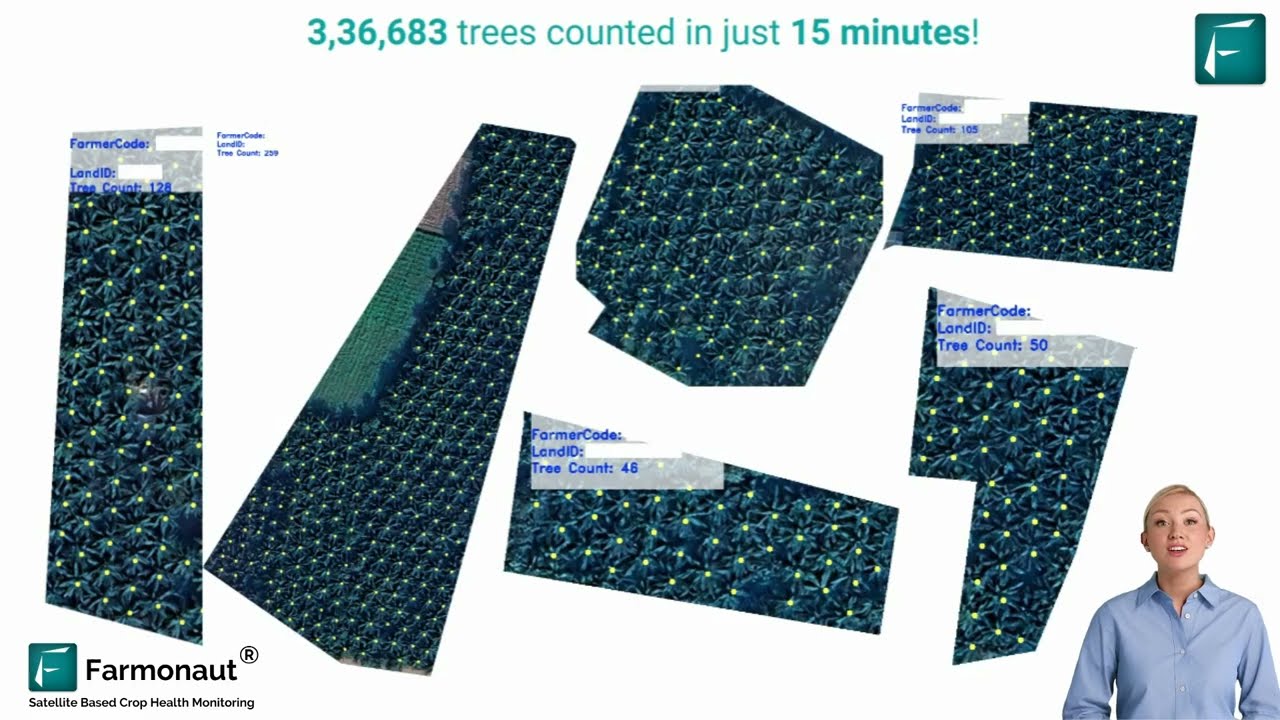
Forestry management is experiencing a shift towards automation, especially with the emergence of the automatic tree farm. These farms leverage robotics, sensor networks, and AI-driven software to create intelligent environments where the growth, health, and harvesting of timber is optimized at all times.
- Sensor arrays continuously monitor soil conditions, plant health, climatic factors, and pest presence.
- Robotic machinery performs precise irrigation, fertilization, pruning, and harvesting routines.
- AI software analyzes growth data, predicts issues, and recommends or automates management interventions.
The outcome is enhanced yields, reduced labor costs, minimized resource use, and rapid responses to environmental threats.
Why Automatic Tree Farms Matter for 2025 and Beyond
- Sustainability: Optimized water and nutrient delivery reduces environmental footprint and conserves inputs.
- Labor Shortages Solved: With minimal need for manual oversight, human resource challenges ease.
- Resilience: Automated detection and action against pests, diseases, and droughts boost forest health.
- Continuous Data: Data-driven management enables proactive, rather than reactive, forestry practices.
- Carbon Management: Track and report carbon sequestration, enhancing carbon credit monetization.
See how carbon footprinting adds value: Farmonaut Carbon Footprinting Solutions
Key Functions Enabled by Automatic Tree Farming Automation
- Robots or drones plant saplings with precise locations for optimized density and sunlight.
- Sensors collect real-time data on moisture, soil nutrients, and tree health.
- AI-based advisory systems issue recommendations or directly control irrigation, fertilization, and pest deterrence.
- Harvesting robots select and remove mature trees, minimizing damage to surrounding growth.
- Automated reporting for compliance, environmental credits, and resource management.
Satellite-Powered Management & Monitoring
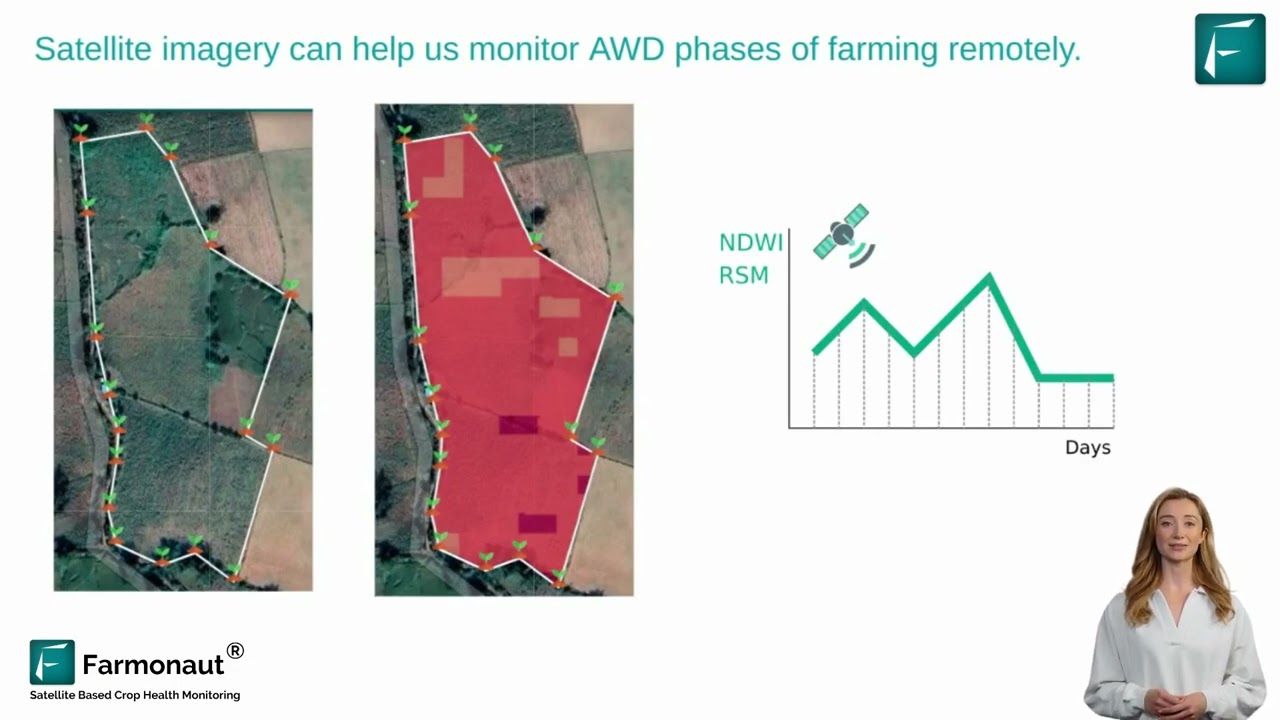
Satellite-based growth monitoring, NDVI vegetation indices, and AI-driven advisory systems offer supplemental benefits, including accurate forest mapping, resource usage optimization, and detection of stressful conditions within large-scale forests.
Read more about how Farmonaut’s crop plantation and forest advisory tools support large projects. Try Farmonaut’s Forest Advisory Solutions
Integrated Smart Pest Management: Tackling Aphids and Scale Insects
A persistent challenge in agriculture and forestry is the management of pests like aphids and scale insects. In the past, extensive use of chemical pesticides sometimes did more harm than good—triggering resistance, harming beneficial insects, and polluting ecosystems.
2025 brings a smarter approach—integrated pest management systems that combine real-time monitoring, precision intervention, and data-driven automation.

Automated Detection: Monitoring Aphids & Scale (Insects) Within Modern Facilities & Farms
- Sensor networks inside storage and growing facilities identify the presence of aphids and scale insects early, often before visible signs or economic damage occurs.
- Hyperspectral imaging and pheromone traps connected to AI analytics detect pest populations, triggering real-time alerts and recommendations.
- Data from automated scale ticketing can be cross-referenced with pest trends to spot patterns related to moisture or temperature conditions that favor infestations.
Smartly timed interventions — whether precise sprays, releasing beneficial insects, or environmental adjustments — deliver sustainable, effective pest control with minimal chemical input.

Benefits of Automation in Pest Management by 2025
- Reduced chemical usage: Targeted, data-driven treatments cut pesticide inputs by up to 40% (vs traditional blanket spraying).
- Faster response times: Early detection means infestations can be stopped before they spread.
- Improved yields & health: Healthier plants, protected forests, and consistent grain quality are realized.
- Compliance & reporting: All actions and conditions are logged, streamlining audits and sustainability certifications.
“Smart pest management solutions are projected to reduce chemical usage in forestry by 40% through precise, automated applications by 2025.”
Automation doesn’t mean one-size-fits-all, but rather tailored solutions where data triggers only the right amount of pest management at the right place and time.
Learn detailed strategies for managing pests sustainably in 2025:
For growers seeking financial security, satellite-powered data and monitoring is transforming how crop loans and insurance claims are verified—cutting fraud and speeding up settlements. See Farmonaut’s Solutions for Crop Loan and Insurance
Farmonaut’s Role in Transforming Management Practices
As a satellite technology company, we at Farmonaut empower grain handlers, foresters, and agriculturalists by making satellite-driven, AI-powered insights and automation affordable and accessible around the globe.
Our platform’s mission is simple: Deliver actionable, real-time, data-backed intelligence and management tools through web, mobile apps, and robust APIs—streamlining operations, ensuring compliance, and promoting environmental responsibility wherever food or timber is produced.
- Satellite-Based Monitoring: From crop health & soil conditions to forest density & infrastructure, we leverage multi-spectral satellite imagery for comprehensive resource management.
- AI and Machine Learning: Our Jeevn AI System provides advanced advisories, automates routine oversight, and powers informed decision-making across the value chain.
- Blockchain Traceability: Used for grain, timber, and agricultural produce, our blockchain tech ensures that every step of the journey is recorded, secure, and visible.
- Fleet and Resource Management: For those running large operations, from truck fleets to field equipment and harvest logistics, our SaaS platform offers advanced tracking, route optimization, and resource allocation.
- Environmental Impact Tracking: Real-time monitoring of carbon footprint and emissions empowers users to meet compliance targets and promote sustainability.
Learn More: Farmonaut Carbon Footprinting
Mobile Apps, API, and Platform Access
Manage and monitor agriculture, forestry, and logistics operations from anywhere through Farmonaut’s mobile and web solutions:



Access Farmonaut API: For enterprises, integrate real-time data and automation into your facilities and software via API.
API Documentation: Developer guide for seamless integration
Frequently Asked Questions (FAQ)
-
What is the significance of automating scale tickets for grain in 2025?
Automating scale ticketing replaces manual data entry with IoT-powered, digital scale and cloud-based record systems. This cuts transaction times by up to 60%, reduces errors, and ensures traceable compliance—making the entire grain value chain more efficient and secure. -
How do automatic tree farms enhance sustainable forestry?
Automatic tree farms utilize robotics, continuous data from sensors, and AI-driven management tools, enabling optimal growth, immediate response to threats, and reduced labor. This approach yields better-quality timber while preserving natural resources and enabling environmental monitoring like carbon sequestration. -
What pests are addressed by smart pest management, and how is chemical use reduced?
By integrating sensors and AI analytics, infestations of pests like aphids and scale insects are detected early, so only precisely targeted treatments are applied. This approach can cut pesticide use by 40%, preserve beneficial insects, and maintain ecological balance. -
How does Farmonaut deliver these automation and monitoring capabilities?
Farmonaut provides satellite-driven monitoring, AI-powered advisory, blockchain traceability, and resource management across web, Android, iOS, and API platforms, empowering users to automate, oversee, and trace every step from field to facility. -
Can small and medium-scale farms access these innovations affordably?
Yes. Farmonaut operates on subscription models and mobile apps designed for accessible entry, making advanced automation affordable not just for enterprises but for small to mid-sized operators worldwide. -
How does blockchain enhance scale ticketing and traceability?
Blockchain creates secure, tamper-proof digital records for every grain or timber transaction, ensuring validations, traceability, and visible supply chains while reducing fraud and facilitating certifications. -
What are the main environmental benefits?
Automation leads to optimized resource use, reduced waste, lower emissions, and proactive environmental stewardship—all measurable through embedded monitoring and reporting tools. -
How do I access Farmonaut’s services and monitor my assets?
Use the web platform, Android app, or iOS app for direct access. For enterprise or custom solutions, the Farmonaut API integrates automation features directly into your operational workflow.
Conclusion
The nexus of automation in grain handling, forestry management, and pest control marks a breakthrough year for the agriculture and forestry industries in 2025. With automated scale ticketing providing unmatched accuracy and traceability, automatic tree farms advancing sustainable forestry, and integrated smart pest management reducing chemical dependencies, industry leaders are realizing new heights of efficiency, compliance, and environmental stewardship.
Among the most critical advancements gaining traction, digital innovation and real-time data integration are enabling an era of proactive, resilient food and timber production. As we continue adopting and refining these tools, automation will remain the core driver for meeting the world’s growing demands sustainably and profitably.
Transform your agricultural and forestry operations for 2025—leverage the power of automation, data, and precision!
Ready to monitor, automate, and scale?
Access Farmonaut’s platform now or integrate via API for a smarter tomorrow in agriculture and forestry.
Discussion
Questions, corrections or field experience? Share them below. First-time comments are reviewed before they appear, and your email is never published.
No comments yet. Be the first to add a question or your experience.

 MCSOD
MCSOD Marei Nursery
 Sayaji Group
 eKGIS
eKGIS Mostas Tech
 Native Seeds
 Andex
Andex FCF India
 Unifrutti Gulf
 Deluxe Conseil
 TVS Electronics
 WICO
WICO Chimera Innovation
 SkyHarvest
 Polaris Digitech
