

Best AI Platforms for Agriculture Water Conservation 2025
“AI-driven irrigation platforms can reduce agricultural water usage by up to 30% while maintaining optimal crop yields in 2025.”
Water is an indispensable resource in agriculture, accounting for approximately 70% of global freshwater use. As the world’s population continues increasing and climate change brings intensifying water scarcity concerns, efficient water management in farming has become paramount. By 2025, artificial intelligence (AI) platforms have emerged as transformative tools — supporting water conservation for agriculture by intelligently optimizing irrigation, enhancing yield, and promoting sustainable resource use.
Water Conservation in Agriculture: Leveraging AI Platforms for Sustainable Farming in 2025
Discover how the best AI platforms for water conservation in agriculture are reshaping the future of farming. By integrating satellite imagery, IoT-based soil sensors, machine learning algorithms, and data analytics, these platforms enable precise water management, boost productivity, and contribute to environmental sustainability — addressing agriculture water conservation needs for a climate-challenged world.



Water Conservation in Agriculture: Why It’s Paramount in 2025
Water conservation agriculture is more critical than ever. Agriculture’s heavy dependence on water makes farms vulnerable to droughts, erratic rainfall, and groundwater depletion. In many regions, traditional irrigation methods and unscheduled water application result in:
- Overwatering or under-watering of crops
- Excessive water waste and reduced crop quality
- Financial losses and resource inefficiency for farmers
The conservation of water in agriculture entails not just reducing water usage but applying the right amount of water at the right time — fostering soil health, improving ecosystem balance, and ensuring sustainability.

Agriculture’s Water Footprint: Global Context and Scarcity Concerns
Globally, agriculture uses about 70% of available freshwater. This immense share comes with mounting concerns:
- Population growth increasing demand for food and water
- Changing climate patterns producing unpredictable weather, droughts, and intensifying water scarcity worldwide
- Overexploitation leading to groundwater depletion and reduced soil fertility
Traditional methods often fail to address these multi-dimensional challenges for conservation of water in agriculture. A paradigm shift is essential to optimize irrigation and resource management.
The Goals of Water Conservation Agriculture
- Reduce overall water usage without sacrificing yield
- Improve efficiency in irrigation systems
- Enhance soil health and long-term farm productivity
- Maintain ecosystem balance and regional sustainability
- Respond proactively to weather patterns, rainfall events, and climatic conditions
“In 2025, over 60% of large farms are projected to adopt AI platforms for sustainable water management.”
The AI Revolution: How Artificial Intelligence Transforms Agriculture Water Conservation
Artificial intelligence (AI) is revolutionizing agriculture water conservation by leveraging data, advanced machine learning algorithms, and real-time analytics to address farmers’ greatest concerns. AI-powered platforms enable:
- Intelligent decision support for irrigation and resource allocation
- Predictive analytics leveraging historical and forecasted weather data
- Remotely sensing soil moisture, crop health, and growth stages with drones and satellites
- Automated, data-driven water delivery systems
- Integration with IoT devices and soil sensors for dynamic adjustment
By analyzing complex data patterns among different sources, AI platforms deliver innovative solutions for the conservation of water in agriculture and sustainable farming practices.

AI in Action: Typical Data Sources & Applications
- Satellite imagery: Assess crop health, water stress, and soil moisture at scale (Carbon Footprinting in Agriculture)
- IoT soil sensors: Monitor in-field water conditions for real-time response
- Weather forecasts: Anticipate rain, drought, or climatic shifts impacting irrigation needs (Fleet Management Solutions help with resource transport planning related to weather)
- Farm management data: Integrate crop type, growth stage, and yield targets for optimal watering schedules

Key AI Techniques for Water Conservation in Agriculture
Let’s break down the most effective AI-driven water conservation agriculture technologies empowering farmers in 2025:
1. Smart AI-Optimized Irrigation Systems
Smart irrigation controllers utilize IoT-enabled soil moisture sensors and advanced algorithms to:
- Continuously monitor changing soil and environmental conditions
- Adjust water application in real time, reducing water wastage
- Align irrigation to crop growth stages and historical patterns
- Enhance water use efficiency and maintain optimal crop health
These AI systems learn from past performance, farmer actions, and environmental data to optimize future irrigation decisions.
2. Predictive Analytics for Water Management
AI platforms process historical and forecasted climatic data to produce actionable irrigation schedules. This predictive capability allows farmers to:
- Anticipate droughts or heavy rainfall periods
- Prepare in advance for changing weather patterns
- Mitigate crop stress and yield reduction risks
- Optimize water usage aligned with forecasted conditions
3. Remote Sensing and Crop Monitoring
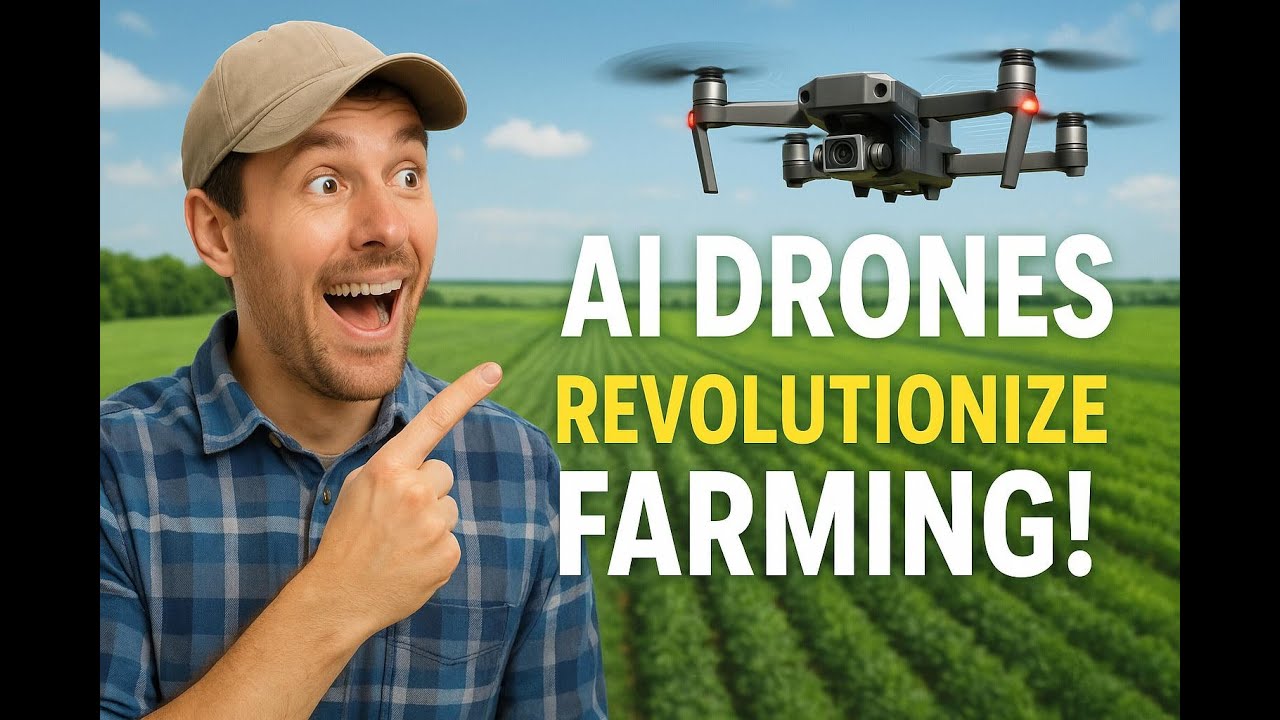
Drones and satellites equipped with multispectral imaging provide real-time crop stress analytics for large and small-scale farms. Among their advantages:
- Identify vegetation health issues before visible symptoms develop
- Detect regions of water deficit or over-saturation in fields
- Enable targeted intervention, reducing unnecessary water application
Farmonaut’s satellite-driven insights with AI-based indicators support farm decision-makers with actionable recommendations.

4. AI Decision Support Systems (DSS)
- Integrate multiple data sets (soil, crop, weather, historic yields, sensors, satellite)
- Deliver actionable insights for irrigation, crop selection, and soil management
- Enable data-driven, sustainable resource management at the farm, agribusiness, and government levels
- Support large-scale farm management for corporate and institutional users: Farmonaut Large Scale Farm Management Platform
The role of these systems is vital in enhancing farm productivity and guiding the right decision for water conservation agriculture.
Best AI Platforms for Water Conservation in Agriculture 2025
Several AI platforms have emerged as leaders — enabling water conservation for agriculture through their innovative features:
- CropX: Offers AI-driven soil sensing and analytics for precise irrigation management. Cloud-based recommendations optimize water use, cut costs, and enhance yield.
- Arable: Combines real-time weather, soil, and crop data in a robust AI-powered farm analytics platform. Excellent for irrigation scheduling, disease prediction, and resource management.
- IBM Watson Decision Platform for Agriculture: Fuses AI, IoT, and weather data — supporting farmers with precision irrigation, smart sensors, and actionable alerts to reduce water consumption with high crop productivity.
- Taranis: Uses AI-powered aerial and satellite imagery to diagnose crop areas with water stress or health problems — enabling targeted irrigation and efficiency.
-
Farmonaut:
- Brings global satellite imagery, AI, and machine learning directly to individual farmers, businesses, and institutions worldwide.
- Provides real-time crop health monitoring, AI-powered advisory and blockchain-based product traceability.
- Delivers weather and soil condition alerts for timely irrigation and water conservation.
- Satellite-Based Crop Loan and Insurance Verification — Supports lending and insurance for climate-smart water management.
- Offers API integration and developer docs: Farmonaut API for Satellite & AI Data.
Choose a platform compatible with your digital literacy, farm size, location, and preferred data sources for best results.

Comparison Table of Leading AI Platforms for Agricultural Water Conservation (2025)
| Platform Name | Core AI Features | Estimated Water Savings (%) | Compatibility with Existing Systems | Estimated ROI Timeline (months) | Ease of Implementation (1-5)* | Unique Innovations |
|---|---|---|---|---|---|---|
| CropX | AI-driven soil sensing, predictive analytics, real-time irrigation recommendations | 20-30% | High (cloud-based integration; IoT-ready) | 10-15 | 4 | Continuous machine learning from field data, mobile-first |
| Arable | Real-time weather, crop, and soil data fusion; AI analytics dashboard | 18-28% | Moderate-High (sensor network required) | 12-18 | 3 | Multi-sensor fusion, mobile-friendly farm analytics |
| IBM Watson Agriculture | AI + IoT + weather data, decision support, prescriptive irrigation scheduling | 22-30% | High (enterprise, API integration options) | 12-15 | 4 | Large-scale integration, cloud-based DSS |
| Taranis | Aerial & satellite imagery, AI crop health diagnostics, stress detection | 15-25% | Moderate-High (requires drone/aerial data feeds) | 12-20 | 3 | Ultra-high resolution crop imagery & pattern algorithms |
| Farmonaut | AI-based satellite monitoring, blockchain traceability, real-time advisory, API & app integration | 15-30% | Very High (web/mobile/API, no extra hardware needed) | 6-12 | 5 | Multispectral analytics, instant AI advisory across sectors, blockchain-enabled traceability, environmental impact monitoring |
*Ease of implementation: 5 means easiest/no hardware; 1 means complex/multiple hardware integrations.

Farmonaut: Satellite-Driven AI Insights for Water Conservation 2025 & Beyond
As a global leader in satellite technology and AI-powered resource management for agriculture, we at Farmonaut deliver a comprehensive, scalable platform to meet diverse water conservation agriculture needs:
-
Satellite-Based Monitoring:
- Multi-spectral imagery to assess crop health, soil moisture, and water stress
- NDVI, NDWI, and other vegetation indices for informed irrigation decisions
-
Jeevn AI Advisory System:
- Provides real-time insights and weather forecasts tailored to your field conditions and crop requirements
- AI analyzes satellite data for customized strategies improving water usage, productivity, and sustainability
-
Blockchain Traceability:
- Verifies agricultural products’ journey from field to market
- Enhances transparency in resource use and supports sustainable irrigation reporting: Traceability for Sustainable Agriculture
-
API & App Access:
- Accessible via our web/mobile apps and developer APIs with full developer documentation
- Enables users and businesses to integrate satellite and AI-powered insights easily within their own platforms and decision workflows
- Crop Loan and Insurance Verification — using satellite records to validate water-smart farming and boost access to finance.
- Environmental impact monitoring tools for carbon footprint tracking and sustainable farming: Farmonaut Carbon Footprinting Services
Who Benefits from Farmonaut?
- Farmers (small & large): Access AI satellite insights without the need for costly hardware
- Businesses and Agribusinesses: Monitor vast farm areas, automate irrigation, and ensure compliance with sustainable water usage standards
- Governments & Policy Makers: Track agricultural water usage, plan nationwide conservation strategies, and respond swiftly to droughts or water stress events
- Financial Institutions: Verify sustainable water-management practices — reduce risk on lending/insurance
- Research Institutions: Reliable, large-scale water resource data for research and innovation
By leveraging AI, machine learning, and remote sensing technology, we empower users to:
- Optimize irrigation schedules based on real-time conditions
- Detect crop water stress and prevent losses proactively
- Minimize operational costs while boosting yield and farm profitability
- Support regenerative and sustainable agriculture water conservation practices worldwide
Future Directions & Trends Transforming Agriculture Water Conservation
The pace of innovation in AI, IoT, and data-driven agriculture is accelerating — paving the way for even more intelligent water conservation agriculture systems in 2025 and beyond:
- Edge Computing: Brings AI decision-making even closer to the field, reducing response times for automated irrigation and emergency water cutoffs.
- 5G Connectivity: Ensures seamless, real-time data transfer for massive sensor networks, UAVs/drones, and satellite systems on large farms.
- Advanced Robotics & Autonomous Irrigation: Emerging AI-enabled robots are starting to handle precision watering and monitor soil conditions autonomously.
- Holistic Farm Management: Unified platforms (web, mobile, API) will support integrated water, crop, fertilizer, and environmental management.
- Regenerative Agriculture & Sustainability: AI platforms will play a key role in monitoring, verifying, and reporting sustainable agricultural water conservation efforts.
Farmonaut’s modular, scalable API and app ecosystem is designed to keep pace with these advancements, enabling truly sustainable, data-driven farming worldwide.
Challenges and Adoption: Navigating Roadblocks in AI-Driven Water Conservation Agriculture
Despite all the promise, adopting the best AI platforms for water conservation in agriculture isn’t free from challenges:
- High Initial Costs: IoT sensors, satellite monitoring, or advanced analytics may require upfront investment
- Digital Literacy: Many smallholders face barriers in using digital tools or interpreting advanced analytics
- Data Privacy and Security: Sharing farm-specific or location-tagged data raises privacy and IP concerns
- Infrastructure Limitations: Reliable internet, power, and device compatibility may limit adoption in remote areas
- Customization: Platforms need to be adaptable to local climatic, soil, and crop conditions — not one-size-fits-all
Overcoming these requires: government incentives, user education, simple mobile/web experiences, API-powered integrations, and continued cost reduction. It is important that platforms like ours (Farmonaut) remain accessible — via web/apps and API, with training and support built-in for a globally inclusive impact.
FAQs: Best AI Platforms for Water Conservation in Agriculture 2025
-
What is the best AI platform for water conservation in agriculture?
The most suitable platform depends on farm size, local infrastructure, user skill, and integration needs. For example, Farmonaut offers satellite-based monitoring, real-time AI advisory, and API access for global users, while CropX and Arable excel with IoT sensor-based predictive analytics. -
How much water do AI-powered irrigation platforms save?
AI platforms can reduce on-farm water usage by 15–30% compared to traditional methods — while maintaining or even enhancing crop yields through precise application and stress alerts. -
Are AI water conservation platforms suitable for smallholder farmers?
Yes. Platforms like Farmonaut offer web/mobile access without requiring expensive local hardware. Many AI platforms are moving toward affordable, easy-to-use interfaces for small farms and individual users. -
What data do AI conservation platforms use?
The best platforms integrate satellite imagery, IoT sensors, historic and forecasted weather data, crop health metrics, and farm management data — providing recommendations for irrigation timing, water amounts, and mitigation strategies. -
Can AI solutions track and report environmental impact?
Yes. Platforms like ours (Farmonaut) offer carbon footprint tracking tools and blockchain-based audit trails for reporting and compliance in regenerative, sustainable agriculture. -
How fast is ROI with AI-based water conservation?
Most users observe significant savings within 6–18 months after implementation, depending on farm size and technology adoption.
Conclusion
AI platforms are catalyzing a new era of water conservation in agriculture as we move through 2025. By harnessing data from satellites, sensors, and advanced analytics, these technologies enable precise irrigation, sustainable resource management, and optimized crop yields — addressing global freshwater scarcity concerns and increasing population needs.
Through innovative platforms like CropX, Arable, IBM Watson Decision Platform, Taranis, and ours (Farmonaut), all types of farmers and agribusinesses can:
- Leverage smart irrigation platforms for dynamic adjustment based on real-time data
- Integrate predictive analytics and weather forecasts for proactive water management
- Gain actionable insights for sustainable decision-making and traceability
- Adopt efficient, scalable solutions with minimal hardware investments through apps and APIs
- Promote environmental stewardship, reducing water wastage and maintaining healthy ecosystems
With ongoing advancements in AI, IoT, and remote sensing technologies, the conservation of water in agriculture will only become more intelligent, efficient, and accessible. By adopting AI-driven solutions, the agricultural sector is not only surviving the challenges of 2025 and beyond — but proactively building a more productive, sustainable, and climate-resilient world for generations to come.
Explore how Farmonaut delivers affordable satellite-driven insights, AI-advisory, and sustainable resource management for individual farmers, businesses, and governments worldwide. Monitor, analyze, and optimize water conservation for agriculture with real-time, actionable data — on any device, anytime.

 Kisanwala
 Agro La Gándara
 Global Agrifood
 HIPSAC
 ZOL Zimbabwe
 Juligerm
 AdBio
AdBio MISE Maroc
 NWNS
NWNS Red August Group
 Farm Inc
 WeMe Global
 Agrotoken
 Blue BearX
 Insignito
 Croptimum
 DnCubed
 Field Capacity
 Indosistim Teknologi
