

Harvest · Efficiency and loss guide
Combine Harvester Efficiency: How to Cut Grain Loss
A combine cuts, threshes and cleans grain in one pass. How efficient it is shows on the ground behind it: for wheat with 30 g per 1,000 kernels, about 20 kernels per square foot equal a lost bushel per acre (Alberta Agriculture). This guide shows how to count, find and cut those losses.
Key takeaways
- For wheat at 30 g per 1,000 kernels, about 20 kernels per square foot on the ground equal a loss of 1 bushel per acre (Alberta Agriculture).
- Losses come from shatter before harvest, the header, threshing, and separation and cleaning; only the last three are set by the combine.
- Count kernels before and behind the combine, subtract, and divide by the kernels that make one bushel per acre.
- University of Illinois farmdoc (2025): combining corn costs $54.40 per acre with a new 470 HP combine on 2,500 acres, so lost grain adds to an already high cost.
- Average custom combining rates in Wisconsin’s 2025 survey were about $38 per acre for corn and soybeans (UW Extension).
In this article
Combine farming means harvesting grain with a combine harvester that cuts, threshes and cleans the crop in one pass. On a large US grain farm, running a new combine cost about $43.40 per acre for corn in a 2025 farmdoc daily model from the University of Illinois, when one machine covers 3,600 acres a year. The biggest test of an efficient harvest is how much grain the machine leaves on the ground, and how much field time it spends actually harvesting.
This guide shows how to count grain loss behind the combine in a few minutes, where the losses come from and which settings and habits raise field efficiency. A calculator turns your kernel counts into bushels and dollars lost per acre.
What a combine harvester does in one pass
A combine harvester, often just called a combine, joins three jobs that farmers once did separately. It reaps (cuts the standing crop), threshes (knocks the grain loose from the heads or pods) and winnows or cleans (blows chaff and straw away from the grain). An FAO guide to grain harvesting describes combine harvesters as machines that can cut, convey, separate and thresh the grain, developed to cut the labour of separate harvesting and threshing.
The same machine harvests wheat, barley, oats, canola, soybeans, corn and many other grains. The front attachment, called the header, changes with the crop: a flex or draper header for small grains and soybeans, a corn head for corn. Inside, a rotor or a set of straw walkers separates grain from straw, and sieves clean it before it goes into the grain tank.
How combines changed over time
Early harvesting took teams of workers and animals, and much grain was lost between cutting and threshing. Horse-drawn and then tractor-pulled combines joined the steps in the 19th and early 20th centuries. Self-propelled combines followed in the mid-20th century and brought more speed.
Today’s large machines are very different. Case IH lists its AF11 combine with 775 engine horsepower, a grain tank of 567 bushels and an unload rate of 6 bushels per second. Modern machines carry GPS guidance, yield monitors, moisture sensors and cameras that adjust settings while the machine moves. The change is not only in size: the data a combine records now feeds next year’s planting and input decisions.
| Stage | What changed | Main limit |
|---|---|---|
| Hand and animal harvest | Cutting, threshing and cleaning done in separate steps | Labour, time and grain lost between steps |
| Pulled and early self-propelled combines | All three jobs done in one machine | Small headers, slow ground speed |
| Modern large combines | Big rotors, wide headers, sensors, guidance and yield maps | High purchase price and high cost per acre on small farms |

▶ What farm technology such as self-driving machines means for jobs and rural towns. · 3:50
Combine cost in brief
Efficiency also shows up in the cost of each acre. The 2025 estimate from the University of Illinois puts combining corn at $54.40 per acre and soybeans at $47.60 per acre, based on a 470 HP combine used on 2,500 acres. A farmdoc daily article from October 2025 notes that between 2021 and 2023, prices of new agricultural equipment increased by over 20%. In its model, one thousand extra acres cut the corn cost from $54.10 to $43.40 per acre, so spreading a machine over more acres matters. For the full breakdown of purchase price, cost per acre and an own-or-hire calculator, see our guide to the cost of a combine.
Chart
Combining cost: 2,600 vs 3,600 acres per machine
US dollars per acre, corn, new combine
There is a trade-off. Stretching one machine over more acres means a longer harvest. Grain that stands longer in the field can lose yield to shatter, lodging and weather, so the cheapest machine plan is not always the cheapest harvest.
Custom combining rates
Custom operators bring their own combine and crew and charge per acre, sometimes with a per-bushel or yield charge on top. The Custom Rates for 2025 Wisconsin Farm Operations survey from University of Wisconsin Extension gives these average flat rates for combining only:
- Corn: $38.47 per acre (range $26 to $55)
- Soybeans: $38.45 per acre
- Small grains, straight cut: $37.12 per acre
- Small grains from swath: $35.38 per acre
- Corn with combine, grain cart and local hauling: $51.08 per acre
These are survey averages reported by farmers and operators, not quotes. Rates vary by region, field size, yield and travel distance. The Texas A&M AgriLife custom rates survey notes that wheat harvesting may be priced at a rate per acre, plus a rate per bushel, plus an overage charge above a set yield. In Canada, Manitoba’s farm machinery custom and rental guide lists rotary combine custom work at $31 to $40 per acre. Ask local operators for current quotes before you decide.
Hiring has costs that do not show in the rate. The operator may not reach your fields at the best time, and you have less control over settings and losses. Owning gives control over timing, but ties up capital and needs a skilled driver. Many farms mix the two: they own one machine and hire help in a wet or late year. Whoever drives, ask for a loss check in the first field and agree what loss is acceptable before the work starts.
Chart
Average custom combining rates in Wisconsin
US dollars per acre, flat rate, survey averages for 2025
How much grain a combine leaves behind
Every combine loses some grain. Some falls before the machine arrives (shatter), some at the header, and some goes out the back with the straw and chaff. The aim is not zero loss, which is impossible, but loss you have measured and decided to accept.
Chart
Kernels per square foot that equal a 1 bu/acre loss
Cereals with a 1,000 kernel weight of 35 grams
Counting kernels on the ground is the simplest check. Alberta Agriculture’s guide to Using 1,000 Kernel Weight for Calculating Seeding Rates and Harvest Losses gives the number of seeds per square foot that equals a loss of one bushel per acre. For wheat with a 1,000 kernel weight of 30 grams, about 20 kernels per square foot equal 1 bushel per acre. Bigger seeds mean fewer kernels per bushel, so the count falls as seed weight rises. For canola at 3 grams per 1,000 seeds, it takes about 174 seeds per square foot to lose a bushel per acre.
What a small loss is worth
Losses look small on the ground but add up across a farm. One bushel per acre on 1,000 acres of wheat is 1,000 bushels. The calculator below turns your own kernel counts into bushels and dollars lost.
Where losses come from
- Pre-harvest shatter: grain that falls before the combine arrives, more common in dry, overripe or wind-hit crops.
- Header loss: heads, pods or ears missed or knocked off by the reel, cutter bar or snouts.
- Threshing loss: grain still in the heads after the rotor or cylinder, often from low rotor speed or a wide concave.
- Separation and cleaning loss: loose kernels carried out with straw and chaff, often from overloading or a fan set too high.
Pre-harvest shatter is not the combine’s fault, but the date you start harvest affects it. That is one reason the harvest order of fields matters.
A five-minute loss check
- Stop the combine in a typical part of the field and let it clear.
- Before it reaches a spot, count kernels in one square foot of standing crop area on the ground. This is shatter loss, which the combine did not cause.
- Behind the combine, count kernels in several one-square-foot frames across the full width of the cut, including under the chaff spread.
- Subtract the pre-harvest count from the behind-the-combine count. That is machine loss.
- Divide by the kernels per square foot that equal one bushel per acre for your crop and seed size.
If the loss is high, work out where it comes from. Heads or pods on the ground point to the header: reel speed, cutting height or ground speed. Loose kernels in the chaff point to the rotor, concave or sieves. Change one setting at a time and check again. Your combine manual and your dealer can give the right starting settings for your crop.
Chart
Wheat kernels per square foot that equal a 1 bu/acre loss
By 1,000 kernel weight of the crop (grams)
Try the numbers for your own farm below.
Calculator
How much grain is your combine leaving behind?
Enter your own kernel counts, crop price and acres.
- Combine loss: 1.10 bu/acre
- Shatter loss before harvest: 0.40 bu/acre
- Combine loss value per acre: $6.93 $/acre
Example values only (wheat at 30 g per 1,000 kernels, a modest loss); not a benchmark. Kernels per bushel-loss comes from Alberta Agriculture’s tables; weigh 1,000 kernels of your own crop if you can. The $6.30/bu default is USDA’s October 2026 WASDE projection of the 2026/27 US all-wheat season-average farm price; enter your own expected price.
Settings and habits that raise field efficiency
Field efficiency is the share of time the combine is actually harvesting at full width. Turning at headlands, waiting for a grain cart, unloading and stopping for repairs all cut it. A few habits help:
- Match the grain cart to the combine. Manitoba’s guide works through hauling time and labour cost per trip from one and two combines; if the cart is late, the combine waits.
- Unload on the go where it is safe, so the machine keeps moving.
- Set ground speed by loss, not by the clock. Going faster than the rotor can handle adds loss in the chaff.
- Plan field order by crop readiness rather than by distance, so ripe fields do not wait.
- Service the machine before harvest. A breakdown in a short weather window costs far more than the repair.
- Check moisture. Harvesting too wet adds drying cost; too dry adds shatter and header loss.
Technology on modern combines
Yield monitors, GPS guidance and auto-steer are now common on large combines. The USDA Economic Research Service report Precision Agriculture in the Digital Era found that adoption rises with farm size. Only 7 percent of farms with less than 200 acres of cropland in its 2016 corn survey had an operator who adopted yield maps, against 50 percent of farms with more than 1,725 acres.
A yield map is the most useful record a combine makes. It shows which parts of a field produced more or less, which helps with seeding rates, drainage work and fertiliser plans. The map is only as good as the calibration: calibrate the yield monitor for each crop, and clean the data of headland and turn errors before you use it.
Automation goes further on some new machines, with cameras that watch grain quality and systems that adjust the rotor and fan on their own. These can help less experienced drivers, but they still need a person who checks losses on the ground.

▶ Six plain steps to start precision farming without buying a robot. · 4:18
Using field data before and after harvest
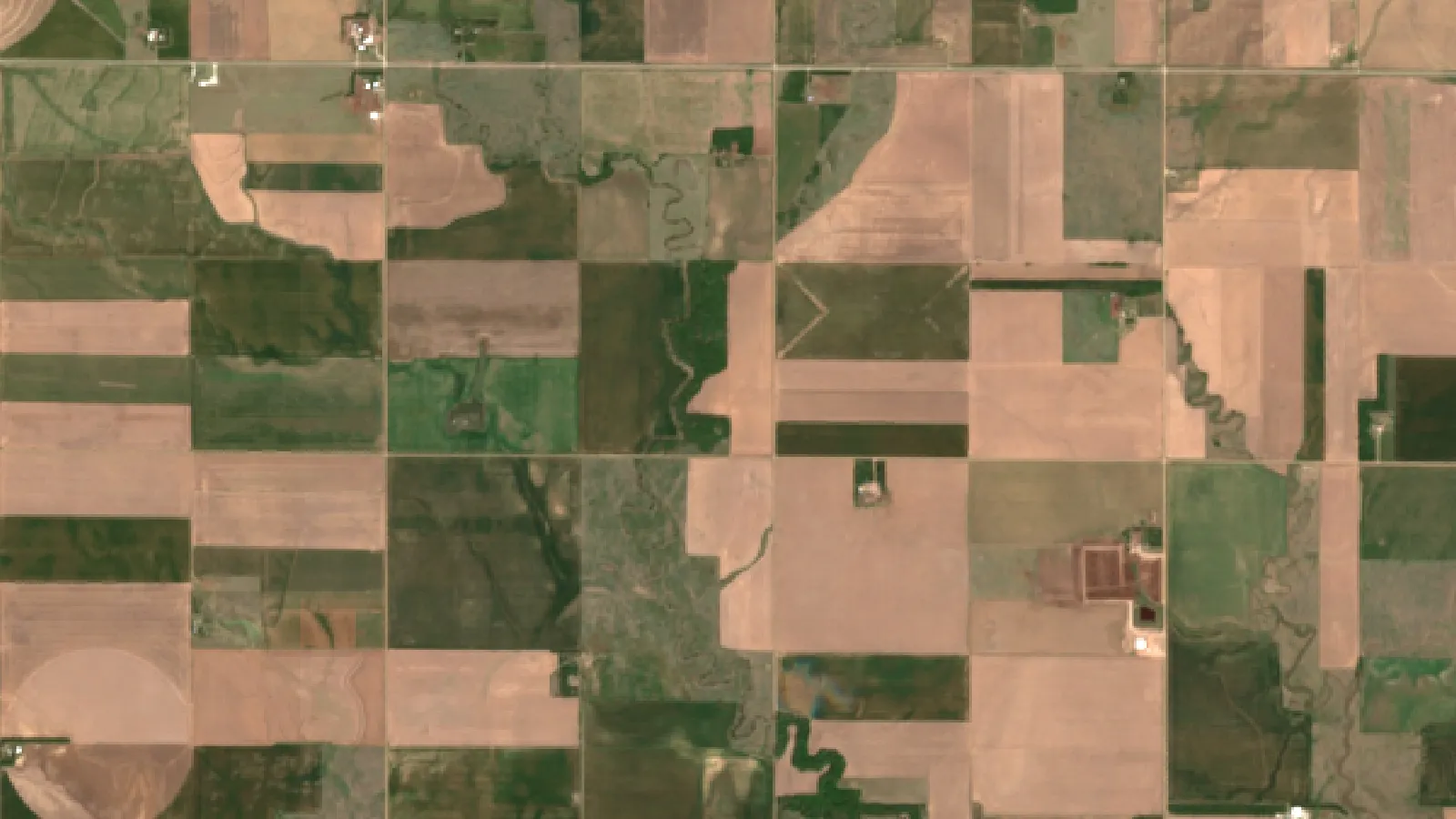
Harvest goes better when you know which fields will be ready first and which parts are weak. Satellite crop maps give that view across the whole farm during the season. A field that matured early on a sandy ridge, or a wet patch that stayed green, shows up before the combine gets there.
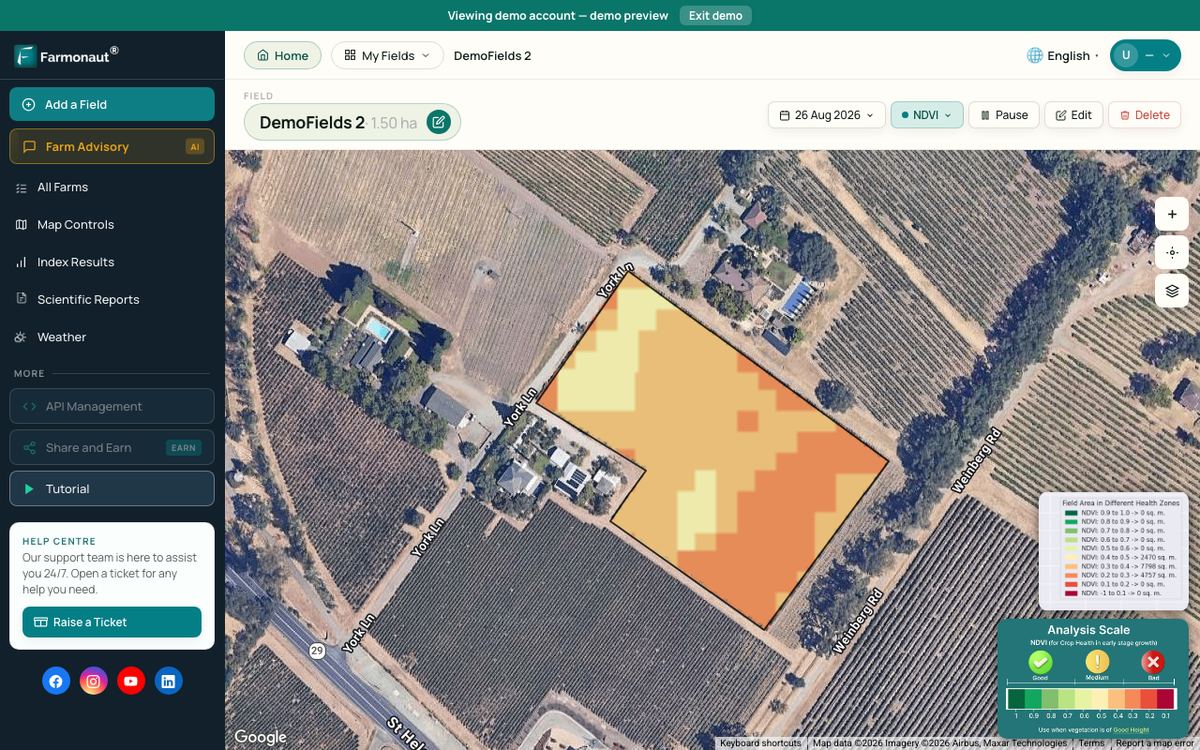
Farmonaut, a US-based company, maps crop health and moisture from satellite images for each field you draw. Farmers use these maps with their yield maps: the satellite shows where crops struggled during the season, and the yield map shows what that cost at harvest.
Those field records also help in other parts of the business, such as lenders and insurers who ask for crop history, and buyers who want traceable grain.

▶ How satellite NDVI maps show crop stress across a large farm before you can see it. · 4:09
Limits of these numbers
The cost figures in this guide come from US extension budgets and surveys. The farmdoc costs assume a new combine, set interest, fuel and labour rates, and Illinois corn and soybean farms. The Wisconsin rates are survey averages from one state. Your own costs depend on the machine’s age and price, your acres, local labour and your crop mix.
Loss counts are a quick field check, not a lab measure. Kernel weights vary between varieties and seasons, so weigh 1,000 kernels from your own crop if you can. Before you buy, lease or hire, get current quotes and talk to your lender or a farm business adviser.
For a closer look at a related question, see our guide: Corn Harvester Innovations: Boost Yield & Efficiency.
FAQ
What is combine farming?
Combine farming is harvesting with a combine harvester, a machine that cuts, threshes and cleans grain in one pass. It replaced separate reaping and threshing and cut harvest labour sharply.
What is an acceptable combine loss?
There is no single figure. Measure your loss, compare it with the cost and time of slowing down or changing settings, and ask your dealer or extension office for crop-specific guidance.
Does driving faster increase combine losses?
Often, yes. Going faster than the rotor and sieves can handle pushes more grain out with the chaff. Check losses at your usual speed and at a slower one before you decide.
How do I measure combine losses?
Count kernels in one-square-foot frames behind the combine, subtract the count before harvest, and divide by the kernels that equal one bushel per acre. For wheat at 30 grams per 1,000 kernels, about 20 kernels per square foot is one bushel per acre.
How many acres should one combine cover?
The farmdoc daily authors say harvesting over 3,000 acres per combine lowers costs. Fewer acres raise the cost per acre, but more acres stretch the harvest window and can add field losses.
Related pages on our site: Case combine harvester price guide · fleet management for farm machinery · challenges facing US farms · types of farming · crop loan and insurance verification · product traceability · carbon footprinting · agribusiness dashboard · satellite and weather API · mobile app
Farmonaut crop monitoring
Know which fields are ready first
Draw your fields once and Farmonaut shows satellite crop health maps for them through the season, on web, Android or iOS.



Sources
- University of Illinois farmdoc, Harvest operations machinery costs (2025): farmdoc.illinois.edu
- University of Illinois farmdoc, Harvest operations machinery costs (2023): farmdoc.illinois.edu
- Schnitkey and Paulson, Large Increase in Machinery Costs Suggests Need to Reconsider Machinery Purchase Decisions, farmdoc daily (October 2025): farmdocdaily.illinois.edu
- University of Wisconsin Extension, Custom Rates for 2025 Wisconsin Farm Operations (PDF, August 2026): farms.extension.wisc.edu
- University of Wisconsin Extension, Custom rates for 2025 Wisconsin farm operations (article): farms.extension.wisc.edu
- Texas A&M AgriLife Extension, Texas Custom Rates Survey (2026): agecoext.tamu.edu
- Manitoba Agriculture, Farm Machinery Custom and Rental Rate Guide: manitoba.ca
- Alberta Agriculture, Using 1,000 Kernel Weight for Calculating Seeding Rates and Harvest Losses: www1.agriculture.alberta.ca
- FAO, Grain storage techniques: grain harvesting, threshing and cleaning: fao.org
- McFadden, Njuki and Griffin, Precision Agriculture in the Digital Era: Recent Adoption on U.S. Farms, USDA ERS EIB-248 (February 2023): ers.usda.gov
- Case IH, AF11 combine harvester specifications: caseih.com
Discussion
Questions, corrections or field experience? Share them below. First-time comments are reviewed before they appear, and your email is never published.
No comments yet. Be the first to add a question or your experience.

 Gen Chayat
 Chimera Innovation
 Hiteshi Infotech
 Clubhouse OS
 SkyHarvest
 Polaris Digitech
 Teledarbas
 Wild Oak Farm
 SFX
SFX BACF Africa
 Doodlakine
 Exurbia Geospatial
 FieldZero
 Indico Company
 Licence holder · Niger · Gold










