

Digital Agriculture Tools Comparison: Top 10 for 2025
Meta Description: Discover the leading digital agriculture tools of 2025. Get a comprehensive guide to precision agriculture technologies, solutions, and data-driven platforms transforming farm management, crop yield, and sustainability for farmers and foresters globally.
- The Rise of Digital Agriculture in 2025
- Key Categories of Digital Agriculture Tools
- 2025 Data Insights: Trivia
- Core Benefits of Digital Tools in Agriculture & Forestry
- Barriers & Challenges in Digital Agriculture Adoption
- Feature Comparison Table: Top 10 Digital Agriculture Tools for 2025
- Farmonaut: Advanced Digital Agriculture Tools for 2025
- Emerging Trends Shaping Digital Agriculture in 2025
- Frequently Asked Questions (FAQ)
- Conclusion: Embracing the Future of Digital Agriculture
Embracing the Future: The Rise of Digital Agriculture in 2025
Digital agriculture tools are revolutionizing how the world grows, manages, and distributes food and forestry resources. In 2025, these solutions blend the latest in IoT sensors, AI-driven analytics, remote sensing drones, and farm management software to enable precision, sustainability, and robust data-driven decision-making across the agriculture sector.
The transformation is not limited to large commercial farms. Thanks to democratized access and innovative platforms, digital tools for agriculture now empower smallholders, allied industries, and forestry professionals as well. This surge is driven by mounting pressures—population growth, climate change, resource constraints, and evolving consumer demands for transparency and sustainability.
Governments and private enterprises globally are investing in digital infrastructure and cloud computing, accelerating the reach of digital in agriculture from high-tech agribusiness environments to the smallest farms and remote forest operations.
Digital agriculture, digital farming and digital transformation: what the terms mean
The terms overlap, and searchers use them loosely. A working split:
- Digital agriculture (also called e-agriculture or digital farming): any use of data and connected technology to run a farm or food chain. It covers sensors, satellite imagery, farm software, mobile apps, market platforms and traceability.
- Precision agriculture: the field-level part. Inputs and operations are matched to variation within a field, using GPS guidance, yield maps and variable-rate application.
- Digital transformation (or digitalization) of agriculture: the wider shift of a farm, value chain or country toward data-driven decisions.
The FAO’s 2019 status report on digital technologies in agriculture separates two sets of conditions for that shift. Basic conditions are availability of connectivity, affordability, ICT in education, and supportive policy. Enabling conditions are actual use of the internet and mobile phones, digital skills, and a culture of agricultural enterprise and innovation. Where the basic conditions are missing, tools sit unused however good they are.
Key Categories of Digital Agriculture Tools: 2025 Landscape
To fully grasp the transformative advantages of digital agriculture tools, it’s important to recognize their broad categorization within the modern agricultural and forestry ecosystem:
1. Data Collection & Monitoring Tools
- IoT Sensors: Soil moisture, nutrient, and climate sensors deliver real-time data for irrigation, fertilization, and pest management, optimizing every intervention.
- Drones & Satellite Imagery: Remote sensing via drones and satellites supplies actionable aerial imagery, vegetation health indices, forest canopy assessments, and early detection of crop stress or diseases (multispectral mapping).
- Mobile Apps: Enable farmers and foresters to record, manage, and access critical information and expert advisory services on the go.
2. Data Processing & Analytics Tools
- AI & Machine Learning Platforms: Advanced analytics parse massive, complex datasets for predictions, early disease detection, and optimization recommendations.
- GIS & Mapping Software: Spatial data visualization through geographic information systems allows precision mapping for crop management, soil health monitoring, and resource allocation.
3. Automation & Robotics
- Autonomous Tractors & Drones: AI-equipped machinery for planting, spraying, harvesting, and weed control—improving productivity and minimizing labor dependency.
- Robotics for Weed & Pest Control: Targeted, high-accuracy intervention with reduced chemical input.
4. Farm Management Systems
- Integrated Farm Management & Platforms: Software that syncs data from multiple sources for finance, compliance, labor, inventory, and crop yield forecasting—often via intuitive dashboards.
- Blockchain Traceability: Ensures total supply chain transparency, food safety, and meets growing consumer and export demands for verifiable provenance. (Learn about advanced traceability solutions by Farmonaut).
5. Decision Support Systems (DSS)
- Platforms that synthesize all available data and offer critical, actionable insights—from irrigation scheduling to crop rotation and pest alerts, minimizing risks and improving decisions.

2025 Data Insights: Trivia
Core Benefits of Digital Tools in Agriculture and Forestry
- Enhanced Productivity: Data-driven crop health monitoring and targeted applications (> Farmonaut’s Plantation, Crop and Forest Advisory) directly increase yield and reduce resource wastage across all farms, including large and allied industries.
- Sustainability: Digital agriculture tools reduce input overuse and foster conservation, with features like Farmonaut’s Carbon Footprinting for sustainability tracking.
- Risk Management: Predictive analytics and weather monitoring support proactive adaptation to climate risks, pests, and market fluctuations.
- Resource Efficiency: Automation reduces dependence on manual labor, while integrated software platforms optimize every phase of production and logistics. See also Farmonaut’s Fleet Management solution for agribusinesses.
- Market Access & Pricing: Digital platforms increase transparency and connect farmers directly to markets, improving profit margins and enabling fairer pricing models.
- Data-Driven Policies: Aggregated data helps governments and NGOs create more effective incentives, subsidies, and extension services, as leveraged by platforms like Farmonaut’s Large-Scale Farm Management.
Barriers & Challenges in Digital Agriculture Adoption
- Digital Divide: Inconsistent internet connectivity and digital literacy—especially in rural or remote regions—create gaps in access to digital solutions. This often requires ongoing training and strong support systems.
- Cost Barriers: While many solutions are becoming affordable (see Farmonaut’s cost-effective model below), some advanced sensors, drones, and robotics still carry higher initial investment.
- Data Privacy & Security: User trust is critical. Blockchain-based traceability provides transparent solutions, addressing privacy and misuse concerns in supply chains.
- Interoperability: The diversity of tools and proprietary platforms means integration can be complex. Unified data standards and API approaches (Farmonaut’s API) can help solve this.
- Skills & Training: Effective use of digital tools for agriculture relies on continued training to interpret complex data and manage technology. Check what training and support each vendor provides before you buy.
Ongoing public-private partnerships, smart policies, and educational initiatives are indispensable for overcoming these challenges and enabling widespread adoption and maximized impact.
How many farms use digital tools? US adoption data
Basic connectivity is now normal on US farms. The advanced layer is not. USDA’s August 2025 Technology Use (Farm Computer Usage and Ownership) report gives these national figures:
| Measure (share of US farms) | 2023 | 2025 |
|---|---|---|
| Used precision agriculture practices for crops or livestock | 27% | 22% |
| Had internet access | – | 85% |
| Used a broadband connection | – | 55% |
| Owned or used a smartphone | – | 82% |
| Bought farm inputs online | – | 50% |
NASS counts GPS guidance, yield monitoring and soil mapping, variable-rate application, scouting drones, electronic tagging and robotic milking as precision practices. Use is far higher in the Corn Belt: 42% of farms in Iowa and Illinois in 2025.
Farm size matters most. The USDA Economic Research Service found that in 2023 autosteer guidance was used by 70% of large-scale crop farms and 52% of midsize farms, and yield monitors, yield maps or soil maps by 68% of large-scale crop farms. For a small farm, tools that need no field hardware, such as satellite crop maps and phone apps, are usually the first step.
Feature Comparison Table: Top 10 Digital Agriculture Tools for 2025
Choosing the right digital agriculture tools depends on the farm type, scale, resource constraints, and operational goals. The table below compares ten widely used tools by type, main function and the kind of farm each suits best.
Every solution has unique strengths: Farmonaut excels in democratized precision agriculture with real-time satellite monitoring and is highly scalable. Tools like John Deere’s Autonomous Tractors offer unmatched mechanization for very large farms, while Taranis and CropX are best for AI-driven analytics in specific crops. Always consider integration capabilities, supported crops, sustainability impact, and cost-effectiveness for your specific agricultural or forestry operation.
The ten tools at a glance
Prices for most of these tools depend on acreage, hardware and contract, so ask each vendor for a quote rather than relying on a list price.
| Tool | Type | What it does | Best suited to |
|---|---|---|---|
| Farmonaut | Satellite monitoring platform | Satellite crop-health and soil-moisture maps, AI advisory, traceability, carbon tracking | Farms of any size that want field data without installing hardware |
| CropX | In-field soil sensors | Soil moisture, temperature and irrigation analytics | Irrigated row and vegetable crops |
| DJI Agriculture | Drones | Aerial mapping, scouting and spraying | Farms needing field-scale imagery or aerial application |
| Granular Business | Farm management software | Farm financial and operations management; sold by Corteva to Traction Ag in November 2022 | Larger row-crop operations |
| Taranis | AI crop scouting | Detects weeds, disease and stress from high-resolution imagery | Large acreage of major field crops |
| John Deere autonomous 8R | Autonomous tractor | Driverless field work; launched at CES 2022 for tillage | Very large grain farms |
| IBM Food Trust | Blockchain traceability | Shared supply-chain records for food provenance | Food companies and exporters |
| AgriWebb | Farm management software | Grazing and livestock records on mobile | Livestock and mixed farms |
| Arable | In-field weather and crop sensor | Microclimate, rainfall and crop-growth monitoring | Field and specialty crops |
| Naïo Technologies | Field robots | Autonomous mechanical weeding | Vegetables and vineyards |
Farmonaut: Advanced Digital Agriculture Tools for 2025
As a pioneer in making precision agriculture both affordable and accessible, we at Farmonaut focus on providing real-time satellite-driven crop health monitoring, AI-based advisory, and blockchain traceability for every farm. Our platform supports soil health assessment, moisture monitoring, AI analytics, and resource optimization without costly on-field hardware—driving adoption across large, small, and allied industries globally.
- Satellite-Based Crop Health Monitoring: Multispectral imagery and AI analytics allow farmers and foresters to detect stress, control pests, and optimize irrigation long before visible signs appear—enhancing yield and reducing losses. (Try the Farmonaut app for crop and plantation advisory)
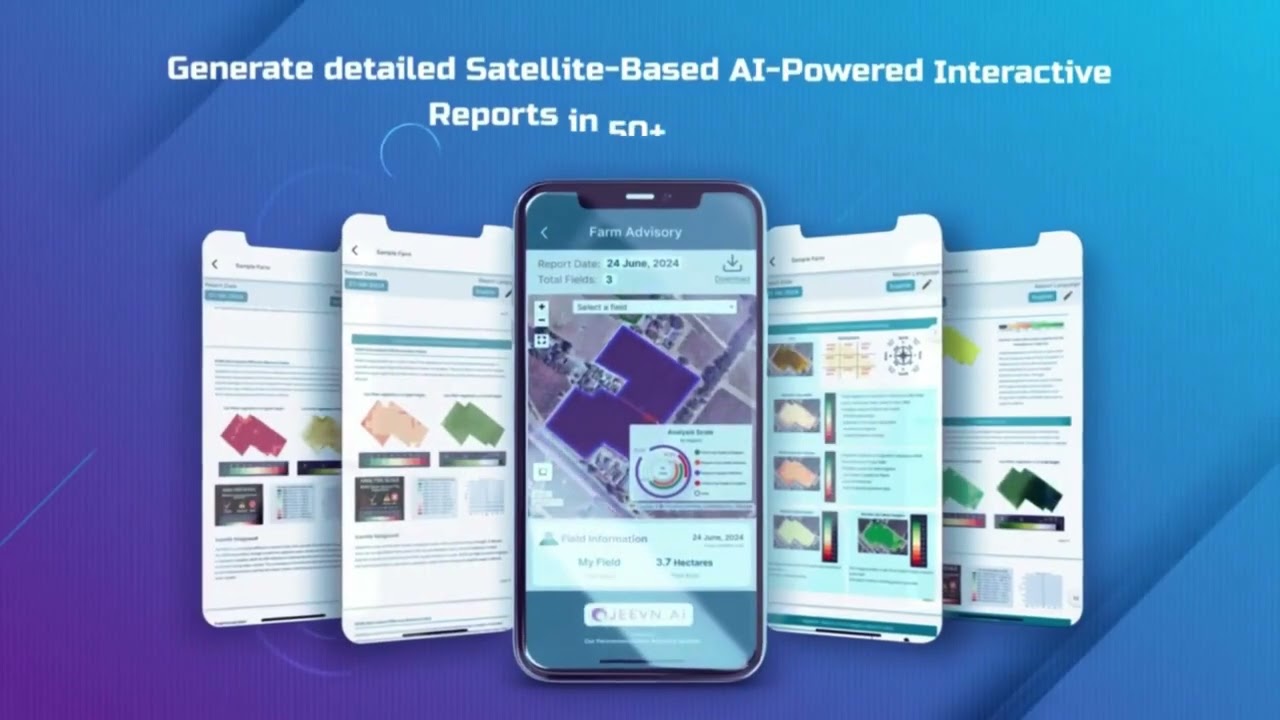
- Jeevn AI Advisory System: Personalized, real-time advice—from weather forecasts to expert crop management tips—integrated with satellite and field data for highly tailored support. Watch “JEEVN AI: The Future of Smart Farming with Satellite & AI Insights” (YouTube)
- Blockchain-Based Product Traceability: Every step in the crop’s journey is tracked, delivering transparency and trust for local and export markets (Explore Farmonaut’s blockchain traceability value).
- Fleet and Resource Management: Agribusinesses and allied industries can reduce operational costs and ensure safety with real-time fleet monitoring (Fleet Management solution).
- Carbon Footprinting: Support for carbon farming and climate-smart practices, by providing actionable environmental impact data for every operation. (Detailed carbon tracking with Farmonaut).

Our subscription-based model is structured for maximum scalability, making it ideal for:
- Individual farmers: affordable, accurate, and real-time decision support and field management.
- Agribusinesses: plantation-scale management, logistics and resource optimization.
- Governments, NGOs, and institutions: area monitoring, crop estimation, and data-driven policies.
- Financial institutions: satellite-backed verification to unlock crop loans and insurance (Learn about satellite-based verification for finance).
- Corporate clients: traceability for supply chain transparency in food, textile, and other allied sectors.
Access our platform instantly:



Developers: Instant API access | API Developer Docs
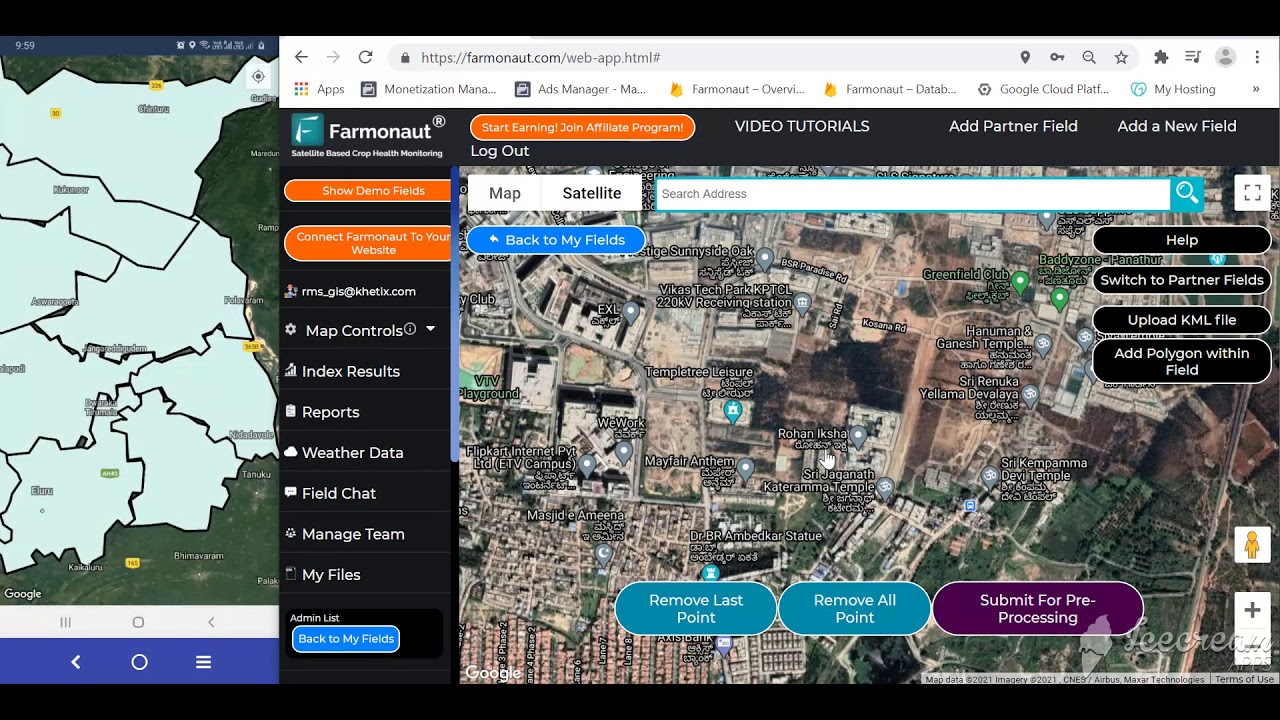
Explore subscription options tailored for every agricultural scale and budget:

Emerging Trends Shaping Digital Agriculture Tools in 2025
The future of agriculture digital tools and digital agriculture tools comparison reveals new developments making the agricultural sector more dynamic, efficient, and sustainable:
- AI+Robotics Integration: Highly adaptive, autonomous machinery that learns from farm-level data to improve precision, cost efficiency, and resource management.
- Edge Computing on Farm: Real-time analytics performed on-site, minimizing reliance on cloud connectivity and boosting decision speed for even the most remote operations.
- Multispectral & Hyperspectral Sensing: Next-gen detection of crop stress, nutrient deficiencies, and disease vectors at previously impossible scales. (See advanced soil moisture & crop health monitoring (YouTube))
- Carbon Farming & Climate-Smart Solutions: Track, verify, and monetize carbon credits and sustainable practices with digital tools. See Farmonaut’s Carbon Footprinting for environmental accountability.
- Enhanced User Experience: The rise of voice interfaces, simplified mobile dashboards, and intelligent assistants is minimizing skill barriers and boosting digital literacy in farming communities.
- Finance & Insurance Integration: Satellite verification for crop loans & insurance is reducing risk and unlocking access to financial products. (Farmonaut’s crop loan and insurance verification process).
- API and Data Interoperability: More platforms and agriculture digital tools are supporting open data standards, empowering holistic farm management (Farmonaut API access).
Frequently Asked Questions (FAQ) on Digital Agriculture Tools in 2025
Digital agriculture tools encompass a wide range of platforms, sensors, software, and hardware—including IoT devices, AI-powered analytics, drones, satellites, farm management apps, robotics, and traceability systems—that enable data-driven, precise, and sustainable management of farming and forestry.
Q2: How does remote sensing benefit agriculture?
Remote sensing uses satellites and drones to collect aerial imagery and multispectral data, allowing early detection of plant health issues, soil moisture deficits, pest infestations, and nutrient deficiencies. This supports timely interventions and boosts overall crop productivity.
Q3: Are these tools only for large commercial farms?
No. Modern digital agriculture tools—especially satellite-based, API-driven, and mobile-first platforms like Farmonaut—are increasingly accessible to smallholder farmers, cooperatives, and government agencies worldwide.
Q4: What is the unique advantage of blockchain in agriculture?
Blockchain delivers tamper-proof traceability for food, fiber, and other crops, providing transparency, trust, and compliance required by modern consumers and regulatory bodies. It’s essential for export markets and brands that prioritize authenticity.
Q5: How do I choose the best digital tool for my farm?
Start by identifying your crop types, scale, and key needs (e.g., irrigation optimization, fleet management, sustainability). Use comparison tables, read data on integration, support, pricing, and compatibility, then test with pilot fields if possible.
Q6: Can digital tools improve my access to finance or insurance?
Yes. Satellite-based verification increases confidence for lenders and insurers, speeding up crop loan approvals and reducing fraud risk. For example, Farmonaut supports such features in its crop loan & insurance solutions.
Q7: Where can I find more information or get started with digital agriculture platforms?
Visit Farmonaut’s web and mobile platform for real-time crop health monitoring, advisory, and management.
Use their API access for seamless integration into your own systems.
Conclusion: Embracing the Digital Transformation of Agriculture for 2025 and Beyond
Digital agriculture tools in 2025 usher in a new era—one where every farmer, forester, and agribusiness can harness advanced technology for greater productivity, sustainability, and resilience. By integrating IoT sensors, AI analytics, blockchain-based traceability, remote sensing drones, and scalable farm management platforms, the sector is adapting to mounting challenges from climate change to market demands for transparency.
While cost, literacy, and digital infrastructure remain barriers in some communities, solutions like those from Farmonaut are leading the way in breaking these barriers—making cutting-edge precision agriculture accessible and affordable worldwide. By providing actionable advice, sustainability tracking, and real-time monitoring, digital tools ensure that food security, resource efficiency, and market trust can be achieved for any farm, regardless of type or size.
As technologies continue to evolve, our collective responsibility is to remain informed, open to new digital solutions, and collaborative across the agricultural landscape. The power of data-driven farming tools is now in every farmer’s hands—let’s embrace this profound transformation together for a sustainable and food-secure future.
Ready to revolutionize your agricultural practices with the latest digital tools? Get started with Farmonaut today!
Discussion
Questions, corrections or field experience? Share them below. First-time comments are reviewed before they appear, and your email is never published.
No comments yet. Be the first to add a question or your experience.

 Gen Chayat
 Chimera Innovation
 Hiteshi Infotech
 Clubhouse OS
 SkyHarvest
 Polaris Digitech
 Teledarbas
 Wild Oak Farm
 SFX
SFX BACF Africa
 Doodlakine
 Exurbia Geospatial
 FieldZero
 Indico Company
