

Deep Water Culture Hydroponics: Systems, Kits & Setup
Reviewed September 2026 against USDA NASS, USDA ERS, and a University of Arizona resource-comparison study published in a peer-reviewed journal.
Try it: Run your own numbers →
A deep water culture (DWC) system suspends plant roots directly in an oxygenated, nutrient-rich water reservoir instead of soil. A University of Arizona field trial found hydroponic lettuce yielded 41 ± 6.1 kg/m² per year against 3.9 ± 0.21 kg/m² per year for conventional field lettuce over 2003-2012 — an 11 ± 1.7-fold gain per unit of growing area, at 20 ± 3.8 liters of water per kilogram of lettuce versus 250 ± 25 liters conventionally. Below, we cover what a DWC kit actually contains, what a hydroponics automation system costs to run, and how to size a commercial hydroponic system against real USDA production data — not marketing copy.
What Is Deep Water Culture (DWC)?
In a deep water culture system, a reservoir holds an oxygenated nutrient solution. Plants sit in net pots on a floating raft or lid, roots dangling straight into the water below. An air pump and air stone keep dissolved oxygen high enough to stop root suffocation — DWC’s single point of failure and its main design constraint. Because roots have constant access to both nutrients and oxygen, growth is not gated by a plant’s own root-foraging effort, which is the main reason yields diverge so sharply from soil-grown crops.
The Arizona study, run in Yuma between 2003 and 2012 and published in 2015, is the most-cited peer-reviewed source comparing DWC-style hydroponic lettuce against conventional field lettuce on the same three metrics growers actually care about: yield per area, water per kilogram, and energy per kilogram. It found hydroponic lettuce needed 90,000 ± 11,000 kJ/kg/year of energy (roughly 25 kWh/kg) against 1,100 ± 75 kJ/kg/year for field lettuce (roughly 0.31 kWh/kg) — an 82 ± 11-fold energy penalty per kilogram, mostly from pumps, lighting, and climate control. That’s the tradeoff in one sentence: DWC wins heavily on land and water, loses heavily on energy, per kilogram of crop produced.

Watch: 10 Low-Investment, High-Profit Agri Business Ideas
Core Principles of DWC
- Suspended roots: roots sit in nutrient solution, not soil or substrate.
- Oxygenation: an air stone delivers continuous bubbles; this is the variable most likely to crash a crop if it fails.
- Constant nutrient delivery: the solution is always available, removing the wet/dry stress cycles of soil irrigation.
- Closed-loop recirculation: water and nutrients are reused, which is the direct mechanism behind the 20 L/kg figure above.
Pro Tip
Hold solution temperature between 18-22°C. Above that range, dissolved oxygen capacity drops right as root respiration demand rises — the combination behind most DWC root rot.
Inside a Deep Water Culture Hydroponics Kit
A hydroponics system kit sold as “DWC” should include five things. If any is missing or downgraded to a generic part, price the replacement before you buy:
- ✔ Reservoir: the container holding oxygenated water and nutrients.
- ✔ Net pots / baskets: hold each plant while letting roots reach the water.
- ✔ Air pump and air stones: the component most kits under-spec — buy one rated above your reservoir’s stated minimum.
- ✔ Growing media: usually expanded clay pebbles — inert and stable, not a nutrient source.
- ✔ Nutrient solution: a mineral mix formulated for hydroponic (not soil) feeding.

Pair a DWC kit with satellite-based crop health monitoring for the greenhouse or outdoor acreage around it.
Common Mistake
Buyers underestimate air pump capacity. A pump sized exactly to a reservoir’s minimum spec leaves no margin if an air stone clogs or a line kinks — size up, not to spec.
Visual List: Essential DWC Kit Items
- 🌊 Reservoir — holds water and nutrients
- 🪴 Net pots — support plants above the waterline
- 💨 Air pump + stone — the oxygenation supply
- 🌑 Expanded clay pebbles — stability and airflow around the stem
- 🔋 Sensors (in automated kits) — track pH, nutrient concentration (EC), and water level
Hydroponics Automation Systems: What They Add
A hydroponics automation system layers sensors and controllers onto a base DWC reservoir. It does not replace the physical components above — it monitors and adjusts them. The core additions are:
- 📡 IoT-connected sensors: continuous readings of temperature, dissolved oxygen, pH, and nutrient concentration (EC).
- ✨ Automated nutrient dosing: pumps that correct EC drift without a manual mix-and-check cycle.
- 🔔 Auto-pH balancing: keeps solution pH inside the target band without daily manual titration.
- 🌡 Temperature regulation: heaters or chillers holding the 18-22°C band referenced above.
- 💻 Mobile app control: remote alerts and adjustment, reducing on-site checks.
Whether automation is worth the added cost depends on labor cost per check-in and how many reservoirs one operator runs — neither of which is published as a standardized U.S. figure. The gap section below explains how to build that math for your own operation instead of relying on a borrowed number.

Watch: Regenerative Agriculture: Carbon Farming, Soil Health & Climate-Smart Solutions | Farmonaut
Tracking environmental impact alongside automation?
Farmonaut’s Carbon Footprinting solution quantifies water, nutrient, and emissions data for a hydroponic or mixed operation.
What’s Actually Published
US controlled environment agriculture (CEA) operations — the category hydroponics and DWC fall under — rose from 1,476 in 2009 to 2,994 in 2019, with production volume up 56% over the same span, per USDA ERS. That’s operation count and volume, not automation adoption rate specifically; no federal source breaks out automated versus manual DWC systems.

Watch: Veg Equipment Boom: Smart Farming, AI Telematics & the Farm Equipment Market | Farmonaut
Comparing DWC System Specs by Scale
Vendor spec sheets rarely list reservoir size, plant sites, and power draw side by side. The table below compares representative configurations across that range so you can match a system to your space and budget before contacting a supplier for a current quote — list prices change often enough that any number here should be treated as a starting reference, not a live quote.
| Configuration Class | Reservoir Capacity (Liters) | Plant Sites | Air Pump Draw (Watts) | Automation Level | Typical Use Case |
|---|---|---|---|---|---|
| Starter kit | 40 | 12 | 25 | Low — manual pH/EC checks | Kitchen garden, first-time buyer |
| Mid-size single reservoir | 60-90 | 18-48 | 40-80 | Low to medium | Hobbyist to small side-business |
| Automated single reservoir | 80-120 | 24-36 | 60-95 | High — IoT sensors, app control | Serious grower, small commercial pilot |
| Multi-reservoir modular / vertical | 200+ (across modules) | 60+ | 145+ | High — remote dosing, cloud integration | Commercial hydroponic system, vertical farm |
How to read this: power draw scales with plant sites roughly linearly within a class, but jumps at the automation tier because sensors, dosing pumps, and controllers draw continuously, not just the air pump. Confirm rated wattage and duty cycle direct with a supplier before sizing a circuit or a solar offset — this table gives you the shape of the comparison, not a substitute for a datasheet.
Setting Up a Deep Water Culture System, Step by Step
- ✔ Choose the reservoir: allow at least 2-4 liters per plant site as a starting allowance, then adjust for crop size.
- ✔ Install net pots and grow media: seat net pots in pre-cut holes; fill with expanded clay pebbles or an equivalent inert medium.
- ✔ Add water and nutrients: use dechlorinated water; mix a nutrient solution formulated for the crop you’re growing.
- ✔ Set up aeration: connect the air pump to air stones positioned so bubbles reach every root zone — this is the step to over-spec, not the one to economize on.
- ✔ Add sensors and controls if automating: pH/EC sensors, auto-dosing pumps, and temperature probes cut manual checks but add points of failure that need their own maintenance schedule.
- ✔ Monitor and maintain: check water level, oxygenation, and nutrient concentration daily; refresh the solution every 2-3 weeks and keep the root zone within the 18-22°C band.
Common Mistake
Skipping reservoir and tubing sterilization between cycles lets algae establish, which competes with roots for dissolved oxygen and opens the door to root disease.

Watch: EV Trucks Supercharge Mobile Vertical Farming: Urban AgTech & Hydroponics
Running more than one reservoir?
Farmonaut’s Large Scale Farm Management tools
add real-time tracking across sites, useful once a DWC system setup grows past a single kit.


Monitor crops around a DWC install on the go.
Scalable DWC and Commercial Hydroponic Systems
“Scalable” in a DWC context means modular reservoirs that can be added without redesigning plumbing or dosing — not a specific plant count. At commercial scale, the relevant baseline is USDA NASS’s 2024 Census of Horticultural Specialties: it counted 23,060 US horticulture operations generating $18.3 billion in sales across floriculture, nursery, specialty crops, and food crops under protection. Within that total, food crops grown under protection — the category hydroponic vegetable production sits inside — accounted for $1.01 billion in 2024 sales. That census figure is the closest published national benchmark for sizing a commercial DWC or greenhouse hydroponic investment against the wider industry; it does not break out DWC as a distinct method from other hydroponic or CEA techniques.
For a deep water culture system for sale at commercial scale, ask suppliers for: rated plant sites per module, total dissolved oxygen delivery at full load (not just pump wattage), and whether nutrient dosing is metered by EC feedback or on a fixed timer — timer-based dosing is the more common source of nutrient burn or deficiency in scaled installations, since it does not correct for a reservoir at temperature.
How to Get a Current Figure
USDA NASS runs the Census of Horticultural Specialties every five years; the next release is expected February 2029. For a current-year snapshot between census years, query NASS Quick Stats directly by commodity and state. USDA ERS updates its CEA operation-count series annually in its “Charts of Note” product.

Watch: EV Farming Trucks | Mobile Vertical Farms, Water Savings & AI Crop Monitoring
Traceability at Scale
Commercial hydroponic operations selling into retail or wholesale chains increasingly need to document input sourcing end to end.
Farmonaut’s Traceability Solution tracks produce from nutrient sourcing through market delivery.
Where DWC Is Used: Crops, Trucks, and Urban Farms
DWC’s yield and water advantages hold most clearly for fast-cycling leafy greens and herbs — the crops the Arizona lettuce study and most commercial deployments are built around. Its applications:
Established DWC Applications
- ✔ Leafy greens: lettuce, spinach, kale — fast cycles, the best-documented yield case.
- ✔ High-value herbs: basil, mint, cilantro, which tolerate DWC’s constant-immersion root zone well.
- ✔ Strawberries and small fruits: supported in stacked or vertical DWC modules, though with less published yield data than lettuce.
- ✔ Seedling production for forestry: propagating stock for reforestation or degraded-land restoration.
- ✔ Urban agriculture: rooftop, basement, and warehouse installs maximizing output per square meter of floor space.
On hydroponics equipment for truck drivers: mobile and containerized hydroponic units exist for over-the-road and last-mile fresh production, generally built around compact DWC or NFT modules with onboard power management rather than a distinct product category with its own published market data. Treat vendor claims in this niche the same way as any DWC kit claim — verify reservoir size, plant sites, and power draw against the comparison table above rather than a marketing figure alone.
Watch: Smart Farming Future: Precision Tech & AI, Boosting Harvests and Sustainability
Data Insight
In regions with limited arable land or unreliable soil quality, DWC’s per-area yield advantage (11 ± 1.7-fold over conventional field production, per the Arizona study) matters more than its energy cost, since land is the binding constraint rather than power.
Supporting land restoration or forestry propagation?
Farmonaut’s crop plantation and forest advisory provides satellite-driven support for reforestation programs using hydroponically propagated seedling stock.
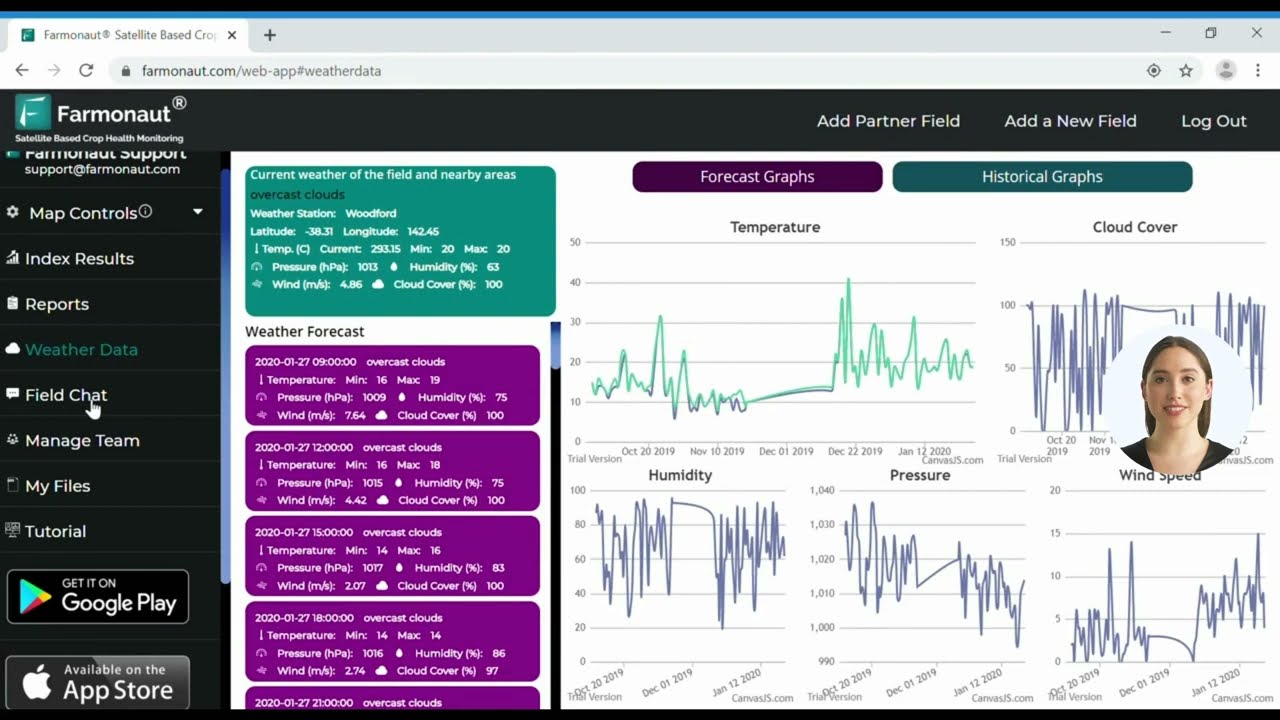
Watch: Farmonaut Web App: Satellite-Based Crop Monitoring
Resource Use: Water, Energy, and Land
The Arizona study’s three headline multipliers, restated together: hydroponic lettuce used 11 ± 1.7 times less land per kilogram, 13 ± 2.7 times less water per kilogram (20 ± 3.8 L/kg vs. 250 ± 25 L/kg), and 82 ± 11 times more energy per kilogram than conventional field production. Those are per-kilogram figures from one 2003-2012 field trial on lettuce specifically — no equivalent published USDA or university dataset covers tomatoes, cucumbers, or herbs under comparable US conditions, so do not extrapolate the lettuce multiplier to other crops without a caveat.
- ✔ Water efficiency: 13 ± 2.7 times less water per kilogram of lettuce than conventional field production.
- ✔ Land efficiency: 11 ± 1.7 times more yield per square meter, supporting vertical and urban installs.
- ✔ Closed-loop nutrients: recirculation cuts the fertilizer runoff associated with soil-based irrigation.
- ✔ No soil-borne disease pathway: removes one class of pest and disease pressure present in soil systems.
- ✔ Energy tradeoff: 82 ± 11 times more energy per kilogram — the cost side of the equation that vendor marketing usually omits.
Measure water, nutrient, and emissions footprints with Farmonaut’s satellite data.
Where Deep Water Culture Systems Fall Short
- ⚠ Electricity dependency: aeration must run continuously; an outage can suffocate roots within hours, not days.
- ⚠ Energy cost per kilogram: 82 ± 11 times conventional field production, per the Arizona study — the tradeoff for DWC’s water and land gains.
- ⚠ Monitoring load: pH, oxygen, and nutrient concentration all need regular checks unless automated, and automation adds its own failure points.
- ⚠ Water temperature management: above the 18-22°C band, root rot risk rises as dissolved oxygen capacity falls.
- ⚠ Upfront cost: commercial-scale modular systems carry a higher capital outlay than a single starter kit; get a current quote rather than relying on a published list price, since none is centrally tracked.
- ⚠ Fast failure propagation: a fault or disease outbreak in one reservoir of a connected multi-module system can spread before it’s caught manually.
Common Mistake
Skipping backup power or redundancy planning is the single most common cause of catastrophic loss in DWC operations — plan for outages before scaling to automated, high-density installs.
Insuring a DWC operation?
Farmonaut offers satellite-based crop loan and insurance verification, useful for financing coverage on hydroponic installations.

Watch: JEEVN AI: Smart Farming with Satellite & AI Insights
Reservoir & Yield Calculator
Use the figures you cited above instead of a vendor’s marketing claim: enter your planned reservoir size and plant count to check the per-site water allowance, and compare hydroponic vs. conventional yield and water demand at your own scale using the Arizona study’s rates.
Run your own numbers
Assumes the 2-4 L per plant site allowance from the setup guide above and applies the University of Arizona 2003-2012 lettuce study’s per-area yield and water-demand rates (41 kg/m²/yr hydroponic, 3.9 kg/m²/yr conventional; 20 L/kg and 250 L/kg water demand respectively). These rates are lettuce-specific and published for research conditions in Yuma, Arizona — treat results for other crops or climates as a starting estimate, not a guarantee. Excludes energy cost, nutrient cost, and labor.
Monitoring a DWC or Greenhouse Operation
Satellite monitoring is built for open-field acreage, not the reservoir itself — but most DWC operations sit inside or alongside a wider farm or greenhouse footprint where this applies directly. Farmonaut’s platform provides:
- ✔ Real-time satellite crop monitoring: track field health and detect anomalies using multispectral imagery around greenhouse and DWC sites.
- ✔ AI advisory with Jeevn: alerts and recommendations for optimizing growing conditions and catching problems early.
- ✔ Blockchain traceability: verify each stage of a hydroponic produce’s journey to market.
- ✔ Environmental impact and carbon footprinting: quantify water, nutrient, and emissions footprints with satellite precision.
- ✔ Fleet and resource management: monitor operations across large-scale sites, integrating logistics for productivity and sustainability.
Accessible via
web,
Android and
iOS apps, or direct
API and
developer documentation, this covers the acreage and greenhouse operations that sit around a DWC install.
FAQ: Deep Water Culture Hydroponics Systems
A: A soilless technique where plant roots are suspended in an oxygenated, nutrient-rich water solution. The University of Arizona’s 2003-2012 study found this approach yielded 41 ± 6.1 kg/m²/year of lettuce on 20 ± 3.8 L/kg of water, against 3.9 ± 0.21 kg/m²/year on 250 ± 25 L/kg for conventional field lettuce.
A: DWC immerses roots in a deep, aerated reservoir rather than misting them (aeroponics) or running a thin nutrient film across them (NFT). That gives DWC a bigger buffer against pump failure or dry-out, and suits leafy greens and herbs particularly well.
A: Air pump draw in common configurations runs from 25W in a 12-site starter kit up to 145W or more in a multi-reservoir modular setup with 60+ sites — see the comparison table above. Automated systems draw additional continuous power for sensors and dosing pumps beyond the air pump figure.
A: Yes. IoT sensor integration, automated dosing, and remote pH/EC monitoring are standard additions to a base DWC kit, cutting manual checks — see the automation section above for what each component actually does.
A: Yes. USDA NASS’s 2024 Census of Horticultural Specialties recorded $1.01 billion in US sales of food crops grown under protection (the category hydroponic vegetable production sits within), across 23,060 total US horticulture operations generating $18.3 billion in sales. USDA ERS separately tracked US CEA operations rising from 1,476 in 2009 to 2,994 in 2019, with production volume up 56% over that span.
A: For USDA figures beyond what’s cited here, query NASS Quick Stats directly, or check USDA ERS’s “Charts of Note” for the annual CEA operations update. No centrally published source tracks current retail DWC kit or commercial system pricing — get quotes directly from suppliers using the spec comparison table above as your checklist.
A: Satellite-based crop monitoring, AI-powered advisory, environmental tracking, traceability, and fleet/resource management — accessible via app or API — for the acreage and greenhouse footprint around a hydroponic install.





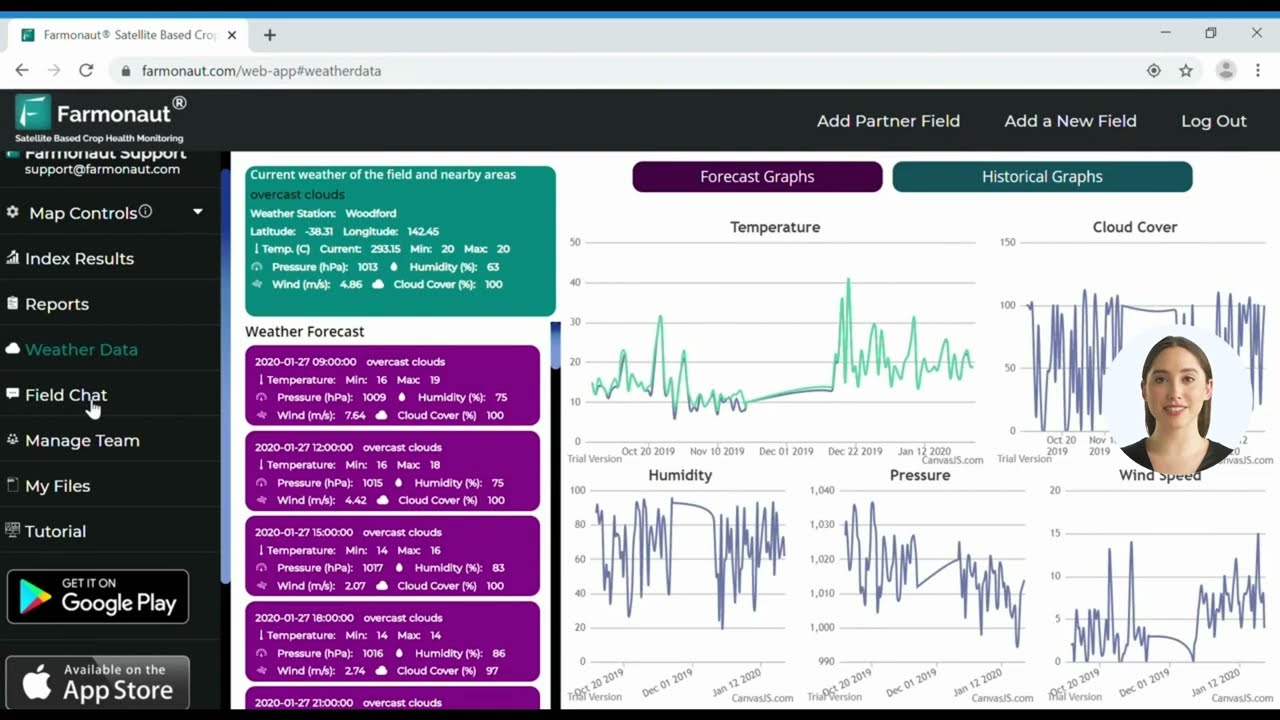

Further reading:
Buying a DWC System: What to Check First
The case for deep water culture rests on two verified numbers: an 11 ± 1.7-fold yield gain and a 13 ± 2.7-fold water-efficiency gain per kilogram, against an 82 ± 11-fold energy cost, all from the same University of Arizona lettuce trial. That tradeoff, not a marketing claim, is what should decide whether DWC fits your crop, climate, and power budget.
Before buying a kit or a commercial-scale system: match reservoir size and plant sites to the specs table above, confirm air pump capacity exceeds the stated minimum, and check whether nutrient dosing is EC-metered or timer-based. For sizing against the wider US market, USDA NASS’s Census of Horticultural Specialties and USDA ERS’s CEA tracking are the two federal sources with published, citable figures — both are due for their next scheduled updates (February 2029 for the census; annually for ERS) rather than being fixed forever.
If you’re evaluating a system for a working farm or greenhouse, Farmonaut’s monitoring tools can track the crop health and resource use around it once installed.

 AgriBazaar
 Geno
Geno Hayleys Agriculture
 Linx Agritech
 Adinet
 Save Your Soils
 Grandstream Algérie
 XOS Realty
 Geospatial Lab Africa
 Agro La Gándara
 HIPSAC
 ZOL Zimbabwe
 Juligerm
 AdBio
AdBio MISE Maroc
 NWNS
NWNS Red August Group
 Farm Inc
 WeMe Global
