

Farming in 2025: Smart Grants & Top Technologies for Success
Summary:
As 2025 unfolds, farming is undergoing a transformation fueled by precision technologies, smart grants, and data-driven innovations. We’ll explore how farmers are leveraging sensor networks, AI analytics, and cutting-edge equipment alongside farming grant 2025 programs to optimize yields, reduce environmental impact, and build resilience—delivering sustainable, profitable, and future-ready agriculture.
Introduction: The Transformation of Farming in 2025
Farming in 2025 is radically different from the traditional, labor-intensive operations of previous decades. Across the world, we see a profound shift: farms—both smallholders and large enterprises—are adopting smart, data-enabled solutions to drive productivity, sustainability, and resilience against fast-evolving climate risks. At the heart of this transformation are smart farming 2025 practices, where the intricate interplay of IoT sensors, AI-driven analytics, robotics, and digital platforms makes farms more adaptive, efficient, and sustainable than ever before.
Simultaneously, governments and private institutions are rolling out farming grants 2025—including substantial funding for sustainability, environmental adaptation, and technology adoption. For both crop and mixed farming systems, grants effectively lower adoption costs, accelerate innovation diffusion, and empower farmers to harness the new era of data-driven, climate-smart agriculture.
Trivia: The New Landscape of Smart Farming 2025
Key Technology Pillars Powering Smart Farming 2025
Let’s break down the key technology pillars that form the backbone of smart farming 2025 and enable us to seize the maximum benefits from the latest grants and funding programs.
Precision Agriculture & IoT Sensors: Optimizing Every Input
Precision agriculture and the Internet of Things (IoT) sensors are revolutionizing on-farm operations by transforming every field into a smart system responsive to real-time signals. Soil moisture probes, multi-spectral drones, autonomous sprinklers, and nutrient sensors now provide live data on field health, soil conditions, and crop growth. This technology enables farmers to:
- ✔ Adjust irrigation via automated sprinklers, conserving water and targeting crop needs with pinpoint accuracy.
- 📊 Control fertilization and nutrient applications using real-time nutrient sensor data, lowering input costs and reducing runoff risk.
- ⚠ Minimize chemical use by detecting pest or disease outbreaks early, leading to targeted interventions.
- ✔ Map fields in high detail, identifying zones for targeted action and maximizing both yield and input usage.
- 📊 Reduce waste, save operational costs, and optimize environmental stewardship.
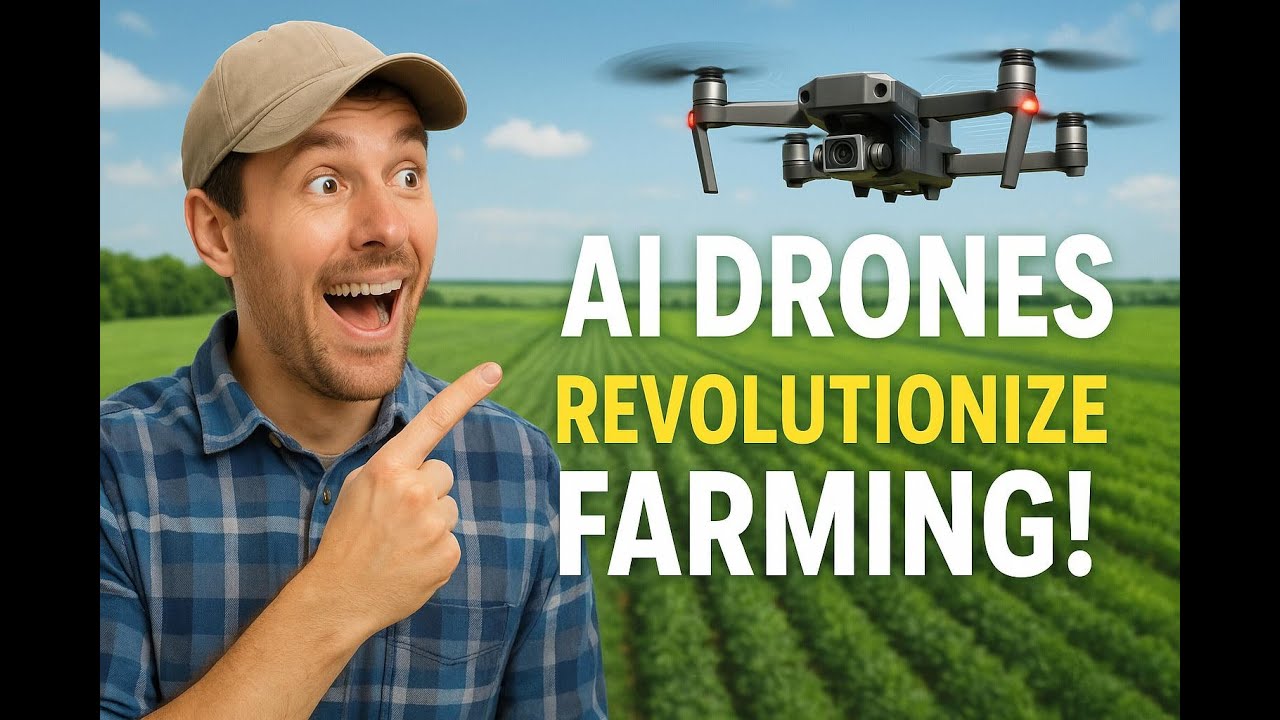
AI-Driven Analytics and Decision Support
The AI revolution in farming 2025 goes far beyond automation. Machine learning and cloud-based platforms—powered by rich data streams from satellites, sensors, trends, and weather forecasts—analyze soil, crop growth stages, and market signals in real time. With these AI decision support systems, we can:
- ✔ Optimize planting windows for each field based on predicted weather and soil moisture.
- 📊 Forecast harvest timing to best align with market prices or processing schedules.
- ⚠ Allocate resources dynamically, focusing labor, inputs, and equipment where they matter most.
- ✔ Reduce risks from unpredictable weather or market fluctuations by building resilience and adaptability.

Key Insight
AI-driven analytics do more than just automate; they empower farmers to see deep patterns, stress factors, and opportunities for improvement before issues become losses—maximizing yield and profitability.
Robotics, Automation, and Autonomous Equipment
The advancement of robotics, automation, and autonomous machinery addresses traditional labor bottlenecks—especially in labor-intensive sectors like horticulture and orchards. Farmers can now rely on technologies including:
- ✔ Autonomous tractors and planters for large-scale, precise fieldwork.
- 📊 Robotic harvesters for crops and fruit, delivering uniformity and reducing labor dependency.
- ⚠ Intelligent weeding robots—minimizing herbicide applications and automating weed management.
- ✔ Automated drones for mapping, seeding, or applying foliar nutrition with ultra-high efficiency.

Integrated Pest, Disease, and Weed Management
Modern integrated pest and disease management relies on early detection technologies. High-resolution satellite imagery, drones, and pathogen sensors identify issues before visual symptoms appear, enabling farmers to take targeted action:
- 📊 Reduce broad-spectrum chemical usage, instead applying interventions only where needed.
- ✔ Enhance crop resilience, improve ecosystem health, and promote sustainability.
- ⚠ Minimize losses from pests or disease outbreaks.

Data Interoperability, Advisory & Digital Extension Services
The value of field-level data is magnified when it can be compared, benchmarked, and integrated with advisory support. Today, open data standards connect:
- ✔ Farm records (operations, inputs, yield maps)
- 📊 Equipment telemetry and performance data
- 📊 Extension services and tailored advisory insights
- ✔ Real-time benchmarking against regional or local best practices
This “networked farm” approach gives farmers access to up-to-the-minute recommendations, quick troubleshooting, training opportunities, and makes it easier to document outcomes for grant eligibility or regulatory compliance.
Top Smart Farming Technologies & Associated Grants (2025)
| Technology Name | Brief Description | Est. Yield Improvement (%) | Est. Cost Reduction (%) | Sustainability Impact | Eligible Grants/Funding |
|---|---|---|---|---|---|
| AI-Powered Drones | Automated aerial crop monitoring, pest detection, precise input application | 15–20% | 18–25% | Reduces chemical use and runoff, supports sustainable intensification (High) |
Smart Farming Grants 2025 – Up to $50,000/project AgriTech Modernization Scheme |
| IoT Soil Sensors | Network of sensors for soil moisture, nutrients, and temperature in realtime | 10–15% | 15–22% | Conserves water, improves nutrient management (High) |
Climate-Smart Agriculture Grant – Up to $25,000/field Soil Health Incentive Program |
| Automated Machinery | Autonomous tractors, planters, robotic weeders, and harvesters | 12–18% | 20–30% | Lowers fuel, labor, and pesticide inputs; enhances sustainability (Medium-High) |
Equipment Modernization Grant 2025 – Up to $40,000/unit Labor-Saving Agri-Robotics Program |
| Satellite Data Platforms | Satellite imagery & analytics for crop health, soil condition, carbon monitoring | 15–25% | 20–35% | Supports precision agriculture, carbon accounting, scalable for all farm sizes (High) |
Digital Ag Extension Grant – Up to $30,000/license Climate Resilience Fund |
| Blockchain Traceability Tools | Secure, transparent crop/product traceability across supply chains | 8–12% | 10–16% | Improves food safety, enhances consumer trust (Medium-High) |
AgChain Innovation Grant – Up to $15,000/startup Food Authenticity Scheme |
Funding Pathways and Farming Grants 2025
Smart grant programs are the financial backbone of the farming 2025 revolution. Understanding the landscape of farming grants 2025 is crucial for every farmer wishing to implement the latest technologies at lower out-of-pocket costs.
National, Regional and International Farming Grants 2025
- ✔ Government initiatives target sustainability, climate adaptation, and productivity. Funding ranges from $10,000 to $100,000+ for on-farm trials, precision equipment, and training.
- 📊 Regional grants prioritize resource stewardship, targeting practices such as cover cropping, reduced tillage, and soil organic carbon improvement.
- 📊 International programs (e.g., FAO, World Bank) often co-fund large-scale technology adoption or demonstration sites.
Grants for Renewable Energy and Efficiency on the Farm
- ✔ Incentives for solar-powered irrigation (crop_plantation_forest_advisory application can support site selection), battery storage, and on-farm micro-generation.
- 📊 Funding for energy-efficient equipment, reducing carbon footprint, operating costs, and improving grant eligibility under carbon-farming programs.
- ✔ Combined energy and fertilizer efficiency programs, integrating smart irrigation and robotics.
R&D Co-Funding, Demonstration Farms, and Partnerships
- ✔ Innovation grants match-fund investment in pilot projects using new technologies such as AI drones, sensors, or satellite analytics.
- 📊 Public-private funding for demonstration farms—proving the value of technology in real-world conditions and expediting scale-up.
- ⚠ Enhanced reporting requirements, but with greater opportunities for peer learning and access to premium equipment.
Soil Health & Carbon Sequestration Incentives
- ✔ Funding linked to soil health initiatives: cover crops, reduced tillage, compost, and agroforestry.
- 📊 Programs that quantify and reward carbon sequestration via digital platforms, GIS, and satellite imagery.
- ✔ Agroforestry and biodiversity projects receive additional bonus grants in many regions (value-add for local ecosystems).
Leverage Farmonaut’s carbon footprint monitoring for accurate reporting and grant compliance in soil health and sustainability programs.

Farm Resilience & Infrastructure Grant Programs
- ✔ Grants dedicated to infrastructure upgrades: flood defense, drainage, storage, and irrigation efficiency.
- 📊 Resilience grants underwrite projects to adapt to climate volatility: drought-proofing, pest-resilient cropping, and diversified workflows.
- ⚠ Common eligibility requirement: quantifiable risk reduction, verifiable via data monitoring platforms.
Farmonaut’s Agro Admin Platform provides scalable tools for large farms to monitor infrastructure, crop health, and optimize operational risk management—essential for modern infrastructure grant reporting.
Visual List: The Five Fundamentals of Smart Grant Eligibility in 2025
- ✔ Clear, outcome-based objectives: Must target water use efficiency, yield stability, or environmental standards.
- 📊 Demonstrable data capabilities: Grant proposals should show existing sensors, satellite data access, or management platforms (e.g., Farmonaut solutions).
- 🔗 Alignment with local conditions: Soil type, infrastructure, and resource constraints are addressed upfront.
- ⚙ Scalable pilot design: Start with one field or system for measurable insights, then expand by results.
- 🤝 Documented knowledge sharing: Many programs value partnerships with extension services or digital platforms for advisory support and peer learning.
Practical Implications for Farmers Deploying Smart Tech in 2025
Adopting smart farming 2025 technologies and securing farming grants 2025 is not just about technology acquisition—it demands an ecosystem approach, proactive business planning, and engagement with training and data governance.
- ✔ Understand the expected ROI: Assess anticipated input savings, yield improvement, and grant reimbursements before investing in new tech.
- ⚠ Plan for ongoing maintenance and data management costs: Sustainability is about more than installation—it’s about lifetime value and operational resilience.
ROI Mindset and Business Case Development
Smart farming 2025 begins with a clear, quantified business case. Farmers should model scenarios—what % increase in yield, what reduction in input or labor costs is attainable, and what grant funds will offset the investment? For many, cloud-based data platforms provide integrated calculators or advisory services for this purpose.
For example, deploying IoT soil sensors may cost <$10,000 for a medium-sized field, but could deliver 15% higher yield and >18% reduction in input costs—with up to 70% funded by grants (per the table above).
Data Governance, Ownership, and Local Sharing Models
As sensor networks and digital platforms proliferate, the question of data ownership, privacy, and sharing becomes central. Progressive local cooperatives and farmer networks are negotiating group terms with platform providers—pooling data for benchmarking, while ensuring individual privacy and control.
Best practices include:
- ✔ Clear written policies on who owns field data and under what conditions it’s shared with extension/advisory services.
- 📊 Use of blockchain-backed platforms (like those offered by Farmonaut for product traceability) for tamper-proof transparency.
- ⚠ Planning for data storage, software updates, and interoperability as tech landscapes evolve from 2025 onwards.
Training, Advisory Access, and Extension Support
- ✔ Participation in funded pilot projects often includes free access to on-farm training, agronomic experts, and tailored advice.
- 📊 Continuous learning is a must—technology, environmental standards, and farming best practices all change fast.
- ✔ Digital extension platforms (like Farmonaut’s satellite-based advisory) offer scalable, on-demand support for all stakeholders—not limited by geography.

Market Alignment, Real-Time Yield Data & Value-Added Programs
Real-time yield and quality data empower farmers with robust market negotiating power, eligibility for certifications, and access to value-added supply chains. Digital proof and traceability improve profitability and reduce exposure to market risks.
Tip: Consider blockchain-powered traceability for crop certifications and for accessing top-tier retail contracts—see Farmonaut’s traceability suite for details.
Farmonaut: Empowering Agriculture with Satellite, AI, and Blockchain Tech
At Farmonaut, our mission is to democratize access to the most advanced satellite, AI, and blockchain technologies for agriculture and other industries—making sophisticated, actionable insights accessible and affordable to farmers, businesses, and governments globally through simple, user-friendly platforms and APIs.
Farmonaut Technologies: Affordable, Scalable, and Actionable
- ✔ Satellite-based crop monitoring: Leveraging multispectral imagery for real-time insights into vegetation health (NDVI), soil conditions, and resource management so we can conserve resources, optimize yields, and reduce costs.
- 📊 AI-powered advisory platforms (Jeevn AI System): Delivering tailored strategies for weather, input use, and risk management using cutting-edge machine learning.
- 🔗 Blockchain-based traceability: Empowering transparency, ensuring food authenticity, and supporting grant compliance in the evolving 2025 agricultural landscape.
- ⚙ Fleet & resource management: Automating logistics and asset tracking for operational efficiency and grant performance reporting.
- 🌱 Environmental impact monitoring: Tracking carbon emissions, water usage, and sustainability metrics in line with stricter environmental standards 2025.
Farmonaut App, API & Platform Access
We provide web and mobile apps so you can monitor, analyze, and manage fields from anywhere. Our API endpoints enable developers and ag businesses to integrate satellite weather and crop health data into their management systems, for ultimate flexibility and scalability.



Developers can access our API directly, or explore the Farmonaut Satellite Weather API Developer Docs for rapid integration.
Farmonaut Key Solution Links
- 🌿 Carbon Footprinting Tool: Quantify emissions, eligible for climate grants
- 🔗 Product Traceability: Blockchain-based traceability for food safety and supply chain transparency
- 💰 Crop Loan & Insurance: Satellite-backed verification streamlines access to funding
- 🚜 Fleet Management: Efficient, data-driven logistics for large-scale farms
- 🌳 Large Scale Farm Management: Centralized, scalable resource management
- 🌲 Crop Plantation, Forest, & Advisory Platform: All-in-one solution for monitoring and advisory
Farmonaut Premium Subscriptions
We offer flexible premium subscription plans for individuals, enterprises, and government institutions. Scale service as your operation grows, and unlock advanced analytics, reporting, and compliance tools—all via intuitive web and mobile apps.

Sustainability, Regulation & Climate Resilience in Farming 2025
Sustainability and compliance are center-stage as global policies rapidly evolve. Farming in 2025 is now measured as much by its environmental impact as by raw productivity.
- ✔ Regulations now target nitrogen & phosphorus runoff, pesticide loads, and soil organic matter preservation.
- 📊 Grant programs reward climate-smart and regenerative practices—reduced tillage, cover cropping, integrated pest management, agroforestry, etc.
- ⚠ Non-compliance risks grant clawbacks, fines, or market exclusion! Planning for data-driven sustainability reporting is increasingly critical.
Evolving Environmental Standards
- ✔ 2025+ regulatory frameworks: More stringent environmental impact audits and outcomes-based verification, often using remote sensing and digital proof (e.g., Farmonaut).
- 📊 Real-time monitoring of fertilizer and chemical runoff via IoT sensors and satellite imagery.
- ✔ Soil health and biodiversity scores increasingly influence grant eligibility and market premiums.
Climate-Smart Practices, Agroforestry and Biodiversity
By leveraging integrated precision ag, IoT, and agroforestry initiatives, farmers benefit from improved soil structure and moisture retention, natural pest suppression, and eligibility for enhanced climate resilience grants.
- ✔ Agroforestry and hedgerow restoration as grant-winning solutions for both biodiversity and carbon credits.
- 📊 Continuous soil health tracking supports eligibility for long-term resilience funding and infrastructure upgrades.
Data-Powered Compliance: How Technology Helps Meet Standards
- ✔ Satellite monitoring and automatic data logging prove compliance and facilitate faster grant approvals.
- 📊 Blockchain tools offer indisputable proof of sustainable practices, traceable from field to fork.
- ✔ Integrated record-keeping via digital platforms speeds up audits and makes it easier for farmers to demonstrate eligibility.
What to Consider: Planning a 2025 Smart-Farm Grant Project
To maximize chances of grant success and sustainable impact, meticulous project planning is critical. Consider:
- 📋 Define clear objectives: e.g., improve water-use efficiency, increase yield stability, or reduce chemical inputs.
- 📋 Assess baseline conditions: soil type, infrastructure, digital readiness, and water availability.
- 📋 Choose scalable technology suite: Pilot on one field/system—rapid, measurable ROI before scale-up.
- 📋 Align project scope to grant criteria: Match goals and metrics to funder reporting requirements, using digital data capture.
- 📋 Collaborate and document partnerships: Work with tech platforms, ag advisors, or local farmer groups for knowledge sharing and risk reduction.
Visual List: Five Steps to a Winning Smart Grant Project
- 1️⃣ Objective-driven design: Target key weaknesses and quantify “before vs. after” metrics.
- 2️⃣ Site assessment: Document baseline field conditions and monitoring capability.
- 3️⃣ Pilot launch: Deploy and tweak technology on a test plot—track improvements in yield, input costs, and resource use.
- 4️⃣ Robust documentation: Use satellite/IoT field logs and blockchain traceability for reporting and compliance.
- 5️⃣ Continuous improvement & scale: Analyze data, incorporate lessons, expand system-wide!
Investor Note
2025 is expected to see a $10B+ global grant pool for smart farming and agri-tech, with rapid expansion in data-driven services for mining, geospatial analytics, and infrastructure monitoring. Diversification and cross-sector investments are rising.
Pro Tip
Integrate real-time environmental monitoring tools early—these solutions both support grant eligibility and future-proof compliance as regulations tighten beyond 2025.
Common Mistake
Overlooking the cost and complexity of data management can reduce the ROI of smart farming projects. Plan for data storage, privacy, and periodic training as integral line items in your grant applications.
Key Insight
Multi-year grant programs typically give preference to scalable, networked solutions—such as those that use satellite, IoT, and blockchain systems—for their proven transparency, scalability, and sustainability impact.
Did You Know?
Many grant programs now require digital, third-party-verified environmental impact records—and platforms like Farmonaut deliver these on-demand, improving audit speed and reducing paperwork!
FAQ: Smart Grants & Farming 2025 Explained
What are the main types of farming grants offered in 2025?
Grants in 2025 target:
- Precision equipment (drones, sensors, robotics)
- Soil health and regenerative practices
- Renewable energy (solar, battery)
- Infrastructure and resilience (irrigation, flood defense, storage)
How does AI and IoT technology improve grant eligibility?
Smart technologies provide the data-backed proof often required for grant approval and auditing—demonstrating outcomes, sustainability gains, and operational improvements in measurable ways.
Can small farmers access these technologies and grants?
Yes—micro-grants and cooperative grant pools help smallholders adopt IoT, AI, and satellite solutions, especially via shared service and subscription platforms like Farmonaut.
What steps are involved in planning a successful smart-farm grant project?
Define objectives and baseline data, choose scalable technology, align your plan with grant requirements, document all improvements and results, and ensure ongoing training and support.
How do digital platforms support regulatory compliance and traceability?
By automating monitoring, record-keeping, and generating tamper-proof reports (e.g., through blockchain), digital platforms streamline compliance and simplify evidence submission for grant and regulatory review.
Conclusion: Harnessing the Convergence for Sustainable, Profitable Farming
Farming in 2025 is not just about reacting to emerging challenges, but about proactively harnessing the convergence of technology and funding. With IoT sensors providing real-time field intelligence, AI analytics optimizing resource allocation, and grant programs underwriting sustainable investments, farmers are positioned for higher yields, lower costs, and resilience amid climate and market volatility.
Our collective future relies on intelligent, climate-adaptive, and data-driven farming systems. By embracing the latest smart farming 2025 technologies and fully utilizing farming grants 2025, agricultural operations worldwide can advance production, conserve resources, and improve profitability—all while safeguarding the environment for generations to come.
Explore the future of farming today—monitor, decide, and optimize with Farmonaut’s advanced satellite, AI, and blockchain-driven solutions.

 SFX
SFX BACF Africa
 Nivia
Nivia Doodlakine
 Exurbia Geospatial
 FieldZero
 Indico Company
 Kubota
 FFBS
FFBS Jontra
 Tucor
Tucor Hayleys Agriculture
