

Innovation Technology Agriculture: 7 Key Trends for 2025
“By 2025, AI-powered precision farming is projected to increase crop yields by up to 30% globally.”
Introduction: Innovation and Technology in Agriculture – Reshaping the World in 2025
The year 2025 marks a pivotal era in innovation and technology in agriculture. As the world faces mounting challenges—from rapid population growth and increased food demand, to climate change, soil degradation, and unpredictable weather—agricultural systems are undergoing a high-tech transformation. Across continents, the fusion of AI, advanced robotics, satellite-based platforms, and smart irrigation is shifting how food is produced, resources are managed, and environmental impacts are reduced.
The drive for sustainable agriculture has never been stronger. The adoption of technology innovation in agriculture offers unprecedented opportunities to:
- Enhance yields and productivity
- Reduce environmental and resource waste
- Make food systems more resilient and secure
- Empower farmers with actionable insights and data
In this comprehensive guide, we will explore seven ground-breaking agriculture technology innovations reshaping farming in 2025 and beyond. These advances empower farmers, businesses, and governments, unlocking smarter crop management, water conservation, and precision input use, steering the global agricultural industry towards a more productive and sustainable future.




1. Precision Agriculture & Farm Data Revolution
Among the most transformative agriculture technology innovations of the decade is the adoption of precision agriculture. Leveraging GPS, remote sensing, and the Internet of Things (IoT), precision farming enables farmers to make data-driven decisions with remarkable accuracy. By 2025, this trend is well on its way to becoming the norm for both large-scale commercial farms and smallholder operations.
How Does It Work?
- Sensors and IoT devices in fields monitor soil moisture levels, nutrient content, and pest occurrences in real-time.
- Drones equipped with multispectral cameras and aerial imagery capabilities detect early signs of crop stress caused by disease, water stress, or nutrient deficiency.
- The resulting digital data is analyzed to guide precise application of water, fertilizers, and pesticides—minimizing waste and environmental degradation while optimizing yields.
The integration of precision agriculture tools helps farmers reduce input costs, address labor shortages, and boost productivity. This data-driven approach also supports food security by making the best use of finite resources—land, water, labor, and energy.

Benefits of Precision Agriculture
- Efficient water management: Sensors and weather-based systems enable irrigation only where and when crops need it. This is crucial in a world where water scarcity increasingly threatens agriculture.
- Yield optimization: Real-time crop health monitoring allows early intervention and targeted support.
- Reduced waste and cost: Exact application of fertilizers and pesticides cuts costs and protects the environment.
Farmonaut’s satellite-based monitoring extends precision agriculture to a new level. By offering blockchain-enabled traceability solutions for agriculture, we help farmers and businesses ensure transparency and food safety, with every input and resource tracked reliably across supply chains.
2. Artificial Intelligence & Machine Learning: The Computational Brain of Agritech
Artificial intelligence (AI) and machine learning have become the new backbone of innovation and technology in agriculture in 2025. AI-powered platforms are increasingly integral for analyzing vast and complex agricultural datasets. This innovation technology agriculture trend is rapidly driving smarter, faster, and more profitable decisions—across both smallholder farms and large enterprise systems.
Transformational Applications of AI in Agriculture
- Weather & crop forecasts: AI models process historical weather data, soil chemistry, and real-time conditions to generate highly accurate, hyperlocal forecasts for farmers.
- Pest and disease detection: Advanced vision algorithms and satellite imagery help identify pest outbreaks and crop illnesses early, enabling targeted interventions instead of broad-spectrum pesticide use.
- Resource management: Automated recommendations on irrigating, fertilizing, and harvesting, driven by machine learning, improve efficiency, reduce labor, and increase productivity.
- Market and price prediction: AI platforms analyze market trends and global demand to help farmers make informed marketing and planting decisions.
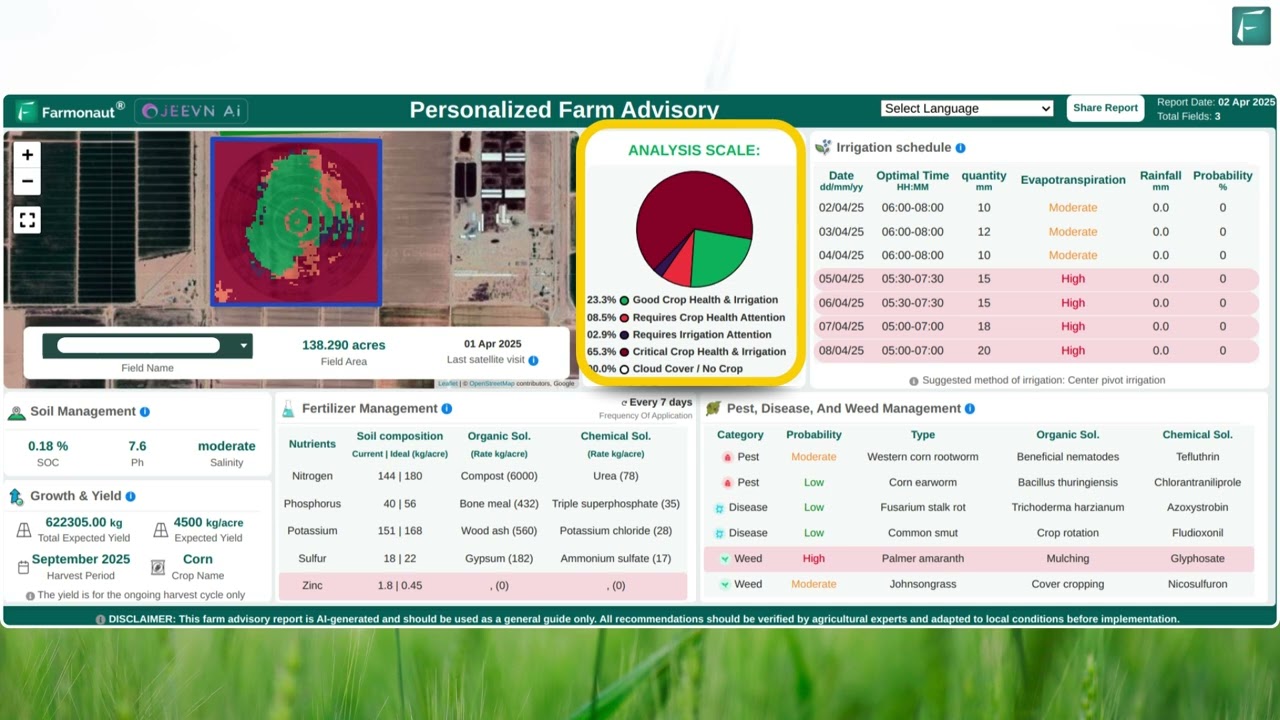
Our Jeevn AI Advisory System provides farmers with real-time weather intelligence, tailored agronomic advice, and digital alerts, helping them proactively manage risks and optimize every aspect of their operation. We also make these AI insights available through our API integration platform and offer detailed API developer documentation for seamless adoption.
AI & Machine Learning Benefits by 2025
- Labor cost reduction via automation of knowledge-intensive tasks.
- Timely planting and harvesting, ensuring maximum yield and food security.
- Minimized human error and real-time detection of weather-induced crop risks.

“Over 50% of new agricultural robots in 2025 will focus on automated harvesting and smart water management.”
3. Robotics & Automation: The New Workforce in Agriculture Technology Innovations
Robotics and automated machinery are no longer futuristic concepts; they’re among the fastest growing technology innovation in agriculture today. The global deployment of driverless tractors, robotic harvesters, and AI-powered drones is revolutionizing how food is produced and harvested.
Agricultural Robotics Advances for 2025
- Driverless tractors and machinery operate with GPS-guided precision, minimizing human error and reducing labor dependency—enabling 24/7 planting, spraying, and harvesting.
- Robotic fruit-pickers and harvesters use AI-enabled vision to gently handle delicate crops like strawberries, apples, and tomatoes, maintaining product quality during harvest.
- Spray drones and field robots deliver targeted applications of fertilizers and pesticides, reducing waste and ensuring maximum impact.
- Automated weeders scan and distinguish crops from weeds, applying removal only where necessary—drastically cutting chemical usage.

Robotics enhance food system productivity by enabling timely operations—crucial in an era where climatic shifts can narrow the optimal time window for planting and reaping. Automation also reduces labor shortages and empowers farms of every scale to remain competitive as global population growth intensifies food demand.
We provide remote-monitoring solutions that facilitate seamless fleet and resource management, so agricultural businesses can optimize everything from machinery usage to vehicle logistics using advanced satellite imagery and AI insights.
4. Biotechnology & Advanced Crop Genetic Solutions
One of the most promising innovation technology agriculture trends for 2025 is biotechnology—particularly gene editing and next-gen genetically modified crops (GMOs). The modern world demands crops able to withstand climate change, drought, and new pest threats, while also providing enhanced nutrition.
- CRISPR & gene editing: Rapid, precise modification of crops to enhance traits such as drought tolerance, pest resistance, and improved nutrient profiles—often in a fraction of the traditional breeding time.
- Disease-resistant crops: Reduced pesticide use and minimized yield loss, supporting sustainable practices and lowering costs.
- Biodiversity: Enables development of regionally adapted varieties, essential for resilient food systems as weather patterns become unpredictable.
Biotechnology also extends into microbial solutions that boost soil health, bio-fertilizers that lower synthetic input needs, and bio-pesticides that control pest occurrences while sparing beneficial insects and the environment.
Challenges & Opportunities
Acceptance and responsible regulation of GMO technologies remain crucial, but the opportunities for sustainable food systems, increased productivity, and climate adaptation are truly unprecedented.

5. Water Management and Smart Irrigation: Resilient Farming in a Changing Climate
Water scarcity remains one of the most formidable challenges for agriculture. In 2025, smart irrigation and sensor-guided water management are no longer optional—they are essential. Innovation and technology in agriculture have propelled these digital and automation solutions, ensuring every drop counts.
- Smart irrigation controllers: Utilize cloud-based platforms, field sensors, and weather forecasts to automate irrigation only when and where it’s needed—maximizing efficiency.
- Soil moisture monitoring: Sensors and satellite imagery provide farmers with precise, field-level moisture data, reducing input waste and helping adjust irrigation practices on-the-fly.
- Drones & satellite analysis: Identify dry spots and areas with excess moisture, enabling targeted watering and less resource waste—a major boost to sustainable agriculture.

Efficiency in water use does not only enhance yield and food security—it also reduces farmers’ reliance on unpredictable rain patterns. Innovative sensors and carbon footprinting tools further provide environmental impact tracking for sustainable practices.

6. Vertical Farming & Urban Controlled-Environment Systems
As urbanization accelerates, vertical farming and advanced controlled-environment agriculture (CEA) are reshaping how and where food is produced. By stacking crops in vertical systems and tightly controlling light, temperature, and nutrient delivery, growers can produce more food using dramatically less land and water.
- LED lighting and climate control: Ensure optimal growth conditions year-round, independent of external climate challenges.
- Hydroponic and aeroponic methods: Replace soil with mineral-rich water mist, accelerating growth while minimizing resource waste.
- Urban sourcing: Fresh produce can be grown much closer to consumers, reducing supply chain costs and carbon footprint.
This innovative approach not only boosts food security (especially in population-dense cities) but provides scalable, climate-resilient solutions that other methods cannot match.
7. Digital Platforms, Decision Tools & Farmonaut’s Satellite AI Solutions
The final key trend uniting all other innovation technology agriculture advances is the rise of digital platforms and decision-support tools. By leveraging AI, satellite imagery, and machine learning, these platforms connect farmers and agribusinesses with actionable insights, scalable monitoring, and seamless resource management.
What Digital Ag Platforms Provide in 2025
- Knowledge and advisory: Mobile and web apps deliver instant, region-specific guidance on pest outbreaks, irrigation scheduling, and best farming practices.
- Real-time alerts and monitoring: Satellite-powered dashboards provide actionable insights on soil health, crop growth, and weather risk.
- Market and price intelligence: Digital tools equip farmers to make better selling decisions and plan future crops accordingly.
- Resource and fleet management: Track vehicles, equipment, and logistical assets to reduce costs and enhance efficiency.
At Farmonaut, we empower users with a range of satellite, AI, and digital monitoring tools tailored for:
- Large Scale Farm Management—Optimize vast-acreage operations with real-time satellite data and AI forecasting, maximizing farm profitability and sustainability.
- Crop Loan and Insurance Verification—Our solutions help financial institutions and farmers authenticate crop conditions for credit, insurance, and disaster relief, reducing fraud and improving access to finance.
- Carbon Footprinting—Monitor environmental impact, track emissions, and enable adoption of climate-smart farming methods for a sustainable future.
We also offer affordable subscriptions for businesses and users through the platform below to ensure that advanced technology and innovation technology agriculture are accessible to everyone.
Trend Impact Summary Table: Innovation and Technology in Agriculture for 2025
| Technology Trend | Description | Estimated Adoption Rate (2025) | Impact on Yield/ Resource Efficiency | Key Benefits |
|---|---|---|---|---|
| Precision Agriculture | GPS-guided, data-driven input management using IoT and remote sensing | 65% | Up to 30% yield increase, 25% reduction in water/fertilizer use | Optimized input use, reduced waste, environmental protection, higher profits |
| Artificial Intelligence Platforms | AI/ML for forecasts, pest/disease detection, & crop decision support | 58% | 20-35% resource efficiency, timely actions improve yield/resilience | Labor cost reduction, fewer errors, risk mitigation, proactive actions |
| Robotics & Automation | Automated planting, harvesting, weed/pest management, using robots and drones | 53% | 25% labor savings, 15-20% faster operations, reduced waste | Addresses labor shortages, 24/7 operations, better crop quality |
| Biotechnology (GM & CRISPR Crops) | Genetically enhanced crops (drought, pest, nutrition), rapid breeding tools | 47% | 10-35% higher yield, lower pesticide/fertilizer use | Climate resilience, food security, sustainable farming, less environmental impact |
| Water Management Tech (Smart Irrigation) | Soil moisture, weather-based and sensor-guided irrigation systems | 60% | 30-50% improved water efficiency, stable yields in drought | Resource conservation, drought resilience, reduced costs |
| Vertical & Urban Farming Systems | Stacked indoor/urban farms using hydroponic/aeroponic systems | 26% | 10-20x yield per sq.m., up to 90% less water use | Year-round production, low land and water use, local sourcing |
| Digital Advisory & Satellite Platforms | AI/satellite data-driven, real-time digital advisors, mobile/web solutions | 70% | Informs every decision, reduces risks, integrates multiple technologies | Faster response, inclusive access for smallholders, better incomes |
Building a Sustainable Agricultural Future
The convergence of precision agriculture, AI, robotics, biotechnology, water management, and innovative digital systems is transforming agriculture into a truly data-driven, technology-led sector. These innovations support environmental sustainability by minimizing input waste, promoting biodiversity, and enabling regenerative agriculture practices.
Through tools like real-time carbon footprint monitoring and blockchain-based traceability, Farmonaut is empowering farms, agribusinesses, and financial institutions to not only thrive in today’s data-driven world, but also to lead on climate resilience and sustainable growth.
For businesses seeking scalable solutions beyond agriculture, Farmonaut’s modular subscriptions extend predictive, satellite-driven monitoring to mining, infrastructure, and even defence intelligence—helping optimize efficiency while reducing environmental impact across industries.
FAQ: Innovation and Technology in Agriculture for 2025
How do satellite and remote sensing technologies benefit farmers?
Satellite imagery and remote sensing provide highly detailed, field-level insights on soil health, crop stress, water moisture, and pest occurrences. This enables quick, precise interventions and improves resource use efficiency.
Why is precision agriculture essential for sustainable food systems?
Precision agriculture combines on-the-ground data, IoT, and digital decision-support to reduce input waste, enhance yields, and protect the environment. It is one of the most effective ways to address both growing food demand and environmental challenges.
What are some real-world examples of AI in agricultural decision making?
AI platforms can identify early stages of disease, predict pest outbreaks before they spread, provide field-specific advice on fertilization, and recommend optimal harvest dates to boost profits and minimize losses.
Can smallholder farmers in developing regions access these innovations?
Yes, digital mobile platforms (including affordable subscriptions from Farmonaut) are key to democratizing access to advanced technology—even in resource-limited areas. Real-time alerts, advisory, and local language support make these tools accessible and actionable for small and mid-scale farmers.
What role does Farmonaut play in innovation and technology in agriculture?
Farmonaut provides satellite-driven monitoring, AI-based advisory, blockchain-based traceability, and resource management solutions via mobile, web, and API. Our mission is to make cutting-edge, affordable insights available so that farmers, businesses, and governments can make informed and sustainable decisions.
Conclusion: The Future of Innovation Technology Agriculture in 2025 and Beyond
The agricultural world in 2025 is defined by innovation and technology. Precision farming powered by data, AI, robotics, and digital platforms is reshaping food systems to be more productive, resilient, and sustainable than ever before. Farmers and agri-businesses who embrace these agriculture technology innovations will enjoy enhanced yields, resource efficiency, and reduced environmental impact.
As farmers, researchers, and technology leaders, our collective challenge is to ensure these innovations reach every field, every farmer, and every decision-maker—empowering a food-secure and climate-resilient future.
Farmonaut Subscription and Contact
Discover accessible satellite-powered insights for your farm, business, or institution. Affordable subscriptions unlock full platform capabilities for monitoring, decision support, advisory, resource tracking, and environmental monitoring.

 Reddane Farming
 Esri North East Africa
 Farmer Amigo
 Cresol
 Atur Kuliner
 MDCV UK
 Zerella Group
 Etech Consulting Madagascar
 Vestlandsforsking
 Agritein
 Delicio
 WB Dev
 Sama Premium
 Prochecker
 Tres Valles
 LACOS Geoinformation
 Magrifly
 LatConnect 60
 Blickwinkel
 Agricultural Credit Policy Council
