

Eggplant pests · Insecticide guide
Best Insecticide for Eggplant: Organic Options Compared
Spinosad, pyrethrin and an azadirachtin-pyrethrin mix each cut flea beetles by about three quarters in 11 eggplant field trials, while neem alone cut them by about a third (Insects, 2020). Match the product to the pest, spray only above the threshold, and follow the label.
Key takeaways
- In 11 Maryland eggplant trials, spinosad gave 77.4% flea beetle control, pyrethrin 76.6%, azadirachtin plus pyrethrin 73.6% and neem alone 31.9% (Insects, 2020).
- On potato, spinosad cut Colorado potato beetle larvae by more than 95%, but the beetle has developed resistance to spinosad on organic farms after overuse.
- University of Wisconsin Extension thresholds for eggplant flea beetles: 2 per plant under 3 inches, 4 at 3-6 inches, 8 above 6 inches.
- For aphids and mites, UC IPM suggests water sprays and natural enemies first, then insecticidal soaps or oils.
- US organic rules (7 CFR 205.206) allow sprays only when cultural, physical and biological controls are not enough; always follow the product label and local rules.
In this article
- Best insecticide for eggplant at a glance
- How we compared eggplant insecticides
- Common eggplant pests and what each one needs
- Eggplant insecticide results from field trials
- When to spray: thresholds and scouting
- Non-spray controls to use first
- Organic rules, bees and resistance
- Is a spray worth it? Cost calculator
- Satellite monitoring for larger eggplant fields
- FAQ
The best insecticide for eggplant depends on the pest. In 11 field trials on eggplant in Maryland, spinosad, pyrethrin and an azadirachtin-plus-pyrethrin mix each cut flea beetle numbers by roughly three quarters, while a neem (azadirachtin) product alone cut them by about a third, according to a 2020 study in the journal Insects. Soaps and oils suit soft-bodied pests such as aphids, and none of these products should be the first step.
This guide compares the main eggplant insecticide options, organic and conventional-farm friendly, pest by pest. It gives spray thresholds from university extension services, the trial results as charts, and a calculator that tests whether a spray pays for itself on your own field. Always follow the product label and your local rules; labels and registrations differ between the US, Canada, the UK, the EU and Australia.
Best insecticide for eggplant at a glance
The table matches each common product type to the pests it handled best in published trials and extension advice. “Organic” means the active ingredient has products approved for organic use in the US; check the exact product for your certifier.
| Option | Best for | What the evidence shows | Watch out for |
|---|---|---|---|
| Spinosad | Flea beetles, Colorado potato beetle larvae, caterpillars | 77% flea beetle control on eggplant; over 95% control of potato beetle larvae on potato (Insects, 2020) | Resistance in potato beetles after overuse; weak on aphids and true bugs |
| Pyrethrin | Flea beetles, leafhoppers, aphids | 77% flea beetle control on eggplant; only 15% control of potato beetle larvae (Insects, 2020) | Short residual; broad-spectrum, so it also hits beneficial insects |
| Azadirachtin + pyrethrin | Mixed infestations of adults and larvae | 74% flea beetle control; 71% potato beetle larval control (Insects, 2020) | Mostly pyrethrin does the killing on adult beetles; azadirachtin mainly repels |
| Neem (azadirachtin alone) | Young larvae, beetle larvae | 32% flea beetle control; 63% potato beetle larval control (Insects, 2020) | Slow; works mainly when insects eat treated leaves |
| Kaolin clay | Flea beetles on young plants | 75% fewer flea beetles when mixed with a neem oil product in several trials (Insects, 2020) | Washes off; reapply after rain |
| Soaps and oils | Aphids, whiteflies, mites | Recommended by UC IPM for aphids when other methods fail | Contact only; do not spray drought-stressed plants |
Best for flea beetles on young plants
Spinosad or pyrethrin, with kaolin clay as a barrier on new transplants. These gave the highest flea beetle control in the eggplant trials.
Best for Colorado potato beetle larvae
Spinosad, used no more than needed and rotated with a different mode of action. Neem and the azadirachtin mix are the next options.
Best for aphids, whiteflies and mites
Insecticidal soap or horticultural oil, plus natural enemies. Spinosad does little against sucking insects.
How we compared eggplant insecticides
We used one main data set because it tests organic products side by side under field conditions. Researchers at the University of Maryland summarised 153 field trials run from 2002 to 2015. They tested four products: Entrust (spinosad), PyGanic (pyrethrins), Neemix (azadirachtin) and Azera (azadirachtin plus pyrethrins). Results are given as percent control: how much lower the pest count was than in untreated plots.
Three limits matter. First, the flea beetle trials were on eggplant, but the Colorado potato beetle trials were on potato, so we label those numbers by crop. Second, the plots were small, and the authors say mobile pests such as flea beetles moved between plots, so whole-field results may be better. Third, the authors treated 75% control or more as acceptable, and they note that older infestations sprayed late may be harder to control than in their trials.
We added thresholds and non-spray methods from extension services in Wisconsin, Maryland, California and Colorado, organic rules from US federal regulations, and greenhouse advice from the UK’s Royal Horticultural Society.
Chart
Average control across 12 hard-to-control pest groups
Percent reduction in pests, weighted by number of trials, 153 US field trials
Common eggplant pests and what each one needs
Name the pest before you choose a product. A spray that works well on beetles may do almost nothing to aphids.
Flea beetles
Flea beetles are tiny black or brown beetles that jump when disturbed. Adults chew small round holes in leaves, which gives a shot-hole look. University of Maryland Extension lists eggplant among the most susceptible hosts and notes that adults overwinter in plant debris, emerge in late April to early May, and build up after mild winters. Seedlings and new transplants suffer most.
Colorado potato beetle
This yellow-and-black striped beetle feeds on potato, eggplant and other nightshade crops. The Maryland study says it causes economic damage to eggplant when numbers are high and that older larvae do most of the leaf feeding. It also resists many insecticides, so rotation matters.
Eggplant lace bug
The eggplant lace bug (Gargaphia solani) feeds in groups on the underside of leaves. Leaves turn pale, yellow or bronze and carry small dark spots of excrement. Because it sucks sap, treat it like other sap feeders: soaps, oils and natural enemies first.
Aphids
Aphids are small, soft-bodied insects that cluster on new growth. The UC IPM aphid guide advises nonchemical methods first, such as a strong stream of water on sturdy plants, and insecticidal soaps or oils when numbers stay high.
Spider mites
Spider mites are tiny and cause stippled, scorched leaves. Colorado State University Extension says dry conditions favour them and that sprays which kill their natural predators are one reason outbreaks start.
Whiteflies and greenhouse pests
Under glass or in polytunnels, aphids, glasshouse whitefly and red spider mite are the usual problems. The RHS aubergine guide suggests misting leaves with tepid water to discourage red spider mite and improve fruiting.

▶ Lace bugs: how to spot them and organic ways to control them · 12:30
Eggplant insecticide results from field trials
In the 11 eggplant trials, flea beetles invaded soon after transplanting and averaged 6.2 beetles per plant in untreated plots, with up to 21 per plant. Each product was applied two or three times, a week apart.
Chart
Flea beetle control on eggplant by product
Percent reduction in flea beetles vs untreated plots, eggplant trials, standard rates (kaolin + neem oil tested in several of the 11 trials)
Spinosad, pyrethrin and the azadirachtin-pyrethrin mix all gave about 74% to 77% control. Neem alone gave 31.9%. The authors think pyrethrin did most of the killing in the mix, while azadirachtin mainly repelled the beetles. Kaolin clay with an oil cut flea beetle numbers by 75%.
Against Colorado potato beetle larvae on potato, spinosad at the standard rate cut larvae and leaf loss by more than 95%. Lower spinosad rates still gave 70% to 88% control. Pyrethrin was weak, with 14.7% larval control, which fits the beetle’s known resistance to pyrethroids.
Across all 12 pest groups in the study, weighted by number of trials, spinosad reduced pests by 73.9% on average, the azadirachtin-pyrethrin mix by 61.7%, pyrethrin by 48.6% and neem by 46.1%. These averages hide big differences between pests, so use the pest-by-pest numbers when you choose.
Chart
Colorado potato beetle: larvae killed vs leaf loss avoided
Percent reduction vs untreated plots, 14 potato trials, standard rates (spinosad: over 95% on both, not shown)
When to spray: thresholds and scouting
Scout at least twice a week from transplanting until plants are well grown. Check the underside of leaves, new growth and stems. Count pests on a set number of plants in several parts of the field, and write the numbers down.
For flea beetles, University of Wisconsin Extension gives thresholds for eggplant that rise as the plant grows, because bigger plants can lose more leaf area without yield loss.
| Plant height | Treat when flea beetles reach |
|---|---|
| Under 3 inches | 2 beetles per plant |
| 3 to 6 inches | 4 beetles per plant |
| Over 6 inches | 8 beetles per plant |
For Colorado potato beetle, the Maryland potato trials began spraying when the first generation passed 40 small larvae per 10 plants. That figure comes from potato trials; ask your local extension office for an eggplant threshold in your region.
Below the threshold, keep scouting and rely on the non-spray controls in the next section. Above it, choose the product that fits the pest, and spray the underside of leaves where many pests feed.
Non-spray controls to use first
US organic rules make sprays a later step. Under 7 CFR 205.206, a grower may apply a biological, botanical or approved synthetic substance only when crop rotation, sanitation, cultural practices, physical controls and natural enemies are not enough. Conventional growers also save money when these steps keep pests below the threshold.
- Row covers: Maryland Extension suggests covering young eggplant with a row cover over hoops, secured to the ground, so the fabric does not lie on the plants. Check under it often, and remove it if pests are trapped inside.
- Clean-up: remove crop debris after harvest, because flea beetle adults overwinter in it.
- Rotation: do not follow potato, tomato or pepper with eggplant in the same block, since they share pests.
- Kaolin clay: a white particle film that discourages feeding on young plants. It washes off and needs reapplying after rain.
- Natural enemies: lady beetles, lacewings, parasitic wasps and predatory mites all feed on eggplant pests. Flowering borders give them nectar and shelter.
- Water and humidity: a strong water spray knocks aphids off sturdy plants; in greenhouses, damping down the floor on hot days raises humidity against spider mites.
- Trap crops and companions: some growers plant a few early eggplants or other hosts at the field edge to draw beetles away from the main crop. Treat the trap rows, not the whole field.
▶ Spider mites and the predatory mite Phytoseiulus persimilis as a natural control · 13:25
Organic rules, bees and resistance
A product that is allowed in organic farming is not harmless. Read the label for the crop, the pest, the rate, the re-entry interval and the days to harvest. Rules differ by country, so check with your national regulator or certifier before you buy.
Protect pollinators. Eggplant flowers draw bees, and some organic products are toxic to them. The UC IPM table of insecticides used in eggplant gives spinosad a bee precaution rating of II and moderate toxicity to predatory mites and other predators. Spray in the evening when bees are not flying, and keep drift off flowering weeds.
Neem oil is less of a concern for bees. The National Pesticide Information Center says neem oil is practically non-toxic to bees, birds and mammals because insects must eat treated leaves to be affected, but it is slightly toxic to fish, and azadirachtin is moderately toxic to aquatic animals. Keep it out of ditches and ponds.
Rotate modes of action. The Insecticide Resistance Action Committee recommends sequences or rotations of products with different modes of action to slow resistance. The Maryland authors warn that Colorado potato beetle has developed high-level resistance to spinosad on organic potato farms after repeated overuse. On eggplant, do not rely on spinosad alone all season.
Older advice sometimes lists rotenone as a botanical spray. Do not use any product unless it is registered for eggplant where you farm.
Is a spray worth it? Cost calculator
A spray pays only when the crop it saves is worth more than the product, labour and machine time. Enter your own numbers below. The control rate can come from the trial results above, but expect less if you spray late or the pest is resistant.
Try the numbers for your own farm below.
Calculator
Will an eggplant spray pay for itself?
Enter your own field, price and cost numbers to compare crop saved with spray cost.
- Crop value saved per acre (US$): $720
- Spray cost per acre (US$): $720
- Control needed to break even: 75.0 %
Example values only, set near break-even; they are not benchmarks or forecasts. Price inputs are examples, use today’s price. Control rates in published trials ranged from about 15% to over 95% depending on product and pest (Dively et al., Insects, 2020).
Satellite monitoring for larger eggplant fields
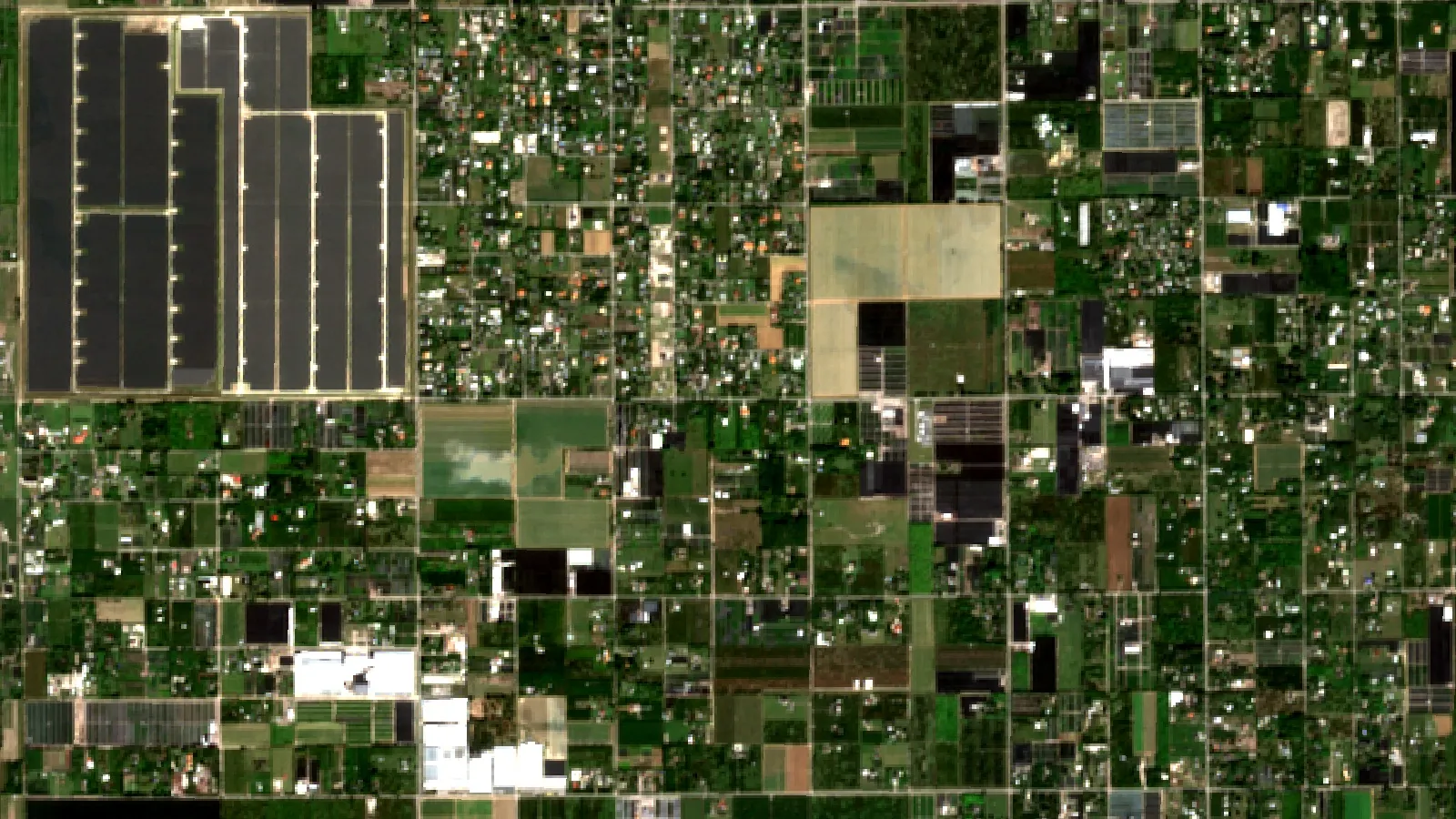
On a few acres, walking the rows is the best way to find pests. On larger blocks, satellite crop-health maps can show where plant vigour drops, so scouts know which patches to check first. Satellites show stress, not the insect, so a field visit still confirms the cause.
The Farmonaut Satellite + AI Farm Monitoring System maps vegetation indices for each field from regular satellite passes. Teams that run their own scouting software can pull the same data through the satellite and weather API documentation.
Keep records either way. Note the date, pest counts, product, rate and weather for every spray, and compare counts a week later. After two or three seasons, these records tell you which products work on your farm and which do not.
Related pages on our site: organic pest control tips · organic pesticides for farming · IPM strategies for insect pests · crop protection ingredients · agricultural extension services · farm pest infestation tips
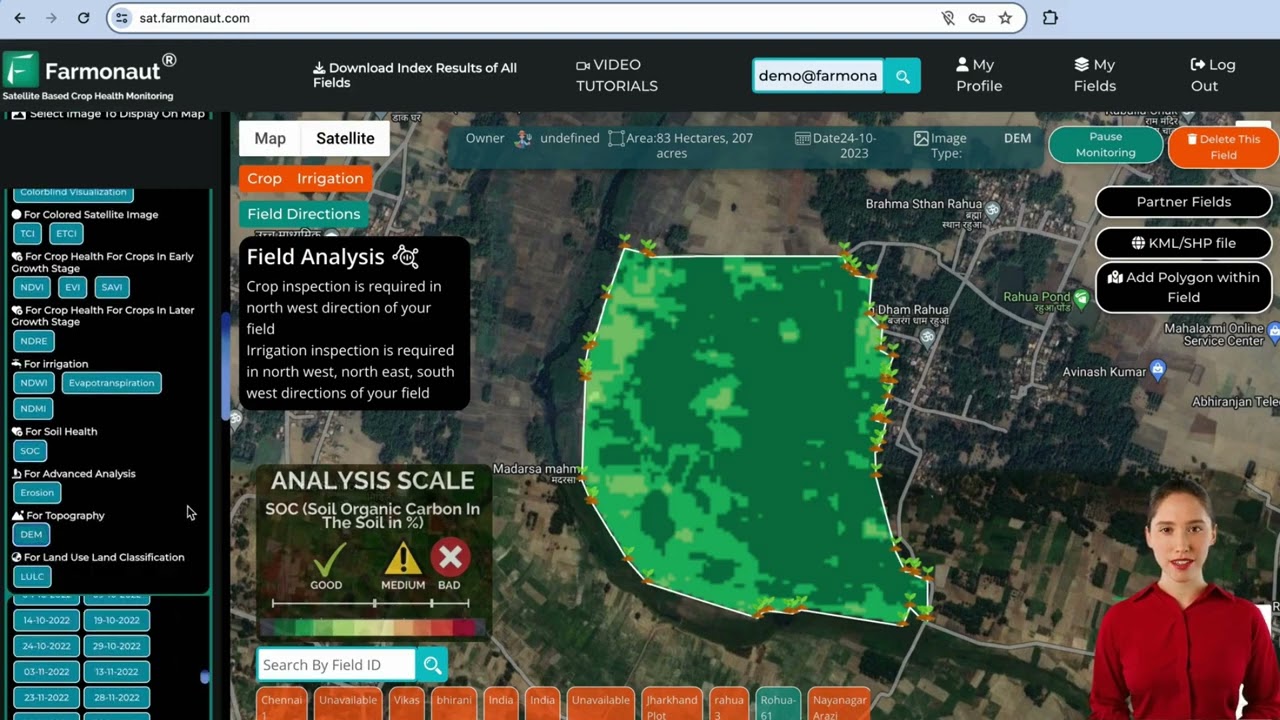
▶ Walk-through of the Farmonaut web app for satellite crop monitoring · 8:02
FAQ
What is the best insecticide for eggplant flea beetles?
In 11 eggplant trials in Maryland, spinosad (77.4%), pyrethrin (76.6%) and an azadirachtin-pyrethrin mix (73.6%) gave the best flea beetle control. Neem alone gave 31.9%. Row covers and kaolin clay on young plants reduce the need to spray. Follow the product label and local rules.
Does neem oil work on eggplant pests?
Neem works best on young larvae that eat treated leaves. In the Maryland trials it gave 63.3% control of Colorado potato beetle larvae on potato but only 31.9% control of adult flea beetles on eggplant. It is a weak choice for adult beetles.
What should I spray on eggplant for aphids?
Try a strong water spray and natural enemies first. If aphids stay high, UC IPM suggests insecticidal soaps or oils, sprayed thoroughly because they work only on contact. Do not spray plants under drought stress.
What is eating holes in my eggplant leaves?
Many small round holes on young plants usually point to flea beetles. Large ragged holes and striped beetles or soft orange larvae point to Colorado potato beetle. Pale, bronzed leaves with insects on the underside suggest lace bugs or spider mites.
How close to harvest can I spray eggplant?
It depends on the product. Each label gives a pre-harvest interval in days, and some are as short as zero days while others are longer. Check the label of the exact product, and ask your local extension office if you are unsure.
Farmonaut crop monitoring
Know which part of the field to scout first
Satellite crop-health maps show where plant vigour drops so you can check those rows for pests sooner.




Sources
- Dively, Patton, Barranco, Kulhanek, Comparative efficacy of common active ingredients in organic insecticides, Insects (2020): pmc.ncbi.nlm.nih.gov
- University of Wisconsin Extension, Flea beetle: hort.extension.wisc.edu
- University of Maryland Extension, Flea beetles on vegetables (2023): extension.umd.edu
- UC IPM, Aphids pest note: ipm.ucanr.edu
- UC IPM, Relative toxicities of insecticides used in eggplants to natural enemies and honey bees: ipm.ucanr.edu
- UC IPM, Eggplant pest management guidelines: ipm.ucanr.edu
- Colorado State University Extension, Spider mites: extension.colostate.edu
- Royal Horticultural Society, How to grow aubergines: rhs.org.uk
- Cornell LII, 7 CFR 205.206 Crop pest, weed and disease management practice standard: law.cornell.edu
- National Pesticide Information Center, Neem oil general fact sheet: npic.orst.edu
- Insecticide Resistance Action Committee, Mode of action classification: irac-online.org
Discussion
Questions, corrections or field experience? Share them below. First-time comments are reviewed before they appear, and your email is never published.
No comments yet. Be the first to add a question or your experience.

 Bharat Krushi Seva
 Geno
 Hayleys Agriculture
 Linx Agritech
 Adinet
 Save Your Soils
 Grandstream Algérie
 XOS Realty
 Geospatial Lab Africa
 Agro La Gándara
 HIPSAC
 ZOL Zimbabwe
 Juligerm
 AdBio
 MISE Maroc
 NWNS

 Licence holder · Niger · Gold
 Client · Somalia · Gold
 Client & affiliate partner · Ghana · Gold










