

Reviewed September 2026 against USDA, PS Market Research, and IMARC Group.
Try it: Run your own numbers →
The US precision agriculture technologies market was valued at $2.1 billion in 2024 and is projected to reach $4.3 billion by 2032, a 9.3% compound annual growth rate, according to PS Market Research. Mexico’s precision farming market is smaller but growing faster: $738.2 million in 2025, headed toward $1,335.2 million by 2030 at an 8.8% CAGR, per IMARC Group. Globally, the broader smart agriculture market — precision equipment, farm software, sensors, and advisory services combined — was worth $16.2 billion in 2023 and is forecast to hit $25.4 billion by 2028.
Those three numbers answer the market-size question directly. What they don’t answer — and what most articles skip — is what “smart agriculture” actually buys a working farm, in USDA-measured yield and profit terms, and what portion of that spend counts toward climate-resilience funding under current USDA programs. That’s the rest of this article.



Summary: The Smart Agriculture Market Right Now
“Smart agriculture” and “precision agriculture” are used almost interchangeably in the market research that quantifies this sector — GPS guidance, yield monitors, variable-rate input controllers, soil sensors, satellite and drone imagery, and the farm management software that ties them together. In the United States, USDA’s 2023 survey of large-scale crop farms found 70% already using GPS guidance and autosteering, and 68% using yield monitors and soil mapping tools — meaning the “market” section of this article is describing technology that has already crossed the majority-adoption line on large operations, not an emerging trend. What’s still growing is spend: deeper software integration, AI-based advisory, and the climate-resilience practices — cover cropping, reduced tillage, rotational grazing — that USDA is now funding directly through the Inflation Reduction Act. New agriculture career paths are opening up around exactly this shift, from agronomists who specialize in climate-adaptive cropping to the data analysts who run the sensor networks.
US Smart Agriculture Market: Size, Growth, Adoption
PS Market Research puts the US precision agriculture technologies market at $2.1 billion in 2024, projecting growth to $4.3 billion by 2032 — a 9.3% CAGR across 2025–2032. That’s roughly double in eight years, driven less by new adopters (adoption on large farms is already high) and more by farms replacing single-purpose tools with integrated platforms, and by mid-size operations catching up to where large operations already are.
The adoption numbers behind that spend, from USDA’s 2023 large-farm technology survey:
- 70% of large-scale crop farms use GPS guidance and autosteering systems (USDA, 2023)
- 68% of large-scale farms use yield monitors and soil mapping tools (USDA, 2023)
Those figures are specific to large-scale operations — USDA’s survey doesn’t break adoption out by state or region in the published results, so a Nebraska corn operation and a California specialty-crop operation are both folded into the same national number. If you need adoption data segmented more finely than “large-scale farms,” USDA’s National Agricultural Statistics Service (NASS) publishes the underlying Agricultural Resource Management Survey (ARMS) data, which is the source to query directly for regional or commodity-specific cuts.
Federal funding is a second growth driver, separate from private technology spend. USDA committed $19.5 billion over five years (2023–2028) through the Inflation Reduction Act to NRCS climate-smart practices — cost-share and technical assistance for things like cover crops, nutrient management, and conservation tillage. That funding runs through 2028, so a farm evaluating precision or climate-smart investment now should check current NRCS program status and local funding pool availability before assuming the same terms apply years out.

Mexico Smart Agriculture Market: Size and Growth Drivers
Mexico’s precision farming market was valued at $738.2 million in 2025 and is projected to reach $1,335.2 million by 2030, an 8.8% CAGR, according to IMARC Group. That’s a smaller absolute market than the US but a faster growth rate than the global smart agriculture average (9.4% for 2023–2028 globally, per the same research category) once you isolate the fastest-growing segment within it: IMARC identifies a high-growth segment inside Mexico’s precision agriculture market expanding at 14.47% CAGR over the same 2025–2030 window — meaning growth inside the market is uneven, concentrated in specific technology categories rather than spread evenly across all precision tools.
IMARC’s Mexico report doesn’t break adoption down to farm-level percentages the way USDA’s does for the US, so there’s no equivalent “68% of large farms use X” figure for Mexico to cite here — that data gap is real, not an oversight. What is published is market value and the growth-rate spread between the overall market and its fastest segment, which is the more useful figure for anyone sizing an investment or partnership decision in the Mexican market: it tells you where the growth is concentrated, not just that growth is happening.
Mexico’s precision agriculture and Inflation Reduction Act (US-specific) don’t overlap — Mexico’s growth is running on private investment and technology cost declines rather than an equivalent federal climate-smart cost-share program of that scale. Anyone tracking policy-driven funding for Mexican farms should watch Mexico’s national agricultural agency programs directly, since the US IRA figures cited elsewhere in this article do not apply there.
Climate-Resilient Agriculture: What the Market Data Doesn’t Cover
There is no published market-size figure specifically for “climate-resilient agriculture” as its own category. Market research treats climate-resilient and climate-smart practices — cover cropping, rotational grazing, conservation tillage, nutrient timing — as a subset of the broader precision and smart agriculture markets already covered above, not as a separately sized market. If a figure claiming to size “the climate-resilient agriculture market” shows up elsewhere, treat it skeptically; it’s very likely a repackaging of the smart or precision agriculture numbers rather than an independently measured category.
What is measurable and specific: USDA’s $19.5 billion, five-year (2023–2028) NRCS commitment funds exactly these practices for US producers, and that’s the most concrete dollar figure tied to climate resilience specifically, as opposed to precision technology generally. For a farm trying to size its own climate-resilience opportunity, the practical path is to work backward from NRCS’s current Environmental Quality Incentives Program (EQIP) and Conservation Stewardship Program (CSP) cost-share rates for your state and practice type, since national market-size figures won’t translate to a specific operation’s numbers.
This is also where the language gets confused across the industry: “smart agriculture,” “precision agriculture,” and “climate-smart agriculture” are frequently used to mean overlapping but not identical things. Precision agriculture is the technology (GPS, sensors, variable-rate application). Climate-smart or climate-resilient agriculture is the outcome-oriented practice set (reduced emissions, better resilience to drought and flood, improved soil carbon). Smart agriculture is the umbrella term research firms use for the market that sells both. Learn the distinction and you’ll read market reports more accurately than most people writing about them — for a fuller breakdown of the practice side specifically, see the 10 key objectives of climate-smart agriculture.

What Precision and Climate-Smart Practices Actually Return
Market size tells you the industry is growing. It doesn’t tell you what a farm gets back. The American Farm Bureau’s 2023 analysis, prepared with USDA data, quantifies two specific outcomes from precision nitrogen application:
- A 2 to 3 bushel-per-acre corn yield increase from more precisely targeted nitrogen application, rather than blanket-rate application (USDA / American Farm Bureau, 2023)
- A $12-per-acre profitability increase from a 10 lb-per-acre reduction in nitrogen application enabled by precision targeting (USDA, 2023)
Those are the two hardest numbers in the precision-agriculture ROI conversation, and they’re worth sitting with: the profitability gain comes from applying less nitrogen more precisely, not from applying more of anything. That’s the mechanism climate-resilience funding and precision-technology spend actually share — both are paying for measurement and targeting, not for more inputs.
Cost figures for individual technologies — what a drone system, a soil moisture sensor network, or a variable-rate controller actually costs to install on a given acreage, set against these yield and profit numbers — aren’t available in a standardized, cross-technology comparison in current published research. That’s a genuine gap: get an installed-cost quote from your equipment dealer or precision-ag service provider and run it against the $12/acre and 2–3 bu/acre figures above for your own acreage; the calculator further down this page does exactly that math for the nitrogen-reduction case.
Technology Driving the Market
The technology categories behind both the US and Mexico numbers above:
- Remote sensing and satellite monitoring: real-time crop health, pest, and soil moisture tracking without a field visit — see the Farmonaut web system walkthrough for how this looks in practice.
- GPS guidance and autosteering: the single most widely adopted category, at 70% of large US farms per USDA’s 2023 survey.
- Yield monitors and soil mapping: at 68% adoption on large US farms, this is the data layer that makes variable-rate application possible.
- AI-based advisory: predictive models for disease, pest pressure, and yield, layered on top of sensor and satellite data.
- Traceability and supply-chain verification: increasingly bundled into farm management software rather than sold separately — see Farmonaut’s product traceability tools.
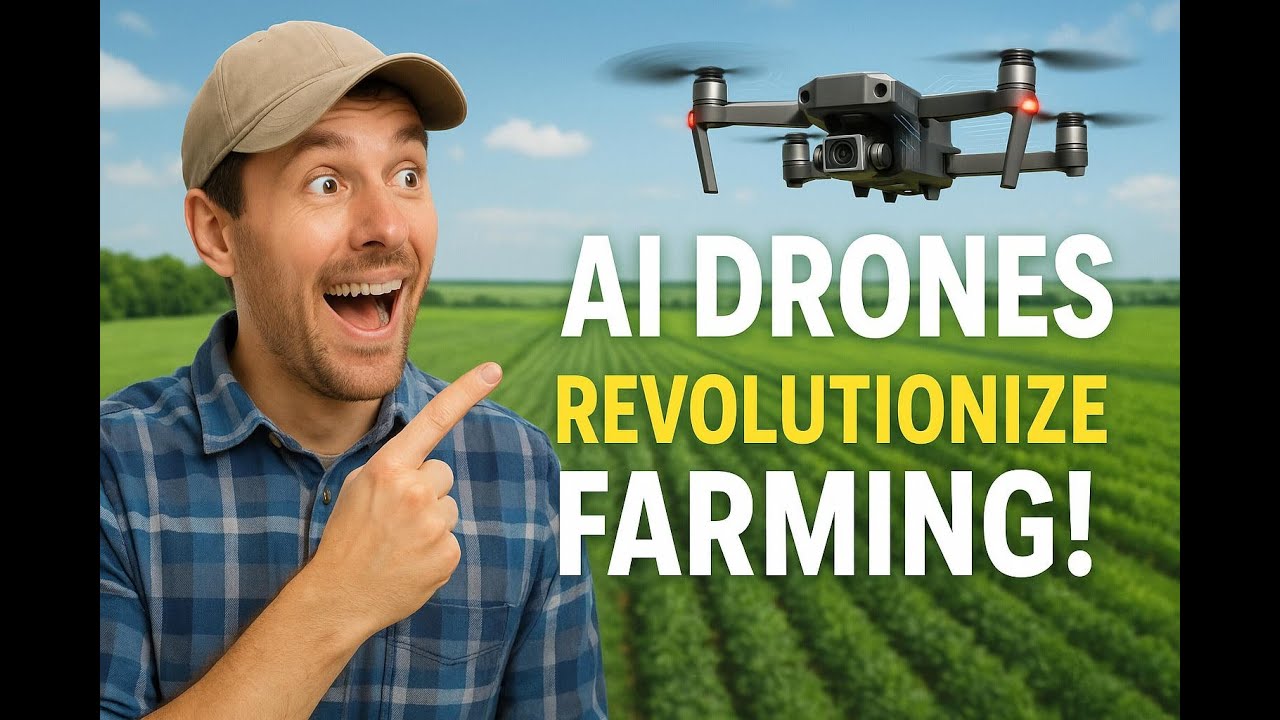
Drones are frequently cited as the fastest-growing single hardware category in precision agriculture coverage — see this explainer on AI drones in modern farm operations — though the market research cited in this article measures precision agriculture as a whole rather than breaking drones out as their own line item.

Jobs the Smart Agriculture Market Is Creating
A market growing from $2.1 billion to $4.3 billion in the US alone, and $16.2 billion to $25.4 billion globally, is hiring against that growth. The roles clustering around it:
- Agritech specialists — deploying and maintaining precision tools, sensor networks, and drone fleets
- Climate agronomists — advising on climate-adaptive crop selection and soil management; see agricultural scientist career roles for how this specialization is evolving
- Farm data analysts — turning satellite, weather, and yield data into planting and input decisions
- Sustainability consultants — helping operations meet conservation program requirements and buyer ESG standards
- Supply chain and traceability managers — verifying product provenance for regulatory and retail buyers via traceability platforms
These roles sit inside the broader agricultural cycle — from crop selection through harvest and post-harvest tracking — rather than as a separate track bolted onto conventional farming. Financing is part of the same shift: as precision and climate-smart adoption grows, so does demand for satellite-verified crop loans and parametric insurance that underwrite risk using the same monitoring data these roles produce.


Calculator: Nitrogen Reduction Savings from Precision Application
Use USDA’s measured outcome — a $12/acre profitability gain from a 10 lb/acre nitrogen reduction — to estimate what precision nitrogen targeting could be worth on your own acreage.
Run your own numbers
Assumptions: scales USDA/American Farm Bureau’s 2023 measured $12/acre profit gain per 10 lb/acre nitrogen reduction, and the separately reported 2–3 bushel/acre yield gain, linearly to your entered acreage and nitrogen reduction. Excludes equipment, sensor, and software installation costs, which are not standardized in published research — get a quote from your provider and subtract it from the estimate above. Not a substitute for a farm-specific agronomic plan.
Learning Resources: PPT, PDF, and API Access
For training and internal presentations, a precision and smart farming tools PowerPoint deck covers the technology categories above in slide form. For developers and enterprise users building on top of satellite and weather data directly, Farmonaut provides API access and full developer documentation. For fleet and large-acreage operations managing multiple sites or crews, the Agro Admin App centralizes monitoring and task assignment.
For farm-scale figures beyond what’s cited in this article — regional adoption rates, state-level precision technology use, or updated national totals — NASS’s Agricultural Resource Management Survey is the primary US source to query directly, since USDA’s published summaries don’t break every figure out by geography.

Where Farmonaut Fits In
Farmonaut’s tools sit inside the categories quantified above rather than outside them: satellite-based crop and soil monitoring maps to the remote-sensing category; the Jeevn AI advisory system maps to the AI-advisory category; and carbon footprinting and product traceability map to the regenerative-practice and supply-chain-verification categories, respectively. None of that changes the market numbers above — they’re independent research figures — but it’s worth naming plainly what a farm evaluating this market can actually try:
- Real-time crop and soil monitoring via satellite imagery, without new hardware to install in the field
- Jeevn AI advisory for planting, irrigation timing, and climate-risk flagging
- Carbon footprint tracking for operations pursuing NRCS climate-smart program eligibility or buyer ESG reporting
- Satellite-verified data feeding into crop loan and insurance applications
- Subscription-based pricing, priced to be accessible below the installed-hardware cost of comparable precision systems
Try Farmonaut’s web app or download the mobile apps above to see how these tools apply to your own acreage.
Market Comparison Table
| Market | Size (vintage) | Projected Size | CAGR | Source |
|---|---|---|---|---|
| US precision agriculture technologies | $2.1 billion (2024) | $4.3 billion (2032) | 9.3% (2025–2032) | PS Market Research |
| Mexico precision farming | $738.2 million (2025) | $1,335.2 million (2030) | 8.8% (2025–2030) | IMARC Group |
| Mexico high-growth precision segment | — (2025) | — (2030) | 14.47% (2025–2030) | IMARC Group |
| Global smart agriculture | $16.2 billion (2023) | $25.4 billion (2028) | 9.4% (2023–2028) | IMARC Group |
Market figures are refreshed by their respective research firms on their own schedules — IMARC and PS Market Research typically republish these categories annually, with Mexico’s report commonly updated in Q1/Q2 of each calendar year. Check the linked reports directly for the current figures rather than assuming these hold beyond their stated vintage.
FAQ
How big is the smart agriculture market?
Globally, $16.2 billion in 2023, projected to reach $25.4 billion by 2028 (9.4% CAGR), per IMARC Group and related market research. In the US specifically, the precision agriculture technologies segment was $2.1 billion in 2024, headed toward $4.3 billion by 2032. These are the most recent published figures as of this review; check the linked source reports for any update issued after this article’s review date above.
How big is Mexico’s smart agriculture market?
Mexico’s precision farming market was valued at $738.2 million in 2025 and is projected to reach $1,335.2 million by 2030, an 8.8% CAGR, with one segment inside that market growing at 14.47% over the same period, per IMARC Group.
Is there a separate market size for climate-resilient agriculture?
No standalone market forecast for “climate-resilient agriculture” as its own category was found in current research; it’s tracked as a subset of the smart and precision agriculture markets above. The clearest dedicated dollar figure for climate resilience specifically is USDA’s $19.5 billion, five-year (2023–2028) NRCS commitment for climate-smart practices under the Inflation Reduction Act.
What return do farms actually see from precision agriculture?
USDA-backed analysis from the American Farm Bureau found a 2–3 bushel/acre corn yield increase and a $12/acre profitability increase from a 10 lb/acre reduction in nitrogen application enabled by precision targeting (2023 data).
What share of US farms use precision technology?
USDA’s 2023 survey found 70% of large-scale crop farms use GPS guidance and autosteering, and 68% use yield monitors and soil mapping tools. These figures apply specifically to large-scale operations; USDA/NASS’s ARMS data is the source to query for adoption broken out by farm size, region, or commodity.
What jobs is this market creating?
Agritech specialists, climate agronomists, farm data analysts, sustainability consultants, and supply-chain traceability managers, spanning agritech startups, government agencies, and large agribusinesses. See agriculture career paths and agricultural scientist roles for specifics.
How do I access Farmonaut’s tools?
Through the web app, or the Android and iOS apps linked above. Developers can use the API with the accompanying developer docs.





Further reading:
Conclusion: Tracking the Market Going Forward
The numbers that matter here are specific and sourced: $2.1 billion in US precision agriculture spend in 2024 growing toward $4.3 billion by 2032, $738.2 million in Mexico in 2025 growing toward $1,335.2 million by 2030, and a $19.5 billion USDA commitment to climate-smart practices running through 2028. None of these are static — each research firm listed in the comparison table above republishes on its own cycle, generally annually — so the durable move is to bookmark the source reports linked in this article, not this article’s numbers.
The more useful habit for evaluating any of this on your own operation is the method, not the snapshot: separate “precision technology” (the hardware and software layer) from “climate-smart practice” (the outcome-oriented farming decisions) when you read a market claim, check whether a cited figure applies to large farms or all farms, and run any ROI claim through your own acreage and input costs before acting on it — the calculator above is one way to start.

 Godrej Agrovet
 Hayleys Agriculture
 Linx Agritech
 Adinet
 Save Your Soils
 GalaxEye Space
 Grandstream Algérie
 XOS Realty
 Geospatial Lab Africa
 Agro La Gándara
 HIPSAC
 ZOL Zimbabwe
 Juligerm
 AdBio
AdBio MISE Maroc
 NWNS
NWNS Red August Group
 Farm Inc
 WeMe Global
 Agrotoken
 Blue BearX
 Insignito
 DnCubed
 Indosistim Teknologi
 Liquify Digital
 CU Foods
 BeyondTech Global
 Rouge VC
 AgroRisk
 Oath Inc
 Esri North East Africa
 MDCV UK
 Etech Consulting Madagascar
 Vestlandsforsking
 WB Dev
 Sama Premium
 Tres Valles
 Blickwinkel
 Agricultural Credit Policy Council
 eKGIS
eKGIS Mostas Tech
 Andex
Andex Deluxe Conseil
 WICO
WICO Chimera Innovation
 SkyHarvest
 Teledarbas
 Exurbia Geospatial
 FieldZero
