

Smart Farming for Improving Agricultural Management 2025: How Advanced Technologies are Revolutionizing Crop, Forest, and Small Farm Productivity
“By 2025, smart farming technologies are projected to increase global crop yields by up to 25%.”
“Over 60% of small farms are expected to adopt precision agriculture tools for improved management by 2025.”
Smart Farming for Improving Agricultural Management: The 2025 Transformation
Smart farming for improving agricultural management is at the heart of the global push to produce more food sustainably and efficiently as the population continues to grow. By 2025, the pressure to maximize productivity while minimizing environmental impact has never been greater. This is driving a technological transformation across farms—big and small—in every region.
Smart farming, also known as precision agriculture, leverages advanced technologies to optimize farm management in agriculture. When we talk about smart farm management, we’re referring to the integrated use of data, remote and in-field sensors, drones, AI, Internet of Things (IoT), and satellite imagery. These technologies are making farm management more precise, affordable, and scalable, directly boosting yields, improving resource use, and ensuring environmental sustainability.
In this comprehensive guide, we’ll explore how smart farming for improving agricultural management is transforming every aspect of agricultural operations in 2025—from planting and irrigation schedules to improved forest management, improved small farm management, and the role of advanced analytics and grants. We’ll also highlight how Farmonaut is empowering farmers, organizations, and governments with accessible and actionable satellite-driven insights for smarter farming management, environmental monitoring, and resource optimization.

The State of Smart Farming in 2025: Meeting the Pressures of a Growing Population
The world’s population continues to grow, urbanizing at unprecedented rates and placing greater pressure on agricultural production systems. The need for higher productivity with fewer resources—water, land, fertilizers, and labor—has intensified. Farms are also expected to minimize their environmental impact, align with climate goals, and deliver food security across regions.
In 2025, smart farming stands at the forefront of this agricultural transformation. Enabled by innovative technologies and data-driven insights, these systems are revolutionizing how we monitor soil health, manage crop schedules, respond to pest threats, optimize irrigation, and conserve resources in both crop production and improved forest management.
Whether applied on large-scale commercial farms or smallholder holdings, precision technologies and management approaches are accessible and increasingly tailored to local and regional needs. This means that more small farms—often with limited capital and restricted access to technology—can now benefit from digital tools, satellites, mobile applications, IoT sensors, and grants aimed at improving farming productivity.
Core Technologies Revolutionizing Smart Farming Management in Agriculture
The core of smart farming management in agriculture is precise data collection and targeted decision-making. The following sections detail how specific technologies—like IoT sensors, drones, satellite imagery, advanced analytic platforms, and artificial intelligence—work together to optimize every component of farm management, crop productivity, and environmental protection.
Comparison Table: Key Smart Farming Technologies and Their Impact
| Technology | Core Functionality | Estimated Impact on Productivity (%) | Estimated Impact on Sustainability (%) | Relevance for Small Farms |
|---|---|---|---|---|
| Drones | Crop scouting, pest detection, aerial mapping, precise spraying | +10-20% | +15-25% | Medium |
| IoT Sensors | Soil moisture, nutrient, and environmental condition monitoring | +15-30% | +20-30% | High |
| Satellite Imagery | Large-area monitoring, crop health assessment, water stress, forest assessment | +10-25% | +25-40% | High |
| Farm Management Software | Data analytics, scheduling, input tracking, yield forecasting | +10-18% | +12-20% | High |
| Artificial Intelligence (AI) | Predictive models, automated decision-making, anomaly detection | +12-25% | +15-30% | Medium |
| Blockchain Traceability | Transaction transparency, input provenance, fraud reduction | +5-10% | +10-18% | Medium |
These newest technologies synergistically address productivity bottlenecks and sustainability goals, enabling farms and forest managers of all sizes and locations to optimize operations, especially as we move further into 2025 and beyond.

Enhancing Small Farm Management and Productivity With Precision Technologies
Small farm management is rapidly evolving, making it crucial to adopt scalable and affordable smart technologies in 2025. Smallholder farms, which form the backbone of food production in many regions, often face unique challenges including limited capital, market information, and technology access. Traditionally, precision agriculture was out of reach for these operators due to high entry costs and technical complexity.
Now, the adoption of tools like low-cost IoT sensors for microclimate monitoring, mobile apps providing on-the-spot pest or irrigation insights, and cloud-based platforms for collaborative information sharing, is making improved small farm management a reality. Smart farming for improving agricultural management on small farms doesn’t mean adding unnecessary complexity; rather, it introduces just the right digital tools that are scaled to the farm’s size and needs.
- Mobile Applications: Provide real-time field scouting, pest detection, and recommendations in regional languages.
- Sensor Networks: Track soil moisture, nutrient levels, and temperature for better irrigation schedules and targeted fertilizer applications.
- Collaborative Platforms: Enable shared resources and data across smallholder farmers, improving negotiating power and knowledge.
- Access to Grants and Training: Governments and organizations support small farm management through improving farming productivity grants, training, and the distribution of affordable digital tools.
Thanks to these advancements, small farm productivity is on the rise—boosting rural incomes, improving local food security, and building resilience against climate volatility. Smart cooperatives and data-sharing networks are democratizing access to innovation even further.
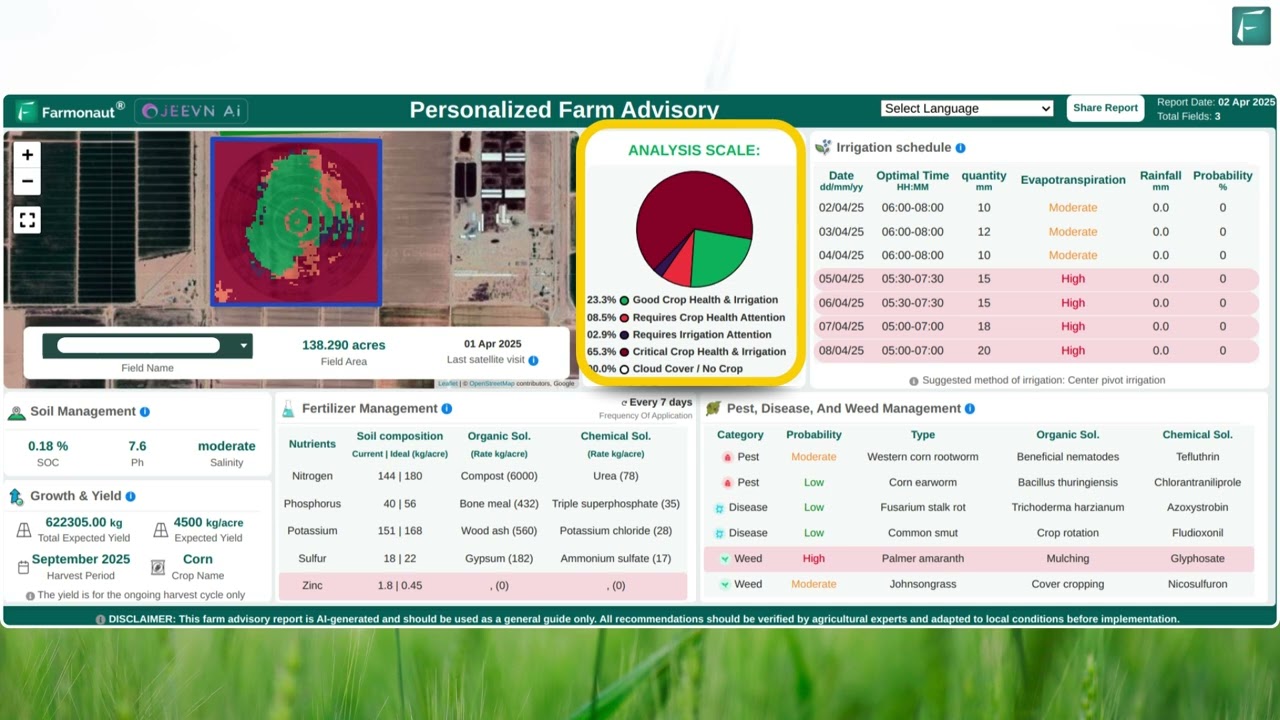
For a high-impact approach to digital crop and resource management that benefits small and large operators alike, we recommend exploring Farmonaut’s Agro Admin App—a platform for large scale farm management—to remotely monitor field health, schedule operations, and optimize resources.
To support equipment and agricultural logistics, Farmonaut’s Fleet Management Tools are available for tracking vehicles and machinery, reducing operational costs, and enhancing safety and profitability across farms.
Smart Farming and Improved Forest Management: Sustainability Beyond Farmland
Smart farming doesn’t stop at the farm gate. Improved forest management is an integral part of sustainable land use, biodiversity conservation, and climate mitigation in 2025. The application of remote sensing technologies, satellite imagery, AI-based analysis, and real-time data is allowing forest managers to:
- Monitor Forest Health: Identify drought, pest outbreaks, and disease much earlier than conventional methods.
- Detect Illegal Activities: Drones and satellites now offer continuous surveillance, identifying illegal logging or unplanned fires in remote areas.
- Optimize Carbon Sequestration: By analyzing forest stand growth and thinning schedules through AI models, managers can balance timber production with carbon capture—essential for carbon footprinting and environmental reporting.
- Guide Sustainable Harvesting: Data-driven models simulate growth, predict harvest windows, and support replanting and conservation goals.
The global drive for sustainability and conservation is increasingly reliant on precise forest data. In response, Farmonaut’s Crop, Plantation & Forest Advisory Services offer remote crop and forest monitoring solutions, providing tailored, AI-powered guidance for forest managers and policymakers.

The Role of Data Analytics, Artificial Intelligence & IoT in Modern Farm Management
At the core of precision agriculture is the seamless integration of data analytics, IoT, and AI technologies into every farming process. Here’s how these pillars of smart farming for improving agricultural management come together:
- IoT Sensors: Deploy soil and microclimate sensors in fields and greenhouses to collect precise, real-time data on moisture, temperature, nutrient levels, and even pest presence.
- Data Analytics Platforms: Aggregate and analyze sensor, drone, and satellite data to reveal actionable trends in soil health, irrigation effectiveness, pest outbreaks, and optimize fertilization schedules.
Farmonaut provides an API for integrating satellite insights and weather analytics into existing farm management systems. Learn more or check the API developer docs. - Artificial Intelligence Models: Use machine learning and predictive models to forecast yields, pest risks, water stress, and make decisions on the right timing for planting, irrigation, and harvest.
- Remote Sensing and Imagery: Satellites provide cost-effective, large-scale monitoring of vegetation health (via NDVI), crop growth stages, and field anomalies, making even regional monitoring affordable and practical—without the need for expensive hardware installations.





Targeted Approaches: Applying Precisely What’s Needed for Sustainable Yields
The precision approach enabled by modern smart farming platforms is instrumental in achieving higher productivity and sustainability:
- Variable Rate Application: By analyzing data at a granular level, farm management software enables farmers to apply water, fertilizers, and pesticides only where needed. This targeted application reduces waste, prevents environmental contamination, and cuts down costs.
- Optimized Planting Schedules: AI-powered decision-support models evaluate soil moisture, temperature, and historical yield data to inform optimal planting windows—crucial in the context of weather volatility and climate change.
- Automated Irrigation Systems: Smart sensors and software platforms automate irrigation, reducing water use and ensuring each plant receives the exact amount needed to thrive.
- Enhanced Pest and Disease Management: Remote sensing and image analytics detect early signs of pest presence, enabling rapid, targeted treatment and minimizing losses.
Such data-driven, scalable and sustainable solutions are increasingly available to all farm sizes, thanks to improvements in affordability and government productivity grants that support the integration of smart farming technologies.

How Blockchain Traceability is Enhancing Agricultural and Food Security
Traceability in smart food supply chains provides transparency from field to table. Farmonaut’s blockchain-based traceability solutions ensure every step in the agricultural value chain— from input application to post-harvest handling— is recorded and verifiable, increasing food safety, trust, and supply chain authenticity.
Impact of Improving Farming Productivity Grants in 2025: Bridging Technology and Adoption
Governments worldwide recognize that enabling access to smart farming for improving agricultural management requires direct support for innovation. This is why improving farming productivity grants are increasingly popular and essential as we advance into 2025.
- Lowering Barriers to Entry: Grants help cover the cost of IoT sensors, drones, farm management software, and satellite subscriptions for all farms—especially those with limited capital.
- Integrated Training and Technical Support: To maximize technology impact, governments and agencies deliver training programs alongside financial incentives. These sessions help farmers interpret digital insights and use them for practical decision-making.
- Long Term Impact: Grant-funded adoption results in higher crop yields, less input waste, improved farm resilience to climatic shocks, and a broader alignment with sustainable production goals—crucial for food security.
Farmers also benefit from satellite-based verification for loans and crop insurance. Find out more on how Farmonaut’s Crop Loan & Insurance Verification makes access to financing easier and more secure by visiting Crop Loan and Insurance Solutions.
How Farmonaut Supports Smart Farming for Improving Agricultural Management in 2025
At Farmonaut, our mission is to make affordable, satellite-driven insights accessible to farmers, agricultural enterprises, and governments globally. By combining satellite imagery with AI, machine learning, blockchain, and remote sensing, we empower agricultural management in several key ways:
- Satellite Monitoring: We use multispectral satellite imagery to monitor crop and forest health, detect soil stress, and support regional resource management — all without requiring expensive on-site installations.
- JEEVN AI Advisory System: Our AI-driven tool analyzes current and forecasted weather, crop, and environmental data to provide customized recommendations for field operations, input applications, and risk mitigation.
- Blockchain-Based Traceability: We enable product and resource traceability solutions across agriculture and forestry, increasing transparency, trust, and security at every point in the value chain.
- Environmental Impact Tracking: Our platform offers real-time carbon footprint and environmental monitoring to help our clients comply with regulations and meet sustainability goals.
- Fleet Management Suites: Our tools improve logistics for agricultural machinery and fleets, delivering cost efficiency and safer, more reliable operations.
Our user-friendly web, Android, and iOS platforms and open API make Farmonaut’s insights accessible anywhere, to anyone—whether you operate a small family farm, a regional cooperative, or a government agency.
Explore these categories to get started:
- Carbon Footprinting – Track carbon emissions and support environmental compliance.
- Traceability Solutions – Build trust with transparent supply chains.
- Crop Loan & Insurance – Leverage satellite data for loan/insurance verification.
- Fleet Management – Optimize agricultural logistics.
- Large Scale Farm Management – Efficiently manage expansive farms or plantations.
Farmonaut Subscription Information
We offer flexible subscription plans for smart farming management, suitable for small farms, large businesses, and governmental agencies. Pay only for the scope and data frequency you need and scale as your operations grow.
Frequently Asked Questions: Smart Farming, Forest Management, and 2025 Innovations
-
What exactly is smart farming for improving agricultural management?
Smart farming for improving agricultural management refers to the use of precision technologies such as sensors, drones, AI, IoT, and satellite platforms to track and manage every aspect of farm or forestry operations. This data-driven approach optimizes input use, scheduling, and decision making to boost yields, reduce costs, and ensure sustainability. -
Are smart farming tools only for large farms?
No. In 2025, many smart farming technologies—like affordable IoT sensors, mobile apps, and cloud-based software—are specifically tailored for small farm management. Incentives and grants also support adoption by smaller landholders. -
How does smart farming help with improved forest management?
Remote sensing and satellite monitoring enable forest managers to detect health issues, illegal activities, and carbon dynamics quickly. AI models simulate growth, schedule thinnings and planting, and help balance production and conservation goals. -
What are the main benefits of integrating platforms like Farmonaut?
Platforms like Farmonaut make real-time insights affordable and accessible across any device. This empowers farmers, businesses, and agencies to monitor vegetation health, plan efficient operations, manage environmental impact, and improve profitability through data-driven decisions. -
Are there resources and training to help farmers adopt these tools?
Yes! Many government programs, NGOs, and digital providers offer training, support, and technical assistance alongside access to smart farming technology, particularly for small farm management. -
How do I get started with Farmonaut’s API or app?
Simply visit our app/web platform to get started, or review API access details and developer documentation for integrations. -
Does smart farming contribute to climate change resilience?
Absolutely. Smart farming enables better management of water, soils, and crops/forests, increasing resilience to droughts, floods, and climate unpredictability. It also tracks carbon and soil health, supporting sustainable practices.
Conclusion: The Future of Smart Farming for Improving Agricultural Management in 2025 and Beyond
As we look ahead, smart farming for improving agricultural management will play a crucial role in global food security, environmental conservation, and rural prosperity. Powered by advanced technologies such as IoT, AI, blockchain, satellite imagery, and remote sensing, smart platforms help farmers of every scale increase yields, reduce waste, meet sustainability goals, and adapt to ever-changing climate conditions—efficiently and affordably.
The transformation is especially profound for small farms, which gain access to scalable solutions, improved management, and financial support through targeted grants and training. At the same time, improved forest management is bolstered by continuous monitoring, AI-driven analytics, and data-driven conservation, ensuring that planetary resources are managed with precision and responsibility.
Smart farming stands at the forefront of the 2025 agricultural revolution, delivering data-powered tools and actionable insights that empower farmers, organizations, and governments to meet the pressures of population growth, environmental challenges, and the demand for more sustainable food production. By embracing this technology-driven future, we can ensure productive, resilient, and sustainable systems for generations to come.
Ready to experience the future of farming and resource management?
Get started with Farmonaut’s app or API today!

 Blickwinkel
 Agreeta Solutions
 Agricultural Credit Policy Council
 BayWa
BayWa MCSOD
MCSOD Marei Nursery
 eKGIS
eKGIS Mostas Tech
 Native Seeds
 Andex
Andex FCF India
 Unifrutti Gulf
 Deluxe Conseil
 TVS Electronics
 WICO
WICO Chimera Innovation
 SkyHarvest
