

Reviewed September 2026 against UK Department for Environment, Food and Rural Affairs (Defra), Frontiers in Plant Science, and Springer Nature research.
Try it: Run your own numbers →
Smart farming with IoT means networks of field sensors, connected machinery, and satellite or drone data feeding software that tells a farmer exactly when to irrigate, fertilize, or spray. The evidence for it is now measurable: peer-reviewed trials report up to 30% water savings and up to 20% yield improvement from optimized IoT monitoring, and Barclays-backed UK Agri-Tech research puts precision agriculture adoption on UK farms at 60% for 2025. This article covers what the technology actually does, what it costs in adoption terms, and how to verify the numbers yourself as they change.
What Smart Farming with IoT Actually Involves
“IoT smart farming” is not one product — it’s a stack. At the field level: soil moisture probes, weather stations, and plant-health sensors. At the machinery level: GPS-guided tractors and variable-rate applicators. Above the field: drones and satellites capturing multispectral imagery. Tying it together: cloud or edge software that turns raw readings into an irrigation trigger, a fertilizer rate, or a pest alert sent to a phone.
The UK government treats this as a policy priority, not just a vendor pitch. In June 2026, Defra announced an additional £53 million for the Farming Innovation Programme, bringing total UK agricultural innovation funding to £123 million for the year — explicitly aimed at “the next wave of greener, smarter farming” under England’s Farming Roadmap (Defra, June 2026). That funding line is worth checking annually — Defra republishes the Farming Innovation Programme allocation each funding round at the same URL.
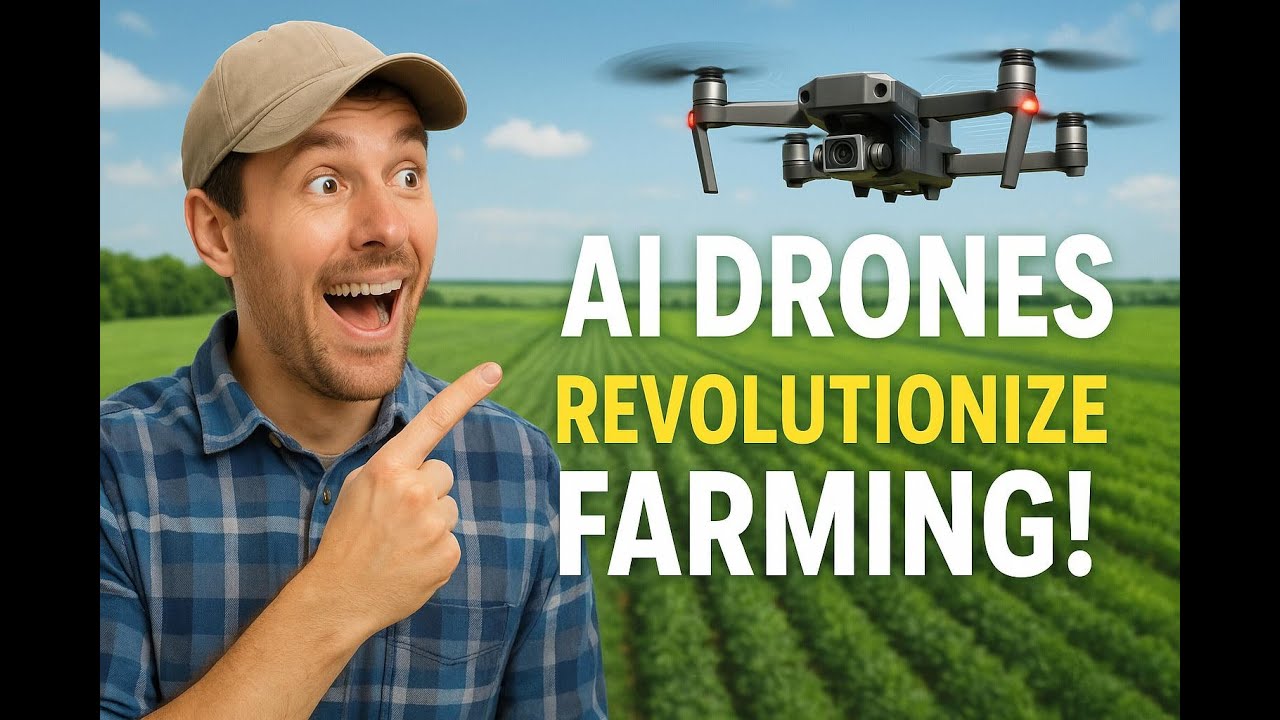
The IoT in Farm Management Market: What’s Verified and What Isn’t
Searches for “iot in farm management market” and “us iot agriculture market” are usually looking for a single market-size figure in dollars. That number moves fast and most public figures trace back to paid market-research reports we cannot verify against a primary source, so we won’t repeat one here as fact. What is independently checkable:
- US adoption data: USDA’s Agricultural Resources Management Survey (ARMS), run by NASS, is the primary federal source for on-farm technology adoption. Check current figures directly at nass.usda.gov under QuickStats, filtered by technology adoption and by state or crop.
- UK adoption data: Defra publishes farm practice surveys annually; the next full progress report against the England Farming Roadmap is due in 2027. The Barclays/UK Agri-Tech figure — 60% of UK farms expected to adopt precision agriculture technologies in 2025 — is the most recent citable estimate as of this review (ICAEW industry profile, 2025).
- Market-size dollar figures: if you need one for a report or pitch deck, go to Grand View Research’s agriculture IoT report directly and check its publication date — most “market size” citations circulating online are one or two report-cycles out of date by the time they’re quoted.
This is the honest state of the data: adoption percentages are published and citable; a single global market-size dollar figure, as of this review, is not something we can verify to a primary source, so we’re not printing one.
Trend 1: Smart Sensors and Real-Time Farm Monitoring
How Sensors Turn Field Conditions into Decisions
Three sensor categories do most of the work on a connected farm:
- Soil moisture sensors: probes at multiple root-zone depths trigger irrigation only when a set threshold is crossed, instead of on a fixed calendar schedule.
- Environmental sensors: on-farm weather stations report humidity, temperature, rainfall, and wind speed in real time, feeding spray-timing and frost-risk decisions.
- Plant health sensors: multispectral sensors detect chlorophyll stress, early disease signals, and nutrient deficiency before symptoms are visible to the eye, giving a window for targeted treatment instead of blanket application.
The adoption context: 60% of UK farms are expected to be running some form of precision agriculture technology in 2025, per Barclays-backed UK Agri-Tech research cited by ICAEW. That figure covers the sensor and precision-machinery category broadly, not sensors in isolation — there is no UK government dataset that isolates soil-sensor adoption specifically, which is one of the real gaps in the public data right now.

Trend 2: Low-Power IoT Networks Connecting the Farm
Why Connectivity, Not Sensors, Is Often the Real Bottleneck
A single field sensor is useless if it can’t get a reading back to the farm office. Most working farms sit outside reliable 4G or Wi-Fi coverage, which is why low-power wide-area network (LPWAN) protocols — LoRaWAN, NB-IoT, and Sigfox-class radios — matter more to smart farming than the sensor hardware itself. These networks trade bandwidth for range and battery life: a soil probe on a LoRaWAN network can run for years on one battery and report from several kilometers away, at the cost of sending only small, infrequent data packets rather than live video or high-resolution imagery.
For UK and US farms evaluating a low-power network, the practical checklist is:
- Coverage: does an existing public LoRaWAN or NB-IoT network already reach the farm, or does it require a private gateway?
- Power budget: can the sensor run on battery or solar for a full season without a site visit?
- Data volume: is the payload a few bytes of sensor readings (fits low-power networks) or full imagery (needs cellular or satellite backhaul instead)?
- Interoperability: does the network standard the sensor vendor uses match what a second vendor’s equipment could also use, so the farm isn’t locked into one supplier?
This is also where edge computing (covered in Trend 6) pairs naturally with low-power networks: process data locally on the farm and transmit only the decision or alert, not the raw stream, which keeps power and bandwidth needs low even on the cheapest network tier.
Trend 3: Precision Farming with IoT & Advanced Analytics
Precision as the Cornerstone of Input Efficiency
Precision farming links GPS-guided machinery to sensor data so that seeding rate, fertilizer, and chemical application vary across a field rather than applying one blanket rate. The measured outcomes from recent peer-reviewed work are specific:
- Precision IoT irrigation systems have delivered up to 30% water savings in field trials (2024–2025), per research published via Springer Nature.
- Optimized IoT crop monitoring has been linked to yield improvements of up to 20% in the same research window, per Frontiers in Plant Science.
- Geo-referenced machinery data lets tractors and harvesters adjust seeding and chemical rates in real time against soil and crop maps, cutting both input cost and chemical runoff.
These two figures — 30% water savings and 20% yield improvement — are the two most defensible, source-backed numbers in this entire field right now. Most other precision-agriculture ROI claims circulating online do not trace to a named, dated study.
Platforms such as Farmonaut’s large-scale farm management solutions apply this same logic — satellite and sensor data turned into an actionable input plan — without requiring a farm to own its own drone fleet or weather station network.
Trend 4: Drone Technology and Aerial IoT Integration
Aerial Diagnostics at Field Scale
Drones extend IoT monitoring above the reach of ground sensors:
- Aerial surveys using multispectral cameras scan for early disease, pest pressure, and nutrient deficiency across a whole field in a single flight.
- NDVI and thermal mapping flag crop-vigor problems days or weeks before they’re visible from the ground.
- Disaster assessment — flooding, drought stress, pest outbreaks — gets a fast, whole-field view that speeds up the response decision.
Drone data feeds the same analytics pipeline as ground sensors, so a flood-damage map or a pest hotspot from a drone flight lands in the same dashboard as a soil-moisture reading.

Farmonaut pairs this aerial and satellite intelligence with satellite-driven carbon footprinting tools, letting a farm track environmental impact alongside crop health from the same imagery.
Trend 5: Automated Irrigation & Resource Management
Turning Sensor Data into a Water-Saving Trigger
Automated IoT irrigation closes the loop between a soil-moisture reading and a pump or valve, without a person in between:
- Integrated soil moisture and weather sensors evaluate real-time field conditions against a crop’s actual water need.
- Threshold-triggered irrigation runs only when moisture drops below a pre-set level or a forecast confirms no rain is coming — the mechanism behind the 30% water-saving figure cited above.
- Satellite and AI-driven advisory layers in crop-stage data so the irrigation trigger accounts for growth stage, not just soil moisture alone.
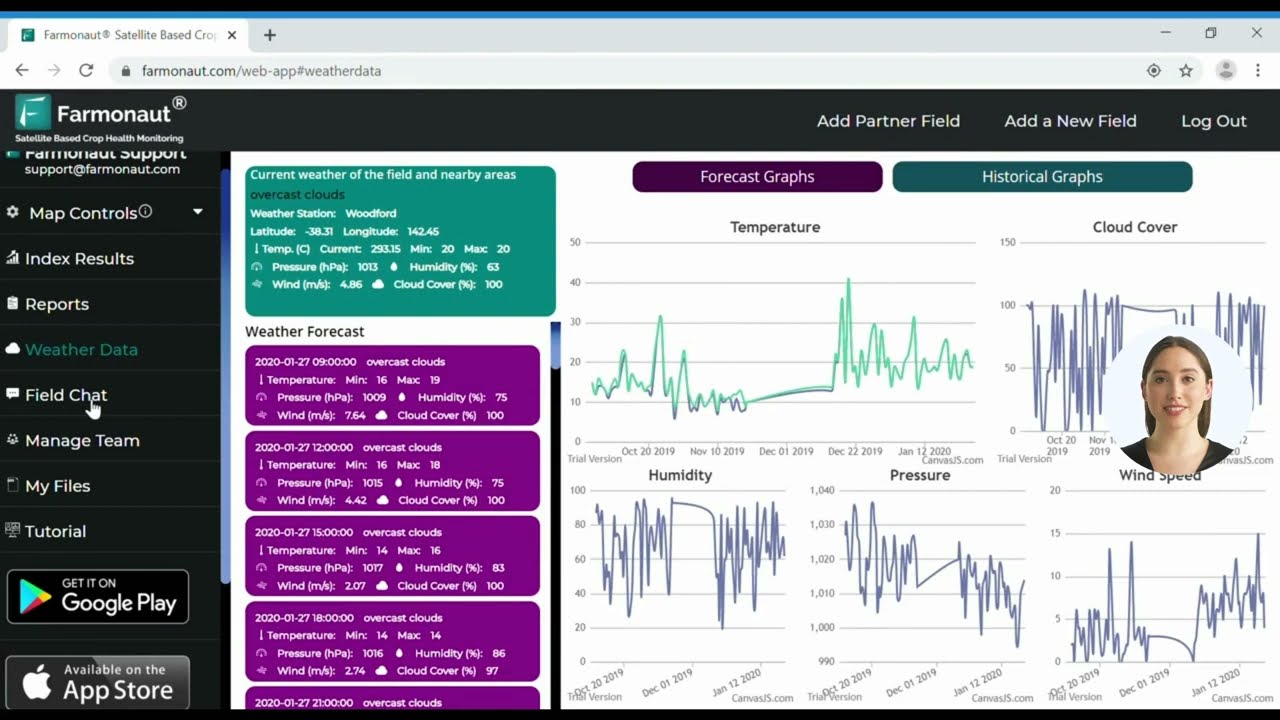
Trend 6: AI and Edge Computing for Predictive Agriculture
Processing Data Where the Signal Is Weakest
AI and edge computing solve a specific problem: rural connectivity is often too weak or too expensive to stream raw sensor data to the cloud continuously. Edge devices process readings locally on the farm and transmit only the decision — “irrigate zone 4” or “disease risk elevated in block 7” — rather than the full data stream.
- AI-driven analytics aggregate soil, weather, crop-health, and pest data to identify patterns across a season, not just a single reading.
- Edge processing keeps critical operations — irrigation timing, disease alerts, fertilizer-rate adjustment — running even when cloud connectivity drops.
Farmonaut’s Jeevn AI Advisory System applies this model: satellite image analytics converted into a specific, timed recommendation rather than a raw data export the farmer has to interpret alone.


Farms running edge-processed fleets also lean on fleet and resource management tools to keep machinery utilization and routing data flowing into the same analytics layer as field sensors.
Trend 7: IoT-Enabled Supply Chain Transparency & Traceability
Tracking Produce from Harvest to Retail
IoT sensors extend past the field into storage, transport, and retail:
- Blockchain-based traceability gives each crop or livestock lot an immutable origin-and-handling record, viewable by buyers, regulators, and consumers.
- Temperature and humidity sensors monitor perishable goods in transit and storage, reducing post-harvest losses from spoilage.
- Verified traceability supports access to premium and export markets that require documented, auditable sourcing.

Comparative Trends Table
| Trend | Core IoT Technology | Verified Outcome | Source & Date |
|---|---|---|---|
| Smart Sensors & Real-Time Monitoring | Soil/plant moisture sensors, weather stations | Underpins the 60% UK precision-ag adoption estimate | ICAEW / Barclays UK Agri-Tech, 2025 |
| Low-Power IoT Networks | LoRaWAN, NB-IoT sensor gateways | Multi-year battery life; long-range, low-bandwidth backhaul | Network protocol specifications (see method above) |
| Precision Agriculture | GPS-guided machinery, variable-rate applicators | Up to 30% water savings; up to 20% yield improvement | Springer Nature; Frontiers in Plant Science, 2024–2025 |
| Drone & Aerial IoT | Multispectral drones, NDVI/thermal cameras | Whole-field disease and stress detection ahead of visible symptoms | Field-level imaging method, not separately quantified |
| Automated Irrigation | Threshold-triggered smart valves and pumps | Up to 30% water use reduction vs. fixed-schedule irrigation | Springer Nature, 2024–2025 |
| AI & Edge Computing | Edge AI gateways, local inference | Maintains critical decisions during connectivity loss | Operational design pattern, not separately quantified |
| Supply Chain Traceability | Blockchain ledgers, cold-chain sensors | Auditable origin record supporting export-market access | Operational design pattern, not separately quantified |
Where the table says “not separately quantified,” that is deliberate: no government or peer-reviewed source in our research base isolates that trend’s individual effect, so we’re not backfilling it with a number that can’t be checked.
Irrigation Water-Savings Calculator
Use your own field’s water use and cost to see what a 30% reduction from precision IoT irrigation — the figure reported in the Springer Nature research above — would be worth on your farm.
Run your own numbers
Assumes water use and cost stay constant across the season and that the reported percentage reduction applies uniformly to your acreage; it excludes equipment, installation, and maintenance costs for the irrigation hardware itself, and excludes any yield-side revenue gain.
Farmonaut Digital Platforms & Subscriptions
Farmonaut brings satellite-driven, IoT-compatible farm data to web and mobile, for farms of any size:
-
Real-time satellite crop and field monitoring through web and mobile apps across Android and iOS.



- API access: integrate satellite, weather, and crop monitoring data directly into your own IoT stack. See the API Portal and API Developer Docs.
- Finance & insurance: satellite-based crop loan and insurance verification for lenders and producers.
- Environmental tracking: carbon footprint monitoring for regulatory compliance and sustainability reporting.
Frequently Asked Questions
What is smart farming with IoT?
It's the use of connected sensors, machinery, and software to gather real-time field and livestock data and automate decisions — irrigation timing, fertilizer rate, pest response — that would otherwise rely on a fixed schedule or a manual field check.
What does a low-power IoT network for smart agriculture actually mean?
It refers to wide-area, low-bandwidth radio networks — LoRaWAN, NB-IoT, and similar protocols — built to run battery-powered field sensors for years at long range, trading data speed for reach and power efficiency. This matters most on farms without reliable cellular or Wi-Fi coverage across every field.
How much water can IoT irrigation actually save?
Peer-reviewed research (2024–2025) reports water savings of up to 30% from precision IoT irrigation systems, per Springer Nature. Use the calculator above with your own field's water use to estimate the value on your farm.
Is there a reliable dollar figure for the US or global IoT farm market?
Not one we can verify to a primary government or peer-reviewed source as of this review. For US adoption data specifically, check USDA NASS's ARMS survey and QuickStats database directly, since figures update on their own schedule and a static number here would go stale.
What's the most current UK adoption figure for precision agriculture?
60% of UK farms were expected to adopt precision agriculture technologies in 2025, per Barclays-backed UK Agri-Tech research cited by ICAEW. Defra's own farm practice surveys are published annually and are the primary source to check for an updated figure.
Are smart IoT systems accessible to smaller farms, or only large operations?
Platforms like Farmonaut lower the entry cost by delivering satellite-based monitoring through a web or mobile app rather than requiring a farm to buy and maintain its own sensor network and analytics infrastructure.
Where This Goes Next
The two numbers worth remembering from this article are 30% (water savings from precision IoT irrigation) and 20% (yield improvement from optimized IoT monitoring), both from peer-reviewed research published in 2024–2025. The £123 million UK Defra funding figure for the current year, and the £53 million increase announced in June 2026, tell you where UK policy money is flowing — check the Defra link above each funding cycle, since that page is updated as new rounds are announced.
The durable method, regardless of which numbers change: check USDA NASS QuickStats for US adoption data, check Defra's farm practice surveys for UK data, and treat any market-size dollar figure without a named, dated primary source as unverified until you trace it yourself. That's the checklist that keeps working even after every statistic above has been superseded.
Farmonaut's satellite and AI-driven platforms give farms of any size a way to act on this data today, without building a private sensor network first.

 Fyllo
Fyllo FieldZero
 Indico Company
 Kubota
 FFBS
FFBS Jontra
 Kalustyan
 Tucor
Tucor Geno
Geno Hayleys Agriculture
 Linx Agritech
 Adinet
 Save Your Soils
