

Top 10 AI Agriculture Projects & Farming Management Software – Roadmaps, Impact & Trends for 2025 and Beyond
Table of Contents
- — AI in Agriculture: A 2026 Perspective
- — Trivia: AI in Agriculture Yields
- — Key Domains of AI Agriculture Projects
- — Core Components of Agriculture AI Software Projects
- — Top 10 AI Agriculture Projects & Farming Management Software (2025–2026)
- — Comparison Table: Features, Impacts, and Target Users
- — Drivers, Constraints, and Best Practices for Adoption
- — Farmonaut: Empowering Precision Agriculture with Satellite AI
- — Key Insights, Pro Tips, and More
- — Roadmaps & Outlook: AI Trends in Agriculture for 2026 & Beyond
- — FAQ: AI Agriculture in 2025/2026
- — Get Started: Apps, APIs & Platform Links
AI in Agriculture: A 2026 Perspective
The agricultural sector is undergoing a targeted digital transformation driven by rapid advances in artificial intelligence (AI) and machine learning (ML). Leveraging robust data pipelines, multispectral satellite imagery, IoT sensors, and computer vision, agriculture ai projects now fuel real-time insights and operational efficiency across farms worldwide. What once relied on intuition and experience is increasingly backed by dedicated farming project management software and AI-enabled agricultural platforms.
“AI-powered agriculture software can increase crop yields by up to 30% in precision farming projects by 2025.”
Farmers, agribusinesses, and research institutions are increasingly investing in core AI agriculture projects to boost yields, reduce inputs, optimize resource use, and enhance sustainability. In 2025 and beyond, AI is now central to crop management, disease and pest detection, livestock optimization, supply chain analytics, greenhouse automation, and farm-to-market decision making.
Key Domains of AI Agriculture Projects
The latest wave of agriculture software projects and AI-driven farming management software is transforming the way we cultivate fields, manage resources, and sustain global food supply chains. Let’s examine the most impactful project domains dominating agriculture in 2025–2026.
1. Precision Farming & Crop Optimization
- Data integration: AI models analyze multispectral satellite imagery, drone data, soil sensors, localized weather forecasts, and historical yields.
- Actionable insights: Projects focus on variable-rate irrigation and fertilization, disease forecasting, early pest warning, and harvest scheduling.
- Key outcome: Reduce chemical and water usage, boost yield quality, and optimize operational costs.
2. Disease & Pest Detection
- Computer vision systems identify foliar symptoms, fruit lesions, and stress indicators in real time using drone and smartphone cameras.
- Integrated pest management (IPM) workflows guide targeted intervention decisions, minimizing resistance and environmental impact.
- Mobile apps and dashboards support rapid response from field crews and agronomists, reducing losses.
3. Livestock Optimization
- AI-powered monitoring tracks the health, behavior, and nutrition of cattle, sheep, and poultry around the clock.
- IoT sensors and video analysis enable predictive analytics for reducing mortality and improving feed efficiency.
4. Greenhouse & Controlled-Environment Agriculture (CEA)
- AI coordinates climate control, lighting, irrigation systems for optimal growth and quality.
- Emphasis on energy efficiency, dynamic microclimate stability, and AI-driven rapid cultivar experimentation.
5. Farm-to-Market Analytics
- AI supports demand forecasting, harvest timing, logistics optimization for perishable crops.
- Farming project management software aligns field operations with supply chain needs, reducing spoilage and preserving profit margins.

Core Components of Agriculture AI Software Projects
The most successful agriculture ai projects in 2025 are backed by robust data infrastructure and modular, interoperable platforms. Below are the essential components that power next-generation AI agriculture projects:
- Data Platform & Integration: Centralized data lakes aggregate weather, soil, drone, sensor, and market datasets. APIs and open standards guarantee interoperability.
- AI Model Lifecycle Management (MLOps): Standardization of data versioning, model training, retraining with seasonal drift, evaluation, and explainable AI for trust and traceability.
- Farm Management Software (FMS) Integration: Tight coupling of AI recommendations with field operations, inventory, labor, and compliance tracking through desktop, mobile, and dashboard apps.
- Decision Support & Automation: Real-time dashboards provide alerts, application maps, and enable automated control (e.g., for irrigation, climate) where allowed and safe.
- Edge Computing & Offline Resilience: Local AI processing enables real-time interventions even in remote locations with unstable connectivity.

Visual List: What Powers Modern Agriculture AI Projects?
- ✅ Cloud Data Integration: Connects weather, device, and field data effortlessly.
- 💡 Multispectral Satellite Imagery: Offers actionable, field-level crop & soil insights.
- 🤖 Automated Model Training: MLOps pipelines track, retrain, and optimize models.
- 📲 Mobile App Dashboards: Bring AI insights to field crews and agronomists instantly.
- 🌐 Robust API Connectivity: Ensures interoperability across farming platforms and devices.
Top 10 AI Agriculture Projects & Farming Management Software (2025–2026)
As we look forward to 2026, the following AI agriculture projects and software platforms stand out for their impact on yields, sustainability, resource optimization, and technology adoption in both large-scale and smallholder farming environments.
Buyers shortlisting vendors can compare what ag software companies specialize in before booking demos.
“Over 60% of top farming management platforms now integrate machine learning for real-time crop health analysis.”
These platforms exemplify the state-of-the-art in combining AI, robust data integration, and farm management intelligence, thus raising the bar for agricultural efficiency worldwide.
Visual List: 📈 Top Focus Areas in Modern Agriculture AI Projects
- 🌱 Crop Health Monitoring — Real-time detection and intervention
- 🤖 Automated Harvest Planning — Supervised and unsupervised AI models
- 🌡 Greenhouse Automation — IoT sensors and intelligent climate control
- 🛰 Satellite-Driven Advisory — Platform-agnostic, scalable insights
- 🚜 Fleet and Resource Optimization — Boosts mechanical and workforce efficiency

Comparison Table: Top 10 AI Agriculture Projects & Farming Management Software
| Project/Software Name | Description | Core AI Technology | Key Features | Estimated Yield Improvement (%) in 2025 | Expected Sustainability Impact | Target Users |
|---|---|---|---|---|---|---|
| Farmonaut Satellite Platform | Satellite-driven monitoring, blockchain traceability, AI advisory, resource management for precision agriculture | Multispectral satellite imagery, ML models, blockchain, edge computing | Crop health insights, input optimization, traceability, fleet/resource tools, environmental impact tracking | 24–28% | High | All sizes – farmers, agribusiness, governments |
| ClimateCrop AI Suite | Predicts optimal planting and harvest periods using climate and genomics data | AI-driven climate modeling, big data analytics | Yield forecasting, risk maps, resilience planning, scenario simulation | 14–18% | Medium | Commercial growers, crop consultants |
| AgriVision Disease Detector | Real-time crop disease and pest detection via mobile and drone apps | Computer vision, CNNs, edge computing | Instant foliar and fruit assessment, automated alerts, field mapping | 10–15% | Medium | Smallholders, field crews |
| YieldMaster Pro | ML-powered, variable-rate fertilization and precision irrigation tool integrated with soil sensors | Decision-tree AI, time-series soil/moisture models | Dynamic fertilizer/water application, drought risk warnings | 20–24% | High | Mid/large-scale farms, cooperatives |
| AgroTrace Blockchain Suite | End-to-end traceability platform for sustainable supply chain transparency | Blockchain, AI anomaly detection | Origin tracking, fraud prevention, regulatory compliance modules | 6–10% | High | Exporters, agribusiness, certifiers |
| Livestock AI Monitor | Real-time livestock health and nutrition analytics for cattle, sheep & poultry | AI pattern recognition, IoT sensors | Feed optimization, early warning alerts, reproductive tracking | 12–16% | Medium | Livestock farmers, ranches |
| CropChain Automated Planning | AI-powered seasonal planning, connected to market-chain analytics and logistics | Predictive analytics, supply chain AI, mobile dashboards | Harvest optimization, distribution maps, perishability reduction | 9–13% | Medium | Farmer cooperatives, agribusiness |
| GreenhouseBot CEA | Automated microclimate & energy management for greenhouses | Automated control AI, IoT/environmental sensors | Dynamic climate & lighting adjustment, energy efficiency tools | 17–22% | High | Greenhouse operators |
| AgFleet Management AI | Fleet, equipment, and logistics optimization with AI scheduling modules | AI scheduling, telematics integration | Route optimization, maintenance predictions, vehicle usage analytics | 11–14% | Low | Agribusiness, custom operators |
| FarmSense Market Analyzer | Market demand, pricing trends, and sales analytics for crops | Demand forecasting AI, price prediction models | Harvest scheduling, route-to-market suggestions, price alerts | 8–12% | Low | Growers, exporters |
Note: Data based on 2025–2026 projections, feature sets may be subject to continuous improvement.

Adoption Drivers & Constraints in AI Agriculture Projects
Adopting AI-powered agriculture software projects presents both major opportunities and notable challenges. Here’s a breakdown of what drives successful adoption, and what constraints must be overcome for scale in 2026 and beyond:
✔ Drivers
- Input Savings: AI-driven optimization in irrigation, fertilizer, and crop protection automation leads to direct cost reduction.
- Yield Gains: Field management and disease early warning enable increases in both quantity and marketable quality of crop yields.
- Quality Premiums: AI projects enable chemical reductions, traceability, and transparent operations for higher-value certifications and premiums.
- Risk Mitigation: Real-time weather and pest analytics help mitigate harvest and revenue losses.
- ESG & Regulatory Compliance: AI platforms increasingly support carbon reporting and compliance, crucial for large enterprises and exporters.
⚠ Constraints
- Data Privacy & Governance: Concerns persist when sharing field data with platforms or contractors; robust controls and explainability drive trust.
- User Experience (UX): Agronomist-friendly dashboards must clearly explain AI-driven recommendations; transparency is critical for adoption.
- Budget Limitations: Smallholders require scalable, modular AI solutions that let them start small and grow capabilities over time.
- Interoperability Issues: Legacy equipment often lacks API standards; modern platforms must provide adapters for seamless integration.
- Training Requirements: Continuous workforce training in AI software use, model interpretation, and digital operation is essential for full project impact.
Investor Note
💹 Investor Note:
With over 60% of top agri-management platforms integrating ML by 2025 and substantial ROI in input reduction and yield improvement, the sector offers strong upside for innovators focused on sustainability, data integrity, and user-centric AI application development.
Farmonaut: Empowering Precision Agriculture with Satellite AI
At Farmonaut, we are committed to democratizing advanced satellite-driven technologies for the agriculture sector, delivering actionable insights to farmers, businesses, and government agencies worldwide. Our solutions are engineered for efficiency, transparency, and scalability in a digital world.
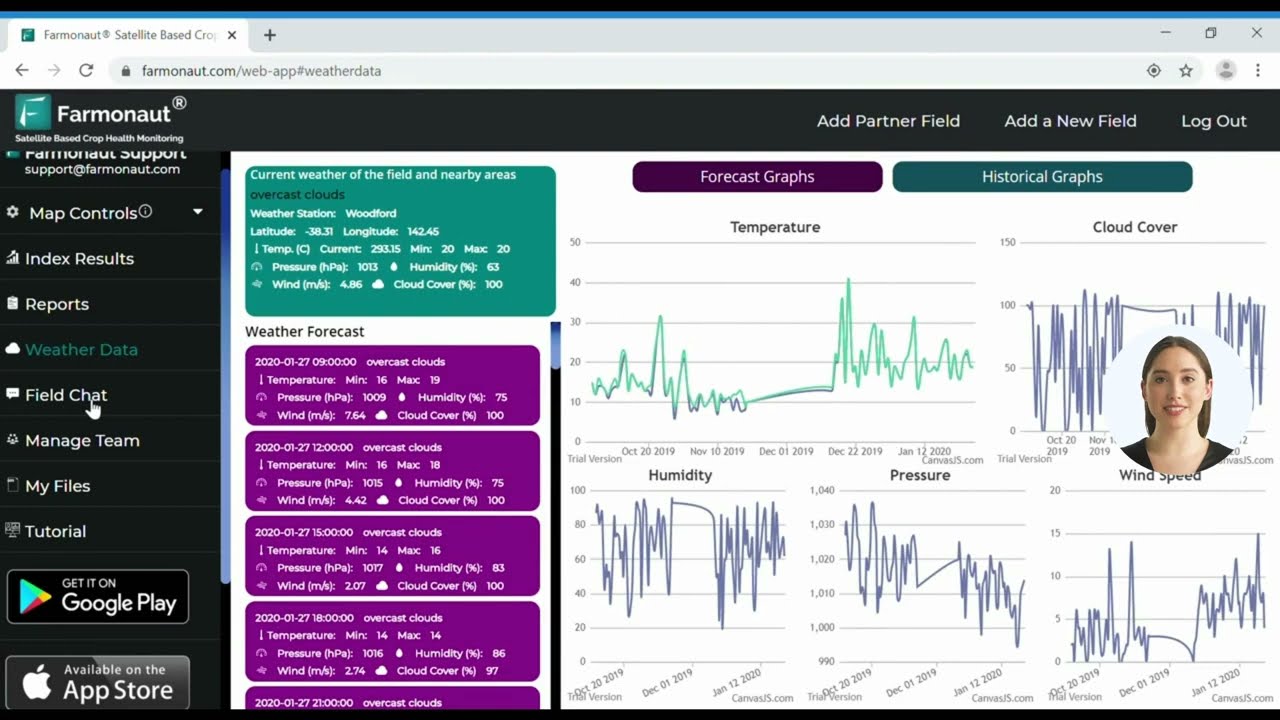
- Satellite-Based Monitoring: We leverage multispectral imagery to enable robust, real-time field and crop health evaluation (NDVI, soil moisture, vegetation indices).
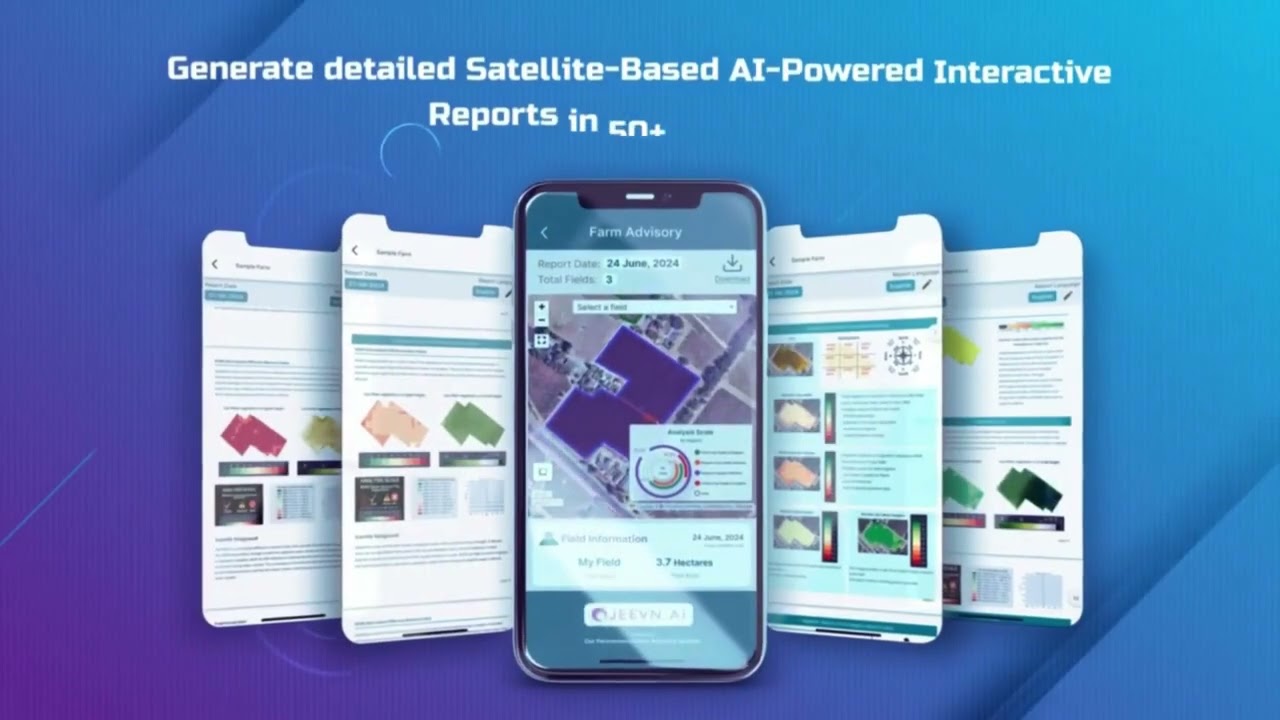
- Jeevn AI Advisory System: This AI-driven tool empowers farmers with weather forecasts, tailored strategies, and predictive analytics for better field operations.
- Blockchain Traceability: Our platform enables secure, end-to-end traceability for agricultural supply chains, using the blockchain for verifiable transparency. Learn more about our Traceability solution.
- Environmental Impact Monitoring: Carbon emission tracking and sustainability analytics are embedded for ESG and regulatory compliance.
- Fleet & Resource Management: Optimize agricultural operations and logistics using our Fleet Management suite.
- APIs & Platform Access: Seamlessly integrate Farmonaut data into your systems via our API and Developer Docs.
Our robust, modular platform offerings allow users to access field-level insights via web and mobile apps, ensuring both scalability and affordability.
Callout: Why Satellite Tech Matters in 2026?
🚀 Key Insight:
Satellite AI gives farmers and decision-makers persistent, unbiased field monitoring every few days, across all weather conditions, driving rapid, data-first agronomy.
App, API, and Subscription Access



Developers and agribusinesses: Access our API at https://sat.farmonaut.com/api and dive deeper with the API Developer Docs.

Best Practices and Common Pitfalls in AI Agriculture Projects
💡 Pro Tip
Start with High-Impact Use Cases:
Focus initial AI projects on areas with the biggest ROI—like disease detection, irrigation optimization, or harvest planning—before expanding into complex workflows.
🚫 Common Mistake
Neglecting Data Labeling & Sensor Uptime:
AI models need quality, representative data and reliable sensor coverage. Periodically validate sensor data and keep metadata clean for improved model outcomes.
🔍 Data Insight
Explainable AI Drives Trust:
Agronomists and field operators are more likely to adopt AI agriculture projects when recommendations are transparent and reasoned, not just “black box” decisions.
📉 Risk Alert
Platform Lock-In:
Avoid systems that lack robust API access or standards, making future integration costly; prioritize open standards for maximum future flexibility.
🛠 Implementation Guideline
Run Pilot Projects with Measurable KPIs:
Water use efficiency, fertilizer reduction, disease rates, or harvest predictability—benchmarked pilot results add business credibility and simplify scaling decisions.

Roadmaps & Outlook: AI Trends in Agriculture for 2026 & Beyond
Looking ahead, the convergence of remote sensing, edge computing, and agile farm management ecosystems will reshape the agricultural sector. Priorities for AI agriculture projects will include sustainable intensification, climate resilience, and supply-chain transparency.
- Greater Model Interoperability: Expect richer APIs, data portability, and easier integration across new and legacy platforms.
- More Autonomous Field Operations: Robotic actuators, AI-driven irrigation, and automated climate control will streamline production.
- Robust Data Governance: Blockchain and advanced cryptography will secure cooperative data sharing, traceability, and audit trails.
- Resilient, Offline-First Design: Edge computing will enable real-time decision support in remote fields disrupted by connectivity challenges.
- Data-Driven Sustainability: Sustainability scoring (water use, carbon footprint) will be linked to premiums and regulatory incentives.
- Intelligent Market Analytics: Farm-to-market software projects will further reduce post-harvest losses and unlock higher revenue for growers via AI demand optimization.
As models mature and adoption broadens, AI projects in agriculture will fuel a continued shift toward digital stewardship and robust, transparent operations, benefiting both producers and supply chains globally.
FAQ: AI Agriculture Projects & Farming Management Software in 2025/2026
Q1: What are the top benefits of adopting AI-driven agriculture software projects?
AI projects in agriculture boost yields, optimize fertilizer and water use, enable rapid disease and pest detection, automate routine decision-making, improve traceability, and enhance sustainability. By connecting farm operations to real-time weather, market, and sensor data, farmers and agribusinesses can unlock higher profit margins and reduce environmental impact.
Q2: How does AI improve disease and pest management?
Modern projects use computer vision and edge computing (through drones and mobile apps) to detect foliar symptoms, lesions, and stress indicators on crops. Integrated pest management workflows then guide site-specific interventions, minimizing resistance and chemical usage.
Q3: Why is interoperability so crucial for agriculture ai projects?
The effectiveness of digital transformation depends on the seamless integration of data from diverse sources (machinery, sensors, soil and weather data, ERP systems). APIs and standard data schemas ensure future scalability, easier adoption, and prevent vendor lock-in.
Q4: What’s the best way to get started with AI farming management software?
Begin with clearly defined, high-ROI use cases (e.g., satellite-driven irrigation optimization). Choose platforms like Farmonaut that scale with your needs, run pilot projects, focus on measurable KPIs, and invest in workforce training to ensure success.
Q5: How does Farmonaut differ from traditional agriculture management tools?
Farmonaut combines satellite imagery, AI, blockchain, and APIs to provide unbiased crop monitoring, actionable advisory, end-to-end traceability, and sustainability scoring through accessible apps and APIs. We support remote, smallholder, and large-scale users—making satellite-driven AI affordable and scalable without extra hardware.
Get Started: Apps, APIs & Platform Links
-
Explore Farmonaut’s carbon monitoring suite:
Carbon Footprinting & Regulatory Tools -
Enhance farm supply chain transparency:
Farmonaut Traceability Solutions -
Crop loan and insurance application support:
Crop Loan & Insurance Verification -
Fleet & Equipment Management:
Fleet Management Tools -
Large-Scale Farm Management Mobile App:
Farmonaut Agro Admin App
Ready to drive robust yields, environmental stewardship, and supply chain efficiency with the next generation of AI agriculture projects? Start your journey at Farmonaut.com or reach out for custom enterprise solutions.

 Agritein
 Delicio
 Payagri
 WB Dev
 Sama Premium
 Prochecker
 Tres Valles
 LACOS Geoinformation
 Pulsar Supernova
 Magrifly
 LatConnect 60
 WebsEdge
 Blickwinkel
 Agricultural Credit Policy Council
 Marei Nursery
 eKGIS
eKGIS Mostas Tech
 Andex
Andex FCF India
 Unifrutti Gulf
