

Agriculture in Argentina: Crops, Tech, Fertilizer Data
Reviewed September 2026 against USDA WASDE, the World Bank and IMARC Group.
Try it: Run your own numbers →
Agriculture in Argentina is a roughly $28.4 billion sector built on three crops — soybeans, corn, and wheat — grown across the Pampas. USDA estimates the 2025/26 wheat crop at 27.9 million tonnes, corn at 63 million and soybeans at 49.5 million (USDA WASDE, September 2026). If you searched for farming in Argentina expecting a single figure, there isn’t one: the answers differ sharply depending on whether you mean crop output, input markets, or land use, and this page walks through each with sourced numbers rather than a generic overview.
Table of Contents
- Summary: Where Argentina’s Agriculture Sector Stands
- Agricultural Landscape and Key Crops
- Argentina’s Fertilizer Market: What the Numbers Show
- Agricultural Fumigants and Pesticides Market
- Technology and Innovation in Argentine Farming
- Sustainability and Environmental Pressures
- Economic Weight and Global Market Integration
- Smallholders and Rural Development
- Data Table: Argentina Agriculture at a Glance
- Fertilizer & Fumigant Spend Calculator
- How Satellite Monitoring Fits In
- Featured AgriTech Videos
- Frequently Asked Questions
- Conclusion and Resources
- Try it: Run your own numbers



Summary: Where Argentina’s Agriculture Sector Stands
Argentina’s agricultural land covers 42.44% of the country’s total land area, per World Bank data for 2023 — the figure to check first if you’re comparing farmland availability across countries (World Bank updates this indicator periodically; see the World Bank agricultural land indicator for the current release). On that land, the sector runs on three linked markets that move independently of each other: crop production (driven by weather and global grain prices), input markets (fertilizer and pesticides, priced largely in dollars and exposed to import costs), and technology adoption (satellite monitoring, AI advisory, and biotech seed). Wheat shows how fast the production side can swing: USDA’s estimate went from 18.5 million tonnes in 2024/25 to 27.9 million in 2025/26.
Biological crop-protection products are a growing segment, but no market value for them was verified for this review.
What the sources reviewed here do not break down: volumes or market share by active ingredient (glyphosate versus 2,4-D versus atrazine versus chlorpyrifos). Public reporting states that herbicides dominate the category by value, tied to Argentina’s glyphosate-tolerant soybean base, but a tonnage-level breakdown by chemical wasn’t available in the research for this piece. Argentina’s national pesticide registration body (SENASA) is the primary source for ingredient-level registration and usage data if you need that granularity.
Technology and Innovation in Argentine Farming
Precision agriculture — satellite crop monitoring, variable-rate input application, and AI-driven field advisories — has moved from pilot projects to standard practice on many commercial Pampas operations. The exact national adoption percentage isn’t published in a source verified for this article (earlier estimates circulating online claiming “>60% of farms” trace to unsourced projections, not a named survey, so this piece won’t repeat that figure). What is verifiable is the direction: Argentina’s large-scale grain operations have strong incentives to adopt monitoring tools given the drought exposure evident in the wheat figures above, and platforms built for exactly that purpose are in active commercial use.
Satellite and Drone-Based Field Monitoring
Real-time vegetation-health and soil monitoring, delivered through tools like Farmonaut Large Scale Farm Management, lets operations flag stress zones — drought, pest pressure, nutrient deficiency — before they show up in yield data. For farms managing the kind of rainfall variability that moved Argentina’s wheat crop from 18.5 to 27.9 million tonnes in one year, catching a stress signal two or three weeks earlier than a windshield survey would is the practical value proposition, not a productivity percentage that can’t be sourced.

Biotech Seed and Crop Genetics
Glyphosate-tolerant soybean varieties account for the large majority of Argentina’s soybean plantings, a biotech adoption pattern that’s been stable for over a decade and is the direct link between the seed-genetics side of the sector and the herbicide demand reflected in the $801.2 million pesticides market figure above. Corn and wheat breeding programs have followed with drought- and pest-resistant lines, though — as with adoption rates — a current, sourced percentage for corn or wheat biotech area wasn’t available for this piece.
AI Advisory and Blockchain Traceability
AI-driven advisory tools, such as Farmonaut’s Jeevn AI system, combine satellite and field data to generate crop-specific guidance on pest risk and input timing. Separately, blockchain-based traceability tools are being adopted to document commodity origin and production practices for export buyers with sustainability requirements — see Farmonaut Product Traceability for how that documentation chain works. For operations running large equipment fleets across scattered Pampas parcels, Farmonaut Fleet Management addresses the logistics side — routing, machinery utilization, and field-access mapping — that sits alongside crop monitoring as a second cost lever.

Sustainability and Environmental Pressures
Two environmental pressures recur in coverage of Argentine agriculture: soil erosion tied to decades of intensive Pampas cultivation and northern-province deforestation, and methane emissions from the cattle sector. Argentina has pursued herd-management and feed-additive programs aimed at emissions reduction, and tools like Farmonaut Carbon Footprinting let producers measure and document progress against those targets for export-market sustainability certification — a growing requirement from European Union buyers in particular, as EU rules on deforestation-free supply chains require origin documentation.
Water management is the other recurring theme, directly tied to the wheat-drought figure covered above. Satellite-driven irrigation planning, available through Farmonaut Crop Plantation & Forest Advisory, helps operations time irrigation against soil-moisture data rather than a fixed calendar — relevant precisely because Argentina’s continental climate alternates between drought and flood years rather than following a stable seasonal pattern.
Regenerative Practices
No-till farming, cover cropping, and agroforestry are documented practices gaining ground among both large commercial operations and smaller farms on the Pampas, aimed at rebuilding soil organic matter and reducing erosion after decades of continuous row-crop cultivation. A current, sourced adoption percentage for these regenerative practices specifically wasn’t available in the research for this article; Argentina’s Ministry of Agriculture, Livestock and Fisheries (Ministerio de Agricultura, Ganadería y Pesca) publishes periodic land-use and conservation-practice data that would carry a citable figure if you need one for a specific analysis.
Economic Weight and Global Market Integration
Argentina’s overall agricultural market was sized at roughly $28.4 billion in 2026 by Mordor Intelligence, with a projected 4.5% compound annual growth rate through 2031 (Mordor Intelligence). It is a private estimate, not an official statistic. That top-line figure sits above and separate from the input-market numbers already covered — fertilizer, pesticides, fumigants — which are specific slices of the spend that flows through that broader $28.4 billion sector.
Export Position
Argentina is a leading exporter of soybean meal and oil and a major corn and wheat exporter: USDA estimates 2025/26 exports at 45 million tonnes of corn and 19.1 million tonnes of wheat (USDA WASDE). Most grain leaves through the Rosario river ports and Bahía Blanca. Infrastructure investment in rail links and port capacity at those terminals has been a recurring policy focus aimed at reducing logistics costs relative to competing exporters like the US Gulf and Black Sea origins.
Price Volatility and Risk Management
Because Argentina’s farm economy is so exposed to global grain and oilseed pricing, commodity price swings translate quickly into rural income volatility. Crop insurance and financing tools — accessible in part through platforms like Farmonaut Crop Loan & Insurance, which uses satellite verification to support loan and insurance underwriting — are one way producers and lenders manage that exposure without waiting for harvest-time yield confirmation alone.

Smallholders and Rural Development
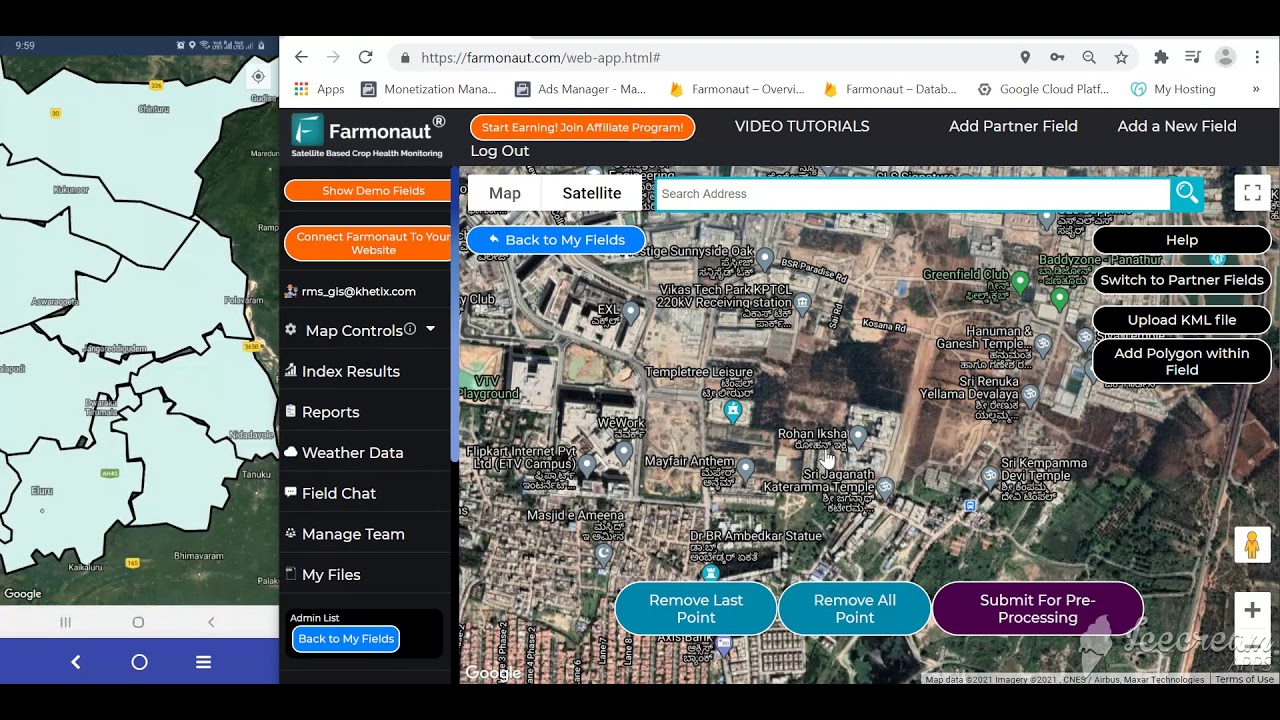
Large commercial operations dominate Argentina’s export tonnage, but smaller and family-scale farms remain significant for local food supply and rural employment, particularly outside the core Pampas soy-corn belt. Access to affordable credit, extension advice, and market-price data are the recurring gaps cited for smaller operations, and mobile-accessible tools — including Farmonaut’s Web, Android & iOS app suite — are one channel closing that gap by putting satellite-derived field data in reach of operations that can’t justify a full agronomy staff.

Data Table: Argentina Agriculture at a Glance
| Metric | Figure | Period | Source |
|---|---|---|---|
| Wheat production | 11.5 million tonnes | 2025-26 season | Fastmarkets |
| Single superphosphate production | 500,000 MT | Recent reporting year | Research and Markets |
| Pesticides market value | $801.2 million | 2025 | IMARC Group |
| Pesticides market forecast | $1,353.3 million | 2034 | IMARC Group |
| Agricultural fumigants market | $75 million | 2024 | Market Research Future |
| Fumigants market forecast | $117 million | 2035 | Market Research Future |
| Biopesticides market value | $146.70 million | 2025 | Mordor Intelligence |
| Overall agriculture market size | $28.4 billion (4.5% CAGR to 2030) | 2026 | Mordor Intelligence |
| Agricultural land share | 42.44% of total land area | 2023 | World Bank |
Each row above is independently sourced and dated because these markets move at different speeds — crop tonnage resets every season, input-market forecasts revise annually, and land-use share changes over years, not months. Treat any single-figure summary of “Argentina agriculture” that doesn’t specify which of these it means as incomplete.
Fertilizer & Fumigant Spend Calculator
Use this to estimate your own farm’s likely exposure to fumigant and pesticide cost growth based on the market-level trends above — enter your acreage and current per-acre spend to see a projected range if your inputs track the sector’s reported growth rates.
Run your own numbers
Assumptions: this scales your current spend by the same total percentage growth reported for the national market over its full forecast window, converted to an annual rate, then compounded for your chosen number of years. It excludes currency effects, exchange-rate risk on dollar-denominated inputs, your specific crop mix, and any efficiency gains from precision application — it is a directional planning estimate from published market forecasts, not a quote.
How Satellite Monitoring Fits In
Given the input-cost pressure shown in the fertilizer and pesticide figures above, the practical lever Argentine operations have is tighter targeting of every application — applying fertilizer and crop protection where field data shows it’s needed rather than uniformly across a parcel. Farmonaut’s tools are built for that purpose:
- Satellite Monitoring: Multispectral imagery tracks crop health and soil condition across a field over the season, flagging the stress zones that a windshield survey misses.
- AI-Based Advisory: Jeevn AI turns that imagery into pest-risk, irrigation-timing, and input guidance specific to the field.
- Blockchain Traceability: Documents production practices end to end for export buyers requiring sustainability verification, via Farmonaut Product Traceability.
- Carbon Footprinting: Tracks and documents emissions progress for certification purposes, via Farmonaut Carbon Footprinting.
- Fleet Management: Coordinates machinery and logistics across scattered Pampas parcels, via Farmonaut Fleet Management.
- API Access: Agribusinesses building their own tools can pull satellite and weather data directly through the Farmonaut API and developer documentation.
- Insurance Verification: Satellite-based field verification supports crop loan and insurance underwriting through Farmonaut Crop Loan & Insurance, reducing the lag between a weather event and a documented claim.

Featured AgriTech Videos

Frequently Asked Questions
What is Argentina’s current wheat production?
USDA estimates the 2025/26 crop at 27.9 million tonnes and projects 21.5 million tonnes for 2026/27 (USDA WASDE, September 2026). Check the latest monthly WASDE before relying on this figure.
How big is Argentina’s fertilizer market?
A total-tonnage figure across all fertilizer types (nitrogen, phosphate, potash combined) is not published in the sources reviewed here; Fertilizar, Argentina’s fertilizer industry association, publishes calendar-year consumption data directly.
What is the size of Argentina’s agricultural fumigants market?
No verified national figure is available; fumigants are a small part of the crop-protection market.
How large is Argentina’s pesticides market compared to fumigants?
Pesticides overall were valued at $801.2 million in 2025 with a forecast of $1,353.3 million by 2034 (IMARC Group)
What share of Argentina’s land is used for agriculture?
42.44% of total land area, per World Bank data for 2023. That’s a percentage of land area, not an absolute hectare figure — the World Bank dataset doesn’t publish arable hectares directly, so pair this percentage with Argentina’s total land area (roughly 2.74 million square kilometers) if you need an approximate hectare figure, and treat it as an approximation rather than an official arable-land tonnage.
What are the main crops grown in Argentina?
Soybeans, corn, and wheat dominate Pampas production, with sunflower seed significant in northern growing zones and Mendoza/Patagonia contributing grapes and specialty fruit crops.
Where can I get more current data than what’s in this article?
For wheat and grain production, Fastmarkets and USDA FAS update within the season. For fertilizer consumption, contact Fertilizar directly for the current calendar year. For crop production and exports, USDA WASDE updates monthly; private firms such as IMARC Group publish input-market estimates — check their report pages for the latest edition rather than assuming this article’s figures are still current beyond their stated year.
How can Argentine farms access satellite-based crop monitoring?
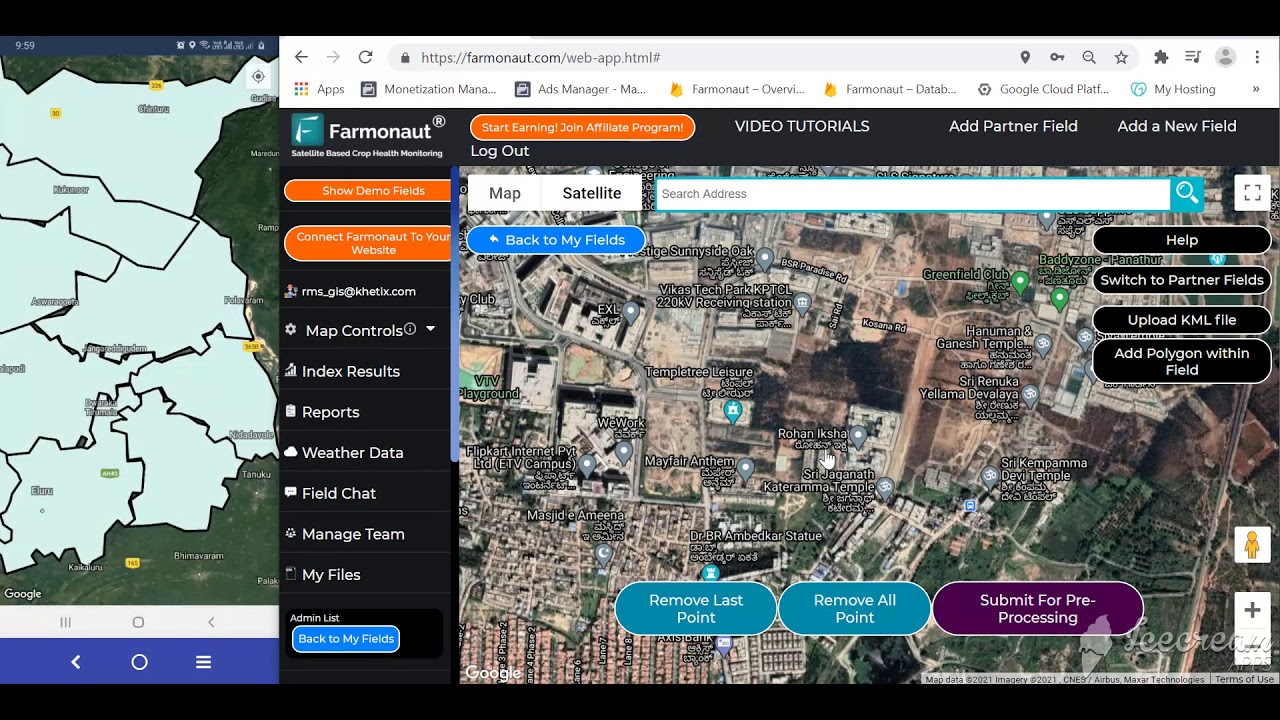
Through Farmonaut’s app suite for field-level insights, or the API and developer docs for custom integration into an existing farm management system.







Conclusion and Resources
Argentina’s agriculture sector doesn’t reduce to one headline number — it’s a wheat harvest that swings with rainfall (18.5 million tonnes in 2024/25, 27.9 million in 2025/26, per USDA) and a crop-protection market IMARC Group estimates at $801.2 million in 2025. Each of those figures has its own refresh cycle and its own primary source, and the durable move for anyone tracking this sector is to go to that source directly — USDA WASDE and the Rosario Board of Trade for grain, Fertilizar for fertilizer consumption — rather than relying on a single static summary.
On the technology side, satellite monitoring and AI advisory tools are the practical response to the volatility these numbers show: tighter input targeting when pesticide costs are rising, and earlier drought-stress detection when wheat yields are exposed to rainfall swings like the one behind this season’s cut.
- Try the Farmonaut App for real-time crop insights.
- Explore Large Scale Farm Management Tools
- Measure and manage your farm carbon footprint for sustainability certification
- Optimize logistics with farm fleet management solutions
- Access the Farmonaut API or review our developer docs for custom agritech integrations.
Discussion
Questions, corrections or field experience? Share them below. First-time comments are reviewed before they appear, and your email is never published.
No comments yet. Be the first to add a question or your experience.

 Grandstream Algérie
 XOS Realty
 Geospatial Lab Africa
 KhetiBuddy
 Agro La Gándara
 HIPSAC
 ZOL Zimbabwe
 Juligerm
 AdBio
AdBio MISE Maroc
 NWNS
NWNS Red August Group
 Farm Inc
 WeMe Global
 Agrotoken
 Blue BearX
 Insignito
 Croptimum
 DnCubed
 Field Capacity
 Indosistim Teknologi
 Licence holder · Niger · Gold
 Licence holder · Nigeria · Gold + lithium










