

4-H vs FFA: Powerful Paths Shaping US Agriculture 2026
Meta Description: 4-H vs FFA: Discover how these youth organizations are driving agricultural innovation, leadership, and sustainable rural development in the evolving 2025 landscape.
“In 2025, over 6 million youth in the US will participate in 4-H and FFA, shaping agriculture’s future.”
Table of Contents
- Summary: 4-H vs FFA
- Trivia: 4-H & FFA in Youth Agriculture
- Understanding 4-H vs FFA: Origins and Mission Focus
- Membership & Structure in 2025
- 4-H vs FFA: Impact Comparison Table 2025
- Education, Training & Career Pathways
- Technology & Innovation – Enabling Future Leadership
- Community Impact & Rural Development
- Challenges & Opportunities: 2026 and Beyond
- Farmonaut: Satellite-Driven Solutions for Agriculture’s Future
- FAQ: 4-H vs FFA
- Conclusion
Summary: 4-H vs FFA – Driving the Future of Agriculture and Rural Development in 2025
4-H vs FFA stands as a central debate in American agricultural education, with both organizations nurturing youth leadership, educational development, and sustainable community innovation. As we approach 2025 and look ahead to 2026, recognizing the distinctions and complementary strengths between 4-H and FFA is essential for all stakeholders invested in a dynamic US agriculture landscape. Their history, organizational structure, and technology-driven approaches are shaping the future of rural America, influencing young people’s career trajectories, and driving innovation that extends far beyond traditional farming into forestry, agribusiness, engineering, and beyond.
“By 2026, 4-H and FFA members will lead more than 10,000 technology-driven agricultural projects nationwide.”
Key Insight
- 4-H vs FFA is not about one being better, but about both organizations working in synergy to empower youth and revolutionize agriculture—ensuring a resilient, tech-enabled rural America by 2026.
Understanding the 4-H vs FFA Debate: Origins and Mission Focus
The origins of 4-H and FFA (Future Farmers of America) reflect deep roots in American agricultural and rural development. However, their historical trajectories and mission focus reveal essential distinctions in how these organizations serve youth, communities, and the evolving needs of agriculture in 2025 and beyond.
4-H: Founded in the Early 1900s – Broad Youth Development
- Origins: Founded in the early 1900s, created as a community-based youth development program.
- Administration: Administered by the Cooperative Extension System of land-grant universities across the United States.
- Mission Focus: Revolves around “learning by doing,” emphasizing life skills, citizenship, and responsibility, alongside hands-on agricultural and STEM projects.
- Approach: Project-based, with volunteer adult mentors guiding youth in clubs, after-school programs, community camps, and events.
FFA: Launched in 1928 – Agricultural Education Leadership
- Origins: Originally established as the Future Farmers of America in 1928; now simply known as the National FFA Organization.
- Mission Focus: Specifically designed to promote leadership and career success in agricultural education.
- Approach: Operates primarily through school-based, formal curricula, integrating technical training in farming, agribusiness, horticulture, and forestry.
💡 Pro Tip
- For technology enthusiasts exploring youth agricultural programs, look for chapters or clubs featuring robotics, AI, and satellite technology projects—these are the breeding grounds of tomorrow’s leaders in high-tech agriculture!

Why Do 4-H vs FFA Origins Matter Today?
Their distinct missions lay the foundation for different—but often complementary—roles in rural development, education, technology integration, and youth leadership. As we journey into 2026, understanding these distinctions enables stakeholders to best leverage each organization’s strengths for fostering sustainable growth and innovation in American agriculture.
Membership and Structure in 2025: Adapting to an Evolving Agriculture Landscape
4-H: Flexible Programming Across Diverse Demographics
- Membership: Serving youth ages 9–19, in both rural and urban communities across the United States.
- Structure: Boasts a flexible, informal system where participants work with volunteer adult mentors in clubs, after-school programs, and camps.
- Project Range: Ranging from animal science and crop production to robotics, environmental stewardship, and community development.
FFA: School-Based, Career-Focused Engagement for Future Agricultural Leaders
- Membership: Typically aged 12–18, focusing on youth in middle and high schools nationwide.
- Structure: Operates primarily through high school chapters under formal agricultural education curricula—including supervised agricultural experiences (SAEs).
- Event Offerings: Technical skill-building through livestock judging, agricultural mechanics, agriscience fairs, and more.
✔ 5 Ways 4-H vs FFA Structure Impacts Youth Experience in 2025:
- 🌱 Flexibility: 4-H’s club-based model adapts to local community needs, offering wider participation—including urban and rural youth.
- 🏫 Formal Education: FFA’s structure is integrated into school curricula, providing systematic skills training and career pathways.
- 🤝 Mentorship: 4-H emphasizes adult volunteer-mentors, fostering intergenerational learning and diverse life skills.
- 🔗 Community Ties: Both organizations build strong connections to local, state, and national networks, amplifying impact.
- 🎯 Specialization vs Breadth: FFA offers specialized technical training; 4-H opts for a broad youth development approach.
4-H vs FFA: Impact on Youth, Technology, and Rural Development (2025 Estimates)
| Dimension | 4-H (2025 Estimate) | FFA (2025 Estimate) |
|---|---|---|
| Membership Numbers | ~4.5 million youth (ages 9–19) | ~800,000 students (ages 12–18) |
| Technology Adoption Rate (% using agri-tech tools) | 60%+ (broadly, includes both digital ag and STEM projects) | 80%+ (agri-tech, drones, precision ag, AI integrated in SAE) |
| Leadership Programs Offered | 300+ leadership training camps, workshops, and conferences annually | 400+ leadership development events at local, state, and national level |
| Community Projects (Estimated Annual Impact) | 50,000+ youth-led community initiatives each year | 20,000+ supervised agricultural experience projects annually |
| Rural Innovation Initiatives Started | 7,000+ new technology/innovation projects in rural communities | 3,500+ agri-engineering and high-tech ag projects annually |
| Estimated Growth Rate (2024–2025) | 4–5% (expanding into new STEM and urban markets) | 2.5–3% (focusing on digital agriculture and career prep) |
Data Source: Published estimates, 2025 trends, and organization-reported impact statistics.
Investor Note
The youth technology adoption rate in FFA and 4-H underscores a fertile market for agri-tech firms, IoT startups, and satellite-driven solutions—a sign that investment in digital agriculture has robust grassroots support for 2026 and beyond.

Education, Training, and Career Pathways: Preparing Tomorrow’s Leaders
STEM Education and Innovation in 4-H Programs
The 4-H approach has expanded aggressively in 2025 to integrate STEM education—spanning science, technology, engineering, and mathematics—into core youth programs. This shift extends beyond agriculture to embrace robotics, environmental monitoring, renewable energy, and emerging data science fields.
- 🔬 Innovative Projects: Participants design and manage projects using precision agriculture technologies, soil health sensors, and satellite imagery for crop monitoring.
- 🧬 Leadership in Sustainability: Programs now emphasize climate resilience, carbon footprint analysis, and forestry stewardship.
- 🤖 Robotics & AI Integration: Robotics competitions and AI project tracks foster problem-solving skills and technological fluency.
FFA’s Technical Training and Career Preparation
The FFA national organization centers its mission on developing technical competencies for immediate career pathways in agriculture. In 2025, FFA programs integrate:
- 🚜 Supervised Agricultural Experiences (SAEs): Hands-on career simulations in crop production, animal management, agronomy, and ag engineering.
- 💼 Professional Development: Workshops and training in agribusiness and resource management sectors, including data-driven decision-making using agri-tech.
- 🌳 Forestry & Environmental Tech: New emphasis on sustainable mining for green technologies and renewable resource management.
Common Mistake
Assuming 4-H is “just gardening” or that FFA is “only about livestock” overlooks their expansive, technology-rich programming in 2025—each offers a pipeline to diverse careers in agriculture, science, engineering, tech, and sustainable resource management!
📊 5 Outcomes of 4-H vs FFA Educational Programming:
- 🎓 New-Age Competencies: Youth master AI tools, coding, drone operation, and sustainable agronomy management principles.
- 👩🔬 Career Readiness: Graduates enter not just farming, but biotech research, agri-finance, supply chain management, and tech entrepreneurship.
- 🏞 Environmental Impact: Participants drive forestry conservation projects and advance climate-smart agriculture initiatives.
- 🌍 Global Mindset: US youth gain skills in digital traceability and international food systems, becoming next-generation ag leaders.
- 🛠 Technical Versatility: Both organizations foster practical skillsets adaptable to evolving roles in agri-food industries, infrastructure, and mining.

Technology & Innovation: Enabling Future Agriculture Leadership
Innovation and technology adoption are central to the 4-H vs FFA narrative in 2025–2026. From digital platforms to satellites, AI, drones, IoT, and data analytics—these organizations are fast becoming the launchpads for tech-savvy agricultural leaders, engineers, and scientists.
- ⚙ Agri-Digital Labs: Both 4-H and FFA chapters now boast annual technology hackathons, coding nights, and “smart farm” simulation labs.
- 🛰 Satellite Data: Youth gain experience using satellite imagery (as provided by organizations like Farmonaut) to monitor fields, analyze growth stages, and optimize water/fertilizer use—a crucial advantage for sustainable farming and resource management.
- 🛠 Robotics Events: Robotics teams prototype gadgets for field mapping, environmental sampling, and automated farm operations.
- 🔒 Blockchain Traceability: Projects initiate full-chain traceability from seed to market, supporting transparent, fraud-resistant supply chains—link: Learn how traceability benefits farming and supply chains.

Key Insight
By 2026, youth with hands-on experience in satellite monitoring and AI-based farm management will be top candidates for roles in precision agriculture, agri-research, carbon accounting, and environmental stewardship.

How Resource Management Tools Drive Rural Transformation
Advanced digital solutions help young agriculturalists and organizations like 4-H and FFA:
- Predict water, fertilizer, and pesticide needs accurately
- Lower environmental impact—a key win for regulatory compliance (See how carbon footprinting enables sustainable farming)
- Drive food safety and increase productivity, safeguarding supply to rural and urban markets

Community Impact & Rural Development: 4-H vs FFA in Action
- 🌄 Community Innovation: 4-H and FFA projects revitalize rural towns by launching smart water management schemes, tech-enabled forestry programs, and sustainable food systems.
- 👥 Inclusion: New programming caters to urban youth, ensuring that agriculture’s future workforce reflects America’s demographic diversity.
- 🌱 Stewardship: Both organizations prioritize conservation, afforestation, and biodiversity—training the next wave of environmental leaders.
- 📈 Economic Impact: Youth projects and innovation-driven clubs boost local economies by incubating agri-startups and tech ventures in rural communities.
- 🚀 Scaling Up: Initiatives such as blockchain traceability can be scaled—for example, with Farmonaut’s traceability solution, offering supply chain transparency at a national level.
Pro Tip
For rural leaders and educators—integrate real-time crop monitoring and environmental impact tracking into your club programming. Tools like large scale farm management apps can amplify your reach and efficacy!
Challenges & Opportunities: The 4-H vs FFA Role in Agriculture 2026 and Beyond
As we look toward 2026 and beyond, 4-H and FFA face strategic challenges:
- 🌡 Climate Adaptation: Youth must address water scarcity, extreme weather, and shifting zones for crop and livestock.
- 🔬 Technology Integration: Rural broadband gaps and limited tech access can impede innovation. Investment in tools—such as satellite-based farm advisory—is essential.
- 👩🎓 Education Inequality: Ensuring equitable STEM opportunities and advanced tech exposure for all communities remains a challenge.
- 👨🌾 Workforce Shortages: The aging farmer demographic in the United States means rapid leadership development and outreach to non-traditional youth is imperative.
- ♻ Sustainability Mandates: Demand for verifiable carbon and biodiversity impact—leveraging tech such as carbon footprinting—will be a regulatory and consumer-driven priority.

⚠ Risk or Limitation
Overlooking technology gap—Rural areas lacking broadband or digital infrastructure may fall behind if public and private stakeholders do not invest in scalable agri-tech solutions.
Farmonaut: Satellite-Driven Solutions for Agriculture’s Future
We at Farmonaut are keenly aware that American agriculture, mining, and rural communities are becoming increasingly reliant on satellite technology, AI, and blockchain—foundational elements for sustainable, transparent, and productive food systems.
- 🌐 Real-Time Monitoring: Our platform provides NDVI vegetation health, soil analysis, and comprehensive structure health diagnostics—empowering youth and professionals alike to optimize productivity and resource management.
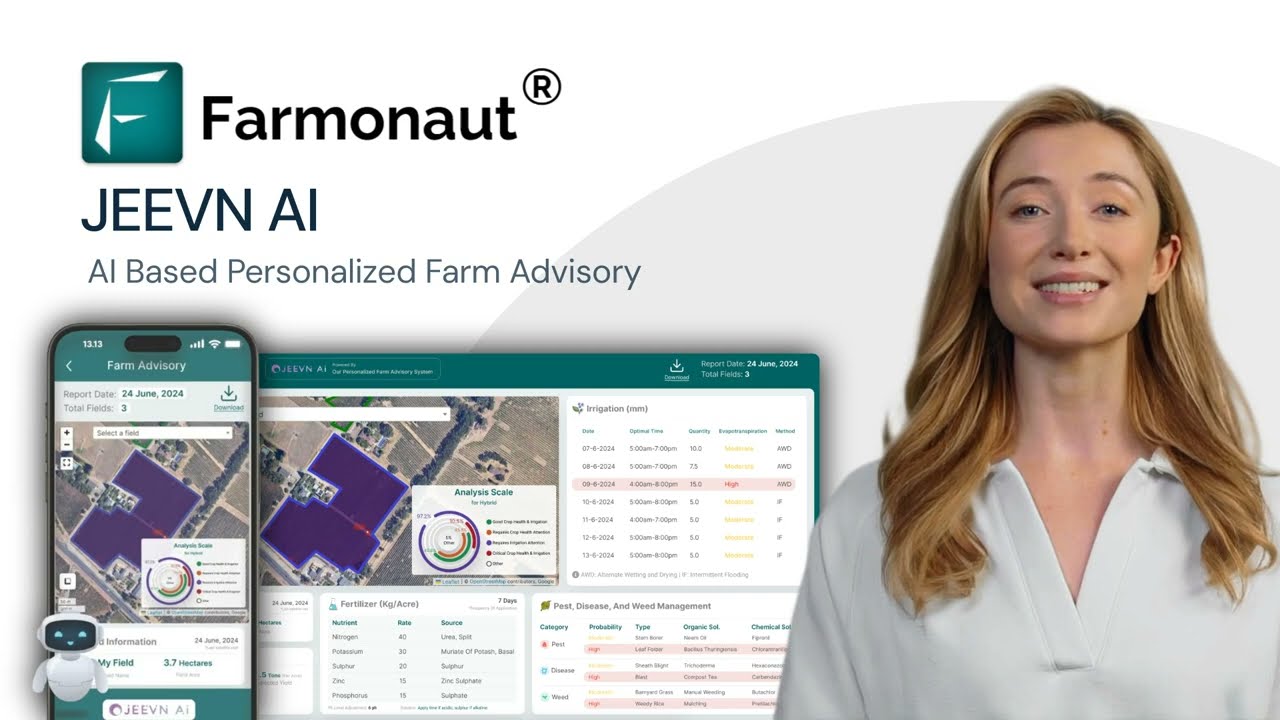
- ⚡ JEEVN AI Advisory: We offer real-time, hyperlocal advisories and weather risk analytics (try our satellite-based farm advisory app)
- 🔗 Blockchain Traceability: Supply chain transparency is made bulletproof with our traceability tool for agriculture and mining
- 🚜 Fleet & Resource Management: Advanced fleet solutions mean efficient logistics for farming, mining, and infrastructure.
- 🌳 Environmental Impact: Our carbon footprinting solutions aid in regulatory compliance and community-driven sustainability leadership.
Access is mobile-ready and affordable: Use our  or
or 

API access for developers: Farmonaut Satellite API — API Docs
For youth organizations, educators, cooperatives, and agricultural businesses, our affordable subscription options keep technology accessible and scalable:
Key Insight
By 2026, satellite-driven environmental monitoring and data analytics will be an essential component in every major 4-H and FFA-sponsored agricultural project—our mission supports this transformation nationwide.
Investor Note
Geospatial monitoring for both mining and agriculture will converge as a critical skillset by 2026. Youth experienced with these systems in 4-H and FFA will be primed for high-value STEM and management careers in dual-sector industries.
FAQ: 4-H vs FFA
What is the main difference between 4-H and FFA in 2025?
4-H offers flexible, community-based youth development and project-based learning in agriculture and STEM, while FFA is a school-based career and technical education program specializing in leadership and professional advancement within agricultural industries.
Who can join 4-H or FFA?
4-H is open to youth ages 9–19 across rural and urban America. FFA is typically for students ages 12–18 within schools offering formal agricultural education curricula.
How do these organizations incorporate technology and innovation?
Both integrate AI, IoT, satellite data, and digital tools into projects and training. FFA emphasizes tech skill application in agriculture careers, while 4-H takes a broader STEM approach, often including environmental, robotics, and community innovation tracks.
Are there resources for adults and educators to launch tech-driven youth programs?
Yes. Many state 4-H and FFA chapters provide online guides, digital curricula, and mentorship resources for launching programs focused on robotics, coding, AI, and satellite data analysis (see Farmonaut for technology access).
How do 4-H and FFA contribute to environmental sustainability?
Youth undertake projects in conservation, carbon footprint reduction, climate adaptive farming, and forestry—backed by technology such as carbon footprinting platforms.
Conclusion: 4-H vs FFA—Essential Foundations for Future-Focused Rural America
The 4-H vs FFA discussion is not a matter of competition, but rather a recognition of two powerful, complementary organizations driving agriculture, technology, and rural development in 2025—setting the stage for 2026 and beyond. As the landscape of agricultural education, resource management, and community leadership continues to evolve, youth engagement in these organizations is the key to maintaining a resilient, innovative, and sustainable rural America.
Through increased adoption of satellite monitoring, AI-driven advisory systems, blockchain traceability, and carbon footprinting solutions, members of 4-H and FFA are well positioned to take on tomorrow’s agricultural challenges. The integration of technology and broad-based leadership development ensures that local communities, state economies, and the nation’s food system will benefit from the next generation of skilled, ethical, and visionary leaders.
For businesses, educators, policy-makers, and youth invested in the future of American agriculture, staying engaged with 4-H and FFA—while leveraging advanced tech platforms like those we offer at Farmonaut—will be essential for growth, sustainability, and national success.
Your next step: Embrace the future—empower youth, foster technology, and shape the sustainable path of agriculture in America.

 Etech Consulting Madagascar
 Vestlandsforsking
 Global Launch Base
 Elders
 Agritein
 Delicio
 WB Dev
 Sama Premium
 Prochecker
 Tres Valles
 LACOS Geoinformation
 Magrifly
 LatConnect 60
 WebsEdge
 Blickwinkel
 Agricultural Credit Policy Council
 Marei Nursery
 eKGIS
eKGIS Mostas Tech
 Andex
Andex
