

Honeycrisp Apple Tree Innovations: Top 5 Orchard Trends 2026
“Honeycrisp apple yields have increased by 30% since 2020 due to advanced pollination and orchard management techniques.”
Introduction: The Ascendance of Honeycrisp Apple Tree Farming
The Honeycrisp apple tree has become a central figure in modern agricultural innovation, reshaping orchard management practices from North America to new, colder regions. As 2026 approaches, advances in cultivation, pollination, and satellite-driven resource management are setting new standards in the apple sector, making the journey from flower to fruit more efficient, sustainable, and potentially more lucrative for farmers and the global market.
The Honeycrisp story is one of scientific ingenuity and adaptation. Bred specifically to handle the rigors of cold northern climates by the University of Minnesota between the 1960s and 1970s, the honeycrisp apple tree combines premium fruit quality with resilience, making it a beacon for modern farming success stories. Yet, these gains come with new challenges: orchard management must now address efficient pollination (mainly via honey bee apples), optimize yield with precise input use, and invest in sustainable practices that benefit both crops and pollinators.
In this comprehensive, SEO-driven guide, we’ll explore the top 5 orchard trends of 2026 revolutionizing the cultivation of Honeycrisp, Honey Gold apples, and related varieties—with actionable insights on modern practices, pollinator health, and how emerging technologies like those from Farmonaut can provide an edge in yield and environmental impact.
Whether you’re a producer, consumer, or agricultural enthusiast, prepare to uncover the essential factors and pioneering innovations that ensure the classic balance of sweetness, acidity, crisp texture, and exceptional juiciness continues to thrive in the years ahead.
Why Are Honeycrisp Apples So Renowned? Unique Features & Global Impact
Honeycrisp apples have emerged as one of the most sought-after varieties on the global fresh fruit market. Their unique balance of sweetness and acidity—combined with a delicious crisp texture and exceptional juiciness—has revolutionized the marketing and consumption of apples worldwide, but especially in North America.
The Honeycrisp apple tree displays:
- Cold hardiness: Bred to thrive where previous apple cultivation was considered marginal due to climate.
- Adaptability: Allowed the expansion of apple orchards into new regions and northern climates.
- Consumer appeal: Drives premium prices due to fruit quality—including appearance, flavor (sweet, with balanced acidity), and aroma.
- Longer shelf life: Improved by better cold storage and advancing supply chains.
Other honey-named varieties, such as Honey Gold apples, have also gained popularity alongside Honeycrisp, offering consumers a broader portfolio with similar sweet flavor profiles while giving farmers more options for market niches.

All of these successes are rooted in targeted agricultural practices—and, perhaps most critically, effective pollination strategies using bee and honey-related systems. Let’s take a closer look at how Honeycrisp apples have shifted the economic landscape for growers and the modern fruit market.
Economic Impact: How Honeycrisp Is Revolutionizing Orchard Management
The economic impact of the Honeycrisp apple tree is profound. Compared to legacy varieties, Honeycrisp consistently commands premium prices at both wholesale and retail levels due to its unmatched quality, flavor, and texture.
- Growers have responded by investing heavily in new planting techniques, such as high-density orchard systems and regional microclimate matching.
- The push for sustainability and yield optimization has led to implementation of advanced orchard management, such as precision thinning and selective cold storage.
- Honeycrisp apples have further energized modern marketing channels and export potential for fruit producers in the United States, Canada, and Northern Europe.
Increased profitability often leads to increased responsibility—growers can no longer afford to ignore challenges like resource use, pest management, and marketing practices that affect not just production but the health of orchards and ecosystems. Especially crucial is the role of pollinators like honey bees, whose populations remain under threat.
“Over 85% of Honeycrisp orchards now use precision thinning for optimized fruit size and sustainable production.”
Top 5 Honeycrisp Apple Tree Orchard Trends for 2026
The cultivation of Honeycrisp apples in 2026 is characterized by an array of innovative trends driven by technology, ecological awareness, and a deeper understanding of fruit ecology and pollination. These advances aren’t just about increasing yield—they’re about balancing environmental sustainability with profitable farming.
1. Precision Pollination: Enhancing Fruit Set with Bee and Honey Insights
- Primary Keywords: honey bee apples, pollination, bee and honey, flower, bee, pollinator
Effective pollination is the critical factor in Honeycrisp apple production. Pollen transfer by bees is essential for fruit set, yield, and quality. In recent years, we’ve seen:
- Heightened collaboration between orchardists and beekeepers to ensure healthy honey bee populations and adequate pollination services.
- Introduction of precision pollination—timing hive placements by analyzing weather, flower bloom stages, and even deploying “bee hotels” to attract native pollinator species as a backup.
- Monitoring bee health by reducing pesticide applications during bloom and fostering symbiotic relationships between orchards and managed apiaries.
This strategic approach not only increases fruit set and improves fruit quality, but also supports the broader ecology of farm environments. As challenges to bee health rise (notably disease and habitat loss), maintaining pollinator sustainability becomes a primary business and environmental goal.
- Some growers even use the term honey bee apples informally, emphasizing the crop’s dependence on vigilant pollinator management.

2. Advanced Orchard Design & High-Density Planting for Honeycrisp Apple Yield
- Primary Keywords: honeycrisp apple tree, planting, management, regions, cultivars, high-density, techniques
Maximizing orchard yield and fruit quality requires rethinking traditional layouts. In 2026:
- High-density planting systems are nearly ubiquitous—these allow smaller trees, closer spacing, earlier and greater overall production, and streamlined pest management.
- Canopy management and mechanical pruning techniques improve light penetration and airflow, reducing disease incidence and promoting optimal fruit size.
- Tailoring varieties by microclimate—certain clones or rootstocks fare better in northern climates or wet, cold regions previously considered marginal for apple farming.
This strategic approach not only increases the efficiency of land use, but also boosts economic returns by enabling more intense, yet sustainable, apple cultivation.

Tip: For orchard owners, using large scale farm management solutions like those available through Farmonaut can help track soil health, optimize planting schedules, and increase overall apple production efficiency via satellite and AI-based advisories.

3. Smart Irrigation & Soil Fertility Monitoring for Optimal Apple Quality
- Primary Keywords: irrigation, soil, fertility, orchard, management, resource, reducing, environmental, optimal
Honeycrisp apple trees require careful management of water and soil nutrients to achieve their renowned quality. Smart irrigation and fertilizer systems are:
- Using AI-driven satellite imagery and weather sensors to apply water and nutrients precisely when and where needed—reducing resource use and run-off.
- Enabling early detection of potential stress (drought, nutrient deficiency) for rapid remediation, boosting both yield and fruit set.
- Increasing sustainability by reducing excess inputs while maintaining peak fruit quality.
Modern orchards leverage satellite monitoring—such as that provided through environmental impact and carbon footprinting tools—to simultaneously maximize productivity and minimize their footprint on the ecosystem.

4. AI & Drone Technology: Precision Pest Management and Yield Forecasting
- Primary Keywords: AI-driven, pest, detection, modern, technology, practices, monitoring, advanced, yield, reducing
With the proliferation of AI and drone technology, orchard management has become more efficient. Innovations include:
- Drone-based orchard monitoring for real-time data on pest infestations, nutrient deficiencies, and water stress, enabling targeted interventions.
- AI-driven decision support systems for yield forecasting, disease identification, and optimal harvest timing.
- Automated blockchain-based traceability systems to track fruit from orchard to packing shed—facilitating transparency, food safety, and improved market access.
The outcome is improved crop quality, higher yields, reduced pesticide use, and increased consumer trust in the supply chain.
Learn more about how satellite-based fleet and resource management tools can improve logistical efficiency for large-scale apple orchards, supporting equipment deployment, harvest scheduling, and delivery management.

5. Pollinator Habitat Creation: Sustainable Strategies for Bee Health & Fruit Production
- Primary Keywords: pollinator, habitat, sustainability, practices, environmental, health, wildflower, reducing, bee, orchard
With the long-term sustainability of honeycrisp apple production in mind, growers are investing in pollinator-friendly habitats to support declining bee populations. Key strategies:
- Planting wildflower strips and maintaining buffer zones around orchards to provide food and shelter for native bees and other insect pollinators.
- Reducing pesticide application—especially during bloom periods—by timing sprays after petal fall and using integrated pest management techniques.
- Participating in new policy initiatives and research programs focused on pollinator conservation and farm ecosystem health.
These efforts enhance apple set, quality, and orchard productivity, while aligning modern farms with consumer and regulatory demands for responsibly-grown fruit.
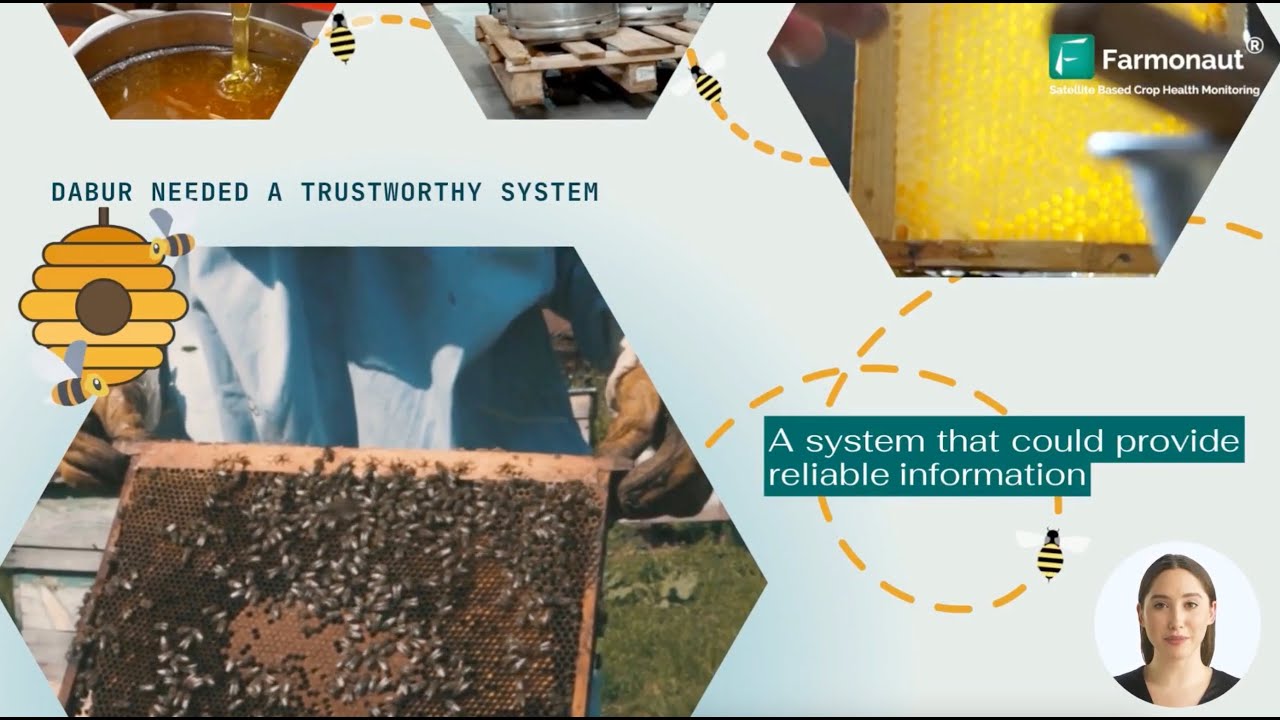
At Farmonaut, we recognize the pivotal role of pollinators and environmental stewardship. Our Traceability platform is designed to improve supply chain transparency and consumer confidence in sustainably-grown apples and honey products—helping producers verify ethical and eco-friendly management practices from the orchard to the shelf.
Comparative Trends Table: Quantifying Top 5 Honeycrisp Apple Tree Innovations
| Innovation/Trend | Description | Estimated Yield Improvement (%) | Estimated Reduction in Resource Use (%) | Technology Involved | Potential Environmental Impact |
|---|---|---|---|---|---|
| Precision Pollination & Hive Management | Scheduled hive placement & flower monitoring to optimize bee activity | Up to 30% | 5-8% | AI, Sensors, Beekeeping Analytics | Supports pollinator health, reduces excess pesticide use |
| High-Density Orchard Planting | Smaller, closely-spaced trees for higher yield and better pest control | 20-35% | 12-15% | Canopy Mgmt, Mechanized Planting, Satellite Layout Planning | Reduces land use per unit output |
| Smart Irrigation & Fertility Management | Satellite-guided and AI-optimized watering/nutrient supply | 10-18% | 15-22% | Remote Sensing, IoT, Automated Irrigation | Minimizes wastage and run-off, supports sustainable use |
| AI/Drone-Based Pest Management | Monitoring orchard health, pest outbreaks, and targeted intervention | 12-20% | 8-15% | Drones, AI Diagnostics, Satellite Imaging | Reduces chemical use, enables early intervention |
| Pollinator Habitat Creation | Planting wildflowers, reducing pesticide timing, hedgerow maintenance | 5-10% | 5-10% | Ecosystem Landscaping, IPM Planning | Enhances ecosystem biodiversity and resilience |

How Satellite Technology from Farmonaut Empowers Modern Apple Orchards
Within the fast-evolving world of honeycrisp apple tree cultivation, using up-to-date, data-driven decision-making tools is mission-critical. Farmonaut is at the forefront of affordable, scalable technology for smart orchard management. Our platform offers growers:
- Satellite crop monitoring for real-time health assessments (carbon footprinting & sustainability impact tools).
- AI-based advisory systems that interpret vegetation health indicators (like NDVI) to optimize irrigation, fertigation, and pest management schedules.
- Blockchain-based traceability for apples and honey—enabling product traceability and building market trust through a transparent, verifiable supply chain journey.
- Resource/fleet management to optimize machinery deployment and operational efficiency, as covered in our fleet management services.
- APIs for system integration—learn more about our API platform and detailed developer documentation to customize data flows for your unique needs.
All these services are available through our mobile-responsive web, Android, and iOS apps:


We strive to democratize access to advanced agriculture tech—making sure orchard managers can act on satellite-driven insights affordably, boost yield, improve environmental outcomes, and build future-ready fruit businesses.
Ready to start optimizing your honeycrisp or honey gold apple orchard from space?
Frequently Asked Questions (FAQ)
-
What makes Honeycrisp apples unique compared to other varieties?
The Honeycrisp apple offers a unique balance of sweetness and acidity, with a crisp texture and exceptional juiciness. This palate combination, combined with its cold resilience and long shelf life, establishes Honeycrisp as one of the most desirable apple varieties globally.
-
How important are bees and pollinators for Honeycrisp apple tree yield?
Pollination by bees is absolutely critical—almost every honeycrisp apple exists because of successful bee activity during bloom. Optimizing bee health translates directly into higher fruit set, better fruit quality, and sustainable orchard practices.
-
How do high-density planting and new orchard designs help boost productivity?
These designs allow for smaller, more manageable trees but more of them per acre or hectare. The result is earlier production, easier pest management, improved resource use, and significantly higher yields per area compared to traditional layouts.
-
What are the main challenges faced by Honeycrisp growers in 2026?
Growers need to balance pest management, resource optimization (water, fertilizer), pollinator health, microclimate selection, disease resistance, and market requirements—all while keeping environmental impact low and maintaining fruit quality.
-
How does Farmonaut satellite technology benefit fruit orchard owners?
Our satellite-driven solutions offer actionable, real-time data on soil health, crop development, carbon footprint, and operational logistics. Orchard managers can improve resource allocation, respond rapidly to threats, document sustainability efforts, and ultimately maximize returns on their apple production investment.
Conclusion: Towards a Healthier, More Productive, and Sustainable Orchard Future
The journey of the Honeycrisp apple tree is, at its heart, a testament to modern agricultural innovation, variety development, and ecosystem partnership. The year 2026 sees Honeycrisp apples not just as a leading premium fruit, but as a symbol of dynamic adaptation—balancing yield, quality, environmental stewardship, and market opportunity.
- Advanced pollination management (especially via bee stewardship) enhances fruit set and orchard sustainability.
- High-density planting and next-gen orchard designs multiply productivity while reducing resource use.
- Smart irrigation and soil fertility techniques optimize input use and environmental outcomes.
- AI, drones, and blockchain create traceable, resilient, and efficient orchard operations.
- Ecological habitat creation ensures that pollinators thrive, securing the future of honeycrisp and honey gold apple production worldwide.
With the right mix of scientific insight, technological innovation, and sustainability commitment, the future of honeycrisp apple tree cultivation is ripe with opportunity—for growers, consumers, pollinators, and the planet alike.
Ready to harness the power of data-driven orchard management?
Explore the Farmonaut platform today via our web, Android or iOS app, and watch your honeycrisp orchard grow smarter, more productive, and more sustainable.
For more detailed, developer-friendly integrations for your orchard tech stack, discover our API and accompanying developer documentation.
Let’s make the future of honeycrisp apple orchards bright, data-driven, and sustainable—one blossom, one bee, one bite at a time.

 Fresh Platter
 Andex
Andex FCF India
 Unifrutti Gulf
 Deluxe Conseil
 TVS Electronics
 BW Pipelines
 WICO
WICO Gen Chayat
 Chimera Innovation
 SkyHarvest
 Polaris Digitech
 Teledarbas
 Wild Oak Farm
 SFX
SFX
