

Mining marketing · Business guide
Digital Marketing for Mining: Trade Shows vs Online Ads
Digital marketing for mining mixes a technical website, search content, a few well-chosen trade shows and narrow online ads. MINExpo drew about 45,000 people in 2024 and PDAC 27,353 in 2025, while a niche industrial minerals forum had 180.
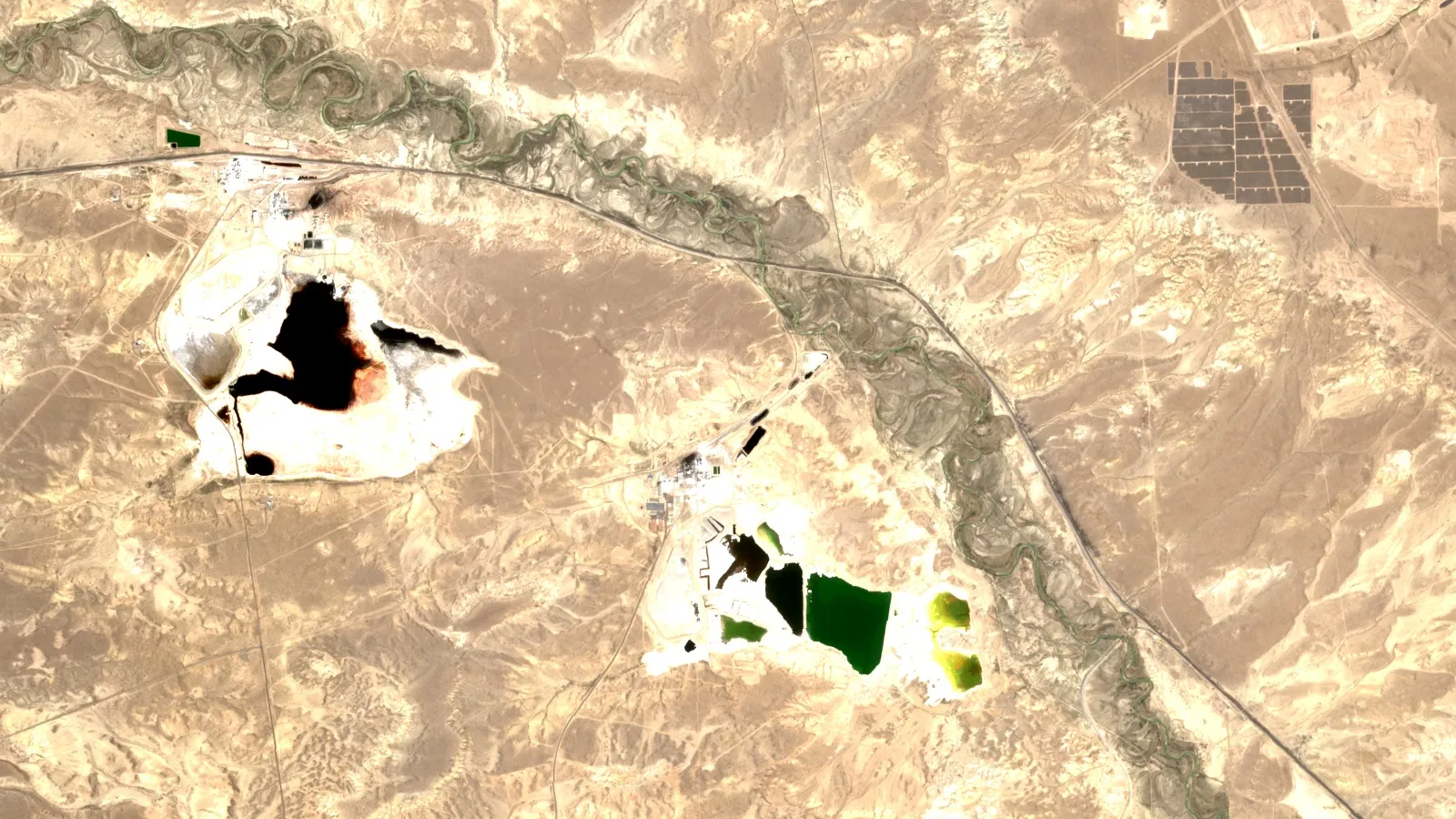
Key takeaways
- MINExpo 2024: about 45,000 attendees, 2,000+ exhibitors, 148 countries (NMA).
- PDAC 2025: 27,353 participants; best for explorers and mining investors (Canadian Mining Journal).
- US industrial sand was worth about US$4.5 billion, lime US$4.0 billion and salt US$2.6 billion in 2025 (USGS, 2026).
- Listed miners: marketing is disclosure; NI 43-101, CSA 51-356 and S-K 1300 apply.
- Judge every channel by cost per qualified lead, not clicks.
In this article
- What digital marketing for mining covers
- Industrial minerals marketing: platforms, trade shows and online advertising
- Mining trade shows compared by audience
- Online advertising for mining companies
- Marketing strategy for a mining company in 5 steps
- Disclosure rules that shape mining marketing
- Using satellite imagery and data in mining marketing
- Choosing a marketing agency for mining
- Mining marketing case study examples
- Marketing budget by stage of a mining business
- Challenges and what to check before you spend
- Frequently asked questions
Digital marketing for mining works best as a mix: a technical website and search content that buyers and investors can find, a small number of trade shows chosen for the right audience, and tightly targeted online advertising. The scale of the shows tells you why the mix matters. MINExpo in Las Vegas drew about 45,000 attendees in September 2024 (National Mining Association), PDAC in Toronto drew 27,353 participants in March 2025 (Canadian Mining Journal), while a specialist industrial minerals event such as IMFORMED’s Fluorine Forum had 180 attendees in October 2026 (IMFORMED).
This guide is written for mining business owners: producers of metals and industrial minerals, equipment and service suppliers, and junior explorers. It compares the main marketing platforms, shows what each one costs you to reach a qualified buyer, sets out the disclosure rules that apply to listed miners, and ends with a calculator that compares cost per lead from a trade show and from paid search or social ads.
What digital marketing for mining covers
Mining marketing has always been a business-to-business job. The buyers are few, the orders are large and the sales cycle is long. A rock salt producer sells to highway departments and distributors; an industrial sand producer sells to glass, foundry and oil-field customers; a drill-rig maker sells to contractors; a junior explorer sells its story to investors. Digital marketing does not replace the handshake. It makes sure that when a buyer, investor or job candidate searches for you, they find accurate, useful information first.
In practice, digital marketing for mining companies covers six channels:
- Website: product data sheets, specifications, project pages, technical reports, investor pages and a quote or contact form.
- Search (SEO): pages written to answer the questions buyers type, such as “industrial sand supplier Wisconsin” or “bentonite for drilling mud specification”.
- Paid search and social ads: Google, Microsoft and LinkedIn campaigns aimed at narrow job titles, industries and regions.
- Email: newsletters to customers, distributors and investors, plus follow-up after trade shows.
- Content and video: technical articles, case studies with client sign-off, site videos and webinars.
- Industry platforms: trade-show listings, association directories, B2B marketplaces and specialist trade press.
Online advertising is a large market in its own right. US internet advertising revenue reached a record US$259 billion in 2024, up 15% on 2023, according to the IAB/PwC Internet Advertising Revenue Report (April 2025). Most of that money chases consumers. That is good news for a mining supplier: the audience you want is small, and the keywords and job titles it uses are cheap compared with consumer goods, as long as your targeting is tight.
▶ What an AI mining app does and who makes one: an example of a plain-English explainer video aimed at mining buyers. · 3:52
Industrial minerals marketing: platforms, trade shows and online advertising
Industrial minerals are non-metallic minerals sold for what they do rather than for a metal they contain: industrial sand for glass and foundry moulds, lime for steel and water treatment, salt for chemicals and de-icing, clays for ceramics and drilling mud, soda ash for glass, diatomite for filtration. They are marketed differently from gold or copper. A gold miner sells into a global price; an industrial minerals producer sells a specification (particle size, purity, brightness, moisture) to a named customer, often at a delivered price that depends on freight.
Chart
Same mineral, very different prices
US salt, average unit value, US$ per tonne
Chart
Value of US industrial minerals output
Selected minerals, estimated value sold or produced, 2025, US$ billion
The US market alone is large. The US Geological Survey estimates that in 2025 industrial sand and gravel sold or used was worth about US$4.5 billion, lime about US$4.0 billion and salt about US$2.6 billion (USGS Mineral Commodity Summaries 2026).
Each of these markets has relatively few sellers. USGS counts 131 companies producing industrial sand and gravel from 207 operations in 38 States, about 120 companies mining clay and shale, 25 companies making salt at 60 plants, and only five companies mining phosphate rock at 10 mines (USGS, 2026). With so few competitors and a known list of customers, marketing is about being the trusted, easy-to-find supplier for a precise specification, not about shouting loudest.
Platforms that industrial minerals buyers use
- Your own website and data sheets. Engineers and buyers want a downloadable specification, typical analysis, packaging options and shipping points. A clear product page with these details is the single most useful marketing asset.
- Search engines. Buyers search by mineral, grade and use (“calcined kaolin for paint”, “food-grade salt bulk supplier”). Pages that answer those searches with real numbers win the click.
- LinkedIn. Useful for reaching procurement managers, process engineers and plant managers by job title and industry, and for posting company news.
- Specialist conferences and their delegate lists. Industrial minerals events are small and focused. Being in the room with 150-300 buyers and sellers of one mineral can be worth more than a booth among 40,000 visitors.
- Trade press and directories. Industry magazines, association member lists and buyers’ guides still drive inquiries for niche minerals.
- Email to existing customers. For repeat-order products, a short quarterly note on availability, lead times and new grades keeps you on the shortlist.
How trade shows and online advertising fit together
Trade shows and online ads work best as one campaign. Before a show, use LinkedIn and email to book meetings with the people you want to see. During the show, collect contacts with consent. After the show, send each contact the data sheet or case study they asked for, and retarget visitors to your website with ads for a few weeks. Without the follow-up, most of the show budget is wasted.
Mining trade shows compared by audience
A booth at a major show is the largest single marketing cost for many mining suppliers, so choose by audience, not by size. The three examples below show the range.
Chart
Attendance at three mining events
Thousand attendees, selected editions (MINExpo 2024, PDAC 2025, Fluorine Forum 2026)
| Event | Main audience | Latest reported attendance | Best for |
|---|---|---|---|
| MINExpo International, Las Vegas | Mine operators, equipment buyers, contractors | About 45,000 attendees and 2,000+ exhibitors from 148 countries (NMA, September 2024) | Heavy equipment, technology and services sold to mine sites |
| PDAC Convention, Toronto | Explorers, investors, geologists, service firms | 27,353 participants (Canadian Mining Journal, March 2025) | Junior explorers raising money; exploration services, drilling, geophysics |
| IMFORMED Fluorine Forum | Fluorspar and fluorine chemicals buyers and sellers | 180 attendees (IMFORMED, October 2026) | Industrial minerals producers and traders in one mineral chain |
MINExpo is held every four years by the US National Mining Association, so planning starts early and booth space sells out. PDAC is held every March and is the main meeting point for the exploration and mining-finance community. Specialist industrial minerals events are smaller and run by niche organisers; the attendee list matters more than the floor area.
How to judge a show before you pay: ask the organiser for the attendee breakdown by job title and industry, count how many of your current customers attended last time, and estimate how many meetings you can realistically hold in the days available. A show where you can hold 40 useful meetings may beat a larger one where you hold 10.
Online advertising for mining companies
Online advertising suits mining because you can target narrowly and measure the result. The main options:
- Paid search (Google Ads, Microsoft Advertising): you pay when someone clicks after searching a phrase you chose. Best for buyers already looking: “mining equipment supplier”, “industrial sand price per ton”, “core drilling contractor Nevada”. Use exact and phrase match, add negative keywords (for example “jobs”, “crypto”, “Minecraft”) and send each ad to a page about that exact product.
- LinkedIn ads: targeting by job title, company size and industry. Cost per click is usually higher than search, but you can reach procurement and engineering staff who are not searching yet. Best for awareness before a trade show or launch.
- Retargeting: ads shown to people who already visited your website. Cheap and effective for long sales cycles.
- Trade press digital ads and newsletters: banner and newsletter placements in industry publications, bought by impressions or by month.
- YouTube: equipment demos, site videos and explainers. Video that answers a technical question keeps working for years.
Mining equipment advertising follows the same rules. Show the machine working, give the specification table, state the service network and lead time, and make it easy to request a quote. Avoid stock photos of generic open pits; buyers notice.
Measure every channel against the same yardstick: cost per qualified lead (a contact who matches your customer profile and asks for a quote or meeting), and later cost per order. Clicks and impressions alone do not tell you whether marketing pays.
Calculator
Trade show or online ads: which costs less per lead?
Enter your own show budget, ad budget and results.
- Ad clicks bought: 2,000
- Qualified leads from ads: 40.0
- Online ads cost per qualified lead (US$): $250
Example values only, not benchmarks. Use your own quotes for booth, travel and ad costs and your own past conversion rates. All money in US$.
Marketing strategy for a mining company in 5 steps
A workable marketing strategy for a mining company does not need a large team. These five steps fit a producer, a supplier or a junior explorer.
- Name the audience and the decision. Write down who buys (or invests), what they decide and what they need to see first. A lime plant’s buyer needs a specification and a delivered price; an investor needs the latest technical report and a clear project map.
- Fix the website first. Every campaign sends people to your site. Make sure each product or project has its own page with data, a document download and a contact form that works on a phone.
- Publish answers, not slogans. Write pages and short videos that answer the questions your sales team hears every week. Each answered question becomes a search entry point.
- Pick one or two events and plan the follow-up. Book meetings before the show, and schedule the follow-up emails and retargeting before you leave the office.
- Measure cost per qualified lead every quarter. Move budget from channels that produce contacts who never buy to those that produce quotes.
Content that works for mining audiences
- Product data sheets with typical chemical and size analysis.
- Case studies on a named customer’s site, only with the customer’s written sign-off.
- Maps and satellite images of a project area, labelled with what they do and do not show.
- Short videos of equipment working, plant tours and safety practice.
- Plain-English explainers of technical terms for investors and community members.
- Environmental and community updates with real numbers, such as water use or land restored.
Mining staff and investors rarely read long marketing copy. They scan for numbers, maps and documents. Pages built around those convert better than pages built around adjectives.
Disclosure rules that shape mining marketing
For a listed miner, a blog post, a LinkedIn update or a paid ad about a project is public disclosure. Securities rules apply to it, and they are stricter than anything a typical B2B marketer deals with.
Canada, NI 43-101. Scientific and technical information about a mineral project must be based on work by, or approved by, a qualified person. The Ontario Securities Commission sets out these mining-specific requirements on its disclosure page.
Canada, promotional activity. CSA Staff Notice 51-356, published in November 2018, warns issuers against unbalanced or unsubstantiated promotion. Its mining examples include suggesting high potential for production without direct evidence from sampling or exploration, relying on projected peak rather than long-term commodity prices, and implying a property has a specific market value without a feasibility report (CSA Staff Notice 51-356).
United States, S-K 1300. SEC-registered mining companies have had to follow Subpart 1300 of Regulation S-K for fiscal years starting on or after 1 January 2021. Resource, reserve and material exploration disclosures must be based on work by a qualified person (A&O Shearman).
In practice this means marketing copy about grades, tonnages or project economics should repeat what is already in a filed technical report, with the same caveats, and be cleared by the qualified person or legal team. Paid investor-awareness campaigns should be disclosed as paid. Equipment suppliers and service firms marketing to miners are not bound by these rules in the same way, but a claim about a named client’s mine still needs that client’s sign-off.
Using satellite imagery and data in mining marketing
Maps and images are the most persuasive material a mining company has. A clear satellite image of a licence, a plant or a rehabilitated area tells an investor, a regulator or a community member more in seconds than a page of text.
- Project location maps: show the licence boundary, access roads, power and water. Investors ask for these first.
- Before-and-after imagery: show land restored or a new haul road, with dates on each image.
- Exploration target maps: for explorers, satellite-based alteration and structure maps show why ground was chosen. Present them as targets for follow-up work, not as resources, in line with the disclosure rules above.
- Operations and supply chain: tools such as fleet management, product traceability and carbon footprinting give real data for customer and ESG reports, which buyers increasingly ask for.
Farmonaut, a US-based company, produces satellite mineral screening reports from a licence boundary (KML, KMZ or polygon), typically in 5-20 business days; some companies use those maps in investor material with the same target-not-resource caveats. Developers can connect the same data through the Farmonaut API documentation.
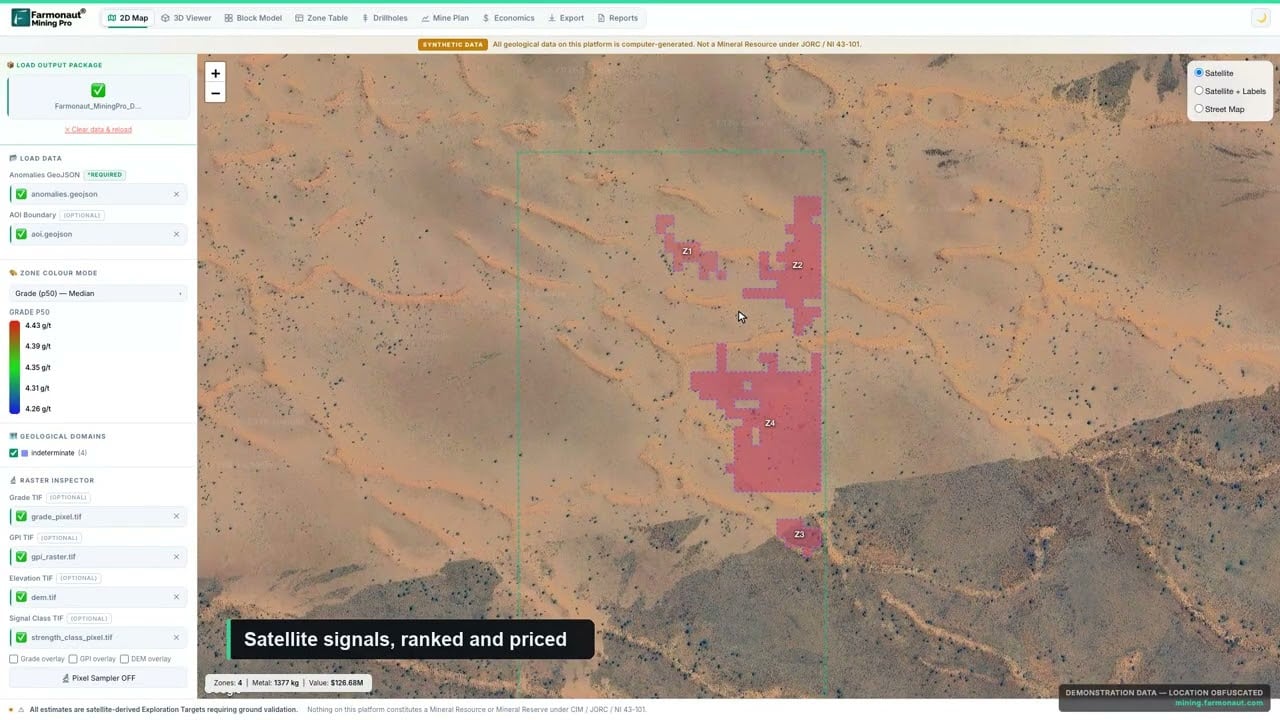
▶ How a licence boundary becomes satellite maps and exploration targets in Farmonaut Mining Pro. · 4:56
Choosing a marketing agency for mining
General agencies often struggle with mining because the audiences are narrow and the compliance risk is real. When comparing a marketing agency for mining, ask:
- Which audience is this for? Investor relations, recruiting, community engagement and equipment sales need different channels and messages. An agency that pitches one plan for all four has not understood the business.
- Do they know the disclosure rules? Ask how they handle technical claims under NI 43-101, JORC or S-K 1300, and who signs off before anything is published.
- Can they write technical content? Ask for samples on geology, processing or equipment written for a specialist reader, not generic copy.
- How do they measure results? For suppliers, that means qualified leads and quote requests. For listed miners, it means reach among relevant investors, not raw clicks.
- Have they worked in your jurisdictions? Community and regulatory messaging in Nevada, Quebec, Western Australia or Ghana differs a great deal.
- Who owns the accounts? Make sure your company owns the ad accounts, analytics, domain and content, so you can change agency without losing history.
Many mining companies keep investor messaging in-house with legal review, and use outside help for websites, search, recruiting campaigns and trade-show content.
Mining marketing case study examples
Real results are the most convincing marketing a mining supplier can show. A good case study follows a simple pattern: the customer’s problem, what was supplied or done, measured results, and a quote from the customer. Three rules keep it credible:
- Get written approval from the customer for the name, the numbers and any photos of their site.
- Use their numbers, not yours. “Downtime fell from X to Y hours per month, as measured by the mine” is stronger than “dramatic gains”.
- Keep listed-company rules in mind. If the customer is a listed miner, nothing in your case study should add to or contradict its public technical disclosure.
For examples of how mining technology is presented to buyers, see our overview of advanced mining technology, our guide to gold and copper mining equipment suppliers and the sustainability practices described for the Sunshine silver mine.
Marketing budget by stage of a mining business
What to spend on depends on where the business is. A new operation planning its first sales, covered in our guide on how to start a mine, needs different marketing from an established producer.
- Explorer before a resource: a clear website with maps, the latest technical disclosure and news releases; one investor show such as PDAC; email updates to shareholders. Budget mainly for content accuracy and legal review. Our guide to an exploration budget for a small licence shows where the money usually goes first.
- Developer approaching production: add community engagement, recruiting campaigns and supplier relations. Video of construction progress works well.
- Producer of industrial minerals: product pages, search, a specialist conference or two, and regular contact with buyers. Keep specifications and lead times current online.
- Equipment or service supplier: search and LinkedIn ads tied to product pages, one major show and several regional ones, case studies and demo videos.
Firms that build mines for others, such as a mine development company, rely heavily on reference projects and technical credibility rather than advertising.
Challenges and what to check before you spend
- Small audiences: a few hundred real buyers may exist for your product worldwide. Broad campaigns waste money; narrow targeting and good lists matter more.
- Technical communication: turning geology, process data and engineering into readable content is a specialist skill. Have a technical person review every page.
- Disclosure risk: for listed companies, every public claim must match filed technical reports.
- Data privacy: trade-show scanning, email lists and retargeting must follow privacy law in each country you market to, including consent rules for email.
- Long sales cycles: industrial contracts and equipment orders can take months or years. Judge marketing on qualified leads and pipeline, not on the first month’s sales.
- Skills: many mining firms lack in-house digital marketing staff. A part-time specialist plus a clear plan often beats a large agency retainer.
Before any spend, check three things: that the website converts (a test inquiry reaches the right person within a day), that you can track where each lead came from, and that someone owns follow-up.

▶ The environmental impacts of mining explained in clay animation, the kind of clear content communities and investors look for. · 2:31
Frequently asked questions
What is digital marketing for mining?
It is the use of websites, search, online ads, email, social media and video to reach the buyers, investors, partners and staff a mining business needs. It works alongside trade shows and direct sales rather than replacing them.
Which trade shows matter most for mining companies?
It depends on the audience. MINExpo (about 45,000 attendees in 2024, per the NMA) suits equipment and services sold to mine sites; PDAC (27,353 participants in 2025) suits explorers and investors; specialist industrial minerals conferences suit producers of one mineral.
How should industrial minerals producers market their products?
Lead with specifications: chemistry, particle size, packaging, shipping points and lead times. Put these on clear product pages, appear in searches for your mineral and its uses, attend the specialist conference for your mineral, and keep regular contact with existing buyers.
Is online advertising worth it for mining equipment?
Yes, when it is narrow. Paid search on exact product phrases and LinkedIn ads aimed at procurement and maintenance roles can produce qualified quote requests. Track cost per qualified lead, not clicks.
What does a marketing agency for mining do differently?
A specialist agency knows the audiences (investors, operators, procurement, communities), can write technical content and understands disclosure rules such as NI 43-101 and S-K 1300. Ask for mining samples and clear reporting on leads.
Can a listed mining company advertise its project online?
Yes, but the content is public disclosure. Technical claims must match filed reports and be approved by a qualified person, and paid promotion should be disclosed as paid. CSA Staff Notice 51-356 lists promotional practices Canadian regulators object to.
How do I measure mining marketing results?
Use cost per qualified lead and cost per order, by channel. Tag every campaign link, record lead source in your sales system, and review each quarter.
What content do mining investors look for online?
The latest technical report, a project location map, key numbers with their basis and date, management background and recent news releases. Clear maps and documents matter more than design.
How much should a mining company spend on marketing?
There is no fixed rule. Start from the cost of one qualified lead and the value of one order, then use the calculator on this page to compare a trade show with online advertising for your own numbers.
Can satellite imagery be used in mining marketing?
Yes. Dated satellite images of a licence, plant or restored land are strong visual evidence. For exploration maps, present them as targets for follow-up work, not as mineral resources.
More from Farmonaut: crop loan and insurance, agro admin app.
This page is for information only. It is not legal or investment advice. Listed companies should confirm disclosure rules with their qualified person and legal counsel.
Farmonaut mining
Get satellite maps of your licence for investor material
Request a quote for satellite mineral screening of your licence area, delivered as maps you can use with the usual target-not-resource caveats.

Mining Pro sample view, synthetic data
Keep reading
Sources
- National Mining Association, MINExpo 2024 breaks all records (2024): nma.org
- Mining Technology, MINExpo 2024 in review (2024): mining-technology.com
- Canadian Mining Journal, PDAC 2025 draws 27,353 participants (2025): canadianminingjournal.com
- IMFORMED, industrial minerals conferences (2026): imformed.com
- IAB/PwC, Internet Advertising Revenue Report: Full Year 2024 (2025): iab.com
- USGS, Mineral Commodity Summaries 2026: Industrial sand and gravel: pubs.usgs.gov
- USGS, Mineral Commodity Summaries 2026: Salt: pubs.usgs.gov
- USGS, Mineral Commodity Summaries 2026: Lime: pubs.usgs.gov
- USGS, Mineral Commodity Summaries 2026: Clays: pubs.usgs.gov
- USGS, Mineral Commodity Summaries 2026: Phosphate rock: pubs.usgs.gov
- USGS, Mineral Commodity Summaries 2026: Soda ash: pubs.usgs.gov
- USGS, Mineral Commodity Summaries 2026: Diatomite: pubs.usgs.gov
- USGS, Mineral Commodity Summaries 2026: Gypsum: pubs.usgs.gov
- Ontario Securities Commission, specific disclosure requirements for mining companies: osc.ca
- CSA Staff Notice 51-356, Problematic promotional activities by issuers (2018): osc.ca
- A&O Shearman, SEC overhauls disclosure requirements for mining companies (2018): aoshearman.com
- eCFR, 17 CFR Part 229 Subpart 1300, Disclosure by registrants engaged in mining operations: ecfr.gov
Discussion
Questions, corrections or field experience? Share them below. First-time comments are reviewed before they appear, and your email is never published.
No comments yet. Be the first to add a question or your experience.

 WSP Investment Company
 Dalgety Minerals Pty Ltd
 Vortex Minerals Pty Ltd
 Faith At Work (Pty) Ltd
 Geotech Mining Solutions plc
 Vulcan International Limited
 Kidepo Associates
 GKY Mining
 Alkimy SARL
 Double A Trading
 GemSprout Metals Limited
 Qader Group
 Ileys General Trading
 SG Gold Mining LLC
 VRV Global Pte Ltd
 Omsri International FZE
 G.I.T.T.
 Jaunita Erss Ltd
 Almosi SARL
 SRK Consulting
 Berks Gold Limited
 Mwerezi Minerals Company Limited
 Mining SARL

 Exploration consultancy · South Africa · Gold










