

Reviewed September 2026 against USDA Farm Service Agency rate announcements, the Purdue University Center for Commercial Agriculture’s agricultural credit outlook, and the American Bankers Association’s farm lending data.
An agriculture loan is financing extended by a bank, Farm Credit association, or government agency for farmland, equipment, operating costs, or storage. The USDA Farm Service Agency (FSA) sets its direct loan rates monthly: as of August 2026, Direct Farm Operating Loans carry a 5.250% rate and Direct Farm Ownership Loans carry 6.000%, per the FSA’s August 2026 lending-rate announcement. Commercial lenders price higher — the Chicago Federal Reserve District reported an average farm operating loan rate of 7.50% and a farm real estate mortgage rate of 6.80% in Q3 2025, according to Purdue University’s Center for Commercial Agriculture. This guide walks through what’s available in Spokane, Washington, across Texas, and in Canada, plus the grant programs — including those targeted at female farmers — that can be paired with a loan to cut the amount you need to borrow.
Current Agriculture Loan Rates: USDA vs. Commercial Lenders
Rates on an agriculture bank loan depend first on who is lending. The USDA Farm Service Agency publishes direct-loan rates on the first business day of every month; the August 2026 update set Direct Operating Loans at 5.250%, Direct Farm Ownership Loans at 6.000%, the Down Payment Loan for farm ownership at 2.000%, Farm Storage Facility Loans (3- to 12-year terms) between 4.125% and 4.625%, and Emergency Farm Loans for actual production loss at 3.750%. These are direct-from-government rates, not guarantees issued through a bank — you apply through your local FSA county office.
Commercial and Farm Credit System lenders price differently because they carry different risk and funding costs. Purdue University’s Center for Commercial Agriculture reported that the Chicago Federal Reserve District — which covers Illinois, Indiana, Iowa, and parts of Wisconsin and Michigan — averaged 7.50% on farm operating loans and 6.80% on farm real estate mortgages in the third quarter of 2025. Washington and Texas are outside that district, so treat the Chicago figures as a national reference point, not a Pacific Northwest or Texas quote — ask your local Farm Credit association or bank for its current sheet, since commercial ag rates move with the prime rate and are not centrally published the way FSA’s are.
For a low interest agriculture loan, the FSA Down Payment Loan at 2.000% is the cheapest program currently published, but it is narrowly scoped: it finances only the down payment portion of a farm ownership purchase, requires the borrower to secure the remaining balance from a commercial lender or another FSA loan, and is limited to beginning and underserved farmers. It is not a substitute for a full operating line.
Agriculture Loans Spokane & Farm Loan Spokane Valley
Spokane County sits in Washington’s Inland Northwest, where wheat, legumes, and irrigated specialty crops dominate. Producers here — including those looking for a farm loan Spokane Valley — draw from three channels: local banks and credit unions (Washington Trust Bank, STCU, and Numerica all maintain agricultural lending desks), Farm Credit associations serving eastern Washington, and the USDA Farm Service Agency’s Washington state office, which administers direct and guaranteed loans against the limits below.
What a Bank Asks Before Approving an Ag Loan
- Cash-flow projection: a season-by-season budget showing how loan payments fit around planting and harvest income, since farm income is seasonal rather than monthly.
- Collateral: land, equipment, or standing crops pledged against the loan amount.
- Production history: yield and revenue records, typically three years, to substantiate the cash-flow projection.
- Debt-to-asset position: lenders review existing debt against farm assets; the exact ratio thresholds are set per-lender and are not centrally published — ask your bank or Farm Credit association directly for its current underwriting guideline, since it varies by institution and by loan type.
- Try it: Estimated result
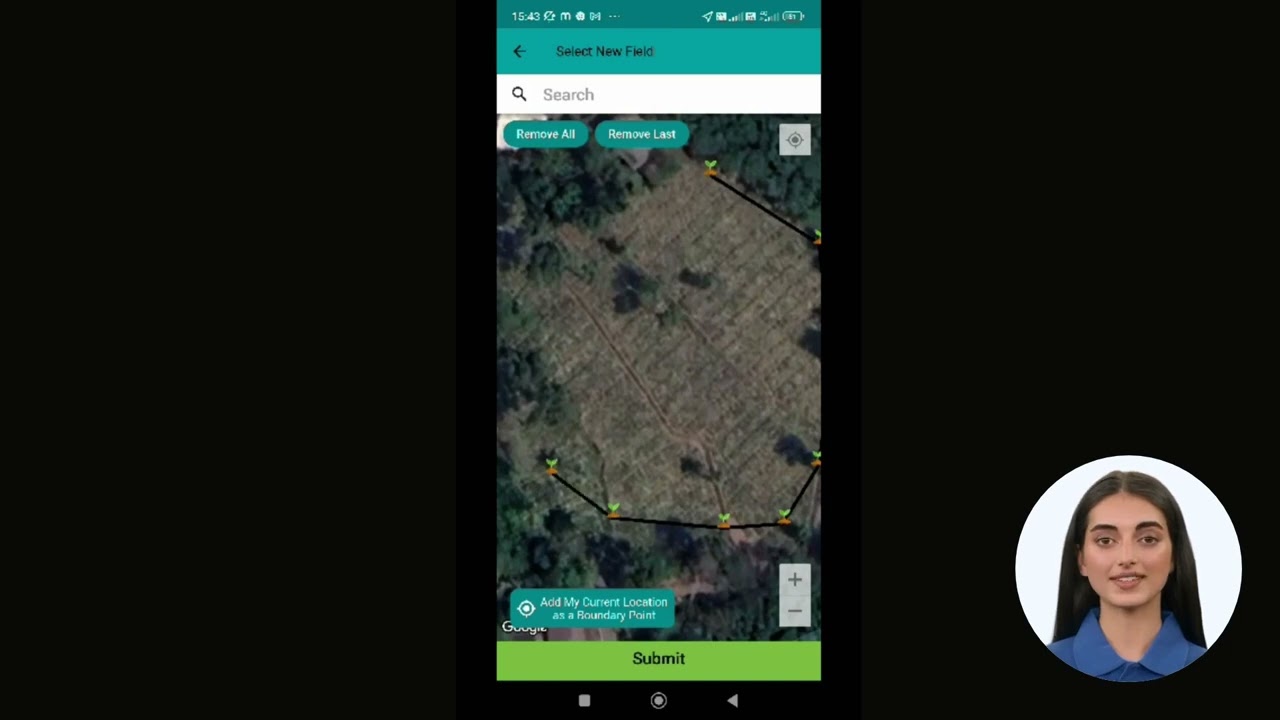
Verifiable production and resource-use records make that first bullet easier to build. Lenders assessing an agriculture loan application increasingly accept satellite-based crop monitoring, such as Farmonaut’s large-scale farm management tools, as supporting documentation for yield history and input efficiency — it doesn’t replace your tax returns, but it corroborates them.

Agriculture Loans Washington: State Limits and Programs
For agriculture loans Washington-wide, the USDA Farm Service Agency’s Washington state office sets loan ceilings that apply statewide, including Spokane County: Direct Operating Loans and Direct Farm Ownership Loans are each capped at $300,000. Farm Microloans — a streamlined application track aimed at smaller and beginning operations — are capped at $50,000. Emergency Loans, issued after a declared disaster, can carry an outstanding balance up to $500,000. These figures come from the FSA’s Washington state office program page and are the ceiling per loan type, not a guaranteed amount — actual approval depends on the cash-flow and collateral review above.
Beyond FSA, Farm Credit System institutions — a national network of borrower-owned lending cooperatives — extended $373 billion in loans, leases, and related services in 2022, according to the Farm Credit System’s investor presentation. That figure is national, not Washington-specific; there is no published Spokane- or Washington-only breakout of Farm Credit lending volume in the sources gathered for this article, so ask your local Farm Credit association (Northwest Farm Credit Services covers eastern Washington) for its current regional loan volume if that number matters for your planning.
Where to Access Agriculture Loans Washington
- Local Banks & Credit Unions: Washington Trust Bank, STCU, and Numerica maintain agricultural lending programs across Spokane County and the Inland Northwest.
- USDA Farm Service Agency: direct and guaranteed loans against the state limits above; apply through your county FSA office.
- Farm Credit Associations: Northwest Farm Credit Services and similar cooperatives offer land purchase and operating financing across eastern Washington.
Agriculture Loans Texas: A Larger, More Varied Market
Texas agriculture spans cattle ranching, cotton, corn, and poultry, with financing needs that differ by scale far more than in Spokane’s more uniform wheat-and-legume base. Farm Credit associations — AgTexas, Capital Farm Credit, and Lone Star Ag Credit — are the largest dedicated agricultural lenders in the state, and commercial banks including Frost Bank, Comerica, and Wells Fargo offer farm operating loans alongside equipment and agribusiness lending.
Nationally, the American Bankers Association reported that commercial banks held $71 billion in small farm loans across more than 1 million loans, and $14 billion in micro farm loans across over 630,000 loans, in its 2025 farm lending data. Profitability is tighter than that lending volume might suggest: only 52% of U.S. farm borrowers were expected to be profitable in 2025, according to agricultural lenders surveyed and reported by Farm Policy News. That profitability figure is a lender-survey projection for calendar 2025, not a guarantee for any individual farm or state — Texas operations should weigh it against their own commodity mix, since cattle, cotton, and grain margins move independently.
Financing Uses Common in Texas
- Conservation tillage and irrigation infrastructure to manage drought exposure.
- Expansion of poultry, hog, and beef operations, often financed through Farm Credit term loans.
- Documentation of asset utilization and resource use for lenders, using tools such as Farmonaut’s fleet management platform and Farmonaut’s crop loan and insurance product.
Agriculture Loans Canada: Federal and Provincial Programs
Canadian agricultural financing runs through a different set of institutions than the U.S. system: Farm Credit Canada (a federal Crown corporation), major banks (TD, RBC, Desjardins), and Agriculture and Agri-Food Canada (AAFC), which administers the Canadian Agricultural Loans Act (CALA) Program. CALA-backed loans cover farm property, equipment, and improvements up to $500,000 CAD for eligible farmers and new entrants, with government-backed loan guarantees that reduce the lender’s risk and can improve approval odds for newer operations.
AAFC also funds grant programs for climate adaptation and technology adoption, and gives dedicated attention to Indigenous and underrepresented farmers through tailored loan and grant criteria. None of the specific AAFC grant ceilings or intake windows for the current cycle were confirmed in the research gathered for this article — check Canada.ca’s Grants and Financing Programs for Business directory before applying, since AAFC intake dates and funding caps change by program year.


Precision agriculture documentation increasingly matters for Canadian loan applications too. Farm mapping and monitoring tools — including Farmonaut’s large-scale farm management platform and its  web app — can support blockchain-based product traceability records that AAFC’s technology-adoption grant criteria often ask applicants to demonstrate.
Agriculture Loans and Grants: Grants for Female Farmers
Not every dollar a farm needs has to be borrowed. The clearest published figure on grants for female farmers comes from the USDA’s Value-Added Producer Grants (VAPG) program, which sets a maximum grant of $250,000 for women and minority farmers developing value-added products — processing raw commodities into higher-margin goods, for example turning wheat into flour sold direct-to-consumer, according to a USDA-sourced guide compiled by LocalLine. VAPG is a federal program administered through USDA Rural Development state offices, and grant cycles open annually with specific application windows that shift year to year — check the current VAPG solicitation through your state Rural Development office before assuming last cycle’s deadline still applies.
Because a grant reduces the amount that needs to be financed, pairing a VAPG award with an FSA or commercial loan is a common strategy: the grant covers the value-added equipment or marketing cost, and the loan covers working capital or land. This applies to any agribusiness loan stacking strategy, not only value-added processing — ask your lender whether a pending or awarded grant affects the loan amount they will underwrite.
Greenhouse Loans and Specialty-Structure Financing
For greenhouse loans specifically, none of the sources reviewed for this article publish a dedicated USDA or Farm Credit greenhouse-only loan product with its own rate sheet — greenhouse and hydroponic structures are financed through the same channels as other farm infrastructure: FSA Farm Ownership Loans (for permanent structures, capped at $300,000 in Washington), FSA Direct Operating Loans (for equipment and inputs, also capped at $300,000 in Washington), or a commercial equipment/construction loan through a Farm Credit association or bank. If a greenhouse-specific financing structure exists at your local Farm Credit association, ask directly — greenhouse and controlled-environment agriculture financing terms are set locally and were not part of the published rate data gathered here.
Loan Payment Calculator
Estimate a monthly and total payment using the USDA and commercial rates cited above, or your own lender’s quote.
Estimated result:
Assumptions: fixed-rate, fully amortizing loan with equal monthly payments; does not include origination fees, closing costs, insurance, or property taxes; does not account for USDA guarantee fees on guaranteed loans. Use it to compare scenarios, not as a binding quote — get an amortization schedule from your actual lender before applying.
Using Satellite Data to Strengthen a Loan Application
Lenders assessing an agriculture loan weigh cash flow, collateral, and production history — and verifiable, third-party production records help on all three. Satellite crop monitoring, AI-based advisories, and traceability records don’t replace tax returns or a business plan, but they corroborate the numbers a lender is already asking for.
- Satellite-based monitoring: NDVI-based crop health tracking and soil condition analytics give lenders an independent check on yield claims, which can support faster underwriting.
- AI advisory systems: Farmonaut’s Jeevn AI produces resource-use and risk recommendations that a farmer can attach to a loan application as documentation of a forward operating plan.
- Blockchain traceability: Product traceability records support compliance documentation for grant programs, including USDA VAPG applications, that require proof of a value-added supply chain.
- Carbon and resource monitoring: Carbon footprinting tools document input use and emissions, which some sustainability-linked loan and grant programs ask for as eligibility evidence.
See Crop Loan & Insurance for how these records apply to insurance and financing use cases specifically. Developers and agribusinesses integrating satellite data directly into loan-origination or insurance software can start with the Farmonaut API and the API developer documentation.


Loan & Grant Comparison Table
| Program | Region | Max Amount | Rate | Vintage / Source |
|---|---|---|---|---|
| FSA Direct Operating Loan | Washington (incl. Spokane County) | $300,000 | 5.250% | Aug 2026, USDA FSA |
| FSA Direct Farm Ownership Loan | Washington (incl. Spokane County) | $300,000 | 6.000% | Aug 2026, USDA FSA |
| FSA Down Payment Loan | Nationwide | Portion of purchase price | 2.000% | Aug 2026, USDA FSA |
| FSA Farm Microloan | Washington | $50,000 | Set at streamlined-loan rate; confirm current rate with local FSA office | 2026, USDA FSA WA office |
| FSA Emergency Loan | Washington | $500,000 outstanding | 3.750% (actual loss) | Aug 2026, USDA FSA |
| FSA Farm Storage Facility Loan | Nationwide | Varies by facility; ask local FSA office | 4.125%–4.625% | Aug 2026, USDA FSA |
| Commercial operating loan, avg. | Chicago Fed District | Set by individual lender | 7.50% | Q3 2025, Purdue Center for Commercial Ag |
| Commercial farm real estate mortgage, avg. | Chicago Fed District | Set by individual lender | 6.80% | Q3 2025, Purdue Center for Commercial Ag |
| USDA VAPG grant (women/minority farmers) | Nationwide | $250,000 | N/A — grant, non-repayable | 2026, USDA via LocalLine guide |
| CALA Program loan | Canada | $500,000 CAD | Set by participating lender under CALA guarantee | Current program terms; confirm at AAFC |
Note: Every figure in this table carries the date it was published. USDA FSA rates change monthly — check the FSA’s rate announcement page before relying on a number here that’s more than a few weeks old.
How to Apply: A Durable Checklist
Rates and loan limits change; the underwriting process does not. Use this checklist regardless of which program or which year you’re reading this:
- Pull your production history. Three years of yield and revenue records, ideally corroborated by independent monitoring data rather than self-reported logs alone.
- Build a cash-flow projection. Map loan payments against your actual planting-to-harvest income cycle, not a flat monthly assumption.
- Check current rates before you apply, not after. Visit the USDA FSA lending-rates announcement for the current month’s direct-loan rates, since they’re revised on the first business day of every month.
- Confirm your state’s loan limits. The FSA Washington state office program page (or your own state’s equivalent) lists current maximums by loan type.
- Ask about grant-loan stacking. If you qualify for VAPG or a similar grant, ask your lender how a pending award changes the amount you need to finance.
- Get a same-district or same-state comparison rate. National averages like the Chicago Fed District figures above are a reference point — your local Farm Credit association’s quote is the number that matters.
- Document technology adoption where it applies. If you use satellite monitoring, traceability, or carbon tracking, include that documentation; some grant programs score it directly.
FAQ: Agriculture Loans & Grants
- What is the current USDA agriculture loan interest rate?
- As of August 2026, USDA Direct Farm Operating Loans are 5.250% and Direct Farm Ownership Loans are 6.000%, per the FSA’s monthly rate announcement. These rates change on the first business day of each month — check the FSA rate announcement page for the current figure.
- What’s the maximum agriculture loan amount in Washington state?
- USDA Direct Operating and Direct Farm Ownership Loans are each capped at $300,000 in Washington; Farm Microloans at $50,000; Emergency Loans at $500,000 outstanding, per the FSA Washington state office.
- Are there grants for female farmers?
- Yes. USDA’s Value-Added Producer Grants program sets a $250,000 maximum for women and minority farmers developing value-added products, funded through USDA Rural Development. Confirm the current application window with your state Rural Development office, since VAPG cycles open annually with dates that shift year to year.
- Is there a dedicated greenhouse loan program?
- No dedicated federal greenhouse-only loan product was found in USDA or Farm Credit program materials reviewed for this guide. Greenhouse and controlled-environment structures are financed through standard FSA Farm Ownership Loans (structures) and Direct Operating Loans (equipment/inputs), or a commercial construction loan through a Farm Credit association — ask your local association whether it has a specialty-structure product.
- How do agriculture loans differ from grants?
- Loans must be repaid with interest; grants, like USDA’s VAPG, are non-repayable funds awarded for a specific qualifying activity. Farmers often pair the two — a grant covering part of a project’s cost, a loan covering the rest — to reduce total interest paid.
- Can new or small producers qualify?
- Yes. USDA Farm Microloans (capped at $50,000, streamlined application) and the FSA Down Payment Loan (2.000% rate, for beginning and underserved farmers) are both built for smaller or first-time operations rather than established commercial farms.
- Where can I check current agricultural credit conditions?
- The Purdue University Center for Commercial Agriculture’s agricultural credit outlook publishes regional lending-rate and farm-profitability data drawn from Federal Reserve district surveys, updated as new district reports are released.
- How can satellite data help my loan application?
- Independent crop-health and resource-use records can corroborate the production history and cash-flow projection a lender asks for. Farmonaut’s satellite monitoring, AI advisories, and traceability tools document exactly that data — see Crop Loan & Insurance for how it applies.
- Where can agri-tech or lending businesses integrate this data directly?
- Visit the Farmonaut API and API developer documentation for self-service integration into loan-origination or insurance platforms.
- Is there guidance specific to farming loans and grants in India?
- Farmonaut covers that market separately — see Farming Loans and Grants in India. This guide is scoped to the U.S. and Canada.
Bottom line: the fastest way to move from “position 20 on a search results page” mindset to an actual funded loan is to separate what’s fixed (the underwriting checklist above) from what changes monthly (USDA rates) and annually (grant cycles, state loan limits). Bookmark the FSA rate page and your state’s FSA program page, and revisit this guide’s comparison table each time you’re ready to apply rather than treating any single figure here as permanent.

 Mera Farmhouse
 GalaxEye Space
 Sun Palm Australia
 Grandstream Algérie
 XOS Realty
 Geospatial Lab Africa
 Agro La Gándara
 HIPSAC
 ZOL Zimbabwe
 Juligerm
 AdBio
AdBio MISE Maroc
 NWNS
NWNS Red August Group
 Farm Inc
 WeMe Global
 Agrotoken
 Blue BearX
 Insignito
 DnCubed
