

Farm equipment · Collector buying guide
Antique Farm Equipment for Sale: Prices and Buying Tips
A 1915 Wallis Cub sold for $231,000 at a 2021 collector auction, but most vintage machines sell for far less. Where to buy, what recorded sales show, how to inspect an old tractor, how to fit rollover protection and what a restoration really costs.
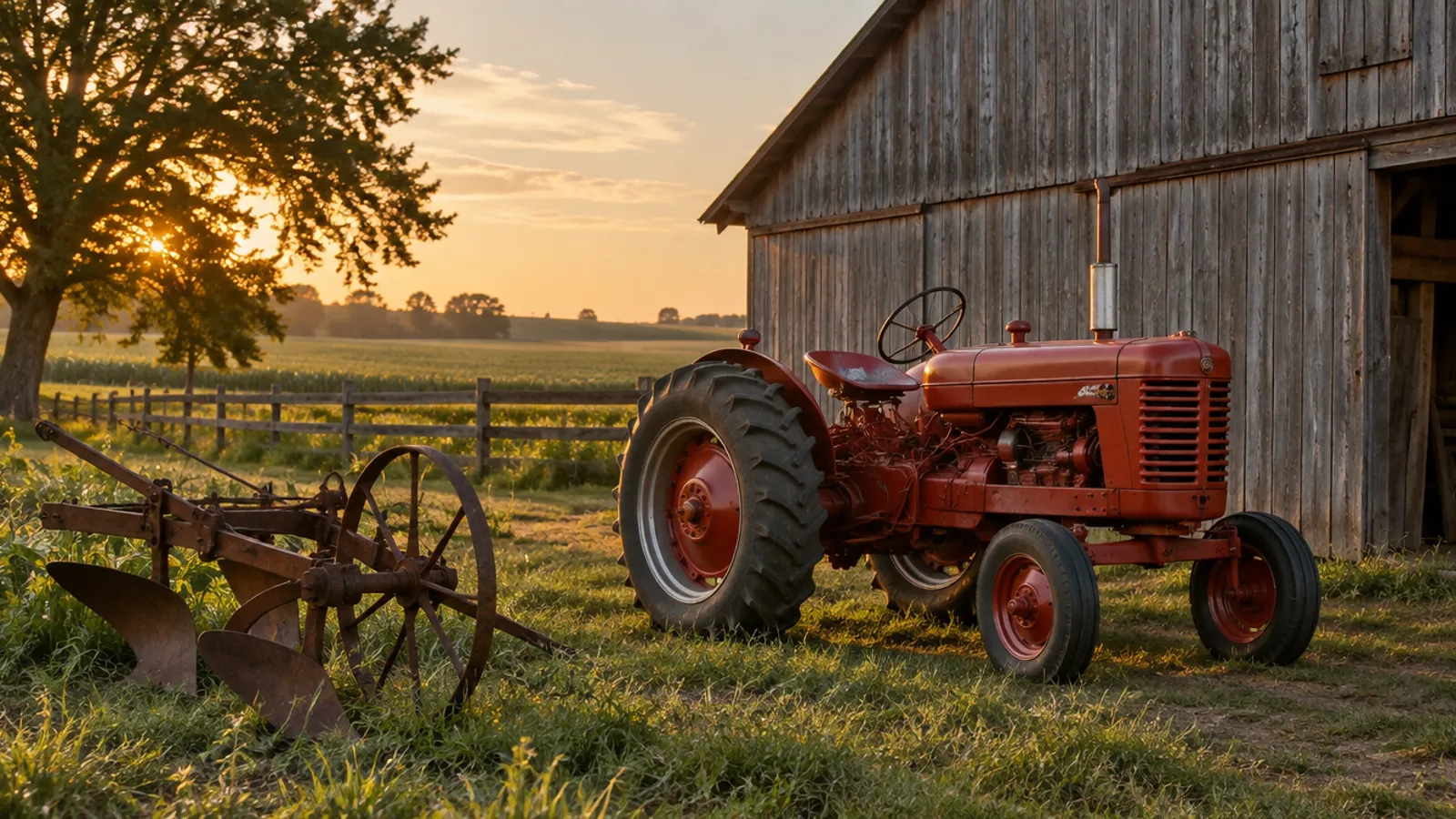
Key takeaways
- Record collector results: a 1915 Wallis Cub Model D sold for $231,000 and a 1938 Minneapolis-Moline UDLX for $215,250 in Davenport, Iowa, in spring 2021 (auction results incl. buyer’s fee).
- The same Spring Classic sale grew from more than $5 million in 2020 to more than $8.4 million in 2021, with sell-through of 95% and 96%.
- Tractor overturns cause about 130 US farm deaths a year; older tractors without ROPS are the ones typically involved (Great Plains Center for Agricultural Health).
- ROPS were not standard on new tractors until 1985 (Ohio State University), so most antique tractors need a retrofit if they will work.
- Price the full job before you bid: purchase, buyer’s premium, transport, parts, paint and safety work.
In this article
- Antique farm equipment for sale: what counts as antique
- What vintage tractors sell for at auction
- Where to find antique farm machinery for sale
- How to inspect a vintage tractor before you buy
- Safety: old tractors and rollover protection
- Vintage implements, dairy relics and farm collectibles
- Restore, preserve or use: plan the budget first
- Antique tractor cost calculator
- Antique farm equipment prices: a quick guide by type
- Buying from abroad: shipping, import and paperwork
- Using a vintage tractor on a working farm
- How we checked the numbers
- FAQ
Antique farm equipment for sale ranges from small cast-iron seats and relics to a pre-1920 tractor that sells for more than $200,000 at auction. At Mecum’s Gone Farmin’ Spring Classic in Davenport, Iowa, in spring 2021, a 1915 Wallis Cub Model D sold for $231,000, an auction record, according to a ClassicCars.com report on the sale. Most vintage pieces trade for far less, and the real cost of owning one is often the restoration, the transport and the safety work that comes after the hammer falls.
This guide is for collectors, hobby farmers and small-acreage owners in the US, Canada, the UK, Europe, Australia and New Zealand. It covers where vintage tractors and implements are sold, what recent auction results show, how to inspect an old machine, and how to fit it with a rollover bar if you plan to use it. It ends with a calculator that adds up the full cost of a purchase and restoration so you can compare it with what the machine may be worth. Prices quoted are auction results that include the buyer’s fee unless we say otherwise.
Antique farm equipment for sale: what counts as antique
There is no single legal definition. Collectors and auction houses use rough age bands, and the bands matter because they change who wants the machine and why.
| Band | Rough build years | Typical examples | Main buyers |
|---|---|---|---|
| Steam and early gas era | Before 1920 | Steam traction engines, early two-cylinder and four-cylinder gas tractors | Museums, serious collectors, show clubs |
| Classic era | 1920s to 1950s | Farmall, John Deere letter series, Ford N series, Ferguson, Allis-Chalmers, Minneapolis-Moline | Hobby collectors, small farms, parade and show owners |
| Muscle-tractor era | 1960s to early 1970s | John Deere 4020 and 4520, high-horsepower row-crop models | Collectors who also want a working tractor |
| Vintage implements and “farm relics” | Any period | Horse-drawn plows, seed drills, cream separators, milk cans, signs, seats | Decorators, restaurants, rural museums, small collectors |
Age alone does not make a machine valuable. Rarity, originality, condition and a known history do. A common tractor built in large numbers can be worth less than a later model that was made in small runs. The best prices tend to go to machines that are rare, complete and either well restored or honestly original.
The antique tractor hobby also has deep roots in testing and buyer protection. The Nebraska Tractor Test Law was passed in 1919 after a farmer bought an unreliable tractor and could not get parts. The first test, on a John Deere Waterloo Boy Model N, was completed on April 9, 1920, as the Nebraska Tractor Test Laboratory history explains. Old test reports are still a handy reference when you check the horsepower a seller claims for a vintage model.
What vintage tractors sell for at auction
Public auction results are the clearest price signal for collector machines, because the final price is recorded. Dealer asking prices and online listings show what sellers hope to get, not what buyers paid.
Chart
Top tractor results, Davenport Spring Classic
US dollars, auction results including buyer’s fee, spring 2021
At the spring 2021 Spring Classic, the sale saw a 96 percent sell-through rate and more than $8.4 million in sales, a 68 percent rise on the same sale in 2020. Four vintage tractors went for six figures. Besides the Wallis Cub, a 1938 Minneapolis-Moline UDLX sold for $215,250, a 1960 John Deere 8020 for $194,250, and a 1960 John Deere 730 All-Fuel Hi-Crop, one of only four built, for $105,000. All four prices include the buyer’s fee.
The June 2020 sale at the same venue gives a useful comparison. A ClassicCars.com report on the 2020 sale lists more than 1,300 lots, a 95 percent sell-through rate and more than $5 million in sales. The top tractor was a 1938 Minneapolis-Moline UDLX Comfortractor at $129,150. A 1969 John Deere 4520 brought $78,750, a 1911 Case 30 horsepower steam traction engine $75,600 and a 1921 Avery 25-50 $68,250.
Keep three points in mind when you read these figures. First, they are the top of the market, not the middle. Most classic-era tractors sell for a small fraction of these sums. Second, an auction price depends on who is in the room and online that day. Third, some reports quote hammer prices and others include the buyer’s fee, so check which basis you are looking at before you compare two sales.
Chart
Total sales at the Davenport Spring Classic
US$ million, more-than figures as reported; June 2020 vs spring 2021
Where to find antique farm machinery for sale
Old machines change hands through a few main channels. Each has its own risks.
1. Specialist collector auctions
Large collector sales draw national and overseas bidders and publish results. They suit rare machines and buyers who want a recorded price. Expect a buyer’s premium, strict payment deadlines and a short window to collect the machine.
2. Farm estate and dispersal sales
When a farm closes or a collection is sold, local auctioneers run on-site sales. These can be the best place to find an untouched tractor that has sat in a shed for decades. Viewing days matter: you get one chance to look before you bid.
3. Online marketplaces and classified sites
Online classifieds and general marketplaces list thousands of vintage pieces. They are convenient, but photos hide problems. Ask for a cold-start video, close-up photos of serial plates and a clear note on what is original. Never send a deposit for a machine you have not seen or had inspected by someone you trust.
4. Tractor clubs, shows and swap meets
Breed clubs for each brand run shows, newsletters and swap meets. Members often sell machines they know well, with service history. Clubs are also the best source of parts, manuals and advice on a specific model.
5. Dealers who specialise in classics
A small number of dealers buy, restore and sell vintage tractors. You pay more than at auction, but you may get a working machine, a written description and some after-sale support. Treat any dealer figure as an asking price until a sale is agreed.
Wherever you buy, the general rule from auction market analyst Machinery Pete still helps. In an AgWeb column he says the price of a well-kept late-model used machine at auction should usually fall roughly between 70% and 75% of the dealer advertised price for the same machine brand new. That rule was written for modern equipment, not collector pieces, but it is a reminder that recorded sale prices, not advertised prices, are the figures to check before you pay.
How to inspect a vintage tractor before you buy
An old tractor can look perfect after a coat of paint and still need an engine rebuild. Walk through these checks in order.
- Serial number and plates. Find the serial plate and stamped numbers. Check them against club or factory records to confirm the model and year. Missing or swapped plates lower collector value.
- Originality. List parts that are not original: wheels, tinwork, seat, carburettor, magneto. A mix of years is common, but it should be disclosed.
- Cold start. Ask the seller not to run the engine before you arrive. Listen for knocking, watch for blue or white smoke and check oil pressure if a gauge is fitted. A Ritchie Bros inspection guide suggests listening to the engine block with a mechanic’s stethoscope to pick out knocking sounds.
- Fluids and leaks. Look under the tractor and at the oil, coolant and transmission fluid. Water in the oil or oil in the coolant can point to a cracked block or head gasket.
- Clutch, gears and brakes. Drive it slowly through every gear if the seller allows it. Old brakes are often weak; test them on flat ground.
- Frame, castings and sheet metal. Look for welded cracks in the housings, rust through the fuel tank and dents in the hood. Castings are hard to replace on rare models.
- Tyres and wheels. Rear tyres for older sizes can be costly. Rusted rims may need replacement.
- Paperwork. Ask for receipts, photos of past restoration, club registration and any title or bill of sale your state or country requires.
Bring a friend who knows the model, or pay a mechanic who works on vintage engines. The cost of an hour’s inspection is small next to the cost of a seized engine.
Safety: old tractors and rollover protection
Many antique tractors were built before rollover protection was common. That matters if you plan to use one for mowing, hauling or field work, not just for display.
Tractor overturns are the leading cause of fatal injuries on US farms, with an average of about 130 deaths each year, according to the Great Plains Center for Agricultural Health. The same centre says 1 in 10 operators overturns a tractor in their lifetime, and that older tractors without Roll-Over Protective Structures (ROPS) are the machines typically involved in these deaths.
ROPS became available in the mid-1960s but were not standard on new tractors until 1985, according to an Ohio State University fact sheet. A University of Nebraska Medical Center safety note adds that tractors are often in use for 30 to 40 years after they are built, so many unprotected machines still work on farms today.
In the US, the OSHA agricultural hazards page explains that an approved ROPS is required on agricultural tractors over 20 horsepower built after October 25, 1976, when a hired worker operates them. Rules in Canada, the UK, the EU, Australia and New Zealand differ, so check the rules where you live and get professional advice before you fit or remove any protective frame.
Some collectors fear a roll bar spoils a classic look. Many retrofit kits fold down or bolt on so the tractor can be shown without the frame and protected when it works. The National ROPS Rebate Program, set up in 2006, helps US farmers pay to fit ROPS on unprotected tractors. Its one-page summary says it has fitted ROPS on over 3,600 tractors. Always wear the seat belt with ROPS fitted, and do not wear one on a tractor without ROPS.
Vintage implements, dairy relics and farm collectibles
Not every buyer wants a tractor. Smaller antique farm equipment is easier to store and move, and it suits homes, cafés, farm shops and small museums.
- Horse-drawn plows, cultivators and seed drills. Often sold as garden or yard pieces. Complete examples with original wooden parts and readable maker marks are worth more.
- Hand-cranked cream separators and butter churns. Dairy relics are popular with collectors of farm kitchen items. Check that the bowl and discs are present; they are often missing.
- Early milking machine units and milk cans. Pails, claws and pulsators from early milking systems show how dairy work changed. They are display pieces only and should not be used for food.
- Hit-and-miss engines. Small stationary gas engines that powered pumps, saws and separators. They have a strong show following and many run again after careful work.
- Signs, seats and badges. Porcelain dealer signs can sell for high prices. At the 2020 Davenport sale, a 1950s New Idea double-sided porcelain neon sign brought $29,500. Fakes are common, so buy from sellers with a record.
The original version of this page also covered modern dairy machinery and robotic milking. Buyers looking for working modern machines will find our general guides more useful; this page now stays on vintage and heritage equipment.
Restore, preserve or use: plan the budget first
Before you bid, decide what you want the machine to be. Each path has a different cost.
Preserve. Clean, stop the rust, fix what is unsafe and keep the original paint and wear. Original, unrestored machines are prized by some collectors. Costs are lowest.
Restore to show. Strip, repair and repaint to factory finish. This is the most costly path. Paint, decals, tyres, engine work and tinwork add up fast, and labour can be a large share if you pay a shop.
Restore to work. Focus on the engine, brakes, hydraulics and safety, with less spent on looks. Add ROPS and lights if the tractor will be used on a farm or on the road.
Write down every cost before you commit: purchase price, buyer’s premium, transport, parts, paint, labour, safety work and storage. Then compare the total with recorded sale prices for the same model in the same condition. The calculator below does that sum for you.

▶ How NDVI maps from satellites show crop stress before you can see it. · 4:09
Antique tractor cost calculator
Enter your own figures. The starting values are examples only, chosen to land near break-even; they are not prices for any model. Values for vintage machines vary widely by model, condition and market, so check recent recorded sales and get advice from a club or appraiser before you rely on any number. This is not financial advice.
Try the numbers for your own farm below.
Calculator
Total cost of an antique tractor vs its value
Enter your own prices and estimates.
- Price paid incl. premium: 6,600 $
- Restoration and safety: 4,000 $
- Total cost: 11,200 $
Example values only, set near break-even; they are not prices for any model. Check recent recorded sales for your model and get advice from a club or appraiser. Not financial advice.
Antique farm equipment prices: a quick guide by type
The table shows the kind of evidence to look for. It uses recorded auction results from the two Davenport sales and gives the basis for each figure. It is not a price list.
| Item | Sale | Price | Basis |
|---|---|---|---|
| 1915 Wallis Cub Model D | Davenport, spring 2021 | $231,000 | Auction result incl. buyer’s fee |
| 1938 Minneapolis-Moline UDLX | Davenport, spring 2021 | $215,250 | Auction result incl. buyer’s fee |
| 1960 John Deere 8020 | Davenport, spring 2021 | $194,250 | Auction result incl. buyer’s fee |
| 1969 John Deere 4520 | Davenport, June 2020 | $78,750 | Auction result incl. buyer’s fee |
| 1911 Case 30 hp steam engine | Davenport, June 2020 | $75,600 | Auction result incl. buyer’s fee |
| 1921 Avery 25-50 | Davenport, June 2020 | $68,250 | Auction result incl. buyer’s fee |
These are record-level results from a top collector sale and are several years old. Use them to understand what drives value, then look up recent sales for the exact model you want.
Chart
Age at sale vs price, top tractor results
Selected tractors from the June 2020 and spring 2021 Davenport sales; price in US$ thousand incl. buyer’s fee
Buying from abroad: shipping, import and paperwork
Many collectors in Canada, the UK, Australia and New Zealand buy from US sales, and the reverse also happens. Before you bid across a border, check four things.
- Transport. Get a quote for trucking and, if needed, container shipping before you bid. Heavy pre-war tractors can cost more to move than small implements are worth.
- Biosecurity and cleaning. Australia and New Zealand have strict rules on soil and plant matter on used machinery. Old tractors often hide soil in wheels and castings, so plan for professional cleaning and inspection.
- Duties and taxes. Import duty and sales or value-added tax may apply. Rules for historic vehicles differ by country.
- Road use. If you want to drive a vintage tractor on public roads, check local registration, lighting and slow-moving vehicle rules.
Rules change, so check with your national customs and agriculture authorities, or a licensed broker, before you buy.
Using a vintage tractor on a working farm
Some owners still use classic tractors for light jobs: mowing, raking hay, hauling a trailer or running a belt-driven saw. A small, simple tractor can be cheap to keep if parts are easy to find. But an old tractor lacks the safety features, comfort and fuel use of modern machines, and it is not a replacement for modern equipment on a commercial farm.
If you farm and collect, the two worlds can meet. Many hobby farmers who run a vintage tractor on a few acres also use newer tools to watch their crops and pasture. Farmonaut provides satellite crop health maps that show which parts of a field are under stress, so you can decide where to send the machine and where to save fuel and time.

▶ How satellite crop maps tell farm equipment where to apply inputs. · 2:12
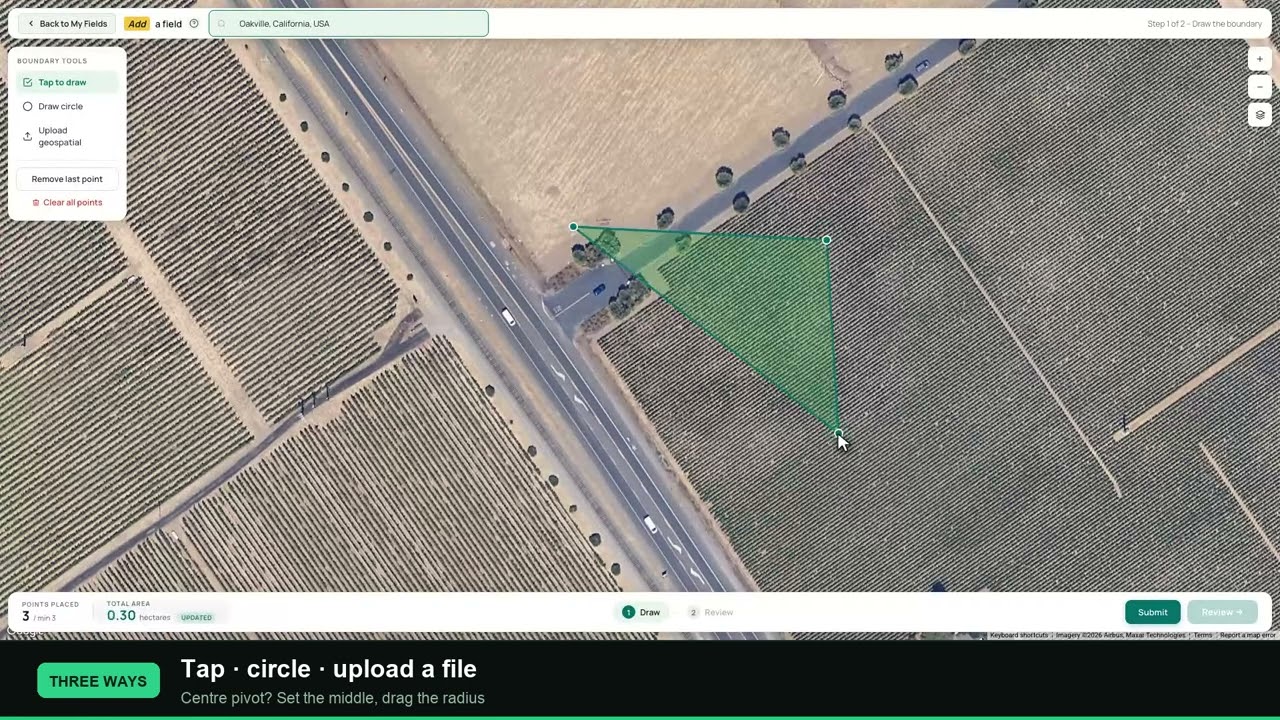
▶ Draw or upload a field boundary in a farm mapping app in under a minute. · 2:21
How we checked the numbers
Auction prices come from published reports of the Mecum Gone Farmin’ sales in Davenport, Iowa, in June 2020 and spring 2021, and include the buyer’s fee as stated in those reports. They are auction results, not dealer asks or list prices. Safety figures come from US university agricultural health centres, OSHA and the National ROPS Rebate Program. Testing history comes from the Nebraska Tractor Test Laboratory. We removed claims from the earlier version of this page that we could not trace to a source, including general market trends for modern dairy machines. Each source is listed at the end of the article.
We cover a connected topic in Agriculture Machinery for Sale: Trends & Equipment for Sustainable Farming.
For a closer look at a related question, see our guide: Best Forestry Machines: Top Forestry Machinery for Sustainable Management.
FAQ
Where can I find antique farm equipment for sale?
At specialist collector auctions, farm estate sales, online classified sites, tractor club shows and swap meets, and a few dealers who restore classics. Club members are often the best source for a well-known machine with service history.
How much is an antique tractor worth?
It depends on the model, rarity, condition and originality. Common classic-era tractors often sell for modest sums, while rare early machines have sold for more than $200,000 at collector auctions. Check recorded sales for the exact model rather than asking prices.
Is it safe to use an antique tractor?
It can be, with care. Many older tractors have no rollover protection, and overturns are the leading cause of farm work deaths in the US. Fit an approved ROPS and wear the seat belt if you plan to work with the tractor, and follow local rules.
Should I restore an antique tractor or keep it original?
Some collectors pay more for honest, original machines, while others want a show finish. Decide your goal first and price the work before you buy. A full restoration can cost more than it adds to the machine’s value, so compare the total with recorded sales first.
What paperwork do I need when buying a vintage tractor?
A bill of sale, any title your state or country requires, and records of the serial number. For imports, you may need customs papers and proof of cleaning. Check local rules or ask a professional.
Related pages on our site: farm management software, sustainable farming practices, fleet management, product traceability, carbon footprinting, crop loan and insurance, weather API docs, agro admin app, Farmonaut web app.
Farmonaut crop monitoring
See your own fields from space
Draw your fields once and Farmonaut shows satellite crop health maps for them through the season, on web, Android or iOS.




Sources
- ClassicCars.com, Mecum’s Gone Farmin’ vintage tractor and truck auction tops $8.4 million (April 2021): journal.classiccars.com
- ClassicCars.com, Mecum’s Gone Farmin’ auction hits 95 percent sell-through (June 2020): journal.classiccars.com
- Nebraska Tractor Test Laboratory, History: tractortestlab.unl.edu
- AgWeb, Swathers to Sprayers: Strong Oklahoma Auctions and Machinery Pete’s Ratio (June 2025): agweb.com
- Ritchie Bros, What to inspect before buying a used farm tractor: blog.ritchiebros.com
- Great Plains Center for Agricultural Health (University of Iowa), Tractor Overturns: gpcah.public-health.uiowa.edu
- Ohio State University Extension, Rollovers and ROPS for Trainers and Supervisors (AEX-892.2.56): ohioline.osu.edu
- University of Nebraska Medical Center, Central States Center for Agricultural Safety and Health, ROPS news (2024): unmc.edu
- OSHA, Agricultural Operations: Hazards and Controls: osha.gov
- National ROPS Rebate Program, program one-pager (March 2025): ropsr4u.org
Discussion
Questions, corrections or field experience? Share them below. First-time comments are reviewed before they appear, and your email is never published.
No comments yet. Be the first to add a question or your experience.

 Insignito
 Croptimum
 Dalmia Bharat Sugar
 DnCubed
 Pistachio ST
 Field Capacity
 Indosistim Teknologi
 Liquify Digital
 CU Foods
 BeyondTech Global
 Rouge VC
 AgroGreen Dynamics
 AgroRisk
 Oath Inc
 Reddane Farming
 Esri North East Africa
 Cresol
 MDCV UK
 Etech Consulting Madagascar

 Licence holder · Niger · Gold










