

Agricultural Products of Brazil, Japan & California 2026:
A Comparative Overview of Climate, Technology & Global Food Supply
“Brazil’s soy output is projected to surpass 155 million tons by 2026, making it the world’s leading exporter.”
“California grows over 90% of America’s broccoli and almonds, innovating with water-efficient methods by 2025.”
Table of Contents
- Introduction
- Global Context: Agriculture, Climate & Technology (2025–2026)
- Agricultural Products of Brazil: Powerhouse of Tropical Farming
- Agricultural Products of Japan: Advanced, Intensive, & Resilient
- Agricultural Products of California: Diversity & Innovation
- Comparative Matrix: Brazil vs. Japan vs. California (2025–2026)
- Climate, Technology, & Sustainability: Shaping Global Agriculture
- Satellite Technology & AI in Modern Agriculture: Insights from Farmonaut
- Key Insights, Pro Tips & Common Mistakes
- Frequently Asked Questions (FAQ)
- Conclusion
Introduction
Agriculture is a foundational pillar of the global economy, underpinning food security, economic growth, and rural livelihoods. With diverse climates and geographies, regions like Brazil, Japan, and California (USA) have developed highly distinctive agricultural profiles that shape global food production, trade, and technology adoption. As we approach 2026, examining the agricultural products of brazil, agricultural products of japan, and agricultural products of california provides deep insight into their unique strengths, sustainability challenges, and contributions to worldwide food supply.
Our comparative overview explores:
- The top crops and livestock underpinning each region’s economy
- The role of technology and precision agriculture for productivity and environmental health
- The critical importance of climate and geography in shaping production and challenges
- How sustainable practices and innovation are securing the future of agriculture worldwide
Global Context: Agriculture, Climate & Technology (2025–2026)
The year 2025 marks a period of significant transformation in global agriculture. Factors like climate change, economic shifts, population growth, and rapid technological innovation have forced agricultural producers to adapt at unprecedented speed. Across Brazil, Japan, and California, a mix of traditional and modern farming techniques shapes production, while climate-related challenges — from drought to typhoons — drive the urgent adoption of sustainable, resilient practices.
- ✔ Climate & Sustainability: All three regions face climate volatility; water scarcity drives efficiency and new crop choices.
- 📊 Technological Adoption: Rapid digitalization, satellite data, and AI empower precision agriculture globally.
- 🌱 Key Products: Soybeans & beef in Brazil; rice in Japan; almonds, dairy, and grapes in California fuel both domestic and export markets.
- ⚠ Resource Constraints: Japan’s limited arable land, California’s water scarcity, and Brazilian deforestation shape farming innovation.
- 🌍 Export Leadership: Brazil and California remain top global exporters; Japan focuses on high-quality, domestic supply and self-sufficiency.
Agricultural Products of Brazil: Powerhouse of Tropical Farming
Brazil is recognized worldwide as one of the top agricultural producers, driven by vast arable lands, tropical climate, and a powerful mix of modern and traditional techniques. By 2025–2026, agricultural products of brazil are indispensable to global food supply chains, with extensive exports fueling the nation’s economic engine.
Top Agricultural Products of Brazil (2025–2026)
- Soybeans: The largest export crop, Brazil is set to produce over 155 million tons by 2026 — a world record. High global demand for animal feed and biofuels keeps it a dominant player in export markets.
- Coffee: Particularly Arabica beans, Brazil remains the top producer globally. Coffee cultivation is rooted in diverse regions, with both large estates and smallholder farmers.
- Sugarcane: Essential for bioethanol production (renewable energy) and traditional sugar markets. Brazil’s efficiency and scale make it a leader.
- Corn: Second to soybeans in volume, supporting both domestic animal feed and beef/poultry exports. Corn yields have rebounded post-2024 through AI satellite crop monitoring.
- Beef & Poultry: As a global top exporter, integrated livestock-crop systems bolster supply, though sustainable management is crucial.
- Orange Juice: Vast citrus groves make Brazil the leading orange juice exporter in the world, especially to North America and Europe.

Brazil’s agricultural success is inseparably linked to:
- Agricultural expansion in the Cerrado and Amazon regions (albeit not without controversy related to deforestation and environmental loss)
- Innovative logistics and storage infrastructure supporting export chains
- Significant adoption of precision agriculture—including satellite monitoring, soil management, and agroforestry—to increase yield while reducing environmental impact.
Sustainability Challenges & Solutions in Brazil
- Deforestation remains a critical challenge. Expansion into the Amazon, driven by soybean, beef, and sugarcane cultivation, threatens biodiversity and carbon stores.
- Agroforestry and conservation agriculture are increasingly promoted to balance economic growth with environmental protection.
- Blockchain traceability, advanced monitoring, and AI-driven advisory systems (see product traceability solutions) foster supply chain transparency and sustainable sourcing.
- 🌱 Soybeans
- ☕ Coffee (Arabica & Robusta)
- 🍊 Orange Juice
- 🍖 Beef & Poultry
- 🌾 Sugarcane

Agricultural Products of Japan: Advanced, Intensive, & Resilient
Japan stands out for its high-quality, intensive agriculture across a limited land area. With nearly 75% of the country covered by mountains and significant urbanization, only a small portion is arable. Despite this, the agricultural products of japan are renowned for their quality, innovation, and resilience in the face of change.
Key Agricultural Products of Japan (2025–2026)
- Rice: The cornerstone crop—short-grain, sticky varieties form the heart of Japanese cuisine and food self-sufficiency policies.
- Fruits: Apples, mandarins, pears, peaches—often cultivated with painstaking care for domestic and premium export markets.
- Vegetables: Daikon radish, eggplant, cucumber, cabbage— essential to both traditional and modern diets.
- Green Tea: Revered globally, Japan remains synonymous with high-quality green tea (matcha and sencha) production.
- Livestock: Wagyu beef, pork, and chicken—with traceability and animal welfare as strong priorities.

Japan’s agricultural system is defined by:
- Exceptional quality standards and food safety assurance, including blockchain traceability.
- Advanced technologies—from robotic harvesters and automated greenhouses to vertical farming and AI-driven real-time crop monitoring.
Farmonaut offers AI and satellite-based insights on large scale farm management to maximize productivity in high-value, land-constrained regions. - Sustainable & organic initiatives: Government-backed efforts to promote organic rice and fruit production, reduce fertilizer use, and increase crop diversity.
- Rural revitalization: Policies to counter population aging by attracting youth and integrating modern techniques with Japanese farming traditions.
- 🍚 Premium Rice
- 🍑 Specialty Fruits
- 🍵 High-Quality Green Tea
- 🐄 Wagyu Beef
- 🌿 Organic Practices
Despite limited arable land and frequent natural disasters (typhoons, earthquakes), Japan’s focus on crop resilience, efficient land use, and food self-sufficiency is a model for sustainable adaptation under challenging geographic conditions.
Agricultural Products of California: Diversity & Innovation
California is the agricultural heartland of the United States. With a Mediterranean climate, fertile valleys, and diversified production, agricultural products of california include over 400 commodities, exporting to global markets and leading in technology-driven sustainability.
The state’s agricultural output is shaped by chronic water constraints, frequent drought, and a strong innovation culture driving advanced water management, organic practices, and high-value export chains.
Key Agricultural Products of California (2025–2026)
- Almonds: The state grows more than two-thirds of the world’s supply, making it a global export leader.
- Wine Grapes: California’s vineyards cluster in Napa Valley, Sonoma, and the Central Coast. Both bulk and premium varietals set quality benchmarks worldwide.
- Dairy: As the United States’ top dairy producer, California’s dairy industry is both intensive and increasingly efficient, using cutting-edge feed management and animal welfare standards.
- Lettuce & Leafy Greens: Key to the nation’s salad bowl, particularly romaine, iceberg, and spring mixes.
- Strawberries and Citrus Fruits: Year-round supply to the U.S. and export markets, made possible by sophisticated irrigation and post-harvest systems.

California’s competitive edge is built on:
- Irrigation innovation: Drip and micro-irrigation systems dramatically reduce water use, vital for crops like almonds, pistachios, and grapes.
- Organic production: The largest organic-producing state in the U.S., California exports certified organic fruits, vegetables, dairy, grains, and wine.
- Farm management tech: Remote crop monitoring, satellite imagery, and AI-powered yield forecasting are standard for large and mid-size operations.
Discover carbon footprint monitoring and fleet management solutions for sustainable and cost-effective resource management. - Supply chain traceability: Real-time tracking from field to table ensures food safety for global markets.
Water, Drought & Adaptation in California Agriculture
- Chronic drought and shifting water allocations have made efficient irrigation and crop selection a necessity.
- Climate-smart breeding: New, drought-resistant cultivars of grapes, almonds, and leafy greens—backed by research and satellite data—help secure yields against unpredictable weather.
- Renewable energy drive: Solar power, bioenergy, and methane capture from dairies are increasingly prevalent.
- 🥜 Almonds
- 🍇 Wine Grapes
- 🥬 Lettuce
- 🍓 Strawberries
- 🧀 Dairy

Comparative Matrix: Brazil vs. Japan vs. California (2025–2026)
The matrix below compares agricultural products of brazil, agricultural products of japan, and agricultural products of california side by side, offering clear insight into their distinctive profiles, economic scale, technological innovations, and export roles. All data for 2025–2026 is estimated, reflecting regional and global agricultural trends.

Climate, Technology, & Sustainability: Shaping Global Agriculture
Climate and environmental constraints remain a defining force for all regions:
- Brazil: Balancing tropical abundance with deforestation risks and pressure to decarbonize export chains.
- Japan: Confronts limited arable land, aging farm population, and a need for food self-sufficiency.
- California: Faces prolonged droughts, water scarcity, and labor challenges, driving automation and resource optimization.
The universal response: Innovative technologies, sustainable practices, and precise data-driven decision-making.
- ✔ AI and Satellite Tech: Enhance yields, reduce waste, and optimize resource inputs everywhere.
- ⚡ Blockchain Traceability: Secures food origins, boosts consumer trust, and drives premium export values.
- 🌍 Carbon & Environmental Impact Monitoring: Integral to future ag policy, certification, and marketing (Farmonaut: Carbon Footprinting).
- 📈 Remote Advisory & Management: Real-time alerting, farm mapping, and yield risk analytics accelerate informed decisions.
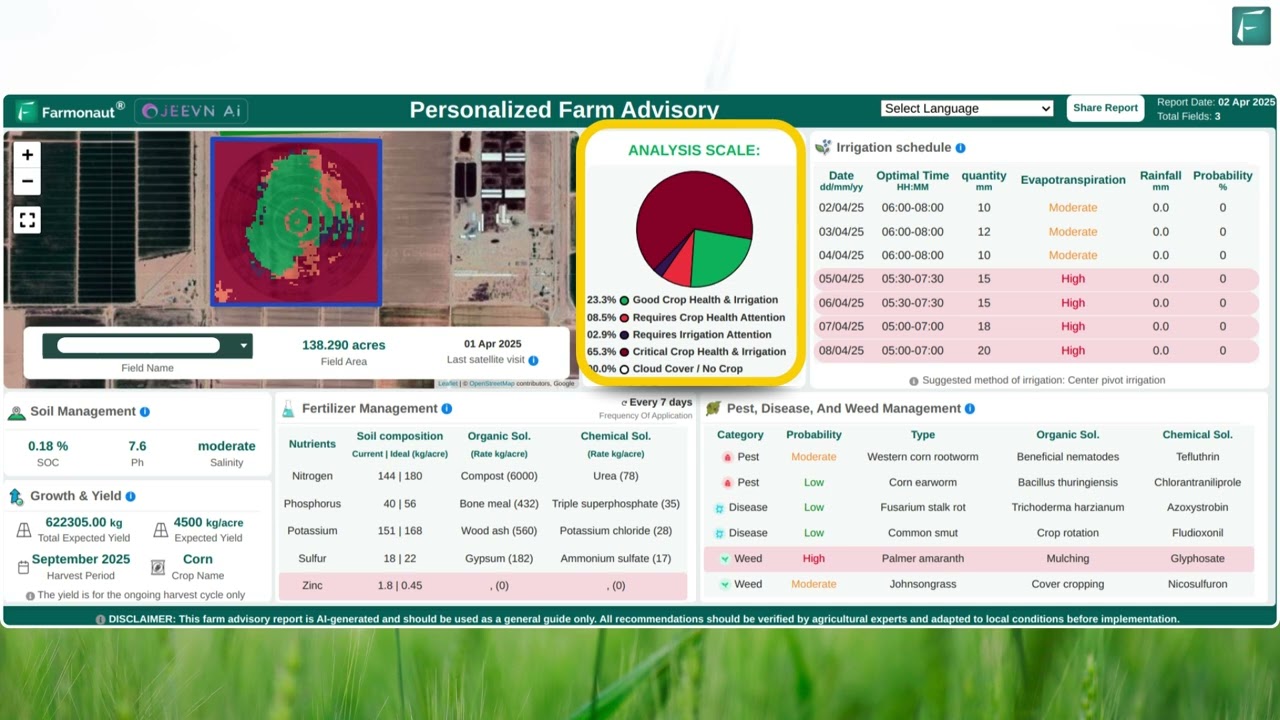
Satellite Technology & AI in Modern Agriculture: Insights from Farmonaut
Modern agriculture’s most transformative advances come from satellite-based monitoring, artificial intelligence, machine learning, and blockchain. At Farmonaut, we are committed to democratizing access to these technologies across Brazil, Japan, California, and worldwide for every scale of operation.
- 🌐 Remote crop monitoring—multispectral satellite data for crop health, NDVI, and soil management
- 🛰 AI-powered advisory systems (e.g., JEEVN AI see our smart farming video) for weather prediction, input optimization, and yield forecasting
- ⛓ Blockchain-based traceability for supply chain transparency
- 🚜 Fleet and resource management tools for logistics and cost efficiency. (Explore: Fleet Management)
- 🔬 Environmental impact & carbon footprint tracking for regulatory compliance and sustainability initiatives (Carbon Footprinting Solutions)
Our platform (available for 
 ) empowers farmers, businesses, and governments to act on real-time data—whether in the Cerrado, Shizuoka, or San Joaquin Valley.
Access via web:

For integrating satellite data into your existing farm management system, explore our
API — or browse integration docs here.
Financial institutions, insurers, and agribusinesses can support risk analysis, loan processing, and insurance verification using Farmonaut’s crop loan and insurance monitoring.
We support operations of any scale — from family farms in Brazil, to large agribusinesses in California, and high-tech greenhouses in Japan — via cost-effective satellite monitoring on web, Android, or iOS.
“California grows over 90% of America’s broccoli and almonds, innovating with water-efficient methods by 2025.”
Key Insights, Pro Tips & Common Mistakes
Adopting precision agriculture and sustainable practices is no longer optional for climate resilience and market access.
Implement AI-based remote monitoring to optimize yield, predict disease, and track water use — especially effective in high-value, water-scarce regions like California.
Blockchain traceability, carbon tracking, and fintech integration are rapidly defining “premium” and “sustainable” in export markets; invest early in these technologies.
Neglecting to monitor smallholder and specialty crop yields in Brazil or Japan; these segments punch above their weight in export value and innovation.
California’s almond and dairy exports alone are valued at over $13 billion annually—underscoring the importance of drought adaptation and supply chain clarity.
- ✔ Key Benefit: Advanced technologies improve yields and reduce costs for every scale of operation.
- 📊 Data Insight: Regions with higher traceability adoption achieve 18–25% greater market premiums for certified sustainable products.
- ⚠ Risk: Failure to act on climate data leads to lower crop resilience and can reduce export competitiveness.
- 📝 Actionable: Integrate blockchain traceability to meet evolving regulatory and buyer requirements post-2025.
- 🌟 Distinctive: Japan’s focus on premium quality and vertical farming is a model for urban agriculture expansion worldwide.
Frequently Asked Questions (FAQ)
-
What are the main agricultural products of Brazil, Japan, and California in 2025–2026?
Brazil: Soybeans, coffee, sugarcane, corn, beef, poultry, oranges.
Japan: Rice, apples, mandarins, green tea, Wagyu beef, daikon.
California: Almonds, dairy, wine grapes, strawberries, lettuce, citrus fruits. -
How do these regions address sustainability challenges?
All use precision agriculture, satellite and AI-based tech, water and energy conservation, and blockchain traceability to improve sustainability and reduce environmental impact. Brazil focuses on preserving rainforests; Japan targets land use efficiency; California prioritizes water-saving and carbon footprint reduction. -
Which region relies most on agricultural exports?
Brazil is a global agri-export powerhouse, followed by California. Japan produces mainly for domestic markets, with select premium food exports. -
How does technology like satellite monitoring impact agriculture?
Technologies deliver real-time insights, improve crop and livestock management, aid in climate adaptation, ensure traceability, and support sustainability certification. -
Can I access agri-tech platforms for real-time monitoring in 2025?
Yes. Platforms like Farmonaut offer AI, blockchain, fleet/resource management, and satellite-based monitoring for operations of any size worldwide, including in Brazil, Japan, and California. -
What’s the future outlook for agriculture in these regions after 2026?
The focus will be on integrating digital technologies, optimizing for climate resilience, diversifying high-value crops, expanding organic certifications, and meeting demanding export market standards.
Explore Real-Time Agricultural Insights
Conclusion
Brazil, Japan, and California exemplify distinct yet complementary agricultural models shaped by unique climates, geographies, and technological paths. By 2025–2026, their agricultural products reflect not just economic priorities but concerted efforts to balance productivity, environmental health, and food security worldwide.
Brazil leverages its vast tropical land, dominant crop export chains, and new sustainability platforms to remain a world leader. Japan perfects high-quality, efficient production on constrained land—advancing innovation in vertical and robotic farming. California continues as an exemplar of crop diversity, climate adaptation, and agritech deployment.
Future agricultural success will depend on:
- Ongoing technology adoption — remote monitoring, precision agriculture, and blockchain food safety
- Continued sustainability innovation to mitigate resource and climate risks
- Policy and investment in young farmer education and climate-resilient farming systems
Globally, these regions will continue to define standards for agricultural productivity, sustainability, and technology — reinforcing food security and rural prosperity into 2026 and beyond.

 Gen Chayat
 Chimera Innovation
 Hiteshi Infotech
 Clubhouse OS
 SkyHarvest
 Polaris Digitech
 Teledarbas
 Wild Oak Farm
 SFX
SFX BACF Africa
 Doodlakine
 Exurbia Geospatial
 FieldZero
 Indico Company
