

Intensive Farming: Advantages & Disadvantages Explained
Introduction: How Intensive Farming Reshaped Modern Agriculture
Intensive farming has transformed the landscape of modern agriculture, maximizing yields and efficiency per unit of land and labor. By using advanced technologies, optimized inputs, and precise management, this system enables faster crop cycles, higher-quality outputs, and enhanced consistency in production. Whether it’s a sprawling plantation, an urban hydroponic setup, or high-tech factory farming, the core idea remains: optimize every aspect—land, water, nutrient delivery, labor, and technology—to achieve the highest possible productivity.
In this comprehensive guide, we’ll dive deep into the advantages and disadvantages of intensive farming, the differences between plantation farming intensive or extensive, and the rapidly rising role of hydroponics. We also map the landscape of factory-scale approaches and discuss how innovative technologies (like those developed by Farmonaut) drive resilient, sustainable, and profitable agriculture in a world facing environmental and market pressures.
What is Intensive Farming? Core Concepts & Systems
At its essence, intensive farming refers to agricultural systems that maximize output per unit using highly managed inputs and advanced technology. Unlike extensive farming, which relies more on natural fertility and lower inputs over vast areas, intensive farming brings deeply managed cycles and controls per hectare, often under regulated environments.
- Specialized inputs: Managed delivery of water, nutrients, and agrochemicals (fertilizers, pesticides).
- Optimized planting densities: Higher density of crops per block, enabling higher per hectare outputs.
- Mechanization & standard practices: Use of automation, precision seeding/harvesting, and eco-efficient production cycles.
- Controlled environments: Ranging from open plantations with precision irrigation to high-tech greenhouses, hydroponics, and indoor vertical farms.
- Continuous monitoring: Technology-driven data collection for resource efficiency and optimization.
Farmonaut supports intensive farming by enabling real-time satellite monitoring, AI-driven advisory (like Jeevn AI), and robust resource management for farms, plantations, and even mining-adjacent green operations. This technological backbone empowers flexibility in decision-making and fosters increased productivity, while satellite monitoring helps lower risks by providing accurate crop and soil insights.

Intensive Farming Advantages
With modern demands for food security, sustainability, and market competitiveness, farmers and agribusinesses leverage intensive farming for several compelling advantages. Here’s how they play out:
1. Higher Productivity per Hectare
Deeply managed inputs and optimized planting densities enable significantly higher yields than traditional extensive farming. It’s particularly evident in plantation crops (tea, coffee, oil palm, rubber) where uniform age structure and rapid cycles can boost total production by over 200%, as opposed to traditional scattered systems.
- Multiple crops or harvests within a year due to faster rotation cycles.
- Examples: High-density fruit orchards, block plantations, intensified vegetable production in hydroponics or greenhouses.
2. Improved Resource Efficiency & Precision Management
Using data-driven systems, water, nutrients, fertilizers, and pesticides are applied with precision and timing accuracy. This reduces waste, boosts resource efficiency per yield unit, and can lower the environmental footprint—especially when implemented with modern monitoring tools.
- Drip irrigation and fertigation for targeted water and nutrient supply.
- AI-guided decisions prevent over-application and minimize ecological impact.
3. Predictable Outputs & Economies of Scale
Controlled environments and mechanization, combined with standardized management practices, ensure reliable harvests and consistent product quality. This predictability reduces risk and enables advanced planning, streamlined storage, and improved market access for farmers and processors.
- Batch processing, uniform maturation, and mechanized harvests boost per-unit cost savings.
- Opportunities to meet large procurement contracts due to reliable, year-round supply.
4. Suitability for High-Value & Specialty Crops
Intensive systems are ideal for high-value crops—such as flowers, medicinal plants, orchard trees, and horticulture specialties—that require precise nutrient, water, and shade management. They support the creation of premium products and value-added items, especially in forestry-adjacent nurseries and specialized plantings.
- Supports delicate varieties (e.g., berries, greens, or even gemstones-in-horticulture) that are not feasible in extensive farming.
- Fosters innovation in product development and market differentiation.
5. Shorter Production Cycles & Accelerated Revenues
In hydroponics, vertical farming, or controlled-climate agriculture, crop cycles are dramatically shortened. Crops reach marketable size faster, often allowing for multiple rotations per year—accelerating overall revenue streams and smoothing cash flow for growers.
- Greens and vegetables mature in a fraction of the time compared to field production.
- Reduced exposure to weather risk with climate controls.

- ✔ High per-hectare yields: Optimized densities and cycles.
- 📊 Data-driven resource efficiency: Reduced input waste with precision.
- 🔄 Rapid rotation: Multiple harvests per year, especially in hydroponics.
- ⚡ Consistent quality: Controlled inputs for uniform harvests.
- 💡 Innovative products: Specialty crops and value-added goods thrive.
What Are the Disadvantages of Intensive Farming?
While intensive farming advantages are substantial, awareness of the associated disadvantages and challenges is essential for sustainable operation. Let’s analyze the most critical negative impacts and risks:
1. Environmental and Soil Health Concerns
Heavy reliance on synthetic inputs can lead to nutrient imbalances, soil degradation, salinization, and disruption of soil biology if not managed responsibly. Runoff from fertilizers and pesticides can have far-reaching effects on waterways and local ecosystems.
- Soil compaction, loss of organic matter, and declining fertility over time.
- Pesticide/fertilizer residues impact non-target species and pollinators.
- Sensitivity to miscalculated nutrient balances (especially in closed hydroponic systems).
2. High Capital & Operating Costs
Establishing advanced controlled environments involves substantial upfront investment—in greenhouses, irrigation, monitoring, and energy systems. Ongoing operating costs are often higher, with constant demand for energy (for climate control, lighting), skilled labor, and maintenance of technology.
- Smaller operators may find entry costs daunting.
- Profitability depends on market price resilience and risk hedging.
3. Vulnerability to System Failures
When intensive systems depend on continuous energy, technology, and automation, failure of key components (like energy supply, climate control, or irrigation pumps) can result in widespread crop loss—risking catastrophic outcomes if back-up systems are not in place.
- Automated greenhouses or hydroponic units are especially vulnerable to power outages.
- Specialized technical skills are needed for troubleshooting and rapid response.
4. Biodiversity and Landscape Impacts
Large blocks of monocultures (particularly in plantation systems) can reduce genetic diversity, disrupt local habitats, and negatively affect ecosystem services such as pollination and pest regulation.
- Risks of pest and disease spread are amplified by genetic uniformity.
- Natural resource depletion and altered landscapes affect surrounding flora/fauna.
5. Ethical & Welfare Considerations in Intensive Production
In animal agriculture, intensive and factory farming models often lead to concerns about animal welfare, confinement, and stress. While crop-focused systems avoid these issues, ethical production (reducing chemical loads, promoting fair labor) is an increasing market demand.
- Public scrutiny and regulatory pressure drive reforms toward more transparent, ethical farming systems.
Plantation Farming Intensive or Extensive?
Plantation farming represents an agricultural system where large areas are devoted to a single cash crop or high-value item such as oil palm, tea, coffee, rubber, or timber. But is plantation farming intensive or extensive? The answer depends on the level of input management, crop density, and technology deployed.
Intensive Plantation Systems
- Optimized spacing & uniform age structure: Every seedling or cutting is planted with calculated density for maximum per hectare yield.
- Technified operations: Use of mechanization, precision irrigation, synthetic fertilizer and pesticide application, and structured pruning regimes.
- Block layouts: Clearly defined blocks and rows, enabling uniform management and easier harvesting.
Risks of intensive plantation include faster spread of diseases, heightened nutrient depletion, and exposure to market volatility. However, robust crop protection and diversification strategies (rotational planting, intercropping) can mitigate some of these risks.
Extensive Plantation Systems
- Low input use; usually larger but less-intensive managed per area unit.
- Wider plant spacing, heterogenous age profiles, and less mechanization.
- Lower yields per hectare but reduced risk of catastrophic disease spread.
Hydroponic Farming Advantages and Disadvantages
Hydroponics is a soil-less cultivation method that grows crops using a precise mixture of water, nutrients, and controlled environmental conditions—often in greenhouses or vertical farms. This remarkably intensive system demonstrates both the peaks and pitfalls of high-tech agriculture.
Hydroponic Farming Advantages:
- 💧 Water savings: Uses up to 90% less water than conventional soil farming, as water circulates and is reused within the system.
- 🌱 Nutrient delivery: Nutrients are tailored precisely for plant species and growth stage, maximizing yields and quality per cycle.
- 🔥 Year-round production: Controlled environments enable growing out of season and in unfavorable climates, freeing farmers from weather-based risk.
- 🏬 Space efficiency: Vertical stacking and compact setups enable high-density production even in urban or resource-limited areas.
- 🌻 Reduced weed and pest pressure: Soil-borne diseases and weed problems are minimized, reducing pesticide needs.
Hydroponic Farming Disadvantages:
- ⚡ High energy use: Lighting, climate regulation, and pumping systems require substantial and continuous power, impacting both costs and carbon footprint.
- 🔬 Dependence on synthetic nutrients: Most hydroponic systems rely on mineral-derived fertilizers that may not be locally available or fully sustainable.
- 🦠 Vulnerability to disease spread: In closed-loop systems, a pathogen can quickly spread and devastate entire crops.
- 👷 Technical complexity: Requires precise monitoring, technical skill, and routine calibration to avoid serious crop loss.
- 💸 High initial investment: Equipment, structures, and maintenance can make entry difficult for small and medium-scale producers.
- Advantage: ✔ Consistency and speed in production cycles (multiple rotations/year)
- Advantage: ✔ Ability to locate farms closer to market, reducing transportation waste
- Challenge: ⚠ System failure or disease can cripple entire operations
- Challenge: ⚠ Requires skilled labor and continuous technical training
Factory Farming: Advantages & Contexts in Crop & Livestock Production
While factory farming advantages are often debated in the context of animal husbandry, a similar approach is seen in industrial crop production. Here, large-scale, high-density, and fully automated systems control virtually every aspect of the environment—light, water, nutrients, temperature, and harvesting.
Factory Farming Advantages (Crop-Specific):
- High-density, uniform output that meets market specification and supply chain requirements.
- Predictable, reliable, and consistent quality.
- Efficient use of land, water, and nutrients through automation and tech-driven management.
Factory Farming Disadvantages:
- High energy and tech dependence can drive up costs and increase exposure to system failures.
- Often linked to ethical, welfare, and sustainability concerns (monoculture, pollution, labor practices).
In livestock, welfare considerations (confinement, stress, treatment) dominate the debate, leading to growing pressure for humane, regenerative production systems.
In agriculture, whether animal or crop-focused, robust waste management, resource stewardship, and resilience strategies are central to balancing productivity with social license and environmental integrity.
Comparative Summary Table: Intensive Farming Methods
| Farming Method | Key Features | Estimated Yield Increase (%) | Resource Efficiency (Water, Land Use) |
Advantages | Disadvantages |
|---|---|---|---|---|---|
| Conventional Intensive Farming | High-density planting, mechanization, synthetic inputs (fertilizers, pesticides), optimized irrigation | 80–200% | Medium to High |
– Rapid cycles – Consistent yields – Economies of scale |
– Soil health risks – Runoff & pollution – Capital-intensive |
| Hydroponic Farming | Soil-less, recirculating water systems, precise nutrient delivery, controlled environment | 150–250% | High |
– Uses 90% less water – Year-round production – Minimal weed/pest risk |
– High energy use – Technical complexity – Pathogen spread risk |
| Plantation Intensive System | Uniform age structure, block planting, mechanization, input-intensive, monoculture | 70–180% | Medium |
– Large-scale output – Streamlined management – Predictable supply |
– Disease/market risks – Loss of biodiversity – Soil nutrient depletion |
Innovation in Intensive Farming: Satellite & AI Tools
The rapid evolution of technology and innovation in agriculture is making intensive systems more resource-efficient and resilient. Farmonaut provides a world-class platform that combines satellite monitoring, AI advisory (Jeevn AI), blockchain-based traceability, and environmental impact tracking to transform modern agricultural and plantation operations.
-
🌍 Real-time farm monitoring: Our satellite-driven insights cover vegetation health (NDVI), soil moisture, and stress detection for intensive and extensive operations.
Explore carbon footprint tracking for agriculture and mining—meet regulatory and sustainability goals while tracking emissions and resource use. -
🤖 AI-driven advisory (Jeevn AI): Guidance for irrigation, nutrient delivery, crop rotation strategies, and early warning for disease/pest risk.
Blockchain traceability ensures supply chain transparency and secure origin verification for intensive farm products. -
🚜 Large-scale and fleet management: Optimize logistics, harvest schedules, and resource allocation for plantations, hydroponics, and conventional farms.
Fleet management tools help you cut logistics costs and boost operational efficiency.
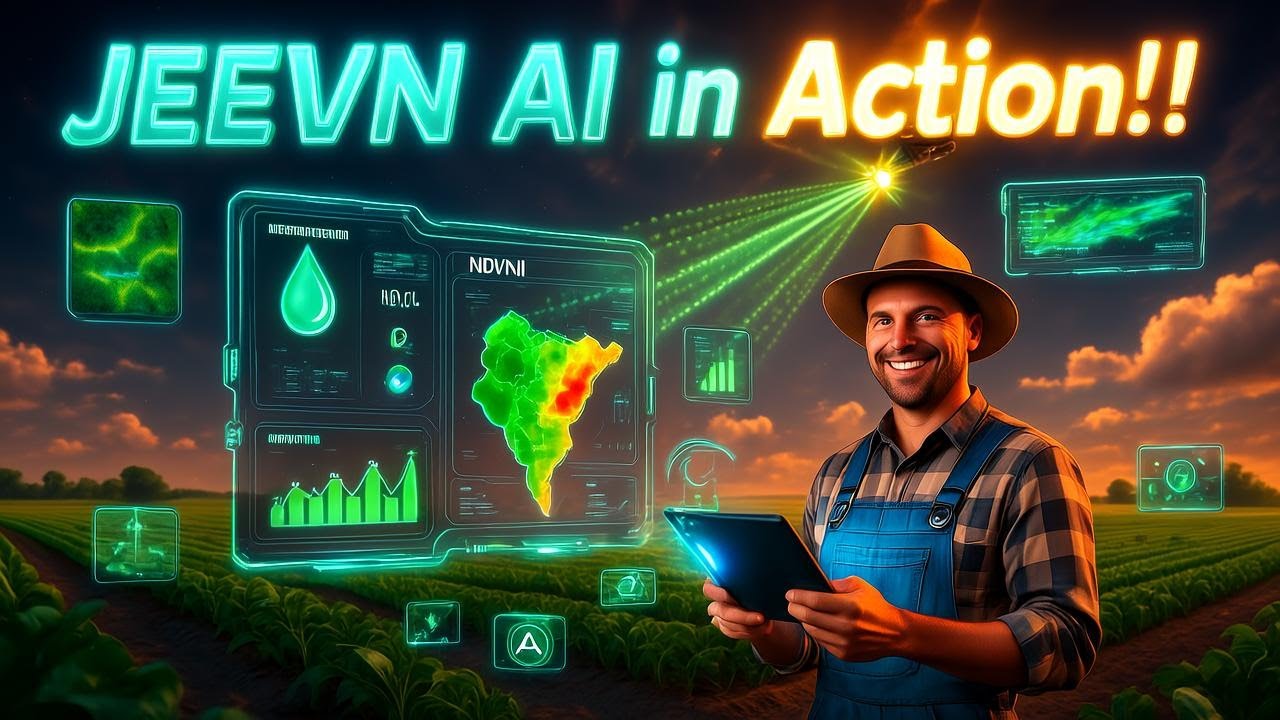
Our solutions can be accessed via Android, iOS, web browser app, and API—making advanced technology affordable and accessible to all agricultural stakeholders.



- 📑 API Integration: Use Farmonaut’s API for automated data delivery to your own software stack. See API developer docs for streamlined integration.
-
🚀 Support for Crop Loans & Insurance: Remote verification of field and crop status helps farmers access financing with transparency—reducing fraud and ensuring better terms for all parties.
Learn how our platform helps streamline crop loan & insurance workflows

Key Callouts & Highlights
Quick Takeaways:
- ✔ High productivity, lower land use: Intensive farming delivers more food per unit area and per labor hour.
- ⚠ Cost & risk: Entry and operation costs are high—always invest in resilience.
- 💧 Water-saving innovation: Hydroponics stands out for water efficiency and urban adaptability.
- 🔬 Smart farming: Satellite data and AI increase efficiency, but technical training is crucial.
- 🌱 Sustainability challenge: Long-term productivity requires robust soil, environmental, and waste management strategies.
Visual List: Key Benefits of Intensive Farming
- ✔ Resource Optimization with precision irrigation and nutrient management.
- ✔ Accelerated Market Access: Faster rotation and predictable outputs ensure supply chain efficiency.
- ✔ Enabled Urban & Vertical Farming: Hydroponics and controlled systems bring farming to new geographies.
- ✔ Support for Specialty and High-Value Products: Custom environments boost quality and profit margins.
- ✔ Advances in Data & Automation: Satellite monitoring, AI, and automation improve outcomes across all scales (see platform features).
Visual List: Risks & Limitations
- ⚠ Soil & Water Degradation: Unchecked input application can erode productivity and pollute environments.
- ⚠ Technological Dependence: Failures in climate control, energy, or automation lead to rapid systemic risk.
- ⚠ Cost Barriers: Initial investments and skilled-labor requirements challenge new entrants.
- ⚠ Market Volatility: Intensive focus on a few crops heightens exposure to commodity price swings.
- ⚠ Biodiversity Concerns: Monocultures lower resilience against pests or disease. See regenerative approaches here.
FAQ: Intensive Farming Advantages, Disadvantages & More
What is the main difference between intensive and extensive farming?
Intensive farming is characterized by higher input use (fertilizers, irrigation, technology) and maximizes output per unit (hectare, labor), while extensive farming uses larger areas with fewer inputs per hectare, resulting in lower productivity but often with reduced ecological disturbance.
A labour-heavy variant practised on small plots is explained in intensive subsistence farming by region.
What are the disadvantages of intensive farming?
Major disadvantages include soil degradation, environmental pollution due to input runoff, loss of biodiversity, high entry and operating costs, vulnerability to system failures, and, in animal operations, potentially poor welfare standards.
Which crops benefit most from intensive farming systems?
High-value and specialty crops (e.g., vegetables, fruits, oilseeds, ornamentals) are particularly suited due to their demand for precise conditions and relatively high returns per area.
How does hydroponic farming enhance sustainability?
Hydroponics drastically reduces water use (savings up to 90%), eliminates soil-borne disease, and enables urban or climate-independent production, although care is required to manage nutrient cycles and energy demand.
How can Farmonaut support intensive farming?
We provide advanced tools for real-time monitoring, AI-driven crop advisory, blockchain-enabled traceability, and environmental impact tracking—making precision manageable for all scales of production.
Conclusion: Steering Sustainable Intensification
Intensive farming has reshaped modern agriculture—propelling food system productivity, enabling rapid market access, and fostering innovation from plantation blocks to vertical hydroponics. The advantages are significant: higher yields, improved efficiency, predictability, and the ability to meet specialized market needs. However, the disadvantages—from environmental and soil health concerns to technological dependence—remind us of the delicate balance required for long-term success.
Strategies for success lie in robust resource stewardship, resilience to risk, and forward-looking technology adoption. Real-time monitoring, precise management, and sustainable input cycles (aided by platforms like Farmonaut) drive efficiency while safeguarding the environment. The future of food production depends not just on maximizing outputs, but on building systems that thrive in harmony with our landscapes and communities.
Farmonaut: Subscriptions, Tools & App Access
Empower your farm, plantation, or agri-business with the next generation of satellite, AI, and digital management tools. Whether you’re growing high-value crops, managing hydroponic greenhouses, or overseeing large plantation systems, Farmonaut offers tailored solutions for intensive and sustainable production.
Check current subscription plans below for individual users, businesses, and government institutions. Flexible pricing and platform access let you scale your services as you grow:
Get started now:
For API access (for developers and agri-enterprise integration):
Discussion
Questions, corrections or field experience? Share them below. First-time comments are reviewed before they appear, and your email is never published.
No comments yet. Be the first to add a question or your experience.

 Messina Beej
 Dirks Bros Farms
 Red August Group
 Farm Inc
 WeMe Global
 Agrotoken
 Blue BearX
 Insignito
 Croptimum
 DnCubed
 Field Capacity
 Indosistim Teknologi
 Liquify Digital
 CU Foods
 BeyondTech Global
 Rouge VC
 AgroGreen Dynamics
 AgroRisk

 Licence holder · Niger · Gold










