

Agricultural Input, Ag Input Loans: Top 2026 Trends Kenya
“In Kenya, digital ag input loans are projected to reach over 1.5 million smallholder farmers by 2026.”
Table of Contents
- Agricultural Inputs in Kenya: Overview and Importance
- Ag Input Loans: Bridging the Financial Gap
- Innovations & Digital Platforms for Ag Input Loans
- Agricultural Inputs Marketing Agencies in Kenya
- Comparative Trends Table: 2025–2026
- Smart Farming Tech & Future Outlook
- Insights & Highlights
- Farmonaut’s Digital Solutions: Enhancing Inputs, Financing & Ag Data for Kenya
- Video Gallery: Digital Ag, Smart Inputs & Farmonaut Tutorials
- FAQs: Agricultural Inputs, Loans, and Kenya’s Farming Future
- Conclusion: The Road Forward for Kenya’s Inputs & Ag Lending
Agricultural Inputs in Kenya: Overview and Importance
Agricultural input stands at the heart of Kenya’s food production ecosystem. Inputs refer to the essential products and resources that farmers use to enhance yields and operational efficiency. In Kenya, the significance of agricultural and livestock inputs is heightened because agriculture contributes nearly 33% of the country’s GDP and supports over 70% of the rural population. Ensuring sustainable access—and maximizing the value—of seeds, fertilizers, crop protection products (pesticides, herbicides), irrigation equipment, and farm machinery is critical for national food security and rural livelihoods.
- ✔ Seeds: Improved varieties offer better nutritional value, higher yields, and resilience to pests, diseases, and drought—vital as climate variability increases.
- ✔ Fertilizers: The appropriate use supports enhanced soil fertility, ensuring robust, higher-yielding crops.
- ✔ Pesticides & Herbicides: Protect against destructive pests and weeds, safeguarding productivity throughout the farming season.
- ✔ Irrigation Equipment: Modern systems and machinery help counteract unpredictable rainfall—especially important as droughts become more frequent.
- ✔ Farm Machinery: Tractors and harvesters speed up and scale farming operations, making them more sustainable—especially on medium and large farms.
According to latest data, demand for these essential inputs is rising fast to meet the country’s growing food needs, especially with the pressure from population growth and shifting climatic patterns. Ensuring access to high-quality input not only boosts individual farmer productivity but also strengthens the country’s national food security mechanisms.
Ag Input Loans: Bridging the Financial Gap for Kenyan Farmers
Despite agricultural input’s importance, access to quality inputs remains a challenge. Many smallholder farmers in Kenya often face financial barriers caused by high upfront costs, limited collateral, and seasonally-driven cash flow gaps. Ag input loans have emerged as a critical financing mechanism, helping farmers procure essential products in time for the planting season—and allowing them to repay the loans after harvest when liquidity is higher.
“75% of Kenyan input suppliers aim to expand via digital platforms by 2025, accelerating access to smart farming tools.”
These ag input loan facilities—offered by banks, microfinance institutions, cooperative societies, and digital platforms—are often tailored for agriculture. They typically involve:
- ✔ Crop-cycle alignment: Credit is provided before planting and repaid after harvest, reducing cash-flow strain.
- ✔ Low/No-collateral requirements: Some programs leverage group guarantees or use real-time data (e.g., satellite crop monitoring) for verification.
- ✔ Flexible terms: Interest rates, repayment windows, and input packages are often customized per crop or region.
- ✔ Mobile & Digital platforms: Streamlining application, disbursement, and repayment via mobile banking, M-Pesa, and other fintech apps.

Government subsidies and input voucher programs further bridge the affordability gap—especially for the most vulnerable farmers in rural areas. This layered approach of direct financing, cost support, and market linkages is crucial in boosting productivity and food security at scale.
Innovations & Digital Platforms for Ag Input Loans and Inputs
The jump in demand for inputs and the rising importance of efficient financing have given momentum to new digital solutions in Kenya’s ag ecosystem:
- Mobile Ag Input Loan Products
📱 Mobile platforms—especially in partnership with local banks and microfinances—let farmers apply for and receive input loans using just their phones. This approach reduces travel, paperwork, and waiting times—making credit access more inclusive, especially in rural areas. - App-driven Advisory & Credit Scoring
These platforms combine digital ag advice, weather forecasts, and crop monitoring with AI-powered credit assessments. By verifying field status remotely (sometimes via satellite), lenders can offer bigger loans at better terms—while reducing default risk. - Blockchain-Enabled Input Traceability
A transparent, trustworthy input supply chain is vital to overcome Kenya’s persistent challenge with counterfeit products. Blockchain traceability ensures that every seed, fertilizer, pesticide or equipment unit is tracked from manufacturer to farmer, protecting product authenticity and yield quality.
- ✔ Improved yields and better loan repayment rates—backed by real-time farm data
- ✔ Enhanced financial inclusion for women and youth in agriculture
- 📊 Estimated: Over 1.5 million digital input loan users in Kenya by 2026

Agricultural Inputs Marketing Agencies in Kenya: Quality and Distribution
Agricultural inputs marketing agencies in Kenya play a pivotal role in the country’s input value chain. Their main functions stretch across:
- Regulatory Oversight:
KEPHIS (Kenya Plant Health Inspectorate Service) is the regulatory agency mandating quality control in seeds, fertilizers, and agro-chemicals. This protects farmers from fake or untested products and ensures safe, effective crop production. - Distribution Networks:
From nationwide agro-dealers to last-mile rural stockists, inputs marketing agencies ensure inputs are available on time, in the right locations. The shift toward digital inventory and delivery tracking means farmers in even remote counties can buy certified seeds and fertilizers with confidence. - Government Support:
NCPB (National Cereals and Produce Board) and KALRO (Kenya Agricultural and Livestock Research Organization) coordinate input subsidies, R&D, and market support, especially where private-sector coverage is weak.
- ✔ Quality assurance: Via regulation, certification, and random checks, agencies safeguard input effectiveness and safety.
- ✔ Farmer Education: Many agencies—government or private—run training sessions, demos, and digital info campaigns on new products and proper input usage.
- ✔ Counterfeit prevention: Blockchain traceability systems and tamper-proof labeling schemes discourage fake products, protecting Kenyan farmers’ investments and national crop yields.
Comparative Trends Table: 2025–2026 – Digital Ag Input, Loans & Platforms in Kenya
- ⚡ Key benefit: Farmers gain timely access to quality input, boosting both crop yields and household security.
- 🔍 Data insight: Digitization reduces fraud in input supply and loan approvals through traceability and AI credit systems.
- 💡 Innovation: Satellite-based monitoring aligns loan disbursement with real farm health, reducing risk for lenders.
- ⚠ Risk/Limitation: Connectivity and digital literacy gaps could restrict platform adoption for some rural users.
- 📈 Growth Potential: Increased input loan uptake and smart farming systems drive national agricultural productivity.

Smart Farming Technologies & The Future of Agricultural Inputs in Kenya
The future of Kenya’s ag sector and input financing is digital, data-driven, and climate-smart:
Emerging Innovations for 2026–2027 and Beyond
- AI & Satellite-Guided Inputs: Multiple providers, including Farmonaut, are democratizing satellite insights for farmers, lenders, and policy makers, enabling more effective use of inputs (when, where, and how much to apply) and enhancing crop health monitoring.
- Climate-Smart Input Adoption: Drought-tolerant and disease-resistant seed varieties, precision irrigation, and organic fertilizers are projected to see double-digit growth in adoption rates by 2026, driven by government and private sector programs.
- Blockchain for Input Authenticity: Transparent digital records fight counterfeiting, ensuring every product—fertilizers, seeds, or chemicals—can be traced to source, benefiting both regulatory agencies and the farming community.
- Integrated Advisory Platforms: By combining real-time weather, AI crop disease detection, and financial guidance, digital platforms empower farmers to decide how best to invest in inputs or ag input loans each season.

Challenge: Despite advances, barriers persist: limited farmer awareness about digital tools, weak rural infrastructure (electricity, mobile networks), and a lack of credible information about new crop input products. Solving these requires coordinated investments and smarter policies—especially in extension and input supply networks.
Visual List: Top Digital Trends for Ag Input & Lending in Kenya
- Mobile loan apps simplifying agricultural credit
- Satellite-powered input optimization (fertilizer, water)
- Blockchain-traced seeds/fertilizers fighting counterfeit
- Interactive farmer education portals & YouTube series
- Automated machinery rentals for smallholder farms
Highlights & Quick-Tips
Marketplaces with real-time stock data reduce input shortage risk, especially at the village level.
Verify input product codes on blockchain-backed platforms before purchase to protect against counterfeits.
Kenya’s ag input loan segment is experiencing 20%+ annual growth, making it a prime target for impact and private investors.
Delaying loan repayments can hurt credit scores and affect next-season financing—opt for platforms with timely reminders.
Heavy rains or droughts may disrupt digital loan repayment cycles; choosing weather-indexed loans provides extra resilience.
Farmonaut’s Digital Solutions: Enhancing Inputs, Financing & Ag Data for Kenya
As we look ahead, next-generation platforms like Farmonaut are redefining how agricultural input and loans are accessed and managed in Kenya. Here’s how our technology helps build a smarter, more secure food system:
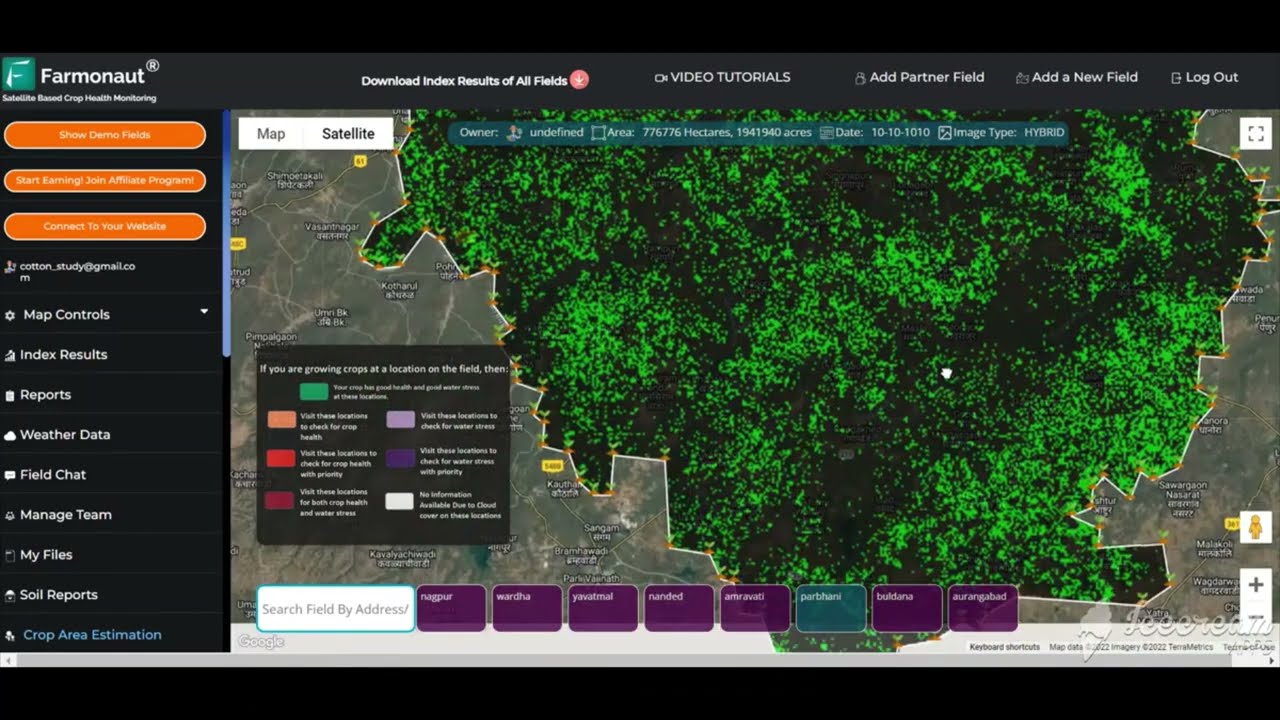
- Satellite Crop Monitoring: Our platform empowers Kenyan farmers, lenders, and ag agencies with multispectral imagery covering field health, soil moisture, and vegetation vigor. This insight enables smarter timing and sizing of loans and input purchases.
- AI Advisory (Jeevn): Real-time, custom field advice on when, where, and how much input (seed/fertilizer/water/pesticide) to apply for optimal yields.
- Blockchain Traceability: End-to-end tracking for seed, fertilizer, and crop origin—from supplier to harvest—ensuring input authenticity and supporting regulatory compliance.
- Loan & Insurance Verification: Our satellite-verified reports help banks and insurance firms approve or disburse funds with lower risk and faster turnaround.
- Carbon Footprinting: Field-level carbon tracking helps farmers adopt climate-smart practices—and validate sustainable, low-carbon input use for new green loans or certifications.



Want to integrate satellite-driven data, crop monitoring, or loan verification into your fintech, ag platform, or lending app? Access our API: sat.farmonaut.com/api & developer docs.
Video Gallery: Digital Ag, Smart Inputs & Farmonaut Tutorials



Visual List: Smart Inputs Driving Future Yields in Kenya
- Certified high-nutrition seed varieties
- Drought-resistant, climate-friendly fertilizers
- Ag drones and remote sensing equipment
- Mobile input marketplaces with blockchain traceability
- Real-time loan platforms linked to satellite field data
FAQs: Agricultural Input, Ag Input Loans & Kenya’s Smart Farming Outlook
- Q1: What is the primary benefit of agricultural inputs for Kenyan farmers?
- Quality agricultural input—such as certified seeds, fertilizers, and pesticides—directly improve yields and reduce losses, helping farmers achieve food security and higher income, especially amid climate and market volatility.
- Q2: How do ag input loans support smallholder farmers?
- Ag input loans bridge the cashflow gap by providing farmers credit before planting, enabling input purchase, and allowing repayment after harvest—thus aligning with the unique agricultural cycles and needs of Kenyan farming.
- Q3: What role do agricultural inputs marketing agencies in Kenya play?
- They ensure timely, quality-guaranteed delivery of inputs, implement regulatory controls (especially KEPHIS), educate farmers on usage, and support public/private sector distribution—safeguarding farmers against counterfeits and shortages.
- Q4: What digital innovations are shaping the future of ag input and loans in Kenya?
- Mobile ag input marketplaces, satellite-based field insights, blockchain traceability, and digital loan apps are rapidly transforming how farmers access quality inputs and financing.
- Q5: How does Farmonaut benefit Kenyan ag stakeholders?
- Farmonaut provides satellite crop monitoring, AI-based advisory, blockchain traceability for authentic input use, and supports lenders with satellite-based loan verification—all contributing to better productivity and resilience.
Conclusion: The Road Forward for Kenya’s Inputs & Ag Lending
As Kenya pushes toward 2026 and beyond, the intertwined roles of agricultural input, ag input loans, and agricultural inputs marketing agencies become ever more fundamental to food security, farmer prosperity, and economic stability. Smart, digital-first solutions are rapidly transforming the availability, quality, and financing of inputs—while blockchain and satellite verification are making ag lending safer for both farmers and financial institutions.
Continued investment in farmer education, rural infrastructure, digital connectivity, and regulatory reforms will be crucial if Kenya is to fulfill the promise of a tech-powered, inclusive agricultural future.
At Farmonaut, we remain committed to ensuring that every Kenyan farmer—big or small—can leverage the latest in satellite technology, AI-driven tips, and blockchain security to maximize the benefits of inputs and loans, and contribute meaningfully to national development.
Together, let’s make Kenya’s food and farming future digitally inclusive, resilient, and prosperous.

 AdBio
AdBio MISE Maroc
 Drift-Sense
 NWNS
NWNS Hydenmet
 Red August Group
 Farm Inc
 WeMe Global
 Agrotoken
 Blue BearX
 Insignito
 Croptimum
 DnCubed
 Field Capacity
 Indosistim Teknologi
 Liquify Digital
 CU Foods
 BeyondTech Global
