

Agriculture Situation in India: Tools & Tax Guide 2026
Summary: Agriculture in India: Current Scenario, Tools, and Taxation Landscape in 2025-2026
- Current Agricultural Situation in India (2025 & Beyond)
- Agricultural Tools in India: 2025 Trends & Innovations
- Latest Agricultural Tools in India (2025) – Features & Tax Guide
- Small & Marginal Farmers: Access, Adoption, and Empowerment
- Agriculture Tax in India: Laws, Schemes & GST Updates (2025-2026)
- Technology, Monitoring, and Digital Transformation in Indian Agriculture
- How Farmonaut Empowers Agriculture with Technology
- Strategic Insights: Callouts, Pro Tips & Key Takeaways
- Frequently Asked Questions (FAQ)
- Conclusion: Towards a Sustainable & Data-Driven Agri-Future
India’s agriculture situation in 2025 stands at a powerful crossroads. The sector, engaging nearly 58% of the population, remains fundamental to the Indian economy by contributing approximately 17–18% to GDP. Despite rapid industrialization and urbanization, agriculture continues as the backbone of rural employment, food security, and national development. Yet, it faces persistent challenges: climate change, fragmented landholdings, limited resources, and fluctuating market prices.
This comprehensive article explores the current scenario of agriculture in India, focusing on the evolution of agricultural tools, digital technology adoption, and the agriculture tax in India including the evolving GST regulations for 2025-2026. Dive in to discover how innovation is transforming the sector, the latest farm tools, policy shifts, and the critical trends shaping our farmers’ future.
In 2025, the synergy of policy evolution, new agricultural tools in India, and digital adoption is reshaping the entire farming sector—making data-driven insights and technology more accessible and impactful than ever before.
The Current Agricultural Situation in India (2025 & Beyond)
The agriculture situation in India in 2025-2026 remains at a critical juncture. While agriculture continues as the country’s backbone, engaging nearly 58% of the population, it contributes around 17–18% to the gross domestic product (GDP). This is despite the relentless forces of industrialization and urbanization.
- ✔ Food and Nutritional Security – With a burgeoning population of over 1.4 billion, agriculture’s role in securing food for all is more crucial than ever.
- 📊 Economic Backbone – Agriculture remains central to rural employment and forms the primary livelihood for over half the Indian workforce.
- ⚠ Vulnerability to Climate Change – Climate variability, irregular monsoons, and frequent pest outbreaks remain persistent threats.
- ✔ Technological Progress – Digital technologies, precision farming, and remote sensing are reshaping the landscape with promise, precision, and predictability.
Major Challenges Impacting Agriculture in India (2025)
- ⚠ Fragmented Landholdings: Most holdings are small and marginal, limiting economies of scale.
- ⚠ Limited Irrigation & Water Resources: Only about a third of farmland is reliably irrigated, causing dependence on monsoons.
- ⚠ Post-harvest Losses & Market Volatility: Between 4-10% of total produce lost post-harvest due to inadequate logistics, infrastructure, and fluctuating market prices.
- ⚠ Access to Credit & Insurance: Many farmers struggle to access formal credit and modern crop insurance products.
- ✔ Government Initiatives: Schemes like PM-KUSUM focus on promoting climate-resilient crops and improving irrigation infrastructure.
Progress & Government Support – 2025 Initiatives
- ✔ Crop Diversification and Organic Farming aided by strong government policies and targeted subsidies.
- ✔ Expansion of digital technologies like mobile-based advisories, satellite crop monitoring, and real-time weather alerts.
- ✔ Contract Farming and Farmer Producer Organizations (FPOs) are strengthening farmers’ negotiation power and income stability.
- ✔ Nurturing rural development by supporting investments in warehousing, cold storage, and rural roads through levies and cess.
Overlooking the importance of market linkages and post-harvest management leads to significant price loss for smallholders. Invest in robust supply chains and storage solutions!
Agricultural Tools in India: 2025 Trends & Innovations
The evolution of agricultural tools in India is a story of innovation meeting tradition. The sector continues to blend tried-and-true implements like sickles and bullock-drawn ploughs with the latest in mechanization and digital technology.
- ✔ Mechanization Deepens – Cost-effective tractors, power tillers, threshers, harvesters, and automated planters now cater to varying farm sizes, especially small and marginal farmers.
- ✔ IoT & Smart Sensors – Soil health monitoring, water management, and weather forecasting via embedded sensors enable precision farming.
- ✔ Drone-Based Applications – Drone sprayers, crop imaging, and robotic weeders are increasingly mainstream thanks to government subsidies and declining costs.
- ✔ Renewable Energy Integration – Solar pumps and electric tractors address high diesel costs and rising environmental concerns, advancing sustainability.

How Modern Agricultural Tools Are Impacting Indian Farming
- ✔ Increased Productivity – Mechanization and technology adoption improve yields and save time, labor, and input costs.
- ✔ Data-Driven Decisions – Real-time monitoring and remotely-sensed data allow for more informed and timely interventions for pest, water, and nutrient management.
- ✔ Risk Reduction – Drones and automated sensors help detect and manage risk factors—such as disease outbreaks—early, helping to reduce yield losses.
- 📊 Sustainable Practices – Technology supports organic farming, precision application of inputs, and helps monitor environmental impacts.
- ✔ Accessibility – Startups and research institutions are making advanced tools more affordable and user-friendly, promoting widespread adoption.
Examples: Latest Tools Being Adopted in 2025
- ✔ Drone Sprayers: Automated, fast, and precise for pesticide/nutrient application.
- ✔ Soil & Moisture Sensors: Real-time monitoring empowers data-based irrigation and fertilizer use.
- ✔ Smart Tractors & Machinery: Equipped with GPS, AI, and telematics for resource optimization and fleet management.
- ✔ Mobile Apps: For advisories, alerts, traceability, and resource management.

Investing in smart tools like satellite-based crop monitoring can provide actionable insights into soil health, carbon footprint, and resource optimization with minimal manual effort.
Latest Agricultural Tools in India (2025) – Features, Technology, and Estimated Tax Implications
| Tool Name | Technology/Innovation Used | Primary Function | Estimated Average Cost (2025, ₹) | Estimated Adoption Rate (%) | Projected Tax Rate (2025) |
|---|---|---|---|---|---|
| Drone Sprayers | AI, GPS, Remote Sensing | Automated pesticide/nutrient application | 3,50,000 | 18% | 12% GST |
| Soil Health Sensors | IoT, Wireless Connectivity | Real-time soil & water monitoring | 25,000 | 32% | 5–12% GST |
| Smart Tractors | Telematics, AI, GPS Navigation | Automated tillage, sowing, & data capture | 6,50,000 | 15% | 18% GST (parts), 12% (whole) |
| Solar Water Pumps | Renewable Energy, IoT Control | Efficient, sustainable irrigation | 1,10,000 | 28% | 5% GST |
| Mobile Farm Apps | AI, Big Data, Blockchain | Advisory, traceability, weather & input alerts | 800–5,000 yearly | 54% | 18% GST (services), exempt for direct agri support |
| Robot Weeders | Machine Vision, Autonomous AI | Weed management, labor saving | 1,80,000 | 7% | 12% GST |
| Blockchain Traceability Tools | Blockchain, Cloud Analytics | Supply chain transparency & anti-fraud | 30,000–1,00,000 | 4% | 18% GST (software) |
| Resource/Fleet Management Tools | AI, Satellite & GPS Tracking | Optimize machinery & resource use | 40,000–1,20,000 | 2% | 18% GST |




Small & Marginal Farmers: Access, Adoption, and Empowerment
Small and marginal farmers (with holdings less than 2 hectares) constitute the majority in India. In 2025, the focus remains on enabling access and affordable adoption of modern agricultural tools, credit, insurance, and training.
- ✔ Government Subsidies – Heavy support for the purchase of tractors, solar pumps, and IoT sensors.
- ✔ Mobile & Digital Platforms – Intuitive, vernacular apps and advisories boost adoption of technology among less literate farmers.
- ✔ FPOs and Collectives – Farmer Producer Organizations amplify bargaining power and enable collective adoption of expensive tools like drones and threshers.
- ✔ Training and Capacity Building – Ongoing skilling programs for digital tool use, safe pesticide handling, resource-efficient irrigation, and post-harvest technology.
- ✔ Access to Finance – Technology-based verification tools simplify loan and insurance processes, making credit more accessible and reducing fraud.
- ✔ Reduces Labor Intensity (enabling focus on farm management and marketing)
- ✔ Improves Timeliness of Agricultural Operations (crucial for weather-dependent crops)
- ✔ Optimizes Input Use (saves on seeds, water, and fertilizers)
- ✔ Facilitates Climate Resilience (precision irrigation conserves water)
With over 60% of Indian farmers expected to adopt digital or mechanized tools by 2025, the market for agricultural technology in India is poised for rapid, sustainable growth.

Agriculture Tax in India: Laws, Schemes & GST Updates (2025-2026)
The agriculture tax in India is shaped through a unique blend of exemptions, incentives, and indirect taxation aimed at balancing government revenue and farmer welfare.
- ✔ Agricultural Income – Income from recognized agricultural activities (cultivation, rent from land) is exempt from central income tax as per the Income Tax Act.
- ✔ State-Level Cess and Levies – Many states implement sector-specific cesses on certain produce (for infrastructure or rural development projects).
- ✔ Goods and Services Tax (GST) – While unprocessed, fresh produce remains outside GST to protect food prices, input goods like fertilizers, seeds, and machinery face a GST of 5-18%.
- ✔ Subsidy & Tax Credit – Direct incentives for investments in technology, organic farming, and resource-efficient machinery are common in 2025.
- ✔ Digitization for Compliance – Online registration for government schemes, credit, and insurance processes is now interlinked with agricultural taxation and subsidies to streamline delivery and reduce fraud.
- ✔ Incentivizing Sustainable Investments – Tax rebates and subsidies for solar, smart sensors, and pollution-mitigating technology.
- ✔ Promoting Digital Record-Keeping – Linking Aadhaar and KYC with online tax and benefit claims.
- ✔ Simplified Indirect Taxation – GST on value-added products, exemption for fresh produce.
- ⚠ Common Compliance Errors – Opaque land revenue systems and delays in digital subsidy disbursement.
However, several challenges remain:
- Opaque land records complicate the rollout of digital schemes in some rural regions.
- Delays in subsidy disbursements create cash flow gaps for smallholder farmers.
- The evolving tax regime for contract farming and agri-processing businesses demands continuous monitoring.
To keep the system farmer-friendly, the government’s focus for 2025–2026 is:
- ✔ Digitizing revenue and land titling systems
- ✔ Expanding counseling and online helpdesks
- ✔ Promoting sustainable practices via targeted fiscal incentives
Incentives under new agriculture tax frameworks include accelerated depreciation for investments in precision tools and renewable-powered machinery—catalyzing adoption and lowering environmental impact.

Technology, Monitoring, and Digital Transformation in Indian Agriculture
Technology adoption continues to reshape Indian agriculture. Satellite monitoring, AI-advisory systems, blockchain traceability, and resource management apps enable data-driven, sustainable farming for all—particularly for smallholders with limited resources.
- ✔ Remote Sensing & Satellite Data – Precision monitoring empowers timely intervention for pest, disease, and water stress detection.
- ✔ Blockchain – Enhances traceability for Indian agricultural supply chains, from input to output, ensuring transparency and authenticity.
- ✔ Mobile Apps & AI Advisory – Deliver customized advice, market price alerts, and weather data instantly to millions of farmers.
- ✔ Resource Management Platforms – Enable tracking of vehicles, farm equipment, and labor for improved operational efficiency.

For real-time and cost-effective farm monitoring, explore the benefits of satellite carbon footprinting solutions to guide your sustainability strategy.
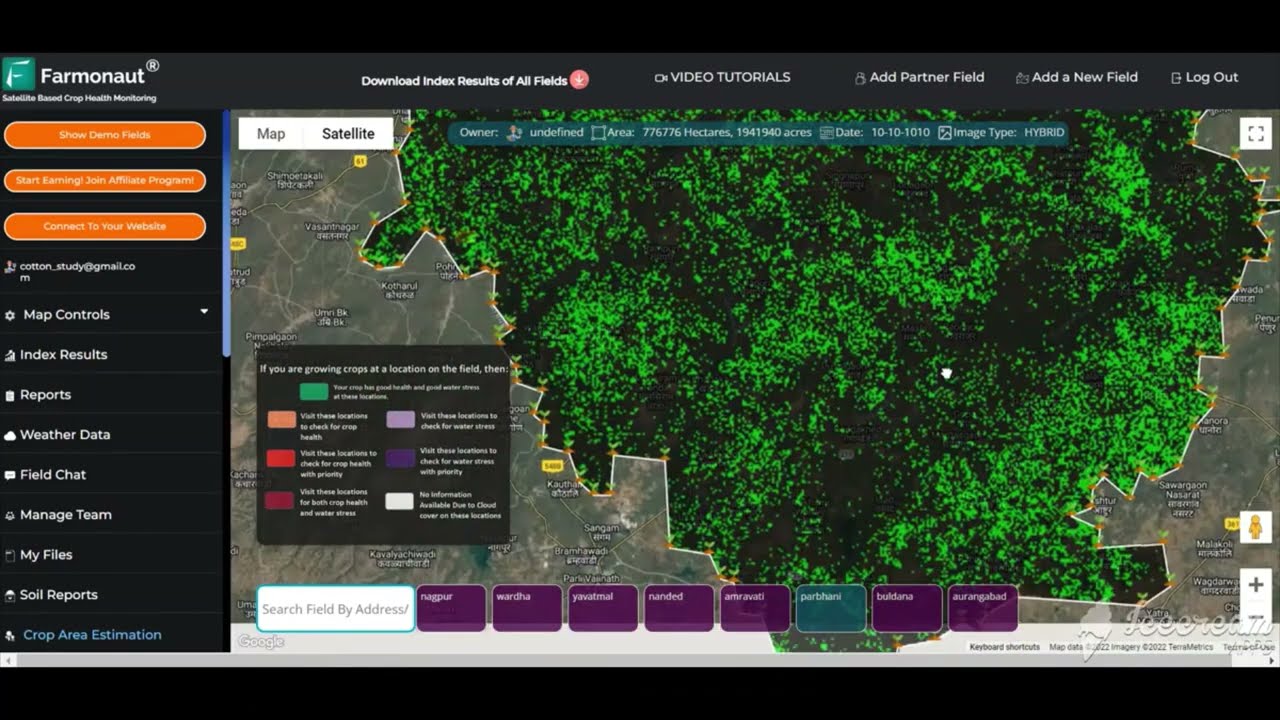
How Farmonaut Empowers Agriculture with Technology
We at Farmonaut are passionate about making data-driven, satellite-based technology affordable and accessible for Indian farmers, agri-businesses, and government stakeholders. Our solutions are designed for the evolving agriculture situation in India, supporting the entire agri-value chain with actionable insights, cost savings, and sustainability guidance.
- ✔ Satellite Monitoring – We provide multispectral satellite images and analytics for crop health, yield estimation, and vegetation stress (NDVI).
- ✔ AI Advisory (JEEVN AI) – Our AI-driven system delivers tailored, real-time advice and weather forecasts for farmers and enterprises.
- ✔ Blockchain Traceability – Enabling transparent, secure supply chains with end-to-end traceability to boost trust and reduce agri supply fraud.
- ✔ Resource & Fleet Management – Optimize agricultural fleet and resource usage, cut operational costs, and ensure the safety of assets. (Learn more)
- ✔ Environmental Impact Monitoring – Track, manage, and mitigate farm and rural environmental footprint, helping both small growers and corporates achieve their ESG goals.
- ✔ Access & Customization – Our solutions are available via Android, iOS, web, and API access for seamless integration with your business flows.
For large-scale farm management, our Agro-Admin App offers single-dashboard monitoring and resource management, ideal for corporate farms, agri-input dealers, and government agencies.
Looking for satellite-based verification for crop area or insurance? See our guidance for banks & insurance firms at Crop Loan & Insurance Solutions.

Satellite-driven fleet management and resource tracking are central to the next phase of agricultural and rural infrastructure optimization, with direct applications in mining and infrastructure as well.
We offer carbon-footprinting for Indian agriculture, helping you monitor emissions for sustainable practices and improved access to ESG-focused financing.
Strategic Insights: Callouts, Pro Tips & Key Takeaways
- ⚡ Mechanization and digital tool adoption are essential for sustainable yield growth and risk reduction.
- 🔥 The agriculture tax in India landscape is evolving, with new compliance mechanisms and incentives for adopting green technology.
- 🌍 Environmental monitoring (carbon, water, soil) is no longer optional; datasets are tied to insurance and bank financing eligibility.
- 🔗 Blockchain-based traceability boosts supply chain transparency, food safety, and farmer revenues—a must for export-ready produce.
- 📲 Indian agriculture is entering a data-driven era—start using farm monitoring apps and integrate traceability solutions now for future success.
- Technology Integration (IoT, Satellite, Blockchain)
- Empowered Smallholders (subsidies, FPOs, mobile platforms)
- Transparent, Digital Taxation Frameworks
- Climate-Resilient Practices (precision irrigation, climate-smart crops)
- Data-Driven Ecosystem (open APIs, real-time advisory, carbon mapping)
Stay ahead—monitor changing rules for GST on farm machinery and digital subsidy schemes. Consider joining a Farmer Producer Organization to access group discounts on the latest implements and compliance support.
Frequently Asked Questions (FAQs)
A1. Pure agricultural income remains exempt from central income tax. However, income from allied activities, contract farming, or agri-processing may be taxed under specific circumstances and is subject to state-level rules and cesses.
A2. GST on agricultural tools and machinery ranges from 5% (for basic implements or solar pumps) up to 18% (for advanced, value-added machinery/software).
A3. Satellite crop monitoring, AI-driven advisory platforms, blockchain traceability, fleet/resource management, and API-enabled ag-tech ecosystems are leading trends—catalyzing yield growth, traceability, and sustainability.
A4. Government subsidy schemes, collective purchasing through FPOs, bank/insurance incentives based on digital compliance, and affordable app-based monitoring solutions make advanced tools more accessible than ever.
A5. They enable real-time soil and crop health monitoring, predictive pest/disease alerts, and data-driven resource use, ultimately leading to higher yields, reduced losses, and sustainable input management.
Conclusion: Towards a Sustainable & Data-Driven Agri-Future
As we look to 2026 and beyond, India’s agriculture will remain the nation’s foundation. However, the sector’s success will increasingly depend on the integration of modern agricultural tools, data-driven technology, and a progressive tax framework that promotes both productivity and sustainability.
The country must continue to invest in technology adoption, enabling all farmers—especially small and marginal holders—to benefit from the digital revolution. Innovations in monitoring, advisory, resource management, and traceability are pivotal for strengthening food security, ensuring environmental sustainability, and building resilient rural economies.
As tax policies and compliance rules evolve, it is essential that they remain simple and farmer-friendly while encouraging sustainable investments and practices. The broader use of digital technologies will drive a transparent, competitive, and robust agrarian landscape in India for generations to come.
Let’s make sure that agriculture continues not only as the backbone of the Indian economy—but as a beacon of innovation and sustainable development worldwide.

 Aadyah Aerospace
 Kubota
 FFBS
FFBS Jontra
 Kalustyan
 Tucor
Tucor Geno
Geno Hayleys Agriculture
 Linx Agritech
 Adinet
 Save Your Soils
 Grandstream Algérie
 XOS Realty
 Geospatial Lab Africa
 Agro La Gándara
 HIPSAC
 ZOL Zimbabwe
