

Managed Farmland: What “Managed” Means & What It Costs
Reviewed August 2026 against USDA NASS, USDA ERS, and Eurostat.
Try it: Run your own numbers →
Managed farmland is agricultural land where a professional operator, landowner-agent, or specialized company handles the cultivation, irrigation, and maintenance under contract, while the investor or absentee owner holds title and receives a lease payment or a share of crop revenue. In the United States this usually takes the form of a cash-rent lease, a crop-share lease, or a turnkey management contract on cropland the owner does not farm directly. The core trade a buyer is making is stress-free ownership and diversified agricultural land investment return in exchange for giving up day-to-day control of the crop plan.
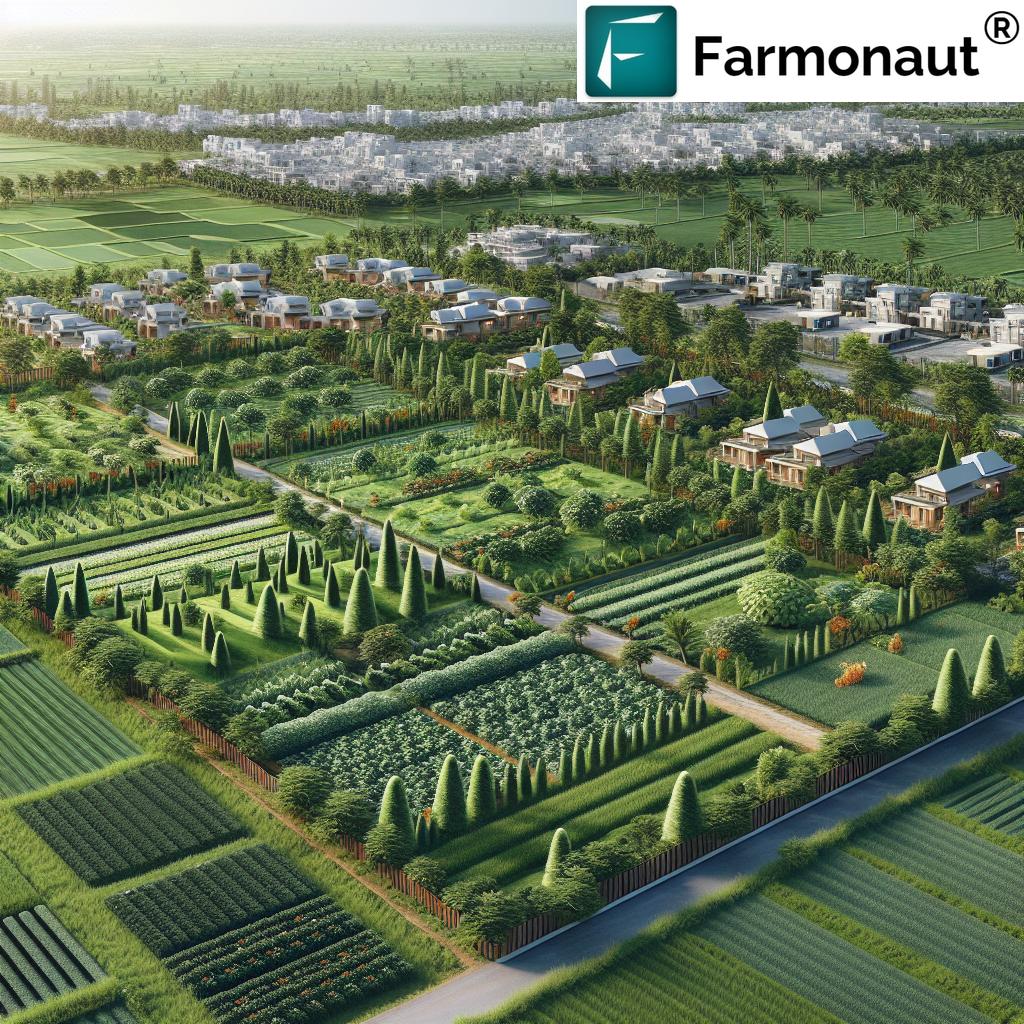
Managed Farmland Near Bangalore: What’s Offered and What to Check
Managed farmland near Bangalore is usually sold as a share of a larger farm, often a quarter-acre to one-acre plot, with the developer planting and running the land for a recurring fee. The model spread after Karnataka amended its Land Reforms Act, with the change in force from 2021, omitting Sections 79A, B and C; 79A had barred anyone with non-farm income of ₹25 lakh a year from buying agricultural land. Revenue Department data reported by Deccan Herald in September 2026 show 19.9 lakh acres of farmland sold statewide since 2021, with 60% of it in north Karnataka, led by Vijayapura and Kalaburagi districts.
No government body publishes prices for managed farm plots, and developers set their own. The most detailed published figures are dated and come from an operator: in 2021 Hosachiguru founder Srinath Setty told Deccan Herald that the company, one of the older Bengaluru operators, sold quarter-, half- and one-acre plots for ₹18 lakh to ₹60 lakh, with running costs of 20 to 40 paise per square foot a month, or roughly ₹8,700 to ₹17,400 a month for a full acre. Treat current listings as asking prices and compare them with recent sale deeds in the same village.
Be wary of promised returns. In January 2024 SEBI froze the accounts of agri-investment platform Growpital, which it treated as an unregistered collective investment scheme: money was pooled, returns of nearly 15% were promised and investors had no control over the farms, as Finshots explained. Before paying, check that you get:
- a registered sale deed for a demarcated plot in your own name, not a membership or “unit”;
- land records showing the land as agricultural and the seller as owner;
- a separate management contract that states the fee, the crop plan, who keeps the produce income, and how you can end it.
What Is Managed Farmland?
A managed farmland project separates two roles that are combined on a typical family farm: the person who owns the land and the person who runs the crop plan. The owner supplies capital and holds the asset; a management company or tenant operator supplies labor, equipment, agronomy decisions, and (in row-crop leases) usually the seed and input purchases. Three structures dominate US managed farmland:
- Cash-rent lease: the owner receives a fixed per-acre rent regardless of yield. USDA’s National Agricultural Statistics Service (NASS) put the national average cash rent for all cropland at $161 per acre in 2025, with irrigated cropland averaging $244 per acre and non-irrigated cropland averaging $147 per acre, according to the 2025 USDA NASS Land Values and Cash Rents summary.
- Crop-share lease: the owner takes a percentage of the harvest (commonly a third to a half, negotiated locally) instead of a fixed rent, sharing in yield risk and price upside.
- Full-service management contract: a farm management company operates the land, markets the crop, and remits net proceeds to the owner after a management fee — the model most similar to what “managed farmland” providers market directly to investors.
What differs across countries is mostly vocabulary, not mechanics. A “managed farmland plantation” in the tree-crop sense — orchard, timber, or agroforestry acreage handed to an operator for multi-year cultivation — follows the same principle: the owner holds the land and long-term crop asset, the manager runs planting, harvest, and maintenance, and returns are split by the same lease-or-share logic used on annual cropland.
Managed Farmland Economics: Rent, Yield, and Return Benchmarks
Before comparing any managed-farmland offer, a buyer needs a yardstick for what the underlying land actually produces and what a rental stream is worth against it. USDA NASS’s most recent final crop production figures, published in January 2026 for the 2025 marketing year, are the standard reference point — the release cadence means a fresher set supersedes this one every January at USDA NASS Newsroom. The last confirmed figures at review time, covering the 2024 crop year, were:
- Corn: 179.3 bushels per acre (US average, 2024), per USDA NASS Crop Production, January 2025.
- Soybeans: 50.7 bushels per acre (US average, 2024), per USDA NASS annual crop summary.
- Wheat: 52.2 bushels per acre (US average, 2024), per the same January 2025 NASS release.
These are national averages across a wide range of soil types and rainfall, so a specific parcel’s yield history — not this national figure — should anchor any individual deal. But the average is the right check against a seller’s pitch: if a managed farmland marketer quotes a per-acre yield well above 179 bu/acre for corn without a multi-year field history to back it, ask for the data.
On the return side, cash rent is the cleanest comparison point precisely because it isolates land income from operating risk. At $161/acre national average against typical US cropland purchase prices, unleveraged cash-rent yields on row-crop land commonly land in the low single digits before appreciation — which is why most row-crop investors count on land-value gains, not rent alone, for total return. Irrigated ground renting at $244/acre reflects the yield premium and drought-risk reduction irrigation buys; the $97/acre gap between irrigated and non-irrigated rent (2025 NASS data) is a reasonable proxy for what irrigation infrastructure is worth annually to a lessee.
Technology adoption also affects what “managed” is worth paying for. USDA’s Economic Research Service found that 40% of US farmland was operated using GPS guidance systems in 2019 — the most recent precision-agriculture adoption figure ERS has published on this measure — per USDA ERS Precision Agriculture research. A management company that has since layered on satellite crop monitoring, variable-rate input application, or yield mapping is operating at or above that 2019 baseline; one that has not is charging a management fee for practices nearly two-thirds of US farmland still lacks, which is a fair question to put to any operator quoting a premium fee.
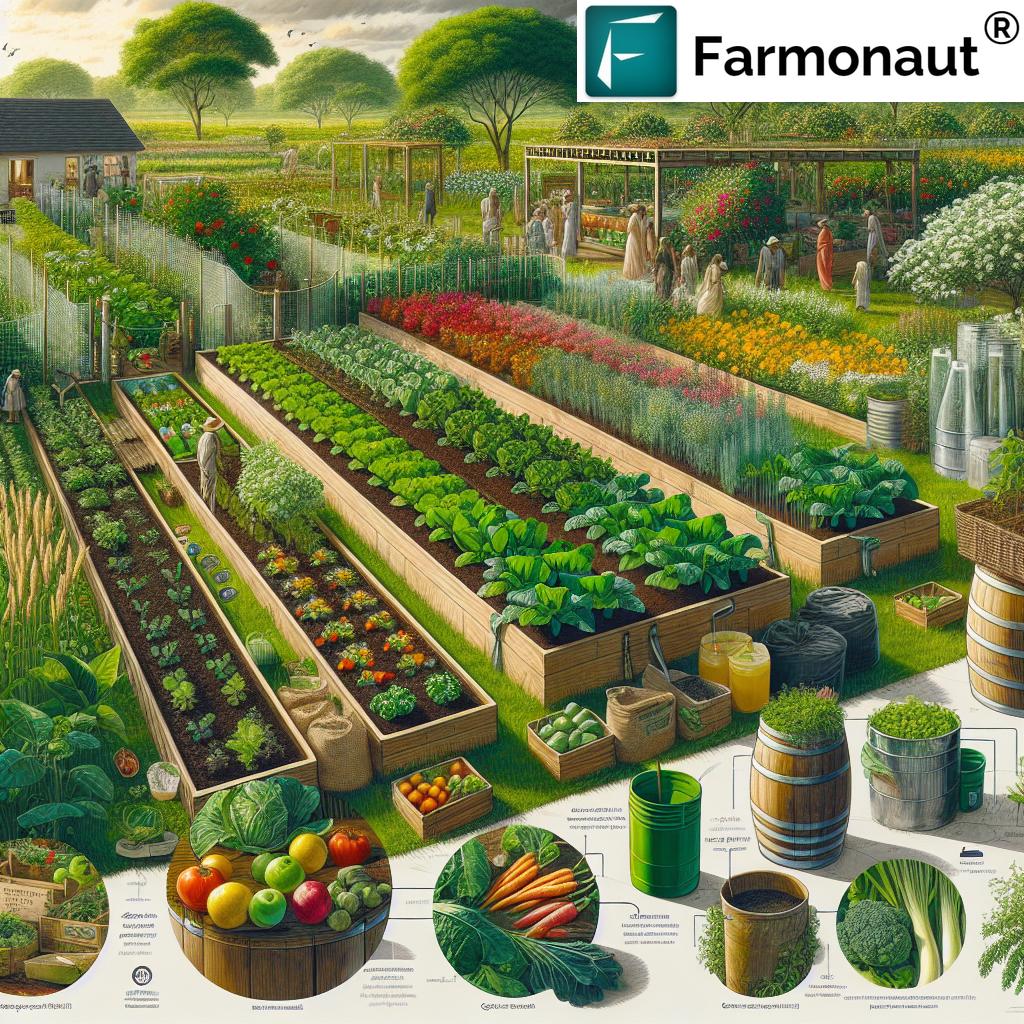



Organic Farming on Managed Farmland
Organic farming in managed farmlands is one of the fastest-growing sub-categories of the model, because certification and buyer relationships are exactly the kind of specialized, ongoing work an owner is usually glad to hand to a manager. US organic food sales reached $71.6 billion in 2024, and certified organic cropland covered 3.6 million acres as of the most recent USDA Economic Research Service count, per USDA ERS Organic Agriculture data. The full Census of Agriculture organic module runs every five years, with the next complete release due in 2027; annual sales figures update sooner, typically in the first quarter of each year through USDA’s organic market summary, so a reader checking this after early 2027 should look for both an updated acreage count and a newer sales total at the USDA NASS Organic Production survey page.
For a managed farmland buyer, organic conversion is a multi-year commitment before the numbers work: US organic standards require land to be free of prohibited substances for 36 months before crops grown on it can be sold as certified organic, and a management contract should specify who carries that transition cost. Ask three questions of any operator marketing organic managed farmland:
- Is the parcel already certified, mid-transition, or not yet started — and who documented that status?
- Does the management fee or crop-share change once certification is achieved and organic pricing applies?
- Who absorbs the yield dip common during the transition years, before soil biology and pest-management systems adjust to synthetic-input-free production?
Land management practices that support both organic transition and conventional soil health — natural farming methods including cover cropping, reduced tillage, and organic matter management — are worth confirming in writing rather than taking on a brochure’s word, since they directly affect both certification timelines and long-run yield stability.
Managed Farmland Plantation Models: Row Crops vs. Tree Crops
Managed farmland plantation structures split into two return profiles that behave very differently, and conflating them is the most common mistake buyers make when comparing offers.
- Annual row-crop leases (corn, soybeans, wheat) generate income in the first season and reset every year — cash rent or crop-share income starts immediately, tracks the national yield and price benchmarks above, and carries limited multi-year commitment. This is the closest model to the US cash-rent market NASS tracks directly.
- Tree-crop and agroforestry plantations (orchards, nuts, timber, or diversified fruit blocks) take several years to reach productive bearing age before any harvest income arrives, then produce for one to several decades. Returns are back-loaded, illiquid in the early years, and depend heavily on the specific crop’s establishment cost and time-to-bearing — figures that vary by species and region and should be sourced from an extension service or the operator’s own multi-year cost-of-establishment schedule, not a national average, since no single USDA series covers tree-crop establishment economics the way NASS covers annual row-crop yields and rents.
Multi-crop rotation and intercropping systems — pairing a fast cash crop with a longer-maturing tree or plantation crop on the same acreage — are marketed by some managed farmland operators as a way to generate income during a plantation’s establishment years. This is a legitimate approach agronomically, but there is no single USDA or Eurostat metric quantifying the yield or income uplift of rotation versus monoculture at a national level; any specific yield-improvement claim for a rotation system should be backed by the operator’s own field trial data or a named university extension study, not treated as an industry-wide constant. Reviewing cash crop and tree crop planning fundamentals before signing a plantation-model contract clarifies which years are expected to produce income and which are establishment-only.
Managed Farmland vs. Owner-Operated Cropland: Comparison
The table below lines up the two ownership models against the same USDA benchmarks, so the trade-offs are visible in one place rather than scattered across marketing pages.
| Factor | Managed Farmland (Lease/Contract) | Owner-Operated Cropland |
|---|---|---|
| Income basis | Fixed cash rent, crop-share, or net-of-fee proceeds | Full crop revenue minus all input, labor, and equipment costs |
| 2025 US benchmark rent | $161/acre average cropland; $244/acre irrigated; $147/acre non-irrigated (USDA NASS) | Not applicable — owner captures yield and price variance directly |
| Yield risk | Absorbed by operator (cash rent) or shared (crop-share) | Fully borne by owner-operator |
| Time commitment | Minimal — quarterly or annual reporting from manager | Full-time or seasonal hands-on labor |
| Technology access | Depends entirely on operator’s own adoption — verify GPS/satellite monitoring in writing | Owner controls adoption directly; 40% of US farmland used GPS guidance as of 2019 (USDA ERS) |
| Best suited to | Absentee owners, diversification-focused investors, first-time farmland buyers | Operators with farming expertise, equipment, and local market relationships |
| Organic transition | Manager can specialize in certification/transition but confirm cost allocation | Owner carries full 36-month transition cost and yield-dip risk |
A shortlist of managed farmland projects — whatever the region — should be screened against this same table before a site visit: fixed rent versus share, who documents yield history, and who is contractually on the hook for the technology a marketing brochure describes.
Calculator: Managed Farmland Lease vs. Buy-and-Operate
Use the calculator below to compare a fixed cash-rent lease against operating the same acreage yourself, using your own acreage, rent rate, expected yield, price, and per-acre operating cost — the USDA 2025 national averages are pre-filled as a starting reference, not a substitute for your parcel’s own numbers.
Run your own numbers
Assumes a simple cash-rent lease with no yield or price risk to the owner, versus self-operation where the owner keeps gross revenue (yield × price) and pays the entered operating cost per acre. Excludes land appreciation, financing cost, taxes, insurance, and crop-share or full-service management-fee structures — those need their own comparison once you have a specific contract in hand.
Technology Behind Modern Managed Farmland
The gap between a well-run managed farmland operation and a purely extractive one usually shows up in monitoring, not marketing copy. USDA ERS's 2019 precision-agriculture figures found GPS guidance in use on 40% of US farmland — a number that predates the wider commercial rollout of satellite-based crop and soil monitoring, so operators adopting newer monitoring tools since then are ahead of that baseline, not merely matching it. On the sustainability side, Eurostat's agricultural statistics offer a useful outside reference point even for US readers evaluating operator claims: EU agricultural labour productivity rose 1.6% in 2024, and crop production alone generated €266.4 billion, roughly half of the EU's total €228.6 billion in agricultural gross value added for that year, according to Eurostat's Performance of the agricultural sector report. That productivity gain is attributed in the underlying Eurostat data to a mix of consolidation and technology adoption — the same forces managed farmland structures are designed to capture on behalf of an absentee owner.
Three monitoring capabilities are worth confirming before signing any management contract, regardless of whether the land is row crop, plantation, or organic:
- Independent yield verification: can the operator show satellite or remote-sensed vegetation index history for the specific parcel, not just a regional average?
- Irrigation and soil moisture data: is water use metered and reported, especially relevant given the $97/acre rent premium (2025 NASS data) that irrigated land commands over non-irrigated land?
- Traceability from field to buyer: for crop-share or premium/organic contracts, can the operator document where the crop was sold and at what price, rather than reporting a single net figure with no backup?
How Farmonaut Supports Managed Farmland Operators
Whether you are the operator running a managed farmland portfolio or the owner who wants independent verification of what a manager reports, satellite-based monitoring closes the information gap that makes absentee land ownership risky. Farmonaut's platform gives both sides of a managed farmland contract the same data:
-
Satellite-Based Crop Health Monitoring:
- Track vegetation indices, soil moisture, and crop stress in near real time across every leased or managed parcel.
- Verify an operator's reported yield against independent satellite data rather than taking a season-end summary on faith.
-
Jeevn AI Advisory System:
- Combine weather, satellite, and crop-management data into actionable recommendations for irrigation timing and input decisions.
- Useful for operators managing multiple non-contiguous parcels who cannot walk every field weekly.
-
Blockchain-Based Product Traceability:
- Give owners end-to-end visibility into where a crop-share or premium crop was actually sold.
- Learn more: Product Traceability
-
Fleet and Resource Management:
- Optimize equipment and transport logistics across multi-parcel managed farmland portfolios.
- Try: Fleet Management
-
Carbon Footprinting:
- Calculate and document a farmland portfolio's carbon footprint, increasingly relevant for institutional and ESG-oriented investors.
- Learn about Carbon Footprinting
-
Large-Scale Farm Management:
- Scale monitoring from a single leased parcel to a multi-state managed farmland portfolio.
- Leverage the Farmonaut Agro-Admin App
-
Crop Loan and Insurance Verification:
- Streamline agri-credit and crop insurance approval using satellite-based farm verification, useful when financing a managed farmland purchase.
- More at Crop Loan & Crop Insurance
-
API Integrations:
- Farm management companies can integrate satellite and weather data directly into their own reporting dashboards for owners.
- Explore the API: Farmonaut API
- Developer docs: API Developer Docs
Ready to verify a managed farmland operation's performance independently?
Farmonaut Subscription Plans — Affordable Precision Farming Tools
Choose from several flexible Farmonaut subscription plans suitable for individual farmers, farm management companies, or large-scale agribusinesses running managed farmland portfolios. Gain access to satellite crop health monitoring, AI-driven crop advisory, blockchain-based produce traceability, and much more:
FAQ on Managed Farmland
Q1: What is managed farmland and how does it differ from buying a farm outright?
Managed farmland is land where a professional operator or management company handles cultivation and maintenance under a lease or contract, while the owner holds title and collects rent, a crop share, or net proceeds. Buying a farm outright means the owner also does the farming, equipment ownership, and marketing — capturing full revenue but also full cost and yield risk.
Q2: What return should I expect from managed farmland?
There is no single published national average return figure for managed farmland investment contracts, because returns depend on the lease structure, crop, and region. What is published: US cash rent on cropland averaged $161/acre in 2025 (USDA NASS), with irrigated land at $244/acre and non-irrigated at $147/acre. Use those figures against a specific parcel's purchase price and your own operating-cost estimate — the calculator on this page walks through that comparison.
Q3: What crops are typically grown on managed farmland?
Row-crop managed farmland in the US centers on corn, soybeans, and wheat — the three crops USDA NASS tracks nationally, averaging 179.3, 50.7, and 52.2 bushels per acre respectively in 2024. Plantation-model managed farmland covers orchard fruit, nuts, and timber, with returns starting only after the crop reaches bearing age, plus cash crop and tree crop combinations designed to bridge that establishment period.
Q4: Is organic farming available on managed farmland, and is it worth the premium?
Yes — US certified organic cropland covered 3.6 million acres as of USDA ERS's most recent count, and organic food sales reached $71.6 billion in 2024. Whether the premium is worth it depends on your contract's specifics: confirm certification status, who bears the 36-month transition cost required under US organic standards, and whether the yield dip common in early organic years is priced into your lease or share terms.
Q5: How do I verify a managed farmland operator is actually using modern technology?
Ask for satellite-based vegetation index history specific to your parcel, not a regional summary — only 40% of US farmland used even basic GPS guidance as of USDA ERS's 2019 figures, so technology claims should be demonstrated with parcel-level data, not asserted. Tools like Farmonaut let an owner independently verify crop health and irrigation data rather than relying solely on an operator's self-reported summary.
Q6: What is the difference between a cash-rent lease and a crop-share lease on managed farmland?
A cash-rent lease pays the owner a fixed per-acre amount regardless of yield or price — $161/acre was the 2025 US average across all cropland (USDA NASS). A crop-share lease instead gives the owner a percentage of the harvest, so income rises and falls with yield and market price, trading certainty for potential upside.
Q7: Where can I check current US cropland rent and yield figures myself?
USDA NASS publishes final crop production data every January at nass.usda.gov/Newsroom, and cash rent and land value figures annually in its Land Values and Cash Rents summary. These are the two documents to re-check before finalizing any managed farmland lease comparison.
Further reading:
Conclusion: Evaluate the Contract, Not Just the Land
Managed farmland is a legitimate way to hold agricultural land without becoming a full-time operator, but the deciding factor is rarely the soil — it is the contract terms and the technology backing them. A $161/acre national average cash rent, a $244/acre irrigated premium, and a 40% GPS-adoption baseline are all real, current-as-of-review benchmarks to hold any specific offer against; none of them substitutes for that offer's own written lease terms, yield history, and fee schedule.
Before committing capital to any managed farmland project — row crop, organic, or plantation-model — confirm three things in writing: which lease structure applies (cash rent, crop-share, or full-service fee), who carries yield and transition risk, and what independent monitoring data you as the owner can access without relying solely on the operator's own summary.
Ready to independently monitor a farmland investment, whether it's row crop, plantation, or organic managed acreage?
Reference points mentioned in this article, for readers evaluating farmland offers outside the US: US farmland investment fundamentals, Australian farmland investment strategy, and general agricultural land investment principles that apply regardless of country.
Operators and marketplaces referenced for context on plantation-style managed farmland models: Arinaa Country Farms, Utopiaa, NowHeaven Farms, Anugraha Farms, Nivashan, Hosachiguru, Blooms EcoVillage, Sangam Farms, The One Acre Farms, Misty Valley Farms, and Swasya Living illustrate the plantation-management contract structures discussed above; buyers should apply the same lease-structure and technology-verification checklist to any operator regardless of region.
*Disclaimer: Information herein is for reference only. Figures cited are sourced from USDA NASS, USDA ERS, and Eurostat as of the dates noted; verify current figures at the linked sources and confirm all lease, contract, and investment details independently before committing capital.

 Native Seeds
 Fresh Platter
 Andex
Andex FCF India
 Unifrutti Gulf
 Deluxe Conseil
 TVS Electronics
 BW Pipelines
 WICO
WICO Gen Chayat
 Chimera Innovation
 SkyHarvest
 Polaris Digitech
 Teledarbas
 Wild Oak Farm
