

Israel Agriculture: 7 Farming Techniques US Growers Can Use
Reviewed August 2026 against FAO AQUASTAT, Israel Central Bureau of Statistics, and USDA Foreign Agricultural Service.
Try it: Run your own numbers →
Israel farms roughly 151,400 hectares of irrigated land — a figure FAO AQUASTAT last confirmed for 2009 — yet produces $11 billion in agricultural output, according to Israel’s Central Bureau of Statistics for 2024. That gap between land area and output value is the whole story of Israel agriculture technology: a country with less irrigated farmland than a mid-sized US county built a $2.8 billion export industry (USDA Foreign Agricultural Service, 2024) by engineering water, soil, and data systems rather than expanding acreage. This article breaks down the seven specific techniques behind that output, with the numbers behind each one and how a US, UK, or EU operation could adapt them.
Table of Contents
- Introduction: Why Israel Agriculture Punches Above Its Land Base
- Israel Agriculture Today: The Numbers Behind the Model
- Comparative Overview: Top 7 Israel Agriculture Techniques
- 1. Drip Irrigation: Precision at the Root Zone
- 2. Precision Agriculture & Data-Driven Decisions
- 3. Protected Cultivation: Greenhouses & Controlled Environments
- 4. Soil Health & Nutrient Management
- 5. Robotics, Automation & Harvest Optimization
- 6. Integrated Pest Management (IPM) & Sustainable Crop Protection
- 7. Value Capture: Tech-Enabled Marketing & Supply Chain Resilience
- Calculator: Drip vs. Flood Irrigation Water Savings
- Enabling Smart Agriculture with Farmonaut Satellite Solutions
- FAQ: Israel Agriculture Techniques
- Conclusion: What US and EU Growers Can Actually Borrow
Introduction: Why Israel Agriculture Punches Above Its Land Base
Israel’s agricultural land base is small and getting no bigger. FAO AQUASTAT’s country profile puts Israel’s maximum irrigated extent at 230,000 hectares in the mid-1980s, an area equipped for irrigation (AEI) of 186,600 hectares as of 2000, and an actually-irrigated figure of 151,400 hectares as of 2009 — the most recent year AQUASTAT has published for the country. That is a shrinking or at best flat irrigated footprint over three decades, in a country roughly the size of New Jersey. Yet Israeli agricultural output was valued at $11 billion in 2024 per the Central Bureau of Statistics, with $2.8 billion in exports across HS Chapters 1–24 that same year, according to USDA’s Foreign Agricultural Service country commercial guide.
The techniques below are not aspirational case studies; they are the specific engineering choices that let a fixed, small, arid land base sustain that output. Each section covers one technique, the real numbers behind it, and where to verify or refresh those numbers yourself — because water statistics, trade figures, and adoption rates all change on different schedules, and a number frozen at today’s date is less useful to you than knowing where it gets updated.
Israel Agriculture Today: The Numbers Behind the Model
Four figures define the current state of Israel agriculture technology, and each has a different refresh cycle worth knowing before you cite it elsewhere.
- Water sourcing: Groundwater supplied 49% of Israel’s agricultural water as of 2004, per FAO AQUASTAT — the most recent breakdown AQUASTAT has published by source. AQUASTAT typically updates country profiles every 3–5 years, so check the AQUASTAT Israel country page directly for whether a newer breakdown has posted.
- Trade balance: Israel imported $9.8 billion in agricultural products against $2.8 billion in exports in 2024 (USDA FAS) — a deficit driven partly by 227,000 metric tons of fruit and vegetable imports tied to conflict-related disruption to domestic production, per the Central Bureau of Statistics’ 2024 report.
- Water reuse: Israel recycles roughly 90% of its treated wastewater for agricultural use, the highest rate reported globally, according to a synthesis of EPA Water Reuse and Israeli government data.
- Desalination: Desalinated seawater supplies about 40% of Israel’s total water supply, with the Sorek plant — the country’s largest — rated at 150 million cubic meters per year of capacity since coming online in 2013.
- Try it: Run your own numbers
These four numbers explain why Israel’s farming techniques center on water rather than land: when your irrigated hectarage is flat or shrinking and you import 3.5 times more food value than you export, every cubic meter of water has to work harder. That constraint produced the seven techniques below, in roughly the order they compound on each other — irrigation efficiency first, then the data and structural layers built on top of it.
Comparative Overview: Top 7 Israel Agriculture Techniques
| Technique | What It Does | Primary Application | Water/Efficiency Data Point | Example Crops |
|---|---|---|---|---|
| Drip Irrigation | Delivers water and nutrients directly to the root zone via tubing and emitters | Row crops, orchards, arid-land cultivation | 70–80% water-use efficiency vs. ~40% for open/flood irrigation | Vegetables, orchards, vineyards |
| Precision Agriculture | Sensors, satellite imagery, and analytics guide input timing and placement | Field crops, orchards, variable-rate management | Feeds irrigation and fertigation scheduling off real-time field data | Wheat, field crops, vineyards |
| Protected Cultivation | Greenhouses and poly-tunnels control temperature, humidity, and light | High-value vegetables, herbs, flowers | Enables off-season and desert-climate production year-round | Tomato, pepper, strawberry, herbs |
| Soil Health & Nutrient Management | Conservation tillage, cover crops, organic amendments, biochar | Soil restoration, degraded-land recovery | Reduces the input load that saline, arid soils otherwise demand | All crops, rehabilitated land |
| Robotics & Automation | Autonomous machinery, drones, and harvesters | Harvesting, planting, weeding, sorting | Addresses labor shortages that constrain expansion of irrigated area | Vegetables, orchards, field crops |
| Integrated Pest Management | Sensor-driven pest monitoring paired with biological controls | Export-grade crop protection | Meets residue limits required by EU and US import inspection | Fruits, vegetables, vineyards |
| Value Chain Digitization | Traceability platforms, quality certification, digital risk management | Export compliance, full supply-chain tracking | Underpins the $2.8B export flow against a $9.8B import base | All export sectors |
1. Drip Irrigation: Precision at the Root Zone
Israel’s Foundational Water Technology
Drip irrigation was developed in Israel specifically to address the water constraint described above, and it remains the technique every other Israel agriculture technique is layered on top of. Instead of flooding a field or spraying it overhead, drip systems run tubing with emitters directly along the root zone, delivering water and dissolved nutrients in metered doses. Israeli sources tracking water-use efficiency put drip systems at 70–80% efficiency, compared with roughly 40% for open or flood irrigation — meaning drip loses less than half as much water to evaporation, runoff, and uneven distribution.
- 💧 Efficiency gap: 70–80% water-use efficiency for drip vs. 40% for open irrigation — a 30-to-40-point efficiency advantage, per Israeli agritech industry sources tracking the comparison in 2024.
- 🌱 Application range: Works across row crops, orchards, vineyards, and reforestation planting, wherever a controlled, localized water dose beats broad wetting.
- ♻️ Feeds into reuse: Because Israel recycles about 90% of its treated wastewater, a large share of what runs through drip lines is reclaimed water, not fresh extraction.
- ⚠ Limitation: Upfront tubing, emitter, and filtration costs are real; the return comes from water and labor savings compounding over multiple seasons, not immediately.

This is also where desalination and drip connect operationally: with roughly 40% of Israel’s total water supply coming from desalinated seawater (the Sorek plant alone rated at 150 million cubic meters per year since 2013), a meaningful share of the water reaching those drip emitters was seawater a few weeks earlier. That’s a fundamentally different water balance than most US or EU farm regions work with, and it’s why the efficiency of the delivery method — not just the volume of water available — became the point of engineering focus.
Key Insight
Drip irrigation paired with AI-driven field analytics — the kind offered in modern satellite monitoring platforms — lets an operation schedule water at the individual field or zone level instead of applying a single blanket schedule across a farm.
Calculator: Drip vs. Flood Irrigation Water Savings
Enter your field size and current irrigation method’s efficiency to estimate the water volume a switch to drip could save per season, using the 70–80% drip vs. 40% open-irrigation efficiency range cited above.
Run your own numbers
Assumptions: 1 acre-inch of water equals approximately 27,154 US gallons. The calculator compares the effective water actually reaching the crop root zone under your current efficiency vs. the same effective delivery achieved at drip efficiency, then reports the reduction in gross water withdrawal needed. It excludes conveyance losses upstream of the field, energy/pumping costs, and installation cost of the drip system itself — those depend on local equipment pricing and terrain and aren’t estimated here.
2. Precision Agriculture & Data-Driven Decisions
Sensors, Satellite Imagery, and Real-Time Field Data
Precision agriculture is the layer that decides when and how much to run the drip system, rather than the delivery mechanism itself. Israeli operations combine soil sensors, satellite imagery, and weather data to schedule irrigation, fertigation, and pest response at the field or zone level instead of on a fixed calendar. This matters more in Israel than in most US regions precisely because the water constraint is so tight — with groundwater covering 49% of agricultural water use as of the 2004 AQUASTAT breakdown, and desalinated water covering roughly 40% of total supply, every irrigation decision has a real marginal cost that field-level data helps minimize.
- 📊 Function: Layers soil moisture, satellite vegetation indices, and weather forecasts to time inputs at the field or zone level.
- 🎯 Precision: Replaces uniform, whole-farm scheduling with zone-specific irrigation and fertigation.
- 🏛 Export relevance: Digital field records support the traceability documentation that EU and US import inspection increasingly require.

Satellite-based platforms extend this capability to operations that can’t afford dense ground-sensor networks. A US grower or a mining-adjacent land manager can use the same class of tool to:
- Track vegetative vigor via NDVI without installing field hardware
- Forecast irrigation timing against weather data
- Flag disease or nutrient stress before it’s visible on the ground
- Monitor reclaimed or reforested land for establishment success
Investor Note
The precision agriculture market is drawing sustained investment on the strength of measurable water and yield returns like the ones documented above.
Learn more about satellite-based analytics and APIs:
Farmonaut’s API lets businesses and developers integrate crop and land monitoring into their own applications. Comprehensive API Developer Docs are available.
3. Protected Cultivation: Greenhouses & Controlled Environments
Year-Round Production Independent of Season
Protected cultivation — greenhouses and poly-tunnels — is how Israel produces high-value fruit and vegetable crops on a land base too small and too dry to support open-field production at the same volume. Controlling temperature, humidity, light, and CO2 inside a structure decouples production from Israel’s Mediterranean-to-desert climate gradient and lets growers hit export specifications year-round rather than seasonally.
- 🕹 Environmental control: Automated climate and fertigation controllers hold temperature, humidity, and light within the range each crop needs.
- 🌱 Export quality: Controlled environments produce the consistency required for the strict grading and residue standards of EU and US import channels.
- 💊 Reduced chemical load: A sealed environment cuts pest and disease pressure relative to open-field production, lowering the pesticide load needed to hit export residue limits.
This sector is a direct offset to the import pressure described earlier: with 227,000 metric tons of additional fruit and vegetable imports recorded in 2024 due to conflict-related disruption to domestic supply (Central Bureau of Statistics), protected cultivation is the fastest lever Israel has to rebuild lost domestic tomato, pepper, and strawberry capacity without needing more irrigated land.



4. Soil Health & Nutrient Management
Managing Fertility on Arid and Saline Ground
Israeli agriculture treats soil as a resource requiring active management rather than a fixed input — a necessity when much of the arable base sits on saline or marginal desert-adjacent soils. Conservation tillage, cover crops, organic amendments, and biochar all target the same goal: keep the small irrigated footprint productive without expanding it.
- 🍃 Conservation tillage preserves soil structure, reducing erosion and improving moisture retention between irrigation cycles.
- 🌾 Cover crops and organic amendments (compost, composted manure) rebuild organic matter in soils that lose it quickly under arid conditions.
- 🔥 Biochar is used in degraded and post-extraction land rehabilitation to restore soil carbon and microbial structure.
- 🔁 Nutrient recycling reduces reliance on external fertilizer inputs, which matters given Israel’s $9.8 billion agricultural import bill in 2024.

Pro Tip
Pair soil moisture sensors with drip scheduling and satellite-derived advisories to cut both water loss and nutrient runoff — the two failure modes that soil management alone cannot fix without irrigation-side data.
For land managers running extraction or heavy-industry operations alongside agricultural rehabilitation, carbon footprinting and fleet management tools support environmental compliance and operational tracking respectively.
5. Robotics, Automation & Harvest Optimization
Labor-Saving Technology for a Constrained Workforce
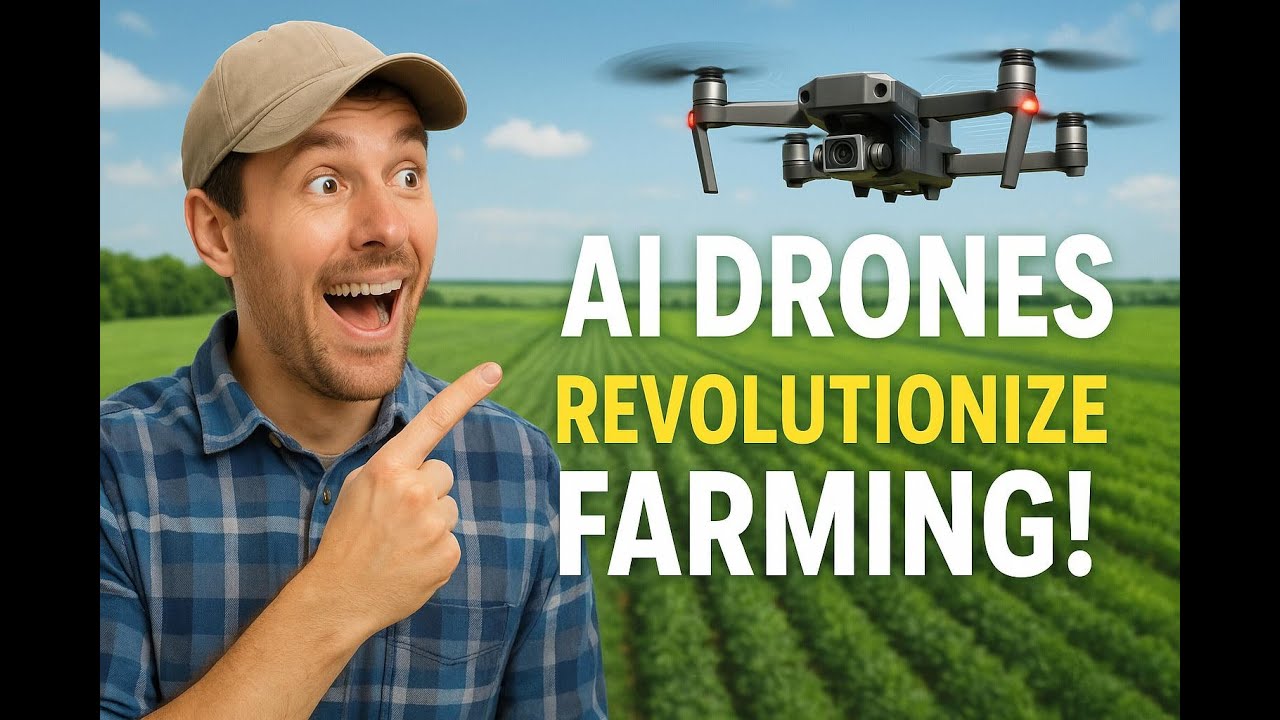
Automation addresses a labor constraint that compounds Israel’s land and water constraints: autonomous tractors, drones, mechanical harvesters, and robotic weeders reduce the manual labor required per hectare, which matters when the irrigated area itself isn’t growing. These tools let a fixed workforce manage the same or greater output as production intensifies under protected cultivation and precision scheduling.
- 🤖 Autonomous machinery handles planting, weeding, spraying, and harvesting with less manual labor per hectare.
- 🛰 Drones map fields and direct site-specific input application, extending the reach of precision agriculture data.
- 🔍 Data capture: Automated systems log harvest volumes and timing in real time, feeding the traceability systems covered in section 7.
Common Mistake
Installing automation hardware without integrating field data from satellite or sensor systems produces isolated efficiency gains instead of the compounding returns that come from linking automation to precision scheduling.
6. Integrated Pest Management (IPM) & Sustainable Crop Protection
Protecting Export Access Through Residue Compliance
Export markets in the EU and US enforce pesticide residue limits that are stricter and more specifically documented than many domestic markets. Israeli IPM combines field sensors, satellite data, and biological controls to hit those limits without sacrificing yield, which is a direct precondition for the $2.8 billion in agricultural exports recorded in 2024.
- 🎯 Early detection: Sensor networks and satellite data flag pest outbreaks before they spread, enabling targeted rather than blanket treatment.
- 🌿 Biological controls: Predatory insects and minimum-risk pesticides substitute for broad-spectrum chemical application.
- 🔄 Residue compliance: Reduced chemical inputs directly support the residue thresholds that EU and US import inspection enforce at the border.

7. Value Capture: Technology-Enabled Marketing & Supply Chain Resilience
Turning Production Into Export Revenue
The final technique is the one that converts everything above into the $2.8 billion export figure: digital traceability, certification, and supply-chain platforms that connect growers, processors, and export buyers. Given that Israel imports $9.8 billion against $2.8 billion exported — a roughly 3.5:1 ratio, per USDA FAS 2024 data — every dollar of export value has to clear a higher documentation and quality bar than a purely domestic sale would.
- 🔗 Traceability platforms: Verify origin and growing practice, a requirement for many EU retail buyers.
- 📋 Certification systems: Secure access to organic, fair-trade, and climate-compliance market segments.
- 🌍 Continuity planning: Digital monitoring supports supply continuity during droughts or the kind of disruption that drove the 227,000-metric-ton import spike in 2024.
- 📈 Diversified revenue: Rehabilitation and ecosystem-service projects on marginal land, including mine site remediation, generate revenue outside core crop production.
Discover traceability solutions for compliance and consumer trust: Explore Farmonaut Product Traceability
Industry Note
For operations in mining, forestry, or infrastructure, the same traceability and environmental-monitoring toolkits used in Israeli export agriculture apply directly to site restoration and provenance-certified output tracking.

For operators managing large-scale land data or needing consolidated analytics across multiple sites, Farmonaut’s large-scale farm management platform provides AI-driven dashboards and compliance reporting adaptable to different crops and terrain.
Enabling Smart Agriculture with Farmonaut Satellite Solutions
Farmonaut provides satellite-based, AI-driven monitoring for agriculture, mining, forestry, and infrastructure. The platform supports:
- Real-time crop and soil monitoring through satellite imagery
- Precision advisory via Jeevn AI for irrigation, fertilization, and resource planning
- Digital traceability for supply-chain transparency via blockchain
- Environmental footprint and emissions monitoring
- Fleet and asset management for agricultural or mining logistics
For forestry and plantation advisory needs: Farmonaut Crop Plantation & Forest Advisory Platform
For risk assessment in agricultural insurance or loan underwriting: Farmonaut’s Satellite-Based Crop Loan & Insurance Verification
FAQ: Israel Agriculture Techniques
What makes Israel’s agriculture technology unique?
How does Israel’s water supply support its farming?
Is Israel’s agricultural sector growing or shrinking?
Which crops benefit most from Israeli farming techniques?
Can Israeli techniques be applied in forestry or land reclamation?
Where can I find updated figures on Israeli agriculture?
How can I access satellite-driven agriculture insights for my own operation?
Conclusion: What US and EU Growers Can Actually Borrow
Israel’s agriculture model isn’t a set of abstract principles — it’s a direct response to a specific, measurable constraint: 151,400 irrigated hectares (2009, FAO AQUASTAT), a mid-1980s peak of 230,000 hectares never since exceeded, and a water supply that’s 40% desalinated and 90% wastewater-recycled. Every technique in this article — drip irrigation, precision scheduling, protected cultivation, soil management, automation, IPM, and traceability — exists because that land and water base couldn’t grow, so output per hectare and per cubic meter had to.
For a US, UK, or EU operation, the transferable lesson isn’t “build more greenhouses” — it’s the diagnostic habit underneath the whole model: measure your water-use efficiency by irrigation method (drip’s 70–80% vs. flood’s roughly 40% is the concrete benchmark to test your own operation against), track what share of your inputs are recoverable or reusable, and treat traceability as an export-market requirement rather than a compliance afterthought. That’s the checklist that still applies whether water gets cheaper or more expensive from here.
The specific dollar and hectare figures in this article will age — check FAO AQUASTAT for irrigated-area updates and Israel’s Central Bureau of Statistics or USDA FAS for the next annual trade report. The method of building a farming system around your actual water and land constraints, rather than around what worked somewhere with more of both, does not expire.
Ready to Revolutionize Your Farm, Forest, or Land Project?
Farmonaut’s platform empowers users across agriculture, mining, infrastructure, defence, and forestry with real-time satellite monitoring, AI advisory, blockchain traceability, environmental compliance tools, and large-scale fleet and resource management — accessible on any device, anywhere.
Discussion
Questions, corrections or field experience? Share them below. First-time comments are reviewed before they appear, and your email is never published.
No comments yet. Be the first to add a question or your experience.

 AgroRangers
 FCF India
 Unifrutti Gulf
 Deluxe Conseil
 TVS Electronics
 BW Pipelines
 WICO
WICO Gen Chayat
 Chimera Innovation
 SkyHarvest
 Polaris Digitech
 Teledarbas
 Wild Oak Farm
 SFX
SFX
 Licence holder · Niger · Gold










