

Regenerative Agriculture Practices Examples: Top 10 Explained
Summary: Regenerative agriculture and farming are restive responses to degradation and a pathway toward resilient landscapes. In the context of agriculture, forestry, and related land uses, the core aim is to rebuild soil health, enhance biodiversity, and improve water cycles while maintaining productive yields. Here, we explore the key examples of regenerative agriculture practices and concrete implementations in both farming and sustainable forestry—illustrated to boost soil health, biodiversity, and create resilient, productive ecosystems.
“Over 60% of global soil carbon can be restored using regenerative agriculture practices like cover cropping and agroforestry.”
Table of Contents
- What is Regenerative Agriculture?
- Why Adopt Regenerative Practices?
- Overview Comparison Table
- Top 10 Regenerative Agriculture Practices Examples
- Farmonaut’s Role in Regenerative Agriculture
- Frequently Asked Questions (FAQ)
- Conclusion
What is Regenerative Agriculture?
Regenerative agriculture is a holistic land management approach that prioritizes the restoration and enhancement of soil health, water cycles, and biodiversity. Unlike extractive or conventional farming, which can deplete resources and degrade ecosystems over time, regenerative agriculture actively rebuilds natural assets.
It draws from ancient farming knowledge, modern science, and ecological principles, seeking to make agricultural and forestry systems not only sustainable but restorative.
- ✔ Key benefit: Boosts soil fertility for higher, more stable yields
- 📊 Data insight: Practices can improve soil organic matter by 20–60% over 5–10 years
- ⚠ Risk or limitation: Transition may require 1–3 years before benefits are fully realized
- 🌳 Forestry relevance: Improves long-term forest productivity and ecological health
- 🌏 Climate impact: Sequesters carbon, helping to mitigate global warming
Why Adopt Regenerative Practices?
Regenerative agriculture and sustainable forestry practices are gaining momentum worldwide for compelling reasons:
- ✔ Enhance ecosystem resilience—landscapes become more resistant to drought, flood, and weather extremes with improved water cycling and living soils.
- 📊 Improve productivity—long-term yields stabilize or increase as soils regain fertility and nutrient cycling improves.
- 🌿 Restore biodiversity—greater plant, microbial, and animal diversity supports ecosystem services, pollination, and natural pest control.
- 🌱 Reduce input costs—diverse rotations, biological controls, and organic amendments lessen reliance on costly synthetic fertilizers and pesticides.
- 🌊 Support communities—regenerative systems safeguard the livelihoods of farmers and forest managers while contributing clean water and air to surrounding communities.
Overview Comparison Table: Top 10 Regenerative Agriculture Practices
| Practice Name | Description | Main Ecological Benefit | Est. Soil Health Improvement (%) | Est. Biodiversity Increase (%) | Forestry Application |
|---|---|---|---|---|---|
| Holistic Soil Health Management | Living soils through reduced disturbance, cover crops, compost/manure, and organic amendments | Boosts organic matter, microbial activity, and water retention | 20–60% | 10–15% | Yes |
| Diverse Cover Cropping & Rotations | Planting mixes of legumes, grasses, and rooted species; breaking cycles with crop rotation | Reduces erosion, enhances nutrient cycling | 15–40% | 10–20% | Yes |
| Reduced Chemical Inputs & Integrated Pest Management | Biological pest control, minimal synthetic use, precision application | Lessens chemical load, improves beneficial biota | 10–20% | 15–25% | Yes |
| Agroforestry & Silvopasture | Integrating trees with crops/livestock for multifunctional systems | Creates habitat, increases carbon storage | 25–50% | 20–35% | Yes |
| Managed Grazing & Pasture Regeneration | Planned livestock rotation, allowing recovery and root growth | Restores soil structure, boosts microbial systems | 20–55% | 18–30% | Yes |
| Water Cycle Restoration | Soil organic matter building, swales, contouring, cover for water infiltration | Improves moisture, reduces runoff and erosion | 10–35% | 10–18% | Yes |
| Biodiversity & Habitat Integration | Designing for pollinators, wildlife corridors, native strips | Strengthens ecosystem resilience, improves services | 10–25% | 20–40% | Yes |
| Investment in Soil Life | Prioritizing microbes/fungi via compost, biofertilizers, minimal disturbance | Enhances carbon cycling, nutrient availability | 20–50% | 10–22% | Yes |
| Climate Adaptation & Resilience | Diversified systems, mixed-age forestry, carbon storage practices | Buffers against shocks, raises overall stability | Varies: 15–45% | 15–27% | Yes |
| Monitoring & Continuous Improvement | Measuring progress with soil/biodiversity/yield metrics for adaptive management | Ensures ongoing improvement and goals alignment | Varies: 10–30% | Varies: 8–21% | Yes |



Tip: Use Farmonaut’s Crop Plantation, Forest Advisory and Monitoring Solutions to monitor soil and crop health remotely—helping you implement and scale regenerative farming and forestry with affordable, real-time insights.
Top 10 Regenerative Agriculture Practices Examples
Let’s explore each of the top 10 regenerative agriculture practices examples, including examples of sustainable forestry practices where applicable, with clear steps, core principles, and practical details.
1. Holistic Soil Health Management
Practice Overview: Healthy, living soils are at the heart of regenerative farming. By minimizing disturbance, using cover crops, and incorporating organic amendments, we prioritize sustainable systems that restore soil life and function.
- ✔ No-till or conservation tillage: Reduces breaking up of soil structure, preserving microbial networks and root channels.
- ✔ Cover crops: Maintain green cover year-round, protect soil from erosion, boost organic matter, and suppress weeds.
- ✔ Compost and manure applications: Enhance organic matter and feed the soil biology, building long-term fertility.
- ✔ Careful nutrient budgeting: Ensures optimal input use and reduces waste and runoff.
- ✔ Forestry application: Mulches around seedlings, keeping the forest floor moist, and minimizing compaction from heavy machinery support forest health and productivity.
Illustrative Example
If you’re running a wheat farm, applying no-till planting, rotating with clover or vetch (a nitrogen-fixing legume), and integrating composted manure can steadily increase soil organic matter content—raising yields and stability in the face of adverse weather.

2. Diverse Cover Cropping & Rotations
Practice Overview: Introducing diverse cover crops (including legumes for nitrogen-fixing, grasses for dense root mats, and deep-rooters like radish) breaks disease cycles and boosts living soil matter. Rotating crops over time prevents single-species dominance, confusing pests and enhancing resilience to drought or flood.
- ✔ Mix of species: Planting winter cover with peas, oats, and vetch, or summer mixtures of buckwheat and cowpea.
- ✔ Long-term cropping rotation: Moving from corn, to soybeans, to wheat, to a vegetable, for example, in sequential years.
- ✔ Forestry relevance: Understory cover cropping or intercropping with native legumes enhances soil fertility in young plantations without compromising timber growth.
Illustrative Example
After main crop harvest, sowing a blend of crimson clover, rye, and daikon radish suppresses winter weeds, opens the soil with the radish’s long taproot, and leaves the land rich in organic nitrogen for the spring planting.

3. Reduced Chemical Inputs & Integrated Pest Management
Practice Overview: Regenerative farming examples always highlight the shift from synthetic fertilizers and pesticides toward biological—and often ecosystem-based—controls.
- ✔ Biological controls: Deploy beneficial insects, such as ladybugs for aphids or parasitic wasps for caterpillar pests.
- ✔ Microbial inoculants: Use mycorrhizal fungi or rhizobia to stimulate plant nutrient uptake and disease resistance.
- ✔ Natural repellents: Neem, essential oils, or garlic for reducing pest pressure without chemicals.
- ✔ Mechanical weed management: Flame-weeding, inter-row cultivation, or mowing reduces chemical herbicide use.
- ✔ Phytoremediation: In forestry or post-mining landscapes, use sunflowers or willows to absorb contaminants and restore ecosystem health along downstream forests and farmlands.
Illustrative Example
In regenerative tomato farming, alternating marigold intercrops (marigolds repel nematodes) and introducing trichogramma wasps for caterpillar egg control replaces much pesticide use, benefiting pollinators and soil life.

4. Agroforestry & Silvopasture
Practice Overview: Agroforestry combines trees with crops, while silvopasture integrates trees, pasture, and livestock. This regenerative approach creates multifunctional landscapes, boosts soil health, and provides climate buffers through integrated shade and wind barriers.
- ✔ Timber and non-timber yields: Wood, fruit, nuts, mushrooms, and more.
- ✔ Riparian buffers: Tree-thickened stream and river margins protect water quality and create wildlife corridors.
- ✔ Cluster planting: Combine fast-growing timber, nitrogen-fixing trees, and perennial intercrops for resilience.
- ✔ Livestock in silvopasture: Animals graze beneath tree canopies, enjoying shade and natural feed sources, while their grazing helps manage understory growth.
Illustrative Example
In a coffee plantation in Uganda, combining banana shade trees, ground-level legumes, coffee shrubs, and rotational grazing by goats enhances all ecosystem services while yielding coffee, bananas, beans, and goat meat.

5. Managed Grazing & Pasture Regeneration
Practice Overview: Strategically managed grazing mimics the natural movement of large herds, allowing pasture plants to regrow between grazing periods.
- ✔ Rotational paddock grazing: Move livestock regularly to rest pastures and avoid overgrazing.
- ✔ Increase root depth: Deeper roots bring up nutrients and stabilize soil, boosting crop resilience.
- ✔ Fire risk mitigation: In forest buffer zones, controlled grazing reduces dry understory biomass.
- ✔ Pollinator habitat protection: Grazing schedules can be coordinated to maintain flowering strips vital for bees.
Illustrative Example
A dairy farmer divides pasture into small sections and rotates cows daily. Grass recovers quickly, soil stays covered, and the system naturally fertilizes itself—improving yields and biodiversity, while supporting local water cycles.
6. Water Cycle Restoration
Practice Overview: Healthy soil acts as a water sponge—but erosion and compaction break this function. Water cycle restoration in regenerative agriculture uses contouring, terracing, swales, and organic matter to maximize water infiltration, minimize runoff, and ensure downstream farm and forest health.
- ✔ Swales & contour bunds: Earth channels along land contours slow rainwater and let it seep into the ground.
- ✔ Mulch & organic matter: Prevents crusting, keeps soil cool, and boosts biological water storage.
- ✔ Agroforestry shade: Reduces evaporation, maintaining cool, moist microclimates vital for forest and farm crops alike.
- ✔ Forest stream buffers: Dense tree strips along waterways filter runoff and hold floodwater, safeguarding downstream communities.
Illustrative Example
In hillside orchards, digging swales and adding heavy straw mulch not only saves on irrigation but restores local springs and reduces flash-flood risk downstream in the watershed.
7. Biodiversity & Habitat Integration
Practice Overview: Implementing features like hedgerows, native wildflower strips, and multi-layered forest understory creates wildlife corridors, stabilizes pest cycles, and improves pollinator abundance in regenerative farm and forest systems.
- ✔ Hedgerows: Dense plantings along field margins offer habitats for birds, insects, and mammals.
- ✔ Flowering strips: Support bees and butterflies, increasing pollination for fruit and seed crops.
- ✔ Native grass buffers: Control erosion and filter nutrient runoff between fields and streams.
- ✔ Forest corridors: Maintain connectivity for game, pollinators, and native plant seed dispersal.
Illustrative Example
A regenerative vineyard plants native wildflowers between rows and maintains forest strips along stream edges. Grape yield improves due to better pollination, disease outbreaks become infrequent thanks to predator insects, and the landscape is resilient to pests and minor climate extremes.
- 🦋 Add native flower strips to support pollinators
- 🦉 Maintain hedgerows for beneficial birds
- 🌾 Use grass buffers to reduce nutrient runoff
- 🌲 Restore forest corridors for wildlife movement
- 🐞 Introduce beetle banks for pest predators
8. Regenerative Investment in Soil Life
Practice Overview: By seeding and nurturing soil with diverse microbes and beneficial fungi, regenerative farmers and foresters build soils that store carbon, improve nutrient cycling, and produce robust crops with lower external input.
- ✔ Compost applications: Add a thriving community of bacteria, fungi, and nutrients.
- ✔ Biofertilizers: Inoculate with specialized microbials to boost soil health and accelerate restoration.
- ✔ Minimal-disturbance tillage: Let fungal threads (“hyphae”) knit soils together for improved aggregate structure.
- ✔ Mycorrhizal inoculation: Essential for forestry operations, especially when restoring degraded lands or planting seedlings in poor soils.
Illustrative Example
Applying well-matured compost before direct-seeding trees on a restoration site increases seedling survival and boosts growth by improving water and nutrient access through the fungal network.
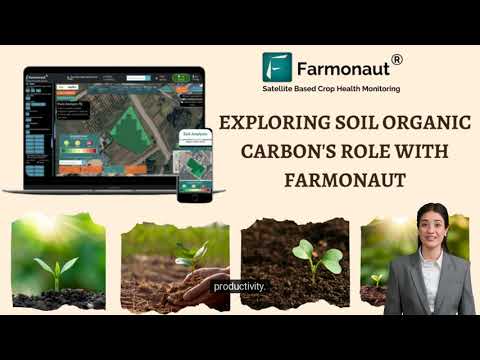
Track and report soil carbon and biodiversity gains more easily with Farmonaut’s Carbon Footprinting solutions. Monitor environmental progress for easier sustainability certifications.
Need transparency in agri or forestry supply chains? Use Farmonaut’s Blockchain-Based Traceability system for secure, seamless tracking.
Healthy, living soils can reach 600% more water-holding capacity than degraded soils, reducing both drought and flood risks.
9. Climate Adaptation & Resilience
Practice Overview: Regenerative systems help landscapes weather shocks by increasing both physical and economic diversity.
- ✔ Carbon drawdown: Trees, cover crops, and deep-rooted species lock away atmospheric CO2.
- ✔ Mixed-age forestry: Simulates natural forests, which are more self-healing after storms or fire.
- ✔ Crop diversification: Reduces food and farm income risk by varying crops, livestock, and perennials.
- ✔ Flexible rotations: Fast adaptation to new pests, diseases, or market changes.
Illustrative Example
A regenerative large-scale farm plants a portfolio—maize, legumes, cover crops, and agroforestry perennials. When heat waves hit and annual crops fail, perennial crops and trees buffer income and keep soils resilient, sustaining productivity for the next season.
“Integrating livestock with crops in regenerative systems can increase farm biodiversity by up to 30%.”

For large operations, our Agro-Admin App delivers remote monitoring, crop health alerts, and water stress warnings—vital for climate-readiness and scalable regenerative management.
10. Monitoring & Continuous Improvement
Practice Overview: Continuous, evidence-based improvement is a unifying principle for all regenerative agriculture practices examples. Keeping track of soil organic matter, yields, biodiversity, and water data ensures that actions are effective and resources are invested where they count most.
- ✔ Simple soil and biota tests: E.g., routine soil organic matter measurement; pitfall traps for ground insects.
- ✔ Remote sensing technology: Use tools like Farmonaut to monitor land health, vegetative cover, and water stress in real time, from anywhere.
- ✔ Adaptive management: Adjust plans and rotations each season based on results, embracing what works best.
- ✔ Community knowledge sharing: Collaborate locally to benchmark, learn, and improve together.
Illustrative Example
A forestry co-op leverages satellite monitoring to track canopy cover, soil moisture, and regrowth, quickly spotting ecosystem stress or recovery trends—guiding when and where to intervene for optimal outcomes.
Interested in integrating satellite and AI-powered monitoring into your systems? Explore our public API and API Developer Documentation for custom, scalable solutions.
Farmers can benefit from satellite-based Crop Loan and Insurance Verification—streamlining finance and risk coverage for regenerative upgrades.
- 📈 Track soil organic matter each season
- 🌳 Measure canopy cover and biodiversity
- 💧 Monitor water infiltration rates
- 🌱 Adjust rotation plans per yield data
- 📲 Use satellite data for landscape-scale insight
Managing multiple vehicles or harvesters for regenerative operations? Our Fleet Management Tools optimize usage, save fuel, and reduce carbon emissions across your farming and forestry fleet.
Farmonaut’s Role in Regenerative Agriculture
At Farmonaut, we empower farms, forestry managers, and agri-enterprises with real-time, satellite-driven data and AI insights that let you:
- 📊 Monitor soil health, vegetation vigor, and water status to optimize regenerative interventions for maximum yield and ecosystem improvement
- 💧 Track and restore water cycles at scale, preventing erosion and supporting downstream communities
- 🌳 Manage diversified landscapes—crops, livestock, forestry, and natural habitat together—through a single platform
- ✔ Access blockchain-based traceability and supply chain transparency for market authentication and premium pricing
- 📱 Access our suite via Android, iOS, web/app, and flexible APIs for seamless integration into your workflow
Get started with Farmonaut’s affordable subscriptions—see below for latest pricing and features.
Principles of Regenerative Farming & Forestry
The principles of regenerative farming—aligned with the best examples of sustainable forestry practices—include:
- ✔ Evidence-based soil regeneration for rebuilding ecosystem function and long-term productivity
- ✔ Biodiversity enhancement at all trophic levels—plants, pollinators, predators, and soil biota
- ✔ Integration of crops, trees, and/or livestock to create synergistic, efficient systems
- ✔ Minimized external input dependence—favoring local amendments and natural pest cycles
- ✔ Patient, measured improvement of ecosystem services for lasting restoration, not just short-term gains
- ✔ System design for productivity while repairing environmental health
Frequently Asked Questions (FAQ)
What are concrete examples of regenerative agriculture practices?
Concrete examples of regenerative agriculture practices include holistic soil health management (no-till, natural composts), diverse cover cropping and rotations, minimized chemical input, agroforestry/silvopasture, rotational grazing, water restoration, biodiversity integration, investment in soil microbes and fungi, climate adaptation through diversified systems, and continuous monitoring.
How do regenerative practices improve farm and forest yields?
By building living soil, enhancing nutrient and water cycles, and promoting biodiversity, these practices result in healthier, more resilient crops and trees—delivering stable or increased yields with less input over time, and improved ecosystem services.
Are these practices only for organic farms?
No. Their principles can be applied in any system—conventional, organic, or mixed. Many commercial and conventional farms integrate regenerative practices like cover cropping, controlled grazing, or tree planting to enhance sustainability.
What technology can help monitor or scale regenerative agriculture?
Farmonaut’s satellite-powered platform provides real-time data on crop vigor, soil health, water stress, and environmental impact—invaluable for farm managers, forestry companies, and investors looking to scale or verify regenerative practices.
How can I prove and report regenerative improvements?
Monitor soil carbon, organic matter, and biodiversity indices with digital tools. Farmonaut offers carbon footprinting, traceability, and resource management features to supply data for certifications, reports, and climate finance.
How can I get started with satellite-driven insights for regenerative agriculture?
Launch the Farmonaut app via web, Android or iOS. Or, connect via API and view the developer documentation.
Conclusion
The transition to regenerative agriculture and sustainable forestry is more than a technical challenge—it’s a restoration of our relationship with the land. Rebuilding living soils, fostering biodiversity, and rebuilding natural cycles are not only essential to securing long-term food and timber supplies, but also to reviving the health of entire landscapes and downstream communities.
Regenerative agriculture practices examples like those detailed above are already being implemented around the globe—with modern technology such as Farmonaut providing the scalable, real-time insights needed to guide, verify, and accelerate these ecological transformations.
Whether you’re a farmer, forestry manager, policymaker, or investor, now is the time to explore regenerative systems—ensuring a productive, resilient, and sustainable future for agriculture, forestry, and the planet.
Discussion
Questions, corrections or field experience? Share them below. First-time comments are reviewed before they appear, and your email is never published.
No comments yet. Be the first to add a question or your experience.

 Fair Climate Fund
 TVS Electronics
 BW Pipelines
 WICO
WICO Gen Chayat
 Chimera Innovation
 SkyHarvest
 Polaris Digitech
 Teledarbas
 Wild Oak Farm
 SFX
SFX BACF Africa
 Doodlakine
 Exurbia Geospatial
 FieldZero
 Indico Company
 Licence holder · Niger · Gold










